CARBON: The Book of Life

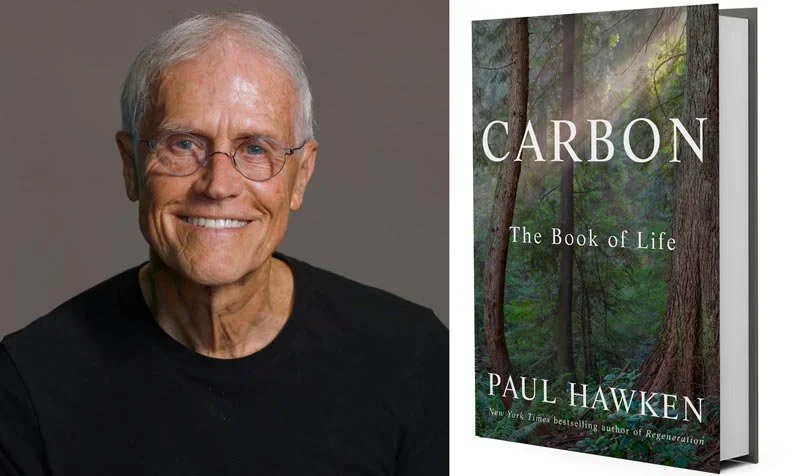
CARBON: The Book of Life

with PAUL HAWKEN
Environmentalist · Entrepreneur
Founder of Project Regeneration & Project Drawdown

We have 1.2 trillion carbon molecules in every cell. We have around 30 trillion cells, and that’s us. So carbon is really a flow that animates everything we love, enjoy, eat, and all plant life, all sea life—everything that's alive on this planet—is animated by the flow of carbon. We want to see the situation we're in as that, as a flow. Where are the flows coming from, and why are we interfering with them? Why are we crushing them? Why are we killing them? For sure. But also, we need to see the wonder, the awe, the astonishment of life itself and to have that sensibility as the overriding narrative of how we act in the world, how we live, and how we talk to each other. Unless we change the conversation about climate into something that's a conversation about more life—better conditions for people in terms of social justice, restoring so much of what we've lost—then we won’t get anywhere.

DAVID BYRNE'S THEATER OF THE MIND

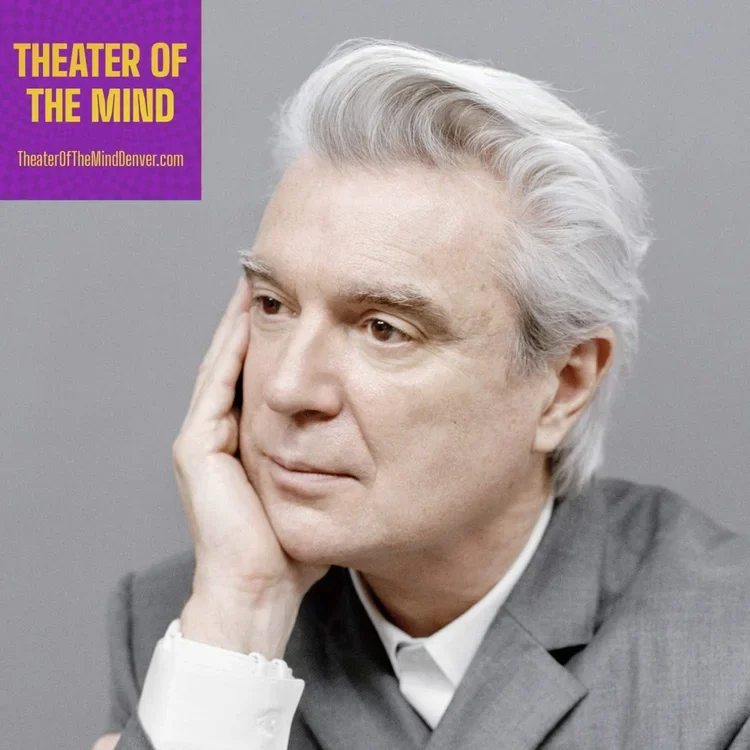
DAVID BYRNE'S THEATER OF THE MIND

Stories of Impact · People’s TV

Q: Who is David Byrne?
David Byrne: …I have no idea.

Most people know me through music, but when I was in high school I saw science and the arts as being equally creative fields. More recently, I just started taking an interest in how the brain works, and there's been this explosion of literature. As much as I love reading about neuroscience, I realize that experiencing some of the phenomena is just on a different level. I wanted to create an experience that shows us we're not who we think we are. Theater of the Mind is an immersive Science Theater project. With this show, I've tried to marry a narrative to the experience of different scientific phenomena that reveal how malleable our perception memory and identity really are.

Building a Vital Earth for Everyone
All About Bees, Soil & Regeneration

All About Bees, Soil & Regeneration

A Conversation with Documentary Filmmaker REBECCA TICKELL

Today, we explore the work of a filmmaker whose lens is consistently turned toward the most critical issues facing our planet. Rebecca Tickell, in collaboration with her husband Josh Tickell, has created a powerful cinematic catalog of films that are not merely observations, but catalysts for change. They've taken on the complexities of our energy systems, the deep-seated problems within our food supply, and now, with her latest work, Bee: Wild, they explore the essential, fragile, and often unseen world of pollinators.

Their film Kiss the Ground sparked a global conversation about regenerative agriculture, leading to tangible shifts in policy and public understanding. Common Ground continued this exploration, unraveling the intricate web of our food systems. Now, with Bee: Wild, narrated by Ellie Goulding and executive produced by Angelina Jolie, Rebecca brings her characteristic blend of journalistic rigor, personal narrative, and solutions-driven storytelling to the urgent plight of bees, asking us to reconsider our relationship with the natural world.

How AI is Shaping Perception

How AI is Shaping Perception

How Deception is Sculpting Our Reality
A Conversation with Artist · Geographer · Author TREVOR PAGLEN

At the core of the work is that sense of curiosity, that sense of joy, that sense of beauty, and that sense of learning. I've been fortunate to have all kinds of strange and interesting experiences, whether that's seeing weird things in the sky over secret military bases in the middle of the Nevada desert, going scuba diving and finding internet cables on the bottom of the ocean, or tracking spy satellites in the sky and being able to predict when they'll appear in a flash against the backdrop of stars. The world around us is extraordinary and embodied, right? It is not on screens, and I’m very privileged to have that be so much a part of my process.

The 15-Minute City: A Solution to Saving Our Time and Our Planet

The 15-Minute City: A Solution to Saving Our Time and Our Planet

A Conversation with CARLOS MORENO · Originator of the 15-Minute City Concept · Scientific Director · Entrepreneurship, Territory, Innovation Chair · Sorbonne Business School

It all starts at home. As a university professor, I have observed the process of transformation of different generations. We need to find a sense of life. We need to find a sense of belonging to our humanity, but to have this sense of life, we need to find a sense in our local communities.

 Emotional Intelligence & Optimal Living

Emotional Intelligence & Optimal Living

A Conversation with Psychologist DANIEL GOLEMAN
Author of Emotional Intelligence · Optimal · Ecological Intelligence

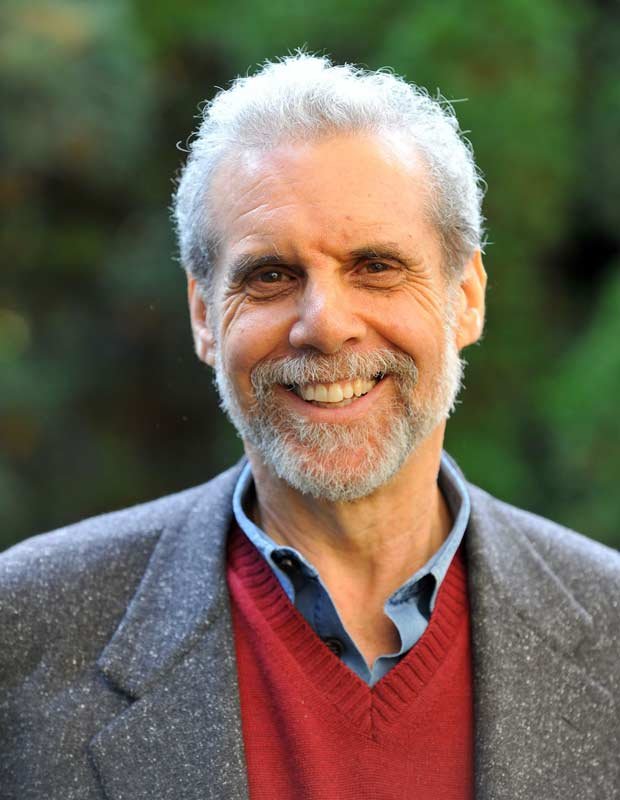
Emotional intelligence is how you manage yourself and how you handle your relationships. Are you aware of what you're feeling? Can you use that awareness to handle emotions, to be positive, to be sure your upsetting emotions don't overwhelm you? This then helps you to tune into other people's emotions, to be empathic, and to put that all together to manage relationships well. It turns out that's what makes an engineer highly effective. I think it's what makes anyone highly effective. 

Pioneering Green Aviation & Revolutionizing Sustainability

Pioneering Green Aviation & Revolutionizing Sustainability

A Conversation with Explorer & Aviator of the First Round-the-World Solar-powered Flight BERTRAND PICCARD · Founder of Solar Impulse Foundation & Climate Impulse

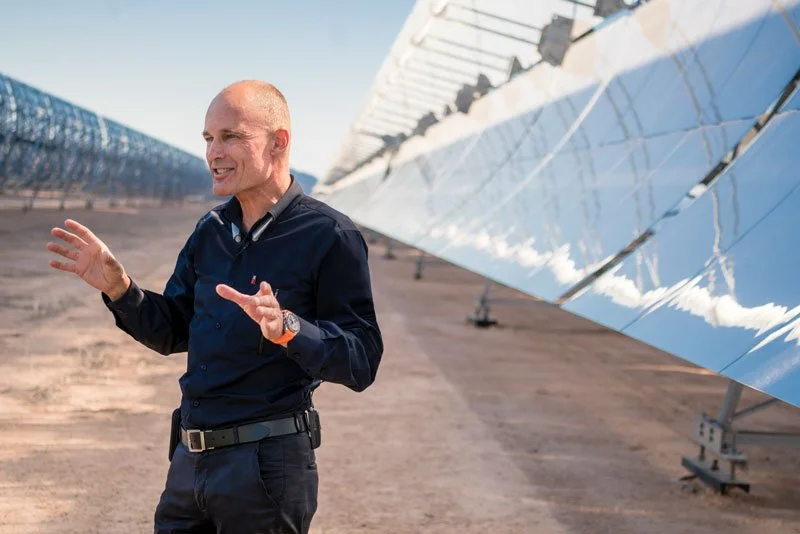
The goal with Climate Impulse is to revolutionize aviation and show that we can decarbonize aviation. Of course, it's not yet a jumbo jet with hydrogen. It's a two-seater airplane. If we go around the world nonstop with two people on board, this project can become like a flagship of climate action.

Sleep, The Nocturnal Brain & The Biology of Being Human

Sleep, The Nocturnal Brain & The Biology of Being Human

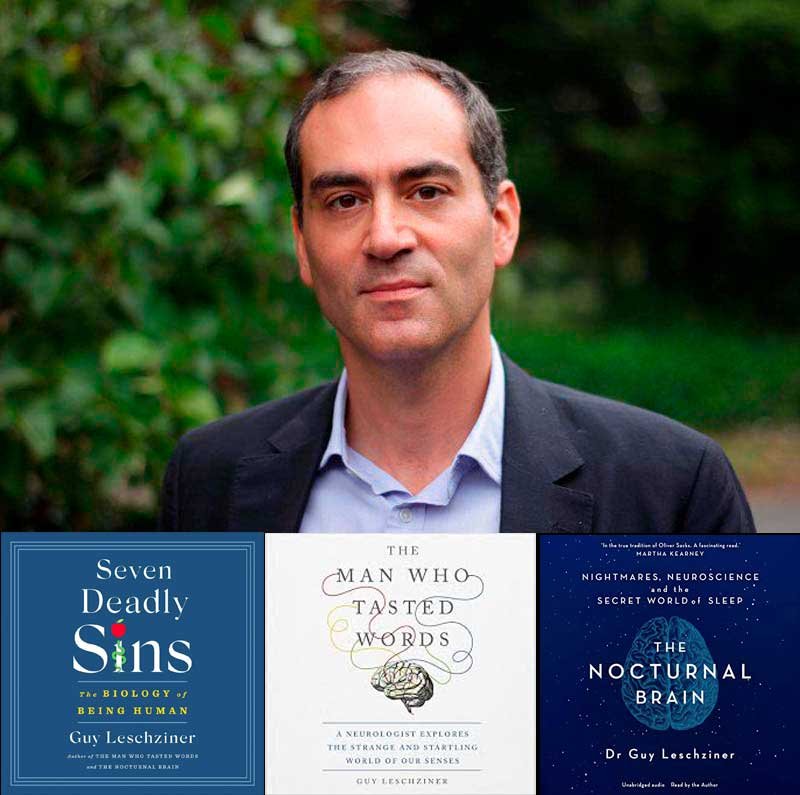
with Neurologist · DR. GUY LESCHZINER
Professor of Neurology & Sleep Medicine · King's College London
Author of Seven Deadly Sins · The Nocturnal Brain · The Man Who Tasted Words

 I'm fascinated by the extremes of the human experience, partly because it is so far removed from our own experience of life. In another way, when you look at people who have neurological disorders or diseases, these are really nature's experiments. They are ways of trying to understand how the brain works for all of us. By extrapolation from looking at these extremes, we can learn about the workings of our own brains. That's very much the case across all the areas of my work, whether it be sleep disorders, neurology, or epilepsy—how we regulate our emotions, how we move, how we experience the world.

OUR PLANET · OUR FUTURE

OUR PLANET · OUR FUTURE

Environmentalists, Artists, Scientists & Earth Defenders Share their Stories

We are privileged to present the voices of individuals dedicated to effecting change and mitigating the harm inflicted upon our precious planet. These are individuals deeply committed to the core values that drive positive transformation: Max Richter, Ingrid Newkirk, Julian Lennon, Bertrand Piccard, Carl Safina, Nan Hauser, Claire Potter, Ada Limón, David Farrier, Cynthia Daniels, Oded Galor, Kathleen Rogers, Joelle Gergis, Sir Geoff Mulgan, Alain Robert, Noah Wilson-Rich, Chris Funk, Suzanne Simard, Peter Singer, and Jennifer Morgan.

The SDGs & UN Summit of the Future

The SDGs & UN Summit of the Future

A Conversation with Vice President · Head of the Paris Office GUILLAUME LAFORTUNE
UN Sustainable Development Solutions Network

The SDSN was set up to mobilize research and science for the Sustainable Development Goals. The development goals were adopted in 2015 by all UN member states, marking the first time in human history that we have a common goal for the entire world. Out of all the targets that we track, only 16 percent are estimated to be on track. Currently, none of the SDGs are on track to be achieved at the global level.

The Club of Rome

The Club of Rome

& The Limits to Growth with Co-President PAUL SHRIVASTAVA

Less than two weeks into the new year and the world’s wealthiest 1% have already used their fair share of the global carbon budget allocated for 2025. Climate change is here. It's already causing devastation to the most vulnerable populations. We are living with an extractive mindset, where we are extracting one way out of the life system of the Earth. We need to change from that extractive mindset to a regenerative mindset. And we need to change from the North Star of economic growth to a vision of eco civilizations. Those are the two main principles that I want to propose and that the Club of Rome suggests that we try to transform our current organization towards regenerative living and eco civilization.

What does art teach us about consciousness?

What does art teach us about consciousness?

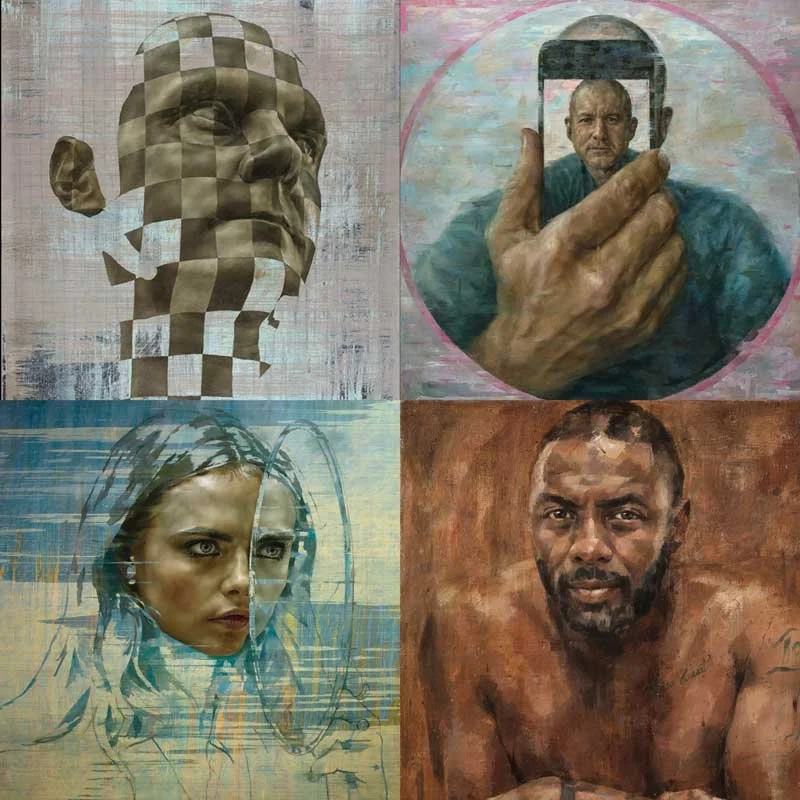
A Conversation with Artist JONATHAN YEO

What are you trying to do with a portrait? On a basic level, you're trying to communicate something about the essence of who someone is. You're trying to figure out who they are, not necessarily who they present themselves as. The two things can quite often be different. You're trying to find ways of showing that through their face, their posture, or any other context. My instinct is always to try to reduce down to the essential elements. We read faces. It's obviously very, very deep in our DNA, really our survival instinct. We are programmed to read faces in a very fine-tuned way.

The Science Delusion

The Science Delusion

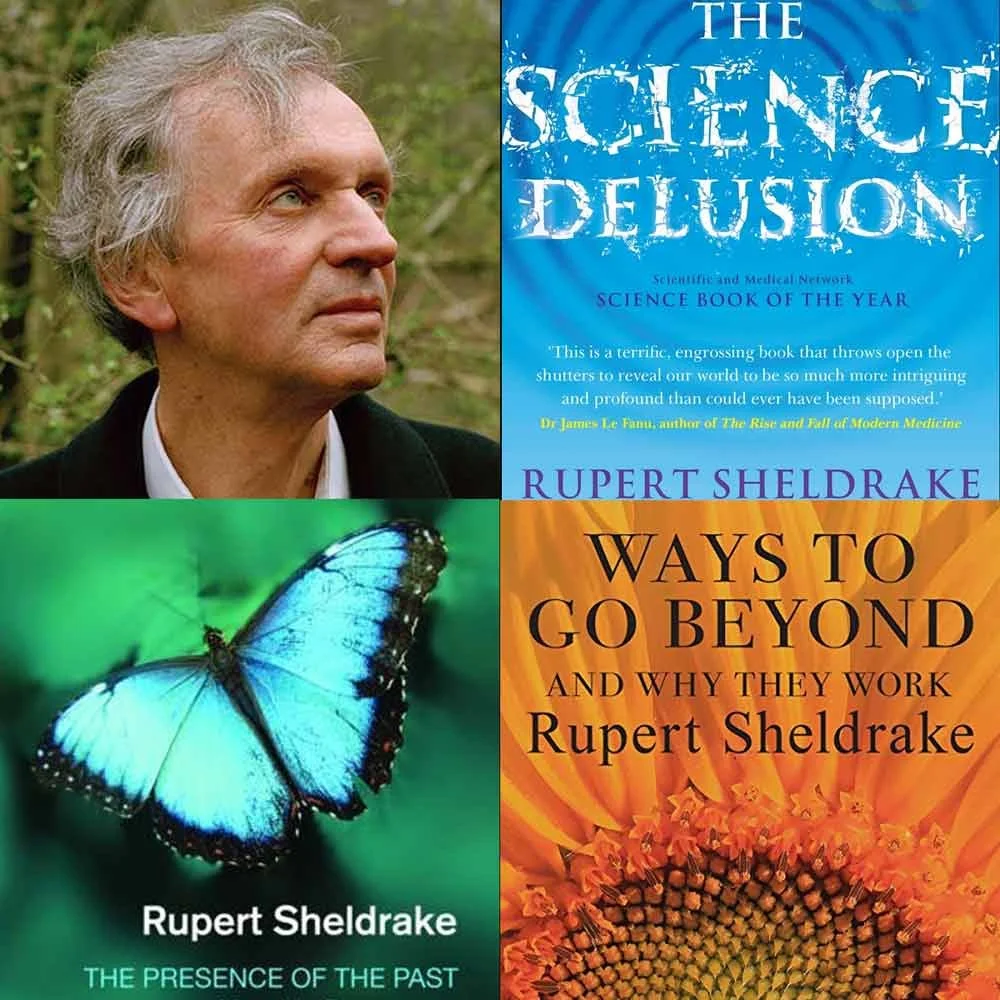
A Conversation with Biologist · Author DR. RUPERT SHELDRAKE

The idea that the laws of nature are fixed is taken for granted by almost all scientists and within physics, within cosmology, it leads to an enormous realm of speculation, which I think is totally unnecessary. We're assuming the laws of nature are fixed. Most of science assumes this, but is it really so in an evolving universe? Why shouldn't the laws evolve? And if we think about that, then we realize that actually, the whole idea of a law of nature is a metaphor. It's based on human laws. I mean, after all, dogs and cats don't obey laws. And in tribes, they don't even have laws. They have customs. So it's only in civilized societies that you have laws. And then if we think through that metaphor, then actually the laws do change. All artists are influenced by other artists and by things in the collective culture, and I think that morphic resonance as collective memory would say that all of us draw unconsciously as well as consciously on a collective memory and all animals draw on a collective memory of their kind as well. We don't know where it comes from, but there's true creativity involved in evolution, both human and natural.

On Time and Water

On Time and Water

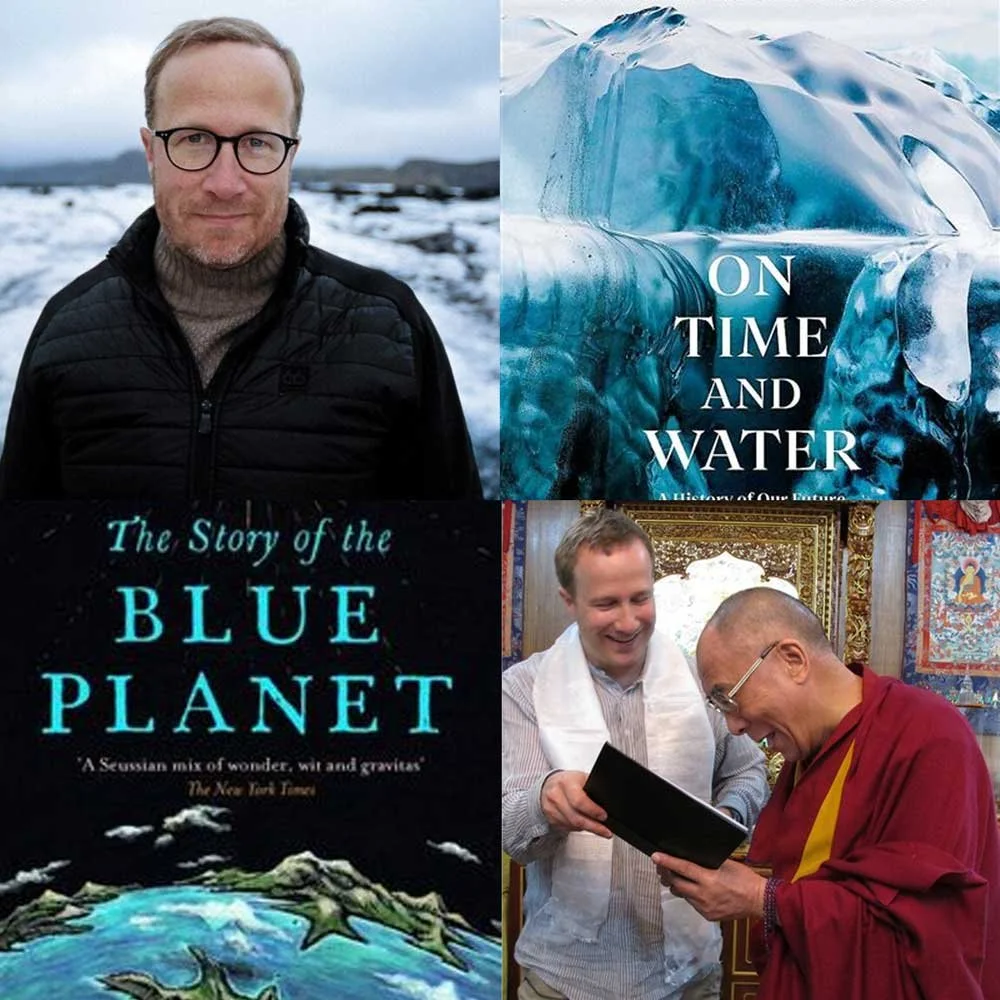
A Conversation with ANDRI SNÆR MAGNASON
Icelandic Writer & Documentary Filmmaker

A letter to the future
Ok is the first Icelandic glacier to lose its status as a glacier.
In the next 200 years all our glaciers are expected to follow the same path.
This monument is to acknowledge that we know what is happening and what needs to be done.
Only you know if we did it.

If you look at the Himalayas, the frozen glaciers are feeding 1 billion people with milky white water. The real tragedy is if the Himalayan glaciers go the same way as Iceland. In many places in the world, glaciers are very important for agriculture and the basic water supply of people.

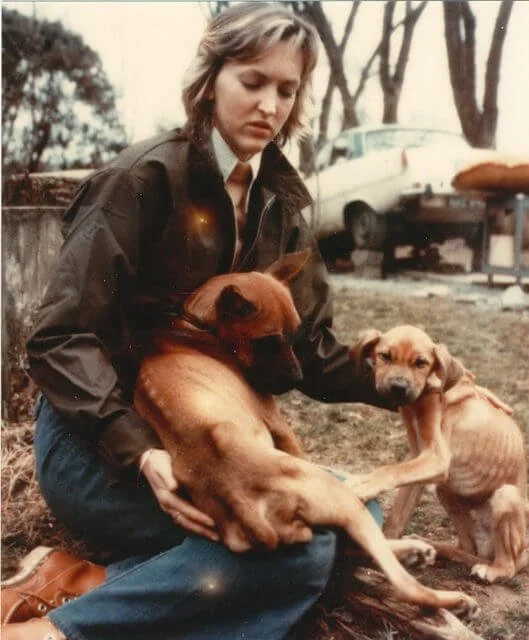
PETA Founder INGRID NEWKIRK turns 75

PETA Founder INGRID NEWKIRK turns 75

People for the Ethical Treatment of Animals

I think things do change because of agitation. So agitation is vital. I mean, nobody who is in a cause should be there to win a popularity contest, whether you're working for children or the elderly or working for peace animals, it's all against nonviolence, aggression, domination, and needless cruelty and suffering. It's all for respect. So you have to be vigorous. You have to use your voice. You can use it politely, but if people don't listen, at PETA, we escalate. So we always start off with a polite letter, a polite entreaty. We always try to, as I say, do the homework. So we have the options that we put out on the table to say, look, instead of doing this, you could do that, and we will help you transition to that.

AI · Virtual Reality & Dawn of the New Everything

AI · Virtual Reality & Dawn of the New Everything

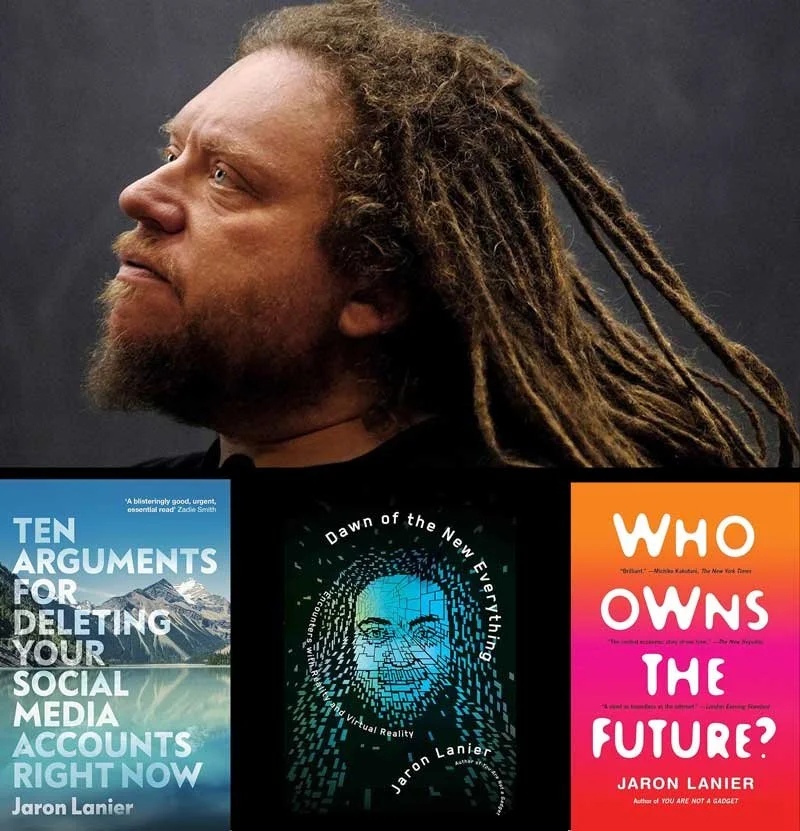
VR Pioneer · Musician · Author JARON LANIER
Who Owns the Future? · Dawn of the New Everything: Encounters with Reality & Virtual Reality · Ten Arguments for Deleting Your Social Media Accounts Right Now

AI is obviously the dominant topic in tech lately, and I think occasionally there's AI that's nonsense, and occasionally there's AI that's great. I love finding new proteins for medicine and so on. I don't think we serve ourselves well when we put our own technology up as if it were a new God that we created. I think we're really getting a little too full of ourselves to think that.

When we do that, I think we confuse ourselves too easily. This goes back to Alan Turing, the main founder of computer science, who had this idea of the Turing test. In the test, you can't tell whether the computer has gotten more human-like or the human has gotten more computer-like. People are very prone to becoming more computer-like. When we're on social media, we let ourselves be guided by the algorithms, so we start to become dumb in the way the algorithms want us to. You see that all the time. It's really degraded our psychologies and our society.

 Being You: A New Science of Consciousness

Being You: A New Science of Consciousness

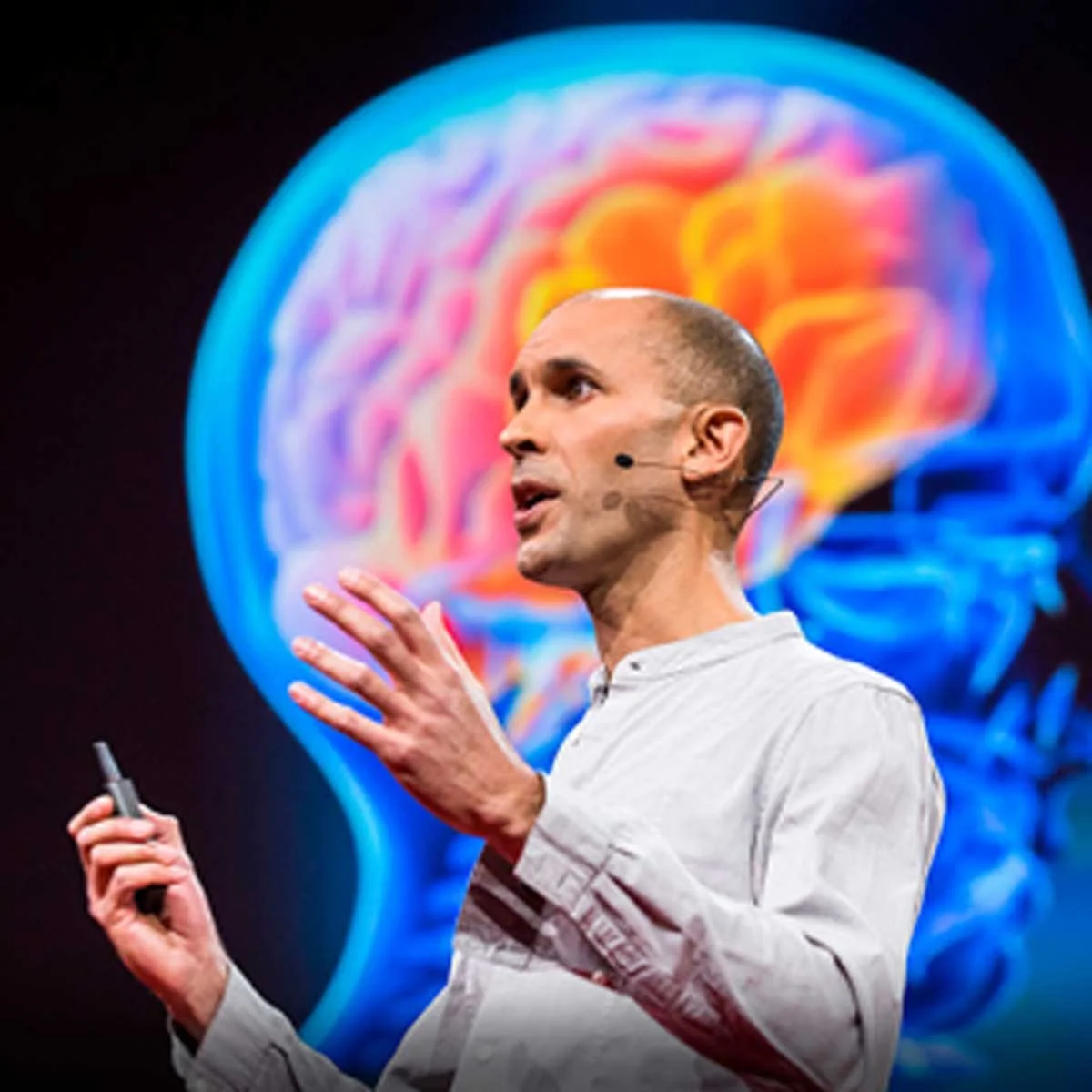
A Convesation with ANIL SETH · Co-director of the Sussex Centre for Consciousness Science · Canadian Institute for Advanced Research Program on Brain, Mind & Consciousness

This is a point in philosophy that the world as it is can never be directly apprehended by our minds. We are shielded from it by what's called a sensory veil. There are, for instance, no such thing as colors that are out there. As the artist Cezanne said, "The colors are where the brain and the universe meet." And color is, I think, a really good example because it is, in a sense, less than what's there because our eyes are only sensitive to three wavelengths of this huge electromagnetic spectrum, which goes all the way from x-rays and gamma rays to radio waves. And we live in a tiny, thin slice of that reality. But then out of those three wavelengths we experience our brains generate many more than three colors and almost an infinite palette of colors. So there's no sense in which our perception could ever reveal the world as it really is, that it reveals the world in a way that's very useful for us as organisms hell-bent on continuing to live and to survive. 

AI and the Future of Your Mind

AI and the Future of Your Mind

A Conversation with SUSAN SCHNEIDER · Founding Director · Center for the Future Mind · Florida Atlantic University · Fmr. NASA Chair at NASA · Fmr. Distinguished Scholar at US Library of Congress

So it's hard to tell exactly what the dangers are, but that's certainly one thing that we need to track that beings that are vastly intellectually superior to other beings may not respect the weaker beings, given our own past. It's really hard to tell exactly what will happen. The first concern I have is with surveillance capitalism in this country. The constant surveillance of us because the US is a surveillance capitalist economy, and it's the same elsewhere in the world, right? With Facebook and all these social media companies, things have just been going deeply wrong. And so it leads me to worry about how the future is going to play out. These tech companies aren't going to be doing the right thing for humanity. And this gets to my second worry, which is how's all this going to work for humans exactly? It's not clear where humans will even be needed in the future.

The Scientific Case for a Simulated Universe

The Scientific Case for a Simulated Universe

A Conversation with MELVIN VOPSON · Physicist · Author · Co-founder & CEO of the Information Physics Institute

These ideas go as far back as Ancient Greece, which basically gave birth to two lines of thinking, two ideologies, materialism and idealism. And the idealist thinkers like Plato regarded reality as a projection of our minds, as something that is not real. And the only thing that is real is our consciousness and our minds and everything else around us is just constructs of our proception and projections. And that was a philosophy that was opposed to materialism, which regards the world as in a materialistic way, made up of atoms and matter and our minds are a product of these chemical reactions and the matter is coming together and forming our minds and consciousness. And everything in the world exists regardless of our consciousness or our minds and the universe is there and it's a materialistic view of the world. So these are two competing ideologies, and this is actually how we see the world today in a materialistic way.