On Mind Games, Power & Obsession - Showrunner HOWARD GORDON & Writer DANIEL PEARLE - Highlights

On Mind Games, Power & Obsession - Showrunner HOWARD GORDON & Writer DANIEL PEARLE - Highlights

Starring CLAIRE DANES & MATTHEW RHYS
A Conversation with Showrunner, Exec. Producer HOWARD GORDON & Exec. Producer Writer DANIEL PEARLE

And I think there's also just something about an unfettered or uncensored id that is so captivating. We all have that fantasy of doing exactly what we want with no consequences and sort of letting that go. I think when you see an athlete at the peak of their game, doing that embodied thing and living that dream, or when someone has actually done horrible things that you would never allow yourself to do, there is a fascination there. I had one teacher who said, "Anyone who drives you crazy or that you just cannot stand in life, put them in a play or put them in a scene, and the audience will love them." If someone has really gotten under your skin and you just cannot stand them, and you have a visceral reaction—like, "I just hate this person"—make them a character, and the audience will make them everyone's favorite character. There is something to that.

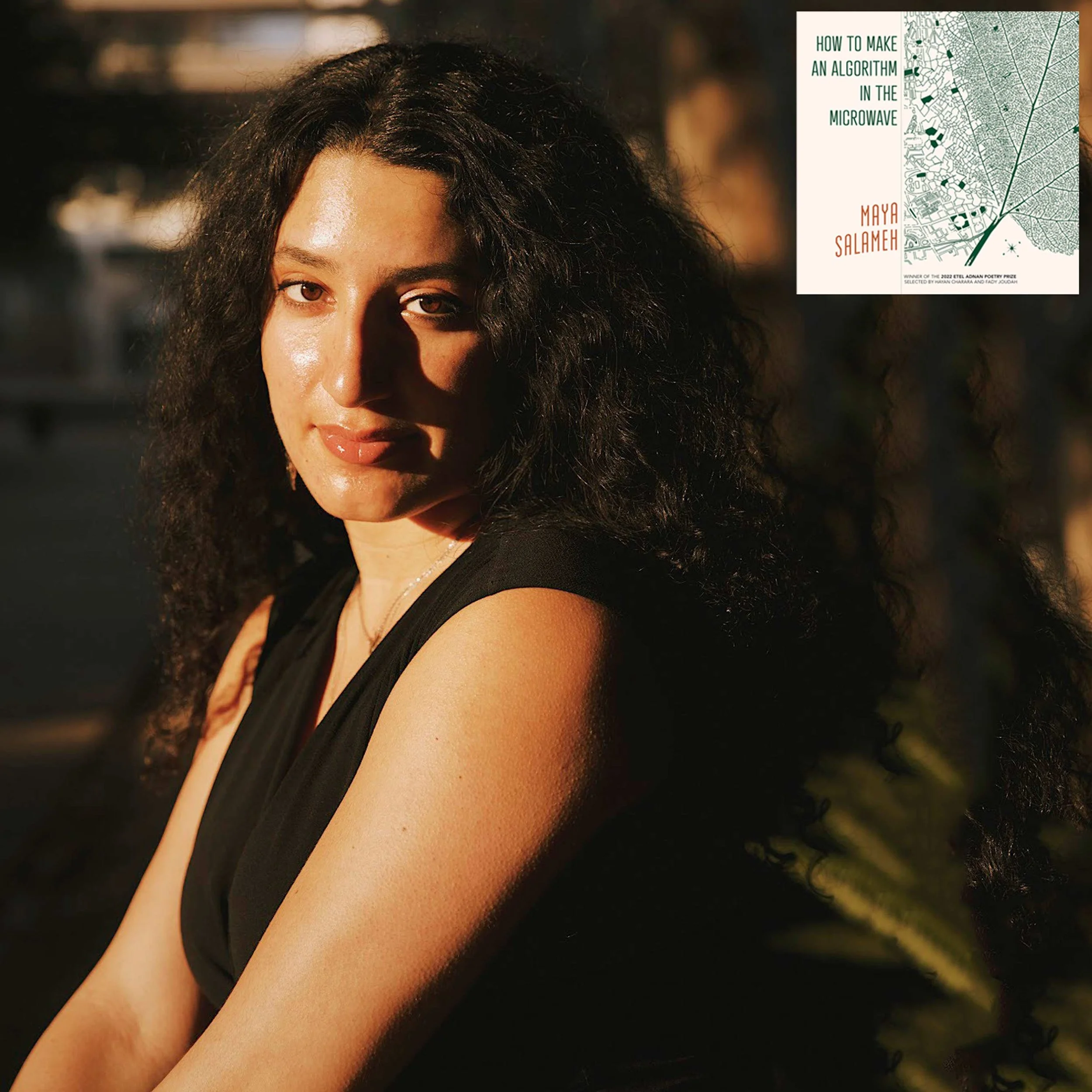
How to Make an Algorithm in the Microwave with Poet MAYA SALAMEH

How to Make an Algorithm in the Microwave with Poet MAYA SALAMEH

Poetry is like one of the great loves of my life, and I think it's probably the longest relationship I'll ever have. I read a lot of poetry. I also wrote these short stories even when I was pretty young, like in second grade, and the stories kept getting shorter and shorter. My family used to go to Damascus in Syria and Lebanon every summer for three months until 2011, when the Civil War broke out in Syria. In 2015, we made our first return after that gap, and my father and I went to Lebanon for two weeks. It's the first time I felt that I belong. To the extent that was true or not, I'm obviously irrevocably American. I speak broken Arabic. I don't think I could ever live in Lebanon or Syria. But for what it was worth at 15 years old, it was a life-changing trip. I wrote my first official poem on the plane back to San Diego from that trip, and I feel that was a formative moment for me. I felt that I had a story to tell and wanted to put it to paper in the form of poetry.

In 2015, we made our first return after that gap, and my father and I went to Lebanon for two weeks. Being back in one of my two homelands as a more fully formed person and not like a young child, I thought, "Wow, this is the first time I've been in an Arabic-speaking Arab place as a teenager." 

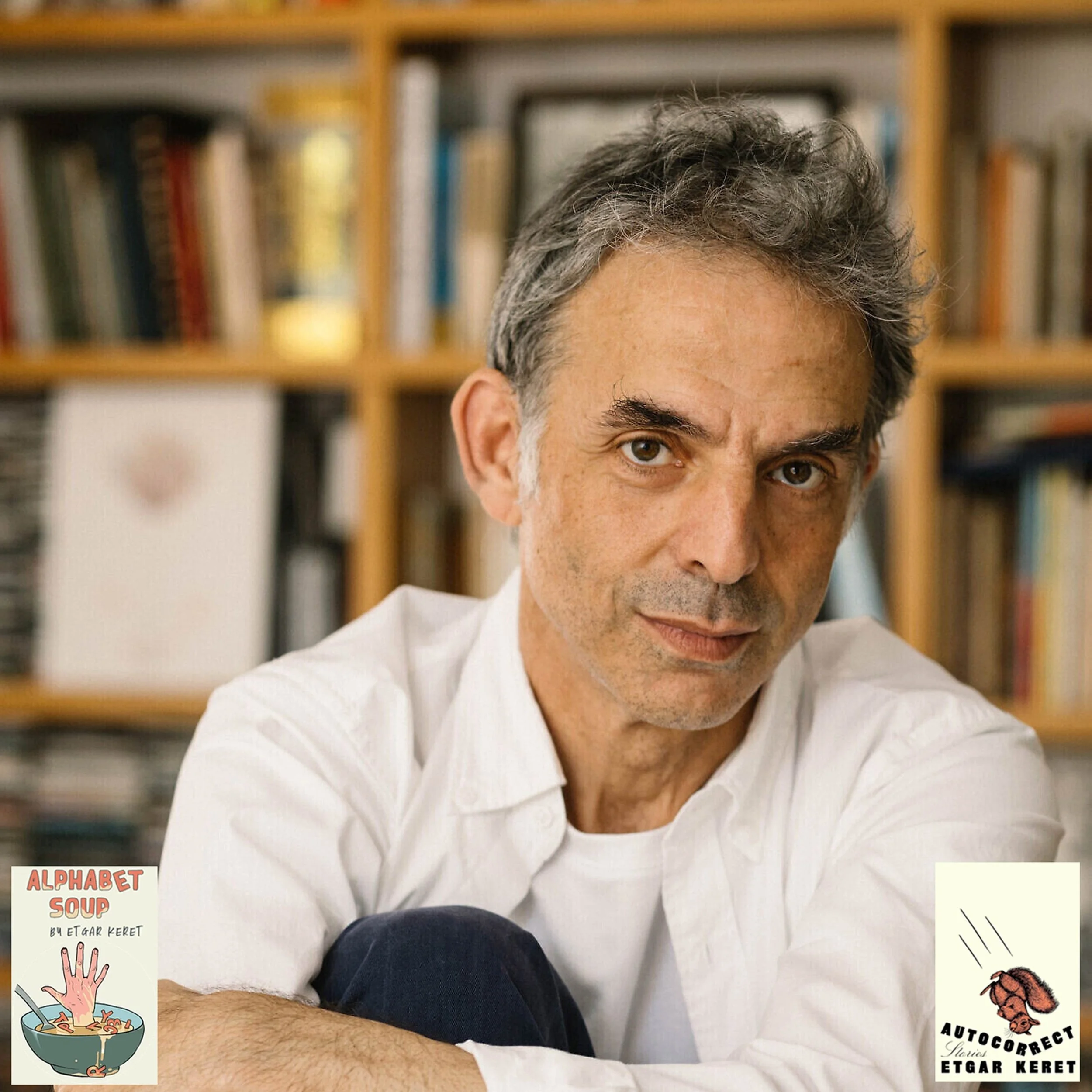
Why We Need Stories in Times of Crisis: ETGAR KERET on Healing, Connection & Creativity in the Age of AI - Highlights

Why We Need Stories in Times of Crisis: ETGAR KERET on Healing, Connection & Creativity in the Age of AI - Highlights

A Conversation with Author · Filmmaker ETGAR KERET
Winner of Cannes Film Festival’s Caméra d’Or · Charles Bronfman Prize & Sapir Prize

When I write my stories, I don't want to solve things in life. I just want to persuade myself that there is a way out. Maybe I am in a cell, maybe I'm trapped. Maybe I won't make it, but if I can imagine a plan for escape, then I'll be less trapped because at least in my mind, there is a way. I think that my parents are survivors. They always talked about this idea of humanity. My parents always said to me, when you look at people, don't look at their political views; that's not important. Look at the way that they look at you. If they see you, if they listen to you, if they can understand your intention, even if it's a failing one, they're your people. And if they can't, it doesn't matter.

I think that when I came with my mother and father, they thought there are people, there are human beings, and there are people who want to be human beings but are still struggling. And you go with humanity; you go with the person who can go against his ideology if his heart tells him something.

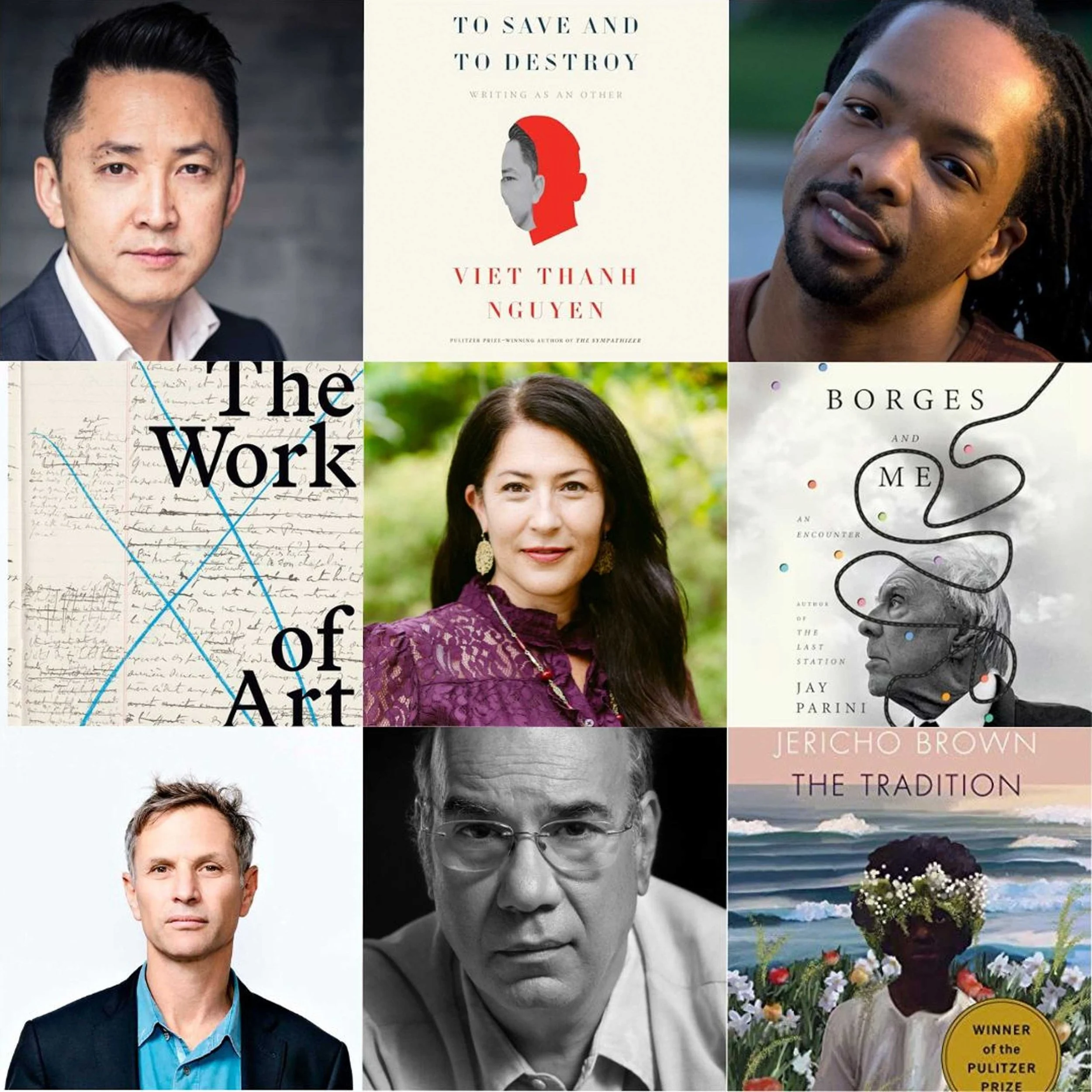
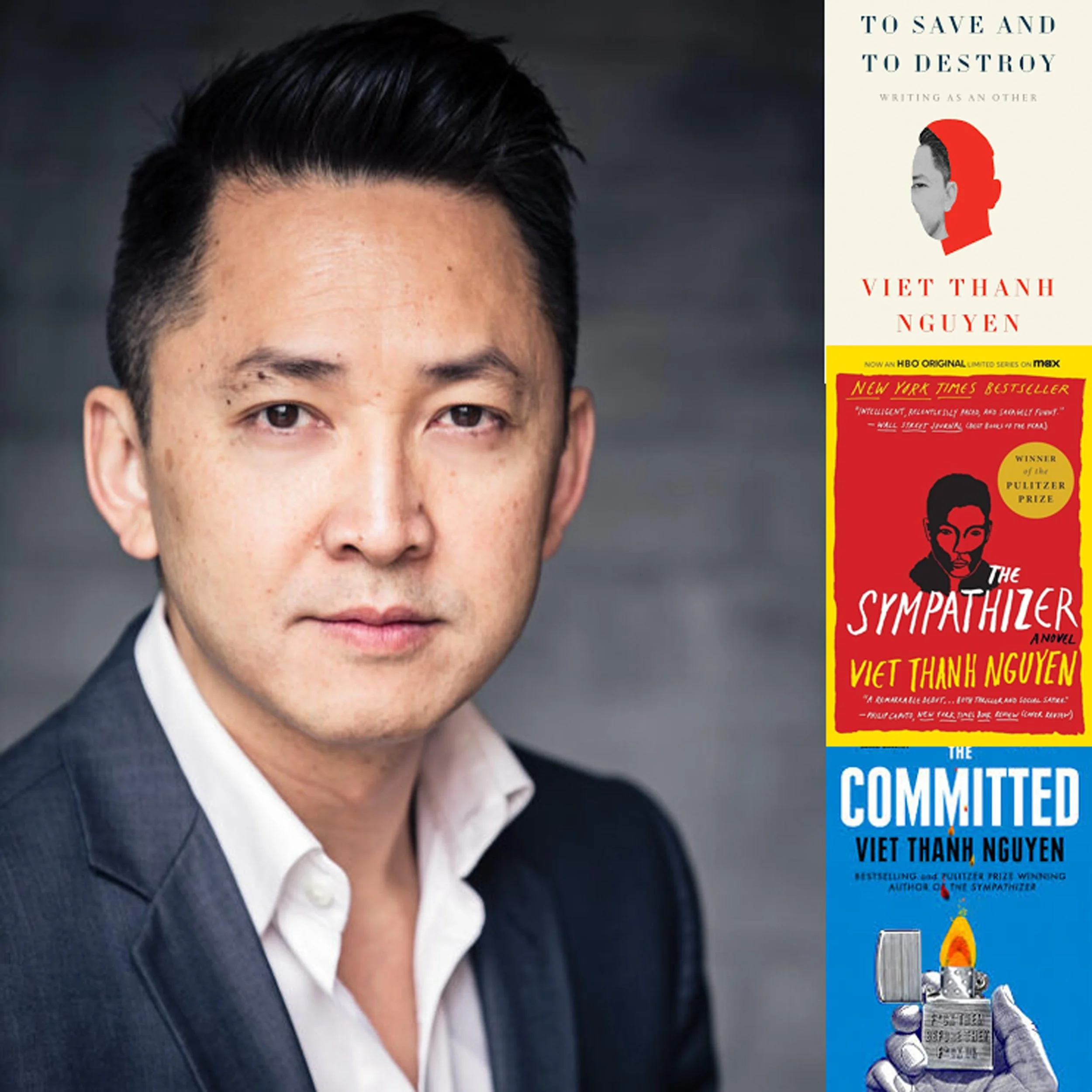
To Save and to Destroy: Writing as an Other with Author VIET THANH NGUYEN - Highlights

To Save and to Destroy: Writing as an Other with Author VIET THANH NGUYEN - Highlights

A Conversation with Pulitzer Prize-winning Author VIET THANH NGUYEN

What I've discovered as a writer is that fear is a good indicator that there is a truth. To speak the truth in a society is oftentimes an act that requires some courage. Those processes of being an other for me in the United States were obviously very fundamental to shaping who I am as a person and as a writer. It was very difficult to undergo, but to become a writer who could talk about those issues was also a lot of fun. Writing The Sympathizer was a lot of fun, and I hope that the novel was enjoyable and humorous to read as well, despite its very serious politics. When I wrote The Committed, I also had a lot of fun as an outsider to France. In writing the novel itself, The Committed, there was a lot of humor, satire, and these kinds of tools to confront the tragedy of othering. This is very important to me as literary and political devices. I think I could do that in both The Sympathizer and The Committed because I had a lot of distance from the time periods that those novels described. My challenge right now is to try to find my sense of humor in describing what the United States is undergoing and doing to other countries, its own immigrants, and its own people of color, and minorities in the present. That's proving to be a little more challenging at this moment.

The Theory of Water with LEANNE BETASAMOSAKE SIMPSON

The Theory of Water with LEANNE BETASAMOSAKE SIMPSON

World-Making, Life-Giving & Indigenous Internationalism with LEANNE BETASAMOSAKE SIMPSON

So I think that part of colonialism for Indigenous peoples has been this idea that Indigenous peoples aren't thinking peoples and that we don't have thought on a kind of systemic level. One of the things that I was interested in doing is intervening in that because I think Indigenous people have a lot of beautiful, very intellectual, theoretical contributions to make to the world. A lot of our theory is encoded in story, but a lot of our theory is also encoded in land-based practice. You can't learn about it from reading books or from going to lectures. You have to really be out on the land with elders for long periods of time. 

On Writing, America's Forever Wars & Challenging Power with Author VIET THANH NGUYEN

On Writing, America's Forever Wars & Challenging Power with Author VIET THANH NGUYEN

A Conversation with Pulitzer Prize-winning Author VIET THANH NGUYEN

What I've discovered as a writer is that fear is a good indicator that there is a truth. To speak the truth in a society is oftentimes an act that requires some courage. Those processes of being an other for me in the United States were obviously very fundamental to shaping who I am as a person and as a writer. It was very difficult to undergo, but to become a writer who could talk about those issues was also a lot of fun. Writing The Sympathizer was a lot of fun, and I hope that the novel was enjoyable and humorous to read as well, despite its very serious politics. When I wrote The Committed, I also had a lot of fun as an outsider to France. In writing the novel itself, The Committed, there was a lot of humor, satire, and these kinds of tools to confront the tragedy of othering. This is very important to me as literary and political devices. I think I could do that in both The Sympathizer and The Committed because I had a lot of distance from the time periods that those novels described. My challenge right now is to try to find my sense of humor in describing what the United States is undergoing and doing to other countries, its own immigrants, and its own people of color, and minorities in the present. That's proving to be a little more challenging at this moment.

On Borges, Gore Vidal, Robert Frost & The Writing Life with Author & Filmmaker JAY PARINI

On Borges, Gore Vidal, Robert Frost & The Writing Life with Author & Filmmaker JAY PARINI

A Conversation with Author & Filmmaker JAY PARINI

Poetry is the prince of the literary arts to me. It's at the very top because it's language refined to its apex of memorability. I am interested in poetry as memorability and poetry as something you live by. These are the words you live by. These words stay in your brain and guide your life. That's what I am interested in. My memoir slash autofiction is called Borges and Me, and as you know, it's a story of my time in 1970 when my best friend Billy was drafted for the Vietnam War, and so was I. He went to Vietnam, and I went to Scotland to hide out and do my graduate work. I spent nearly seven years in Scotland, but I certainly spent the next five years definitely in Scotland. I was there before as an undergraduate for a bit, too. During that time, Billy was killed in Vietnam, and I was a nervous wreck. My memoir talks about my depression, my anxieties, and then, through my friend Alastair Reid, I met Borges, the great Argentine writer. We went on a little road trip through the Highlands, and this conversation with Borges really restored me back to myself and what was important in life. I felt that I owed a huge amount to that contact with Borges… I was lucky that suddenly, out of nowhere, came a wonderful director-producer named Mark Turtletaub. He had read my book and loved it, and he approached me. We had a conversation, and he said, "Look, I want to make this movie." So off we went.

THE DREAM HOTEL with LAILA LALAMI

THE DREAM HOTEL with LAILA LALAMI

A Conversation with Author LAILA LALAMI
on Dreaming Beyond the Algorithmic State

What happens when the state, with the pretext of protecting public safety, can detain indefinitely certain individuals whose dreams seem to indicate they may be capable of committing a crime?  Set in a precarious world where sleep-enhancing devices and algorithms provide the tools and formulae for making one’s unconscious a witness to one’s possible waking life, this novel touches on a myriad of political, philosophical, and moral concerns as they particularly connect to issues of gender, race, ethnicity, privacy, and the security state.

Examining Monuments, Memory & The History of White Supremacy IRVIN WEATHERSBY JR. - Highlights

Examining Monuments, Memory & The History of White Supremacy IRVIN WEATHERSBY JR. - Highlights

A Conversation with Author IRVIN WEATHERSBY JR.

One of the biggest symbols of America is Mount Rushmore. This monument, right? But I think most people fail to realize where it's located and why it's located there. Even more importantly, who did it? It's on a sacred Native American mountain, a place that was central to their creation stories. But then you think about who did it, and it was a Klansman. The guy who sculpted Mount Rushmore was a Klansman. People were like, "Wait, really?" Like, how is that a thing? But it seeps into our understanding and our embrace of white supremacy. This whole notion of us using Mount Rushmore as a metric of excellence is really sad. We are honoring slave owners and people who viciously killed natives, and those who pillage other lands in the name of capitalism. That's what America is, I guess.

I think there's such a disinterest in education in America that it is sickening. We can't even agree on facts. It's up to states' rights to decide. Really? States can say that this is true in one state, but it's not true in another? Although these states are united, it's very bizarre. I'm hopeful for revolution. I'm optimistic. I want radical change. I think we are repeating history. We are going through a cycle of fascism and greed, and I think we're going to see a lot of states collapse. As a result of that, I think people are going to be forced back to their primal needs and concerns, but I think they're going to be forced to think about what makes us human. How do we become more human? Because we've lost that. We've given it up to technology. How can we figure out what makes us a really powerful species again?

An Actor Prepares - SHARON LAWRENCE on Crafting Complex Characters - Highlights

An Actor Prepares - SHARON LAWRENCE on Crafting Complex Characters - Highlights

A Conversation with SHARON LAWRENCE

That transformation was key to my next step as an artist, to knowing that's what acting is. It isn't just posing; it isn't just being a version of yourself in a way that was free. Performing wasn't just performing; it was transforming. I think that artists find that in many different ways, and as actors, there are many ways into that.

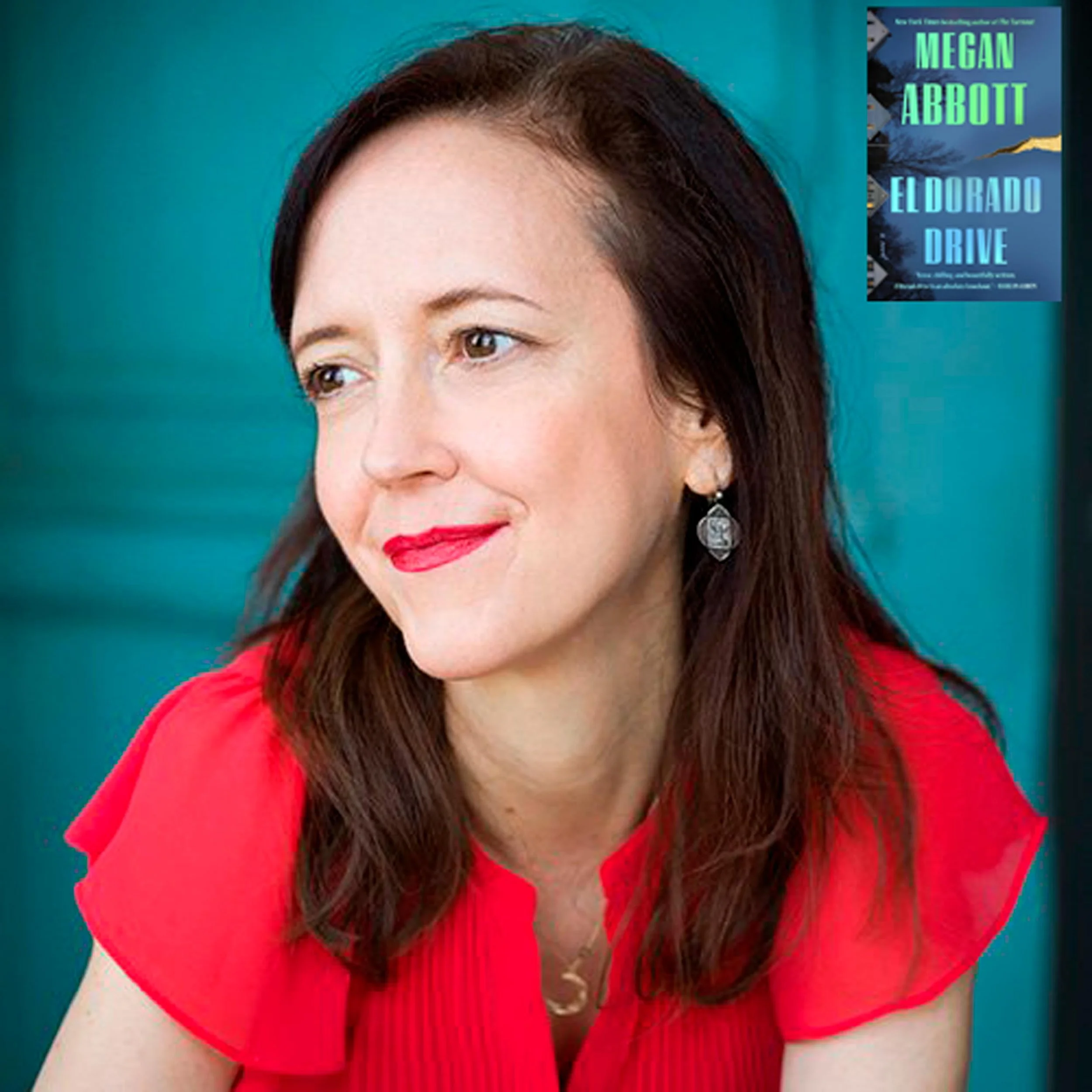
Exploring  Family Dynamics & Fierce Female Friendships with Novelist MEGAN ABBOTT

Exploring  Family Dynamics & Fierce Female Friendships with Novelist MEGAN ABBOTT

A Conversation with MEGAN ABBOTT
Author of Beware the Woman · You Will Know Me · Give Me Your Hand · The Turnout · Co-creator of Netflix’s Dare Me

I always say to young writers, you need to put your heart on the page. Don't worry about being like anyone else. I would say that foremost, in any of the arts, it is self-expression at its core… I think that it all goes back to childhood. I’ve always really been writing about family. I suppose we always are. I do think that it is the original wound, and it's where we are kind of wired and built from those early years. So I think every other relationship just replicates that. It's very natural for me to go there, I suppose because the feelings are most intense there. We just keep recycling these relationships and dynamics over and over again—until maybe someday we can catch ourselves and try to break the bad patterns. It feels the most visceral and real to me, always. You're always looking for that in writing. You want everything to be at this peak intensity, or at least I do. That seems the most natural place to start.

All the Water in the World with Writer & Musician EIREN CAFFALL

All the Water in the World with Writer & Musician EIREN CAFFALL

A Conversation with Writer & Musician EIREN CAFFALL

We are in a complex and delicately balanced relationship of connection to everything else on the planet. We begin to recognize, write into, and speak into the complex interdependence and interconnection of every gesture that we make on the planet. Most storytelling that I really respond to, whether it's from my own culture or from previous civilizations, acknowledges that we are in this complex relationship where every gesture we make is connected to the lives of every other creature on the planet. The more narratives we allow to be complex in that way and interconnected, the more we begin to change our brain chemistry around how we protect ourselves and everything that is in relation to us. The more that you have that evolving relationship with it, that's dynamic and alive to the moment you're in, and that's not afraid of the feelings of fear, hopelessness, grief, or pain that attend paying close attention to the world as it is evolving around you, the better we are able to be flexible in the relationship we need to form with fixing what we can and holding onto what we have.

Building Bridges, Breaking Cycles: Personal Stories of Healing, Social Justice & Activism

Building Bridges, Breaking Cycles: Personal Stories of Healing, Social Justice & Activism

How do our personal relationships affect political movements and activism? What can we learn from Native American tradition to restore ecological balance? How can transforming capitalism help address global inequality and the environmental crisis? Dean Spade, Jericho Brown, Alexi Hawley, Tiokasin Ghosthorse, and Paul Shrivastava share their stories.

PAUL LYNCH discusses Prophet Song, Beyond the Sea & his Creative Process - Highlights

PAUL LYNCH discusses Prophet Song, Beyond the Sea & his Creative Process - Highlights

Booker Prize-winning Novelist PAUL LYNCH
Author of Prophet Song · Beyond the Sea · Red Sky in the Morning

We narrate the story of our lives to ourselves. We narrate it in linear fashion. And I know many writers have played with time in all sorts of amazing ways, but we're storytellers. This is what we do. And if you give the brain a story, a prepackaged story, you're giving a cheesecake. That's what it wants. That's why it loves stories. That's why our society is just built on stories. Politics is nothing but stories. Everything you do in the evenings – we sit down, we're watching Netflix – just stories. We consume them all the time. We are just machines for belief.

On Storytelling & The Human Condition with Booker Prize Winner PAUL LYNCH

On Storytelling & The Human Condition with Booker Prize Winner PAUL LYNCH

Author of Prophet Song · Beyond the Sea · Red Sky in the Morning

We narrate the story of our lives to ourselves. We narrate it in linear fashion. And I know many writers have played with time in all sorts of amazing ways, but we're storytellers. This is what we do. And if you give the brain a story, a prepackaged story, you're giving a cheesecake. That's what it wants. That's why it loves stories. That's why our society is just built on stories. Politics is nothing but stories. Everything you do in the evenings – we sit down, we're watching Netflix – just stories. We consume them all the time. We are just machines for belief.

ADAM MOSS - Fmr. Editor of New York Magazine, Author, Artist on Creativity as a Process

ADAM MOSS - Fmr. Editor of New York Magazine, Author, Artist on Creativity as a Process

ADAM MOSS
Author · Artist · Fmr. Editor of New York magazine · The New York Times Magazine

 I was very interested in the state of mind of an artist as he or she goes about making. I think one of the things that artists have is not just an interest in their own subconscious, but also an ability to find ways, tricks, and hacks to access their subconscious. Over time, they understand how to make productive use of what they find there. We all have subconsciousness; we all dream and daydream. We all have disassociated thoughts that float through our head, but we don't generally know what to do with them. One of the traits that successful artists seem to have is this ability to cross borders into recesses of their own minds.

Art, Performance & the Illusion of Agency - KATIE KITAMURA on her new novel AUDITION

Art, Performance & the Illusion of Agency - KATIE KITAMURA on her new novel AUDITION

Author of Audition · Intimacies · A Separation

I'm really interested in the formal aspect of characters who are channeling language, who are speaking the words of other people, and in characters who are aware of how little agency they actually have, who have passivity forced upon them, who perhaps even embrace their passivity to a certain extent but eventually seek out where they can enact their agency.

Feminism in the 21st Century

Feminism in the 21st Century

Artists, Writers, Filmmakers Share their Stories

Marilyn Minter ·  Sharmeen Obaid-Chinoy ·  Dean Spade ·  Laura Eason ·  Intan Paramaditha ·  Tey Meadow ·  Sara Ahmed ·  Ellen Rapoport ·  Dian Hanson ·  Kate Mueth on the importance of agency, owning the narrative, and the joy of creation.

Inside the Mind of PETER WELLER, Actor, Art Historian, Director, Musician, Author - Highlights

Inside the Mind of PETER WELLER, Actor, Art Historian, Director, Musician, Author - Highlights

Art transcends time and culture—the beauty of it. People worry about the world now. I remind them to go live in 1968, a time of preparing to go to the moon while people died for their beliefs. This is a difficult time in a republic that’s supposed to be free, but music was leading the way. Whether it was Miles, Coltrane, Aretha, Leonard Cohen, Dylan, the music was extraordinarily influential and cutting-edge… Leon Battista Alberti is an interesting figure because he was a poet, painter, architect, and particularly an architect, writer, and humanist. He wrote this amazing book on painting that everyone has to read.