Nicholas A. Christakis - Author of “Blueprint: The Evolutionary Origins of a Good Society" - Dir. - Human Nature Lab, Yale

Nicholas A. Christakis - Author of “Blueprint: The Evolutionary Origins of a Good Society" - Dir. - Human Nature Lab, Yale

Author of Blueprint: The Evolutionary Origins of a Good Society
Director of the Human Nature Lab at Yale · Co-director of the Yale Institute for Network Science

We're not attempting to invent super smart AI to replace human cognition. We are inventing dumb AI to supplement human interaction. Are there simple forms of artificial intelligence, simple programming of bots, such that when they are added to groups of humans – because those humans are smart or otherwise positively inclined - that help the humans to help themselves? Can we get groups of people to work better together, for instance, to confront climate change, or to reduce racism online, or to foster innovation within firms?

Can we have simple forms of AI that are added into our midst that make us work better together? And the work we're doing in that part of my lab shows that abundantly that's the case. And we published a stream of papers showing that we can do that.
Derrick Emsley · Co-founder & CEO of veritree - Data-driven Restorative Platform & tentree Apparel

Derrick Emsley · Co-founder & CEO of veritree - Data-driven Restorative Platform & tentree Apparel

Co-founder & CEO of veritree - Data-driven Restorative Platform & tentree Apparel Co.

I think what's powerful about a tree is it's tangible and it's symbolic in a lot of ways. We as humans naturally have this emotional connection, I think, to trees, and so particularly when you think of our ability to take action within the climate crisis conversation, a tree is this really powerful symbol and vehicle because it's a lot easier to understand a tree than it is to understand a pound or two of CO2 that's floating in the air. So for us, tree planting is just the start of the communication, just the start of the impact. Really if all it was was to get a stick in the ground that wouldn't have the long-term impact, whether that be carbon, whether that be socioeconomic impact, and things like that. So really for us, veritree helps us collect all that data and create the operating system to pull in the data on everything from planting forms and field updates that are coming in, survivability analysis, and different updates on things like biodiversity. We're partnering with some groups to test underwater sensors in some of these planting sites. We're collecting socioeconomic surveys and things like that to try to attach the impact to the community and back to the planting that's happening.

(Highlights) Derrick Emsley · Co-founder & CEO of veritree - Data-driven Restorative Platform & tentree Apparel Co.

(Highlights) Derrick Emsley · Co-founder & CEO of veritree - Data-driven Restorative Platform & tentree Apparel Co.

Co-founder & CEO of veritree - Data-driven Restorative Platform & tentree Apparel Co.

I think what's powerful about a tree is it's tangible and it's symbolic in a lot of ways. We as humans naturally have this emotional connection, I think, to trees, and so particularly when you think of our ability to take action within the climate crisis conversation, a tree is this really powerful symbol and vehicle because it's a lot easier to understand a tree than it is to understand a pound or two of CO2 that's floating in the air. So for us, tree planting is just the start of the communication, just the start of the impact. Really if all it was was to get a stick in the ground that wouldn't have the long-term impact, whether that be carbon, whether that be socioeconomic impact, and things like that. So really for us, veritree helps us collect all that data and create the operating system to pull in the data on everything from planting forms and field updates that are coming in, survivability analysis, and different updates on things like biodiversity. We're partnering with some groups to test underwater sensors in some of these planting sites. We're collecting socioeconomic surveys and things like that to try to attach the impact to the community and back to the planting that's happening.

(Highlights) Petra Cortright · Digital Artist

(Highlights) Petra Cortright · Digital Artist

Artist

I think to pursue mystery and beauty, these things are a bit subjective, so you can't really tell people exactly what it shouldn't be about. And also I have to preserve these things for myself. I primarily make the work for myself, so if I don't have some questions that are unanswered, even for me, then there's not really an interest to like keep going otherwise. So it's also sort of protection and a preservation mindset that I have about leaving things really open for other people and for myself.

Petra Cortright · Digital Artist

Petra Cortright · Digital Artist

Digital Artist

I think to pursue mystery and beauty, these things are a bit subjective, so you can't really tell people exactly what it shouldn't be about. And also I have to preserve these things for myself. I primarily make the work for myself, so if I don't have some questions that are unanswered, even for me, then there's not really an interest to like keep going otherwise. So it's also sort of protection and a preservation mindset that I have about leaving things really open for other people and for myself.

Bill Novelli · Founder, Business for Impact Program, Georgetown · Co-founder Porter Novelli

Bill Novelli · Founder, Business for Impact Program, Georgetown · Co-founder Porter Novelli

Founder Business for Impact Program at Georgetown University
Co-founder Porter Novelli Global PR Agency · Former CEO of AARP

This is one of the biggest problems that we have in this country. So, on the one hand, we know that we have to take personal responsibility for ourselves, our own health, our families – it's up to us. As some people like to say, you're on your own. And we have to balance that against the concept that we're all in this together. You know, the idea that it takes a village and both sides essentially disrespect the other side. They criticize the other side. No, we're not in this together. It's your own responsibility, and vice versa. If we're going to be good citizens, and we're going to make progress, we have to see both sides of that equation. That's not easy to do.

(Highlights) Noah Wilson-Rich · Co-founder/CEO, The Best Bees Co, Urban Beekeeping Driven by Science & Tech

(Highlights) Noah Wilson-Rich · Co-founder/CEO, The Best Bees Co, Urban Beekeeping Driven by Science & Tech

Co-founder & CEO of The Best Bees Company
Largest Beekeeping service in the US

I was originally drawn to bees because they're social creatures. And as humans, I always wanted to know about ourselves and how we can be our healthiest selves and our healthiest society. Bees and wasps, and all of these organisms have been around for so long. Bees especially have been around for 100 million years.

Noah Wilson-Rich · Co-founder/CEO, The Best Bees Co, Urban Beekeeping Driven by Science & Tech

Noah Wilson-Rich · Co-founder/CEO, The Best Bees Co, Urban Beekeeping Driven by Science & Tech

Co-founder & CEO of The Best Bees Company
Largest Beekeeping service in the US

I was originally drawn to bees because they're social creatures. And as humans, I always wanted to know about ourselves and how we can be our healthiest selves and our healthiest society. Bees and wasps, and all of these organisms have been around for so long. Bees especially have been around for 100 million years.

(Highlights) Ann Hiatt · Leadership Strategist & Author of “Bet on Yourself”

(Highlights) Ann Hiatt · Leadership Strategist & Author of “Bet on Yourself”

Leadership Strategist
Author of Bet on Yourself & Host of the Bet on Yourself podcast

I am very concerned that the future seems to be consolidated among the 10 wealthiest, most powerful people in the world who are all white guys. And they're great. I know most of them personally. I have mad respect for them, but it's really concerning when a private individual can buy Twitter. It's very concerning when a billionaire can own one of the most important news organizations in the United States…So my major deliverable and really the motivation behind writing Bet on Yourself was to democratize success. I want more people participating because what concerns me most about globalization is it's being controlled by about 10 people.

Ann Hiatt · Leadership Strategist & Author of “Bet on Yourself”

Ann Hiatt · Leadership Strategist & Author of “Bet on Yourself”

Leadership Strategist
Author of Bet on Yourself & Host of the Bet on Yourself podcast

I am very concerned that the future seems to be consolidated among the 10 wealthiest, most powerful people in the world who are all white guys. And they're great. I know most of them personally. I have mad respect for them, but it's really concerning when a private individual can buy Twitter. It's very concerning when a billionaire can own one of the most important news organizations in the United States…So my major deliverable and really the motivation behind writing Bet on Yourself was to democratize success. I want more people participating because what concerns me most about globalization is it's being controlled by about 10 people.

(Highlights) IAIN McGILCHRIST

(Highlights) IAIN McGILCHRIST

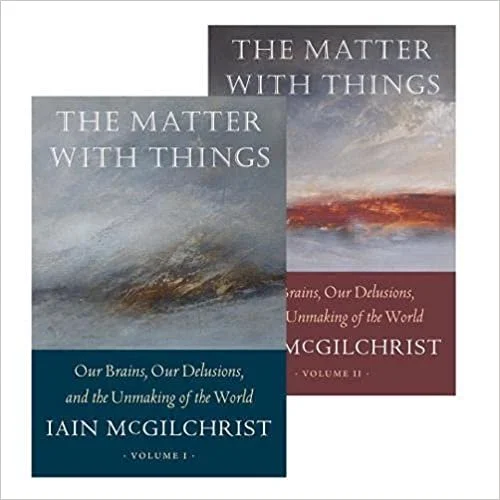
Author of The Matter with Things · The Master and his Emissary: The Divided Brain and the Making of the Western World Psychiatrist, Neuroscience Researcher, Philosopher & Literary Scholar

The heart also reports to the brain and receives from the brain. So our bodies are in dialogue with the brain. And we don't really know where consciousness is, we sort of imagine it's somewhere in the head. We have no real reason to suppose that it's just we identify it with our sight and we, therefore, think it must be somewhere up there behind the eyes, but it's something that takes in the whole of us and to which the whole of us contributes.

IAIN McGILCHRIST

IAIN McGILCHRIST

Author of The Matter with Things · The Master and his Emissary: The Divided Brain and the Making of the Western World Psychiatrist, Neuroscience Researcher, Philosopher & Literary Scholar

The heart also reports to the brain and receives from the brain. So our bodies are in dialogue with the brain. And we don't really know where consciousness is, we sort of imagine it's somewhere in the head. We have no real reason to suppose that it's just we identify it with our sight and we, therefore, think it must be somewhere up there behind the eyes, but it's something that takes in the whole of us and to which the whole of us contributes.

(Highlights) WILLIAM McDONOUGH

(Highlights) WILLIAM McDONOUGH

Leader in Sustainable Design & Development
Architect, Co-author of Cradle to Cradle: Remaking the Way We Make Things

I think believing in something is also part of the responsibility of the believer to sift through these things. So there are a lot of people saying I'm green because they do something less badly. So for me, it’s not green yet, it's just less bad. It's not really good yet. It's not really fabulous, but that just means there's an opportunity to keep going to share information and help each other because in the end, I think what we're dealing with now is the recognition that the world has a very serious issue with climate, that's very clear now. So how can we help each other? The question is no longer what is wrong with the way you're doing it. The real question now is how can I help you?

WILLIAM McDONOUGH

WILLIAM McDONOUGH

Leader in Sustainable Design & Development
Architect, Co-author of Cradle to Cradle: Remaking the Way We Make Things

I think believing in something is also part of the responsibility of the believer to sift through these things. So there are a lot of people saying I'm green because they do something less badly. So for me, it’s not green yet, it's just less bad. It's not really good yet. It's not really fabulous, but that just means there's an opportunity to keep going to share information and help each other because in the end, I think what we're dealing with now is the recognition that the world has a very serious issue with climate, that's very clear now. So how can we help each other? The question is no longer what is wrong with the way you're doing it. The real question now is how can I help you?

(Highlights) DAVID SIMON

(Highlights) DAVID SIMON

Editor of Rethinking Sustainable Cities · Professor of Development Geography & Director for External Engagement, School of Life Sciences & Environment, Royal Holloway, University of London

That principle, what is now called by Anne Hidalgo, the mayor of Paris, and being popularized more widely by the C40 Cities Climate Leadership Network and others as the 15 or 20 Minute City. The idea underpinning it is that a higher proportion of the goods and services, the activities, the social interactions that we need are obtainable within a 1 1/2 to 2 km radius of one's home, which means a far higher proportion of one's individual trips or multiple purpose journeys can be done on foot and by bicycle, therefore, you use your vehicle if you have one more sparingly. You use the bus or minibusses to reach slightly more distant places, and then you have transport interchanges is where you connect with the metro system or the best rapid transit or the railway to reach other parts of large cities or indeed for inner-city journeys. And that is what is now becoming the new best practice in terms of urban planning redesign.

DAVID SIMON

DAVID SIMON

David Simon is Professor of Development Geography and Director for External Engagement in the School of Life Sciences and the Environment, Royal Holloway, University of London. He was also Director of Mistra Urban Futures, Gothenburg, Sweden from 2014–2019. A former Rhodes Scholar, he specialises in cities, climate change and sustainability, and the relationships between theory, policy and practice, on all of which he has published extensively. At Mistra Urban Futures, he led the pioneering methodological research on comparative transdisciplinary co-production. His extensive experience includes sub-Saharan Africa, South and Southeast Asia, the UK, Sweden and USA. From 2020-21, served as a Commissioner on the international Commission on Sustainable Agricultural Intensification (CoSAI), 2020-21. His most recent books as author, editor or co-editor are Rethinking Sustainable Cities: Accessible, green and fair (Policy Press, 2016), Urban Planet (Cambridge Univ Press, 2018), Holocaust Escapees and Global Development: Hidden histories (Zed Books, 2019), Key Thinkers on Development (2nd edn, Routledge, 2019), Comparative Urban Research from Theory to Practice: Co-production for sustainability (Policy Press, 2020), and Transdisciplinary Knowledge Co-production for Sustainable Cities: a Guide (Practical Action Publishing, 2021).

This interview was conducted by Mia Funk & Eric Rosin with the participation of collaborating universities and students. Associate Interviews Producer on this podcast was Jacob A. Preisler & Eric Rosin. Digital Media Coordinators are Jacob A. Preisler and Megan Hegenbarth.  

Mia Funk is an artist, interviewer and founder of The Creative Process & One Planet Podcast (Conversations about Climate Change & Environmental Solutions).

(Highlights) ALICE SCHMIDT
ALICE SCHMIDT
(Highlights) ALI SCHOUTEN

(Highlights) ALI SCHOUTEN

Emmy-Nominated Showrunner, Executive Producer & Writer of iCarly

What we deal more in the second season with how your online persona and your real-life persona sometimes can't help but be at odds with one another. In the first episode back we get into how women are treated, how women in relationships are treated online. In a later episode, we deal with how women are or are not allowed to express their anger online as content creators. So it’s something we talked a lot about in the room. That fracturing of self, that even in a goofy show that's very lighthearted and entertaining, it’s something that we do discuss and try to sneak little tidbits in there.

ALI SCHOUTEN

ALI SCHOUTEN

Emmy-Nominated Showrunner, Executive Producer & Writer of iCarly

What we deal more in the second season with how your online persona and your real-life persona sometimes can't help but be at odds with one another. In the first episode back we get into how women are treated, how women in relationships are treated online. In a later episode, we deal with how women are or are not allowed to express their anger online as content creators. So it’s something we talked a lot about in the room. That fracturing of self, that even in a goofy show that's very lighthearted and entertaining, it’s something that we do discuss and try to sneak little tidbits in there.