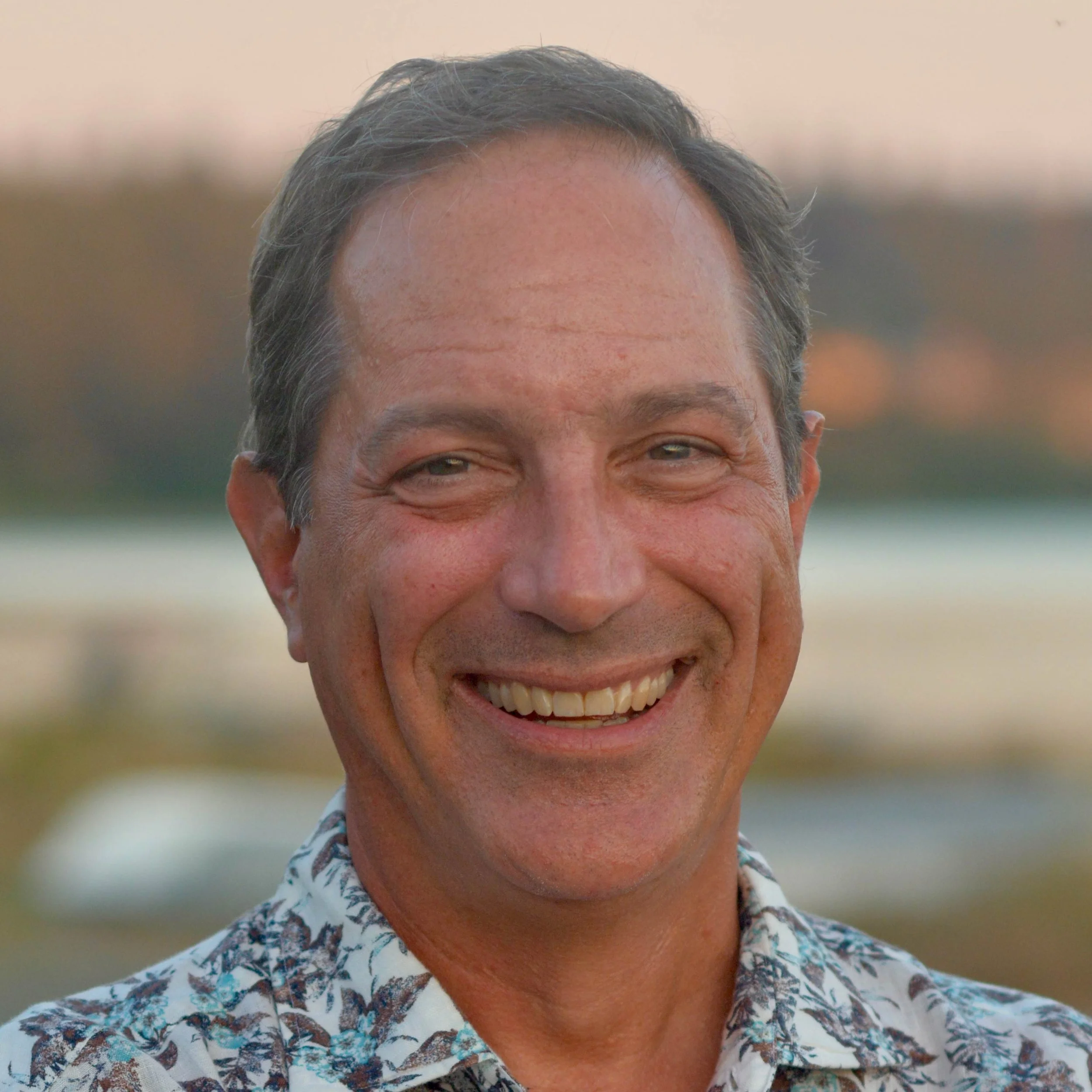
GATOR HALPERN - Co-Founder & President of Coral Vita - UN Young Champion of the Earth - Forbes 30 Under 30 Social Entrepreneur

GATOR HALPERN - Co-Founder & President of Coral Vita - UN Young Champion of the Earth - Forbes 30 Under 30 Social Entrepreneur

Co-Founder & President of Coral Vita
UN Young Champion of the Earth · Forbes 30 Under 30 Social Entrepreneur

Coral reefs are the most biodiverse habitat on the planet, despite covering less than 1 percent of the ocean area, over a quarter of all marine life exists in these rainforests of the sea. And if you think of a coral reef as a rainforest, the trees are the coral themselves. Which are incredible organisms, so, magic is really the right word to describe them. They're these animals that are one of the original forms of animal life, the second branch of the animal kingdom is actually Cnidaria, which includes coral and jellyfish. So, an ancient animal, but they have a symbiotic relationship with algae, and so inside the animal tissue are these zooxanthellae, these algae that do photosynthesis, like algae do, like plants do. It's able to capture sunlight and convert it into sugars and energy. And so, it's an animal, but it's got plants that live inside it, this algae, and then even more wild - it grows a skeleton that is rock!

Highlights - BRIAN DAVID JOHNSON - Director of the ASU Threatcasting Lab - Author of The Future You

Highlights - BRIAN DAVID JOHNSON - Director of the ASU Threatcasting Lab - Author of The Future You

Author of The Future You: How to Create the Life You Always Wanted
Director of the Arizona State University’s Threatcasting Lab
Futurist in Residence, ASU’s Center for Science & the Imagination

Let's talk about technology and the role of humanity and the role of being human and what it means to be present in that. We need to keep humans at the center of everything that we do, that everything that we do in our life is about humans. It begins with humans and ends with humans. There might be technologies and businesses and all these things in between, but we should measure the effect on humans.

When I talk to people about artificial intelligence or technology, I'm generally asking them two questions. What are you optimizing for? What's the effect that you're trying to get? Developing technology for technology's sake, although it can be kind of interesting...then is why you're doing it because you think it's interesting? But then ultimately, if you're doing it beyond your own gratification, why are you doing it?

So much of what I do in that is talking to governments and militaries and large organizations to say we always have to keep humans in the loop. You have to keep humans in the center because it's about us. That really is incredibly important. And that's one of the central ideas in the future. The future should be about humans, and where are humans going. And what do we want as humans? And how are we using technology to make us more human, or healthier, or happier, or more productive?

BRIAN DAVID JOHNSON - Author of The Future You: How to Create the Life You Always Wanted - Futurist in Residence, ASU’s Center for Science & the Imagination

BRIAN DAVID JOHNSON - Author of The Future You: How to Create the Life You Always Wanted - Futurist in Residence, ASU’s Center for Science & the Imagination

Author of The Future You: How to Create the Life You Always Wanted
Director of the Arizona State University’s Threatcasting Lab
Futurist in Residence, ASU’s Center for Science & the Imagination

Let's talk about technology and the role of humanity and the role of being human and what it means to be present in that. We need to keep humans at the center of everything that we do, that everything that we do in our life is about humans. It begins with humans and ends with humans. There might be technologies and businesses and all these things in between, but we should measure the effect on humans.

When I talk to people about artificial intelligence or technology, I'm generally asking them two questions. What are you optimizing for? What's the effect that you're trying to get? Developing technology for technology's sake, although it can be kind of interesting...then is why you're doing it because you think it's interesting? But then ultimately, if you're doing it beyond your own gratification, why are you doing it?

So much of what I do in that is talking to governments and militaries and large organizations to say we always have to keep humans in the loop. You have to keep humans in the center because it's about us. That really is incredibly important. And that's one of the central ideas in the future. The future should be about humans, and where are humans going. And what do we want as humans? And how are we using technology to make us more human, or healthier, or happier, or more productive?

Highlights - SUSAN SCHNEIDER - Author of Artificial You: AI and the Future of Your Mind, Fmr. Distinguished Scholar, US Library of Congress

Highlights - SUSAN SCHNEIDER - Author of Artificial You: AI and the Future of Your Mind, Fmr. Distinguished Scholar, US Library of Congress

Founding Director · Center for the Future Mind · Florida Atlantic University
Author of Artificial You: AI and the Future of Your Mind
Fmr. NASA Chair at NASA · Fmr. Distinguished Scholar at US Library of Congress

So it's hard to tell exactly what the dangers are, but that's certainly one thing that we need to track that beings that are vastly intellectually superior to other beings may not respect the weaker beings, given our own past. It's really hard to tell exactly what will happen. The first concern I have is with surveillance capitalism in this country. The constant surveillance of us because the US is a surveillance capitalist economy, and it's the same elsewhere in the world, right? With Facebook and all these social media companies, things have just been going deeply wrong. And so it leads me to worry about how the future is going to play out. These tech companies aren't going to be doing the right thing for humanity. And this gets to my second worry, which is how's all this going to work for humans exactly? It's not clear where humans will even be needed in the future.

SUSAN SCHNEIDER - Director, Center for the Future Mind, FAU, Fmr. NASA Chair at NASA

SUSAN SCHNEIDER - Director, Center for the Future Mind, FAU, Fmr. NASA Chair at NASA

Founding Director · Center for the Future Mind · Florida Atlantic University
Author of Artificial You: AI and the Future of Your Mind
Fmr. NASA Chair at NASA · Fmr. Distinguished Scholar at US Library of Congress

So it's hard to tell exactly what the dangers are, but that's certainly one thing that we need to track that beings that are vastly intellectually superior to other beings may not respect the weaker beings, given our own past. It's really hard to tell exactly what will happen. The first concern I have is with surveillance capitalism in this country. The constant surveillance of us because the US is a surveillance capitalist economy, and it's the same elsewhere in the world, right? With Facebook and all these social media companies, things have just been going deeply wrong. And so it leads me to worry about how the future is going to play out. These tech companies aren't going to be doing the right thing for humanity. And this gets to my second worry, which is how's all this going to work for humans exactly? It's not clear where humans will even be needed in the future.

AI & THE FUTURE OF HUMANITY

AI & THE FUTURE OF HUMANITY

What will the future look like? What are the risks and opportunities of AI? What role can we play in designing the future we want to live in? In this first episode of our new channel, philosophers, futurists, AI experts, science fiction authors, activists, and lawyers reflect on AI, technology, and the Future of Humanity..

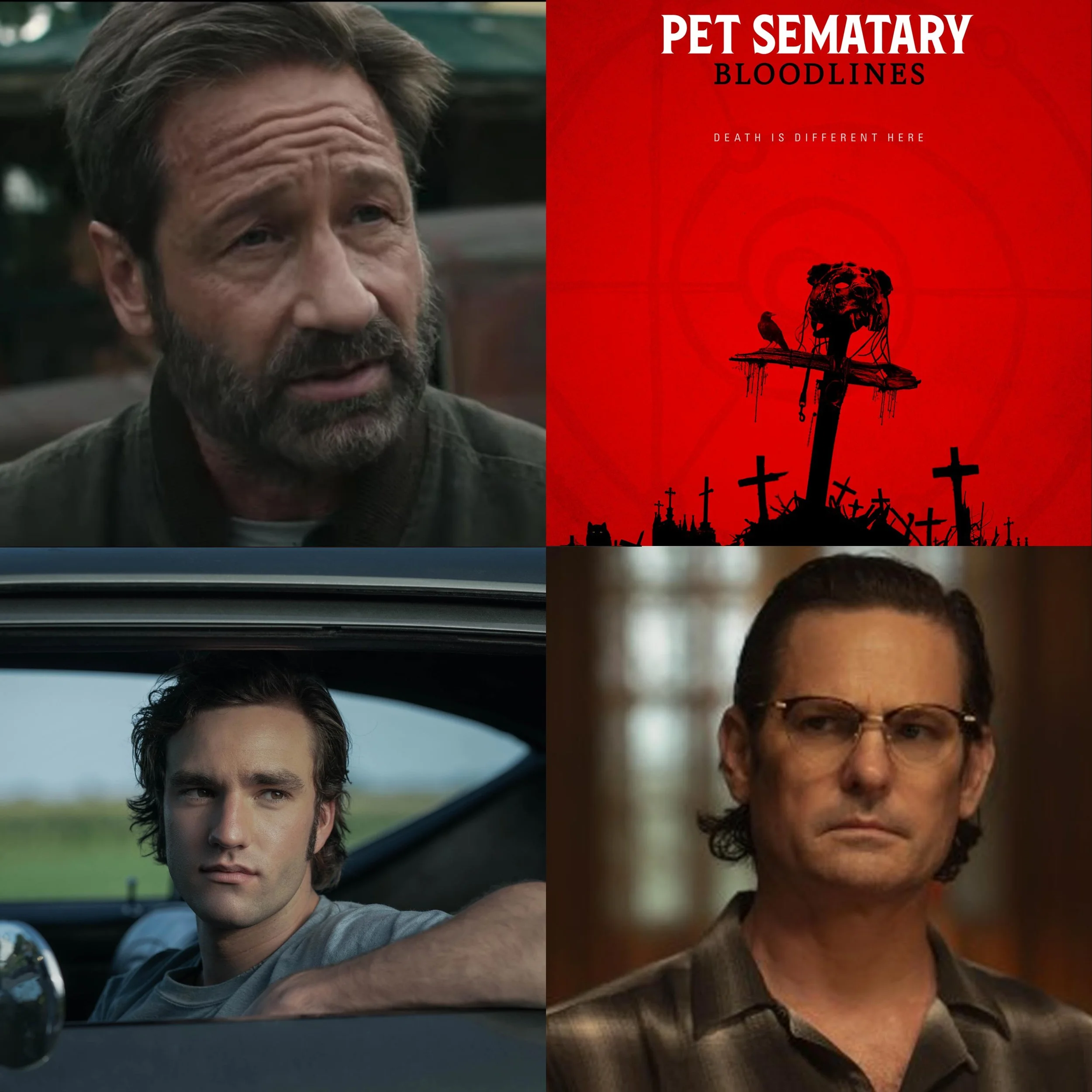
Highlights - LINDSEY ANDERSON BEER - Writer, Director - Pet Sematary: Bloodlines - Sleepy Hollow

Highlights - LINDSEY ANDERSON BEER - Writer, Director - Pet Sematary: Bloodlines - Sleepy Hollow

Writer · Director · Executive Producer
Pet Sematary: Bloodlines · Sleepy Hollow · Bambi · Lord of the Flies

For me, I don't start a project unless I have a really clear understanding of who the main characters are and why this is a journey that's necessary for them to take. And why are these both the best and the worst people to be in this series? That's the question I ask myself all the time because you need to know: What are their strengths? What are their weaknesses? What are the dramatic tension points going to be where these specific people can really succeed or really fail in this scenario? I love people who are passionate, and Quentin Tarantino is just so passionate. And I've never been in a writer's room or even really in any kind of development experience where a director was just so passionate and so full of kind of energetic ideas. And that was really inspiring. Somebody who just completely knows their own point of view and gets excited by their own ideas is just fun to watch.

LINDSEY ANDERSON BEER - Writer, Director, Producer - Pet Sematary: Bloodlines - Sleepy Hollow - Bambi

LINDSEY ANDERSON BEER - Writer, Director, Producer - Pet Sematary: Bloodlines - Sleepy Hollow - Bambi

Writer · Director · Executive Producer
Pet Sematary: Bloodlines · Sleepy Hollow · Bambi · Lord of the Flies

For me, I don't start a project unless I have a really clear understanding of who the main characters are and why this is a journey that's necessary for them to take. And why are these both the best and the worst people to be in this series? That's the question I ask myself all the time because you need to know: What are their strengths? What are their weaknesses? What are the dramatic tension points going to be where these specific people can really succeed or really fail in this scenario? I love people who are passionate, and Quentin Tarantino is just so passionate. And I've never been in a writer's room or even really in any kind of development experience where a director was just so passionate and so full of kind of energetic ideas. And that was really inspiring. Somebody who just completely knows their own point of view and gets excited by their own ideas is just fun to watch.

Highlights - ANTHONY LEISEROWITZ - Host of Climate Connections - Senior Research Scientist, Yale School of the Environment

Highlights - ANTHONY LEISEROWITZ - Host of Climate Connections - Senior Research Scientist, Yale School of the Environment

Founding Director of the Yale Program on Climate Change Communication
Host of Climate Connections · Senior Research Scientist at the Yale School of the Environment

Storytelling is still one of the most powerful ways we have to communicate from one person to another, from one person to millions, and from millions back to one. At the Yale Program on Climate Change Communication, we study how people respond to climate change. So what do people around the world understand or misunderstand about the causes, the consequences, and solutions? How do they perceive the risks: the likelihood and severity of different types of impacts from sea level rise to the health impacts? What kinds of policies do they support or oppose? And then what kinds of behaviors are people engaged in or willing to change to be part of climate solutions? There are lots of different things there, but our ultimate question is answering why. What are the psychological, cultural, the political reasons why some people get engaged with this issue? While others are kind of apathetic and some are downright dismissive and hostile, or at least they are in the United States, which thankfully is not the case in most of the rest of the world.

ANTHONY LEISEROWITZ - Founding Director of Yale Program on Climate Change Communication - Host of Climate Connections

ANTHONY LEISEROWITZ - Founding Director of Yale Program on Climate Change Communication - Host of Climate Connections

Founding Director of the Yale Program on Climate Change Communication
Host of Climate Connections · Senior Research Scientist at the Yale School of the Environment

Storytelling is still one of the most powerful ways we have to communicate from one person to another, from one person to millions, and from millions back to one. At the Yale Program on Climate Change Communication, we study how people respond to climate change. So what do people around the world understand or misunderstand about the causes, the consequences, and solutions? How do they perceive the risks: the likelihood and severity of different types of impacts from sea level rise to the health impacts? What kinds of policies do they support or oppose? And then what kinds of behaviors are people engaged in or willing to change to be part of climate solutions? There are lots of different things there, but our ultimate question is answering why. What are the psychological, cultural, the political reasons why some people get engaged with this issue? While others are kind of apathetic and some are downright dismissive and hostile, or at least they are in the United States, which thankfully is not the case in most of the rest of the world.

Speaking Out of Place: VEENA DUBAL discusses how Uber, Lyft, Instacart, DoorDash…use algorithmic wage discrimination against their workers

Speaking Out of Place: VEENA DUBAL discusses how Uber, Lyft, Instacart, DoorDash…use algorithmic wage discrimination against their workers

on how Uber, Lyft, Instacart, DoorDash and others use algorithmic wage discrimination against their workers

In this episode of the Speaking Out of Place podcast, Professor David Palumbo-Liu speaks with Professor Veena Dubal about how such companies have exported globally a technique of algorithmic wage discrimination that pays workers based on data to which they have no access. Owners dangle bonuses before workers but take away work from them as they draw close to achieving their targets; they use psychological tricks derived from video games to create a casino-like environment where the house always wins. Dubal urges us not to fall into the trap of competing against the house, but back to “good old-fashioned organizing.”

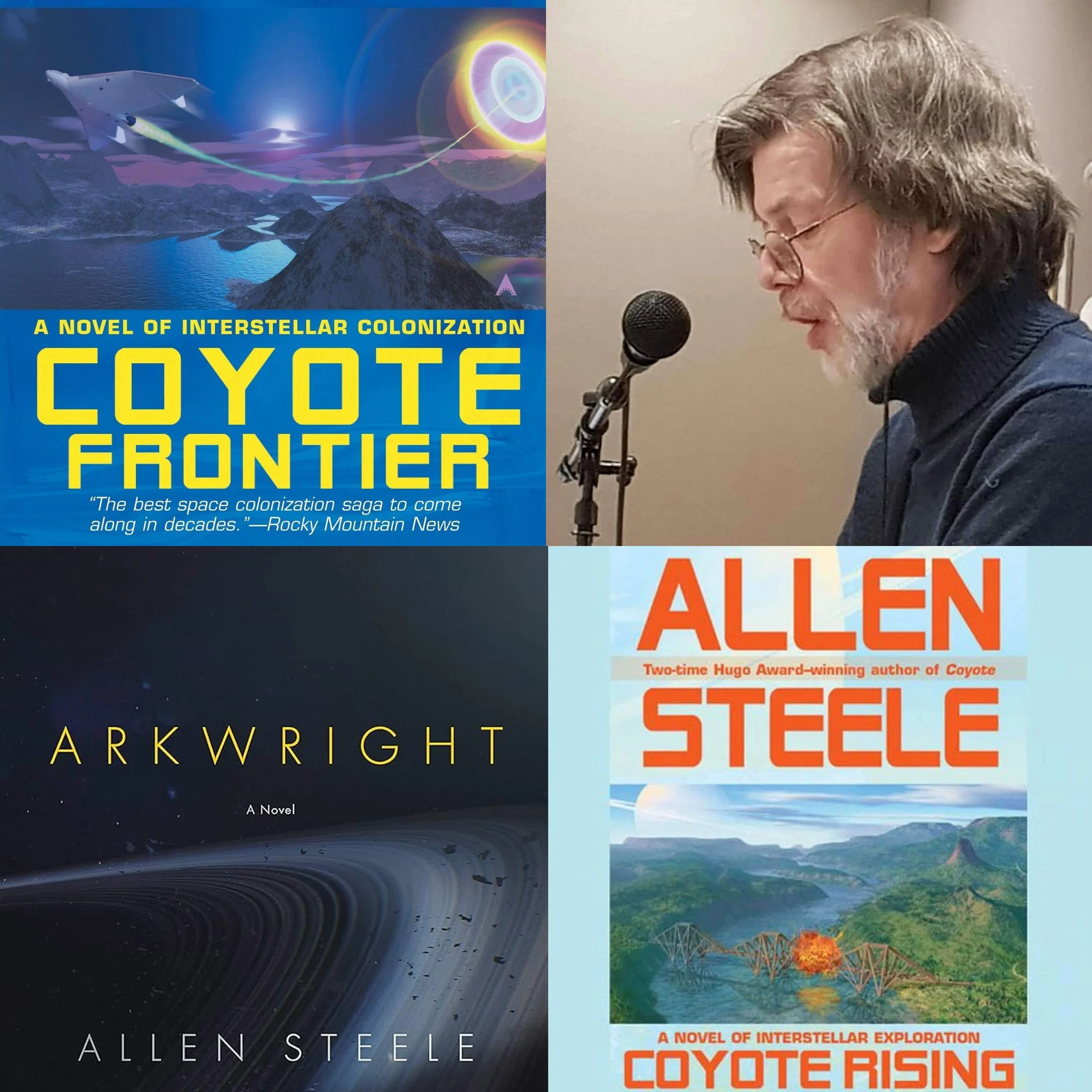
Highlights - ALLEN STEELE - Hugo Award-winning Science Fiction Author of the Coyote Trilogy, Arkwright

Highlights - ALLEN STEELE - Hugo Award-winning Science Fiction Author of the Coyote Trilogy, Arkwright

Winner of the Hugo · Asimov's Readers & Locus Awards
Served on the Board of Directors of Science Fiction & Fantasy Writers of America

I'm really very glad. I was happy to see that within my lifetime that the prospects of not just Mars, but in fact interstellar space is being taken seriously. I've been at two conferences where we were talking about building the first starship within this century. One of my later books, Arkwright, is about such a project. I saw that Elon Musk is building Starship One, I wish him all the best. And I envy anybody who goes.

I wish I were a younger person and in better health. Somebody asked me some time ago, would you go to Mars? And I said, “I can't do it now. I've got a bum pancreas, and I'm 65 years old, and I'm not exactly the prime prospect for doing this. If you asked me 40 years ago would I go, I would have said: in a heartbeat!” I would gladly leave behind almost everything. I don't think I'd be glad about leaving my wife and family behind, but I'd be glad to go live on another planet, perhaps for the rest of my life, just for the chance to explore a new world, to be one of the settlers in a new world. We've got to be careful about how we do this. And we've got to be careful, particularly about the rationale of the people who are doing this.

ALLEN STEELE - Hugo Award-winning Science Fiction Author of the Coyote Trilogy, Arkwright

ALLEN STEELE - Hugo Award-winning Science Fiction Author of the Coyote Trilogy, Arkwright

Winner of the Hugo · Asimov's Readers & Locus Awards
Served on the Board of Directors of Science Fiction & Fantasy Writers of America

I'm really very glad. I was happy to see that within my lifetime that the prospects of not just Mars, but in fact interstellar space is being taken seriously. I've been at two conferences where we were talking about building the first starship within this century. One of my later books, Arkwright, is about such a project. I saw that Elon Musk is building Starship One, I wish him all the best. And I envy anybody who goes.

I wish I were a younger person and in better health. Somebody asked me some time ago, would you go to Mars? And I said, “I can't do it now. I've got a bum pancreas, and I'm 65 years old, and I'm not exactly the prime prospect for doing this. If you asked me 40 years ago would I go, I would have said: in a heartbeat!” I would gladly leave behind almost everything. I don't think I'd be glad about leaving my wife and family behind, but I'd be glad to go live on another planet, perhaps for the rest of my life, just for the chance to explore a new world, to be one of the settlers in a new world. We've got to be careful about how we do this. And we've got to be careful, particularly about the rationale of the people who are doing this.

Highlights - RALPH GIBSON - Award-winning Photographer - Leica Hall of Fame Inductee

Highlights - RALPH GIBSON - Award-winning Photographer - Leica Hall of Fame Inductee

Award-winning Photographer
Leica Hall of Fame Inductee · Recipient of the French Legion of Honor

I wouldn't be able to effectively delineate where my life ends and photography begins. They're one and the same. If my eyes are open, I'm seeing. If I'm seeing, I'm essentially in that valence within which, or from within which come the images. In that book, Self Exposure, one of the things I did realize as I was writing it: all autobiographies are chronological and anecdotal. That's the way they unfold. And I realized that there were certain decisions I had made along the way that were crucial. And there was really only a handful of them. But I was very fortunate because I had that initial desire to be a photographer. I don't even know if it was a desire. I think it was something much further beyond that. I would have to say it was more of a...I didn't really choose photography, it sort of chose me, you know. I mean, nolo contendere. I just did what I knew I had to do. There was a sense of devoir, you know, you just do it. Claude Lévi-Strauss the great social anthropologist has made this sort of thing clear: Society changes and with it the context through which we observe something has changed as well. And so I like the role of art in society and my relationship to my society and to art in my society. Now I'm interested in this phase of my life and how does the mind influence the mind? 

RALPH GIBSON - Award-winning Photographer - Leica Hall of Fame Inductee

RALPH GIBSON - Award-winning Photographer - Leica Hall of Fame Inductee

Award-winning Photographer
Leica Hall of Fame Inductee · Recipient of the French Legion of Honor

I wouldn't be able to effectively delineate where my life ends and photography begins. They're one and the same. If my eyes are open, I'm seeing. If I'm seeing, I'm essentially in that valence within which, or from within which come the images. In that book, Self Exposure, one of the things I did realize as I was writing it: all autobiographies are chronological and anecdotal. That's the way they unfold. And I realized that there were certain decisions I had made along the way that were crucial. And there was really only a handful of them. But I was very fortunate because I had that initial desire to be a photographer. I don't even know if it was a desire. I think it was something much further beyond that. I would have to say it was more of a...I didn't really choose photography, it sort of chose me, you know. I mean, nolo contendere. I just did what I knew I had to do. There was a sense of devoir, you know, you just do it. Claude Lévi-Strauss the great social anthropologist has made this sort of thing clear: Society changes and with it the context through which we observe something has changed as well. And so I like the role of art in society and my relationship to my society and to art in my society. Now I'm interested in this phase of my life and how does the mind influence the mind? 

ROB VERCHICK - Leading Climate Change Scholar - Author of The Octopus in the Parking Garage

ROB VERCHICK - Leading Climate Change Scholar - Author of The Octopus in the Parking Garage

Leading Scholar of Disaster & Climate Change Law
EPA Official under the Obama Administration · President of the Center for Progressive Reform
Author of The Octopus in the Parking Garage: A Call for Climate Resilience

I believe that the strongest machine we have, the strongest empathy machine that we have is literature. The best way to get people to feel what someone else is feeling is through literature and stories. And I also think that feeling and emotion are an important part of reasoning and governing too. It's not the only part, but I think you have to understand how people see the world and how they feel about the world. So in my classes, I teach law classes. I teach policy classes. I often assign novels. We read in one of my classes Their Eyes Were Watching God, the case about a hypothetical hurricane in Florida written by Zora Neale Hurston. We read Oryx and Crake by Margaret Atwood, which is a kind of dystopian novel that involves climate change. We've read The Handmaid's Tale in my classes. What's interesting about them is that they make us, they open up our imaginations and say, Oh, I never thought something like that could happen. We hope it doesn't, but it could, right? And so how do we change the way we look at the future? And it also changes, I think, the way that we understand people's lives.

Highlights - LESLEY HUGHES - Lead Author, IPCC 4th, 5th Assessment Reports - Biology Professor, Macquarie University

Highlights - LESLEY HUGHES - Lead Author, IPCC 4th, 5th Assessment Reports - Biology Professor, Macquarie University

Lead Author of IPCC 4th & 5th Assessment Reports
Director & Councillor of Climate Council of Australia

It's certainly not the case that scientists should be the only people communicating. We have to have everybody in this mix because we're all in this together. So we have to have good science that's communicated. We have to have smart engineers who can work on the technological solutions. We have to have lawyers who are undertaking climate litigation. We have to have creative artists who can tell stories and appeal to people's emotions. No one group should have a responsibility to solve the climate crisis. It's got to be all of those groups bringing what they call the time, the talent, and the treasure to work together on this. We are all in this together, and we've all got a suite of different skills that have to be harnessed to solve this problem.

LESLEY HUGHES - Lead Author of IPCC 4th & 5th Assessment Reports - Director of Climate Council of Australia

LESLEY HUGHES - Lead Author of IPCC 4th & 5th Assessment Reports - Director of Climate Council of Australia

Lead Author of IPCC 4th & 5th Assessment Reports
Director & Councillor of Climate Council of Australia

It's certainly not the case that scientists should be the only people communicating. We have to have everybody in this mix because we're all in this together. So we have to have good science that's communicated. We have to have smart engineers who can work on the technological solutions. We have to have lawyers who are undertaking climate litigation. We have to have creative artists who can tell stories and appeal to people's emotions. No one group should have a responsibility to solve the climate crisis. It's got to be all of those groups bringing what they call the time, the talent, and the treasure to work together on this. We are all in this together, and we've all got a suite of different skills that have to be harnessed to solve this problem.

Highlights - SHEHAN KARUNATILAKA - Booker Prize-winning Author of The Seven Moons of Maali Almeida

Highlights - SHEHAN KARUNATILAKA - Booker Prize-winning Author of The Seven Moons of Maali Almeida

Booker Prize-winning Author
The Seven Moons of Maali Almeida
Chinaman: The Legend of Pradeep Mathew

So this was the decision to write in the second person. A lot of people ask me: why? There are not many examples of this technique. The reason I opted for that is I was trying to figure out interviewing a ghost. And one of the challenges was: what does a disembodied voice sound like? The narrator's body has been chopped up and chucked in a lake. So, I figured that if anything survives the death of your body, it's perhaps the voice in your head. The voice in my head is in the second person. I don't know about your head or anyone else's head, but in mine, it's the second person. 

SHEHAN KARUNATILAKA - Booker Prize-winning Author of The Seven Moons of Maali Almeida

SHEHAN KARUNATILAKA - Booker Prize-winning Author of The Seven Moons of Maali Almeida

What happens when we die? What happens to our memories and consciousness when our bodies cease to be? In the end, is it the things we did and the people we loved that give our lives meaning?

Shehan Karunatilaka is the multi-award winning author. He is known for his novels dealing with the history, politics, and folklore of his home country of Sri Lanka. He won the Commonwealth Book Prize and the DSC Prize for South Asian Literature for his debut novel, Chinaman: The Legend of Pradeep Mathew, and the Booker Prize 2022 for his second novel, The Seven Moons of Maali Almeida. In addition to novels, he has written rock songs, screenplays and travel stories. Born in Colombo, he studied in New Zealand and has lived and worked in London, Amsterdam, and Singapore.

THE CREATIVE PROCESS

In your book, there are ghosts who go around whispering ideas into the ears of the living, so that we think the idea is in our head, but it's something that's been whispered by a vengeful or mischievous ghost.

SHEHAN KARUNATILAKA

So this was the decision to write in the second person. A lot of people ask me: why? There are not many examples of this technique. The reason I opted for that is I was trying to figure out interviewing a ghost. And one of the challenges was: what does a disembodied voice sound like? The narrator's body has been chopped up and chucked in a lake.

So, I figured that if anything survives the death of your body, it's perhaps the voice in your head. The voice in my head is in the second person. I don't know about your head or anyone else's head, but in mine, it's the second person. 

It's almost like someone else telling me: Yeah, you should have worn a better shirt for this interview. You should have read a better chapter. And it's almost like someone is talking to me. And I tried this technique, and I think Maali Almeida also questions. Who is the you that's telling the story? And this is addressed. We've all had experiences where we've done something or said something and we've thought: what was I thinking? Why did I do that? And what made me do that? And so Maali also ponders: Is the voice telling the story, is that me, or is it someone else? Is there a spirit? Because he observes that spirits, because they're so bored - because I have to also figure out what ghosts do all day? Because we know in horror movies, ghosts turn up and be scary. And I don't know if there are resolutions in the book, but there is the idea that maybe are your thoughts your own? Or is someone else whispering them to you? 

THE CREATIVE PROCESS

The figure of the leopard recurs in the book. And I think if you watch leopards in the savannah, you can see that they're at repose until they need to be. And then they just take off, and you can't even follow them with your eyes. So it's kind of like, we conserve our energies and our imagination and we just take off when we have an idea.

As you were writing, you were absorbing different religious, spiritual and artistic traditions. Which were those that resonated the most?

KARUNATILAKA

I was very inspired to know that humans are not the be-all and end-all. We're just one state. But you could be in this state of consciousness, this kind of godly state, even a demonic state, but also the fact that all living creatures had souls and were affected by karma. And this is something we tend to forget, especially because animals are so tasty and therefore we have to justify slaughtering them on such a mass scale. So we want to believe that they don't count. Or they are somehow lesser souls than us. The cat doesn't believe that it's a pet. The cat believes they are the center of the universe. I'm sure the cockroach believes that they are the center of the universe, just as we do. And back to the thing you said: how our bodies inform our view. I think every living creature suffers and experiences joy. And therefore it's convenient for us to say that certain things don't have souls...whatever the soul is.

THE CREATIVE PROCESS

I sometimes feel that I trust an idea more when it comes suddenly from the outside. When you're like a vessel. I feel like it's stronger and it has a momentum. I feel we can go wrong when we're the only author. It's like our ego contaminates our imagination. So I feel like there's a natural order that one becomes a vessel.

KARUNATILAKA

The notion that the idea is out there, but you just need to be in a state to receive it, that's a very comforting thought because it takes the onus off of you. You don't have to be a genius. You don't have to be this big creator. You just have to read and keep healthy and keep yourself open and the idea will arrive. And the funny thing is, usually it arrives to you and then you're typing.

THE CREATIVE PROCESS

Maali Almeida is also a closeted gay man. Why did you choose that? Or did it just seem natural? You also had some inspiration from the life of a real journalist?

KARUNATILAKA

I think when the novel went through many revisions and reiterations, a lot of Richard de Zoysa's biography got shared, and Maali Almeida emerged as a character. But that one detail stayed, the fact that he was a closeted gay man. Again, you write by instinct, and also I had to explain why was this privileged Colombo kid, going to these very dangerous places and hanging out with very dodgy characters. So one reason was perhaps ego. He found something he was very good at, and he thought he was bearing witness and doing this great service.

I think another reason - and also this idealism that he thought his photographs could change the world - but also I think as a closeted gay man, he could express himself sexually in the war zone. Normal rules didn't apply. And also I think this informed his world. He just believed in being a hedonist and enjoying his sexuality. And the only way he could do that was to go to these dangerous places where no one he knew would be watching.

I don't know if I could revise it now and make him heterosexual and have the story work quite as well. So that was the reason. Since then I've been questioned because now that debate is alive and well: the cultural appropriation debate. Are we allowed to write novels from the perspective of characters of different sexualities, genders, and ethnicities?

I think we are. I think that's the whole point of being a novelist or being a storyteller is that you are allowed to inhabit other consciousnesses and see the world through other points of view. Of course, you have to do it well. You have to do it with respect. You have to do the empathy. And you have to do it responsibly.

So if I had done it, and hopefully I've done it well, because I was very careful to do my research properly and get my story read by my friends, by friends who are gay men, and get them to kind of critique it as well. So I think you need to do that, but I don't think we should be placing boundaries because otherwise, I have to write from a Sinhalese Buddhist, Sri Lankan, middle-aged dude...which is quite boring.

I'd like to explore different characters if I'm allowed to write more. So that was really the thinking. It wasn't a political decision. It just felt right for the character, and in the end, it was true to who the character was. And in the end, I think with the plot as well, it gives the novel another dimension.

THE CREATIVE PROCESS

As you think of the future and new technologies like AI and ChatGBT, what for you is the importance of the humanities and their role in helping us navigate new technologies and give our lives meaning?

KARUNATILAKA

But I always think new ideas are what have led us forward. And new ideas, they come out of the humanities. They come out of understanding the classics, psychology, philosophy, and sociology, and being able to think.

I think I'm okay for a couple more books before the robots start writing Booker Prize-winning novels. At the moment I think we're okay because I've tried this technology, and I think it's at the level of a junior copywriter who works hard. The first draft and all of that. But who knows where it's going to go? And we're all reminded this technology is in its infancy. So it's conceivable that these things are going to be writing novels and writing pretty good novels. Perhaps AI can write a formulaic detective thriller? But I don't think it's going to produce a Margaret Atwood or a Salman Rushdie. I think the real challenge is to write stuff that hasn't been written before. And that's what we are all trying to do. So the technology can replicate what's been done before, but the real novels that are going to move us, the stories that are going to move us, are the stuff that hasn't been done before. And that's where I think writers come in. And that's where an understanding of the humanities and being able to come up with new ideas rather than just replicate or rehash new ideas...I think we're still going to need human brains. And there's still room for originality because we think everything's been done, but I think it's just a fraction. There are lots of ideas out there, so I'm hopeful. I'm not too worried. And if this ChatGPT will help me. Instead of spending seven years on a novel, if I can knock out a novel in seven weeks, I'll be happier. The more writing I can do.

Photo credit: David Parry/Booker Prize Foundation

This interview was conducted by Mia Funk with the participation of collaborating universities and students. Associate Interviews Producers on this episode were Sam Myers and Aaron Goldberg. The Creative Process is produced by Mia Funk. Additional production support by Sophie Garnier.

Mia Funk is an artist, interviewer and founder of The Creative Process & One Planet Podcast (Conversations about Climate Change & Environmental Solutions).