Can Finance Revolutionize Climate Action? with MARK CAMPANALE, Founder of Carbon Tracker

Can Finance Revolutionize Climate Action? with MARK CAMPANALE, Founder of Carbon Tracker

A Conversation with MARK CAMPANALE · Founder of Carbon Tracker

Carbon Tracker is a non-profit financial think tank focused on change and the energy transition. I set it up because I spent 20 years working in the financial world, and I noticed that a lot of coal, oil, and gas projects, even with all the evidence we know about climate change, were getting financed through banks and the stock market. It was almost as if investors were completely disregarding what climate change was going to do within our lifetime. What I wanted to do was challenge that, challenge the way people think, and challenge the financial operators, the bankers, stock exchange regulators, and investors to think about what climate change was going to do and what we could do about it. We're saying to the owners of these companies, the shareholders, "Why don't you think about what the world will look like in 50 years, and why are you putting these young people's pensions into coal, which we know is going to destroy the planet?"

Abolish Silicon Valley—How to Liberate Technology from Capitalism

Abolish Silicon Valley—How to Liberate Technology from Capitalism

A Conversation with WENDY LIU

Abolishing Silicon Valley means freeing the development of technology from a system that will always relegate it to a subordinate role, that of entrenching existing power relations. It means designing a new system that isn't deluged in the logic of the bucket. It means liberating our worlds from the illegitimate ring of capital. Perhaps this sounds unfair to capital. Perhaps I sound like I'm not grateful enough for everything that capital has given us, but we don't owe capital anything; the things we attribute to capital were built by workers. People can labor and sometimes die in a process. Their contributions are unrecognized in death as in life. So don't thank capital. It doesn't deserve our gratitude, and it doesn't need it. Thank the people who created everything that capital always takes credit for. Capital is a means of accounting for wealth ownership, not its creation. And that means it's perpetually shrouded in a fundamental untruth; we can leap the swamp of capital behind and start over with something new. 

In this episode on Speaking Out of Place podcast Professor David Palumbo-Liutalks with Wendy Liu. Ever since its publication, Abolish Silicon Valley—How to Liberate Technology from Capitalism has proven to be more urgent and insightful. Today, he talks with author Wendy Liu about how developments like AI and LLM, further erosions of intellectual property, and increased invasions of privacy make the case for abolishing Silicon Valley even more important. They talk about how abolition is critical at a time when more and more the private sector has come to eviscerate the public good. Turning to the genocide in Gaza, they discuss the ways Capital has enlisted technology in deadly and horrific manners. They end with a meditation on the commons and how one can live with fewer commodities and find value in common projects to make life more valuable and worthwhile outside of the logic of the market.

Life As No One Knows It - Exploring AIR Aspen with NICOLA LEES - Highlights

Life As No One Knows It - Exploring AIR Aspen with NICOLA LEES - Highlights

& The Future of Museums
A Conversation with NICOLA LEES · Director of the Aspen Art Museum

It's a complicated time to think about how we can slow down, be still, and bring a brilliant group of people together to do something that feels purposeful and can be productive. It's a moment where things are moving so fast. When I brought up the idea of a hinge generation, I think it's impossible to know how we will look back and reflect on this time and these moments. This year, there is a real emphasis on the relationship between the question we have posed for the retreat, which is fundamentally about our relationship with technology and identifying our relationship with the world and how we want to be present in the moment.

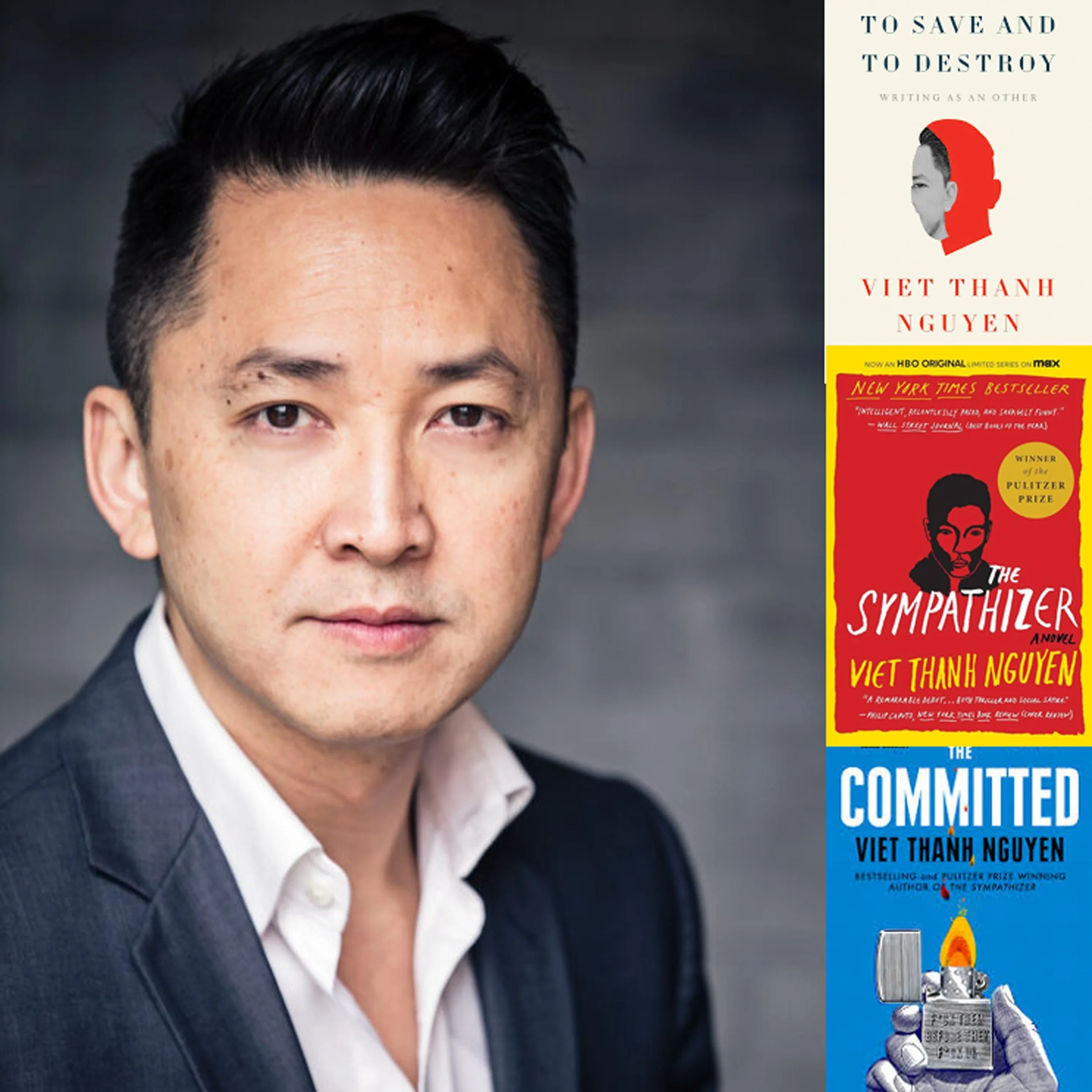
Writing, AI & The Future of Humanity w/ VIET THANH NGUYEN

Writing, AI & The Future of Humanity w/ VIET THANH NGUYEN

A Conversation with Pulitzer Prize-winning Author VIET THANH NGUYEN

What I've discovered as a writer is that fear is a good indicator that there is a truth. To speak the truth in a society is oftentimes an act that requires some courage. Those processes of being an other for me in the United States were obviously very fundamental to shaping who I am as a person and as a writer. It was very difficult to undergo, but to become a writer who could talk about those issues was also a lot of fun. Writing The Sympathizer was a lot of fun, and I hope that the novel was enjoyable and humorous to read as well, despite its very serious politics. When I wrote The Committed, I also had a lot of fun as an outsider to France. In writing the novel itself, The Committed, there was a lot of humor, satire, and these kinds of tools to confront the tragedy of othering. This is very important to me as literary and political devices. I think I could do that in both The Sympathizer and The Committed because I had a lot of distance from the time periods that those novels described. My challenge right now is to try to find my sense of humor in describing what the United States is undergoing and doing to other countries, its own immigrants, and its own people of color, and minorities in the present. That's proving to be a little more challenging at this moment.

The First Artist-Led Global Summit & The Future of Museums - NICOLA LEES, Director, Aspen Art Museum

The First Artist-Led Global Summit & The Future of Museums - NICOLA LEES, Director, Aspen Art Museum

& The Future of Museums
A Conversation with NICOLA LEES · Director of the Aspen Art Museum

It's a complicated time to think about how we can slow down, be still, and bring a brilliant group of people together to do something that feels purposeful and can be productive. It's a moment where things are moving so fast. When I brought up the idea of a hinge generation, I think it's impossible to know how we will look back and reflect on this time and these moments. This year, there is a real emphasis on the relationship between the question we have posed for the retreat, which is fundamentally about our relationship with technology and identifying our relationship with the world and how we want to be present in the moment.

‘Genius’ Entrepreneurs, Technofacists & Phobic Misogynists with BECCA LEWIS

‘Genius’ Entrepreneurs, Technofacists & Phobic Misogynists with BECCA LEWIS

A Conversation with BECCA LEWIS

I think I've always been interested in the far-right end of technology, or I should say for several years that’s what I’ve been studying. However, I kept feeling that gender was understudied in these elements. When I was studying the alt-right online, the focus more than anything else was frequently on white nationalism and the racial dynamic. The scholars whose work really inspired me, like sociologist Jesse Daniels, showed how the racial dynamic was always interconnected with the gender dynamic. As I started following breadcrumbs and looking at certain figures, it became clear that gender was at the heart of their worldview, and there was no getting around it. There were absolutely elements around race and immigration and all sorts of different topics, but in many ways, gender was the core of the worldview, and everything else emanated from there.

Another World Is Possible: Lessons for America From Around the Globe w/ NATASHA HAKIMI ZAPATA

Another World Is Possible: Lessons for America From Around the Globe w/ NATASHA HAKIMI ZAPATA

 It's a really dangerous time we're living through, and I do think that when we talk about these progressive policies, a huge problem in the US is that we still have a lot of stigma left over from the Cold War that keeps us from really great ideas because they're branded as socialist or communist. And I’ve seen, in the time I've been a journalist for the past 15 years, how that stigma has slowly faded. And you see that younger people are more and more interested in these ideas, whether or not they're considered socialist.

AI, Universities & Student Surveillance in the Digital Age - LINDSAY WEINBERG & ROBERT OVETZ

AI, Universities & Student Surveillance in the Digital Age - LINDSAY WEINBERG & ROBERT OVETZ

A Conversaton with LINDSAY WEINBERG & ROBERT OVETZ

Under the guise of “personalizing” education and increasing efficiency, universities are increasingly sold on AI as a cure to their financial ills as public funds dry up and college applications drop. Rather than maintain that education is an essential public good that needs broad support, universities are looking to technology in ways that are changing the nature of education in dangerous and destructive ways.  As Lindsay writes in the book, Smart University: “Higher education is becoming increasingly synonymous with digital surveillance in the United States. Advanced network infrastructure, internet- connected devices and sensors, radio frequency identification (RFID), data analytics, and artificial intelligence (AI) are being celebrated as a means of ushering in the age of “smart universities,” one where institutions canrun their services more efficiently and strengthen the quality of higher education using digital tools. However, as this book demonstrates,  these tools have a darker side. They allow public universities to respond to and perpetuate corporate logics of austerity, use student data to reduce risk of financial investment in the face of dwindling public resources, and track student behavior to encourage compliance with institutional metrics of success. Surveillance of student behavior forms the foundation of the smart university, often in ways that prove harmful to students— particularly  those who are already marginalized within the academy.

THE DREAM HOTEL with LAILA LALAMI

THE DREAM HOTEL with LAILA LALAMI

A Conversation with Author LAILA LALAMI
on Dreaming Beyond the Algorithmic State

What happens when the state, with the pretext of protecting public safety, can detain indefinitely certain individuals whose dreams seem to indicate they may be capable of committing a crime?  Set in a precarious world where sleep-enhancing devices and algorithms provide the tools and formulae for making one’s unconscious a witness to one’s possible waking life, this novel touches on a myriad of political, philosophical, and moral concerns as they particularly connect to issues of gender, race, ethnicity, privacy, and the security state.

The Evolutionary Brain - DR. FERNANDO GARCÍA-MORENO on Creativity & Survival

The Evolutionary Brain - DR. FERNANDO GARCÍA-MORENO on Creativity & Survival

I think creative thinking is rooted in different parts of the brain. I believe that creativity is mostly a cultural expression of how our brains react to the world. It is our culture and our lives that make our brains creative in different manners. Even though you and I have very similar brains containing exactly the same cell types, we have evolved alongside each other for 300 million years. We share a lot of features, yet we express our ideas through creative thinking differently. In my opinion, this is cultural evolution—an expression of how our brains have evolved throughout our lives, how we learn, and what experiences we have over time: what we read, the movies we see, and the people we talk to.

We are working in the lab to understand this moment in development, which is called phylotypic. This is something that has been known for over a hundred years. When you see many vertebrate embryos at this early embryonic time point, all embryos look very, very similar. We are extrapolating these ideas to the brain. We have seen that at this time point, the phylotypic period, all brains of these species are very simple but very closely related. We share the same features with a fish or with a gecko or with any other mammalian species at this early time point. We have the same brain with the same genes active and the same cell types involved in it.

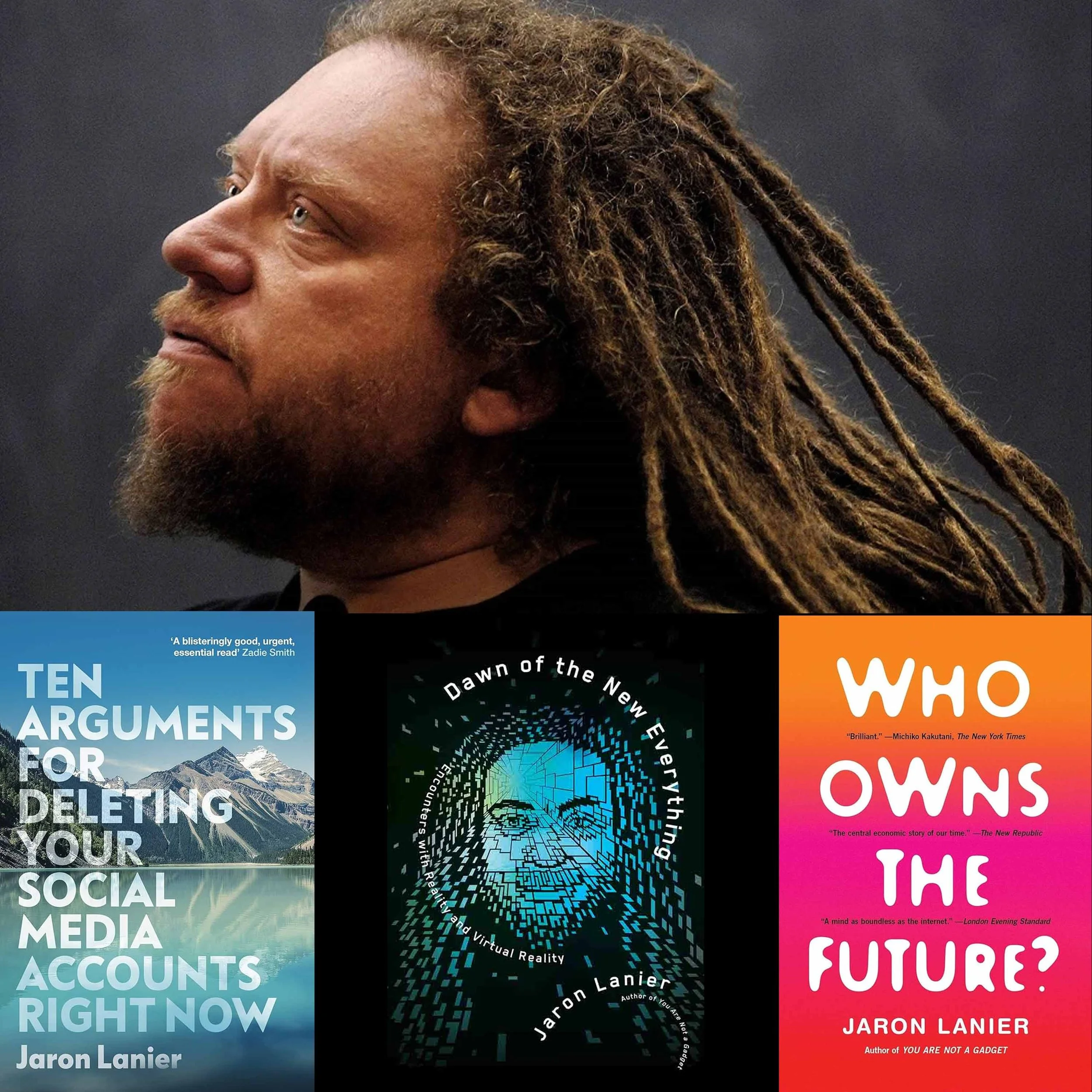
JARON LANIER on Tech, Music, Creativity & Who Owns the Future - Highlights

JARON LANIER on Tech, Music, Creativity & Who Owns the Future - Highlights

VR Pioneer · Musician · Author JARON LANIER
Who Owns the Future? · Dawn of the New Everything: Encounters with Reality & Virtual Reality · Ten Arguments for Deleting Your Social Media Accounts Right Now

AI is obviously the dominant topic in tech lately, and I think occasionally there's AI that's nonsense, and occasionally there's AI that's great. I love finding new proteins for medicine and so on. I don't think we serve ourselves well when we put our own technology up as if it were a new God that we created. I think we're really getting a little too full of ourselves to think that.

When we do that, I think we confuse ourselves too easily. This goes back to Alan Turing, the main founder of computer science, who had this idea of the Turing test. In the test, you can't tell whether the computer has gotten more human-like or the human has gotten more computer-like. People are very prone to becoming more computer-like. When we're on social media, we let ourselves be guided by the algorithms, so we start to become dumb in the way the algorithms want us to. You see that all the time. It's really degraded our psychologies and our society.

AI, Virtual Reality & Dawn of the New Everything w/ JARON LANIER, VR Pioneer, Musician, Author

AI, Virtual Reality & Dawn of the New Everything w/ JARON LANIER, VR Pioneer, Musician, Author

Father of VR · Musician · Author JARON LANIER
Who Owns the Future? · Dawn of the New Everything: Encounters with Reality & Virtual Reality · Ten Arguments for Deleting Your Social Media Accounts Right Now

AI is obviously the dominant topic in tech lately, and I think occasionally there's AI that's nonsense, and occasionally there's AI that's great. I love finding new proteins for medicine and so on. I don't think we serve ourselves well when we put our own technology up as if it were a new God that we created. I think we're really getting a little too full of ourselves to think that.

When we do that, I think we confuse ourselves too easily. This goes back to Alan Turing, the main founder of computer science, who had this idea of the Turing test. In the test, you can't tell whether the computer has gotten more human-like or the human has gotten more computer-like. People are very prone to becoming more computer-like. When we're on social media, we let ourselves be guided by the algorithms, so we start to become dumb in the way the algorithms want us to. You see that all the time. It's really degraded our psychologies and our society.

How Can AI-moderated Deliberation Cure the Ills of Democracy? JAMES FISHKIN - Highlights
How can we meet the Climate Accords thru Environmental Credit Solutions? with BILL FLEDERBACH

How can we meet the Climate Accords thru Environmental Credit Solutions? with BILL FLEDERBACH

President & CEO of ClimeCo

You'll hear ClimeCo speak a lot about market-based solutions because oftentimes, to really drive change in the market when a company is looking at ways to decarbonize, the first thing they typically do is look within their own operations. How can they get decarbonized? What's the cost of decarbonization? We call it the marginal abatement. Can they decarbonize with the technologies that exist? Oftentimes, those technologies exist outside of their operations. The benefit of the environmental markets allows companies to invest in projects that have a reasonable marginal cost.

How Can AI be Part of Bringing Deliberative Democracy to the Masses? w/ JAMES S. FISHKIN
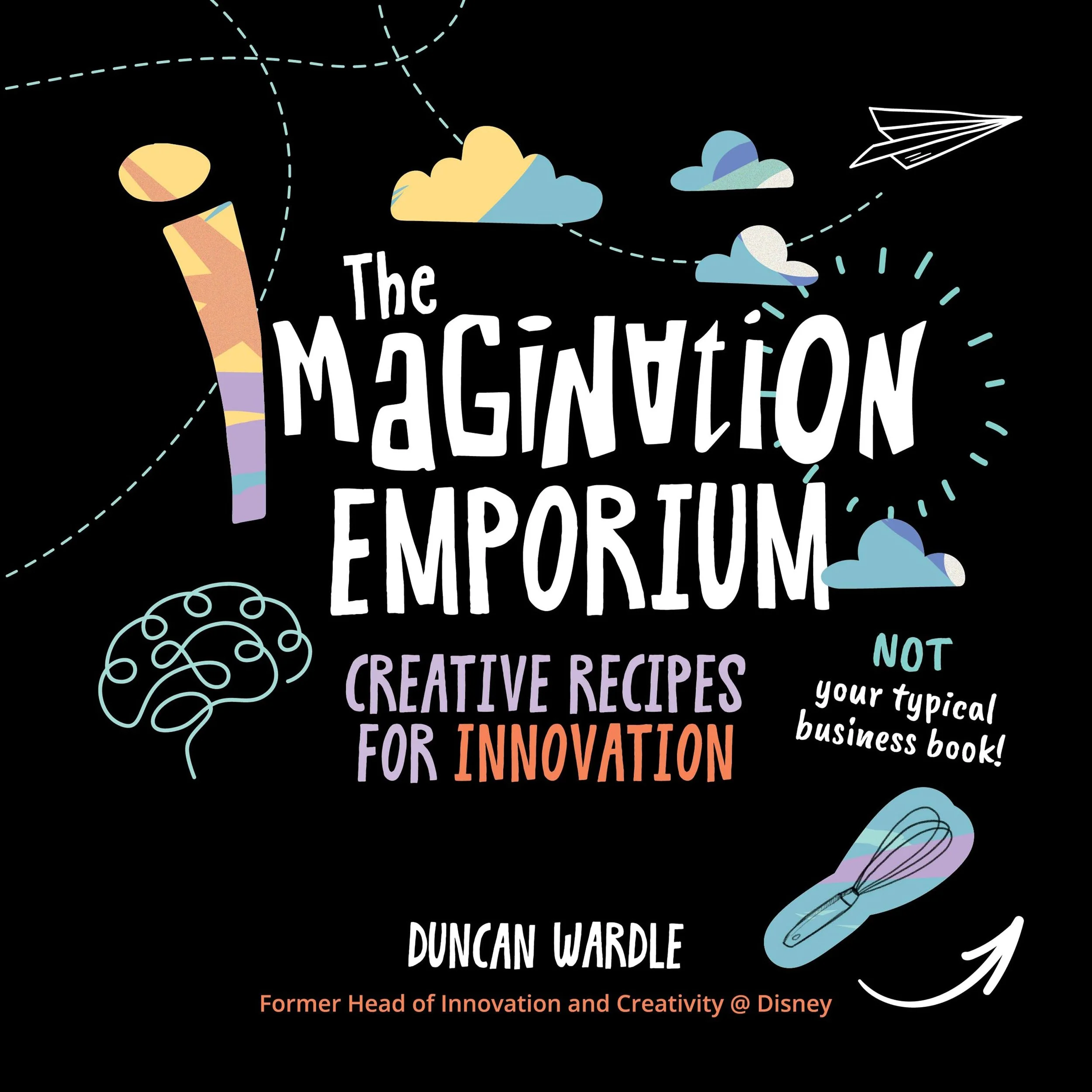
The Imagination Emporium with Fmr. VP of Innovation & Creativity at Disney DUNCAN WARDLE

The Imagination Emporium with Fmr. VP of Innovation & Creativity at Disney DUNCAN WARDLE

Fmr. Vice President of Innovation & Creativity at Disney

I think for most of us, time to think is the biggest barrier to innovation. I would argue it's our own river of thinking. Well, what's a river of thinking? I think it's our own expertise and our own experience. The more we have, the faster, wider, and deeper our river is, allowing us to make quick and informed decisions. But we don't get to think the way we've always thought. In the last four years, we've had global pandemics. We've had global climate change. We've got Generation Z entering the workforce, and now we have AI. So basically, the tools of the toolkit, which are brought to you by Nova, are actually designed to stop you from thinking the way you always do and give you permission to think differently.

The Hidden Humans Behind Artificial Intelligence & the Sociopathology of Elon Musk

The Hidden Humans Behind Artificial Intelligence & the Sociopathology of Elon Musk

& the Sociopathology of ELON MUSK with SARAH T. ROBERTS

AI is reliant on executives and business managers to direct machine learning to promote their brand and low-level, out-sourced, and poorly paid content managers to slog through masses of images, words, and data before they get fed into the machine. They talk about the cultural, sociological, financial, and political aspects of AI. They end by taking on Elon Musk and the DOGE project, as an emblem of how Silicon Valley executives have embraced a brand of tech rapture that disdains and destroys democracy and attacks the idea that people can take care of each other, independent of sociopathic libertarianism.

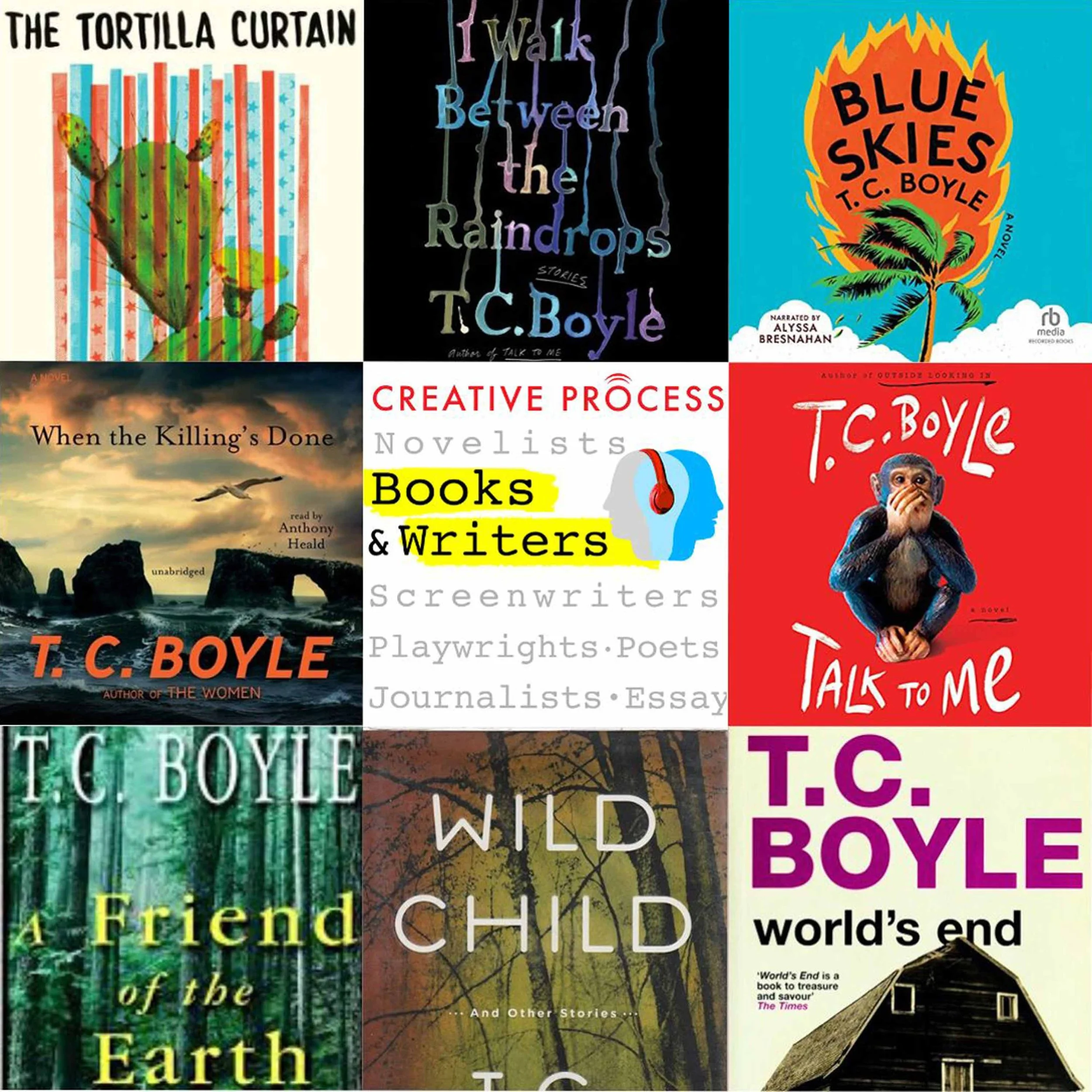
Art, Technology & Society with Author T.C. BOYLE

Art, Technology & Society with Author T.C. BOYLE

Novelist · Short Story Writer

What I have done in my career is just try to assess who we are, what we are, why we are here, and how come we, as animals, are able to walk around and wear pants and dresses and talk on the internet, while the other animals are not. It's been my obsession since I was young. I think if I hadn't become a novelist, I might have been happy to be a naturalist or a field biologist.

On Regulating the Attention Market & Prevent Algorithmic Emotional Governance w/ FABIEN GANDON & FRANCK MICHEL

On Regulating the Attention Market & Prevent Algorithmic Emotional Governance w/ FABIEN GANDON & FRANCK MICHEL

The fact that technologies are being used and combined to capture our attention is concerning. This is currently being done with no limitations and no regulations. That's the main problem. Attention is a very private resource. No one should be allowed to extract it from us by exploiting what we know about the human mind and how it functions, including its weaknesses. We wrote this paper as a call to regulate the attention market and prevent algorithmic emotional governance.

PAY ATTENTION: A Call to Regulate the Attention Market & Prevent Algorithmic Emotional Governance

PAY ATTENTION: A Call to Regulate the Attention Market & Prevent Algorithmic Emotional Governance

The fact that technologies are being used and combined to capture our attention is concerning. This is currently being done with no limitations and no regulations. That's the main problem. Attention is a very private resource. No one should be allowed to extract it from us by exploiting what we know about the human mind and how it functions, including its weaknesses. We wrote this paper as a call to regulate the attention market and prevent algorithmic emotional governance.