Who Are We? What Makes Us Care?

Who Are We? What Makes Us Care?

We explore the internal dialogues of artists and writers to ask what it means to step into someone else's shoes and expand our sense of solidarity through stories. Jim Shepard, Neil Patrick Harris, Katie Kitamura, Laura Eason, Sharmeen Obaid-Chinoy, Benoit Delhomme, Etgar Keret, Viet Thanh Nguyen, Adam Moss, John Patrick Shanley and Nicholas Kristof share their stories.

Exile, Empire & Resistance

Exile, Empire & Resistance

YURI HERRERA on Benito Juarez and Today's Political Crises

Benito Juarez is a really important figure in Mexican culture, politics and history. He is probably the most respected figure in that sense in Mexico, only akin to what Lincoln is in American culture. Juarez was an orphan in the state of Oaxaca who spoke a variant of Zapotec, an indigenous language. He was sent to a seminary and was going to become a priest, but in his own words, he felt repulsed by the way the priests were manipulating the people in Oaxaca.

The Art of Fiction · Democracy & Truth

The Art of Fiction · Democracy & Truth

Author · Activist ·  Stand-Up Comedian AL KENNEDY · Author of Alive in the Merciful Country

The thing that puzzled him was why people don't agree to be fully expressed while they're alive. Why does it only happen in their last moment? Why wouldn't you live being fully expressed? If you have love, eventually you're going to win. It's not that people aren't going to die. It's not terrible things aren't going to happen. But if you stay with that and you stay centered in that, you'll get through and you will not have turned into a monster in order to overcome monsters.”

The Score: How to Stop Playing Somebody Else's Game

The Score: How to Stop Playing Somebody Else's Game

A Conversation with Philosopher C. THI NGUYEN · Author of The Score · Games: Agency as Art

To be in the process of making things, to be in the process of talking to people about what things mean… The creative process is actually, I think, the most meaningful part of life, but it's very hard to measure. When we get shoved towards a world that demands easy measurables, it's very hard to optimize away from the creative process and optimize towards things that are more static.

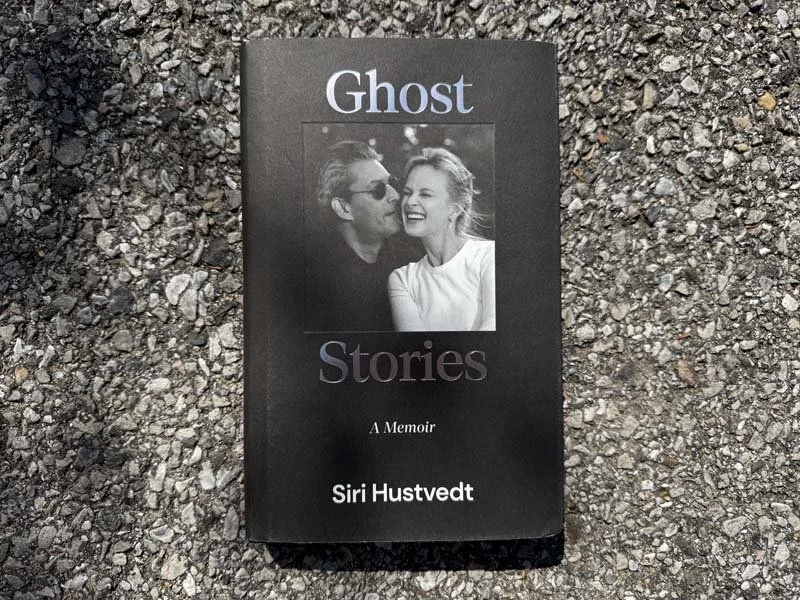
Ghost Stories · A Memoir of Love & Grief

Ghost Stories · A Memoir of Love & Grief

Author SIRI HUSTVEDT Remembers Her Late Husband, PAUL AUSTER

Grief happens because you don't stop loving the person who died. The person doesn't exist in your reality anymore. The everyday is not colored and shaped by this other human being, but you don't stop loving the person. So grief is a particular kind of unrequited love. And probably without that dynamic relationship with this person, I would be someone else. And he would've been someone else. I mean, Paul died before me. But we were, I think, hugely important to the drama of becoming in our own lives.

The Beast in Me

The Beast in Me

Starring CLAIRE DANES & MATTHEW RHYS · A Conversation with Showrunner, Exec. Producer HOWARD GORDON & Exec. Producer Writer DANIEL PEARLE

I think there's also something about an unfettered or uncensored id that is so captivating. We all have that fantasy of doing exactly what we want with no consequences and sort of letting that go. I think when you see an athlete at the peak of their game and living that dream, or when someone has actually done horrible things that you would never allow yourself to do, there is a fascination there.

On Storytelling & The Human Condition

On Storytelling & The Human Condition

Booker Prize-winning Novelist PAUL LYNCH
Author of Prophet Song · Beyond the Sea · Red Sky in the Morning

We narrate the story of our lives to ourselves. We narrate it in linear fashion. And I know many writers have played with time in all sorts of amazing ways, but we're storytellers. This is what we do. And if you give the brain a story, a prepackaged story, you're giving a cheesecake. That's what it wants. That's why it loves stories. That's why our society is just built on stories. Politics is nothing but stories. Everything you do in the evenings – we sit down, we're watching Netflix – just stories. We consume them all the time. We are just machines for belief.

On Writing, America's Forever Wars & Challenging Power

On Writing, America's Forever Wars & Challenging Power

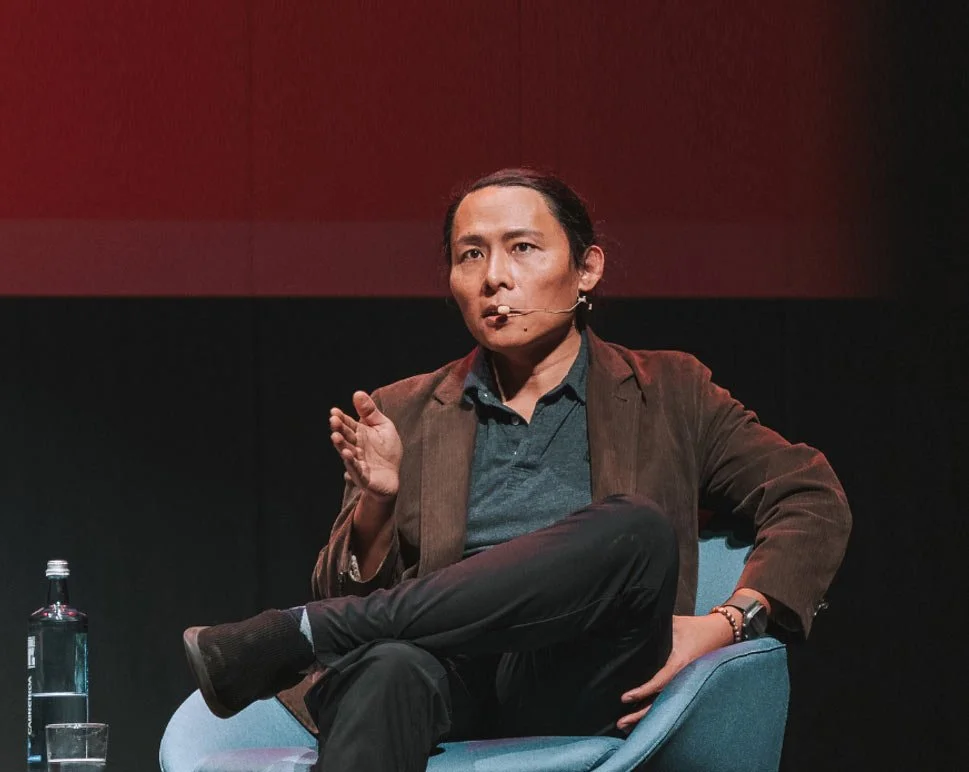
A Conversation with Pulitzer Prize-winning Author VIET THANH NGUYEN

What I've discovered as a writer is that fear is a good indicator that there is a truth. To speak the truth in a society is oftentimes an act that requires some courage. Those processes of being an other for me in the United States were obviously very fundamental to shaping who I am as a person and as a writer. It was very difficult to undergo, but to become a writer who could talk about those issues was also a lot of fun. Writing The Sympathizer was a lot of fun, and I hope that the novel was enjoyable and humorous to read as well, despite its very serious politics. When I wrote The Committed, I also had a lot of fun as an outsider to France. In writing the novel itself, The Committed, there was a lot of humor, satire, and these kinds of tools to confront the tragedy of othering. This is very important to me as literary and political devices. I think I could do that in both The Sympathizer and The Committed because I had a lot of distance from the time periods that those novels described. My challenge right now is to try to find my sense of humor in describing what the United States is undergoing and doing to other countries, its own immigrants, and its own people of color, and minorities in the present. That's proving to be a little more challenging at this moment.

Art, Performance & the Illusion of Agency

Art, Performance & the Illusion of Agency

with KATIE KITAMURA · Author of Audition
Intimacies · A Separation

I'm really interested in the formal aspect of characters who are channeling language, who are speaking the words of other people, and in characters who are aware of how little agency they actually have, who have passivity forced upon them, who perhaps even embrace their passivity to a certain extent but eventually seek out where they can enact their agency.

Finding Humanity Through Storytelling

Finding Humanity Through Storytelling

A Conversation with Author · Filmmaker ETGAR KERET
Winner of Cannes Film Festival’s Caméra d’Or · Charles Bronfman Prize & Sapir Prize

When I write my stories, I don't want to solve things in life. I just want to persuade myself that there is a way out. Maybe I am in a cell, maybe I'm trapped. Maybe I won't make it, but if I can imagine a plan for escape, then I'll be less trapped because at least in my mind, there is a way. I think that my parents are survivors. They always talked about this idea of humanity. My parents always said to me, when you look at people, don't look at their political views; that's not important. Look at the way that they look at you. If they see you, if they listen to you, if they can understand your intention, even if it's a failing one, they're your people. And if they can't, it doesn't matter.

I think that when I came with my mother and father, they thought there are people, there are human beings, and there are people who want to be human beings but are still struggling. And you go with humanity; you go with the person who can go against his ideology if his heart tells him something.

How the Arts Can Transform Our Health

How the Arts Can Transform Our Health

DAISY FANCOURT · Author of Art Cure · Director of WHO Collaborating Centre on Arts & Health · Prof. Psychobiology & Epidemiology at UCL

Within society we seem to have separated the arts out, so they’re not so much a part of our daily lives. As I’ve become a mother and I have children now, it’s been really eye-opening to rediscover lots of arts things that I’d stopped doing in my own childhood. But now coming back to them I think probably the most meaningful one for me is one I describe in the book, which is about my younger daughter, Daphne, who was premature and unfortunately got incredibly ill with meningitis and was in intensive care when she was just a few days old.

Female Desire · Sex & Intimacy

Female Desire · Sex & Intimacy

Emmy-nominated Producer, Writer, Playwright LAURA EASON on THREE WOMEN

I think the show conveys to the women watching that their lives matter. They don't have to be some gorgeous aspirational person, although Sloane absolutely fits that mold. But for others living in the Midwest, struggling and feeling unseen, hopefully, the mirrors of Lina and Maggie will help them not feel so alone and remind them that their stories are important and matter.

DON McKELLAR

DON McKELLAR

Co-writer · Executive Producer · Co-showrunner of HBO’s The Sympathizer
with Hoa Xuande · Robert Downey Jr.

I think it's central to the message of the show and of the book. This idea that there's another side to every question. That's the central quandary. There's this problem with the whole Vietnam War. It's saying, to Americans at least, put yourself on the other side, the Vietnamese side, and then recognize that that side also has two sides and then within that, there are further divisions. And if you do that, I think what it's proposing is that you have to step back. It forces a sort of objectivity and humility, and it asks you to step back and allow the bigger human questions to resonate.

ANDRI SNÆR MAGNASON

ANDRI SNÆR MAGNASON

Icelandic Writer & Documentary Filmmaker
On Time and Water · The Casket of Time · LoveStar · Not Ok · The Story of the Blue Planet

A letter to the future
Ok is the first Icelandic glacier to lose its status as a glacier.
In the next 200 years all our glaciers are expected to follow the same path.
This monument is to acknowledge that we know what is happening and what needs to be done.
Only you know if we did it.

If you look at the Himalayas, the frozen glaciers are feeding 1 billion people with milky white water. The real tragedy is if the Himalayan glaciers go the same way as Iceland. In many places in the world, glaciers are very important for agriculture and the basic water supply of people.

JOHN PATRICK SHANLEY

JOHN PATRICK SHANLEY

Academy Award · Tony · Pulitzer Prize-winning Writer/Director
Doubt starring Meryl Streep, Philip Seymour Hoffman, Amy Adams
Moonstruck · Wild Mountain Thyme · Danny and the Deep Blue Sea · Joe Versus the Volcano

I knew Philip Seymour Hoffman for several years. We went on vacation together. He produced a play of mine. Before we did Doubt, we worked in the same theater company together, and he was, you know, very committed to excellence. And so he could become impatient with anybody who was not committed to excellence, and that could make him a volatile person to deal with. Phil cared. He cared a great deal. And he worked really hard. They're very committed. Like with Viola Davis. Viola had done a decent amount of big work before Doubt, but she was not recognized yet. And she was careful. You know, she certainly wasn't throwing weight around. She was, I'm the new kid on the block, and I'm just here to work and be serious and do my job, keep my head down, and get out. And pretty much that's what I was doing too, you know, because I've got Meryl Streep, I've got Philip Hoffman, who I was friends with, but Phil's not an easy guy to be friends with or was not easy to be friends with. He's a very prickly person prone to getting pissed off about things that you might not expect. And then Amy Adams was somebody who, you know, tried to get along with everybody and Phil would say like, 'You just want everybody to like you.' So, you know, you're in the middle of that group, and you just, you don't want to put yourself in a position where you're trying to prove something. You have to let them...they're very, very smart people, and they're going to figure out whatever it is that you're doing. They're going to figure out whether you are in any way trying to handle that. And that's not going to go well. And so I didn't do that.

DR. RUPERT SHELDRAKE

DR. RUPERT SHELDRAKE

Biologist · Author
The Science Delusion · The Presence of the Past · Ways to Go Beyond and Why They Work

The idea that the laws of nature are fixed is taken for granted by almost all scientists and within physics, within cosmology, it leads to an enormous realm of speculation, which I think is totally unnecessary. We're assuming the laws of nature are fixed. Most of science assumes this, but is it really so in an evolving universe? Why shouldn't the laws evolve? And if we think about that, then we realize that actually, the whole idea of a law of nature is a metaphor. It's based on human laws. I mean, after all, dogs and cats don't obey laws. And in tribes, they don't even have laws. They have customs. So it's only in civilized societies that you have laws. And then if we think through that metaphor, then actually the laws do change. All artists are influenced by other artists and by things in the collective culture, and I think that morphic resonance as collective memory would say that all of us draw unconsciously as well as consciously on a collective memory and all animals draw on a collective memory of their kind as well. We don't know where it comes from, but there's true creativity involved in evolution, both human and natural.

DAN FUTTERMAN & ADAM RAPP

DAN FUTTERMAN & ADAM RAPP

Award-winning Screenwriters · Exec. Producers · Directors
American Rust · The Looming Tower
Capote · The Outsiders musical

We're all culpable in some way of being both good and bad, being virtuous and also questionable at times in our own lives. And I think when you start answering questions on either side of that too firmly, I think it allows the audience to disconnect from it. And then you just have this sort of a good and bad guy narrative that is oversimplified all too often in our culture. I think viewers will relate to this nature versus nurture versus DNA, raising all the questions of psychological and biological inheritance.

DAVID FENTON

DAVID FENTON

Author of The Activist’s Media Handbook: Lessons From 50 Years as a Progressive Agitator
Founder of Fenton Communications: The Social Change Agency
JStreet · Climate Nexus · The Death Penalty Information Center

It sounds like a cliche, but it really is true that history moves in pendulums and waves. And whatever is happening today is not going to last. It will change. So you have periods of concentrations of wealth and power, and then you have periods of rebellion. And I'm quite sure we're headed for another period of rebellion. You can see it a little bit now in the labor strife in the United States and the strikes. You can certainly see it in the massive demonstrations in France and Israel. Excessive concentrations of power breeds rebellion, and that's just inevitable. And the climate crisis is going to cause a lot of rebellion as people figure this out. And I think it's coming very soon, actually, because as you've noticed, the weather is getting very bad. It's become a non-linear accelerating phenomenon. And people will wake up to that. I just hope they wake up in time.

CHARLIE HERTZOG YOUNG

CHARLIE HERTZOG YOUNG

Award-winning Climate Activist
Author of Spinning Out: Climate Change, Mental Health and Fighting for a Better Future

There's that old saying, “blessed are the cracked for they shall let in the light.” For a lot of people like myself, I think it's true that losing your mind can be a proportionate response to the climate crisis. Those of us with mental health issues are often branded as being in our own world. But paradoxically, being in our own world can actually be a result of being more connected to the outside world rather than less. And in the context of climate change, it may be fairer to describe people who fail to develop psychological symptoms as being in their own separate anthropocentric world, inattentive to the experiences of the billions of other human and nonhuman beings on the planet, unaffected by looming existential catastrophe…

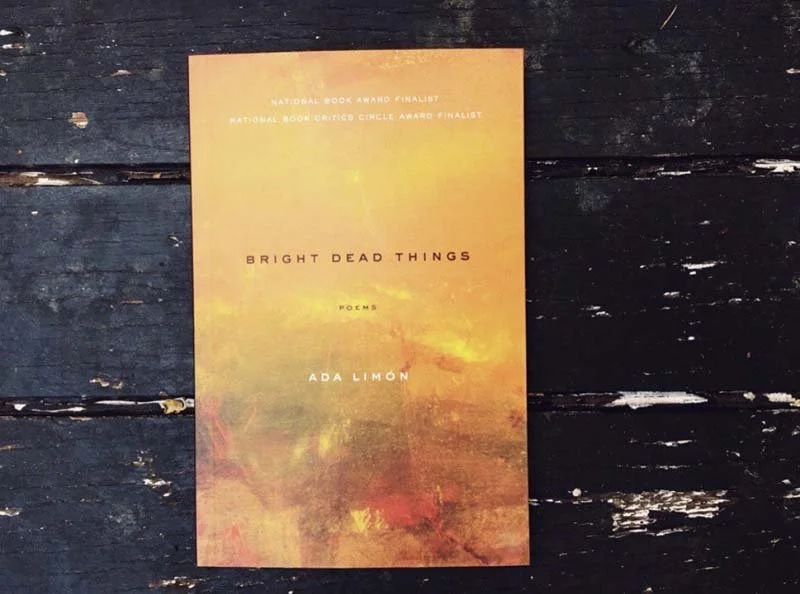
ADA LIMÓN

ADA LIMÓN

24th U.S. Poet Laureate · National Book Critics Circle Award-winning Poet

This poem was written when I was having a real moment of reckoning, not that I hadn't had it earlier, but where I was doing some deep reading about the climate crisis and really reckoning with myself, with where we were and what was happening, what the truth was. And I felt like it was so easy to slip down into a darkness, into a sort of numbness, and I didn't think that that numbness and darkness could be useful.