ASHLEY DAWSON

ASHLEY DAWSON

Author of People’s Power, Extreme Cities, Extinction
Professor of Postcolonial Studies at City University of New York

The political struggle is really hard today and I feel like we haven't been winning, but I think it's important not to think of this as either we win it, or there's catastrophe and that's the end. We win or lose, and there’s this big tidal wave that kills us all. That's not the way the climate crisis is going to play out. It’s going to be a long, slow, attritional crisis punctuated by forms of natural disaster that will decimate populations, but it's also going to be something that people will be impacted by for generations and that people will continue to mobilize around, so I think it's important to keep that in mind.

ROB NIXON

ROB NIXON

Author of Slow Violence and the Environmentalism of the Poor
Professor Environmental Humanities at Princeton

There are some recurrent threads in indigenous cultures across the world. One of those is–We don’t own the land. The land owns us. It’s not seen as property first. It’s seen as inalienable in that sense because you don’t own it in the first place. What we’re seeing now is a kind of movement where more and more indigenous people are living kind of amphibious lives. On the one hand, they have their indigenous cosmologies. And the other hand, in order to increase the likelihood that they can keep out big corporations, mining, logging, and so forth, their presence on the land needs to be bureaucratically recognized is to have recognition that “this is your property.” So in one sense many of these communities I find are both inside and outside private property regimes.

JOËLLE GERGIS

JOËLLE GERGIS

Lead Author  of the IPCC Sixth Assessment Report · Author of Humanity’s Moment: A Climate Scientist’s Case for Hope · Sunburnt Country · Contributor to The Climate Book, ed. Greta Thunberg · Not Too Late, eds. Rebecca Solnit, Thelma Young Lutunatabua

We're really starting to witness serious climate extremes that can no longer be ignored. And the IPCC, one of our key conclusions to that report was that effectively the human fingerprint on the climate system is now undeniable. It is now an established fact that we have warmed every single continent, every ocean basin on the planet. And again, that's a pretty serious thing to contemplate that human activity from the burning of fossil fuels and the clearing of land has led to this energy imbalance in the earth system, which is leading to a rapidly shifting climate.

TODD B. KASHDAN

TODD B. KASHDAN

APA Award-winning Author of The Art of Insubordination: How to Dissent and Defy Effectively
Curious? · The Upside of Your Dark Side
Leading Authority on Well-being, Curiosity, Courage & Resilience

We're really talking about principled rebels. And when we talk about insubordination, we're talking about most of us live in these social hierarchies, and there's the idea, this started in the military and still goes on, where if someone at a lower rank questions or challenges a command or a norm that someone of a higher rank, that's considered an act of insubordination. And one of the main problems of that, I think anyone who's listening can acknowledge, is it depends on the quality of the idea of the person who's raising the question. I just realized there was this whole body of literature on minority influence that no one had put together into a book for the general public, and considering the racial reckoning that occurred during COVID-19, the extra attention to diversity, to disadvantaged groups, every moment of society, it just feels like it's more and more relevant of what I've been working on.

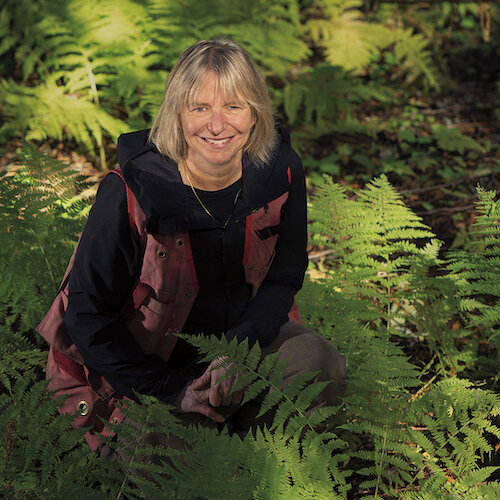
DR. SUZANNE SIMARD

DR. SUZANNE SIMARD

Professor of Forest Ecology
Author of Finding the Mother Tree

Think of yourself as a tree. You’ve got neighbours that you live beside for hundreds if not thousands of years, and none of you can move around, so you just have to communicate in other ways. And so trees have evolved to have these ways of communicating with each other, and they’re sophisticated, they’re nuanced. They include things like transmitting information through these root networks that link them together. They transmit information to each other through the air, so they perceive each other, they communicate and then they respond to each other. And that language is complex.

JEFFREY D. SACHS

JEFFREY D. SACHS

President of UN Sustainable Development Solutions Network
Director of Center for Sustainable Development, Columbia University

If we’re badly educated, we’re not going to make it on this planet. If I had to put my finger on one Sustainable Development Goal above all else, it is let’s empower young people so that they know the future. They know the world that they’re going to be leading soon. They can do something about it…If you’re in elementary school up to university, you should be learning–What is climate change? What is biodiversity? What can we do about it? And this kind of learning is not only book learning, but is also experiential learning.

PAUL AUSTER

PAUL AUSTER

Writer · Filmmaker 1947-2024

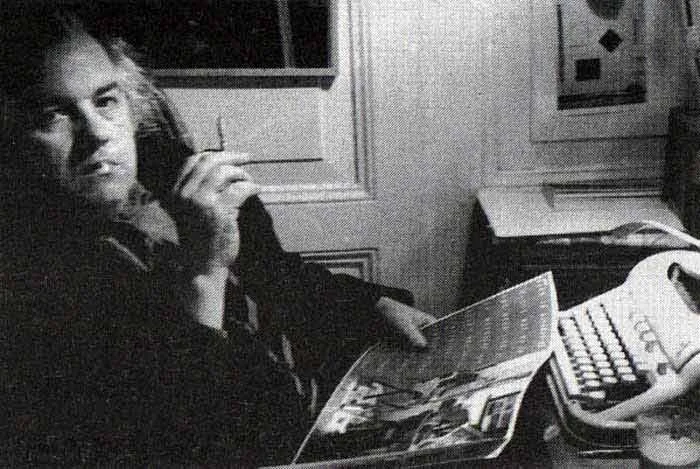
What happens is a space is created. And maybe it’s the only space of its kind in the world in which two absolute strangers can meet each other on terms of absolute intimacy. I think this is what is at the heart of the experience and why once you become a reader that you want to repeat that experience, that very deep total communication with that invisible stranger who has written the book that you’re holding in your hands. And that’s why I think, in spite of everything, novels are not going to stop being written, no matter what the circumstances. We need stories. We’re all human beings, and it’s stories from the moment we’re able to talk.

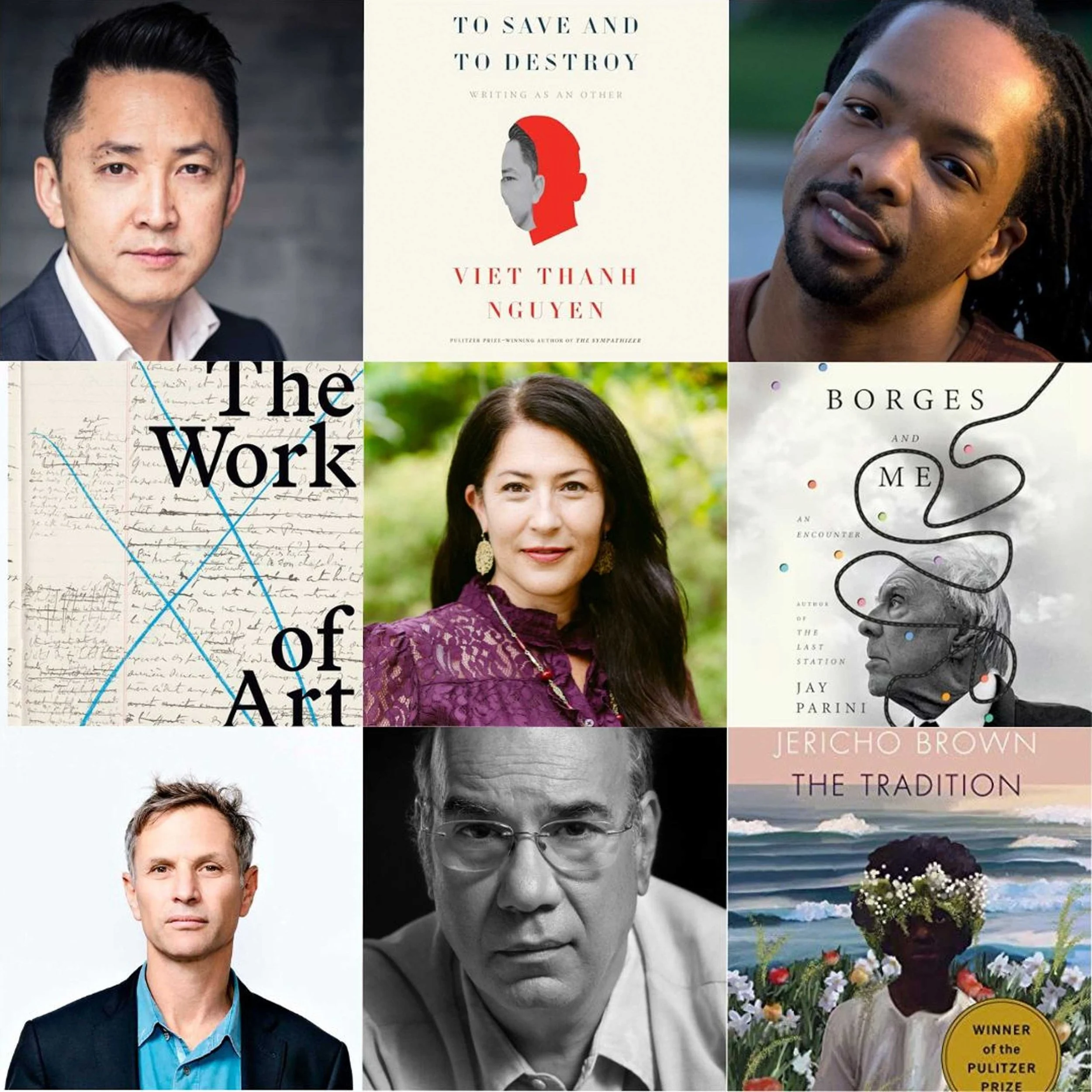
JERICHO BROWN

JERICHO BROWN

Pulitzer Prize-winning Poet
Author of The Tradition & The New Testament

I just want to make the poems like a living being…There are moments that I’m not at the desk, but I’m living life. And living life is actually what leads to writing. You have to have experiences to write about. Whether or not you are aware of those experiences as you are writing them down because if you’re doing music first, maybe you’re not aware of what you’re writing. And yet, those experiences are what come to fruition in your writing. You become aware. Oh, I did come on that roller coaster that time that I haven’t thought about in twenty years. Oh I did make love to that cute person that I haven’t thought about in ten years, but you’ve got to make love, you’ve got to get on roller coasters, you’ve got to get your heart broken. You’ve got to dance. You gotta get out and do things and that, too, is a part of writing. You have to trust you’re a writer by identity. And if you can trust that you’re a writer by identity, then you don’t have to be at a desk.

MERLIN SHELDRAKE

MERLIN SHELDRAKE

Biologist & Bestselling Author of Entangled Life: How Fungi Make Our Worlds,
Change Our Minds, and Shape Our Futures,
Winner of the Wainwright Prize 2021

Humans have been partnering with fungi for an unknowably long time, no doubt for longer than we’ve been humans. Whether as foods, eating mushrooms, as medicines, dosing ourselves with moulds and other mushrooms that might help, parasites or others helpers with infection, mushrooms as tinder or ways to carry a spark, this very important thing that humans needed to do for a very long time, and as agents of fermentation, as in yeasts creating alcohol. So humans have partnered with fungi to solve all sorts of problems and so fungi have found themselves enveloped within human societies and cultures for a long time.

PROF. BAYYINAH BELLO

PROF. BAYYINAH BELLO

Founder of Fondasyon Felicitee
Afrodescendant Ourstorian, Educator, Writer & Humanitarian

It’s true. In Haiti, to a large degree more women were involved in the Revolution, in the war, in the fighting for the nation for the very simple reason that women had more opportunities. After a certain time, we became invisible. Once you’re in your 60’s, you are missing a few front teeth, in fact, some of the women used to take a stone and break up their front teeth so that they wouldn’t be noticed anymore. “That’s just an old lady with no front teeth. Okay, she goes about her business, nobody looks at her. She can do nothing.” And those were the fighters–the greatest fighters of our revolution.

OSPREY ORIELLE LAKE

OSPREY ORIELLE LAKE

Founder & Executive Director of the Women's Earth & Climate Action Network International
Author of Uprisings for the Earth: Reconnecting Culture with Nature & Artist

There’s a wide range of reasons that we really need to understand the root causes of a lot of our social ills and environmental ills. I think we need to continue to come back to this question of how we heal this imposed divide between the natural world and human social constructs. And that healing is key to how we’re going to really unwind the perilous moment that we face right now. How do we reconnect with the natural world? Not just intellectually, but in a very embodied way.

FREE THE LAND

FREE THE LAND

How We Can Fight Poverty & Climate Chaos
with Environmental Journalist & Author AUDREA LIM

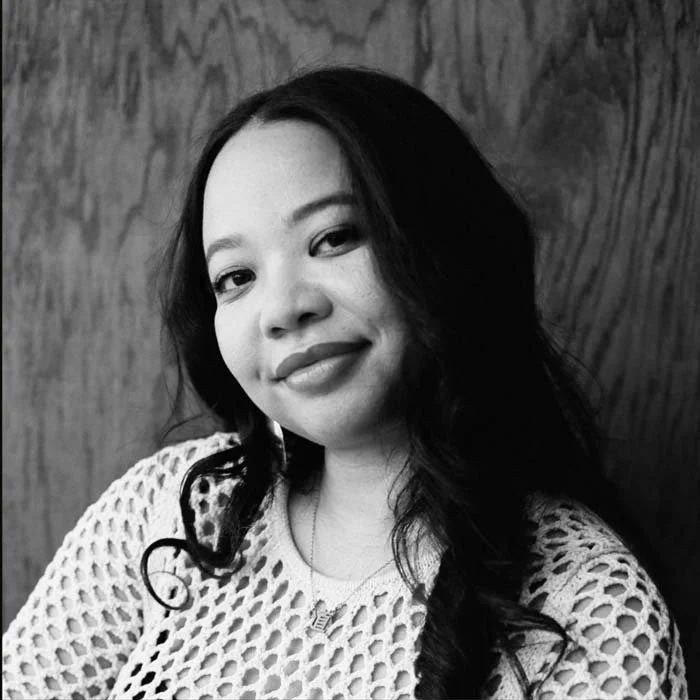
When I first started writing this book, it really foregrounded the problems within our land ownership system, which treats land as a commodity. The way we talk about land and issues like racial and food justice reflects this. We tend to focus on the problems, attaching big concepts to them, such as racial justice or environmental justice. I realized that my job primarily consists of going around and talking to activists and community groups about their work. I’m interested not just in the very big problems we face as a society, economy, and political system, but also in how people are trying to think through solutions or approaches to those problems.

Discovering the Strangest Life on Earth

Discovering the Strangest Life on Earth

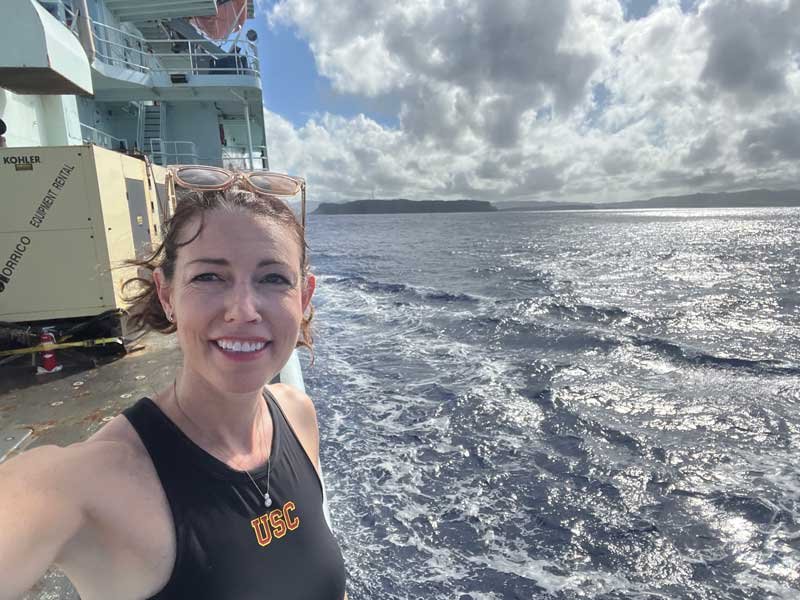
with KAREN G. LLOYD · Author of Intraterrestrials · Wrigley Chair in Environmental Studies · Professor of Earth Sciences · University of Southern California

It's really changed my view of what life is. So many of the things that we attribute to the trappings of life look like requirements, like oxygen and sunlight. All the things that humans would absolutely die without — they’re not really necessary for life. Studying these things sort of breaks down what is necessary; what are the things that life has to have?

Poetics, Poesis & Un-making the Climate Crisis

Poetics, Poesis & Un-making the Climate Crisis

with TAO LEIGH GOFFE · Author of Dark Laboratory: On Columbus, the Caribbean, and the Origins of the Climate Crisis

We manage to create a poetics out of that which wishes to destroy us and the planet. How else will we be able to live in ‘the after’? We must reassess what a problem is.  Living is not a problem, as Audrey Lorde reminds us. I would add that dying is not a problem either. Decomposing is essential to the natural order and cycle of life. Living at the expense of others is a problem.

PATRICK HEALY

PATRICK HEALY

Writer · Philosopher · Independent Scholar

You have all the different languages interplaying with each other. Little scraps of Irish languages and idioms have stories that have been told, but how Ireland actually comes about as an idea, as to where the Irish come from. A lot of these kinds of debates are just placed, you know, in day-to-day conversation, and then they trail off. People start something; they trail off and might come back to it later. That phenomenon of speaking over each other, tales that are known and not known, I always found very interesting. It was literally like a radio that was kept on all day in the kitchen.

You would come in and out, and you would hear certain things, and you'd have to work out the context and the conversation and the speakers. In some way, one of the big personalities in the book is just a radio that’s playing, and some of these conversations are not actually taking place between characters in real-time. They're just snippets that have been overheard on radios.

ALEXI HAWLEY

ALEXI HAWLEY

Showrunner · Writer · Creator
The Rookie · The Recruit

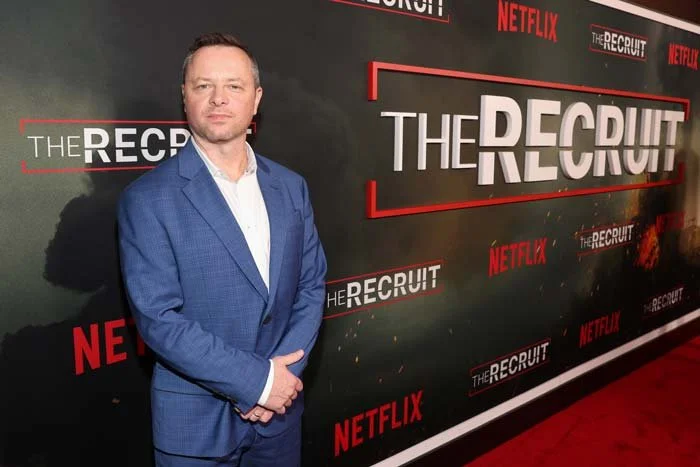
There used to be a time when leading men were okay with falling down as a character. Harrison Ford in Indiana Jones is a prime example of that. Even going back to the fifties, they understood that failure and falling down, but getting back up, is an endearing quality. It's a universal human quality. We have gotten to a point in the last 10 or 15 years, or maybe longer, where leading men often want to win every fight. It’s in their contract: "I have to win every fight" or "I can't fail" or "I can't fall down." It's just such a mistake because the audience roots for you more if they see you fail and then get back up again. Noah is totally comfortable playing that character who's just trying to figure it out on the fly. Sometimes, he gets it wrong, but he's never going to give up. You can really feel that coming off the screen.

MODERN LOVE

MODERN LOVE

Writer, Director SOPHIE BROOKS on her new film OH, HI!

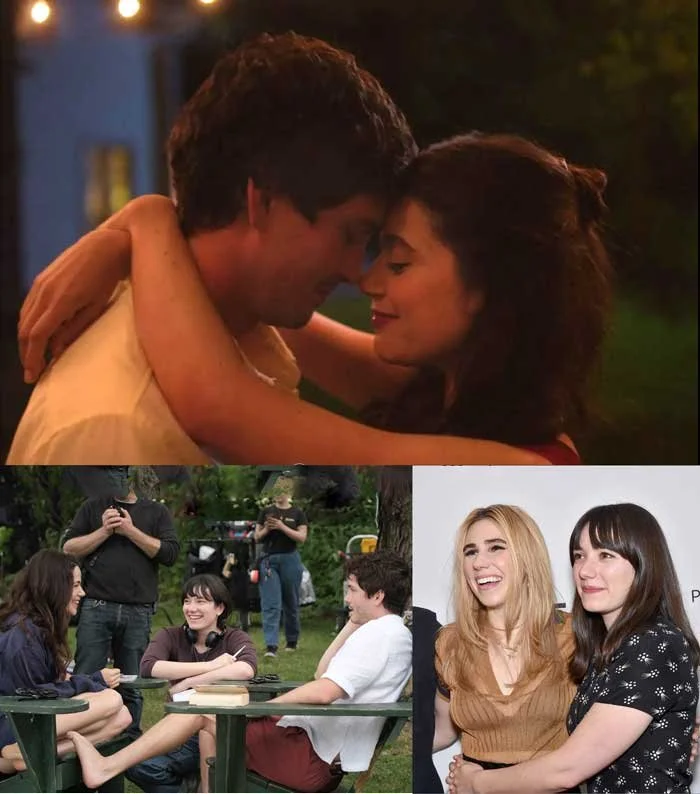
In reality, we're all complex people with feelings and our own sets of baggage. I do think we are very good at self-sabotage, all of us. It's a very easy road to go down. It's safe because it's comfortable, and we know it. When you can find the ways you self-sabotage and try to stop that, it will hopefully lead to a happier life and things that are meaningful. When I was in my late twenties, I got out of a serious relationship and kind of reentered the dating scene. I was shocked by the simplification of a lot of complicated feelings around dating and how women are so easily labeled crazy, and men are so easily labeled assholes.

The Arrogant Ape: The Myth of Human Exceptionalism & Why it Matters

The Arrogant Ape: The Myth of Human Exceptionalism & Why it Matters

A Conversation with Primatologist CHRISTINE WEBB

There are many ways in which I think human exceptionalism has seeped into the sciences, but one of the many ways is through the methodologies we use when we compare the intelligence of humans and other species. In particular, in my field, I’m a primatologist by training, comparing the cognitive abilities of humans with the abilities of our closest living relatives, the great apes. Many times, those studies compare the intelligence of captive chimpanzees who are living in highly restricted, manmade environments. Often, these chimpanzees have been separated from their biological mothers at birth. They're often separated from the group during testing. They're subjected to very human-centric experimental paradigms, like playing with plastic puzzle boxes or computer touchscreens, and we're measuring how they perform on these tasks.

Sleep, The Nocturnal Brain & The Biology of Being Human

Sleep, The Nocturnal Brain & The Biology of Being Human

with Neurologist · DR. GUY LESCHZINER
Professor of Neurology & Sleep Medicine · King's College London
Author of Seven Deadly Sins · The Nocturnal Brain · The Man Who Tasted Words

 I'm fascinated by the extremes of the human experience, partly because it is so far removed from our own experience of life. In another way, when you look at people who have neurological disorders or diseases, these are really nature's experiments. They are ways of trying to understand how the brain works for all of us. By extrapolation from looking at these extremes, we can learn about the workings of our own brains. That's very much the case across all the areas of my work, whether it be sleep disorders, neurology, or epilepsy—how we regulate our emotions, how we move, how we experience the world.