The Arrogant Ape: The Myth of Human Exceptionalism & Why it Matters

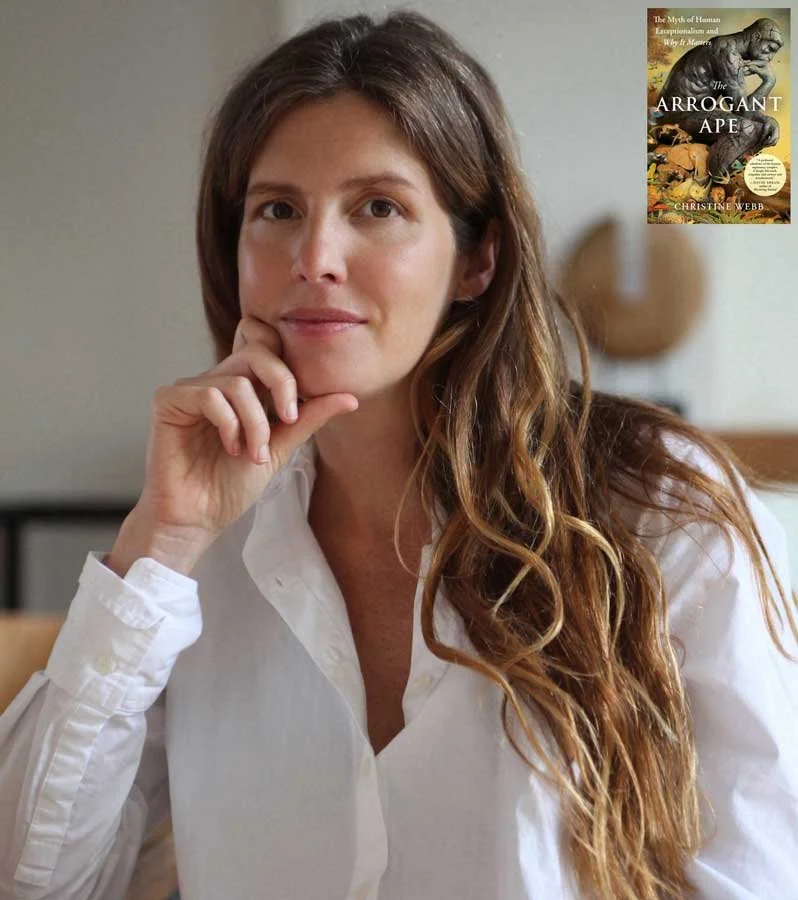
The Arrogant Ape: The Myth of Human Exceptionalism & Why it Matters

A Conversation with Primatologist CHRISTINE WEBB

There are many ways in which I think human exceptionalism has seeped into the sciences, but one of the many ways is through the methodologies we use when we compare the intelligence of humans and other species. In particular, in my field, I’m a primatologist by training, comparing the cognitive abilities of humans with the abilities of our closest living relatives, the great apes. Many times, those studies compare the intelligence of captive chimpanzees who are living in highly restricted, manmade environments. Often, these chimpanzees have been separated from their biological mothers at birth. They're often separated from the group during testing. They're subjected to very human-centric experimental paradigms, like playing with plastic puzzle boxes or computer touchscreens, and we're measuring how they perform on these tasks.

JOHN PATRICK SHANLEY

JOHN PATRICK SHANLEY

Academy Award · Tony · Pulitzer Prize-winning Writer/Director
Doubt starring Meryl Streep, Philip Seymour Hoffman, Amy Adams
Moonstruck · Wild Mountain Thyme · Danny and the Deep Blue Sea · Joe Versus the Volcano

I knew Philip Seymour Hoffman for several years. We went on vacation together. He produced a play of mine. Before we did Doubt, we worked in the same theater company together, and he was, you know, very committed to excellence. And so he could become impatient with anybody who was not committed to excellence, and that could make him a volatile person to deal with. Phil cared. He cared a great deal. And he worked really hard. They're very committed. Like with Viola Davis. Viola had done a decent amount of big work before Doubt, but she was not recognized yet. And she was careful. You know, she certainly wasn't throwing weight around. She was, I'm the new kid on the block, and I'm just here to work and be serious and do my job, keep my head down, and get out. And pretty much that's what I was doing too, you know, because I've got Meryl Streep, I've got Philip Hoffman, who I was friends with, but Phil's not an easy guy to be friends with or was not easy to be friends with. He's a very prickly person prone to getting pissed off about things that you might not expect. And then Amy Adams was somebody who, you know, tried to get along with everybody and Phil would say like, 'You just want everybody to like you.' So, you know, you're in the middle of that group, and you just, you don't want to put yourself in a position where you're trying to prove something. You have to let them...they're very, very smart people, and they're going to figure out whatever it is that you're doing. They're going to figure out whether you are in any way trying to handle that. And that's not going to go well. And so I didn't do that.

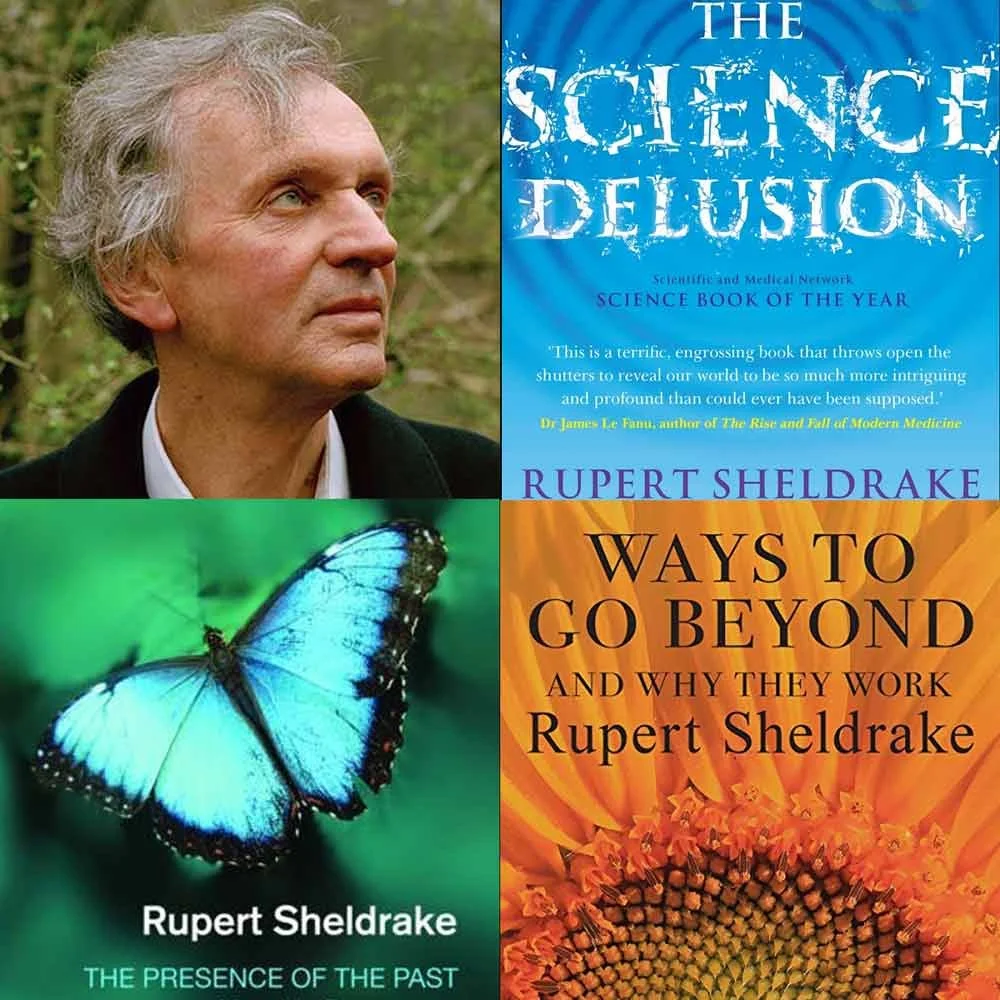
DR. RUPERT SHELDRAKE

DR. RUPERT SHELDRAKE

Biologist · Author
The Science Delusion · The Presence of the Past · Ways to Go Beyond and Why They Work

The idea that the laws of nature are fixed is taken for granted by almost all scientists and within physics, within cosmology, it leads to an enormous realm of speculation, which I think is totally unnecessary. We're assuming the laws of nature are fixed. Most of science assumes this, but is it really so in an evolving universe? Why shouldn't the laws evolve? And if we think about that, then we realize that actually, the whole idea of a law of nature is a metaphor. It's based on human laws. I mean, after all, dogs and cats don't obey laws. And in tribes, they don't even have laws. They have customs. So it's only in civilized societies that you have laws. And then if we think through that metaphor, then actually the laws do change. All artists are influenced by other artists and by things in the collective culture, and I think that morphic resonance as collective memory would say that all of us draw unconsciously as well as consciously on a collective memory and all animals draw on a collective memory of their kind as well. We don't know where it comes from, but there's true creativity involved in evolution, both human and natural.

DAN FUTTERMAN & ADAM RAPP

DAN FUTTERMAN & ADAM RAPP

Award-winning Screenwriters · Exec. Producers · Directors
American Rust · The Looming Tower
Capote · The Outsiders musical

We're all culpable in some way of being both good and bad, being virtuous and also questionable at times in our own lives. And I think when you start answering questions on either side of that too firmly, I think it allows the audience to disconnect from it. And then you just have this sort of a good and bad guy narrative that is oversimplified all too often in our culture. I think viewers will relate to this nature versus nurture versus DNA, raising all the questions of psychological and biological inheritance.

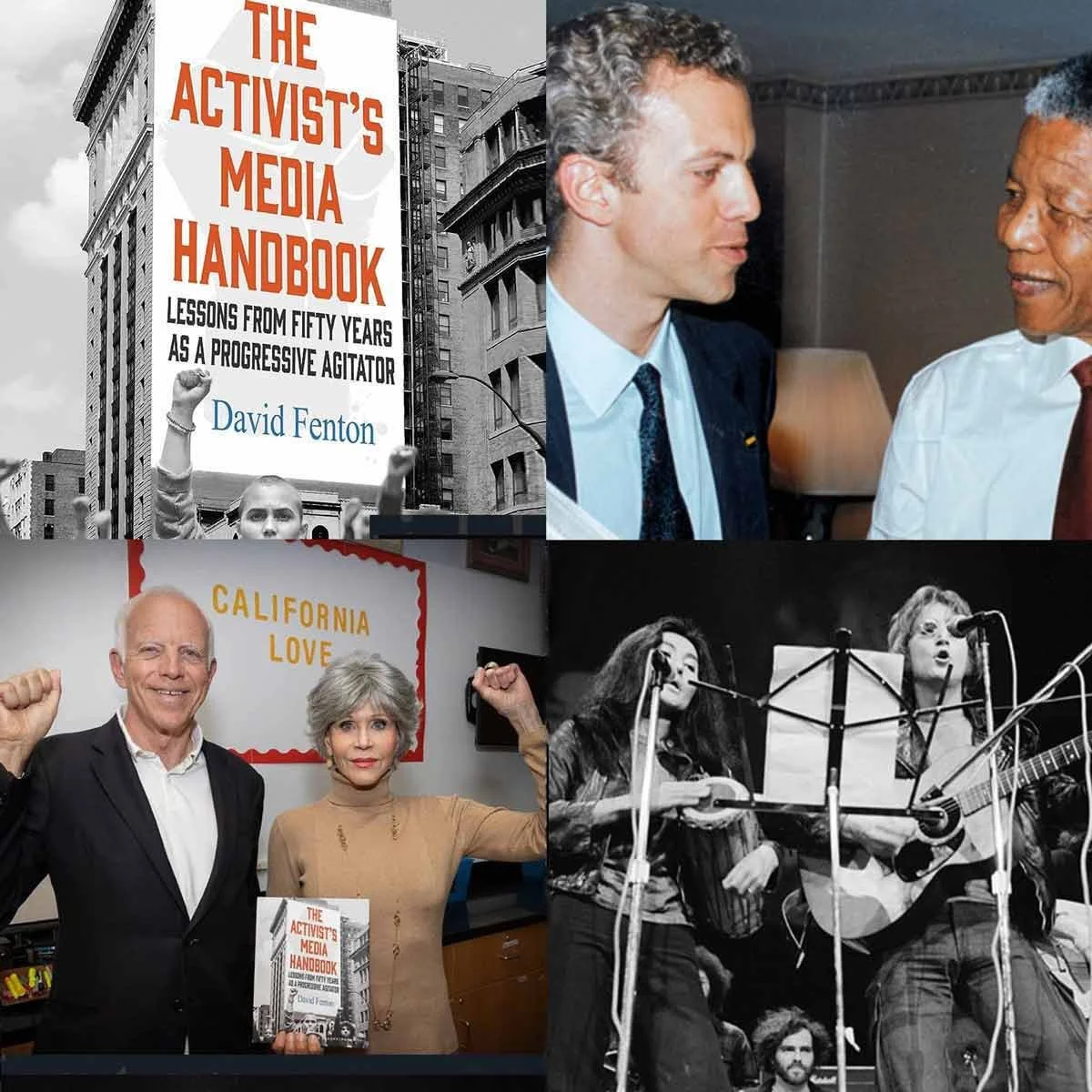
DAVID FENTON

DAVID FENTON

Author of The Activist’s Media Handbook: Lessons From 50 Years as a Progressive Agitator
Founder of Fenton Communications: The Social Change Agency
JStreet · Climate Nexus · The Death Penalty Information Center

It sounds like a cliche, but it really is true that history moves in pendulums and waves. And whatever is happening today is not going to last. It will change. So you have periods of concentrations of wealth and power, and then you have periods of rebellion. And I'm quite sure we're headed for another period of rebellion. You can see it a little bit now in the labor strife in the United States and the strikes. You can certainly see it in the massive demonstrations in France and Israel. Excessive concentrations of power breeds rebellion, and that's just inevitable. And the climate crisis is going to cause a lot of rebellion as people figure this out. And I think it's coming very soon, actually, because as you've noticed, the weather is getting very bad. It's become a non-linear accelerating phenomenon. And people will wake up to that. I just hope they wake up in time.

CHARLIE HERTZOG YOUNG

CHARLIE HERTZOG YOUNG

Award-winning Climate Activist
Author of Spinning Out: Climate Change, Mental Health and Fighting for a Better Future

There's that old saying, “blessed are the cracked for they shall let in the light.” For a lot of people like myself, I think it's true that losing your mind can be a proportionate response to the climate crisis. Those of us with mental health issues are often branded as being in our own world. But paradoxically, being in our own world can actually be a result of being more connected to the outside world rather than less. And in the context of climate change, it may be fairer to describe people who fail to develop psychological symptoms as being in their own separate anthropocentric world, inattentive to the experiences of the billions of other human and nonhuman beings on the planet, unaffected by looming existential catastrophe…

Sleep, The Nocturnal Brain & The Biology of Being Human

Sleep, The Nocturnal Brain & The Biology of Being Human

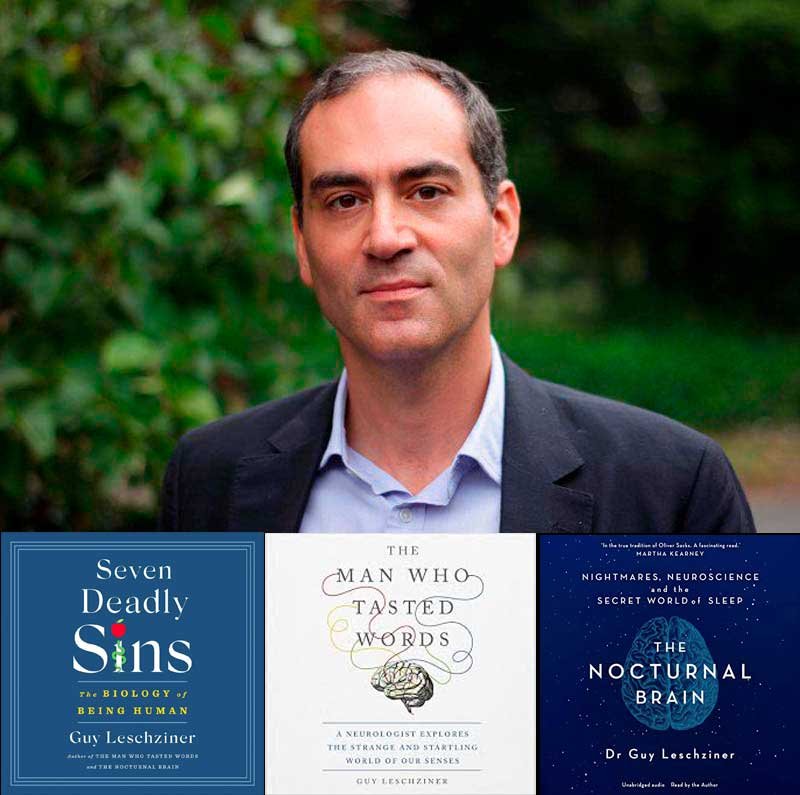
with Neurologist · DR. GUY LESCHZINER
Professor of Neurology & Sleep Medicine · King's College London
Author of Seven Deadly Sins · The Nocturnal Brain · The Man Who Tasted Words

 I'm fascinated by the extremes of the human experience, partly because it is so far removed from our own experience of life. In another way, when you look at people who have neurological disorders or diseases, these are really nature's experiments. They are ways of trying to understand how the brain works for all of us. By extrapolation from looking at these extremes, we can learn about the workings of our own brains. That's very much the case across all the areas of my work, whether it be sleep disorders, neurology, or epilepsy—how we regulate our emotions, how we move, how we experience the world.