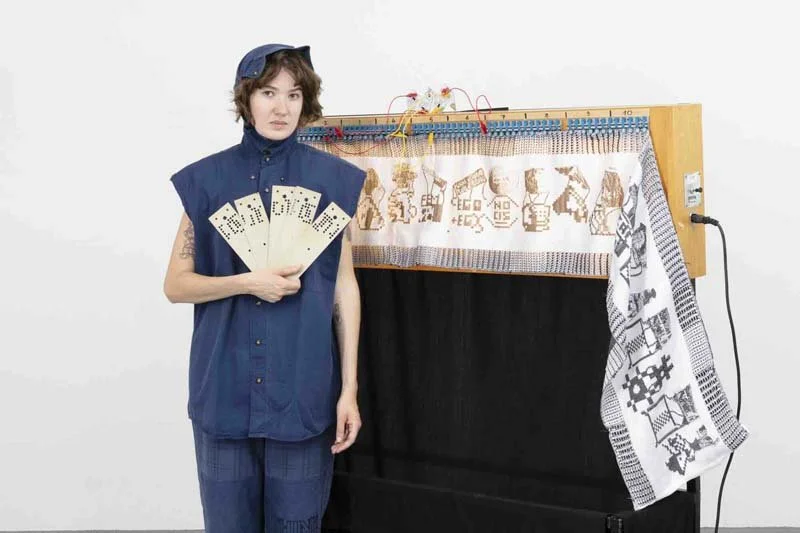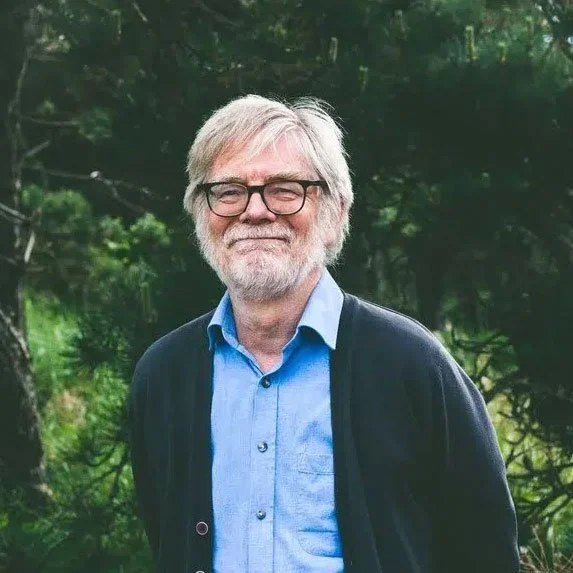


Karo Akpokiere's art practice reflects his interests in visual communications and storytelling across different cultural and material contexts. Heavily influenced by his graphic design background, he employs varied techniques and media to create work that fuses the experiences and observations he gets from everyday life to tell stories of a personal and/or political nature.
Akpokiere's work has appeared extensively in international exhibitions including the 17th Triennial of Tapestry, Lodz, Biennial Sesc_Videobrasil, Sao Paulo (2017), and the 56th Biennale di Venezia, Italy (2015). He has also worked on projects for Moncler, Italy, Nike Europe, Google, San Francisco, and WeTransfer, Amsterdam. @karoakpokiere
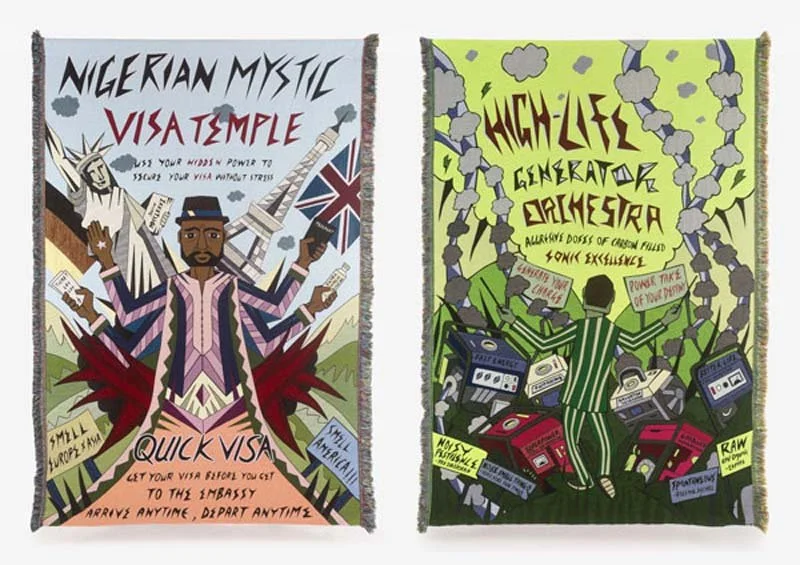
Where were you born and raised in Lagos, Nigeria. How did it influence your art and your thinking about the world? Growing up in Lagos made me sensitive to how messages of any kind can be shared in accessible ways; it also made me appreciate the beauty of language and its varied expressions. Most importantly, it gave me an openness to engaging with the world as I realised quite early that though Lagos was a huge city, there was a world out there bigger than it, and I wanted to see it!
How did you come to recognize art as your chosen path? For you, what is the importance of the arts? During my childhood, I was exposed to art in many forms. While this exposure helped shape my visual identity, I never considered becoming an artist. Art was something to create and enjoy while pursuing more socially accepted interests. The realisation that I could be an artist came when I was 18 from the most unlikely place: a youth programme at church.
I remember the Bishop’s simple yet powerful statements:
Not everyone is meant to be a lawyer, doctor, or engineer
Your talent is a pointer to your purpose
His words encouraged me to reflect on what I loved doing (which, at that time, was mostly drawing sneakers and little characters) and to imagine building a life out of it. That was the moment I decided I wanted to have a life that had a lot to do with drawing! It was a stark shift from the science-focused path I had been on.
Art is about living in the world and engaging with it. You move through life absorbing images, sounds, words, and light, developing interests along the way. Art is a way to make the broad spectrum of our experiences—from the mundane to the beautiful, from the good to the bad and ugly—visible.
Art is proof that you are here now, paying attention
What does your typical day in the studio look like? Walk us through your studio and your most used materials and tools. A lot of my work in the studio starts with drawing. I believe that every drawing has a million lives. These lives can be unlocked through collaboration and engaging with different tools that can help place them in different contexts and make them a greater part of our everyday lives. Because of this belief, the studio has a setup that accommodates working traditionally and digitally. A typical day involves drawing and figuring out who I can potentially collaborate with or where I can get things made. Traditionally, I work a lot with paper, gouache, and ink, etc. Digitally, I work with Illustrator, Procreate, Photoshop, and, most recently, Shaper3D.
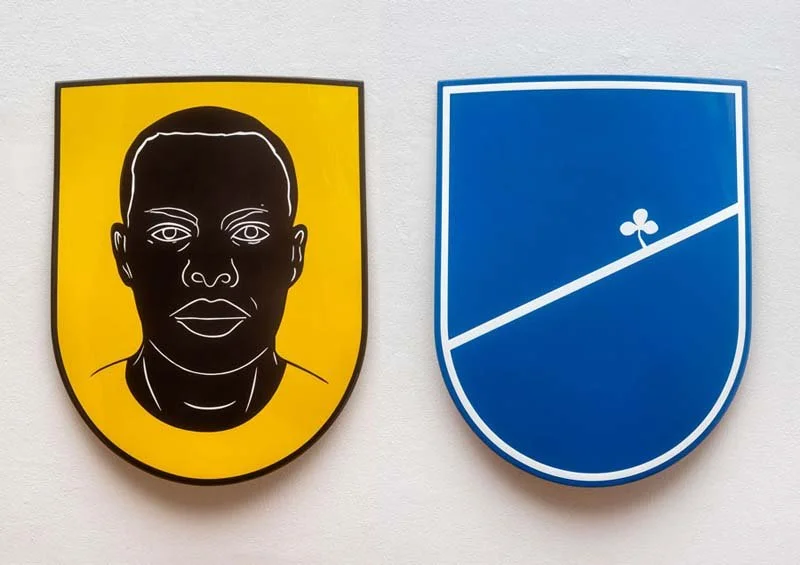
What projects are you at work on at the moment? And what themes or ideas are currently driving your work? One of the projects I’m working on is called An Alternative History of Symbols and Their Meaning. It involves using colours and symbols embedded in the coats of arms of federal states, cities, towns, and villages in Germany to depict a fictional state struggling with its identity and the failure of its institutions. It focuses on themes of appropriation, production of meaning, reverse ethnology, and the role of fiction in shaping contemporary realities.
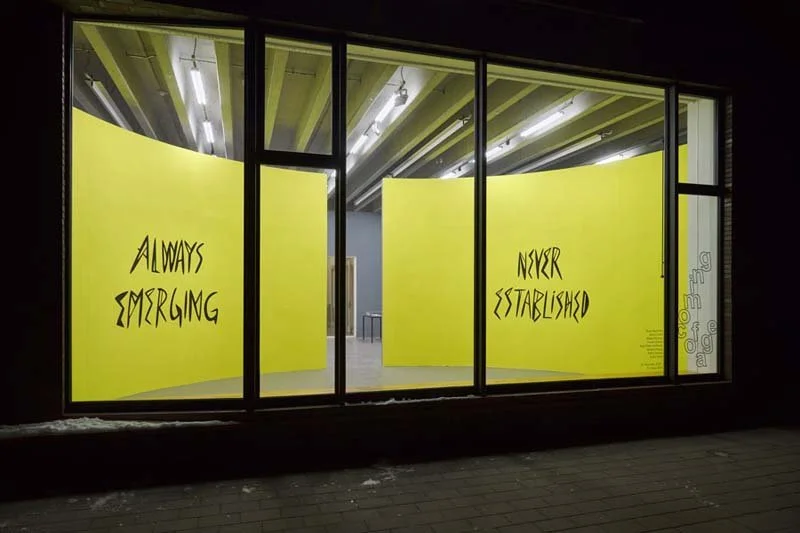
When viewers see An Alternative History of Symbols and Their Meaning, what emotions do you hope they experience? For my ongoing work, An Alternative History of Symbols and Their Meaning, I want people to pay attention to familiar yet forgotten symbols or objects in public spaces—to question why they’re there and what they represent. For Always, Never (2023), the aim was to encourage reflection on success, time, and ageism in the art world. Collectively, I want people to engage with the evolving portrait of an artist living life in all its mundane, exciting, sad, happy, and contradictory glory!
Which artists, contemporary or historic, would you like to meet? Historic – Niki de Saint Phalle, Faith Ringgold
Contemporary – Javier Mariscal, Nina Chanel Abney
Do you draw inspiration from music, art, or other disciplines? Most definitely! History, fashion, printmaking, graphic design, and music, to name a few.
A great thing about living in my city is… I live in Hamburg, Germany. It’s a beautiful, bicycle-friendly place that blends the energy of a city with the calm, welcoming warmth of a town.
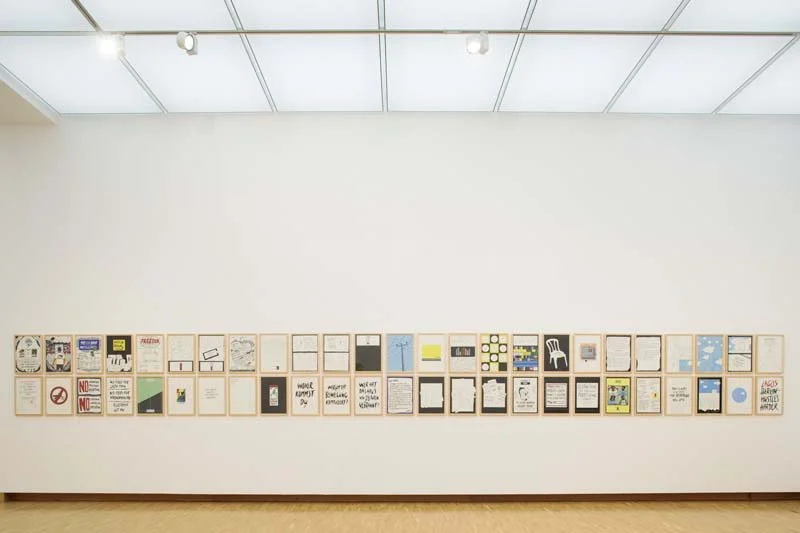
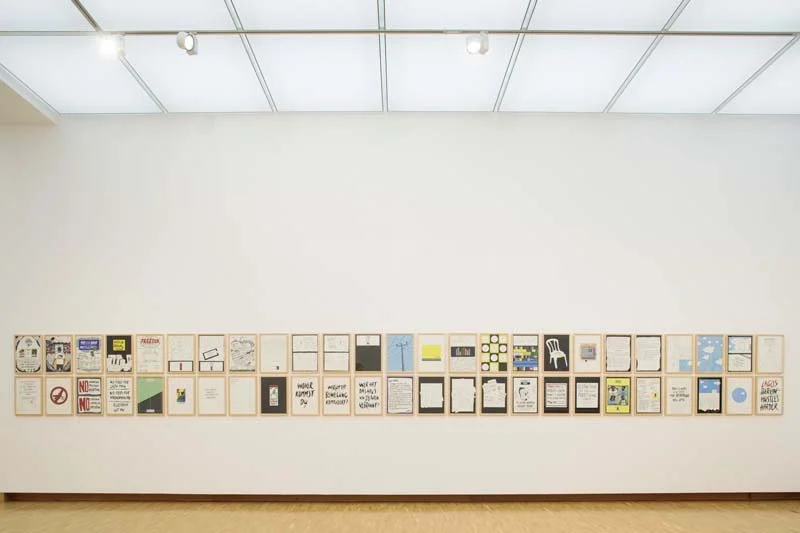
Can you describe a project that challenged you creatively or emotionally—and how you worked through it? Creating the drawing project Zwischen Lagos und Berlin for my participation in the 56th Venice Biennale was challenging, as it was my first time producing work for such a major international stage. While making the piece, I strayed from my usual way of drawing and experimented with telling a story about Lagos and Berlin in an open, non-linear way. The combination of trying an unfamiliar storytelling approach and presenting it on such a large platform stressed me out! I kept wrestling with what if questions: What if the work isn’t completed on time? What if it’s ignored? What if…! None of which was helpful.
Talking with a more experienced artist friend brought me back to myself. They reminded me that Venice, however grand, is just another exhibition. The best thing an artist can do is create work they truly believe in—everything else is secondary. Studying the narrative strategies in Jacob Lawrence’s Migration Series also reassured me, as it confirmed that my ideas for Zwischen Lagos und Berlin were both valid and achievable.
Tell us about important teachers/mentors/collaborators in your life.
Mr. Adeyemo was my textile design teacher at the art school I attended in Lagos. He taught us the significance of motifs in pattern design and how to create them. His openness helped me develop a deep appreciation for the versatility, scalability, and transformative power of small drawings—an appreciation that continues to influence my practice and keeps me open to multiple outcomes and possibilities.
My partner and I constantly exchange ideas about art, design, and everything in between. These conversations broaden our perspectives on life and the interconnectedness of things.
Saki Ho - Beyond being a great friend, Saki is an amazing designer. I’ve had the privilege of collaborating with her on several projects, where her creativity and insight continually inspire me.
Sustainability in the art world is an important issue. Can you share a memory or reflection about the beauty and wonder of the natural world? Does being in nature inspire your art or your process? The 24-hour sunlight, polar bear sighting, shifting icebergs, and the stark contrast of snow-capped mountains made my time on Svalbard one of the most profound encounters with nature I have ever had. Being on Svalbard, you are exposed to nature in such an extreme form that you learn to coexist with it rather than resist it. You are also confronted with the boundlessness and relentlessness of time in the most visceral manner! Time falls apart as the sun refuses to set. Day leads to day - no dusk, no dawn, just the constant presence of light.
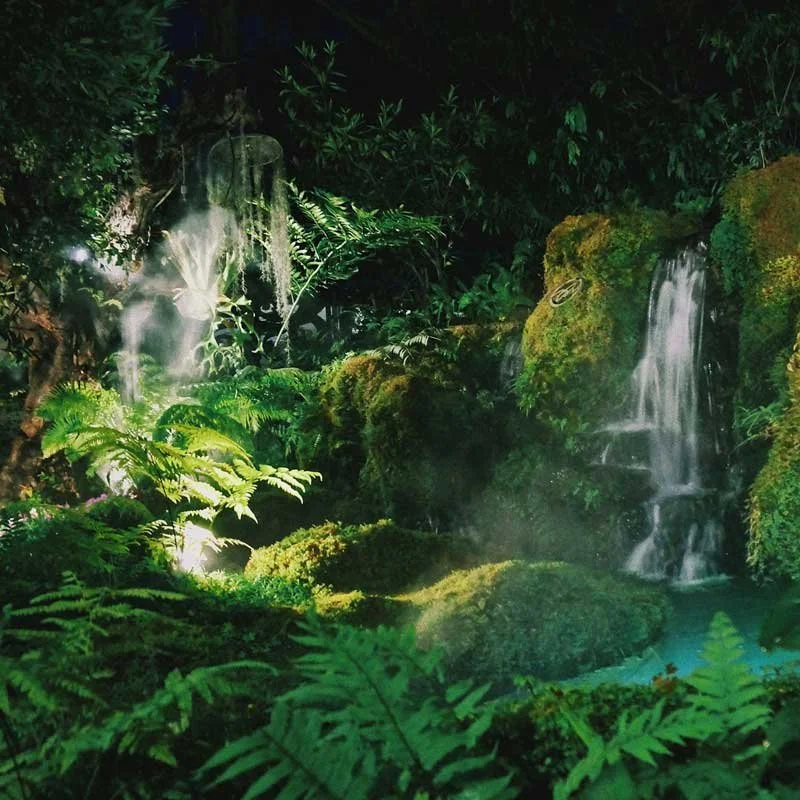
Being in nature fills me with gratitude for life and its diversity. You look at nature and you see a place for beauty and things existing without any heavy-handed rationale. Nature makes me realise that anything is possible, that there are a million ways to be an artist! Nature gives me an endless bank of forms to draw from for my work.
AI is changing everything - the way we see the world, creativity, art, our ideas of beauty and the way we communicate with each other and our imaginations. What are your reflections about AI and technology? What is the importance of human art and handmade creative works over industrialized creative practices? I believe it’s the individual and collective values we hold as a society that foster a climate of respect or disregard for the environment and the people who live in it. Handmade, industrial, or AI-driven—all are approaches to making and living that can be either destructive or constructive, depending on the values we choose to align with.
Exploring ideas, art and the creative process connects me to… myself, the beauty and contradictions of the world, and the people who live in it.