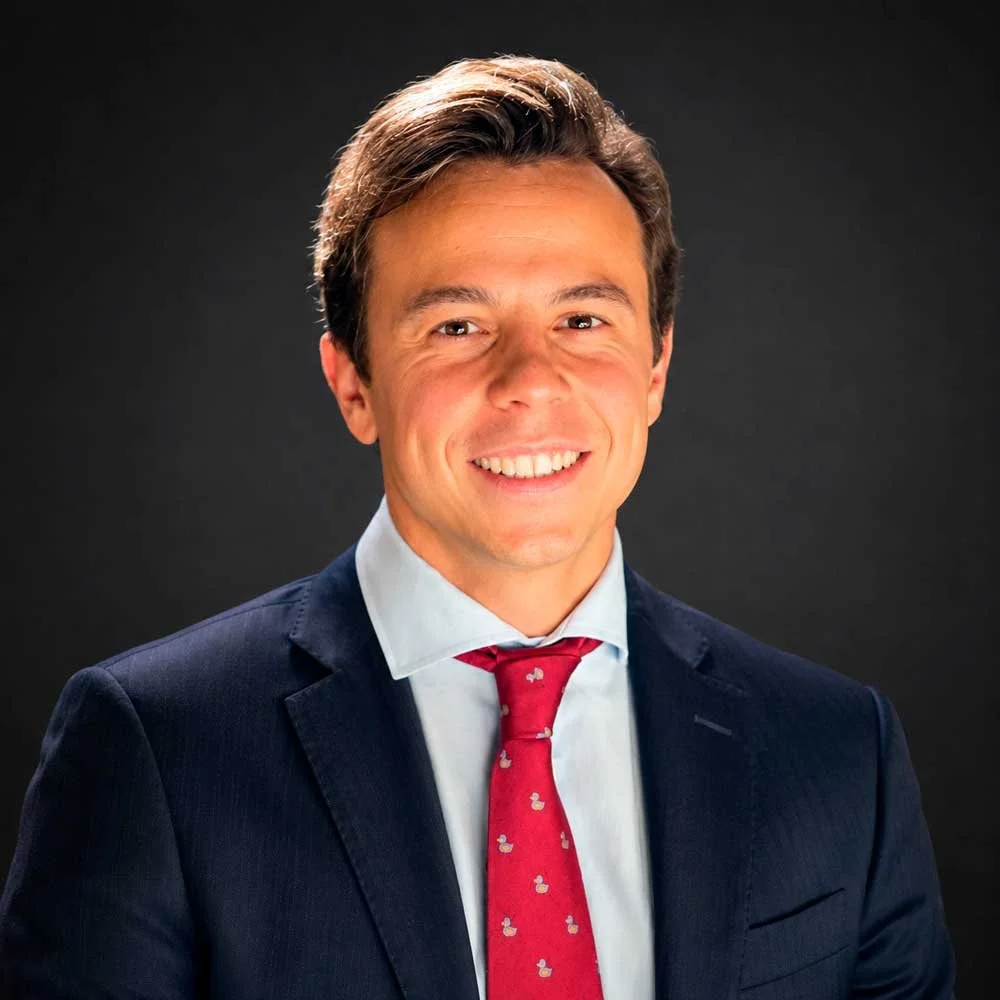
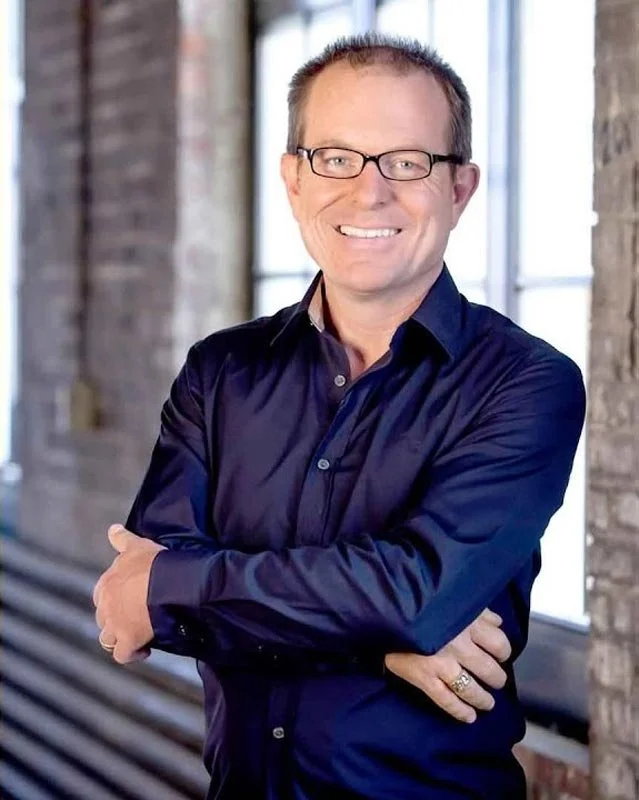
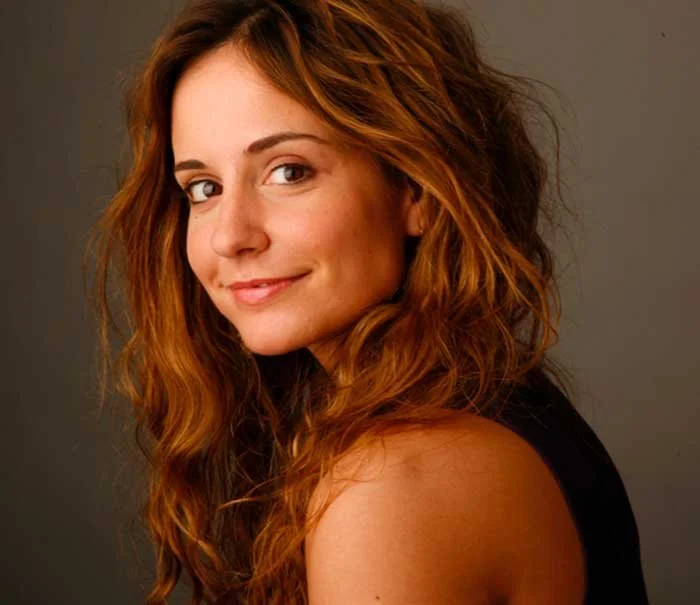
David Rubin began his career in New York on the production staff of Saturday Night Live, before working on the casting of Ragtime, Silkwood, and Amadeus. His career as a casting director includes more than 80 motion pictures, including The English Patient, Men in Black, The Talented Mr. Ripley, and Lars and the Real Girl. He has also assembled the casts of TV productions such as Big Little Lies, A Series of Unfortunate Events, and Little Fires Everywhere. In 2002, he received the Casting Society of America’s Hoyt Bowers Award for outstanding contribution to the casting profession. David Rubin served as president of the Academy of Motion Pictures Arts and Sciences from 2019 to 2022. (This interview was conducted during his presidency.)
THE CREATIVE PROCESS
David Rubin, welcome to The Creative Process.
DAVID RUBIN
It's a great pleasure to be here. Thanks so much for the invitation.
THE CREATIVE PROCESS
Well, thank you. You're now president of the Academy of Motion Picture Arts and Sciences, but you've been involved in casting principally and producing as well, such a body of work. Just tell us a little bit about your beginning or when you realized that casting directing was a possible role within film. We don't know about it very much.
DAVID RUBIN
My connection with actors and with entertainment in general began very early. I grew up in New York and like most children that grow up in New York, there's an exposure to tremendous cultural input. Live theater was really my true love, even from a very early age.
My mother in particular was an avid theatergoer and she was part of a group of women friends who would buy tickets to a series of plays each year. Very often when one of the women was unable to go, I was brought along and I saw some very adventurous theater from a very early age.
And then when I was able to go on my own, I really was such an avid theatergoer that by the time I was in my early teens, I developed this technique of getting backstage at Broadway theaters. Before going into a show, I had these little note cards and I would write a note to the star of the show and I would say, “Dear Angela Lansbury, I'm a great fan of yours.I'm looking forward to seeing your performance. As a student of the theater, I'd be so grateful if you would leave my name at the stage door after the performance with the possibility of my being able to meet you.”
And then, before going in to see the show, I would knock on the stage door of the theater. Invariably, there'd be some gruff old guy chomping a cigar. Somehow I wasn't intimidated, and I said, “Could you please give this to Ms. Lansbury?” And, invariably, I would say 95 percent of the time, after the show I would go back to the stage door and my name would be left on a list, giving me access to the star's dressing room, and I would be ushered into the star's dressing room.
Along with whatever guests they might happen to have, I would engage in a conversation with them about the performance and about their work. I have no idea why they were interested in talking with me, particularly with me as a 13- or 14-year-old. But I think I was just so avid and so keen to learn from them that I really had experience in speaking with some of the great creative performers of the day.
Without knowing anything about my future in casting, it was sort of an advanced preview of what I would end up doing professionally. I then, all through school, acted in plays. In high school, I began directing theater and then similarly in college at Amherst, I directed quite a bit of theater. Again, I didn't know after graduation what I would end up doing. So I moved back to New York and waited on tables, as most people do when they go back from college, particularly to a city like New York.
I got a job initially as a page at NBC at 30 Rockefeller Plaza. Most people know the pages at NBC from the TV series 30 Rock. Shortly thereafter, I set my sights on getting a job on Saturday Night Live, which was really at the height of its first wave of popularity at that moment because it was still the original cast of performers on that show.
I was lucky enough to have met enough people there to get a job on the production team as a lowly production assistant, but it was still an eye-opening experience. And then the cast of Saturday Night Live were all becoming huge movie stars.Most of them were going back and forth to Hollywood to make films, and they announced that the show was not going to return. So we all sort of looked for jobs.
I happened to have met a woman who was head of casting at the television network, NBC. She was looking for an assistant and hired me. I suddenly found myself at a desk looking at photos and resumes of all the actors that I had been seeing all those years in television shows and films, and meeting personally backstage at Broadway theaters. Little did I know that there was actually a profession and a career that would call upon what really was my passion and my hobby, which was actors and their performances, and telling stories through the media of film, television and theater.
THE CREATIVE PROCESS
It's so interesting, and I'm so fascinated. I think it is a mysterious profession, as you say. But it's so fascinating that those qualities—even things you were doing backstage at the theaters, making introductions, getting a foot in the door or opening the doors for others to get their foot in—are things that you draw upon and expand into your professional role.
DAVID RUBIN
Yes, and there are times now when I, as a casting director, because of the relationships that I've established over the years, am pretty much able to get a ticket to any Broadway show, even the toughest ticket. I think back to those days when I had very little money as a child and our family was not wealthy.
I really scrounged for theater tickets to the extent that I would find out when a particular show was in intermission. I would go outside the theater. Occasionally people would leave a show halfway through and drop a program on the sidewalk, and I would scoop up the program and march into the theater at the interval as though I had been there for the first half.
Then, as the lights went down for the second half, I would quickly scan across the seats to find an empty seat, slip into the seat and watch the second half of many shows. Because I wanted to see them and I was happy to see half of it. So now when I go and I'm sitting in house seats, you know, front and center in the fifth row of the orchestra, I'm deeply moved by how my ultimate career has connected to my passion as a child.
THE CREATIVE PROCESS
And it's so competitive, your industry, and this eye for the chance or just seeing an opportunity when it's there is incredible. We're an educational initiative, and we work with wonderful schools, including your alma mater, Amherst. Beyond what you learn in the classroom, there is just being available and being an intern. You learn by finding the place for yourself or making the place for yourself.

PORTRAIT OF DAVID RUBIN by MIA FUNK
DAVID RUBIN
I think as a young person just sort of finding your way, you know, I didn't set my sights on casting. I was open to really whatever came along. As it turned out, the thing that came along very early for me—I could have stayed on the production side of things. I could have continued in the vein of what I did on Saturday Night Live, being on a production team on a television show.
The fact that casting presented itself and connected with me so personally was a fortunate turn of events. I think that very often younger people have to sample quite a bit before they sort of find their spot, find the niche, find the thing where all of the personal attributes and skills that you've had from an early age somehow click with a particular profession. It often happens quite late for people.
I think the joy is that it comes eventually, you just don't know when it is. I understand when young people are impatient and frustrated with the fact that they haven't found their path, but a little patience goes a long way in that regard.Truthfully, each adventure along the way either teaches you what you don't want to do, or teaches you how you do or don't want to behave and act in professional circumstances.
You could take a job with a horrific employer and yet learn a tremendous amount because you're shown by example. If you're open to experiences, I think you can learn as much from the negative ones as the positive ones. And then eventually, hopefully you'll be in a position to create a positive experience for others.
THE CREATIVE PROCESS
And there's a lot of talent that exists underneath difficult people as well. I'm sure in the casting process, you know that there are brilliant actors or brilliant directors who are problematic people. So you're saying it's mixed.
DAVID RUBIN
It absolutely is mixed. No one is really one or the other. The truth is that when it comes to the creative process, those people who are the most creative, adventurous, daring and bold find that daring and boldness in a very complicated emotional persona, and out of complicated, challenging lives and life experiences.
Some of our greatest actors, for example, have been the most troubled. Coupled with that, they have found a way through the craft of acting to expose themselves emotionally and temperamentally. And that's what I think audiences really respond to, is how complicated, how vulnerable but also how willing to expose their interior life they are.
Along with that, you're right, it doesn't come with the easiest personality on a day-to-day basis. I would also say that one of the key ingredients of a great actor is to really be in touch with the inner child. I always say, particularly because I've had such experience in working with children as actors, children by nature are actors. They play, and part of a child's play is to take on different roles. You be a policeman, I'll be a bank robber. You be a doctor, I'll be a patient. There's almost no filter in children, so they're incredibly free.
Then around the time of adolescence, a lot of filters come up in all of us. We are starting to question our identity, and we're very protective and don't want to show very much. An adult actor has somehow managed to connect with the child that they were, so that there aren't those filters. The audience, the filmmaker, the director or I, the casting director, can see in them the ability to be emotionally free and emotionally transparent.
The one amazing thing about the camera lens is that it is really the world's greatest bullshit detector. The camera lens reads thought and emotion as much as the human eye does, and anything that is false, premeditated or planned doesn't feel real. So a great actor has none of those false beats in their work. It's all extremely connected to who they are personally. The camera lens sees it. And the audience loves it.
THE CREATIVE PROCESS
So that believability being so important. We should walk through some of the amazing films and television shows and series that you've worked on. I know a great mentor to you is Lynn Stalmaster, so maybe just speak about some of the approaches to casting and how you've applied that through your earlier projects up to today.
DAVID RUBIN
I've had two mentors. The first person was the woman who hired me initially at NBC, a woman named Mary Goldberg, who was actually not at NBC for very long. Prior to that, she had been the longtime casting director for the New York Shakespeare Festival, downtown on Lafayette Street in New York, the home of many of the great productions through the 60s and 70s. She had adventurous tastes.
She had connections to all of the theater actors that I had enjoyed on the stage, but she also had the strength of her conviction. What I learned from her is that it's not about just funneling ideas of who might play particular roles in our collaboration with a filmmaker, but it's about having a point of view about it. It's about knowing the scripted material so well and the way that each character helps move the story forward that you're able to be articulate about why one actor may be a more interesting choice for a particular role than another.
She taught me very early on about the importance of casting. I mean, truthfully, if you imagine your very favorite film of all time—And then think of that movie with an entirely different set of actors. It's almost impossible to imagine, because the performances and those characters—those actors and those characters are sort of eternally wedded together when it's effective.
That's an indication of how crucial the decisions made in the casting process are to the success of telling a story in film and television. Because the stakes are so high, I learned from Mary Goldberg how important it is to not settle, to always think of another idea. And then I moved to Los Angeles fairly early on in my career because a legendary casting director, Lynn Stalmaster—Lynn being actually a man.
I think back in the day the name Lynn was a relatively common man's name; today not at all, but Lynn was known as one of the premier casting directors and one of the founders of a profession. That's an indication of essentially how new the profession actually is. Movies have been made for a hundred years now. But until the mid-1950s, movies were primarily made by big Hollywood studios, and those studios had actors under contract. They were exclusive to those studios, and the studios told the actors what job they were doing next.
So when a director was about to make a film, the studio handed them a list of all of the actors under contract to that studio. They, in conjunction with the heads of the studios, decided, “Oh, this person is available in September, let's put them in this part, put them in this part.” As a result, a lot of actors were playing the same sorts of roles over and over again. They weren't being used in creative ways, and they were frustrated with the fact that they were being typecast in the same kind of roles over and over again.
Then in the mid-1950s, because of various governmental restrictions on movie studios owning movie theaters, it became a monopolization of the industry. The government said no more, and those movie studios—many of which are still in existence, MGM, 20th Century Fox, Warner Brothers—had to release those actors from being under contract.
Suddenly, when a director was about to make a film, they had the option of casting any available actor in their film, and they needed somebody to direct the casting process. Lynn Stalmaster was one of the first people to open up an independent casting office where any filmmaker could hire him to cast their movies. He cast some of the greatest films of all time, from The Graduate to West Side Story to The Sound of Music to Judgment at Nuremberg. It's a countless, endless array of brilliant films.
He had heard about my work in New York and had an opening in his office in Los Angeles. I got a call from him asking if I had ever considered a move to Hollywood. I absolutely had not. I was a dyed-in-the-wool New Yorker and really hadn't ever thought of moving to Los Angeles, but the opportunity was too good to pass up.
I learned tremendous lessons from Lynn along the way. The most helpful, I think, both professionally and in life, was when we were in a room with a producer and a director, and we were talking about actors which might be the most interesting, most appropriate, most talented, most versatile. I noticed—and I would go to these meetings with Lynn initially—that he wouldn't say much and everybody else was offering their points of view passionately and strongly.
At one point, we took a break in the middle of one of those conversations, and I said, “Lynn, everybody else is leading us in a wrong direction. Why are you not speaking up?” And he said, “It's more important than having a great idea, to convince others that the idea is a great one.”
In order to do that, you must take the temperature of the room. Before you speak, you should know where everybody stands on any particular issue. And then you come in last, and you sort of knock down each of their presumptions and each of their positions with a well-reasoned, well-articulated, fully informed argument.
I've been operating that way ever since. I'm never the first one to speak. I want to know where everyone else stands in so many circumstances, because it's only then that you're able to address their concerns directly. I'm an advocate for my ideas as a casting director, and it's very important, I think, to understand where all of my collaborators are standing in order for me to hopefully bring them around...
SHOW FULL INTERVIEW ▼
...Because I'm hired for my creative point of view. You know, casting is a very personal service. It's a one-on-one conversation between me and a filmmaker, or me, a filmmaker and a producer. Behind closed doors. Nobody sees the process happening but us.
It's one of the reasons why it's so mysterious, why so many people don't really understand what it is. They think it's, you know, let's make a list of our favorite actors and pick one. It's so much a conversation about the psychology of the characters on the page and the psychology, talent and abilities of the actors, and trying to find a match between them.
Also, to make no decision in isolation, because the minute you cast one actor in one part, that will affect how you look at casting the actors that are in the scenes with them. So if you cast a relationship and it's one kind of person, one kind of actor, that will affect your options and your choice ultimately for anybody who encounters them on the screen. All those lessons were learned from Lynn Stalmaster, who remains a dear, dear friend. He is 92 now.
It was a tremendous joy for me when I became more and more involved in the Motion Picture Academy to be able to honor him at the ceremony where he became the first casting director to receive an Oscar for his body of work. So, you know, he's a treasured friend and a mentor, and it's a wonderful touchstone for me to another time in Hollywood. I'm always inspired by the way he did his work.
It's very interesting that you spoke about the mystery, and it's so fascinating to look behind the curtain. I imagine it's kind of part chemistry lab, almost like a Rubik's cube. As you say, one actor can upset the harmony.
I liken it to a fabric or a mosaic.
Mosaic, yes.
Yes, I think that is absolutely true. Actors don't do themselves any favors because they think if they don't get a job that it is about what happened in the room in their audition in particular. But the truth is, so much of the casting process is somewhat related to their audition, but so much of it is related to a larger conversation that happens after they leave the room.
Which is, if we cast that actor, who clearly is talented, what does that do to the story we're telling? If the character is super aggressive and antagonistic on the page, it might be interesting actually to cast a character who innately isn't so aggressive and assertive. Your preconceived notions about what a character needs to be very much change during the casting process.
What we think we're looking for initially is not often what we end up with. That's because we're open to the possibilities that every actor brings into the loop. It's why it's important—you used the word experiment or laboratory just now, and that's exactly what it is.
It is a way for the filmmakers to hear the lines of a script out loud and on their feet for the very first time. Because prior to the casting process, it exists as words on a page. So to hear the many different permutations and varieties that actors bring in their auditions is a really educational process for those of us who are trying to populate the story.
I often think that every actor who auditions should get a writing credit on every movie. Because we learn so much by what they bring into the room. The truth is, if they're really talented and memorable, and their craft is indelible in our minds, they won't get the job this time because it somehow wasn't right in creating that mosaic. But next time, they'll be remembered. They'll come in and be brought in when they're really ripe for the role, and they'll invariably get the part. So it's cumulative in all ways. With the use of technology now, certainly with the use of video, we're able to go back at the end of a casting process and say, “Remember that woman who came in in the first week where we thought she was talented but not right?
Now we've had all these conversations about the story we're telling, and we're starting to figure out what this thing is we're making. Let's look at that video again.” We bring up that video, we watch it and we go, “Wait a minute, what were we talking about? This is exactly where this character is heading in our minds.”
So we then revive the possibilities of that actor ultimately being cast, and that happens many, many times. We're not looking for somebody to come in and tick all the boxes of what we think the requirements are. Lynn Stalmaster has always told me that his favorite word is open.
Because he wants to be open to what and who walks in that door each time, regardless of one's preconceived notions. The script may say that a character is a 45-year-old white man with a limp and red hair. It's a casting director's job in particular to suggest other options to the filmmakers.
Does it have to be a man? Could it be a woman? Does it really have to be somebody with red hair? How does that affect the story that we're telling? The limp, well, interesting. Does that affect the backstory for the character, which somehow informs how he behaves in this story? That may be something where we should find an actor who is physically able to incorporate a physical abnormality into a characterization. All of those things, you know, scripts are written in great detail so that anyone who reads them, particularly the people who write the check to finance the movie, see the film in their minds very specifically.
But when we come around to making the film, it's really incumbent upon the casting director to, in some ways, ignore all of those specifics about the character and only focus on how the character helps tell the story. That opens up a million possibilities—gender possibilities, racial diversity possibilities.
It's very important not to get hidebound to what the screenwriter, with all due respect, says so specifically in the script.You just keep your eye on the story and experiment. I always talk about the casting room as a laboratory because it really is about using as much time as you possibly have to try various combinations of ways of playing these roles.
It's a tremendously stimulating dialogue that we have that no one else who works on movies really understands because they're not engaged in it. I always feel like everybody is an amateur casting director because they have actors they like. So you think it's an easy job.
It's this alchemy and negotiation too, because if you can't get them—not everyone's available—and then getting them all together. You've directed casting on a number of wonderful ensemble projects.
Well, that's the great joy. It's one thing to have a film carried by a particular movie star. But to have a group of people who may not be as well-known come together to create an ensemble and tell a story where very often they don't bring a tremendous amount of baggage from all their past performances, and the audience is discovering them for the first time or relatively for the first time.
I mean, I always talk about The Talented Mr. Ripley, a film that I worked on with the great director Anthony Minghella, where we were lucky to have a group of actors who were not unknown. They had begun to do work, some of which had not yet been released, but they were on the cusp of really being able to do brilliant work.
So to have Matt Damon, Gwyneth Paltrow, Jude Law, Philip Seymour Hoffman and Cate Blanchett in essentially an ensemble piece when people hadn't already seen them in a million movies, and we were fortunate enough to ride the wave of their careers. But they weren't being looked at for leads in movies at that point. All they had been doing was obviously notable work.
So that's a great challenge. It's one of the things I look for in a script, is an opportunity to assemble a group of people who are comparatively new faces. Although I do understand how valuable a movie star can be in telling a story too.
And more recently, though they certainly are stars, was the wonderful series Big Little Lies, which had beautiful roles for women but also male characters. Just so many wonderful roles.
That project also had the benefit of catching a moment of the zeitgeist. The focus of the story was on female empowerment, abuse and female relationships, so beautifully drawn. And the beginning of the Me Too movement. There was a lot going for it culturally, as well as just a ripping good story. It was a really good novel, and it was beautifully adapted by David E. Kelley. But yes, I think it was important to pull together, and obviously we had, actually at the start, not to take credit for it, Nicole Kidman and Reese Witherspoon, who sort of together optioned the novel and had it adapted. So they really led the charge, and I'd known them both previously. I'd worked with Reese on a movie called Wild about the Cheryl Strayed book, and Nicole and I, way back, because I was the first person to cast her in America. She had literally arrived in Los Angeles a couple of weeks earlier when I was casting a movie about NASCAR racing called Days of Thunder, and I was looking for a leading lady opposite Tom Cruise. Yes, I was the one who said, Nicole Kidman, Tom Cruise.
Tom Cruise and Nicole Kidman. So you're a matchmaker in a double sense.
I have since apologized to Nicole. No, we've had many laughs over that day when I did introduce them. But beyond the two, you know, bringing in Laura Dern and Shailene Woodley and all the rest of that cast tremendously, and also creating families. I'm very drawn to assembling families. There's a specific challenge in it. Of course, there's always initially the resemblance factor—who are the parents and in what ways do the children resemble the parents? And then it's how the energy of the collection of kids matches or is in conflict with the parents.
Recently, I worked on a series called Little Fires Everywhere, where the two leading parents, one led by Reese Witherspoon and the other by Kerry Washington, had children, each of whom had their own storyline and a very prominent and demanding emotional storyline. So the added challenge here was to find not only actors that felt organically, completely believable as the children but also had the ability, craft and emotional accessibility to play extremely demanding characters.
The reason I think I'm as engaged with my work now, maybe even more so than ever before, is that each film is a completely new challenge. I've been fortunate enough never to have been the go-to guy for a particular kind of movie. I think there are wonderful casting directors who are known for a certain kind of comedy, a certain kind of family film. It's the diversity in my career that has given me the most pleasure. I think just as an actor becomes an actor because they want to play a huge variety of roles in their career, I have found the most pleasure by the diversity.
So in my casting office, there's a waiting area where the actors wait before they come in. I'm very happy that there's a poster of The English Patient very close to a poster for Harold & Kumar Escape from Guantanamo Bay, very near Hairspray, very near Lars and the Real Girl. Because I think of all of the unique experiences that all of those have represented. And also the very specific challenges that each of those genres present. Each time you open up a script, there's a possibility to cast. I think, what adventure is in store? It must be what a painter feels like when they're looking at a blank canvas and think anything is possible.
I'm a painter! I'm a painter, except I don't—well, actually now I'm doing some kind of glamorous people, but it's lonelier.
It's lonelier. It's not collaborative. I understand that. But in terms of the possibilities and the new adventure that each canvas presents... anyway, you can speak more to that than I can.
No, I think that it's true, and I think what's very interesting—and it takes a certain amount of courage, because you've been at this a long time, but when you're always exploring new genres or going outside of your comfort zone, you have, as you say, that word open. You're constantly reopening your senses. And when you're always doing the same thing, there's not risking failure.
One thing that's very important in the casting process, along with many other aspects of filmmaking including production design, casting design and such, is authenticity. It is being able to be accurate about the world of the film.
For example, there was a period of time when I was, just by coincidence, working on a number of films in a row that took place in the Deep South. Fried Green Tomatoes, My Cousin Vinny, a movie called The War with Kevin Costner that involved a bunch of small-town kids in the South. I'm this Jewish urban guy from New York who had never been to all of these places in the Deep South, but I went there on those films and drove around to find local actors from town to town in Alabama, Mississippi, Tennessee and Georgia, and really strived to represent those worlds accurately.
Occasionally there will be somebody with a very thick Southern accent who will come up to me and say, 'Fried Green Tomatoes is one of my favorite films of all time.' It's tremendously gratifying to know that we got it right. That people didn't look at it and say, 'It's not right, it's not what I know, it's not authentic.'
And then there are those imagined worlds or heightened worlds. Films that I've worked on like Men in Black and The Addams Family, where it's not real life, and it's an invented universe, and you, as a casting director, along with all the other collaborators in the film, have to decide what the rules of this world are. What's required to make an authentic universe that's different from real life but has its own rules and its own requirements?
For movies like that, I need an actor who is able to play characters with a certain size, with a certain theatricality. To be a member of the Addams family, or be somebody who's half in Men in Black, half alien, half real person. I need to know which actors have that ability, because it's not everybody's strength. Some actors are fantastic and very comfortable in extreme naturalism, in working very close to the vest, emotional, intimate ways. And then there are other actors who have the ability to play characters with real size and comedy too.
The ability to trust the rhythms of a comedy script and deliver laugh-getting dialogue is its own skill. Casting directors are both blessed and cursed with incredible memories, and I have a memory bank of all the actors I've ever seen in my head.The amount of work that I've seen them in has informed what I believe is the range of their abilities and the areas in which they're best used to tell stories.
Jay Roach, who's a director whom I love and have worked with many times, talks about an actor's superpower, to sort of get a sense of who they are as people, what they've done in their career, where they've scored most effectively, and to try to ideally utilize them in storytelling for their superpowers. They may be versatile in many ways, but I find that the results are most effective when you bring them into a cast where they're being used in their best ways, for the ways in which they deliver most openly.
With each actor, that's a slightly different thing. So a lot of my conversation with filmmakers is about what their strengths are, what they bring to the table and how useful it is for us in the telling of the story.
Interlude: Yu Young Lee (Georgetown University, BA, English, Film and Media Studies, '24 ▼ CLICK TO READ
Hello, my name is Yu Young Lee. I'm currently a sophomore attending Georgetown University in Washington, D.C., and I'm majoring in English. Hearing David Rubin talk about the casting process as an unapologetically creative one has made me appreciate just how experimental and unbound the whole filmmaking process is. And how in this freedom that is so intrinsic to this artistic endeavor, there is just so much possibility.
Now more than ever, we are going beyond these questions about who best fits a mold, and we're starting to think about the mold itself. What kinds of stories are we telling? What kinds of stories are we listening to? Whose voices have the mic, and whose voices deserve to have their turn? Rubin's experiences with an array of genres, actors and stories, and his advocacy for all sorts of films, especially those outside the quote-unquote mainstream, resonates deeply with me.
I was born in Korea, and I've spent most of my life outside of it, growing up in Indonesia, the United Kingdom, Singapore and now the United States. I can't really say that I have a home in the most conventional terms, but I like to say that I find one on the bridges intersecting all these facets of myself and the art I immerse myself in.
Rubin mentions how he takes pride in the changing of the name of the Academy Award for Best Foreign Language Film to Best International Feature Film, and I too believe it's an important change, a critical one even. To some, one word is a subtlety that hardly makes a difference, but the bridge of inter- and internationalism is not lost on me. The abrasiveness of such a word like foreign isn't lost on me either. Foreign is akin to alien, and to have such a concept like it in such an innately diverse world of film is to demarcate the scopes of the human experience.
When Parasite won Best Picture, Best Director and Best Original Screenplay this year, a lot of people asked me what I thought. How did I feel as a Korean to see a Korean film have such a victory? Was I proud? Well, yes, of course I was.But I was more hopeful of what it represented.
Later on in this interview, David Rubin says, "People fundamentally want to be heard and want to be seen." And in that global moment of Parasite's recognition, it felt like I was seeing into a peephole of the future where Rubin's words ring truer than ever. It was a victory of art for art. Because the real success of Parasite is not a translation of the Korean language, although this in itself is not to be dismissed, but rather a transcendence of film as a shared experience.
When you see a good film, you know. It's hard to put this universality and power into words, but I'd like to share a short prose poem that I wrote in my attempts to describe it. The title of this piece is "Trailer," or trying to describe what good film is in the span of a shortening minute.
Only in this instance is time measured by your inability to grasp it. The slippage, like porridge through your fingers, only it tastes better. When in the fifth grade, they talked about synesthesia. You didn't really understand how the senses eloped together and transcended one another, how it could all muddle up so decidedly in your brain. Like you could have taste buds on the soles of your feet, the ground you tread on made a palatable palate.
But here, your eyes are eating the moving pictures up like breakfast. Each frame and frequency add up to instances, one heralding the next, and the next thing you know, you are watching many instances, you have forgotten what an instance is.They all disappear into one phantasmic feeling that leaves your gut shivering and your heart quaking.
Thank you for listening. For those of you just joining, Mia Funk continues this interview with casting director David Rubin, who is currently the president of the Academy of Motion Picture Arts and Sciences.
It's interesting because I did recently speak to with director Jay Roach and also Jordan Kerner producer of Fried Green Tomatoes. Jay was speaking about you and he was saying–because I imagine with a director that they're thinking about many things, they're thinking about the script–but when you're working with a wonderful casting director, it's like, oh my god. You're focusing so much on casting, all the time it's on casting, so you're helping bring them back to that essential part that they may lose track of with all these other plates spinning.
Without question, I think that's a big part of it. From the very time that the studios closed and people were no longer under contract, where it was an easy job—you had a choice of these five people who happen to be available that day when you're starting to shoot. But directors have so much, and I think that's a wonderful analogy with plates spinning. All the time we're only thinking about the possibilities of actors.
That goes for all the collaborators in film. It goes for the cinematographer, the costume designer and the production designer. We are keeping our eye on a particular aspect of filmmaking and trying to assure that the director doesn't get distracted in the wrong way.
There are studio executives who would love to have a big, fancy box office name in a particular part. But it's not always the best for the telling of a story. Sometimes that big star may be distracting in a role. There are many things that can create bumps in the road along the way in telling a story. Having a too-famous actor in a supporting role could bring you out of a story when you're completely enthralled. Or, if a producer says, 'I have a nephew, he wants to be an actor, let's find a role for him.'
All best intentions, putting that nephew in a role, even in a small role, and you're in a scene, and that nephew comes up and takes the movie star's order at a restaurant, and there's something fake about it because they really don't have the craft to do the job. It's a bump in the road for the audience. You have enough of those and it could be a bumpy ride. I do think it's important, as you say very astutely, that it is all of our jobs as the collaborators in the film to keep our eye on a particular ball and to really make sure that the director is always brought back to the story and not distracted by all the many things that go on in the film.
All the decisions, I can imagine. All of it's an imaginative capacity, but when I think of some films like Gravity where all these things have to be created or even added later, you really have to imagine what that will be like when you're casting in this.
No, absolutely. I mean, that certainly comes with highly technical films that have a huge post-production aspect to it.There's a lot of extrapolation that goes on because we have to be able—and this comes from our experience with actors over the years and our deep understanding of the script—we have to be able to predict how the personality and talent of a particular actor will rub up against the character that's on the page because they're not the same thing, obviously.
We have to be able to understand and vouch for the great likelihood that that actor in that role is going to be more interesting, more vivid and more stimulating to watch than all the other actors we're talking about. And also that that actor opposite this other actor that we're talking to will somehow connect with each other and create a relationship that is going to be thrilling to watch.
Again, no choice is made in isolation. Once you set one person, all right, that's fixed, then everything else is decided in relation to that. Then you set the second person, and then you set the third person in a relationship to the first two that you've set. It's guesswork to a degree, but it's guesswork based on years of focus and years of experience in seeing people work.
The actors that I know best, and I trust my instincts best, are honestly those that I've seen on stage more so than those I've seen on film or television for the following reason. Theater is the only medium in which an actor is fully in charge of their performance from the minute the curtain goes up to the minute the curtain comes down for the bows at the end. All other media, particularly film and television, is highly manipulated, so that the actors deliver whatever they do on the first day, second day, third day, which are all different scenes.
The films themselves and the stories are really told after the actors have done all their work. They've recorded five takes of this scene, ten takes of this scene, 20 takes of that scene. And then the editor, along with the director, sit in an editing room and put together those moments. Sometimes those moments are manufactured. You cut away when an actor's work doesn't have the integrity or the emotional strength that you want and you make the audience believe that it's happening because you're not focused on that actor. You cut back to them when it's really working in that scene. That's what the editorial process is.
There are sometimes when I think for a small part or even a more significant part in a film and television, you can hire somebody who's not that skilled an actor but who's so close to the character that it'll be great because it'll be authentic. But on stage, it's the actor that really carries the story, and I have so much more trust and faith in an actor who has the skill, the craft, the ability and the energy to play a character over a two-and-a-half-hour, three-hour period from beginning to end.
All the changes that that character goes through in one sitting is a unique ability and skill. So if I am making a decision, even in terms of who I recommend for one part between two actors, and one has had the experience of theater work or stage work, and the other one has never had, I'm always inclined to go with the theater actor. Because I know that they've been through the rigorous process, not only of performing a character night after night in a two-hour, three-hour period, but they also know what a rigorous rehearsal period is.Because in movies and television, rehearsal is a rare thing because it's expensive.
And very often in movies and television, you don't have the length of time as you do in a theater because the budget can't withstand it. And movies are also filmed out of sequence. So very often two actors will show up for their first day of work, and the scene that's scheduled on that day, unfortunately, is a lovemaking scene.
And so, you know, they're shaking hands, they're meeting for the first time and the next thing you know, they're on a mattress. Now obviously in scheduling movies you try to avoid those circumstances, but wouldn't it be great if they had spent four weeks, six weeks together in rehearsals experimenting, getting to know each other personally, understanding every beat of the script and the trajectory that each of those characters have from start to finish? A theater actor knows instinctively that that's how you prepare a role. So it's just part of your training and part of the experience of working in play after play. So those are valuable, valuable skills.
Well, I'm so glad to hear that because as much as this interview is a celebration of motion pictures, and I hope we can talk about the Academy, to see these many great initiatives, not just Oscars, which are celebrated, but all your great initiatives, but for you to speak about the importance of theater, which now is going through a difficult period with the social distancing, so our hearts go out to all those workers in the live performing arts.
But I'm really so happy to see obviously theater actors and directors who make the crossover, but also through television and this longer form of storytelling where dialogue and writing is being honored more.
Yeah, I think that screenwriters have been, in the last decade or so, very frustrated with the prevalence of a certain kind of movie being made by the major studios, you know, in terms of superhero, comic book franchises and such. Not to say that there isn't clever and good writing in those films, but more personal, adventurous kind of storytelling is made less and less in feature films.
A lot of the great writers who, in the 1970s, would have been extremely busy making big-budget movies for studios that were challenging for audiences in the best sense are now finding the ability to work in limited series television.
I don't know what took us so long, but Brits had it down years ago that a series in England is six episodes, eight episodes, 10 episodes, whatever is right for the story. In America for decades, since the beginning of television, it's 22 episodes a year, which is nearly impossible for writers to write challenging and satisfying material.
When an actor signs a contract for a television series, they're signing on for at least six or seven years. The terms of their deal is already pre-negotiated, and it's hard to play a role for that long a period of time in that many episodes. So it's interesting, when I first started casting and I would work on a television project, I would have a very short list of people who I would want to suggest because it was followed by 10 or 12 pages of lists of actors who were not interested in television.
Because years ago, it was considered less than to be a television actor than to be a movie actor. I don't know why. It was never this in London, where people go from theater to film to television with ease and without any stigma. But this is now completely reversed in many ways.
Now the level of actors that are interested in telling a story over eight hours as opposed to two hours are all the great actors. Big Little Lies is just an example of film actors who suddenly are working in television. I had the same case with Amy Adams in Sharp Objects and I'm now working on an eight-part series again with Nicole Kidman and Melissa McCarthy, which will have a number of other high-profile people in it.
So it's great that all these storytelling forms are attracting actors, partially because of the length of time that they can play a character over eight hours, and likewise the great writers are loving the opportunity to mine the stories of these characters over a longer period of time.
As you say, it's coming, and you kind of contrasted film with theater, is that they're getting a bit of that ensemble rehearsal experience or really absorbing it.
Yes, because it's a longer shooting schedule. The time spent, the familiarity with your fellow actors and all of that adds to a lived-in feeling and an authentic feeling of the performances.
And it's so pleasurable for viewers, the voyeuristic pleasure of seeing just the intimacy. I mean, that's what I crave. I love to learn things by the intimacy.
Well, yes. I recently saw a limited series, an Irish series called Normal People, that touched me so deeply, partially because it was the ability over 12 episodes to really see the growth of a romantic relationship between a young man and woman who meet in high school and know each other past college. But it was the intimacy of that work that moved me so tremendously.
I'm never happier than when I'm just seeing two faces big on a screen having a relationship and having a complicated dynamic between the two of them. There are sometimes when I'm sent a script and the first thing I do is thumb through all the pages of the script just to sort of get a sense that there's more dialogue than there is stage direction.
If I find that there's a lot of stage direction, that usually means that there's a lot of action, a lot of special effects, a lot of explosions, a lot of all the things that to me, as an audience member, are less engaging than the human story, you know, than the relationship between specific characters.
That's what I've always been drawn toward. It's why I'm drawn toward actor-intensive material. I want my actors to be really challenged, their craft and their emotional lives to be really challenged from playing those parts. And if it's about working in front of a green screen where all the special effects will be put in after the actors leave, I just am less inclined.
No, I think that it's true. I mean, there are some green screen things that are—I mean, the artistry, the acting, as somebody else just said to me recently, actually Jordan Kerner, I think, was that the acting is half or mostly done by the animators than the actors.
You take nothing away from the effect of really clever animators or special effects people, without question. I've worked with Jordan Kerner on some animated films. We did both Charlotte's Web and The Smurfs. And that's a whole other interesting challenge in terms of casting because actors I've learned—because Jordan was the first person to hire me for an animation—I learned that what you think about an actor's voice is very tied to your experience of watching them in person, watching their face and their body.
When you isolate the voice from an actor's visage and physicality, you can be really surprised. The process of animation is to find a clip of an actor's voice from a movie, let's say, or television show, and take out the video part and just have the audio. Sometimes we'll put the audio on top of an image of the animation character to see how they connect, how it's drawn and then the voice of that actor, and we've so often been surprised.
I think Julia Roberts was in Charlotte's Web?
I was just about to mention that because we were 100 percent convinced that Meryl Streep should play Charlotte in Charlotte's Web. And of course, impossible to say no to the notion of having Meryl Streep in your movie. But—and she would understand this if she ever heard this—when we put her voice against the image of Charlotte and the words that Charlotte said, and we put Julia Roberts's voice, who would not automatically have been an idea that we thought was a no-brainer.
Julia somehow was, when divorced from who she was physically and what performances we've seen, and likewise Meryl, divorced from who she is physically and the performances that we've seen, Julia was the clear choice. So it's an interesting and a very different process. Obviously, in live-action film and television, we're looking at what the whole package delivers.
All interesting permutations. Well, those are instances of emotional stories that rely on certain special effects, but it must be freeing from that point of view for actors, radio actors as well, to be able to focus their talent in that specific...
Absolutely. And it's one of the reasons why those movies get such star-studded casts, because the opportunity to do that.Also, it's a very different work experience. It's done over a very long period of time. You record a little bit preliminarily, then half a year goes by. You know, it takes six, seven years to make an animated movie sometimes.
And then they come back and they go to the booth, they see any changes that have been made, they come back and do it again. They don't have to have their hair done and any makeup put on. They don't have to put a costume on. All they have to do is show up in whatever they're wearing. But yes, I think the idea of focusing purely on telling a story through voice is a great exercise and a great challenge for actors.
And writing as well then for the radio. It draws on different imaginative elements and I think it's all important. I think the storytelling in that form of just hearing it as well brings us back to our beginnings in terms of the first way we experienced stories, hearing them.
Yes, around a fire, yes.
Exactly. Tell us a little—so your mother was also in education as well, because it's educational and of the early teachers...
Sure, sure. Well, my mother's field was early childhood education. And at a time when I think people were just starting to realize how important the first few years, three, four or five years of a child's life is formative and how important that environment was.
She was a director of a preschool where she incorporated some elements of Montessori, which is a particular kind of early childhood education, and also a cooperative style of teaching, which meant that each day in the classroom, a different parent of a child would be present and involved in the activities of the school. So that it drew a connection between whatever happened in preschool with whatever was happening at home.
It's a particular philosophy and still used to this day, but this is obviously going back many decades. So I have great appreciation for the value of education, certainly, and particularly of early childhood education. But I've benefited so much from what I've learned from teachers over the years. So I'm so indebted. So indebted.
And always happy to participate in anything to do with education, passing on information and perspective to students in terms of show business and entertainment. I had to learn it sort of on my own. Nobody in my family was involved in the entertainment field. I sorted it out on my own as a young theatergoer and I've just learned by observation and conversation.
Sure, another kind of mentorship, just learning by experience. But I do on the last note, one of the parts of this initiative is to celebrate the invisible arts, and I consider producers, casting directors behind the scenes and teachers as being part of that. I think Steinbeck said that he thought that teachers might even be one of the greatest artists because their medium is the human mind and spirit.
I may have to borrow that.
Go ahead, it's Steinbeck, it's not me. But I think it's true. And in a way, a casting director can be related to that. You're helping make things happen, but you're not necessarily putting your name out first. It's the whole project, so it's about nurturing and stewardship.
Yes, indeed. Nobody does much of anything alone, except you, as an artist.
No, I have a lot of collaborators. We're lucky now, we have creative works from people from over 70 countries now. So I think it's a good segue to talk about the international programs with the Academy of Motion Picture Arts and Sciences.
One of my proudest efforts at the Academy, really that dates back to before I was elected president, is to foster an international presence for the Motion Picture Academy. Because at some point, I sort of looked around at all the Academy does, and I thought it's very America-centric. Honestly, film is among many, but a truly universal, international art form.
Not to mention the fact that it was started as much by the French, by the Lumière brothers in the late 1800s as anybody.But I thought this really has never been called the American Academy of Motion Picture Arts and Sciences, but for some reason it became that. And even the films that were up for recognition with an Oscar were called Best Foreign, which meant other, different, strange.
Two years ago we, or maybe just last year for the first year, changed the name of that award to Best International Feature Film to have nothing pejorative attached to it. Part of this effort, because my focus has been on membership in the Academy, is to seek out great filmmakers all around the world to invite them to be members of the Academy, which many of them thought was not even a possibility.
They felt that they wouldn't be welcome, that they wouldn't be eligible, and what's resulted was a growth of the filmmakers' community, really what an academy was meant to be. Academies, going back to their founding—and I don't really remember, I think it might also be France that started the academy, but I don't know.
We have a lot of academies here, but...
Someone else, which is why they might have borrowed it. But it really is a group of people with a certain degree of passion, expertise and knowledge that want to get together and share. I mean, that's what academies are all about. So the fact that I've been helpful in burning the Academy onto becoming a more international and global enterprise is a source of great satisfaction for me.
Because I think it's important. It's not us versus them, it's everybody doing it together. I've been such a huge, avid fan of international film my entire life. I got turned on to Scandinavian film, Bergman in particular, very early on at a crazy early age. Of course, I'm sure I understood a small fraction of what was going on in those movies back then, but I understood the power of them and French cinema and Italian cinema.
It's been great. My position as president of the Academy took me to Rome this past year to spend time at Cinecittà, their studio, and to meet with some of the great Italian directors and we're establishing a relationship with Cinecittà. We're opening up a motion picture museum this coming year, and we're doing tributes to Italian directors each year, to a different Italian director at the museum, Fellini being the first. So the internationalism of the Academy is a source of great reward and satisfaction for all of us, really.
Well, that's really beautiful because I think with film or any artistic genre, it can tend to repeat, or repeat successes. But with opening up to international voices, it's not just international voices, it's different approaches to storytelling, you know?
Absolutely, and I think that in order to really understand what excellence is in film, is to really look at a huge variety of kinds of films, to look through a much wider lens. To look at international films, to look at experimental films, to look at true independent films.
I'm convinced that the fact that we have more international members and are maybe having some success in widening the lens through which audiences and Academy voters are watching movies has led to the enormous success that a movie like Parasite has had, both at the Academy and with worldwide audiences.
Americans have always been worried, have gotten very lazy about even watching movies with subtitles. I've always been slightly embarrassed with the fact that subtitled movies in America have not been very successful because I think people just don't want to have to go to the movies and read.
Truly embarrassing, but I think with the clear success of a movie like Parasite, I'm starting to feel a very hopeful shift in that attitude, and that good storytelling can happen with foreign languages. Now people will hopefully be more and more open to appreciating the excellence of films from all over the world.
Sure, and I mean, I live in France but I'm frequently coming back and forth to America. I think half of the books that we read are in translation. In films, I'm not sure, we do watch a lot of American films but a lot of international. So I guess there's less of that reluctance. I think in France, it's been quite porous in terms of appreciating other cultures because we have...
I remember that, and I wish it were always the case in America. I think we're just now starting to get the message. It's a wonderful sign, it really is.
But speaking about Parasite, you would think, oh, it's such a genre—I don't want to say genre-defying, but on the one hand it's a thriller, on the other hand it's a social commentary. It has all this even kind of horror, not horror, but you know.
I mean it has something for everyone, truly, but if they weren't so brilliantly enmeshed, it would feel like whiplash. If a movie suddenly has a comedic element and suddenly became an intense thriller in another filmmaker's hands, that could actually be a very confusing experience and somehow it really works here.
He's such a talented man. But also, yes, I think it might make people more open to seeing a huge variety of genres too. A lot of people have their comfort zones. People who, you know, guys don't want to see movies unless there are explosions and a death camp. And, you know, women want to see relationships, you know, all these sort of preconceived, unconscious biases that people have about what will touch them, what will thrill them. You know, the ability to break those down is a challenge but a real talent. And I think Bong Joon-ho is somebody who has the ability to do it. A lot of others have too, but instead of just being limited to genre and reinforcing the ways in which people think they should be seeing movies...
And I just want to give a shout-out to listening students just as an example of that. And I just received some submissions from our Korean participating students today. Creative responses to that film. So to say that we will invite creative responses to film, to this conversation of course, to some of the nominated and award-winning films. So we'll share them linked to the interview. So, maybe you don't know all about our project, but it's not just limited to aspiring film students or aspiring filmmakers but to students across the arts and sciences.
That's great. I think this whole initiative makes so much sense. It's wonderful that you've undertaken it. I mean, really, really fantastic. It's a wonderful service, really.
Oh, thank you. I appreciate it. Well, it inspires me. I think that, like you with the Academy, being open to other cultures.Me, also as an artist, I learn from conversation and I get a chance to collaborate in a small way or to share that with students, so it inspires me. You know, we can also repeat, like a painter can repeat themselves a lot. More than even film, they almost want you to. So it's like we have to find ways out of the straitjacket. I want to speak about students. You have the Student Academy Awards that not everyone knows about. That's a huge, long-standing—how long has that been going over for? I don't...
Honestly know how long, but a very, very long time. I mean, decades and decades. And it's open to young filmmakers, students from all over the world. Information about it can be easily found on Oscars.com and sure, it's an easy Google search to find out what the qualifications are, what the deadlines are and what the specifications are of the films that you submit. And it's thrilling because it's usually not just one person at a school making a movie. It's an entire team of students who are banding together to make a film.
Very often with very limited resources but a tremendous amount of boundless creativity. In all different forms, and there's an animation category, a documentary category, an experimental category and a narrative film category in the Academy Awards. So, you know, lots of possibilities to share. And, you know, short films in general really need a boost. They can be incredibly effective aside from the fact that they're great for people just starting out in storytelling and motion pictures.
But in and of themselves, they're enormously potent, but years ago movie theaters used to show short films before the feature. And that hasn't happened for decades. So the Academy spends a lot of time and energy trying to shine a light on great short filmmaking. You know, just like avid readers know the value of the short story, in film it's become a kind of a stepchild. The Academy has never let up in recognizing great work in the short form.
So I really encourage all students to explore. Likewise, there's a screenplay competition that the Academy holds every year called the Nicholl Fellowships in Screenwriting. And that's open to anybody, including students. Anybody can write a screenplay and submit it, and thousands and thousands of screenplays are submitted every year. But it's a tremendous boost, and many great screenwriters have gotten their start, exposure, representatives and notice from filmmakers from the Nicholl Fellowships in Screenwriting.
Which involves, in addition to winning an award, a financial stipend that enables you to spend, hopefully, the next six months or a year focusing on your next screenplay. So, again, an initiative of the Academy. You know, in some ways, as much as the Oscars are a very exciting night and reward excellence in commercial pictures, I'm just as interested, proud and focused on what happens on the other 364 days of the year at the Academy and a tremendous amount goes on. You're right in singling out those things that really are open to anybody.
And we should say that past recipients or winners of the Student Academy Awards have been such filmmakers as Robert Zemeckis, Cary Fukunaga, Spike Lee and others.
It was a very important stepping stone for those filmmakers. Yeah, and likewise on the screenwriting front. I would say don't hesitate. None of it is impossible. It's all entirely possible. We're here to help and expose.
And tell a little bit about the GOLD program because that's another about the opening out.
I am evangelical about the GOLD program. Talk about giving back. This is again a student program. It's a student internship for college students generally in their third or fourth year of undergraduate work, although I think there are graduate students involved as well. It's an eight-week program over the summer months where you are in Los Angeles and you are being exposed to professionals in the motion picture field who are there to give back, and that involves classes, symposiums and demonstrations.
You're involved yourself in making short films during the course of the summer, and you are also connected with a mentor. Volunteers who are members of the Academy who want to give back, who have a one-on-one relationship with each of the students in the Academy Gold program, and even after the eight-week summer program is done.
The people who attend the Academy Gold program are interested in all facets of motion pictures, and some of them really don't even know which facet they're interested in. They want to be exposed to a variety of things and find their passion. You are connected with a mentor, and even after the eight weeks are done, I think for the following eight months, you are still connected.
As you are graduating and entering the workforce with that mentor who's available to you on a monthly basis or whenever you need them to answer questions about things that you're encountering as you enter the scary real world. And it's been a huge success. It's only been three years and it expands every year. It's limited still because it's still sort of a pilot program.It's only a couple of years old, but it expands every year and it's financed by the various studios.
Studios lend resources, space and personnel to interact with the Academy Gold students. If you go on YouTube and literally input Academy Gold, you'll see videos that have been edited together by the Academy about the program, and you'll see the students talking about the program. It's the greatest. I can't even imagine what my—I mean, I'm very happy with my professional life, but I can't imagine what possibilities would have been presented if I had been given access to a program like Academy Gold.
Really suitably named. It is gold for these students to be exposed to very generous professionals in motion pictures who are at the top of their game. It's great.
It's a beautiful program because it can be really life-changing, you know. And I think it's also open to people from different—not just the filmmaking cities like Los Angeles and New York, but...
In fact, it's geared intentionally and very specifically toward underserved communities, which has to do with both geography and diversity and all of those areas where we feel it's essential to go the extra mile in every sense because opportunities are not immediately available. And we need to make sure that people know that we're here to basically inspire and give opportunities to the next generation of filmmakers. And then ultimately the next generation of Academy members.
No, it's a wonderful initiative. And I think that's a great chance for anyone involved. I want to ask you, we've been going on a bit, but for my inspiration, me to be greedy, are there—because we didn't even get to speak about some of your earliest films like Amadeus or Silkwood—but if there are a few scenes or particular films that kind of helped stir my imagination as I do a portrait of you, are there any particular scenes or films or something?
I have to think about that, because there are some films that are near and dear to my heart that are not the most famous films. There's a film called Men Don't Leave, which I made with a wonderful director named Paul Brickman, who directed Risky Business as his first film. And this was, he's only made two films. This was his second film. And I was an assistant on Risky Business, a casting assistant.
And it's a movie based on a French film called La Vie Continue. Which is about a woman, in this case played by Jessica Lange, with two small, young sons, whose husband dies unexpectedly, and it's about her emotional journey as a single person and going out into the world. Anyway, very moved by that film.
Again, there are so many, you know. Lars and the Real Girl is another film that is also close to my heart, because I think it is an example of a very difficult needle to thread in storytelling, because it has, it's both enormously realistic, but it's also about a relationship between a very lovely man, played by Ryan Gosling, and a blow-up sex doll. It's a very unique story that I think is just an example of how casting particular kinds of actors can help a film with a difficult. And I was able to cast actors in that film that are sometimes difficult to find places for. But they helped create a world and a mood that made a very implausible story entirely plausible. So anyway, I have great affection for that.
No, it's interesting because that goes back to talking about tones. And you speaking earlier about feeling that writers, because often sometimes writers are involved in penning some of the words at least, but there's a kind of writing involved in it. It's not just the words on the page. Sometimes there are hundreds of ways to say no, to say yes or to say I love you, you know?
Without question, it's taking those words and it's what happens with them. And then also, you know, filmmaking is very much what happens on the day, and that can sometimes be improvisation. So you need actors who are so deep into a character that anything that happens that's not in the script feels authentic and integral. And then there are some directors who rely on improvisation. I work with a director, Christopher Guest, whose films are entirely improvisation.
I've done a number of films with Chris and a couple of television series. And those are actors who are working with no script. They're working with an outline. Here's what basically happens, a paragraph. Here's what basically happens in the scene. And then it's okay, roll, go, action. And that takes a very particular kind of performer, obviously.
Sure, no parachute. Exactly. Brave.
And I've learned now over the years of working with Chris what a lot of those actors do, and that's because I've looked into people who work at improvisational theater. You know, there are improvisational sketch groups and theater groups that are skilled in that particular thing. So yes, it's the script, but then it's in many instances a lot more.
Or it's not saying certain lines, and by refusing to say certain lines or whatever, even if you're not writing it, that's an editing process. Hopefully—
Hopefully you're not refusing. Hopefully you're having a dialogue with the filmmaker about massaging a particular moment.
Or realizing you don't need it.
That seems, yeah, listen, I think it's hard to imagine a more collaborative enterprise. And everybody is invested, and everybody has a sense of ownership in the process.
Well, this is one of the beautiful things, and I think that the more that I get to speak to people who are in truly collaborative mediums, is how much the rest of society could learn from it. In particular, through our particular difficulties now, in that every person is a valued part of the process. I love that.
It's 100 percent true. And we all have, and I've obviously experienced this in my work with the Motion Picture Academy, where we have 17 branches representing people who do very different things. And there's such a sense of mutual respect, just as there is on a film set, giving people space, giving people ownership of what they do and expressing appreciation of the skills that they bring to the process. All of it is a very good template for the human condition. And I appreciate that.
Well, I think the fact that when people feel, and as you said, that children are natural actors, or I would say natural artists or whatever. But when people feel that they're making something collectively, I think it's a great vehicle for teaching, but also it gives them all this professional pride. I can't remember who said this to me recently. Oh, it was the actor Gavin Creel. I think he said that he liked to thank everyone that was involved behind and in front of the scenes. But also if other people in other disciplines came in and they got applauded for a great spreadsheet or if they got that kind of—
Fundamentally, and I've learned this a lot because I've been in a leadership position now of a larger organization. But I also learned this through my entire life in terms of relationships that I've had and business situations that I've been in.People fundamentally want to be heard and want to be seen. And that I think is essential. You can disagree with people, but really only until you've fully heard them. Because to disagree with somebody whom you have not officially and fully heard is a sign of disrespect.
But I think if you hear people and see people for who they are, what they represent and how they feel, it's fine to have differences. And you need to acknowledge their differences as well as acknowledge that they'll perceive differences in you. But until you see and hear them fully, we're not really being citizens of this earth. And I appreciate that in working in a collaborative medium as I do. And I think that it is a valuable lesson for everyone.
Well, I think in terms of what you do, filmmaking in general is helping us envision and give voice to people, so what you're doing is wonderful. I mean, think about what's happened in terms of the inclusion of transgender people or women now in the industry. You've done great things even in the last few years in terms of moving towards parity.
We're getting there. Yeah, it's been the cultural shift. It just takes time, but keeping your eye on it is essential, it really is.
The Oscars, the Academy, I think it will be approaching a hundred years soon, and we're thinking about the future. We're living through difficult times. You think about changes in technology and education and the kind of world we're leaving to the next generation. So I guess just what are your thoughts on the importance of film and the arts and how they can make a better tomorrow?
Well, I think the arts of all kinds reflect the human condition and give us an opportunity to stop and pause, and expose ourselves to something outside of our world that in some way reflects and informs our world. So I think there's something essentially primal about storytelling. We all know it goes back to the cavemen and people around fires telling stories, or people drawing images on the walls of caves.
It is integral, natural, primal and essential for people to share stories, both real and imagined. And no two stories are the same because no two storytellers are the same. So I think motion pictures, along with all other forms of storytelling, sort of give weight and credence to the individual voice. So anyway, that's what I feel about the importance of it all.
Thank you so much for adding your voice to this. I want to thank you, David Rubin, for allowing us to look behind the curtain in this mysterious world of casting, which is part matchmaker, part advocate, part negotiator and a hundred other things besides, I'm sure. And which adds so much to the emotional core of the story right at the beginning and for laying those foundations. I want to thank you for adding your voice to The Creative Process.
I'm grateful to be asked. Keep up the good work.