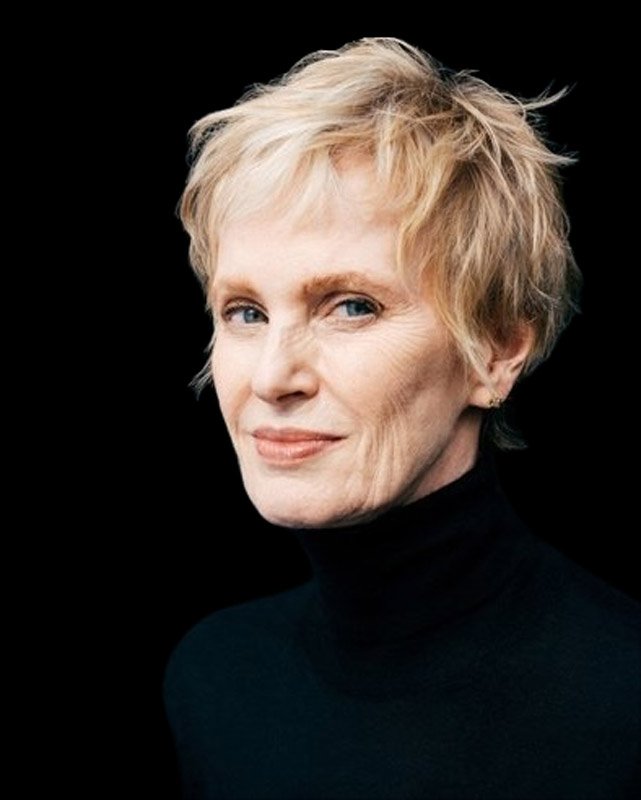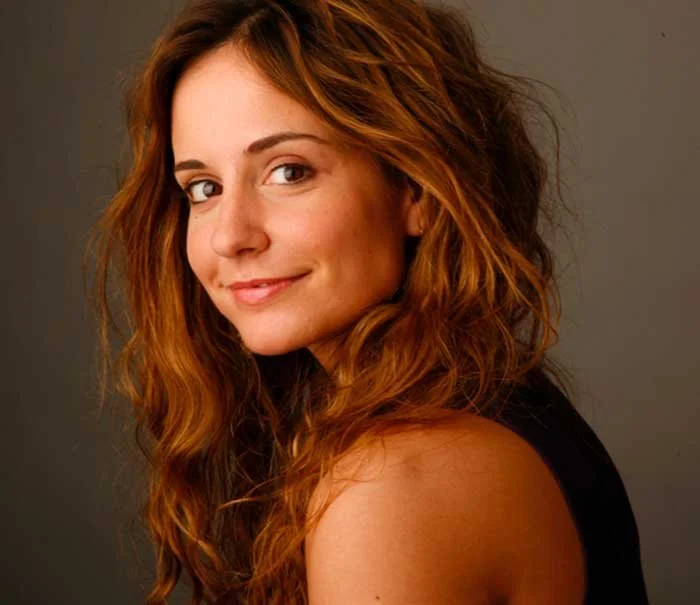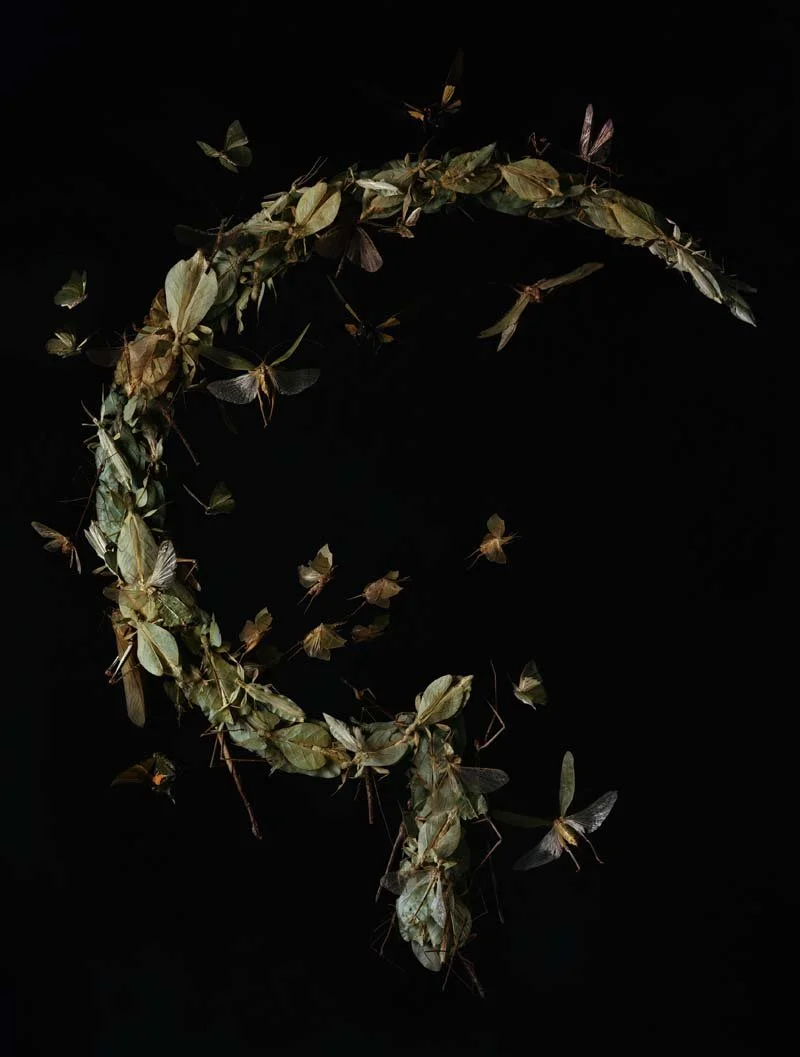


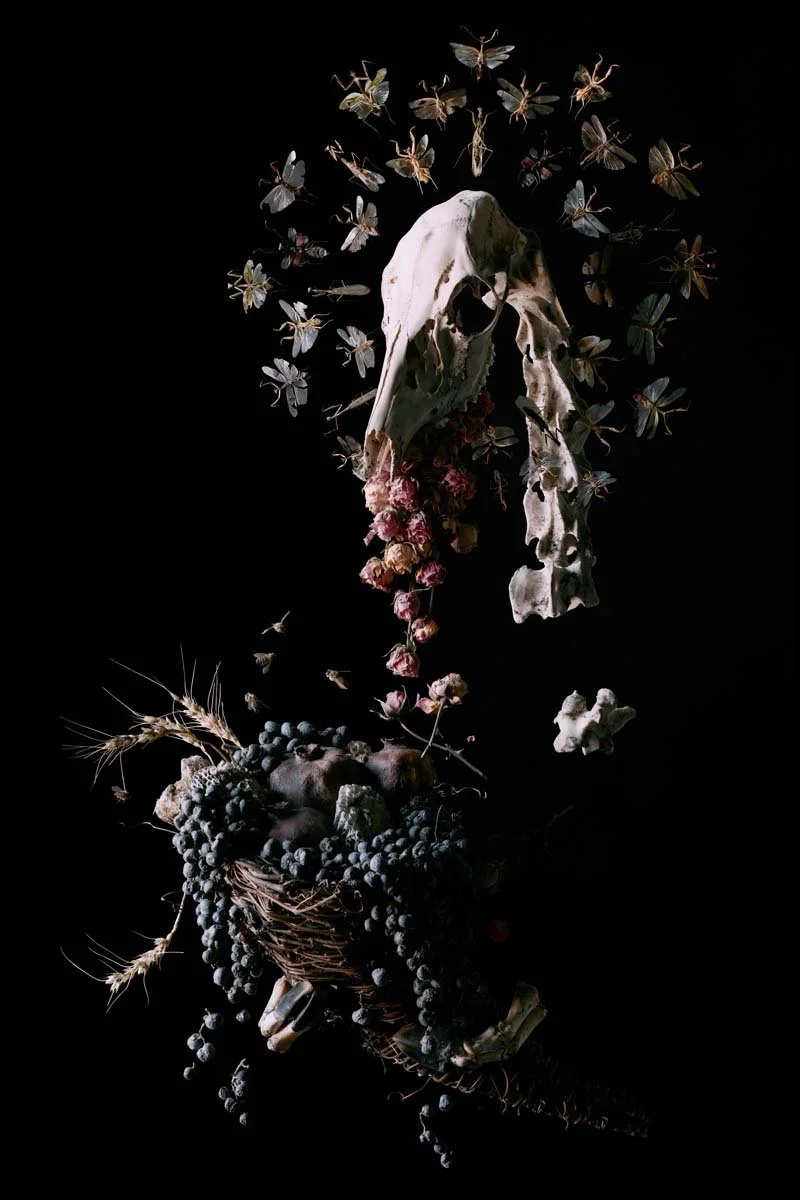
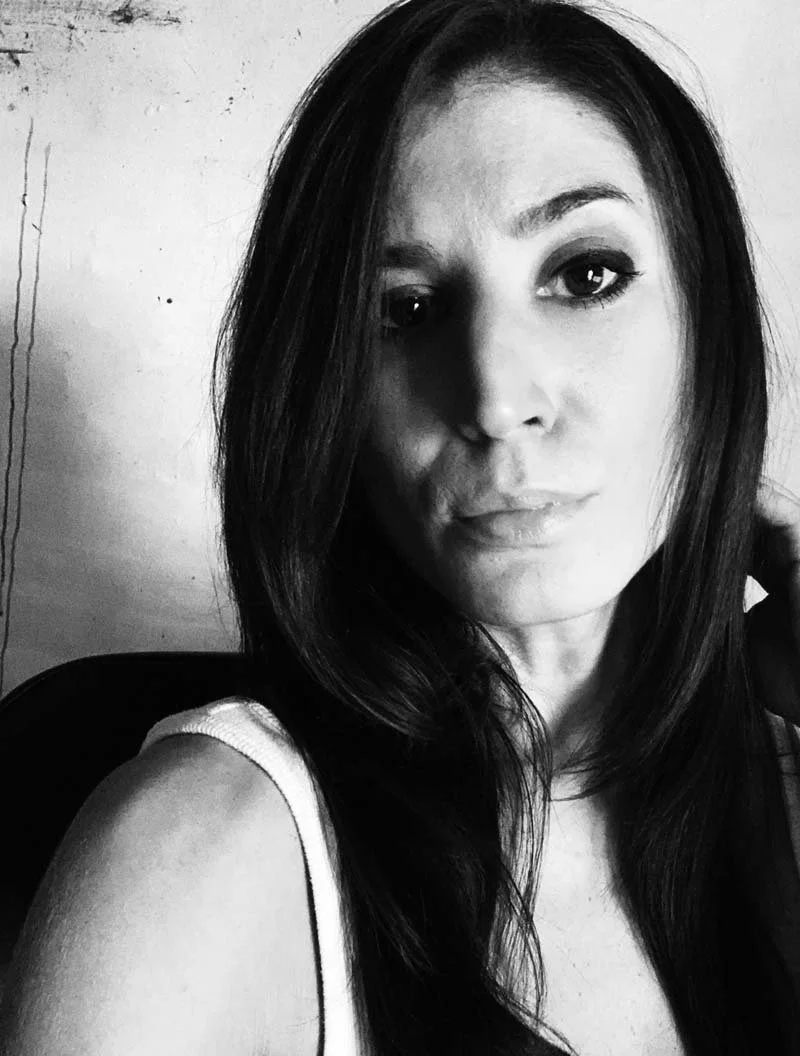
Tara Sellios is a multidisciplinary artist working mainly in large format photography and also in drawing, sculpture and installation. Since receiving her BFA in photography/art history in 2010, she has exhibited both locally and nationally. Recent solo exhibitions include her first solo museum show, Ask Now the Beasts at Fitchburg Art Museum (Fitchburg, MA), Infernalis at Gallery Kayafas (Boston, MA), Sinuous at C. Grimaldis Gallery (Baltimore, MD) and Testimony at Blue Sky Gallery (Portland, OR). Her work is part of several permanent collections, including The Museum of Fine Arts Boston, the Museum of Photographic Art @ San Diego Museum of Art, The Danforth Museum and the RISD Museum. Her visceral, highly detailed photographs are intensely planned and process oriented, often using organic matter like animal skeletons and real, dried insects. Living and working in her South Boston studio, she uses an 8×10 view camera to photograph these arrangements which result in dramatic, painterly still-life photographs wrought with sensuality, lightness and darkness, and religious symbolism. @tarasellios
When did you first fall in love with art and realize you wanted to be an artist? For you, what is the importance of the arts?
There actually is not a specific moment or romantic story of when art entered my life or when I decided to be an artist. As long as I remember, it was always something that I was drawn to, even when I was young. There was a mysterious, sacred quality to art, especially large paintings, that totally fascinated me. It felt like a secret language or mystical world. I was raised in a strict born again Christian environment, and due to feeling so restricted my whole life, I always felt like I had something to get out of me, like I was going to explode. Visual art was how that feeling manifested.
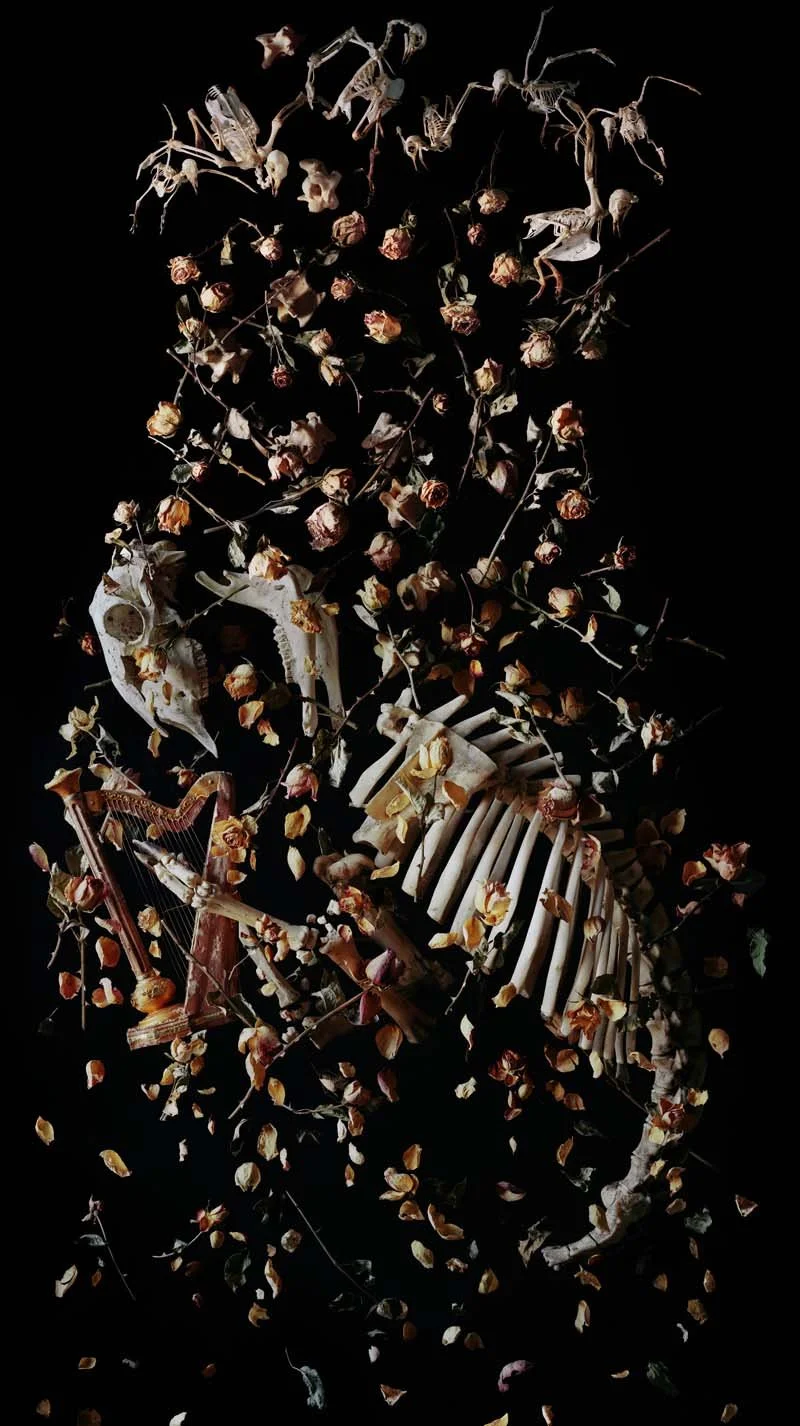
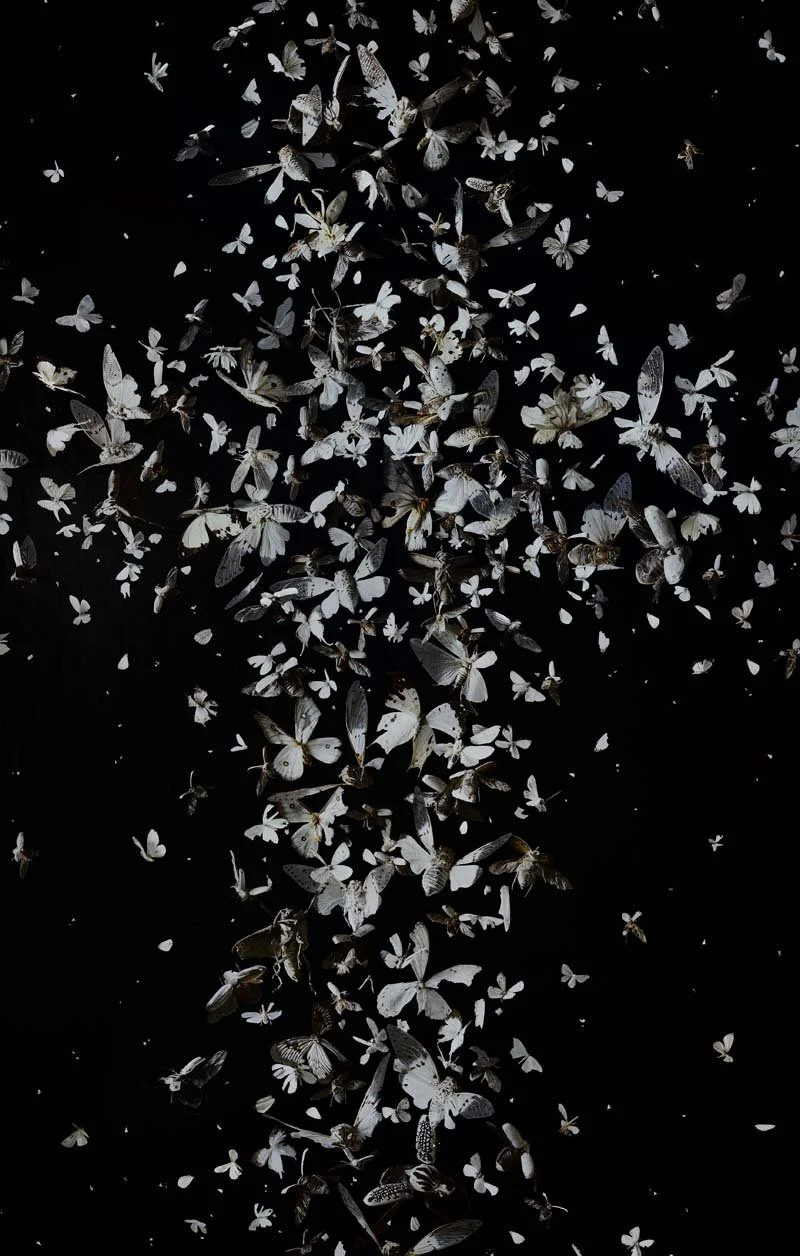
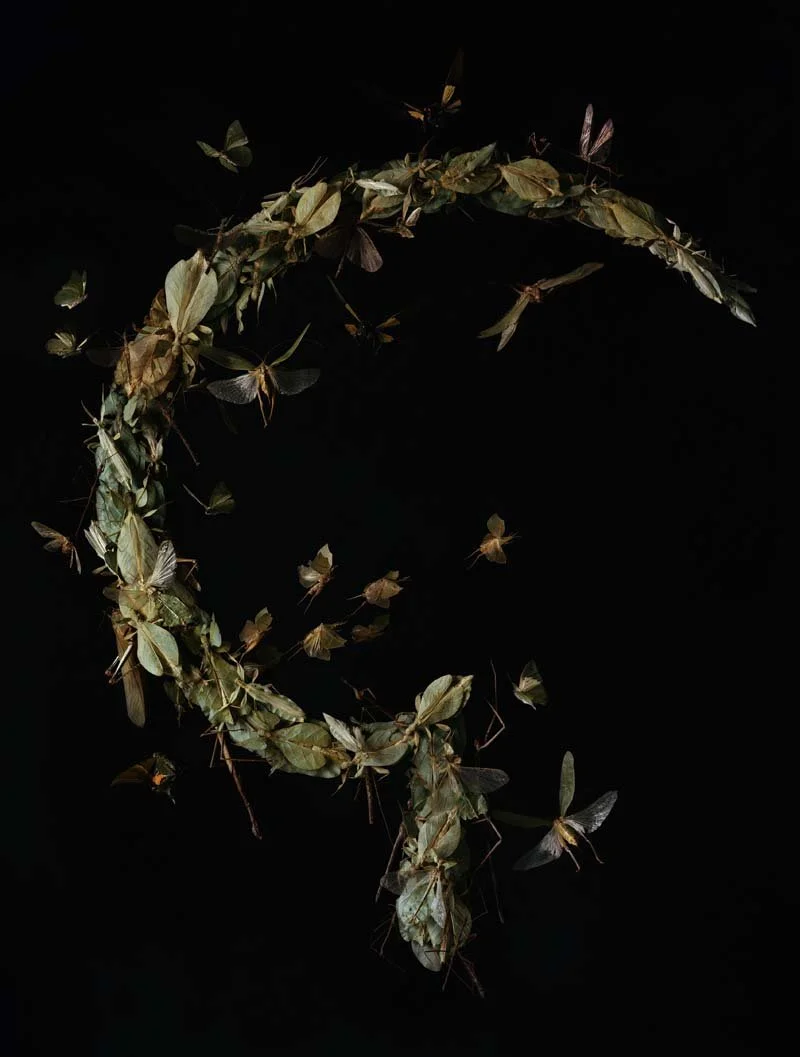
Your work is extremely detailed and process-driven, often unfolding over many stages. What does a day in your studio typically look like—and how does the space itself shape the work? I currently reside a live/work studio in Boston, so being here is just part of my daily life and no day really ever looks the same. My work is extremely process oriented, with many layers and steps that all play off of each other. The initial stage is research-based. Once ideas start coming through, I jot down concepts, words and images that come to mind, some of which are often very vague. They can be colors, feelings or actions that I want the imagery to manifest. As more solid concepts begin to arise, I make a shot list of sorts. I then make preliminary watercolor sketches to establish the concept visually and do most of my problem-solving there. From the sketch, I can figure out colors and materials needed to build the photographic arrangement, which is a sculptural endeavor using organic matter such as real dried insects, animal skeletons, and dried flora. Using an 8x10 view camera and natural light, the scene is photographed with color film and then scanned. The only Photoshop work that I do is typical adjustments and removing the wire, glue, and other base structures that hold everything together. Wherever I am in the process is how my day looks. If I'm home, I'm in my studio.
Tell us more about Ad Altiora Tendo. Where did this particular imagery and its spiritual intensity begin for you? These days, I am always working on several projects at once. Most of them are open-ended, and I just keep adding to them. My main focus at the moment is a series called Ad Altiora Tendo, which means “I strive for higher things” in Latin. Having a lot of deep, rich greens and earth tones, I want it to feel like a lush, subtly psychedelic forest. It explores themes of transcendence and regeneration through suffering and sacrifice. Some of the inspiration is drawn from the martyrs, those who have voluntarily suffered for refusing to denounce their faith and beliefs and ultimately transcend to a higher, more spiritual place. There is some violence in the imagery, but it is portrayed with natural elements of beauty, like flowing red flowers in the place of blood. Ultimately, the work is becoming more celebratory, with more foliage and musical instruments, and probably other elements that will arrive in the future. I have spent much of my time focusing on the research of Hell within art history and have read Dante’s Divine Comedy several times. I’m at a point of moving forward with my work where I want to start focusing more on moving toward and ultimately to, paradise. I have a separate series revolving around in the back of my head in regard to that heavenly/paradise concept, but I'm not sure how that will show up visually yet.
There’s a sacred, almost devotional quality to your photographs. What do you hope viewers feel or take away when encountering your work? The fascinating thing about art is that the creator makes it and releases it out into the world for others experience with no real control over how it is experienced. I love hearing feedback from viewers where they saw or though about something in a piece that I did not.
I hope for my work to stop people in their tracks and have invite them to experience something that they have never seen before. I hope the beauty and detail draws them in and encourages them to dig deep within themselves. Looking at my work should be an almost meditative, sacred experience, a celebration of light and darkness.
Do you draw inspiration from music, art, or other disciplines? Inspiration comes from many sources for me. I've always been fascinated by art history, especially that of baroque painting. Music, movies, and just living are all aspects of the process in terms of keeping my creative well full. Having grown up in such a restricted environment where I wasn't allowed to listen to anything but church music, my discovery of rock, punk, indie etc. when I was around 12 changed everything for me. Music really became my world and I went to see bands play every weekend. The intensity of emotion, sound and deep, often dark, feelings expressed felt so cathartic. I didn’t know music could be that. It led me to bartending in nightclubs and music venues for over fifteen years, something I still drop into from time to time. All of it feeds the work, which I think is true for a lot of artists - whatever is part of our “diet” shows up in some way, whether subtle or not.
A great thing about living in South Boston is… I really love the artist community building that I live in. I've been here for 10 years, and it just really feels like home, something that I am very grateful for, especially in the present state of the world. Living in Boston is great for many reasons, one of which is due to the amount of prestigious universities and museums in the area, there are a lot of resources for research and inspiration.
Your show Ask Now the Beasts was a huge leap—creatively, emotionally, and financially. What did it take to bring that body of work into the world, and what did it teach you? On January 18th, my first solo museum exhibition opened at Fitchburg Art Museum (MA). The show consists of 14 monumental photographs, 10 preliminary sketches and a reliquary of objects used in the making of the work. The commitment to have this show was a giant leap of faith financially, as I knew that it would cost a fortune, and it was money that I didn't have. In my soul, I knew that the exhibition needed to be put out in the world, and as they say I chose to "listen to the little voice in my head" despite the uncertainty. Contrary to common assumptions about how producing a show works between museum and artist, the museum only was able to help with a fraction of the cost. It has been taking a lot of faith and trust, as I am still working the financial part of it out.
I didn't expect this to be the case in such an extreme way, but having the show was also emotionally exhausting when it first went on the wall. The source of the imagery is so personal and delves into a lot of my deep shadow work. Having viewers experience the work, talk about what it was about and have it be exhibited for all was difficult at first - there was actually a lot of panic the week before it went on view that was coming from a deep place. I've now grown from that space and am thrilled that the images are out in the world and have a life of their own. I'm grateful I've been learning so much the past several months.
Tell us about important teachers and how those relationships have influenced your path as an artist. I was fortunate to have many great teachers when I went to school, many of whom I am still in touch with to this day. There has always been an amazing support system around me in various aspects of life, between teachers, the people I work with to produce my work (printers, framers, etc), to my found family. Linda Connor, a San Francisco-based photographer, is a wonderful mentor of mine. She came across my work while visiting Boston in 2011 and invited me out to lecture for a class that she taught called "Sacred and Profane". We have a lot of similar interests and ways of seeing the world, and she feels like a family member. We've stayed in contact throughout the years. In April, she invited me out to speak for a photography organization that she began many, many years ago called Photo Alliance, which was such a rich experience. Being an artist can be tricky to navigate, as the journey is an insanely personalized one, and it can be the wild wild west at times. Having the guidance of others is so essential.
Nature plays a major role in your practice—not just in materials, but as a source of emotion and atmosphere. What draws you to the woods? My current work contains elements from the natural world and has a deep connection to it. I spend a lot of time walking in the woods, and it is where many of my ideas come to fruition. I like to be in the woods just as it is getting dark out...that twilight period. There's something so beautiful about the dimness of light, the colors and the quietness of that time. There's also a tinge of fear of being out there when the dark is settling in. This is a feeling that I want my work to have, a sort of quiet, dark mysterious quality.
Your process is incredibly tactile and rooted in the physical world. What do you make of the rise of AI and the shifting definitions of art and creativity in its wake? To be honest, I don't spend much of my time or brain capacity thinking about AI. It doesn't have a heartbeat or emotions. My work is so process oriented, hands on and intense that I don't have much interest in thinking about AI. I think things made with a human hand has a different life, spirit and authenticity to it.
Exploring ideas, art and the creative process connects me to…the collective unconscious