NICOLE FLEETWOOD

NICOLE FLEETWOOD

Dr. Nicole Fleetwood is an educator and author whose work explores Black cultural history, visual, media, and gender studies and mass incarceration. She earned her B.Phil from Miami University and her Ph.D. from Stanford University. Fleetwood currently serves as an Associate Professor of American Studies and Art History at Rutgers University and is a member of their press editorial committee. She has also been published in several scholarly journals, co/curated exhibitions on art and mass incarceration, and received prestigious grants and fellowships from the Whiting Foundation Public Engagement Fellowship, the Schomburg Center for Research on Black Culture, and many more.
Marking Time Exhibition is at MoMA PS1, through Apr 4, 2021
Marking Time - Art in the Age of Mass Incarceration is published by Harvard University Press
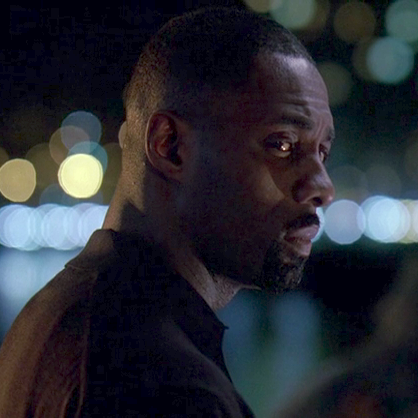
(Highlights) TOM PERROTTA

(Highlights) TOM PERROTTA

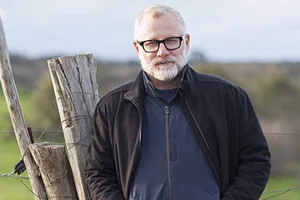
Tom Perrotta is the bestselling author of nine works of fiction, including Election and Little Children, both of which were made into Oscar-nominated films, and The Leftovers, which was adapted into a critically acclaimed, Peabody Award-winning HBO series. His other books include Bad Haircut, The Wishbones, Joe College, The Abstinence Teacher, Nine Inches, and his newest, Mrs. Fletcher. His work has been translated into a multitude of languages. Perrotta grew up in New Jersey and lives outside of Boston.

TOM PERROTTA

TOM PERROTTA

Tom Perrotta is the bestselling author of nine works of fiction, including Election and Little Children, both of which were made into Oscar-nominated films, and The Leftovers, which was adapted into a critically acclaimed, Peabody Award-winning HBO series. His other books include Bad Haircut, The Wishbones, Joe College, The Abstinence Teacher, Nine Inches, and his newest, Mrs. Fletcher. His work has been translated into a multitude of languages. Perrotta grew up in New Jersey and lives outside of Boston.

(Highlights) GEORGE PELECANOS

(Highlights) GEORGE PELECANOS

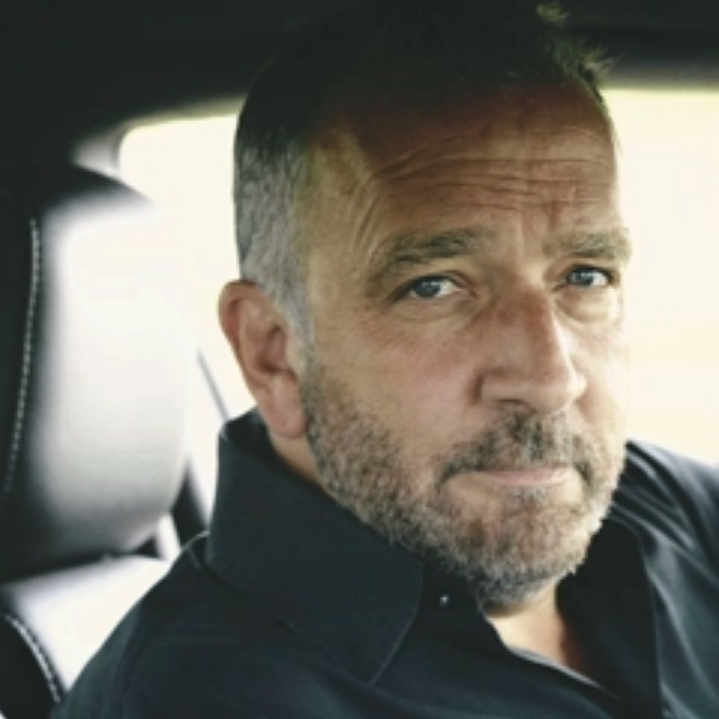
George Pelecanos is an award-winning author, essayist, screenwriter and producer from Washington, D.C. He has written over 20 novels and four series in the crime and detective fiction genre. He is also a recipient of the Los Angeles Times Book prize, the Raymond Chandler Award, the Hammett Prize, the Barry Award, the Gumshoe Award, and the Grand Prix Du Roman Noir Award. Pelecanos worked as a screenwriter for HBO’s The Wire, where his writing earned him an Emmy nomination as well as an Edgar and Writers Guild of America Award. Other shows he has written and/or produced for are The Pacific, The Deuce, and Treme.

Mia Funk is an artist, interviewer and founder of The Creative Process. 

GEORGE PELECANOS

GEORGE PELECANOS

George Pelecanos is an award-winning author, essayist, screenwriter and producer from Washington, D.C. He has written over 20 novels and four series in the crime and detective fiction genre. He is also a recipient of the Los Angeles Times Book prize, the Raymond Chandler Award, the Hammett Prize, the Barry Award, the Gumshoe Award, and the Grand Prix Du Roman Noir Award. Pelecanos worked as a screenwriter for HBO’s The Wire, where his writing earned him an Emmy nomination as well as an Edgar and Writers Guild of America Award. Other shows he has written and/or produced for are The Pacific, The Deuce, and Treme.

Mia Funk is an artist, interviewer and founder of The Creative Process. 

(Highlights) IAN BURUMA

(Highlights) IAN BURUMA

Ian Buruma is the author of many books, including A Tokyo Romance, The Churchill Complex,Their Promised Land, Year Zero, The China Lover, Murder in Amsterdam, Occidentalism and God’s Dust. He teaches at Bard College and is a columnist for Project Syndicate and contributor to The New Yorker, The New York Times, and other publications. He was awarded the 2008 Erasmus Prize for making "an especially important contribution to European culture" and was voted one of the Top 100 Public Intellectuals
by the Foreign Policy magazine.

This interview was conducted by Mia Funk & Lexi Kayser with the participation of collaborating universities and students. Digital Media Coordinator is Phoebe Brous.

Mia Funk is an artist, interviewer and founder of The Creative Process & One Planet Podcast (Conversations about Climate Change & Environmental Solutions).

IAN BURUMA

IAN BURUMA

Ian Buruma is the author of many books, including A Tokyo Romance, The Churchill Complex,Their Promised Land, Year Zero, The China Lover, Murder in Amsterdam, Occidentalism and God’s Dust. He teaches at Bard College and is a columnist for Project Syndicate and contributor to The New Yorker, The New York Times, and other publications. He was awarded the 2008 Erasmus Prize for making "an especially important contribution to European culture" and was voted one of the Top 100 Public Intellectuals
by the Foreign Policy magazine.

This interview was conducted by Mia Funk & Lexi Kayser with the participation of collaborating universities and students. Digital Media Coordinator is Phoebe Brous.

Mia Funk is an artist, interviewer and founder of The Creative Process & One Planet Podcast (Conversations about Climate Change & Environmental Solutions).

RALPH GIBSON

RALPH GIBSON

Photographer

Whatever I do, quite often I say– Is this good for my work? Should I go here? Should I do that? When I had my initial debut, I became known for a book called The Somnambulist. I took 24 of those pictures in one weekend and then I worked for three years on the next 24.

MARK SELIGER

MARK SELIGER

Photographer

I always tell people the worst picture can ever take is one you don't take. And that is a simple philosophy. If you don't go out there and do the work, then you will never know. You may think there's going to be another great snowstorm. You might think there's going to be another great moment where a block is going to have a certain kind of rhythm or a culture is going to have a certain amount of innocence or a musician is going to be as reluctant or vulnerable or sympathetic. You just have to embrace the moment and do the work.

(Highlights) SETH M. SIEGEL

(Highlights) SETH M. SIEGEL

Entrepreneur, Public Speaker & NYTimes Bestselling Author
Let There Be Water: Israel’s Solution for a Water-Starved World · Troubled Water: What's Wrong with What We Drink

On average in advanced societies, about 70% of freshwater that’s consumed is consumed by agriculture. In less developed countries, sometimes as high as 95% of the freshwater goes to agriculture, which means that you’re depleting the amount of water available for the environment. You’re depleting amount of groundwater to preserve for the future, especially in dry times, and it creates a stress for the future…What are you going to do when you have hundreds of millions of water refugees coming from places where there used to be enough water where there’s now just not enough water? What is the world going to do then?

SETH M. SIEGEL

SETH M. SIEGEL

Entrepreneur, Public Speaker & NYTimes Bestselling Author
Let There Be Water: Israel’s Solution for a Water-Starved World · Troubled Water: What's Wrong with What We Drink

On average in advanced societies, about 70% of freshwater that’s consumed is consumed by agriculture. In less developed countries, sometimes as high as 95% of the freshwater goes to agriculture, which means that you’re depleting the amount of water available for the environment. You’re depleting amount of groundwater to preserve for the future, especially in dry times, and it creates a stress for the future…What are you going to do when you have hundreds of millions of water refugees coming from places where there used to be enough water where there’s now just not enough water? What is the world going to do then?

(Highlights) RICHARD D. WOLFF

(Highlights) RICHARD D. WOLFF

Founder of Democracy at Work · Host of Economic Update
Author of The Sickness is the System: When Capitalism Fails to Save Us from Pandemics or Itself

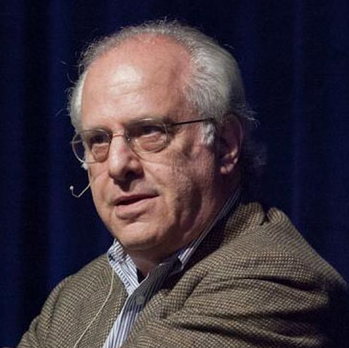
You can criticize many things in the United States, but there are taboos and the number one taboo is that you cannot criticize Capitalism. That is equated with disloyalty…This story about Capitalism being wonderful. This story is fading. You can’t do that anymore. The Right Wing cannot rally its troops around Capitalism. That’s why it doesn’t do it anymore. It rallies the troops around being hateful towards immigrants. It rallies the troops around “fake elections”, around the right to buy a gun, around White Supremacists. Those issues can get some support, but “Let’s get together for Capitalism!” That is bad. They can’t do anything with that. They have to sneak the Capitalism in behind those other issues because otherwise, they have no mass political support.

RICHARD D. WOLFF

RICHARD D. WOLFF

Founder of Democracy at Work · Host of Economic Update
Author of The Sickness is the System: When Capitalism Fails to Save Us from Pandemics or Itself

You can criticize many things in the United States, but there are taboos and the number one taboo is that you cannot criticize Capitalism. That is equated with disloyalty…This story about Capitalism being wonderful. This story is fading. You can’t do that anymore. The Right Wing cannot rally its troops around Capitalism. That’s why it doesn’t do it anymore. It rallies the troops around being hateful towards immigrants. It rallies the troops around “fake elections”, around the right to buy a gun, around White Supremacists. Those issues can get some support, but “Let’s get together for Capitalism!” That is bad. They can’t do anything with that. They have to sneak the Capitalism in behind those other issues because otherwise, they have no mass political support.

(Highlights) GAIA VINCE

(Highlights) GAIA VINCE

Science Writer, Broadcaster & Author
Transcendence: How Humans Evolved Through Fire, Language, Beauty & Time · Adventures in the Anthropocene

The good thing about our species is that we create our own environment. What we’ve been doing so far is creating an environment where we’re much more successful. We live a lot longer, we’re much healthier than we have been in the past. There are many, many more of us, so we’re very successful as a species and that’s been at the expense of other ecosystems, but what’s happened is we are now dominating the planet to a dangerous degree, but we are also self-aware. We’re capable of understanding that.

GAIA VINCE

GAIA VINCE

Science Writer, Broadcaster & Author
Transcendence: How Humans Evolved Through Fire, Language, Beauty & Time · Adventures in the Anthropocene

The good thing about our species is that we create our own environment. What we’ve been doing so far is creating an environment where we’re much more successful. We live a lot longer, we’re much healthier than we have been in the past. There are many, many more of us, so we’re very successful as a species and that’s been at the expense of other ecosystems, but what’s happened is we are now dominating the planet to a dangerous degree, but we are also self-aware. We’re capable of understanding that.

(Highlights) MARY EDNA FRASER & ORRIN H. PILKEY
MARY EDNA FRASER & ORRIN H. PILKEY
(Highlights) JANE MADGWICK

(Highlights) JANE MADGWICK

Ecologist & CEO of Wetlands International
Co-author of Water Lands: A vision for the world’s wetlands and their people
Wetlands naturally absorb twice the amount of carbon than all the world’s forests combined.
I think everybody at school learns about the water cycle. That rings a bell with everybody. Maybe this is a good hook to show the place of wetlands in capturing and purifying and the story of water. And then in turn how this links to what we’re seeing every year: droughts, floods, fires, heat waves which are devastating and life-threatening. I think this may be one of the easiest routes in educating people, connecting wetlands with water and the direct impact of that.

JANE MADGWICK

JANE MADGWICK

Ecologist & CEO of Wetlands International
Co-author of Water Lands: A vision for the world’s wetlands and their people
Wetlands naturally absorb twice the amount of carbon than all the world’s forests combined.
I think everybody at school learns about the water cycle. That rings a bell with everybody. Maybe this is a good hook to show the place of wetlands in capturing and purifying and the story of water. And then in turn how this links to what we’re seeing every year: droughts, floods, fires, heat waves which are devastating and life-threatening. I think this may be one of the easiest routes in educating people, connecting wetlands with water and the direct impact of that.