CARMEN MARIA MACHADO
(Highlights) ALICE SCHMIDT
ALICE SCHMIDT
(Highlights) ROB BILOTT

(Highlights) ROB BILOTT

Environmental Lawyer · Partner Taft Stettinius & Hollister LLP
Author of Exposure: Poisoned Water, Corporate Greed, and One Lawyer’s Twenty-Year Battle Against DuPont

It's kind of a scary thought. We've got these PFAS (per- and polyfluoroalkyl substances), you hear them now referred to as forever chemicals because these chemicals–none of these existed on the planet prior to World War II–they're fairly recent invention and they have this unique chemical structure that makes them incredibly useful in a lot of different products, manufacturing operations, but also that same chemical structure makes them incredibly persistent and incredibly difficult to break down once they get out into the environment, into the natural world, into our soil, into our water. They simply, many of them, particularly the ones with eight or more carbons in their structure, don't break down under natural conditions. Or it may take thousands or millions of years for those chemicals to start breaking down. But not only that. Once they get into us, they get into people, they tend to accumulate in our blood and build up over time. They not only persist, they bioaccumulate. Unfortunately, as the science has slowly been revealed to the world about what these chemicals can do, we are seeing that they can have all kinds of toxic effects And unfortunately, we’re finding that those things can happen at lower and lower dose levels.

ROB BILOTT

ROB BILOTT

Environmental Lawyer · Partner Taft Stettinius & Hollister LLP
Author of Exposure: Poisoned Water, Corporate Greed, and One Lawyer’s Twenty-Year Battle Against DuPont

It's kind of a scary thought. We've got these PFAS (per- and polyfluoroalkyl substances), you hear them now referred to as forever chemicals because these chemicals–none of these existed on the planet prior to World War II–they're fairly recent invention and they have this unique chemical structure that makes them incredibly useful in a lot of different products, manufacturing operations, but also that same chemical structure makes them incredibly persistent and incredibly difficult to break down once they get out into the environment, into the natural world, into our soil, into our water. They simply, many of them, particularly the ones with eight or more carbons in their structure, don't break down under natural conditions. Or it may take thousands or millions of years for those chemicals to start breaking down. But not only that. Once they get into us, they get into people, they tend to accumulate in our blood and build up over time. They not only persist, they bioaccumulate. Unfortunately, as the science has slowly been revealed to the world about what these chemicals can do, we are seeing that they can have all kinds of toxic effects And unfortunately, we’re finding that those things can happen at lower and lower dose levels.

(Highlights) MARYBETH GASMAN

(Highlights) MARYBETH GASMAN

Author of Doing the Right Thing: How to End Systemic Racism in Faculty Hiring
Executive Director of the Samuel DeWitt Proctor Institute for Leadership, Equity, & Justice & Rutgers Center for Minority Serving Institutions

We all have things to learn when it comes to these diversity-related issues or issues of identity. We have so much to learn. Just because, let's say, you’re a person of color, it doesn't necessarily mean that you are going to be accepting of transgender individuals. You might have some real hangups. Or you could be transgender and have some hangups around people of color, all around the spectrum. You can be a woman who doesn't support women. You can be a woman who doesn't support women trans-women. There are all of these kinds of things that I think we have to be open to, and we have to be open to learning and also open to making mistakes because sometimes people are going to make mistakes around these issues.

MARYBETH GASMAN

MARYBETH GASMAN

Author of Doing the Right Thing: How to End Systemic Racism in Faculty Hiring
Executive Director of the Samuel DeWitt Proctor Institute for Leadership, Equity, & Justice & Rutgers Center for Minority Serving Institutions

We all have things to learn when it comes to these diversity-related issues or issues of identity. We have so much to learn. Just because, let's say, you’re a person of color, it doesn't necessarily mean that you are going to be accepting of transgender individuals. You might have some real hangups. Or you could be transgender and have some hangups around people of color, all around the spectrum. You can be a woman who doesn't support women. You can be a woman who doesn't support women trans-women. There are all of these kinds of things that I think we have to be open to, and we have to be open to learning and also open to making mistakes because sometimes people are going to make mistakes around these issues.

(Highlights) JON YATES

(Highlights) JON YATES

Executive Director of Youth Endowment Fund
Author of Fractured: How We Learn to Live Together

I think humans really need to feel valued and loved. The question is where do you get your value from? And I try to get my value from–faith plays a big part of my life, but not everyone has that way of thinking about the world, so I'm not going to major on that, but that's only part of it, the sense that I believe there's a God who thinks I'm of worth, but it's more than that. I believe that my closest friends and my family think I'm of worth. And so I think that's probably made me more comfortable in saying if I start a charity and it fails, and I have started things that fell apart, it's not the end of the world.

JON YATES

JON YATES

Executive Director of Youth Endowment Fund
Author of Fractured: How We Learn to Live Together

I think humans really need to feel valued and loved. The question is where do you get your value from? And I try to get my value from–faith plays a big part of my life, but not everyone has that way of thinking about the world, so I'm not going to major on that, but that's only part of it, the sense that I believe there's a God who thinks I'm of worth, but it's more than that. I believe that my closest friends and my family think I'm of worth. And so I think that's probably made me more comfortable in saying if I start a charity and it fails, and I have started things that fell apart, it's not the end of the world.

(Highlights) ALI SCHOUTEN

(Highlights) ALI SCHOUTEN

Emmy-Nominated Showrunner, Executive Producer & Writer of iCarly

What we deal more in the second season with how your online persona and your real-life persona sometimes can't help but be at odds with one another. In the first episode back we get into how women are treated, how women in relationships are treated online. In a later episode, we deal with how women are or are not allowed to express their anger online as content creators. So it’s something we talked a lot about in the room. That fracturing of self, that even in a goofy show that's very lighthearted and entertaining, it’s something that we do discuss and try to sneak little tidbits in there.

ALI SCHOUTEN

ALI SCHOUTEN

Emmy-Nominated Showrunner, Executive Producer & Writer of iCarly

What we deal more in the second season with how your online persona and your real-life persona sometimes can't help but be at odds with one another. In the first episode back we get into how women are treated, how women in relationships are treated online. In a later episode, we deal with how women are or are not allowed to express their anger online as content creators. So it’s something we talked a lot about in the room. That fracturing of self, that even in a goofy show that's very lighthearted and entertaining, it’s something that we do discuss and try to sneak little tidbits in there.

(Highlights) ROLAND GEYER

(Highlights) ROLAND GEYER

Author of The Business of Less
Professor at Bren School of Environmental Science & Management, UC Santa Barbara

So, if we study transportation, then we need to study urban development and infrastructure. Suddenly, we need to think about housing. We need to think about the co-location of jobs and shops, and you realize it's all connected. That might be one of the challenges of urban sustainability. It's all connected. So the way we move around is connected to the way we built the city. And I think the intrinsic sustainability or non-sustainability in urban areas seems to be designed in. Especially in the United States where there are just so many places where, if you don't have a car, you're basically stranded. You can't go anywhere. The European model is to have co-located things, and I miss that. I think it has some intrinsic sustainability built-in.

ROLAND GEYER

ROLAND GEYER

Author of The Business of Less
Professor at Bren School of Environmental Science & Management, UC Santa Barbara

So, if we study transportation, then we need to study urban development and infrastructure. Suddenly, we need to think about housing. We need to think about the co-location of jobs and shops, and you realize it's all connected. That might be one of the challenges of urban sustainability. It's all connected. So the way we move around is connected to the way we built the city. And I think the intrinsic sustainability or non-sustainability in urban areas seems to be designed in. Especially in the United States where there are just so many places where, if you don't have a car, you're basically stranded. You can't go anywhere. The European model is to have co-located things, and I miss that. I think it has some intrinsic sustainability built-in.

(Highlights) AZBY BROWN

(Highlights) AZBY BROWN

Author of Just Enough · Small Spaces · Lead Researcher for Safecast
Authority on Japanese Architecture, Design & Environmentalism

In Edo Japan, basically life was pretty good, and they recycled everything. Everything was reused, upcycled. Waste was considered taboo. A person who was wasting was considered an ugly person. So there’s a lot that we could talk about design, the layout, scale. Buildings were rarely taller than two storeys. Very good use of environmental features, microclimates, use of wind for cooling, passive solar heating. Good use of planting, gardens, etc. But regarding cities of the future, I think the main thing is it needs to be a place where people feel like they belong and want to take responsibility.


AZBY BROWN

AZBY BROWN

Author of Just Enough · Small Spaces · Lead Researcher for Safecast
Authority on Japanese Architecture, Design & Environmentalism

In Edo Japan, basically life was pretty good, and they recycled everything. Everything was reused, upcycled. Waste was considered taboo. A person who was wasting was considered an ugly person. So there’s a lot that we could talk about design, the layout, scale. Buildings were rarely taller than two storeys. Very good use of environmental features, microclimates, use of wind for cooling, passive solar heating. Good use of planting, gardens, etc. But regarding cities of the future, I think the main thing is it needs to be a place where people feel like they belong and want to take responsibility.


(Highlights) MERLIN DONALD

(Highlights) MERLIN DONALD

Psychologist, Neuroanthropologist & Cognitive Neuroscientist
Author of Origins of the Modern Mind, & A Mind So Rare

Lots of people have written books both optimistic and pessimistic about the Internet. It's a wonderful thing, it gives an opportunity to broaden our experience. I think in many ways the Internet is the only hope if you want to eliminate racism and want to raise the bar across the world, but at the same time, the inequalities are completely ridiculous. They've reached a point of insanity, and we have a moral issue. Is one person ever worth twice as much as another person? Can you justify one human being owning 10 times as much as another person? I don't think you can. I don't think that the president of the biggest cooperation in the world is worth 10 times the poorest person in the world, but that's not what we have. Sometimes he may be “worth” a million times more, a hundred thousand times more. That’s crazy.

MERLIN DONALD

MERLIN DONALD

Psychologist, Neuroanthropologist & Cognitive Neuroscientist
Author of Origins of the Modern Mind, & A Mind So Rare

Lots of people have written books both optimistic and pessimistic about the Internet. It's a wonderful thing, it gives an opportunity to broaden our experience. I think in many ways the Internet is the only hope if you want to eliminate racism and want to raise the bar across the world, but at the same time, the inequalities are completely ridiculous. They've reached a point of insanity, and we have a moral issue. Is one person ever worth twice as much as another person? Can you justify one human being owning 10 times as much as another person? I don't think you can. I don't think that the president of the biggest cooperation in the world is worth 10 times the poorest person in the world, but that's not what we have. Sometimes he may be “worth” a million times more, a hundred thousand times more. That’s crazy.

DR. G. SAMANTHA ROSENTHAL
(Highlights) DAVID PALUMBO-LIU

(Highlights) DAVID PALUMBO-LIU

Writer, Activist, Comparative Literature Professor
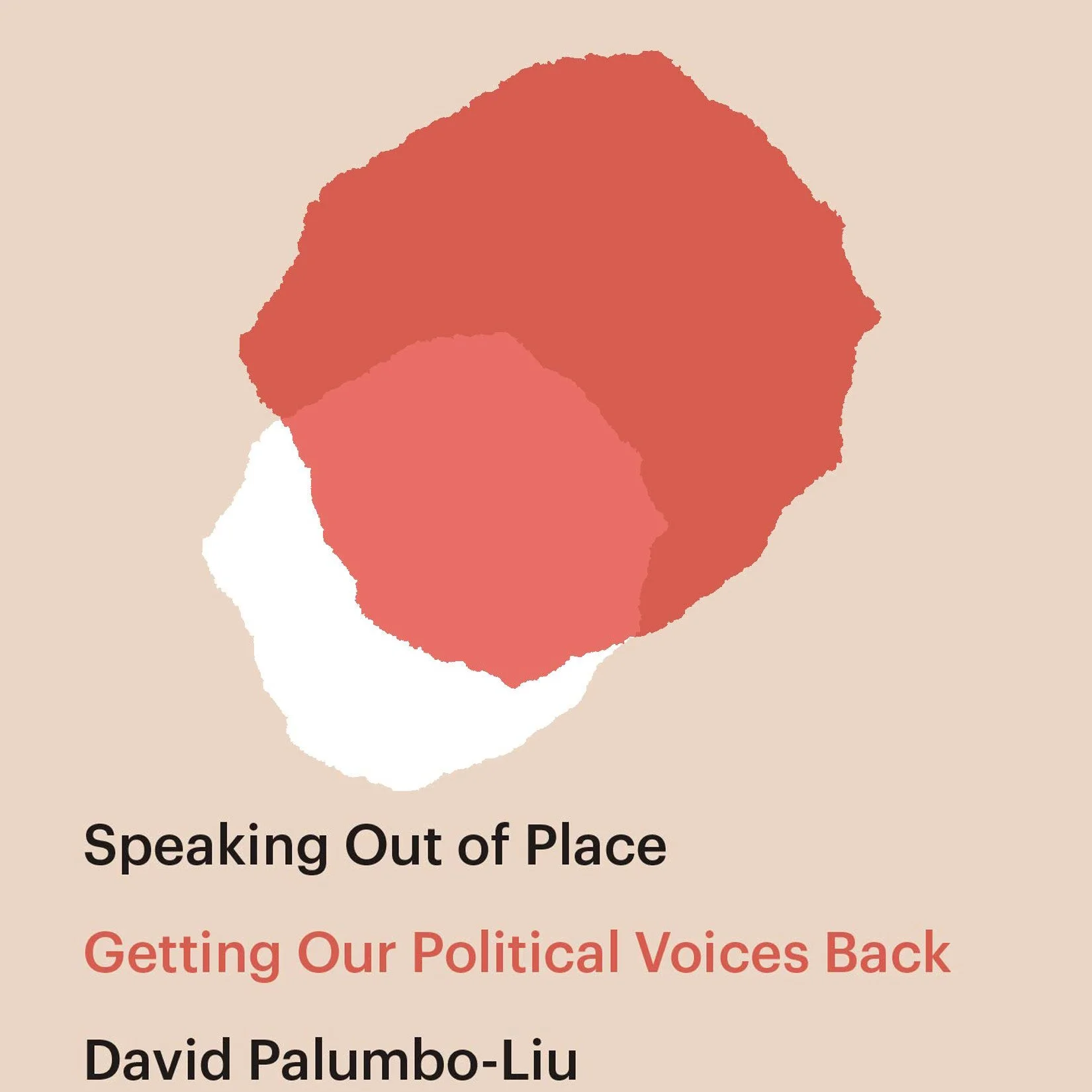
Author of Speaking Out of Place: Getting Our Political Voices Back

To explore different worlds. That’s what literature has taught me. Reading has taught me how difficult it is to write well, to do you something other than the mundane or the expected, so all those things point to a kind of human creativity and a human capacity to both create and also to learn. To learn about life in different ways and to pass on those lessons to other people. One thing I think great teachers do is to embody what they talk about, the values that they profess, the things they feel are important in their everyday lives outside of the literature. So when I become involved in politics or a cause, it’s a reflection of what I've learned through any number of things including literature. Literature doesn’t stand alone. Literature is part of the world.

DAVID PALUMBO-LIU

DAVID PALUMBO-LIU

Writer, Activist, Comparative Literature Professor
Author of Speaking Out of Place: Getting Our Political Voices Back

To explore different worlds. That’s what literature has taught me. Reading has taught me how difficult it is to write well, to do you something other than the mundane or the expected, so all those things point to a kind of human creativity and a human capacity to both create and also to learn. To learn about life in different ways and to pass on those lessons to other people. One thing I think great teachers do is to embody what they talk about, the values that they profess, the things they feel are important in their everyday lives outside of the literature. So when I become involved in politics or a cause, it’s a reflection of what I've learned through any number of things including literature. Literature doesn’t stand alone. Literature is part of the world.