Highlights–Nicholas Christakis, Author of “Blueprint”

Highlights–Nicholas Christakis, Author of “Blueprint”

Author of Blueprint: The Evolutionary Origins of a Good Society
Director of the Human Nature Lab at Yale · Co-director of the Yale Institute for Network Science

So these kinds of problems in what I call hybrid systems of humans and machines are a key focus of my lab right now. Margaret Traeger, who's now at Notre Dame, she did a wonderful project in which we made these groups of three humans and a humanoid robot work together to solve a problem.

We manipulated the humanity of the robot. For example, sometimes we had the robot tell stupid dad jokes, like corny jokes. Or we had the robot break the ice by saying, "You know, robots can make mistakes, too." This kind of stuff. And what we found was that the human interactions could be changed by the simple programming of the robot.

Nicholas Christakis, Author of “Blueprint”-The Evolutionary Origins of a Good Society

Nicholas Christakis, Author of “Blueprint”-The Evolutionary Origins of a Good Society

Author of Blueprint: The Evolutionary Origins of a Good Society
Director of the Human Nature Lab at Yale · Co-director of the Yale Institute for Network Science

We're not attempting to invent super smart AI to replace human cognition. We are inventing dumb AI to supplement human interaction. Are there simple forms of artificial intelligence, simple programming of bots, such that when they are added to groups of humans – because those humans are smart or otherwise positively inclined - that help the humans to help themselves? Can we get groups of people to work better together, for instance, to confront climate change, or to reduce racism online, or to foster innovation within firms?

Can we have simple forms of AI that are added into our midst that make us work better together? And the work we're doing in that part of my lab shows that abundantly that's the case. And we published a stream of papers showing that we can do that.

(Highlights) Tey Meadow · Author of “Trans Kids: Being Gendered in the Twenty-First Century"

(Highlights) Tey Meadow · Author of “Trans Kids: Being Gendered in the Twenty-First Century"

Author of Trans Kids: Being Gendered in the Twenty-First Century
Assistant Professor of Sociology, Columbia University
Co-editor of Other Please Specify: Queer Methods in Sociology

So while there is no kind of one size fits all story, there are plenty of times when...kind of like clusters of activity. And some kids don't come out as trans. They come out as wanting to begin a process of exploration around gender, wanting to sort of bend things a little bit or begin to present themselves in slightly different ways without a concrete cross-identification.

Tey Meadow · Author of “Trans Kids: Being Gendered in the Twenty-First Century"

Tey Meadow · Author of “Trans Kids: Being Gendered in the Twenty-First Century"

Author of Trans Kids: Being Gendered in the Twenty-First Century
Assistant Professor of Sociology, Columbia University
Co-editor of Other Please Specify: Queer Methods in Sociology

So while there is no kind of one size fits all story, there are plenty of times when...kind of like clusters of activity. And some kids don't come out as trans. They come out as wanting to begin a process of exploration around gender, wanting to sort of bend things a little bit or begin to present themselves in slightly different ways without a concrete cross-identification.

Bill Novelli · Founder, Business for Impact Program, Georgetown · Co-founder Porter Novelli

Bill Novelli · Founder, Business for Impact Program, Georgetown · Co-founder Porter Novelli

Founder Business for Impact Program at Georgetown University
Co-founder Porter Novelli Global PR Agency · Former CEO of AARP

This is one of the biggest problems that we have in this country. So, on the one hand, we know that we have to take personal responsibility for ourselves, our own health, our families – it's up to us. As some people like to say, you're on your own. And we have to balance that against the concept that we're all in this together. You know, the idea that it takes a village and both sides essentially disrespect the other side. They criticize the other side. No, we're not in this together. It's your own responsibility, and vice versa. If we're going to be good citizens, and we're going to make progress, we have to see both sides of that equation. That's not easy to do.

(Highlights) Noah Wilson-Rich · Co-founder/CEO, The Best Bees Company, Largest US Beekeeping service…

(Highlights) Noah Wilson-Rich · Co-founder/CEO, The Best Bees Company, Largest US Beekeeping service…

Co-founder & CEO of The Best Bees Company
Largest Beekeeping service in the US

I was originally drawn to bees because they're social creatures. And as humans, I always wanted to know about ourselves and how we can be our healthiest selves and our healthiest society. Bees and wasps, and all of these organisms have been around for so long. Bees especially have been around for 100 million years.

Noah Wilson-Rich · Co-founder/CEO, The Best Bees Company, Largest US Beekeeping service…

Noah Wilson-Rich · Co-founder/CEO, The Best Bees Company, Largest US Beekeeping service…

Co-founder & CEO of The Best Bees Company
Largest Beekeeping service in the US

I was originally drawn to bees because they're social creatures. And as humans, I always wanted to know about ourselves and how we can be our healthiest selves and our healthiest society. Bees and wasps, and all of these organisms have been around for so long. Bees especially have been around for 100 million years.

(Highlights) Ellen Rapoport · Creator, Exec. Producer & Showrunner of “Minx” for HBO Max

(Highlights) Ellen Rapoport · Creator, Exec. Producer & Showrunner of “Minx” for HBO Max

Creator, Executive Producer & Showrunner of Minx
starring Ophelia Lovibond & Jake Johnson

What drew me to the time period of the 70s was the real story of these magazines Playgirl, Viva, Foxy Lady, all the magazines that existed in this period. So it was a natural outgrowth of trying to tell a story that was inspired by, to some extent, real-life events. When I started developing Minx, what struck me about the 70s, in particular, is just how similar it was to our time. It seems like the magazines were covering all the same issues that we're now talking about. Obviously, we all saw with the leaked decision in Roe vs. Wade just how close we are to that time period and how far we haven't come.

Ellen Rapoport · Creator, Exec. Producer & Showrunner of “Minx” for HBO Max

Ellen Rapoport · Creator, Exec. Producer & Showrunner of “Minx” for HBO Max

Creator, Executive Producer & Showrunner of Minx
starring Ophelia Lovibond & Jake Johnson

What drew me to the time period of the 70s was the real story of these magazines Playgirl, Viva, Foxy Lady, all the magazines that existed in this period. So it was a natural outgrowth of trying to tell a story that was inspired by, to some extent, real-life events. When I started developing Minx, what struck me about the 70s, in particular, is just how similar it was to our time. It seems like the magazines were covering all the same issues that we're now talking about. Obviously, we all saw with the leaked decision in Roe vs. Wade just how close we are to that time period and how far we haven't come.

(Highlights) Stuart Pimm · Expert in Study of Present-Day Extinctions · Founder/Dir. Saving Nature

(Highlights) Stuart Pimm · Expert in Study of Present-Day Extinctions · Founder/Dir. Saving Nature

Global Leader in the Study of Present-Day Extinctions & Biodiversity
Founder & Director of Saving Nature

It's a complicated issue. I think a lot of those bird disappearances come from the fact that we have massively intensified our agriculture. Large areas of North America and Europe are now under intense agriculture. They are sprayed with a whole variety of pesticides, which I think is also responsible for the fact that many insects have disappeared, so species that depend on farmland have clearly declined dramatically, but it isn't all birds and there is a piece of this complicated story that involves water birds. Herons and egrets and ducks. Those species both in North America and Europe, are now much more common than they were 30, or 40 years ago. That comes from active conservation of protecting wetlands, making sure we don't shoot our wetland birds. So it’s not all doom and gloom. There are some success stories. There are many things we can do. I think 50 years ago, there were only something like 300 bald eagles in the lower 48 states. Bald eagles are now nesting in every state apart from Hawaii. Our conservation efforts have done a great job.

Stuart Pimm · Expert in Study of Present-Day Extinctions · Founder/Dir. Saving Nature

Stuart Pimm · Expert in Study of Present-Day Extinctions · Founder/Dir. Saving Nature

Global Leader in the Study of Present-Day Extinctions & Biodiversity
Founder & Director of Saving Nature

It's a complicated issue. I think a lot of those bird disappearances come from the fact what are those disappearances come from the fact that we have massively intensified our agriculture. Large areas of North America and Europe are now under intense agriculture. They are sprayed with a whole variety of pesticides, which I think is also responsible for the fact that many insects have disappeared, so species that depend on farmland have clearly declined dramatically, but it isn't all birds and there is a piece of this complicated story that involves water birds. Herons and egrets and ducks. Those species both in North America and Europe, are now much more common than they were 30, or 40 years ago. That comes from active conservation of protecting wetlands, making sure we don't shoot our wetland birds. So it’s not all doom and gloom. There are some success stories. There are many things we can do. I think 50 years ago, there were only something like 300 bald eagles in the lower 48 states. Bald eagles are now nesting in every state apart from Hawaii. Our conservation efforts have done a great job.

Anthony Gardner · Prof. Contemporary Art History, Oxford · Fmr. Head, Ruskin School of Art

Anthony Gardner · Prof. Contemporary Art History, Oxford · Fmr. Head, Ruskin School of Art

Professor of Contemporary Art History, University of Oxford
Fmr. Head, Ruskin School of Art · Co-author of Biennials, Triennials and documenta: The Exhibitions That Created Contemporary Art

I think art can engage with the body, the mind, and the imagination in so many different ways that can compliment modes of thinking, other modes of creating and thinking through and working through and devising.
I was thinking about this in relation to the last 18 months and how the sciences have rightly been heralded as the great way of getting ourselves out of this pandemic, but culture is the way and art is the way that we've been getting through the pandemic.

(Highlights) Anthony Gardner · Prof. Contemporary Art History, Oxford · Fmr. Head, Ruskin School of Art

(Highlights) Anthony Gardner · Prof. Contemporary Art History, Oxford · Fmr. Head, Ruskin School of Art

Professor of Contemporary Art History, University of Oxford
Fmr. Head, Ruskin School of Art · Co-author of Biennials, Triennials and documenta: The Exhibitions That Created Contemporary Art

I think art can engage with the body, the mind, and the imagination in so many different ways that can compliment modes of thinking, other modes of creating and thinking through and working through and devising.
I was thinking about this in relation to the last 18 months and how the sciences have rightly been heralded as the great way of getting ourselves out of this pandemic, but culture is the way and art is the way that we've been getting through the pandemic.

(Highlights) Courtney Peppernell · YA Writer & Poet · Author of “Pillow Thoughts”

(Highlights) Courtney Peppernell · YA Writer & Poet · Author of “Pillow Thoughts”

YA Writer & Poet
Author of Pillow Thoughts & I Hope You Stay

I really hope that kindness is preserved. I really think manners and being polite can go a long way. People are in such a rush these days. Everybody wants to acquire so much, and they forget to just be thankful for the little things in life. To slow down, how you move through the world and how selfless you are, holding open a door for someone, or just telling someone to have a good day. Those are all things that can have a lasting effect on another person and make them want to be better as well.

Courtney Peppernell · YA Writer & Poet · Author of “Pillow Thoughts”

Courtney Peppernell · YA Writer & Poet · Author of “Pillow Thoughts”

YA Writer & Poet
Author of Pillow Thoughts & I Hope You Stay

I really hope that kindness is preserved. I really think manners and being polite can go a long way. People are in such a rush these days. Everybody wants to acquire so much, and they forget to just be thankful for the little things in life. To slow down, how you move through the world and how selfless you are, holding open a door for someone, or just telling someone to have a good day. Those are all things that can have a lasting effect on another person and make them want to be better as well.

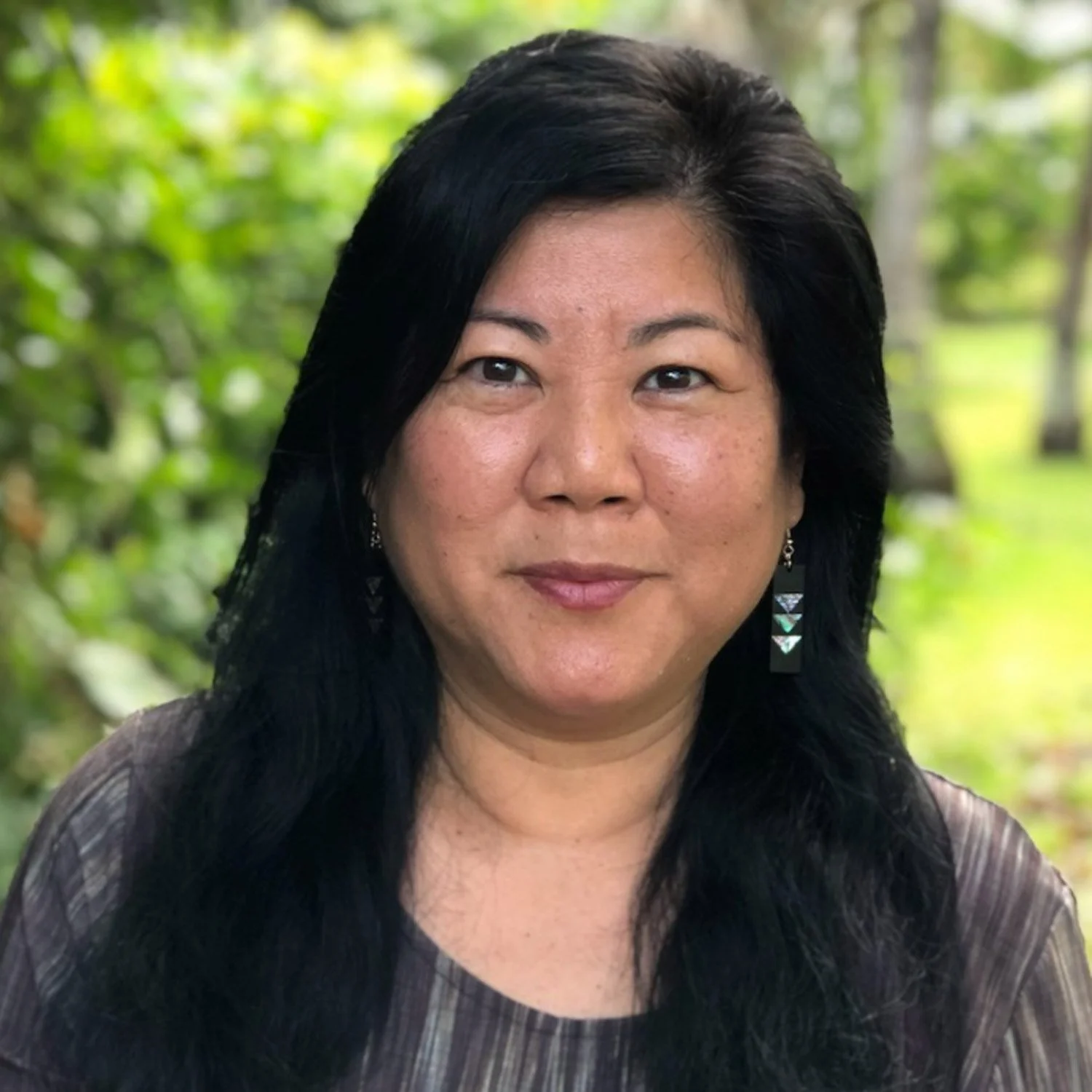
(Highlights) Candace Fujikane · Author of "Mapping Abundance for a Planetary Future”

(Highlights) Candace Fujikane · Author of "Mapping Abundance for a Planetary Future”

Author of Mapping Abundance for a Planetary Future
Professor of English at the University of the Hawaiʻi at Manoa

The struggle for a planetary future calls for a profound epistemological shift. Indigenous ancestral knowledges are now providing a foundation for our work against climate change, one based on what I refer to as Indigenous economies of abundance—as opposed to capitalist economies of scarcity. Rather than seeing climate change as apocalyptic, we can see that climate change is bringing about the demise of capital, making way for Indigenous lifeways that center familial relationships with the earth and elemental forms. Kānaka Maoli are restoring the worlds where their attunement to climatic change and their capacity for kilo adaptation, regeneration, and tranforma- tion will enable them to survive what capital cannot.

Candace Fujikane - Author of "Mapping Abundance for a Planetary Future"

Candace Fujikane - Author of "Mapping Abundance for a Planetary Future"

Author of Mapping Abundance for a Planetary Future
Professor of English at the University of the Hawaiʻi at Manoa

The struggle for a planetary future calls for a profound epistemological shift. Indigenous ancestral knowledges are now providing a foundation for our work against climate change, one based on what I refer to as Indigenous economies of abundance—as opposed to capitalist economies of scarcity. Rather than seeing climate change as apocalyptic, we can see that climate change is bringing about the demise of capital, making way for Indigenous lifeways that center familial relationships with the earth and elemental forms. Kānaka Maoli are restoring the worlds where their attunement to climatic change and their capacity for kilo adaptation, regeneration, and tranforma- tion will enable them to survive what capital cannot.


(Highlights) Dolen Perkins-Valdez · NYTimes Best-selling Author of “Take My Hand”


(Highlights) Dolen Perkins-Valdez · NYTimes Best-selling Author of “Take My Hand”

NYTimes Best-selling Author of the books Take My Hand · Balm, & Wench
Chair of the Board of the PEN/Faulkner Foundation

My dad graduated from Tuskegee, and he often told me about the Tuskegee Syphilis Experiment. He really wanted me to understand the history, not only of medical experimentation but more specifically, medical experimentation in the state of Alabama. So my feeling about medical experimentation is that there's a long history in this country of medical experimentation on black bodies, particularly based behind this racist notion that black people don't feel pain in the same way. And so I've always sort of known that, but once I started to research this book, I began to really understand more specifically what it has meant for black women.

Dolen Perkins-Valdez · NYTimes Best-selling Author of “Take My Hand”

Dolen Perkins-Valdez · NYTimes Best-selling Author of “Take My Hand”

NYTimes Best-selling Author of the books Take My Hand · Balm, & Wench
Chair of the Board of the PEN/Faulkner Foundation

My dad graduated from Tuskegee, and he often told me about the Tuskegee Syphilis Experiment. He really wanted me to understand the history, not only of medical experimentation but more specifically, medical experimentation in the state of Alabama. So my feeling about medical experimentation is that there's a long history in this country of medical experimentation on black bodies, particularly based behind this racist notion that black people don't feel pain in the same way. And so I've always sort of known that, but once I started to research this book, I began to really understand more specifically what it has meant for black women.

(Highlights) Ami Vitale · Award-winning Photographer, Filmmaker & Exec. Director of Vital Impacts

(Highlights) Ami Vitale · Award-winning Photographer, Filmmaker & Exec. Director of Vital Impacts

Award-Winning Photographer & Filmmaker
Executive Director of Vital Impacts

When are we all going to start to care about one another? Because all of our individual choices do have impacts. And I just think the demands that we place on this planet, on the ecosystems, are what are driving conflict and human suffering. In some cases, it's really the scarcity of resources, just like water. In others, it's the changing climate and the loss of fertile lands to be able to grow food. But in the end, it's always the people living in these places that really suffer the most. All of my work today, it’s not really about wildlife, and it's not just about people either. It's about how deeply interconnected all of those things are. People and the human condition are the backdrop of every one of the stories on this planet.