Every Monument Will Fall - DAN HICKS Explores Remembering & Forgetting

Every Monument Will Fall - DAN HICKS Explores Remembering & Forgetting

A Conversation with DAN HICKS on Remembering & Forgetting

I work in between archeology and anthropology in this field called either historical archeology or contemporary archeology. At the heart of that is the relationship between objects and humans. How do we write about the past or the present in terms of listening to human voices or evidence from things where maybe human voices have been erased or haven't left as much of a mark on the written records as others? Wrapped up with that, though, is always the risk of dehumanization, of the treatment of human lives as if the boundary between a subject and an object is one that is permeable, not in a sort of positive way, but in a more sinister way. There is a long history of people being treated as things. 

AI, UFOs, Perception & Reality with Artist, Geographer, Author TREVOR PAGLEN - Highlights

AI, UFOs, Perception & Reality with Artist, Geographer, Author TREVOR PAGLEN - Highlights

At the core of the work is that sense of curiosity, that sense of joy, that sense of beauty, and that sense of learning. I've been fortunate to have all kinds of strange and interesting experiences, whether that's seeing weird things in the sky over secret military bases in the middle of the Nevada desert, going scuba diving and finding internet cables on the bottom of the ocean, or tracking spy satellites in the sky and being able to predict when they'll appear in a flash against the backdrop of stars. The world around us is extraordinary and embodied, right? It is not on screens, and I’m very privileged to have that be so much a part of my process.

How AI is Shaping Perception w/ Artist TREVOR PAGLEN, Author of Trevor Paglen: Adversarially Evolved Hallucinations

How AI is Shaping Perception w/ Artist TREVOR PAGLEN, Author of Trevor Paglen: Adversarially Evolved Hallucinations

How Deception is Sculpting Our Reality
A Conversation Artist, Geographer, Author TREVOR PAGLEN

At the core of the work is that sense of curiosity, that sense of joy, that sense of beauty, and that sense of learning. I've been fortunate to have all kinds of strange and interesting experiences, whether that's seeing weird things in the sky over secret military bases in the middle of the Nevada desert, going scuba diving and finding internet cables on the bottom of the ocean, or tracking spy satellites in the sky and being able to predict when they'll appear in a flash against the backdrop of stars. The world around us is extraordinary and embodied, right? It is not on screens, and I’m very privileged to have that be so much a part of my process.

Art, Empathy & Resilience with CADY McCLAIN, Actor, Director, Writer, Artist, Musician - Highlights

Art, Empathy & Resilience with CADY McCLAIN, Actor, Director, Writer, Artist, Musician - Highlights

A Conversation with Emmy Award-winning Actor, Director, Writer CADY McCLAIN

I won my first Emmy when I was 21, which was the result of absolutely devoting myself day and night for two years to doing all the scene work. I attended classes simultaneously and did plays until my mother died. I studied with Michael Howard for eight years. Even when I was so tired I couldn't get up to do a scene, he would say, "Get up and do a poem." It helped me enormously; it saved me. The way I was trained and how I train others is that you know when you’re in the zone. Oh God, it feels so good. It feels like flying. And that's what you want. You want to be so unselfaware that you're on liftoff?

A Life in Acting with Emmy Award-winning Actor, Director, Writer CADY McCLAIN

A Life in Acting with Emmy Award-winning Actor, Director, Writer CADY McCLAIN

A Conversation with Emmy Award-winning Actor, Director, Writer CADY McCLAIN

I won my first Emmy when I was 21, which was the result of absolutely devoting myself day and night for two years to doing all the scene work. I attended classes simultaneously and did plays until my mother died. I studied with Michael Howard for eight years. Even when I was so tired I couldn't get up to do a scene, he would say, "Get up and do a poem." It helped me enormously; it saved me. The way I was trained and how I train others is that you know when you’re in the zone. Oh God, it feels so good. It feels like flying. And that's what you want. You want to be so unselfaware that you're on liftoff?

Exploring  Organic, Biodynamic & Regenerative Agriculture with LOUIS DE JAEGER - Highlights

Exploring  Organic, Biodynamic & Regenerative Agriculture with LOUIS DE JAEGER - Highlights

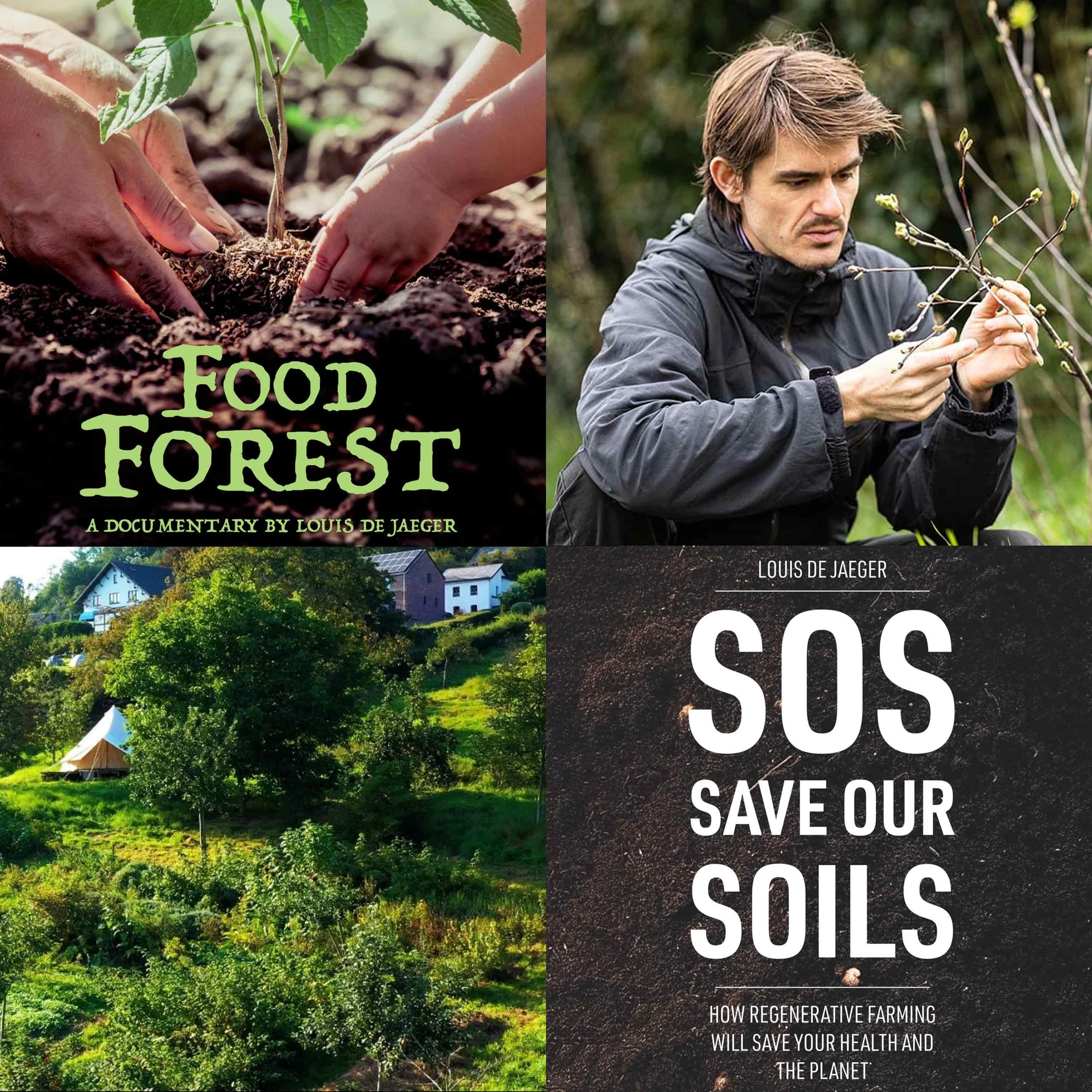
The Earth started as one big rock, and soil did not exist. Without soil, you can't really grow trees or any crops whatsoever. We are depleting soils super fast, and it is predicted that in less than 25 years, 90% of our soils will be degraded. We as humans can destroy things in a couple of years that have taken thousands or even millions of years to form. On the other hand, nature regenerates pretty fast. It heals itself. If humans help this healing process, it can go even faster.

SOS: Save Our Soils: How regenerative food & farming will save your health & the planet w/ LOUIS DE JAEGER

SOS: Save Our Soils: How regenerative food & farming will save your health & the planet w/ LOUIS DE JAEGER

The Earth started as one big rock, and soil did not exist. Without soil, you can't really grow trees or any crops whatsoever. We are depleting soils super fast, and it is predicted that in less than 25 years, 90% of our soils will be degraded. We as humans can destroy things in a couple of years that have taken thousands or even millions of years to form. On the other hand, nature regenerates pretty fast. It heals itself. If humans help this healing process, it can go even faster.

Abolish Silicon Valley—How to Liberate Technology from Capitalism

Abolish Silicon Valley—How to Liberate Technology from Capitalism

A Conversation with WENDY LIU

Abolishing Silicon Valley means freeing the development of technology from a system that will always relegate it to a subordinate role, that of entrenching existing power relations. It means designing a new system that isn't deluged in the logic of the bucket. It means liberating our worlds from the illegitimate ring of capital. Perhaps this sounds unfair to capital. Perhaps I sound like I'm not grateful enough for everything that capital has given us, but we don't owe capital anything; the things we attribute to capital were built by workers. People can labor and sometimes die in a process. Their contributions are unrecognized in death as in life. So don't thank capital. It doesn't deserve our gratitude, and it doesn't need it. Thank the people who created everything that capital always takes credit for. Capital is a means of accounting for wealth ownership, not its creation. And that means it's perpetually shrouded in a fundamental untruth; we can leap the swamp of capital behind and start over with something new. 

In this episode on Speaking Out of Place podcast Professor David Palumbo-Liutalks with Wendy Liu. Ever since its publication, Abolish Silicon Valley—How to Liberate Technology from Capitalism has proven to be more urgent and insightful. Today, he talks with author Wendy Liu about how developments like AI and LLM, further erosions of intellectual property, and increased invasions of privacy make the case for abolishing Silicon Valley even more important. They talk about how abolition is critical at a time when more and more the private sector has come to eviscerate the public good. Turning to the genocide in Gaza, they discuss the ways Capital has enlisted technology in deadly and horrific manners. They end with a meditation on the commons and how one can live with fewer commodities and find value in common projects to make life more valuable and worthwhile outside of the logic of the market.

To Save and to Destroy: Writing as an Other with Author VIET THANH NGUYEN - Highlights

To Save and to Destroy: Writing as an Other with Author VIET THANH NGUYEN - Highlights

A Conversation with Pulitzer Prize-winning Author VIET THANH NGUYEN

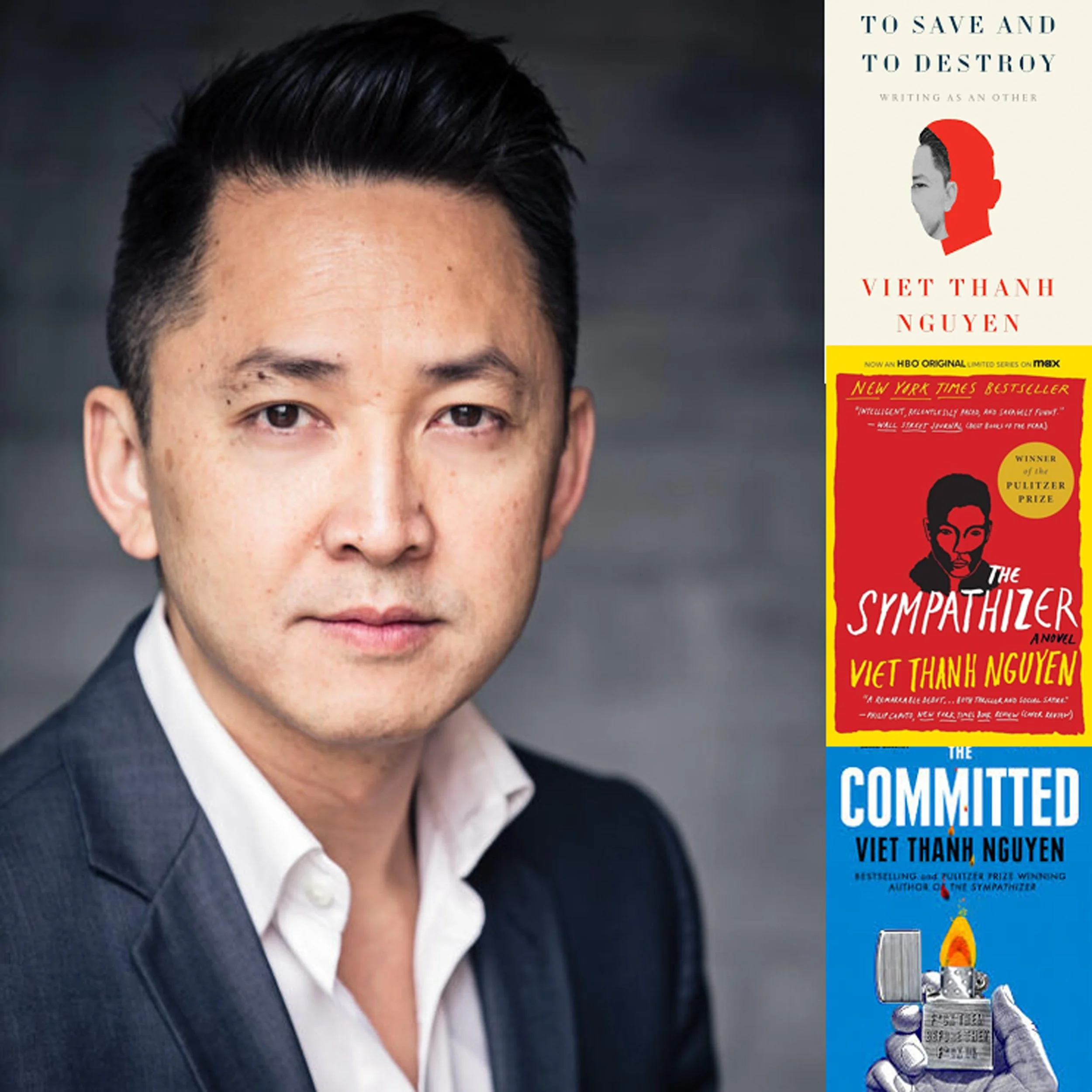
What I've discovered as a writer is that fear is a good indicator that there is a truth. To speak the truth in a society is oftentimes an act that requires some courage. Those processes of being an other for me in the United States were obviously very fundamental to shaping who I am as a person and as a writer. It was very difficult to undergo, but to become a writer who could talk about those issues was also a lot of fun. Writing The Sympathizer was a lot of fun, and I hope that the novel was enjoyable and humorous to read as well, despite its very serious politics. When I wrote The Committed, I also had a lot of fun as an outsider to France. In writing the novel itself, The Committed, there was a lot of humor, satire, and these kinds of tools to confront the tragedy of othering. This is very important to me as literary and political devices. I think I could do that in both The Sympathizer and The Committed because I had a lot of distance from the time periods that those novels described. My challenge right now is to try to find my sense of humor in describing what the United States is undergoing and doing to other countries, its own immigrants, and its own people of color, and minorities in the present. That's proving to be a little more challenging at this moment.

Ten Cases of Hope for Our Future w/ MONICA FERIA-TINTA - Highlights

Ten Cases of Hope for Our Future w/ MONICA FERIA-TINTA - Highlights

MONICA FERIA-TINTA on Ten Cases of Hope for Our Future

I like young people to know that they're extremely powerful. I guess the book was about giving hope because I realized how much we could do together. If a person can manage to argue and make a major impact in the way we are understanding treaties in human rights or other things, imagine what could be if every single person is in their own place in some field, with that alertness and synced in the same way. I believe that ordinary people are the ones bringing changes here. I believe that the communities gathering together – for example, I am seeing that in this country around the protection of rivers – are the ones that will mark the change. It's not going to come from above; it's going to come from below, up. We all have a role. Working for the protection of what we love the most will make you happy. So get into a positive mindset. Learn all you can. Be part of things that make you feel positive. You will see how you will find your way, and there is no place for feeling disempowered. This is the moment where you should feel very powerful because it is us who are going to make the future of this Earth.

The Theory of Water with LEANNE BETASAMOSAKE SIMPSON

The Theory of Water with LEANNE BETASAMOSAKE SIMPSON

World-Making, Life-Giving & Indigenous Internationalism with LEANNE BETASAMOSAKE SIMPSON

So I think that part of colonialism for Indigenous peoples has been this idea that Indigenous peoples aren't thinking peoples and that we don't have thought on a kind of systemic level. One of the things that I was interested in doing is intervening in that because I think Indigenous people have a lot of beautiful, very intellectual, theoretical contributions to make to the world. A lot of our theory is encoded in story, but a lot of our theory is also encoded in land-based practice. You can't learn about it from reading books or from going to lectures. You have to really be out on the land with elders for long periods of time. 

The Theory of Water with LEANNE BETASAMOSAKE SIMPSON

The Theory of Water with LEANNE BETASAMOSAKE SIMPSON

World-Making, Life-Giving & Indigenous Internationalism with LEANNE BETASAMOSAKE SIMPSON

So I think that part of colonialism for Indigenous peoples has been this idea that Indigenous peoples aren't thinking peoples and that we don't have thought on a kind of systemic level. One of the things that I was interested in doing is intervening in that because I think Indigenous people have a lot of beautiful, very intellectual, theoretical contributions to make to the world. A lot of our theory is encoded in story, but a lot of our theory is also encoded in land-based practice. You can't learn about it from reading books or from going to lectures. You have to really be out on the land with elders for long periods of time. 

Bombs Will Never Liberate Iran: PERSIS KARIM & MANIJEH MORADIAN in Conversation

Bombs Will Never Liberate Iran: PERSIS KARIM & MANIJEH MORADIAN in Conversation

A Conversation with MANIJEH MORADIAN & PERSIS KARIM

 I think one must frame what happened in Iran recently in the context of what is happening in the larger Middle East, which is that Israel and the United States principally are orchestrating a kind of regional shift in their power that can only be seen in light of what happened, and it continues to happen in Gaza and the wider Palestinian Territories, which is that Israel is, by virtue of signaling an aggressive move towards Iran, suggesting that it will continue unabated to exercise its will throughout the region, and that it also is interested in destroying Iranian support for Palestinian rights in the region.

On Writing, America's Forever Wars & Challenging Power with Author VIET THANH NGUYEN

On Writing, America's Forever Wars & Challenging Power with Author VIET THANH NGUYEN

A Conversation with Pulitzer Prize-winning Author VIET THANH NGUYEN

What I've discovered as a writer is that fear is a good indicator that there is a truth. To speak the truth in a society is oftentimes an act that requires some courage. Those processes of being an other for me in the United States were obviously very fundamental to shaping who I am as a person and as a writer. It was very difficult to undergo, but to become a writer who could talk about those issues was also a lot of fun. Writing The Sympathizer was a lot of fun, and I hope that the novel was enjoyable and humorous to read as well, despite its very serious politics. When I wrote The Committed, I also had a lot of fun as an outsider to France. In writing the novel itself, The Committed, there was a lot of humor, satire, and these kinds of tools to confront the tragedy of othering. This is very important to me as literary and political devices. I think I could do that in both The Sympathizer and The Committed because I had a lot of distance from the time periods that those novels described. My challenge right now is to try to find my sense of humor in describing what the United States is undergoing and doing to other countries, its own immigrants, and its own people of color, and minorities in the present. That's proving to be a little more challenging at this moment.

On Borges, Gore Vidal, Robert Frost & The Writing Life with Author & Filmmaker JAY PARINI

On Borges, Gore Vidal, Robert Frost & The Writing Life with Author & Filmmaker JAY PARINI

A Conversation with Author & Filmmaker JAY PARINI

Poetry is the prince of the literary arts to me. It's at the very top because it's language refined to its apex of memorability. I am interested in poetry as memorability and poetry as something you live by. These are the words you live by. These words stay in your brain and guide your life. That's what I am interested in. My memoir slash autofiction is called Borges and Me, and as you know, it's a story of my time in 1970 when my best friend Billy was drafted for the Vietnam War, and so was I. He went to Vietnam, and I went to Scotland to hide out and do my graduate work. I spent nearly seven years in Scotland, but I certainly spent the next five years definitely in Scotland. I was there before as an undergraduate for a bit, too. During that time, Billy was killed in Vietnam, and I was a nervous wreck. My memoir talks about my depression, my anxieties, and then, through my friend Alastair Reid, I met Borges, the great Argentine writer. We went on a little road trip through the Highlands, and this conversation with Borges really restored me back to myself and what was important in life. I felt that I owed a huge amount to that contact with Borges… I was lucky that suddenly, out of nowhere, came a wonderful director-producer named Mark Turtletaub. He had read my book and loved it, and he approached me. We had a conversation, and he said, "Look, I want to make this movie." So off we went.

Everything for Everyone: An Oral History of the New York Commune, 2052-2072

Everything for Everyone: An Oral History of the New York Commune, 2052-2072

A Conversation with M. E. O’BRIEN & EMAN ABDELHADI

The book is a speculative fiction novel that imagines a transition out of capitalism in the nation-state in the next few decades, but it is composed of a series of fictional oral history interviews. We imagine ourselves in the future, and we are writing a book to celebrate the 20th anniversary of a food riot that launches the New York version of this kind of revolutionary transition. We are conducting various oral histories with different actors, some who participated in the revolution and some who grew up in the new social form, which is the commune. The book consists of a series of 12 interviews that we trade off as interviewers. It was actually Michelle’s idea to write the book. She had written a fictional oral history interview for an online magazine and invited me to create a whole novel of these interviews. We both have a relationship with oral history as a form of research and engagement with the world. I conduct life history interviews for my sociological research, and Michelle ran a New York Trans Oral History project, which is a great archive that people should check out. It has 200 interviews, so we both have experience in this field. We are both science fiction fans, friends, and comrades. I have spent many years discussing politics, the future, and the left. The book is a culmination of all these elements, representing an intersection of various facets of our lives as scholars, as well as our friendship and comradeship. We pitched the book to Common Notions, presenting a general outline of the world and brief paragraphs about each character we thought we might write about. They encouraged us to proceed, and the rest is history.

A Barrister for the Earth: Ten Cases of Hope for Our Future w/ MONICA FERIA-TINTA

A Barrister for the Earth: Ten Cases of Hope for Our Future w/ MONICA FERIA-TINTA

I like young people to know that they're extremely powerful. I guess the book was about giving hope because I realized how much we could do together. If a person can manage to argue and make a major impact in the way we are understanding treaties in human rights or other things, imagine what could be if every single person is in their own place in some field, with that alertness and synced in the same way. I believe that ordinary people are the ones bringing changes here. I believe that the communities gathering together – for example, I am seeing that in this country around the protection of rivers – are the ones that will mark the change. It's not going to come from above; it's going to come from below, up. We all have a role. Working for the protection of what we love the most will make you happy. So get into a positive mindset. Learn all you can. Be part of things that make you feel positive. You will see how you will find your way, and there is no place for feeling disempowered. This is the moment where you should feel very powerful because it is us who are going to make the future of this Earth.

Constitutional Collapse & the Possibilities of a New Democracy w/ AZIZ RANA

Constitutional Collapse & the Possibilities of a New Democracy w/ AZIZ RANA

A Conversation with AZIZ RANA

In the US, we have this idea that exists as a kind of popular cultural sense. The country has basically had the same constitution—a document ratified in the 1780s, and it has really been in effect since then. However, one of the things that's distinctive about the US Constitution is that it is perhaps the hardest in the world to formally amend. It is incredibly difficult to change the actual terms of the text, even during times when we've had pretty profound changes to the language. Here, we can think about the Reconstruction period with the passage of the 13th, 14th, and 15th amendments.

Another World Is Possible: Lessons for America From Around the Globe w/ NATASHA HAKIMI ZAPATA

Another World Is Possible: Lessons for America From Around the Globe w/ NATASHA HAKIMI ZAPATA

 It's a really dangerous time we're living through, and I do think that when we talk about these progressive policies, a huge problem in the US is that we still have a lot of stigma left over from the Cold War that keeps us from really great ideas because they're branded as socialist or communist. And I’ve seen, in the time I've been a journalist for the past 15 years, how that stigma has slowly faded. And you see that younger people are more and more interested in these ideas, whether or not they're considered socialist.

AI, Universities & Student Surveillance in the Digital Age - LINDSAY WEINBERG & ROBERT OVETZ

AI, Universities & Student Surveillance in the Digital Age - LINDSAY WEINBERG & ROBERT OVETZ

A Conversaton with LINDSAY WEINBERG & ROBERT OVETZ

Under the guise of “personalizing” education and increasing efficiency, universities are increasingly sold on AI as a cure to their financial ills as public funds dry up and college applications drop. Rather than maintain that education is an essential public good that needs broad support, universities are looking to technology in ways that are changing the nature of education in dangerous and destructive ways.  As Lindsay writes in the book, Smart University: “Higher education is becoming increasingly synonymous with digital surveillance in the United States. Advanced network infrastructure, internet- connected devices and sensors, radio frequency identification (RFID), data analytics, and artificial intelligence (AI) are being celebrated as a means of ushering in the age of “smart universities,” one where institutions canrun their services more efficiently and strengthen the quality of higher education using digital tools. However, as this book demonstrates,  these tools have a darker side. They allow public universities to respond to and perpetuate corporate logics of austerity, use student data to reduce risk of financial investment in the face of dwindling public resources, and track student behavior to encourage compliance with institutional metrics of success. Surveillance of student behavior forms the foundation of the smart university, often in ways that prove harmful to students— particularly  those who are already marginalized within the academy.