

I grew up in a pretty unstable time in the 1960s, in the United States. Right now, what's going on in the world is probably even more threatening because of whatever the normal stuff that happens in politics, you've got climate change kind of riding over the top of that. Young people, especially, I think, are very anxious about what the future looks like.
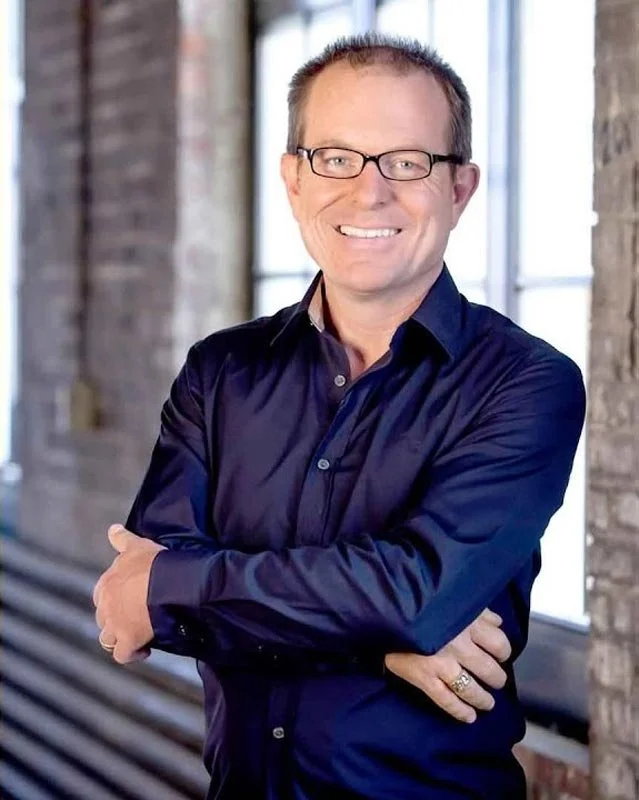
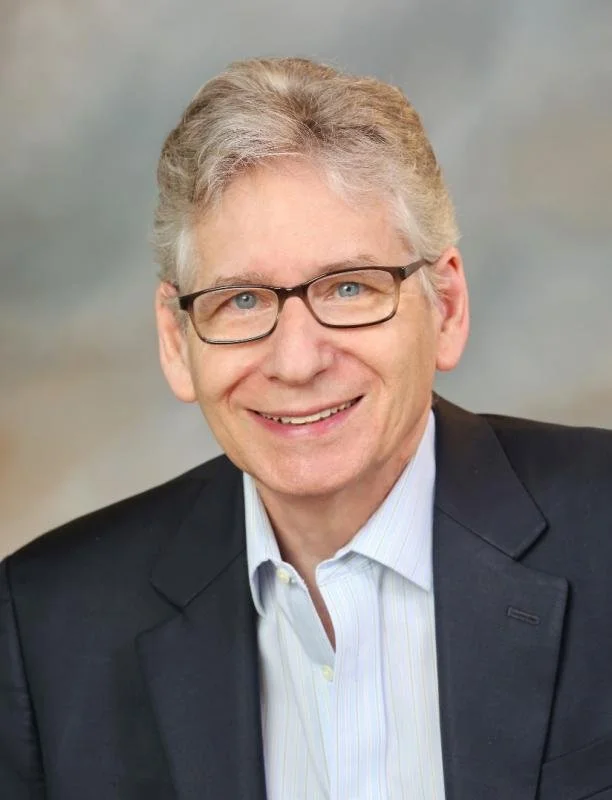
Today on Business and Society, Bruce Piasecki and I are joined by Ed Saltzberg, Executive Director of the Security and Sustainability Forum, an organization he founded in 2009 to bring global experts together for free, accessible conversations on climate, energy, and community resilience. SSF has now produced more than 400 webinars used by educators, professionals, and students worldwide to stay informed on the evolving challenges shaping our environmental and social future. Ed’s work extends far beyond SSF. Through his Substack, The Stability Brief, and his collaborations with Native American tribes on long-term energy and resilience planning, he weaves together science, civic responsibility, and lived experience. His perspective is grounded in a lifetime of public service—and even a formative 1966 road trip that shaped how he sees a changing planet. Today, we’ll explore what he’s learned, what concerns him, and what practical steps communities can take to build a more stable, sustainable future.
ED SALTZBERG
Well, actually, the revelation came later, and it was sort of benchmarking against what happened on that road trip. I was 20 years old in college, so it was a real formative, growing time for me. But people who are in their fifties and later will remember a time when you had to clean your windshield every few hours if you're on a trip, because there were so many insects.
But now if you drive cross-country, you probably don't have to clean it at all. And so, looking back on that time, I did write a Substack article about that. What happened to that biodiversity? Where did it go? And it really comes down to what man's impact on the environment is, and you can really trace that.
Learning from Native Americans & Indigenous Traditions
So their values, their expectations, and their view of the future, their view of the past, and their view of the future is so much different than mine. So just sort of expanding and stepping back and learning to listen, I think, was just really, really important. When you talk to Native Americans, they don't really talk as much about the present as much as they talk about the impact on the future.
So they have a saying: are we doing something that's going to support seven generations of the future, and if we are not, then we're not going to make that decision. That was really eye-opening for me. Was a transformative way to look at the world as far as I'm concerned.
Early Career Lessons
My first job out of graduate school was at SAIC, not at that time a big consulting firm. And the consulting firm's founder owned 3% of the stock. The rest of the stock got out into the hands of the workers and personnel, which was such a revolutionary way to run a company. Since it was my first job out of graduate school, I thought that that's the way all companies worked. He ran that company much like a tribal Council runs its programs and works with its citizens.
Problem-Solving Approach
I don't know if there was a particular defining movement, but I think I'm a problem solver at heart. I think that's really what I do. And what I'm particularly good at is stepping back and seeing the big picture and how things come together.
And if I can't see how things come together, then I don't feel like I can act. I don't know enough to act. So there's so much impacting communities, but it comes down to understanding what those impacts are and then being able to bring people together so they understand them. And then together, working out solutions that you can move forward with. So I don't think I had a defining movement.
Security and Sustainability Forum
Well, I started the Security and Sustainability forum in 2009, kind of an early adopter of online education. I decided at that point to make all of it free. I needed sponsors to do that, but I made it all free. I was just in a position, since I'm in DC, had a lot of corporate and government experience that I had a network and I was able to build on that.
So I was able to pull together global leaders to address issues of climate, public health, food, water security, and civic responsibility, which I wind into kind of everything. Over that period of time, it's a privilege to be able to do that and learn from so many people, but also to bring that education to a larger group. And you had mentioned that faculty use my webinars for curriculum enrichment because everything there is pretty deep technically, although easily understood by a non-technical person.
Well, first of all, we try to pick topics that are going to be more universal. So the learning would still be there in a year or two years, maybe not forever. But then we'll get three to five experts together in about 90 minutes. Shorter than 90 minutes, you can't get into the issues, into the topics well enough, and then there's not enough time for discussion among the panelists.
Creating Effective Webinars
And that's the real creative part, is answering questions and then for the panelists to be talking and maybe moving the frontiers of understanding. I try to make the talks fit together. So we spend time together to make sure we're sort of getting the puzzle together so the pieces do fit. And then I try to let it rip in the discussion and try to get people to kind of let their hair down and really kind of talk to each other in those discussions and try to get more going. And one thing that I do is I collect a lot of statistics. So I do a survey right at the end where I ask key questions to the people, what they liked, what they didn't like. I ask 'em to score it.
Working with AI - Limitations and Opportunities
Okay, well, two things. I look at AI as my smart autistic researcher. And it's a great researcher, but you've gotta be extremely careful with it. So I use AI to collect a lot of information in a very short period of time. And then I have learned about how to interact with different large language models.
And they work differently in a way that I can get them to check themselves and do their own QC, and then I can have one QC the other. So I'm really looking for fact-based information. But you have to learn to engage with it, and you can't ignore it. It's not going away.
You have to engage with AI. In many parts of the world, there are certain jobs that are never going to go away. Personal care, for example, is probably never going to go away, but all the other jobs are kind of at risk. But you know what AI can't do is the problem-solving that is necessary. Framing that problem, coming up with the original idea, that's the creative part of it. AI can go in and then do a lot of the operational work for you and make it go a lot faster, and then it can't develop that finished product 'cause it can't tell one product from another.
AI and the implications of AI are really unsettling, but I sort of have three things that I talk about here. Get educated, understand it, so that then you can develop some things that you can actually do and find a community that you can do them in, so that you're in a position that you're in more control.
Optimism Through Systems Thinking
I am pretty optimistic. I think that, if you can, and this is maybe my science and engineering systems background, if you can face a problem, break it down into its pieces, see how the system works, understand it, then you've got a chance of coming up with solutions that are going to work.
So I just feel that my ability to kind of step back, not get too flustered if I don't understand, and if things are happening very quickly, to get to the root cause of what's happening.
Well, I started this Security and Sustainability forum. It's just an idea I got when I was at Battelle Memorial Institute, a research lab, and I realized I was in a position to pull people together in a collaborative way to address some important issues. So I had a big meeting, called people from government, from industry, from academia into a large meeting to address issues, climate being one of them.
To my great surprise, they all came, and we had this great discussion and wrote a report that came out of it in the end on solutions to the different problems.
American Whiplash
I wrote an article called American Whiplash, and what I was seeing is that there's cycles in the short American history from 1776 up until now. There were periods and you have to look at the strata of society here. Some parts of society are always oppressed, have been oppressed.
So, but I'm talking about the part of society that I'm experiencing trying to change the whole thing, so all stratas are really moving forward together there. But there are periods of real oppression, where there is a real concentration of power, which is a bad thing in the end, unless you have that benevolent dictator, which is really hard to find, and then that gets broken because it's unsustainable and then a much more progressive period comes in. And I was just tracing the cycles there.
Advice for Young People
Well, when I do speak to young people, which I do through the Security and Sustainability forum and also through George Washington University, I encourage them to, first of all, get educated on what the issues are surrounding them. There's just no substitute for educating yourself.
And there's so many ways to do that online now. Encourage them to choose one or two domains where they will commit for the long term. In my own life that's been local civic work. I've been on a local board commission for 40 years here at Falls Church. A lot of experience working on local issues and within the community, tribal partnerships and education, and then encourage 'em to stay with an issue over many years. That way you can see the change. The change becomes visible in the daily news cycle. You see projects that build, maybe laws adjusted and social norms shifted.
Well, there's so many different levels people can operate at in terms of clean energy. You can operate within your community and look for ways to get renewable energy adopted by the community on government buildings, maybe developing programs, state or local programs for residential community solar and batteries, which are just really important. I think that understanding what a circular economy is all about and finding roles in those supply chains. So if you're in business, looking at your supply chains from a recyclable and reuse, kind of a buy nothing kind of attitude towards your supply chain. I think those are really ripe avenues.
Transition to Regenerative Society
We have a lot of activities going on now. We have fossil fuels still in the economy. We have a long-term reliance on natural gas because of resilience on the grid. We have electrification, which means more pressure on the grid and more transmission lines and more power needed to generate the electricity. All of that is happening, but I sort of see that as a wave and a peak and at the same time, a circular economy and not wasting materials because it takes so much energy to extract and create the materials. It takes energy to throw those materials away, then those materials impact the environment from there. So that planning for circularity so that all the molecules go to places that you want them to. Someone said, I think it was Barry Commoner in the 1960s, that original environmentalist, that pollution is just molecules in the wrong place. And I believe that's absolutely true. You wanna get those molecules in the right place so they're not polluting, they're not emissions up into the atmosphere.
And we have the power and ability to do that. Meanwhile we have a lot of energy things going on while we get to that peak and get over to the other side where we have a society based, not on fossil fuels, but based on regeneration.