On Abolition Sanctuary & Environmental Activism from Below

On Abolition Sanctuary & Environmental Activism from Below

with Naomi Paik & Ashley Dawson

In this episode on Speaking Out of Place podcast Professor David Palumbo-Liutalks with scholar-activists Naomi Paik and Ashley Dawson about the close connection between abolition and environmental activism from below. How are the twin projects raising profound questions about borders, carcerality, enclosures, and the separation of humans from each other and all other forms of life, including supposedly “inanimate” objects?  How can we create “sanctuary for all” in a radical rethinking of notions like “the commons”? 

Nature, Wellbeing, Creativity & The Power of Meditation w/ DR. BEN SHOFTY

Nature, Wellbeing, Creativity & The Power of Meditation w/ DR. BEN SHOFTY

Functional Neurosurgeon · Professor · University of Utah

When you think about the evolution of the human brain–just like other animals that have specialized in speed or keeping warm or gathering food–I feel our brain sort of specialized being creative and flexible and being able to generate different solutions to a given problem. To me, this is probably the most fascinating thought process that happens in the human brain. And what I do in neurosurgery–and my subspecialty is called functional neurosurgery–we don't deal with disorders in which there's an anatomical abnormality inside the brain. We deal with disorders in which there is an abnormal connection or abnormal circuitry inside the brain when there's an issue with the way the brain functions. There's no tumor. There are no abnormal blood vessels or anything like that. And that gives us an amazing opportunity to really investigate how different circuits and different areas inside the brain work.

Assembling Tomorrow: A Guide to Designing a Thriving Future - SCOTT DOORLEY & CARISSA CARTER - Highlights

Assembling Tomorrow: A Guide to Designing a Thriving Future - SCOTT DOORLEY & CARISSA CARTER - Highlights

Creative & Academic Director · Stanford d.school
Co-authors of Assembling Tomorrow: A Guide to Designing a Thriving Future

Today, someone is putting the finishing touches on a machine-­ learning algorithm that will change the way you relate to your family. Someone is trying to design a way to communicate with animals in their own language. Someone is cleaning up the mess someone else left behind seventy years ago yesterday. Today, someone just had an idea that will end up saving one thing while it harms another.

To be a maker in this moment—­ to be a human today—­ is to collaborate with the world. It is to create and be created, to work and be worked on, to make and be made. To be human is to tinker, create, fix, care, and bring new things into the world. It is to design. You—­ yes, you!—­ might design products or policy, services or sermons, production lines or preschool programs. You might run a business, make art, or participate in passing out meals to the poor. You may write code or pour concrete, lobby for endangered species legislation or craft cocktails. Wherever you fit in, you are part of shaping the world. This is design work.

– Assembling Tomorrow: A Guide to Designing a Thriving Future

Can Design Save the World? - SCOTT DOORLEY & CARISSA CARTER - Co-authors of Assembling Tomorrow - Directors of Stanford’s d.School

Can Design Save the World? - SCOTT DOORLEY & CARISSA CARTER - Co-authors of Assembling Tomorrow - Directors of Stanford’s d.School

Creative & Academic Director · Stanford d.school
Co-authors of Assembling Tomorrow: A Guide to Designing a Thriving Future

Today, someone is putting the finishing touches on a machine-­ learning algorithm that will change the way you relate to your family. Someone is trying to design a way to communicate with animals in their own language. Someone is cleaning up the mess someone else left behind seventy years ago yesterday. Today, someone just had an idea that will end up saving one thing while it harms another.

To be a maker in this moment—­ to be a human today—­ is to collaborate with the world. It is to create and be created, to work and be worked on, to make and be made. To be human is to tinker, create, fix, care, and bring new things into the world. It is to design. You—­ yes, you!—­ might design products or policy, services or sermons, production lines or preschool programs. You might run a business, make art, or participate in passing out meals to the poor. You may write code or pour concrete, lobby for endangered species legislation or craft cocktails. Wherever you fit in, you are part of shaping the world. This is design work.

– Assembling Tomorrow: A Guide to Designing a Thriving Future

Curiosity, Cognition & Adapting to the Uncertainties Climate Change with Neuroscientist DR. JACQUELINE GOTTLIEB

Curiosity, Cognition & Adapting to the Uncertainties Climate Change with Neuroscientist DR. JACQUELINE GOTTLIEB

Professor of Neuroscience & Principal Investigator at Columbia University’s Zuckerman Mind Brain Behavior Institute

I came to neuroscience from a humanistic perspective. I was very interested to find out who we are. What do we know? What do we think we know? Why do we think we know certain things? How do we see things? How do we perceive them? Ultimately, the question behind curiosity is what things we find interesting in our environment. The way I think about eye movements is that they really are trained in some largely subconscious process.

Wetlands, Methane & Restoring Earth’s Garden of Eden with EUAN NISBET

Wetlands, Methane & Restoring Earth’s Garden of Eden with EUAN NISBET

Earth Systems Scientist · Royal Holloway University of London

I am a Christian and I have strong Muslim and Jewish friends as well as great respect for Hindu beliefs. I grew up in Southern Africa and I am well aware of the depth of some Indigenous beliefs. I think that having belief systems does give you a very different perspective sometimes. Now, in Christianity, the concept of the shepherd, human beings are here and this is our garden, our garden of Eden, but we have a responsibility. And if we choose to kick ourselves out of the garden, there are consequences. And that's precisely what we are doing. The garden is there, it's lovely, and we can manage it, and it's our job to manage it. We can manage it properly. We can respect it. It's for all creation, and it's very explicit that it involves all Creation. And that's a very fundamental biblical law that you have to respect all Creation. And if you don't do that, then the consequences—you’re basically throwing yourself out of the Garden of Eden.

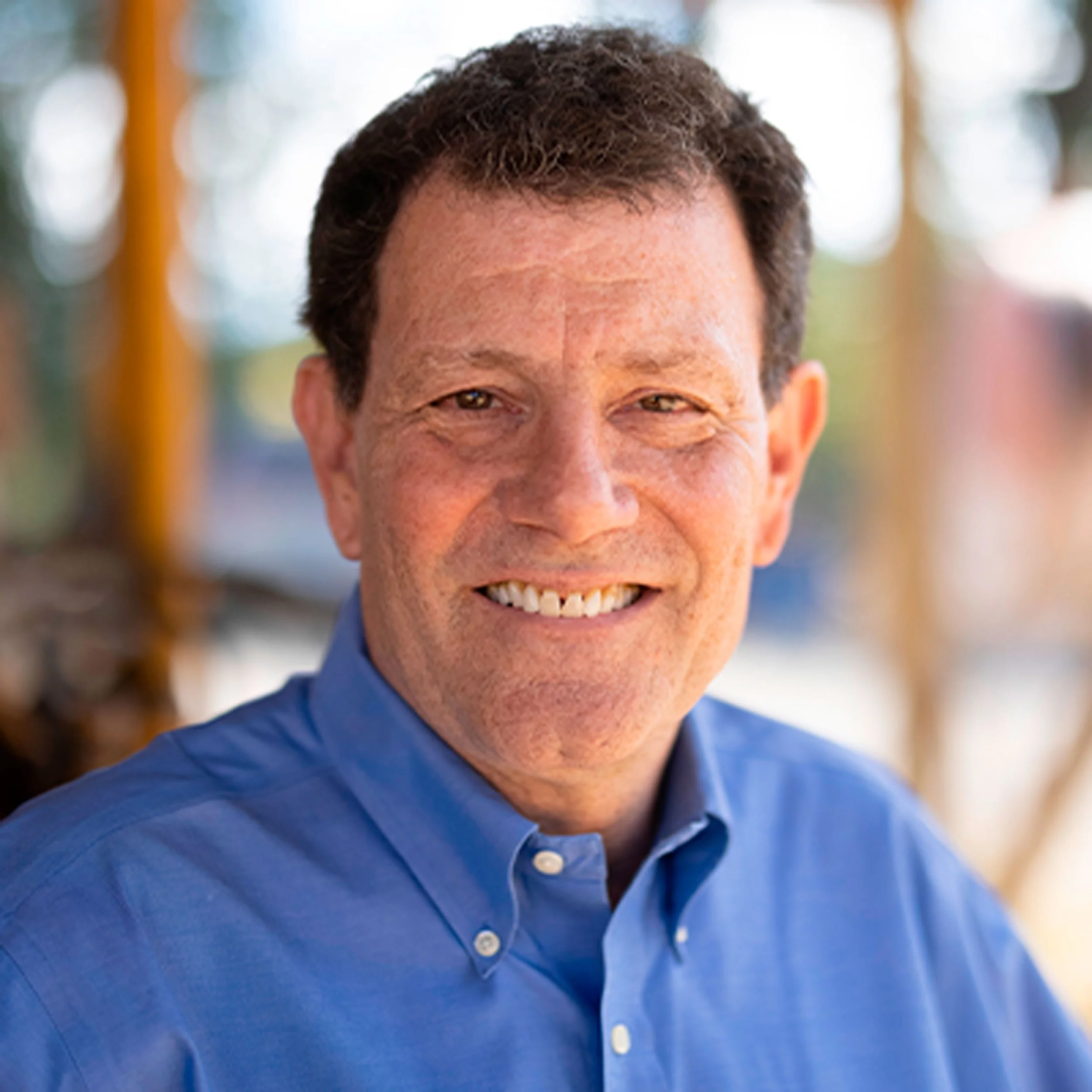
How can journalism make people care about environmental crises & create solutions? - Highlights - NICHOLAS KRISTOF

How can journalism make people care about environmental crises & create solutions? - Highlights - NICHOLAS KRISTOF

Pulitzer Prize-winning Journalist · NYTimes Op-Ed Columnist
Author of Chasing Hope, A Reporter's Life · Coauthor of Half the Sky · Tightrope · A Path Appears

I'm trying to get people to care about a crisis in ways that may bring solutions to it. And that's also how I deal with the terror and the fear to find a sense of purpose in what I do. It's incredibly heartbreaking to see some of the things and hear some of the stories, but at the end of the day, it feels like–inconsistently here and there–you can shine a light on problems, and by shining that light, you actually make a difference.

Chasing Hope: A Reporter's Life w/ Pulitzer Prize-winning Journalist NICHOLAS KRISTOF

Chasing Hope: A Reporter's Life w/ Pulitzer Prize-winning Journalist NICHOLAS KRISTOF

Pulitzer Prize-winning Journalist · NYTimes Op-Ed Columnist
Author of Chasing Hope, A Reporter's Life · Coauthor of Half the Sky · Tightrope · A Path Appears

I'm trying to get people to care about a crisis in ways that may bring solutions to it. And that's also how I deal with the terror and the fear to find a sense of purpose in what I do. It's incredibly heartbreaking to see some of the things and hear some of the stories, but at the end of the day, it feels like–inconsistently here and there–you can shine a light on problems, and by shining that light, you actually make a difference.

Natural Magic: Emily Dickinson, Charles Darwin, and the Dawn of Modern Science with RENÉE BERGLAND

Natural Magic: Emily Dickinson, Charles Darwin, and the Dawn of Modern Science with RENÉE BERGLAND

Literary Critic · Historian of Science · Educator
Author of Natural Magic: Emily Dickinson, Charles Darwin, and the Dawn of Modern Science

There is a stronger connection between Dickinson and Darwin than the proximity of history. Or the universality of literature. They both understood natural science and the natural world in ways that seem strange and somewhat surprising in the 21st century. Their 19th century attitudes to nature and the study of it are so different from ours that when we trace their stories, a vanished world begins to emerge. The more I consider these figures together, the more I feel their world and my world. come alive. Darwin and Dickinson illuminate each other. By reading them together, we can start to understand the interconnected relationships that animated 19th century poetry and science.

Empire of Things: How We Became a World of Consumers & Out of the Darkness: The Germans 1942 to 2022 w/ FRANK TRENTMANN

Empire of Things: How We Became a World of Consumers & Out of the Darkness: The Germans 1942 to 2022 w/ FRANK TRENTMANN

Professor of History at Birkbeck, University of London · Author of Out of the Darkness: The Germans 1942 to 2022

The environmental crisis, Gaza, the war in Ukraine—all of those don't make sense if you don't have a sense of history. History and the humanities have come under huge pressure. We've seen falling student numbers, and that's a real shame because history continues to be a source of intellectual inspiration and curiosity that not only makes us wiser and more reflective but also creates the dynamism and creativity we need to confront our present and future challenges. I hope that among the young generations, there will be people inspired by history, people that have the ambition to research and write about the past.

Out of the Darkness: The Germans 1942 to 2022 with FRANK TRENTMANN

Out of the Darkness: The Germans 1942 to 2022 with FRANK TRENTMANN

Professor of History at Birkbeck, University of London · Author of Out of the Darkness: The Germans 1942 to 2022

The environmental crisis, Gaza, the war in Ukraine—all of those don't make sense if you don't have a sense of history. History and the humanities have come under huge pressure. We've seen falling student numbers, and that's a real shame because history continues to be a source of intellectual inspiration and curiosity that not only makes us wiser and more reflective but also creates the dynamism and creativity we need to confront our present and future challenges. I hope that among the young generations, there will be people inspired by history, people that have the ambition to research and write about the past.

The SDGs & UN Summit of the Future - Highlights - GUILLAUME LAFORTUNE

The SDGs & UN Summit of the Future - Highlights - GUILLAUME LAFORTUNE

Vice President · Head of the Paris Office
UN Sustainable Development Solutions Network

The SDSN was set up to mobilize research and science for the Sustainable Development Goals. The development goals were adopted in 2015 by all UN member states, marking the first time in human history that we have a common goal for the entire world. Out of all the targets that we track, only 16 percent are estimated to be on track. Currently, none of the SDGs are on track to be achieved at the global level.

How Can We Unite 193 Countries for a Sustainable Future? - GUILLAUME LAFORTUNE - VP, UN-SDSN, Paris

How Can We Unite 193 Countries for a Sustainable Future? - GUILLAUME LAFORTUNE - VP, UN-SDSN, Paris

Vice President · Head of the Paris Office
UN Sustainable Development Solutions Network

The SDSN was set up to mobilize research and science for the Sustainable Development Goals. The development goals were adopted in 2015 by all UN member states, marking the first time in human history that we have a common goal for the entire world. Out of all the targets that we track, only 16 percent are estimated to be on track. Currently, none of the SDGs are on track to be achieved at the global level.

Environmental Justice & Politics: PRIYAMVADA GOPAL & FRANÇOISE VERGÈS discuss Elections in UK & France

Environmental Justice & Politics: PRIYAMVADA GOPAL & FRANÇOISE VERGÈS discuss Elections in UK & France

on the Recent Elections in Britain and France

I would say what we can celebrate is the incredible mobilization of the young people. They went everywhere, they knocked on the door, they mobilized. This was an incredible, incredible mobilization. So that was extraordinary because it showed real mobilization and an understanding that the National Rally was a real threat. We knew that if they came to power, the first people who would be targeted would be people of color, and that was absolutely clear.

How Do Utopian Visions Shape Our Reality & Future? - Highlights - S. D. CHROSTOWSKA

How Do Utopian Visions Shape Our Reality & Future? - Highlights - S. D. CHROSTOWSKA

Author · Historian · Curator
Utopia in the Age of Survival: Between Myth and Politics · The Eyelid · Marvellous Utopia

I like to think of utopianism as “effective social daydreaming” because utopia is associated with consciously imagining societies. Our imagination is always involved in creating reality. The opposition between the two, reality and the imaginary, is not a stark one; they're porous.

Utopia in the Age of Survival with S. D. CHROSTOWSKA

Utopia in the Age of Survival with S. D. CHROSTOWSKA

Author · Historian · Curator
Utopia in the Age of Survival: Between Myth and Politics · The Eyelid · Marvellous Utopia

I like to think of utopianism as “effective social daydreaming” because utopia is associated with consciously imagining societies. Our imagination is always involved in creating reality. The opposition between the two, reality and the imaginary, is not a stark one; they're porous.

Climate Change, Mental Health & Fighting for a Better Future - Highlights - CHARLIE HERTZOG YOUNG

Climate Change, Mental Health & Fighting for a Better Future - Highlights - CHARLIE HERTZOG YOUNG

Award-winning Climate Activist
Author of Spinning Out: Climate Change, Mental Health and Fighting for a Better Future

There's that old saying, “blessed are the cracked for they shall let in the light.” For a lot of people like myself, I think it's true that losing your mind can be a proportionate response to the climate crisis. Those of us with mental health issues are often branded as being in our own world. But paradoxically, being in our own world can actually be a result of being more connected to the outside world rather than less. And in the context of climate change, it may be fairer to describe people who fail to develop psychological symptoms as being in their own separate anthropocentric world, inattentive to the experiences of the billions of other human and nonhuman beings on the planet, unaffected by looming existential catastrophe. There are layers and layers of insulation made up of civilizational narratives that dislocate many people from climate chaos and those whose psyches buckle upon contact with this reality are the ones deemed mad. But this pathologizing is a defense mechanism employed by the civilized or by the dominant culture, which ends up subjugating those of us whose minds stray from accepted norms. There are lots of studies that show that certain forms of psychosis are actually a form of meaning-making for communities that feel like they have no sense of purpose. We've had generations and generations of trauma visited upon the human species by picking apart communities and our intimate relationships with nature. Especially since the 80s, picking apart our inability to even consider ourselves as part of society in a meaningful sense .That kind of pulling apart means that we're locked in

The Mind, Climate Change & Community Resilience with CHARLIE HERTZOG YOUNG

The Mind, Climate Change & Community Resilience with CHARLIE HERTZOG YOUNG

Award-winning Climate Activist
Author of Spinning Out: Climate Change, Mental Health and Fighting for a Better Future

There's that old saying, “blessed are the cracked for they shall let in the light.” For a lot of people like myself, I think it's true that losing your mind can be a proportionate response to the climate crisis. Those of us with mental health issues are often branded as being in our own world. But paradoxically, being in our own world can actually be a result of being more connected to the outside world rather than less. And in the context of climate change, it may be fairer to describe people who fail to develop psychological symptoms as being in their own separate anthropocentric world, inattentive to the experiences of the billions of other human and nonhuman beings on the planet, unaffected by looming existential catastrophe. There are layers and layers of insulation made up of civilizational narratives that dislocate many people from climate chaos and those whose psyches buckle upon contact with this reality are the ones deemed mad. But this pathologizing is a defense mechanism employed by the civilized or by the dominant culture, which ends up subjugating those of us whose minds stray from accepted norms. There are lots of studies that show that certain forms of psychosis are actually a form of meaning-making for communities that feel like they have no sense of purpose. We've had generations and generations of trauma visited upon the human species by picking apart communities and our intimate relationships with nature. Especially since the 80s, picking apart our inability to even consider ourselves as part of society in a meaningful sense .That kind of pulling apart means that we're locked in

How and when will we transition to a clean energy future? - Highlights - RICHARD BLACK

How and when will we transition to a clean energy future? - Highlights - RICHARD BLACK

Author of The Future of Energy · Fmr. BBC Environment Correspondent · Director of Policy & Strategy · Global Clean Energy Thinktank · Ember

The fact is you've got a lot of industrial and political muscle now coming behind clean energy, especially from China, which is the leading country deploying wind energy, solar, and the leading manufacturer and user of electric vehicles. "We have petrostates in the world. China is the first electrostate." And China is on its way to becoming the world's most powerful country. So, where China leads, the rest of the world is almost certain to follow. Yes, there are massive air pollution problems in China, of course, but I think it's more than that. It's also about seeing that this is the future that the world is going to have. And if these goods are going to be made anywhere, well, the Chinese government clearly would like them to be made in China. And they've set out, you know, industrial policies and all kinds of other policies for, well, at least a decade now, in pursuit of that aim. It's interesting now to see other countries, India, for example, and the United States now sort of deploying muscle to try and carve out a slice of the pie themselves as well.

The Future of Energy - RICHARD BLACK - Director, Policy & Strategy, Ember - Fmr. BBC Environment Correspondent

The Future of Energy - RICHARD BLACK - Director, Policy & Strategy, Ember - Fmr. BBC Environment Correspondent

Author of The Future of Energy · Fmr. BBC Environment Correspondent · Director of Policy & Strategy · Global Clean Energy Thinktank · Ember

The fact is you've got a lot of industrial and political muscle now coming behind clean energy, especially from China, which is the leading country deploying wind energy, solar, and the leading manufacturer and user of electric vehicles. "We have petrostates in the world. China is the first electrostate." And China is on its way to becoming the world's most powerful country. So, where China leads, the rest of the world is almost certain to follow. Yes, there are massive air pollution problems in China, of course, but I think it's more than that. It's also about seeing that this is the future that the world is going to have. And if these goods are going to be made anywhere, well, the Chinese government clearly would like them to be made in China. And they've set out, you know, industrial policies and all kinds of other policies for, well, at least a decade now, in pursuit of that aim. It's interesting now to see other countries, India, for example, and the United States now sort of deploying muscle to try and carve out a slice of the pie themselves as well.