Why We Need Stories in Times of Crisis: ETGAR KERET on Healing, Connection & Creativity in the Age of AI - Highlights

Why We Need Stories in Times of Crisis: ETGAR KERET on Healing, Connection & Creativity in the Age of AI - Highlights

A Conversation with Author · Filmmaker ETGAR KERET
Winner of Cannes Film Festival’s Caméra d’Or · Charles Bronfman Prize & Sapir Prize

When I write my stories, I don't want to solve things in life. I just want to persuade myself that there is a way out. Maybe I am in a cell, maybe I'm trapped. Maybe I won't make it, but if I can imagine a plan for escape, then I'll be less trapped because at least in my mind, there is a way. I think that my parents are survivors. They always talked about this idea of humanity. My parents always said to me, when you look at people, don't look at their political views; that's not important. Look at the way that they look at you. If they see you, if they listen to you, if they can understand your intention, even if it's a failing one, they're your people. And if they can't, it doesn't matter.

I think that when I came with my mother and father, they thought there are people, there are human beings, and there are people who want to be human beings but are still struggling. And you go with humanity; you go with the person who can go against his ideology if his heart tells him something.

Finding Humanity Through Storytelling with Author & Filmmaker ETGAR KERET

Finding Humanity Through Storytelling with Author & Filmmaker ETGAR KERET

A Conversation with Author · Filmmaker ETGAR KERET
Winner of Cannes Film Festival’s Caméra d’Or · Charles Bronfman Prize & Sapir Prize

When I write my stories, I don't want to solve things in life. I just want to persuade myself that there is a way out. Maybe I am in a cell, maybe I'm trapped. Maybe I won't make it, but if I can imagine a plan for escape, then I'll be less trapped because at least in my mind, there is a way. I think that my parents are survivors. They always talked about this idea of humanity. My parents always said to me, when you look at people, don't look at their political views; that's not important. Look at the way that they look at you. If they see you, if they listen to you, if they can understand your intention, even if it's a failing one, they're your people. And if they can't, it doesn't matter.

I think that when I came with my mother and father, they thought there are people, there are human beings, and there are people who want to be human beings but are still struggling. And you go with humanity; you go with the person who can go against his ideology if his heart tells him something.

Highlights - JIM SHEPARD - Award-winning Author of The Book of Aron, Project X, The World to Come, Like You’d Understand, Anyway

Highlights - JIM SHEPARD - Award-winning Author of The Book of Aron, Project X, The World to Come, Like You’d Understand, Anyway

Author of The Book of Aron · Project X · The World to Come starring Casey Affleck, Vanessa Kirby, Katherine Waterston
Winner of the PEN New England Award · The Story Prize · Ribalow Prize for Jewish Literature

In terms of what I'm writing, I'm always trying to make myself a more interesting human being. And so that means I'm coming across these human dilemmas where I'm like what would it have been like to be in that position? And that snags my emotional imagination. I do think that literature is all about extending the empathetic imagination. And so I'm always looking to educate myself in emotional terms, too. Because I'm very interested in the way we respond in those situations where it feels like we both have responsibility, and we don't have responsibility.

JIM SHEPARD - Author of The Book of Aron, Project X, The World to Come starring Casey Affleck, Vanessa Kirby, Katherine Waterston

JIM SHEPARD - Author of The Book of Aron, Project X, The World to Come starring Casey Affleck, Vanessa Kirby, Katherine Waterston

Author of The Book of Aron · Project X · The World to Come starring Casey Affleck, Vanessa Kirby, Katherine Waterston
Winner of the PEN New England Award · The Story Prize · Ribalow Prize for Jewish Literature

In terms of what I'm writing, I'm always trying to make myself a more interesting human being. And so that means I'm coming across these human dilemmas where I'm like what would it have been like to be in that position? And that snags my emotional imagination. I do think that literature is all about extending the empathetic imagination. And so I'm always looking to educate myself in emotional terms, too. Because I'm very interested in the way we respond in those situations where it feels like we both have responsibility, and we don't have responsibility.

Highlights - Etgar Keret - Cannes Film Festival Award-winning Director - Author of “Fly Already”, “The Seven Good Years”

Highlights - Etgar Keret - Cannes Film Festival Award-winning Director - Author of “Fly Already”, “The Seven Good Years”

Cannes Film Festival Award-winning Director
Author of Fly Already · Suddenly a Knock on the Door · The Seven Good Years

For me, there is something about art, it's not a monologue, it's a dialogue. Some people, it doesn't matter who they speak to, they will speak in the same way they would speak to a five-year-old or to an intellectual or to somebody who doesn't speak the language very well. They would speak the same way and they don't care because this is what they have to say, but I think that the natural thing in the dialogue is really to look into the eyes of the person you speak to and see when he understands or when she doesn't understand or when she's moved or when he's angry. And basically out of that, kind of create your own language.

Etgar Keret - Cannes Film Festival Award-winning Director - Author of “Fly Already”, “Suddenly a Knock on the Door”

Etgar Keret - Cannes Film Festival Award-winning Director - Author of “Fly Already”, “Suddenly a Knock on the Door”

Cannes Film Festival Award-winning Director
Author of Fly Already · Suddenly a Knock on the Door · The Seven Good Years

For me, there is something about art, it's not a monologue, it's a dialogue. Some people, it doesn't matter who they speak to, they will speak in the same way they would speak to a five-year-old or to an intellectual or to somebody who doesn't speak the language very well. They would speak the same way and they don't care because this is what they have to say, but I think that the natural thing in the dialogue is really to look into the eyes of the person you speak to and see when he understands or when she doesn't understand or when she's moved or when he's angry. And basically out of that, kind of create your own language.

William Irvine - Author of “The Stoic Challenge”, “A Guide to the Good Life”

William Irvine - Author of “The Stoic Challenge”, “A Guide to the Good Life”

Author of The Stoic Challenge & A Guide to the Good Life: The Ancient Art of Stoic Joy

Happiness is another interesting thing. I've been thinking about this lately. You know, people take aim at happiness. I don't know if you can actually do that, if you can have a recipe for attaining happiness. Happiness is something that just happens as a byproduct of something else going on in your life, and that is having a day where you're experiencing equanimity. You don't have this abundance of negative emotions, where you value the things you've already got, where you value the relationships you've got, where you feel good inside your own body. You like being who you are. And I think, if all that happens, then suddenly, you know, it'll dawn on me. 'Gosh, I guess I'm happy...'

Highlights - William Irvine - Author of “The Stoic Challenge”, “A Guide to the Good Life”

Highlights - William Irvine - Author of “The Stoic Challenge”, “A Guide to the Good Life”

Author of The Stoic Challenge & A Guide to the Good Life: The Ancient Art of Stoic Joy

Happiness is another interesting thing. I've been thinking about this lately. You know, people take aim at happiness. I don't know if you can actually do that, if you can have a recipe for attaining happiness. Happiness is something that just happens as a byproduct of something else going on in your life, and that is having a day where you're experiencing equanimity. You don't have this abundance of negative emotions, where you value the things you've already got, where you value the relationships you've got, where you feel good inside your own body. You like being who you are. And I think, if all that happens, then suddenly, you know, it'll dawn on me. 'Gosh, I guess I'm happy...'

(Highlights) Candace Fujikane · Author of "Mapping Abundance for a Planetary Future”

(Highlights) Candace Fujikane · Author of "Mapping Abundance for a Planetary Future”

Author of Mapping Abundance for a Planetary Future
Professor of English at the University of the Hawaiʻi at Manoa

The struggle for a planetary future calls for a profound epistemological shift. Indigenous ancestral knowledges are now providing a foundation for our work against climate change, one based on what I refer to as Indigenous economies of abundance—as opposed to capitalist economies of scarcity. Rather than seeing climate change as apocalyptic, we can see that climate change is bringing about the demise of capital, making way for Indigenous lifeways that center familial relationships with the earth and elemental forms. Kānaka Maoli are restoring the worlds where their attunement to climatic change and their capacity for kilo adaptation, regeneration, and tranforma- tion will enable them to survive what capital cannot.

Candace Fujikane - Author of "Mapping Abundance for a Planetary Future"

Candace Fujikane - Author of "Mapping Abundance for a Planetary Future"

Author of Mapping Abundance for a Planetary Future
Professor of English at the University of the Hawaiʻi at Manoa

The struggle for a planetary future calls for a profound epistemological shift. Indigenous ancestral knowledges are now providing a foundation for our work against climate change, one based on what I refer to as Indigenous economies of abundance—as opposed to capitalist economies of scarcity. Rather than seeing climate change as apocalyptic, we can see that climate change is bringing about the demise of capital, making way for Indigenous lifeways that center familial relationships with the earth and elemental forms. Kānaka Maoli are restoring the worlds where their attunement to climatic change and their capacity for kilo adaptation, regeneration, and tranforma- tion will enable them to survive what capital cannot.

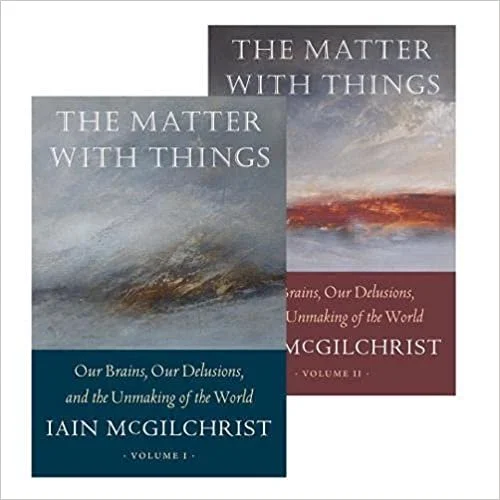
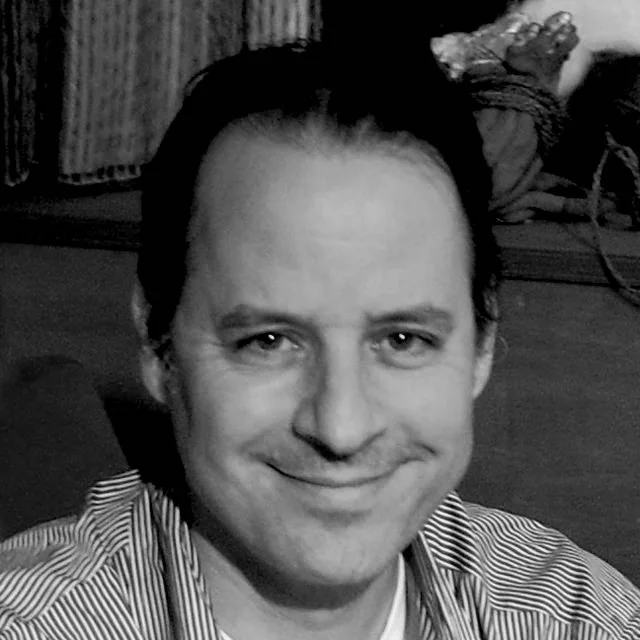
(Highlights) IAIN McGILCHRIST

(Highlights) IAIN McGILCHRIST

Author of The Matter with Things · The Master and his Emissary: The Divided Brain and the Making of the Western World Psychiatrist, Neuroscience Researcher, Philosopher & Literary Scholar

The heart also reports to the brain and receives from the brain. So our bodies are in dialogue with the brain. And we don't really know where consciousness is, we sort of imagine it's somewhere in the head. We have no real reason to suppose that it's just we identify it with our sight and we, therefore, think it must be somewhere up there behind the eyes, but it's something that takes in the whole of us and to which the whole of us contributes.

IAIN McGILCHRIST

IAIN McGILCHRIST

Author of The Matter with Things · The Master and his Emissary: The Divided Brain and the Making of the Western World Psychiatrist, Neuroscience Researcher, Philosopher & Literary Scholar

The heart also reports to the brain and receives from the brain. So our bodies are in dialogue with the brain. And we don't really know where consciousness is, we sort of imagine it's somewhere in the head. We have no real reason to suppose that it's just we identify it with our sight and we, therefore, think it must be somewhere up there behind the eyes, but it's something that takes in the whole of us and to which the whole of us contributes.

(Highlights) WILLIAM McDONOUGH

(Highlights) WILLIAM McDONOUGH

Leader in Sustainable Design & Development
Architect, Co-author of Cradle to Cradle: Remaking the Way We Make Things

I think believing in something is also part of the responsibility of the believer to sift through these things. So there are a lot of people saying I'm green because they do something less badly. So for me, it’s not green yet, it's just less bad. It's not really good yet. It's not really fabulous, but that just means there's an opportunity to keep going to share information and help each other because in the end, I think what we're dealing with now is the recognition that the world has a very serious issue with climate, that's very clear now. So how can we help each other? The question is no longer what is wrong with the way you're doing it. The real question now is how can I help you?

WILLIAM McDONOUGH

WILLIAM McDONOUGH

Leader in Sustainable Design & Development
Architect, Co-author of Cradle to Cradle: Remaking the Way We Make Things

I think believing in something is also part of the responsibility of the believer to sift through these things. So there are a lot of people saying I'm green because they do something less badly. So for me, it’s not green yet, it's just less bad. It's not really good yet. It's not really fabulous, but that just means there's an opportunity to keep going to share information and help each other because in the end, I think what we're dealing with now is the recognition that the world has a very serious issue with climate, that's very clear now. So how can we help each other? The question is no longer what is wrong with the way you're doing it. The real question now is how can I help you?

(Highlights) AZBY BROWN

(Highlights) AZBY BROWN

Author of Just Enough · Small Spaces · Lead Researcher for Safecast
Authority on Japanese Architecture, Design & Environmentalism

In Edo Japan, basically life was pretty good, and they recycled everything. Everything was reused, upcycled. Waste was considered taboo. A person who was wasting was considered an ugly person. So there’s a lot that we could talk about design, the layout, scale. Buildings were rarely taller than two storeys. Very good use of environmental features, microclimates, use of wind for cooling, passive solar heating. Good use of planting, gardens, etc. But regarding cities of the future, I think the main thing is it needs to be a place where people feel like they belong and want to take responsibility.


AZBY BROWN

AZBY BROWN

Author of Just Enough · Small Spaces · Lead Researcher for Safecast
Authority on Japanese Architecture, Design & Environmentalism

In Edo Japan, basically life was pretty good, and they recycled everything. Everything was reused, upcycled. Waste was considered taboo. A person who was wasting was considered an ugly person. So there’s a lot that we could talk about design, the layout, scale. Buildings were rarely taller than two storeys. Very good use of environmental features, microclimates, use of wind for cooling, passive solar heating. Good use of planting, gardens, etc. But regarding cities of the future, I think the main thing is it needs to be a place where people feel like they belong and want to take responsibility.


(Highlights) EARL K. MILLER, Ph.D.

(Highlights) EARL K. MILLER, Ph.D.

Picower Professor of Neuroscience
MIT’s Picower Institute for Learning and Memory & Department of Brain & Cognitive Sciences

There are a lot of distractions in cities. So it's always good to maybe take some time out, be in a quieter place with no distractions so you can let your thoughts run. And that leads into the creative process because new ideas, new thoughts and where they come from. They come from following the garden path of associations in your mind. One thought leads to another, leads to another until your mind is in a new place it's never been before. Or you put two thoughts together that were never together before, but now they are because you managed to somehow follow this garden path of thoughts from one thought to the other. That's where creativity comes from, that's where your ideas come from, seeing things in a new way, seeing things that were never together before. And if you have constant distractions that interferes with that process.

EARL K. MILLER, Ph.D.

EARL K. MILLER, Ph.D.

Picower Professor of Neuroscience
MIT’s Picower Institute for Learning and Memory & Department of Brain & Cognitive Sciences

There are a lot of distractions in cities. So it's always good to maybe take some time out, be in a quieter place with no distractions so you can let your thoughts run. And that leads into the creative process because new ideas, new thoughts and where they come from. They come from following the garden path of associations in your mind. One thought leads to another, leads to another until your mind is in a new place it's never been before. Or you put two thoughts together that were never together before, but now they are because you managed to somehow follow this garden path of thoughts from one thought to the other. That's where creativity comes from, that's where your ideas come from, seeing things in a new way, seeing things that were never together before. And if you have constant distractions that interferes with that process.

(Highlights) MERLIN DONALD

(Highlights) MERLIN DONALD

Psychologist, Neuroanthropologist & Cognitive Neuroscientist
Author of Origins of the Modern Mind, & A Mind So Rare

Lots of people have written books both optimistic and pessimistic about the Internet. It's a wonderful thing, it gives an opportunity to broaden our experience. I think in many ways the Internet is the only hope if you want to eliminate racism and want to raise the bar across the world, but at the same time, the inequalities are completely ridiculous. They've reached a point of insanity, and we have a moral issue. Is one person ever worth twice as much as another person? Can you justify one human being owning 10 times as much as another person? I don't think you can. I don't think that the president of the biggest cooperation in the world is worth 10 times the poorest person in the world, but that's not what we have. Sometimes he may be “worth” a million times more, a hundred thousand times more. That’s crazy.

MERLIN DONALD

MERLIN DONALD

Psychologist, Neuroanthropologist & Cognitive Neuroscientist
Author of Origins of the Modern Mind, & A Mind So Rare

Lots of people have written books both optimistic and pessimistic about the Internet. It's a wonderful thing, it gives an opportunity to broaden our experience. I think in many ways the Internet is the only hope if you want to eliminate racism and want to raise the bar across the world, but at the same time, the inequalities are completely ridiculous. They've reached a point of insanity, and we have a moral issue. Is one person ever worth twice as much as another person? Can you justify one human being owning 10 times as much as another person? I don't think you can. I don't think that the president of the biggest cooperation in the world is worth 10 times the poorest person in the world, but that's not what we have. Sometimes he may be “worth” a million times more, a hundred thousand times more. That’s crazy.