Highlights - Johnjoe McFadden - Author of “Life is Simple” - Prof. Molecular Genetics, Assoc. Dean - U of Surrey

Highlights - Johnjoe McFadden - Author of “Life is Simple” - Prof. Molecular Genetics, Assoc. Dean - U of Surrey

Author of Life is Simple: How Occam’s Razor Set Science Free and Shapes the Universe
Co-author of Life on the Edge: The Coming of Age of Quantum Biology
Professor of Molecular Genetics & Assoc. Dean (Int’l) · University of Surrey

I think that's what art is all about is communicating these big, complex objects, which are ideas inside our head, but in a non-dissected way in which the object isn't completely dissected, or it's dissected in such a way it can be reassembled in somebody else's mind. So you get a full experience of what the artist had or as close as he or she can make it. So I think that to me is what art does. It's a way of communicating these wonderful ideas and feelings that we have inside our heads. And they're trapped there, and art allows you - by playing music or painting, or writing poetry... - it allows you to communicate this in this holistic kind of way.


Johnjoe McFadden - Author of “Life is Simple: How Occam’s Razor Set Science Free and Shapes the Universe”

Johnjoe McFadden - Author of “Life is Simple: How Occam’s Razor Set Science Free and Shapes the Universe”

Author of Life is Simple: How Occam’s Razor Set Science Free and Shapes the Universe
Co-author of Life on the Edge: The Coming of Age of Quantum Biology
Professor of Molecular Genetics & Assoc. Dean (Int’l) · University of Surrey

I think that's what art is all about is communicating these big, complex objects, which are ideas inside our head, but in a non-dissected way in which the object isn't completely dissected, or it's dissected in such a way it can be reassembled in somebody else's mind. So you get a full experience of what the artist had or as close as he or she can make it. So I think that to me is what art does. It's a way of communicating these wonderful ideas and feelings that we have inside our heads. And they're trapped there, and art allows you - by playing music or painting, or writing poetry... - it allows you to communicate this in this holistic kind of way.

Highlights - Richard Thompson Ford - Author of “Dress Codes”, “Rights Gone Wrong”, “The Race Card”

Highlights - Richard Thompson Ford - Author of “Dress Codes”, “Rights Gone Wrong”, “The Race Card”

Stanford Professor of Law · Expert on Civil Rights & Antidiscrimination Law
Author of Dress Codes · Rights Gone Wrong · The Race Card

One of the things that I've tried to do in my work is demonstrate the way that laws that don't seem to be directly related to social equality, to equality of opportunity, to racial justice in fact are and that it's only through also reforming these kind of systemic and institutionalized forms of discrimination that we could truly achieve an egalitarian society. So what I've really wanted to argue against is the idea that civil rights are kind of a magic bullet and that those kinds of laws alone would be sufficient to achieve.

Richard Thompson Ford - Author of “Dress Codes” - Stanford Prof. of Law - Expert on Civil Rights - Antidiscrimination Law

Richard Thompson Ford - Author of “Dress Codes” - Stanford Prof. of Law - Expert on Civil Rights - Antidiscrimination Law

Stanford Professor of Law · Expert on Civil Rights & Antidiscrimination Law
Author of Dress Codes · Rights Gone Wrong · The Race Card

One of the things that I've tried to do in my work is demonstrate the way that laws that don't seem to be directly related to social equality, to equality of opportunity, to racial justice in fact are and that it's only through also reforming these kind of systemic and institutionalized forms of discrimination that we could truly achieve an egalitarian society. So what I've really wanted to argue against is the idea that civil rights are kind of a magic bullet and that those kinds of laws alone would be sufficient to achieve.

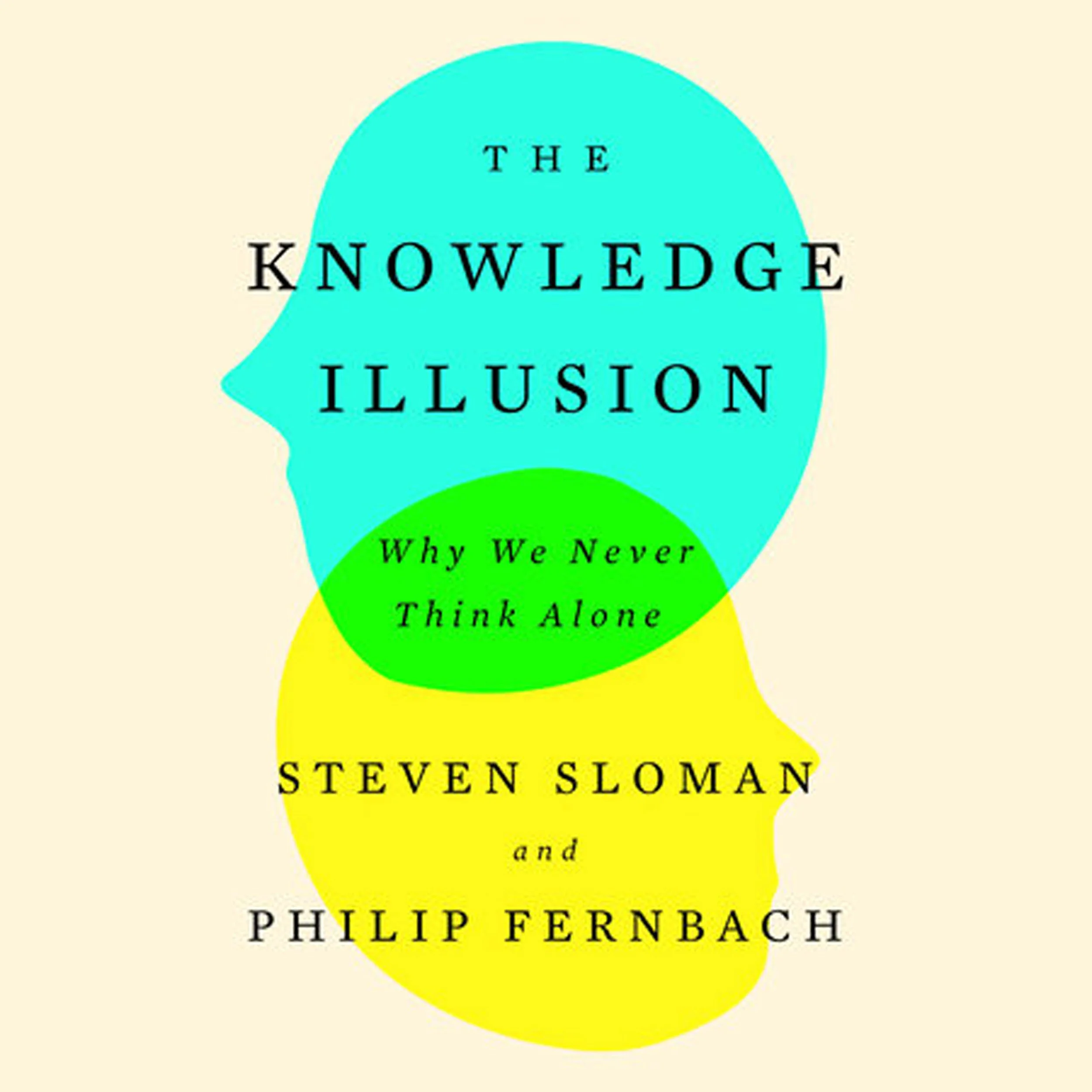
Highlights - Philip Fernbach - Cognitive Scientist - Co-Director, Ctr. for Research, Consumer Financial Decision Making - Co-author, “The Knowledge Illusion”

Highlights - Philip Fernbach - Cognitive Scientist - Co-Director, Ctr. for Research, Consumer Financial Decision Making - Co-author, “The Knowledge Illusion”

Co-author of The Knowledge Illusion: Why We Never Think Alone
Cognitive Scientist · Co-Director of Center for Research on Consumer Financial Decision Making, CU Boulder

The human mind is both genius and pathetic, brilliant and idiotic. People are capable of the most remarkable feats, achievements that defy the gods. We went from discovering the atomic nucleus in 1911 to megaton nuclear weapons in just over forty years. We have mastered fire, created democratic institutions, stood on the moon, and developed genetically modified tomatoes. And yet we are equally capable of the most remarkable demonstrations of hubris and foolhardiness. Each of us is error-prone, sometimes irrational, and often ignorant… How is it that people can simultaneously bowl us over with their ingenuity and disappoint us with their ignorance? How have we mastered so much despite how limited our understanding often is?

Philip Fernbach - Co-author of “The Knowledge Illusion” - Cognitive Scientist - Co-Director of Ctr. for Research on Consumer Financial Decision Making

Philip Fernbach - Co-author of “The Knowledge Illusion” - Cognitive Scientist - Co-Director of Ctr. for Research on Consumer Financial Decision Making

Co-author of The Knowledge Illusion: Why We Never Think Alone
Cognitive Scientist · Co-Director of Center for Research on Consumer Financial Decision Making, CU Boulder

The human mind is both genius and pathetic, brilliant and idiotic. People are capable of the most remarkable feats, achievements that defy the gods. We went from discovering the atomic nucleus in 1911 to megaton nuclear weapons in just over forty years. We have mastered fire, created democratic institutions, stood on the moon, and developed genetically modified tomatoes. And yet we are equally capable of the most remarkable demonstrations of hubris and foolhardiness. Each of us is error-prone, sometimes irrational, and often ignorant… How is it that people can simultaneously bowl us over with their ingenuity and disappoint us with their ignorance? How have we mastered so much despite how limited our understanding often is?

Highlights - Aniela Unguresan - Champion of Diversity, Equity, Inclusion in the Workplace - EDGE Cert

Highlights - Aniela Unguresan - Champion of Diversity, Equity, Inclusion in the Workplace - EDGE Cert

Co-founder of EDGE Certified Foundation (Economic Dividends for Gender Equality)
Champion of Diversity, Equity & Inclusion in the Workplace

I co-founded what has become EDGE for gender and intersectional equity back in 2009, and at that time workplace gender and intersectional equity were still very much seen as a societal issue rather than a business issue. Organizations were asking themselves if it's within their role to tackle these issues of equity, diversity, and inclusion in the workplace, or if they are the mere recipients of what is going on in societies, following the beliefs around what men and women should be doing at work and at home. So at that time we wanted to contribute to this transition from making gender and intersectional equity a business issue and help organizations see that how they manage their talent and how they are able to attract, develop, motivate, and retain diverse talent is a key component of their sustainable business success.

Aniela Unguresan - Co-founder, Economic Dividends for Gender Equality - EDGE Cert. Foundation

Aniela Unguresan - Co-founder, Economic Dividends for Gender Equality - EDGE Cert. Foundation

Co-founder of EDGE Certified Foundation (Economic Dividends for Gender Equality)
Champion of Diversity, Equity & Inclusion in the Workplace

I co-founded what has become EDGE for gender and intersectional equity back in 2009, and at that time workplace gender and intersectional equity were still very much seen as a societal issue rather than a business issue. Organizations were asking themselves if it's within their role to tackle these issues of equity, diversity, and inclusion in the workplace, or if they are the mere recipients of what is going on in societies, following the beliefs around what men and women should be doing at work and at home. So at that time we wanted to contribute to this transition from making gender and intersectional equity a business issue and help organizations see that how they manage their talent and how they are able to attract, develop, motivate, and retain diverse talent is a key component of their sustainable business success.

Highlights - Carl Safina - Author of “Becoming Wild: How Animal Cultures Raise Families, Create Beauty, and Achieve Peace”

Highlights - Carl Safina - Author of “Becoming Wild: How Animal Cultures Raise Families, Create Beauty, and Achieve Peace”

Ecologist, Founding President of Safina Center
NYTimes Bestselling Author of Becoming Wild · Song for the Blue Ocean · Beyond Words: What Animals Think and Feel

So we tend to take living for granted. I think that might be the biggest limitation of human intelligence is to not understand with awe and reverence and love that we live in a miracle that we are part of and that we have the ability to either nurture or destroy. The living world is enormously enriching to human life. I just loved animals. They're always just totally fascinating. They're not here for us. They're just here like we're just here. They are of this world as much as we are of this world. They really have the same claim to life and death and the circle of being.

Carl Safina - Ecologist - Founding President of Safina Center - NYTimes Bestselling Author

Carl Safina - Ecologist - Founding President of Safina Center - NYTimes Bestselling Author

Ecologist, Founding President of Safina Center
NYTimes Bestselling Author of Becoming Wild · Song for the Blue Ocean · Beyond Words: What Animals Think and Feel

So we tend to take living for granted. I think that might be the biggest limitation of human intelligence is to not understand with awe and reverence and love that we live in a miracle that we are part of and that we have the ability to either nurture or destroy. The living world is enormously enriching to human life. I just loved animals. They're always just totally fascinating. They're not here for us. They're just here like we're just here. They are of this world as much as we are of this world. They really have the same claim to life and death and the circle of being.

Highlights - Lars Chittka - Author of "The Mind of a Bee” - Founder, Research Centre for Psychology, QMUL

Highlights - Lars Chittka - Author of "The Mind of a Bee” - Founder, Research Centre for Psychology, QMUL

Author of The Mind of a Bee
Founder of the Research Centre for Psychology, Queen Mary University of London

The world of bees is under threat, and that is not because bees are singled out, but because bees live in the environment that we all share and they are a kind of a canary in the coal mine for what's going on more largely in destroying our environment. And in a sense they are, I think, a useful sort of mascot and icon to highlight these troubles, but they are only a signpost of other things that are also under threat. We need the bee for our own food because they pollinate our crops, and they pollinate the flowers that we enjoy, but I think their utility for us is not the only reason to support them and their environment. I think the growing appreciation that the world that surrounds us is full of sophisticated and unique minds places on us a kind of onus and obligation to preserve the diversity of these minds that are out there and make sure that they continue to thrive.

Lars Chittka - Author of "The Mind of a Bee” - Founder, Research Centre for Psychology, QMUL

Lars Chittka - Author of "The Mind of a Bee” - Founder, Research Centre for Psychology, QMUL

Author of The Mind of a Bee
Founder of the Research Centre for Psychology, Queen Mary University of London

The world of bees is under threat, and that is not because bees are singled out, but because bees live in the environment that we all share and they are a kind of a canary in the coal mine for what's going on more largely in destroying our environment. And in a sense they are, I think, a useful sort of mascot and icon to highlight these troubles, but they are only a signpost of other things that are also under threat. We need the bee for our own food because they pollinate our crops, and they pollinate the flowers that we enjoy, but I think their utility for us is not the only reason to support them and their environment. I think the growing appreciation that the world that surrounds us is full of sophisticated and unique minds places on us a kind of onus and obligation to preserve the diversity of these minds that are out there and make sure that they continue to thrive.

Highlights - Nick Bostrom - Founding Director, Future of Humanity Institute, Oxford

Highlights - Nick Bostrom - Founding Director, Future of Humanity Institute, Oxford

Founding Director of Future of Humanity Institute, University of Oxford
Philosopher, Author of Superintelligence: Paths, Dangers, Strategies

I do think though that there is a real possibility that within the lifetime of many people who are here today, we will see the arrival of transformative AI, machine intelligence systems that not only can automate specific tasks but can replicate the full generality of human thinking. So that everything that we humans can do with our brains, machines will be able to do, and in fact do faster and more efficiently. What the consequences of that are, is very much an open question and, I think, depends in part on the extent to which we manage to get our act together before these developments. In terms of, on the one hand, working out our technical issues in AI alignment, figuring out exactly the methods by which you could ensure that such very powerful cognitive engines will be aligned to our values, will actually do what we intend for them to do, as opposed to something else. And then, of course, also the political challenges of ensuring that such a powerful technology will be used for positive ends. So depending on how well we perform among those two challenges, the outcome, I think, could be extremely good or extremely bad. And I think all of those possibilities are still in the cards.

Nick Bostrom - Philosopher, Founding Director, Future of Humanity Institute, Oxford


Nick Bostrom - Philosopher, Founding Director, Future of Humanity Institute, Oxford


Founding Director of Future of Humanity Institute, University of Oxford
Philosopher, Author of Superintelligence: Paths, Dangers, Strategies

I do think though that there is a real possibility that within the lifetime of many people who are here today, we will see the arrival of transformative AI, machine intelligence systems that not only can automate specific tasks but can replicate the full generality of human thinking. So that everything that we humans can do with our brains, machines will be able to do, and in fact do faster and more efficiently. What the consequences of that are, is very much an open question and, I think, depends in part on the extent to which we manage to get our act together before these developments. In terms of, on the one hand, working out our technical issues in AI alignment, figuring out exactly the methods by which you could ensure that such very powerful cognitive engines will be aligned to our values, will actually do what we intend for them to do, as opposed to something else. And then, of course, also the political challenges of ensuring that such a powerful technology will be used for positive ends. So depending on how well we perform among those two challenges, the outcome, I think, could be extremely good or extremely bad. And I think all of those possibilities are still in the cards.

Highlights - Vitaliy Katsenelson - Author of “Soul in the Game: The Art of a Meaningful Life” - CEO of IMA

Highlights - Vitaliy Katsenelson - Author of “Soul in the Game: The Art of a Meaningful Life” - CEO of IMA

Author of Soul in the Game: The Art of a Meaningful Life
CEO of IMA - Investment Management Associates

There are four modes of communicating: preacher, prosecutor, politician, and scientist. So those three Ps are very important modes, but if you spend all your time in these modes, you will learn very little because all of them are kind of outward-looking modes. You're trying to convince others, and you don't learn very much when you're in those modes. Now, I would argue that most of us need to spend a good chunk of our time in a scientist mode. If you are in a scientist mode, then you are doing what Seneca said, "time discovers truth.

Vitaliy Katsenelson - Author of “Soul in the Game: The Art of a Meaningful Life” - CEO of IMA

Vitaliy Katsenelson - Author of “Soul in the Game: The Art of a Meaningful Life” - CEO of IMA

Author of Soul in the Game: The Art of a Meaningful Life
CEO of IMA - Investment Management Associates

There are four modes of communicating: preacher, prosecutor, politician, and scientist. So those three Ps are very important modes, but if you spend all your time in these modes, you will learn very little because all of them are kind of outward-looking modes. You're trying to convince others, and you don't learn very much when you're in those modes. Now, I would argue that most of us need to spend a good chunk of our time in a scientist mode. If you are in a scientist mode, then you are doing what Seneca said, "time discovers truth.

Highlights - Jack Horner - Renowned Paleontologist - Technical Advisor, Jurassic Park/World Films

Highlights - Jack Horner - Renowned Paleontologist - Technical Advisor, Jurassic Park/World Films

Renowned Dinosaur Paleontologist
Technical Advisor on all Jurassic Park / Jurassic World Films

I found my first fossil when I was six years old. And I found my first dinosaur bone when I was eight, my first dinosaur skeleton when I was 13. When I was a kid, I knew I wanted to be a paleontologist, and I didn't think there was much hope for it, though. I was doing very poorly in school. I think I was always a pretty positive kid. And so even though I wasn't doing well in school, I was really happy about the fact that I was finding all these cool fossils, and I was making collections. I don't know when it came to me that I would do this, but I think I just was born this way.

Jack Horner - Renowned Dinosaur Paleontologist - Technical Advisor, Jurassic Park/World Films

Jack Horner - Renowned Dinosaur Paleontologist - Technical Advisor, Jurassic Park/World Films

Renowned Dinosaur Paleontologist
Technical Advisor on all Jurassic Park / Jurassic World Films

I found my first fossil when I was six years old. And I found my first dinosaur bone when I was eight, my first dinosaur skeleton when I was 13. When I was a kid, I knew I wanted to be a paleontologist, and I didn't think there was much hope for it, though. I was doing very poorly in school. I think I was always a pretty positive kid. And so even though I wasn't doing well in school, I was really happy about the fact that I was finding all these cool fossils, and I was making collections. I don't know when it came to me that I would do this, but I think I just was born this way.

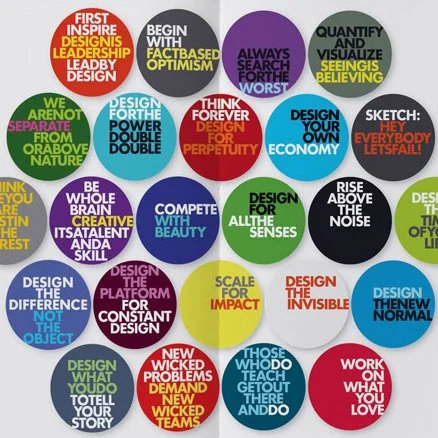
Highlights - Bruce Mau - Award-winning Designer, Author of “Mau MC24…24 Principles for Designing Massive Change”

Highlights - Bruce Mau - Award-winning Designer, Author of “Mau MC24…24 Principles for Designing Massive Change”

Award-winning Designer, Artist & Educator
Co-founder & CEO of Massive Change Network
Author/Co-author of Mau MC24 · The Nexus · S, M, L, XL

I would like them to know just how powerful they are, that they have the power to shape the world. At some point, I realized that the world is produced. The world is designed and produced, and since we designed and produced it, we can redesign it. And you can play a part in designing it. You can play a part in that production. It doesn't have to happen to you. And I think, for too many people, too much power and too much control is concentrated in too few hands. People need to have the power to control and design their own life.

Bruce Mau - Author of "Mau MC24…24 Principles for Designing Massive Change in Your Life and Work”

Bruce Mau - Author of "Mau MC24…24 Principles for Designing Massive Change in Your Life and Work”

Award-winning Designer, Artist & Educator
Co-founder & CEO of Massive Change Network
Author/Co-author of Mau MC24 · The Nexus · S, M, L, XL

I would like them to know just how powerful they are, that they have the power to shape the world. At some point, I realized that the world is produced. The world is designed and produced, and since we designed and produced it, we can redesign it. And you can play a part in designing it. You can play a part in that production. It doesn't have to happen to you. And I think, for too many people, too much power and too much control is concentrated in too few hands. People need to have the power to control and design their own life.