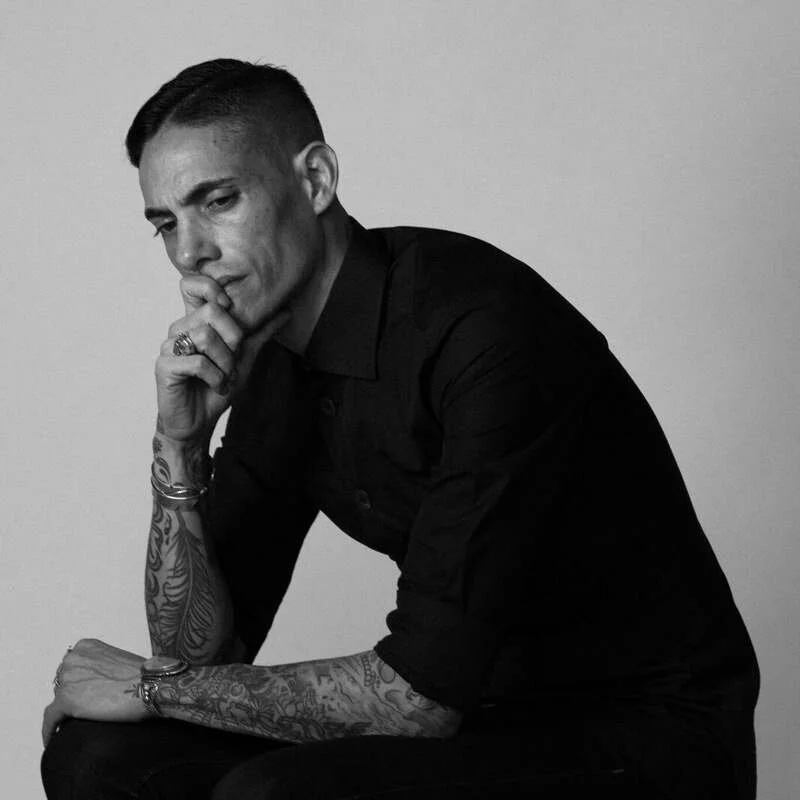
DAVID TOMAS MARTINEZ

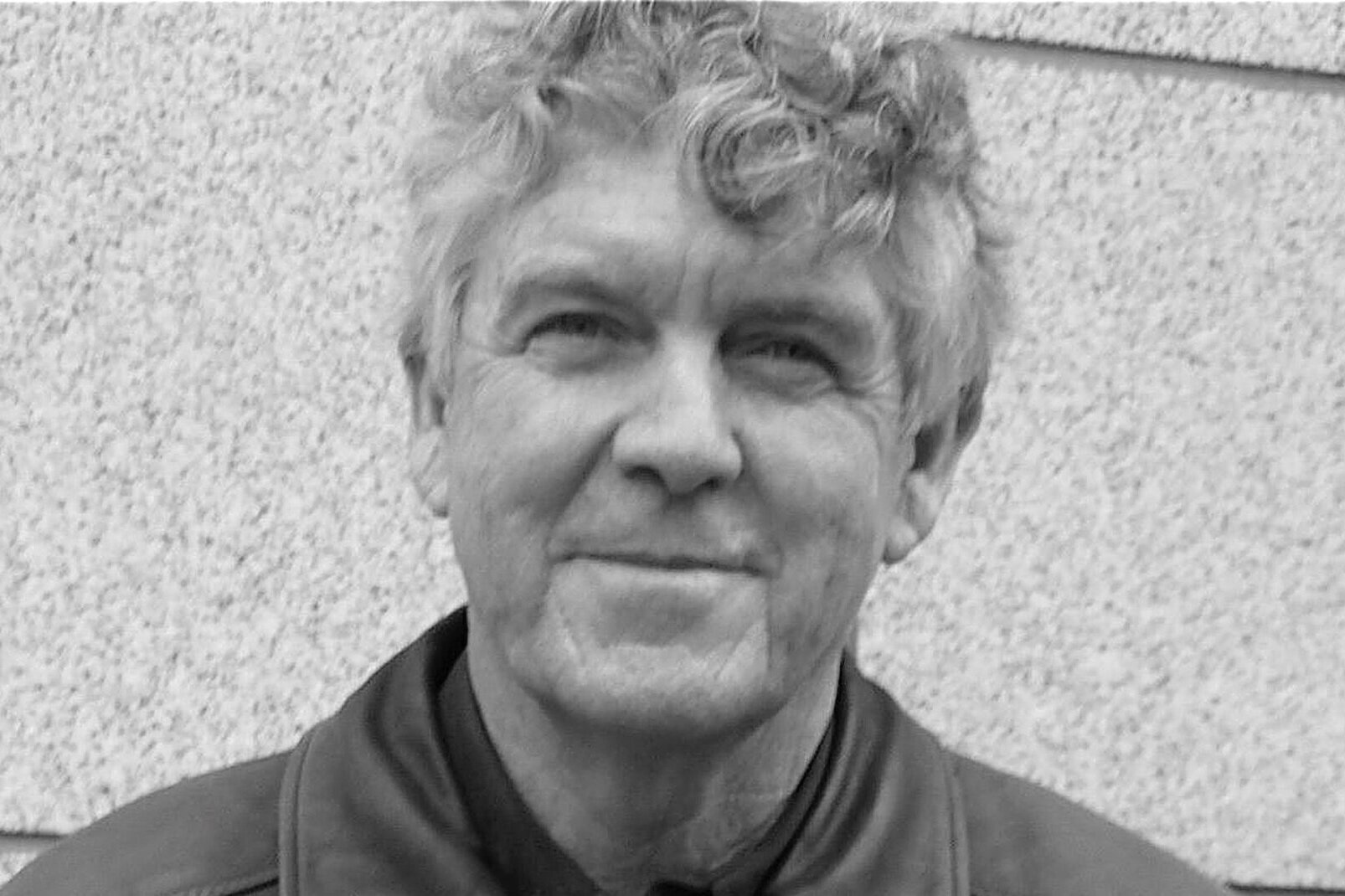
DAVID TOMAS MARTINEZ

Pushcart Award-Winning Poet

When I was younger, I never really thought of living past twenty-five…I felt like I was in a movie. I thought that I was living this movie idea of things and there’d be gunshots around you. You hear it hitting the concrete, and you’re like ‘Oh, shit’. Seriously, I didn’t think of it as real life. When you’re young, the idea that I’d known people that were killed early, you go to prison. These just felt like matter of fact. They seemed to be this part of life and you just accepted them.

(Highlights) MARCIA SCHEINER

(Highlights) MARCIA SCHEINER

President & Founder of Integrate Autism Employment Advisors

For autistic individuals, there’s really sort of two paths. There are those today, about 35% percent of 18 year olds with an autism diagnosis who do go on to college or some form of post-secondary education, and then those who don’t. Of those who don’t and want to work, there’s about a 55% unemployment rate. And those who go to college and then look for employment afterwards, there’s about a 75 to 85% underemployment rate. So you can see the unemployment rates whether you go to college or not are astronomical, but they’re even higher if you go to college, which is sort of counterintuitive.

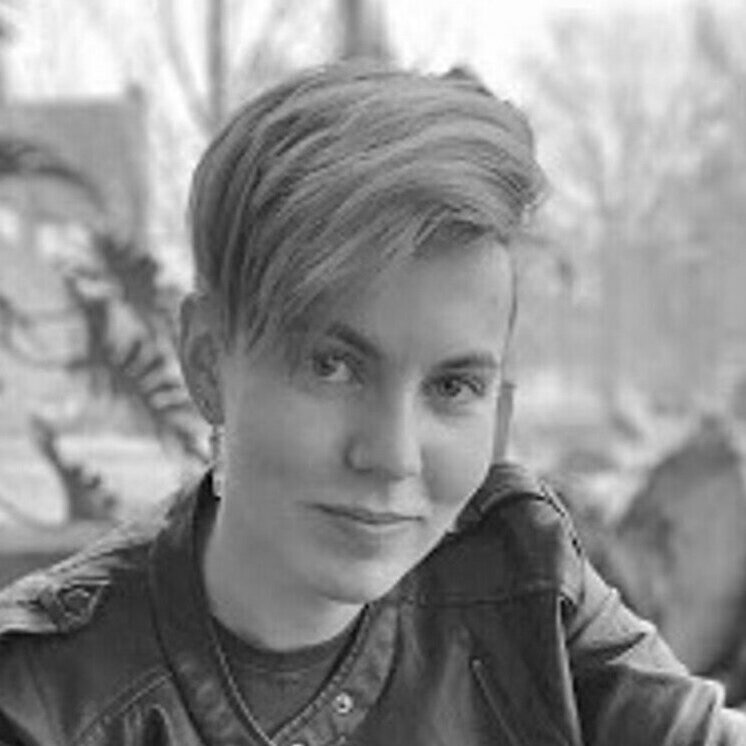
MARCIA SCHEINER

MARCIA SCHEINER

President & Founder of Integrate Autism Employment Advisors

For autistic individuals, there’s really sort of two paths. There are those today, about 35% percent of 18 year olds with an autism diagnosis who do go on to college or some form of post-secondary education, and then those who don’t. Of those who don’t and want to work, there’s about a 55% unemployment rate. And those who go to college and then look for employment afterwards, there’s about a 75 to 85% underemployment rate. So you can see the unemployment rates whether you go to college or not are astronomical, but they’re even higher if you go to college, which is sort of counterintuitive.

(Highlights) JANET BURROWAY

(Highlights) JANET BURROWAY

Novelist, Playwright & Author of Most Widely Used Creative Writing Text in America

There’s a lot of controversy about that idea at the moment, about whether fiction is truly empathic and how much freedom the imagination should have because, as one of my friends says, the imagination is not free. It comes from all of the places that we come from. So it’s a controversial notion, but I am firmly on the side of literature is empathic. In fact, I think that all the arts are empathic because all the arts basically say, ‘Wait a minute. Look at it this way.’ And they allow us to see from some other vantage point than our extremely self-interested selves.

JANET BURROWAY

JANET BURROWAY

Novelist, Playwright & Author of Most Widely Used Creative Writing Text in America

There’s a lot of controversy about that idea at the moment, about whether fiction is truly empathic and how much freedom the imagination should have because, as one of my friends says, the imagination is not free. It comes from all of the places that we come from. So it’s a controversial notion, but I am firmly on the side of literature is empathic. In fact, I think that all the arts are empathic because all the arts basically say, ‘Wait a minute. Look at it this way.’ And they allow us to see from some other vantage point than our extremely self-interested selves.

POETRY & PROSE

POETRY & PROSE

Welcome to The Creative Process’s poetry and prose series. In this episode, we’ll be hearing powerful readings of poems and prose from various writers. 

To begin, we have Neil Gaiman (www.neilgaiman.com), acclaimed writer of The Sandman, American Gods, Stardust, and Coraline, read some of his poetry. His contributions to practically every literary genre have earned him a place in the Dictionary of Literary Biography as one of the top ten living postmodern writers. Gaiman’s work has been honored with many awards internationally, including the Newbery and Carnegie Medals. Gaiman reads his poems “A Writer’s Prayer” and “These Are Not Our Faces”. 

Poet and novelist Marge Piercy (www.margepiercy.com) reads poems from her newest collection, On the Way Out, Turn Off the Light. She has written 17 novels including The New York Times Bestseller Gone To Soldiers, 19 volumes of poetry, and critically acclaimed memoir, Sleeping with Cats. She is active in antiwar, feminist and environmental causes. In her segment, she reads ““Language has shaped my life”; “Who can hold them, what can save them?”; “Can’t you hear them?”; and “This is our legacy”. 

Alice Fulton, (www.alicefulton.com) shares poems from her most recent work, Barely Composed. She has received an American Academy of Arts and Letters Award in Literature and fellowships from the MacArthur Foundation, National Endowment for the Arts, Guggenheim Foundation, and Ingram Merrill Foundation. Her other books include Sensual Math, Powers Of Congress, Palladium, Dance Script With Electric Ballerina, and an essay collection, Feeling As A Foreign Language. Fulton reads “Because We Never Practiced With The Escape Chamber” and “Triptych For Topological Heart”. 

EJ Koh (www.thisisejkoh.com) reads an excerpt from her memoir, The Magical Language of Others, the winner of the Pacific Northwest Book Award and Longlist for the PEN Open Book Award. She also has written the poetry collection A Lesser Love (Louisiana State University Press, 2017), winner of the Pleiades Press Editors Prize for Poetry. Her poems, translations, and stories have appeared in Boston Review, Los Angeles Review of Books, Slate, and World Literature Today. 

Alice Notley, writer of over 40 volumes of poetry, reads from her newest collection Certain Magical Acts. Notley has received many awards including the Academy of American Poets’ Lenore Marshall Prize,  the Poetry Society of America’s Shelley Award,  the Griffin International Prize, two NEA Grants, the Los Angeles Times Book Award for Poetry, and the Ruth Lilly Poetry Prize, a lifetime achievement award. She is also a visual artist and collagist, and a book of her poem-drawings is forthcoming from Archway Editions. Notley reads two poems “Two of Swords” and “I The People”.

Margo Berdeshevsky, NYC born, writes from Paris. Her latest collection: “Before The Drought” (Glass Lyre Press/ National Poetry Series finalist.) Newest poetry collection, “It Is Still Beautiful To Hear The Heart Beat” is forthcoming from Salmon Poetry. Author of “Between Soul & Stone” and “But a Passage in Wilderness” (Sheep Meadow Press), “Beautiful Soon Enough” (1st Ronald Sukenick Innovative Fiction Award, for FC2) Other honors include Robert H. Winner Award from Poetry Society of America. Published in Poetry International, New Letters, Kenyon Review, Plume, The American Journal of Poetry, The Collagist, Prairie Schooner, Big Other, PN Review, Under the Radar, Beltway, and many more. “Kneel Said The Night” waits at the gate.

Gerald Fleming is the author of the poetry collections One (Hanging Loose Press, 2016), The Choreographer, Night of Pure Breathing, and Swimmer Climbing onto Shore. His work has appeared in many magazines over the decades, including New Letters, Michigan Quarterly Review, Hanging Loose, Carolina Quarterly, New World Writing, Volt, and The Prose Poem. The former editor of the magazines Barnabe Mountain Review and Forward to Velma, he is currently editing the limited-edition vitreous magazine One (More) Glass and The Collected Poetry & Prose of Lawrence Fixel

Jess Wilber is a recent graduate of Oberlin College, where she double-majored in Environmental Studies & East Asian Studies with a double-minor in Politics & History and a concentration in International Affairs. She has been working with Citizens’ Climate Lobby (CCL) since her freshman year of college and helped to pioneer their current programs for students in Higher Education. She was among the first members of the Campus Leaders Program, which seeks to educate and empower students to become effective climate advocates and organizers in their communities.Beyond her climate work, Jess is a musician, poet, certified mediator, and nationally and world-ranked equestrian in the Morgan Horse circuit. 


To be included in special podcasts celebrating poetry and prose. You can submit a reading of your work at www.creativeprocess.info/poetryprose and we'll get in touch about the possibility of taking part in an interview for the creative process.

-

.sqs-block-summary-v2 .summary-block-setting-text-size-small .summary-excerpt p { font-size: 10px; }
(Highlights) SARA PARETSKY

(Highlights) SARA PARETSKY

Author & Mystery Writers of America “Grand Master”
I started writing out of a desire to counter stereotypes of the roles that women traditionally played in crime fiction, in which case they were wicked. They used their bodies to do good boys to do bad things. Or they were virgins who couldn’t tie their shoes couldn’t tie their shoes without adult supervisions. Or they were victims, most often. And so I wanted a detective who was like the women that I knew who could solve their own problems, who didn’t need to be rescued, who could have a sex life that didn’t make her a bad person…

SARA PARETSKY

SARA PARETSKY

Sara Paretsky is the author of nineteen books, including sixteen V.I. Warshawski novels. She was named 2011 Grand Master by the Mystery Writers of America and is the winner of many awards, including the Cartier Diamond Dagger Award for lifetime achievement from the British Crime Writers' Association and the CWA Gold Dagger for Blacklist.

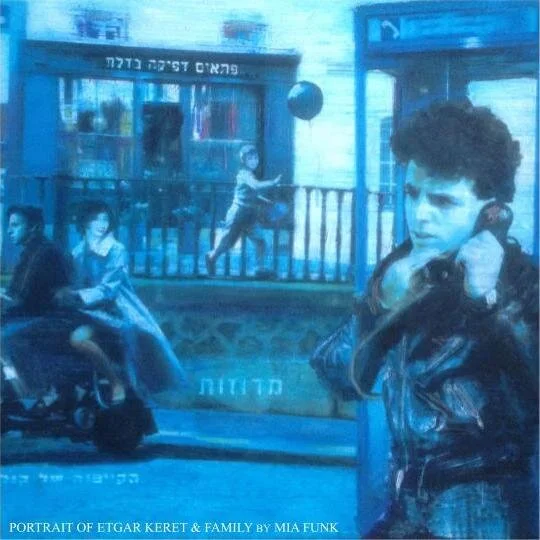
This interview was conducted by Mia Funk with the participation of collaborating universities and students. Associate Interviews Producer on this podcast was Lilian Liu. Digital Media Coordinator is Hannah Story Brown.

Mia Funk is an artist, interviewer and founder of The Creative Process.

(Highlights) INGRID NEWKIRK

(Highlights) INGRID NEWKIRK

Founder & President of People for the Ethical Treatment of Animals (PETA)

They’re not human traits. They’re all shared traits because, of course, we all love. We all love our families, or not. We all grieve if somebody we love disappears or dies. A family dog, perhaps. A grandfather. We all feel loneliness, we all feel joy. We all really value our freedom. And so I think, if anything, looking into the eyes of the animal, even online, you see a person in there. There’s a someone in whatever the shape or the physical properties of that individual are. And that lesson is that I am you. You are me, only different. We are all the same in all the ways that count…Any living being teaches you– Look into my eyes. And there you are, the reflection of yourself.

INGRID NEWKIRK

INGRID NEWKIRK

Founder & President of People for the Ethical Treatment of Animals (PETA)

They’re not human traits. They’re all shared traits because, of course, we all love. We all love our families, or not. We all grieve if somebody we love disappears or dies. A family dog, perhaps. A grandfather. We all feel loneliness, we all feel joy. We all really value our freedom. And so I think, if anything, looking into the eyes of the animal, even online, you see a person in there. There’s a someone in whatever the shape or the physical properties of that individual are. And that lesson is that I am you. You are me, only different. We are all the same in all the ways that count…Any living being teaches you– Look into my eyes. And there you are, the reflection of yourself.

(Highlights) ETGAR KERET

(Highlights) ETGAR KERET

Writer and Director

When I compare novelists to short story writers or very short story writers, I can’t compare them, but one thing for sure, the purpose is different. I think that someone who writes tries to create or document a world. And when you write very short fiction you try to document a motion, some kind of movement.

ETGAR KERET

ETGAR KERET

Writer and Director

When I compare novelists to short story writers or very short story writers, I can’t compare them, but one thing for sure, the purpose is different. I think that someone who writes tries to create or document a world. And when you write very short fiction you try to document a motion, some kind of movement.

(Highlights) JUNG CHANG

(Highlights) JUNG CHANG

Historian & Author of International Bestseller Wild Swans

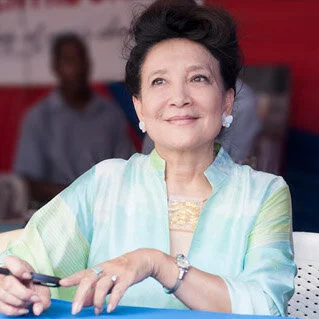
Writing Wild Swans was the thing that resolved the trauma for me. When I first came to Britain in 1978, I was one of the first people to leave China and come to the West. I wrote about the experience in Wild Swans. And for many years I had nightmares of the horrible things I saw and experienced. Writing Wild Swans made all these nightmares disappear. It was a wonderful process. The writing process turned trauma in memory. I am now able to talk to you about my book, my life, to read it without too much pain. I think this is a luxury people in China still don’t have.

JUNG CHANG

JUNG CHANG

Historian & Author of International Bestseller Wild Swans

Writing Wild Swans was the thing that resolved the trauma for me. When I first came to Britain in 1978, I was one of the first people to leave China and come to the West. I wrote about the experience in Wild Swans. And for many years I had nightmares of the horrible things I saw and experienced. Writing Wild Swans made all these nightmares disappear. It was a wonderful process. The writing process turned trauma in memory. I am now able to talk to you about my book, my life, to read it without too much pain. I think this is a luxury people in China still don’t have.

(Highlights) AVI LOEB

(Highlights) AVI LOEB

Harvard Astronomer · Theoretical Physicist
NY Times Bestselling Author of Extraterrestrial, The First Sign of Intelligent Life Beyond Earth

If we are not open to discover wonderful things, we will never discover them. It very much depends on us allowing ourselves to explore and find new things. My mother used to tell me when I was a kid that when I was born as an infant I was very different from the other babies in the room. I was looking around with open eyes, and I should say that’s where it all started. Once I got out of the womb of my mother and I started looking around, I was very curious. The great privilege of being a scientist is that you don’t need to give up on that curiosity. You can maintain your childhood curiosity.

AVI LOEB

AVI LOEB

Harvard Astronomer · Theoretical Physicist
NY Times Bestselling Author of Extraterrestrial, The First Sign of Intelligent Life Beyond Earth

If we are not open to discover wonderful things, we will never discover them. It very much depends on us allowing ourselves to explore and find new things. My mother used to tell me when I was a kid that when I was born as an infant I was very different from the other babies in the room. I was looking around with open eyes, and I should say that’s where it all started. Once I got out of the womb of my mother and I started looking around, I was very curious. The great privilege of being a scientist is that you don’t need to give up on that curiosity. You can maintain your childhood curiosity.

RICK MOODY

RICK MOODY

Novelist & Memoirist

Words are the oldest information storage and retrieval system ever devised…The written word will remain, scribbled on collapsed highway overpasses, as a testament to love and rage, as evidence of the wanderers in the ruin.

(Highlights) JENNY BHATT

(Highlights) JENNY BHATT

Writer, Literary Translator, Book Critic & Host of Desi Books Podcast

People talk about the work life, the line between your work and your life and keeping them separate and keeping the balance. For me, it’s always been that my work defines who I am and who I am in my personal life also defines who I am at my workplace. I don’t know how you separate those identities because I take all my belief systems and who I am to my workplace.

JENNY BHATT

JENNY BHATT

Writer, Literary Translator, Book Critic & Host of Desi Books Podcast

People talk about the work life, the line between your work and your life and keeping them separate and keeping the balance. For me, it’s always been that my work defines who I am and who I am in my personal life also defines who I am at my workplace. I don’t know how you separate those identities because I take all my belief systems and who I am to my workplace.

(Highlights) PETER SINGER

(Highlights) PETER SINGER

Most Influential Living Philosopher
Author · Founder of The Life You Can Save

I would like young people to recognise that they are part of a long tradition that has been trying to the make the world a better place. A tradition that goes back as far as we have recorded history, that there are people who tried to–like Socrates, but also like Buddha and many other figures in different cultures–think more about how we ought to live in accordance with their thinking. Tried to do good in the world and that’s a tradition they can be part of. This generation really does hold the future of the planet in its hands.