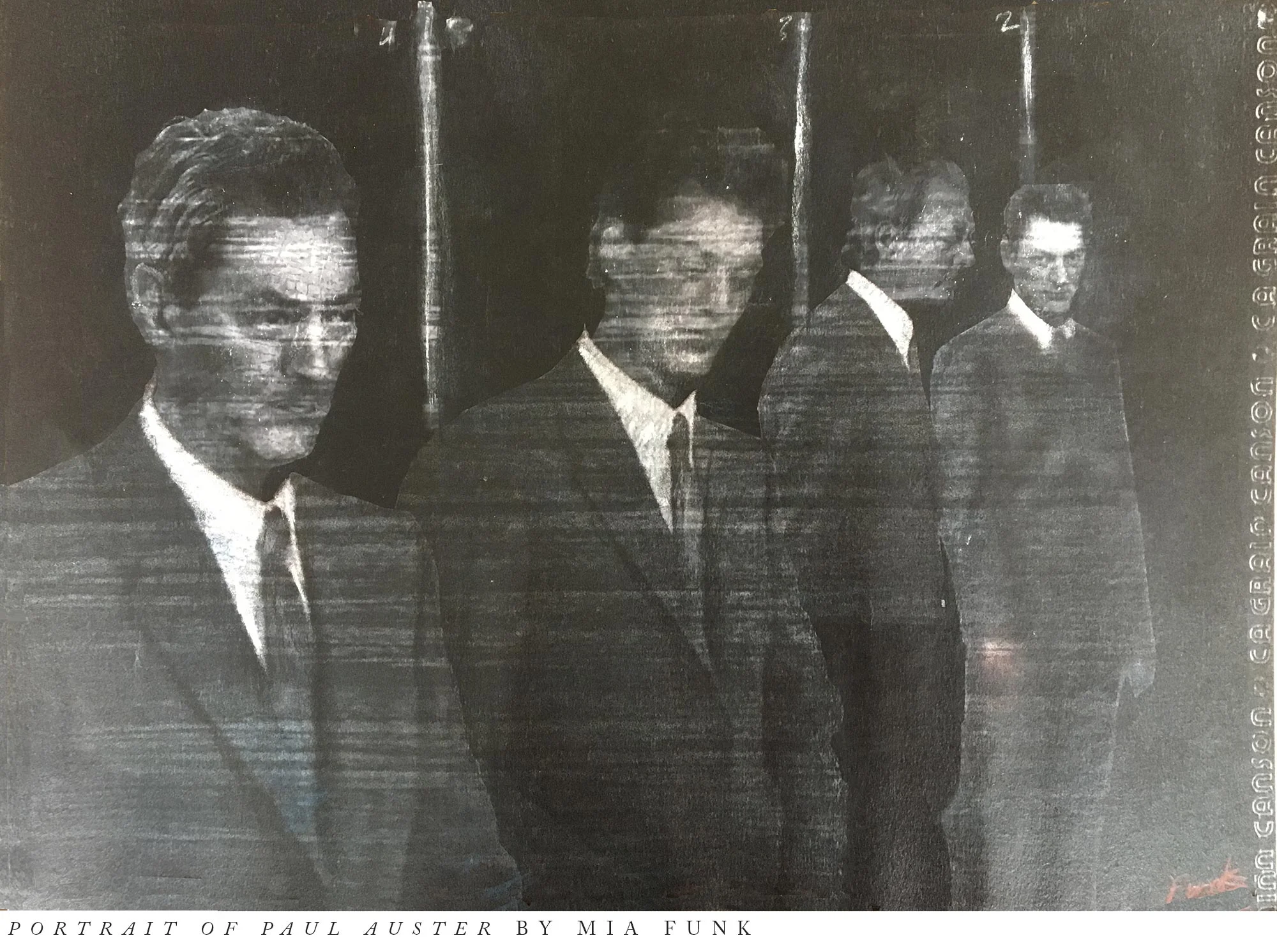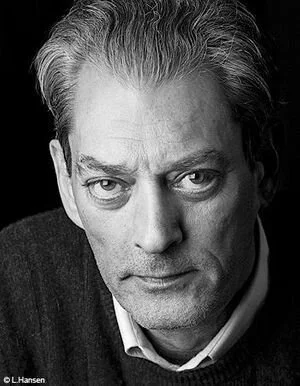
(Highlights) PAUL AUSTER
/Novelist & Filmmaker
A space is created. And maybe it’s the only space of its kind in the world in which two absolute strangers can meet each other on terms of absolute intimacy.
Novelist & Filmmaker
A space is created. And maybe it’s the only space of its kind in the world in which two absolute strangers can meet each other on terms of absolute intimacy.
Writer · Director
A space is created. And maybe it’s the only space of its kind in the world in which two absolute strangers can meet each other on terms of absolute intimacy.
Novelist and Essayist
The reason I think you should read in these other disciplines is because it will help you in your own work. Now I really mean that. I think what has happened with the fragmentation of disciplines is that when problems arise. ...the people working in the discipline are unable to see avenues out of the problem that they would easily see if they had worked through problems in other disciplines.
Novelist and Essayist
The reason I think you should read in these other disciplines is because it will help you in your own work. Now I really mean that. I think what has happened with the fragmentation of disciplines is that when problems arise. ...the people working in the discipline are unable to see avenues out of the problem that they would easily see if they had worked through problems in other disciplines.
Author of Slow Violence and the Environmentalism of the Poor
Professor Environmental Humanities at Princeton
There are some recurrent threads in indigenous cultures across the world. One of those is–We don’t own the land. The land owns us. It’s not seen as property first. It’s seen as inalienable in that sense because you don’t own it in the first place. What we’re seeing now is a kind of movement where more and more indigenous people are living kind of amphibious lives. On the one hand, they have their indigenous cosmologies. And the other hand, in order to increase the likelihood that they can keep out big corporations, mining, logging, and so forth, their presence on the land needs to be bureaucratically recognized is to have recognition that “this is your property.” So in one sense many of these communities I find are both inside and outside private property regimes.
Rob Nixon is a nonfiction writer and the Barron Family Professor in Environmental Humanities at Princeton University. He is the author of four books, most recently Slow Violence and the Environmentalism of the Poor. Nixon is currently writing a book on environmental martyrs and the defense of the great tropical forests. He writes frequently for the New York Times. His writing has also appeared in The New Yorker, Atlantic Monthly, The Guardian, The Nation, London Review of Books, The Village Voice, Aeon and elsewhere. Much of his writing engages environmental justice struggles in the global South. He has a particular interest in understanding the roles that artists can play in effecting change at the interface with social movements.
ROB NIXON
There are some recurrent threads in indigenous cultures across the world. One of those is–We don’t own the land. The land owns us. It’s not seen as property first. It’s seen as inalienable in that sense because you don’t own it in the first place. What we’re seeing now is a kind of movement where more and more indigenous people are living kind of amphibious lives. On the one hand, they have their indigenous cosmologies. And the other hand, in order to increase the likelihood that they can keep out big corporations, mining, logging, and so forth, their presence on the land needs to be bureaucratically recognized is to have recognition that “this is your property.” So in one sense many of these communities I find are both inside and outside private property regimes.
This interview was conducted by Mia Funk & Phil Kehoe with the participation of collaborating universities and students. Associate Interviews Producer on this podcast was Phil Kehoe. Digital Media Coordinator is Phoebe Brous.
Mia Funk is an artist, interviewer and founder of The Creative Process & One Planet Podcast (Conversations about Climate Change & Environmental Solutions).
Associate Professor of Political Science at the University of Oregon
Member of the United Nations Knowledge Network on Harmony with Nature
The term Rights of Nature tends to be applied to two different things. One is this underlying legal philosophy that is actually broader than just Rights of Nature, that’s probably better understood as ecological jurisprudence that may or may not be expressed in terms of rights, but because Rights of Nature is getting a lot of attention that term tends to be applied to represent this broader underlying philosophy. Of course, the other way it’s used it to refer to the legal provisions that explicitly recognize Rights for ecosystems.
Associate Professor of Political Science at the University of Oregon
Member of the United Nations Knowledge Network on Harmony with Nature
The term Rights of Nature tends to be applied to two different things. One is this underlying legal philosophy that is actually broader than just Rights of Nature, that’s probably better understood as ecological jurisprudence that may or may not be expressed in terms of rights, but because Rights of Nature is getting a lot of attention that term tends to be applied to represent this broader underlying philosophy. Of course, the other way it’s used it to refer to the legal provisions that explicitly recognize Rights for ecosystems.
Dr. Nicole Fleetwood is an educator and author whose work explores Black cultural history, visual, media, and gender studies and mass incarceration. She earned her B.Phil from Miami University and her Ph.D. from Stanford University. Fleetwood currently serves as an Associate Professor of American Studies and Art History at Rutgers University and is a member of their press editorial committee. She has also been published in several scholarly journals, co/curated exhibitions on art and mass incarceration, and received prestigious grants and fellowships from the Whiting Foundation Public Engagement Fellowship, the Schomburg Center for Research on Black Culture, and many more.
Marking Time Exhibition is at MoMA PS1, through Apr 4, 2021
Marking Time - Art in the Age of Mass Incarceration is published by Harvard University Press
Tom Perrotta is the bestselling author of nine works of fiction, including Election and Little Children, both of which were made into Oscar-nominated films, and The Leftovers, which was adapted into a critically acclaimed, Peabody Award-winning HBO series. His other books include Bad Haircut, The Wishbones, Joe College, The Abstinence Teacher, Nine Inches, and his newest, Mrs. Fletcher. His work has been translated into a multitude of languages. Perrotta grew up in New Jersey and lives outside of Boston.
Tom Perrotta is the bestselling author of nine works of fiction, including Election and Little Children, both of which were made into Oscar-nominated films, and The Leftovers, which was adapted into a critically acclaimed, Peabody Award-winning HBO series. His other books include Bad Haircut, The Wishbones, Joe College, The Abstinence Teacher, Nine Inches, and his newest, Mrs. Fletcher. His work has been translated into a multitude of languages. Perrotta grew up in New Jersey and lives outside of Boston.
George Pelecanos is an award-winning author, essayist, screenwriter and producer from Washington, D.C. He has written over 20 novels and four series in the crime and detective fiction genre. He is also a recipient of the Los Angeles Times Book prize, the Raymond Chandler Award, the Hammett Prize, the Barry Award, the Gumshoe Award, and the Grand Prix Du Roman Noir Award. Pelecanos worked as a screenwriter for HBO’s The Wire, where his writing earned him an Emmy nomination as well as an Edgar and Writers Guild of America Award. Other shows he has written and/or produced for are The Pacific, The Deuce, and Treme.
Mia Funk is an artist, interviewer and founder of The Creative Process.
George Pelecanos is an award-winning author, essayist, screenwriter and producer from Washington, D.C. He has written over 20 novels and four series in the crime and detective fiction genre. He is also a recipient of the Los Angeles Times Book prize, the Raymond Chandler Award, the Hammett Prize, the Barry Award, the Gumshoe Award, and the Grand Prix Du Roman Noir Award. Pelecanos worked as a screenwriter for HBO’s The Wire, where his writing earned him an Emmy nomination as well as an Edgar and Writers Guild of America Award. Other shows he has written and/or produced for are The Pacific, The Deuce, and Treme.

Mia Funk is an artist, interviewer and founder of The Creative Process.
Ian Buruma is the author of many books, including A Tokyo Romance, The Churchill Complex,Their Promised Land, Year Zero, The China Lover, Murder in Amsterdam, Occidentalism and God’s Dust. He teaches at Bard College and is a columnist for Project Syndicate and contributor to The New Yorker, The New York Times, and other publications. He was awarded the 2008 Erasmus Prize for making "an especially important contribution to European culture" and was voted one of the Top 100 Public Intellectuals
by the Foreign Policy magazine.
This interview was conducted by Mia Funk & Lexi Kayser with the participation of collaborating universities and students. Digital Media Coordinator is Phoebe Brous.
Mia Funk is an artist, interviewer and founder of The Creative Process & One Planet Podcast (Conversations about Climate Change & Environmental Solutions).

Ian Buruma is the author of many books, including A Tokyo Romance, The Churchill Complex,Their Promised Land, Year Zero, The China Lover, Murder in Amsterdam, Occidentalism and God’s Dust. He teaches at Bard College and is a columnist for Project Syndicate and contributor to The New Yorker, The New York Times, and other publications. He was awarded the 2008 Erasmus Prize for making "an especially important contribution to European culture" and was voted one of the Top 100 Public Intellectuals
by the Foreign Policy magazine.
This interview was conducted by Mia Funk & Lexi Kayser with the participation of collaborating universities and students. Digital Media Coordinator is Phoebe Brous.
Mia Funk is an artist, interviewer and founder of The Creative Process & One Planet Podcast (Conversations about Climate Change & Environmental Solutions).
Photographer
Whatever I do, quite often I say– Is this good for my work? Should I go here? Should I do that? When I had my initial debut, I became known for a book called The Somnambulist. I took 24 of those pictures in one weekend and then I worked for three years on the next 24.
Photographer
Whatever I do, quite often I say– Is this good for my work? Should I go here? Should I do that? When I had my initial debut, I became known for a book called The Somnambulist. I took 24 of those pictures in one weekend and then I worked for three years on the next 24.
Photographer
I always tell people the worst picture can ever take is one you don't take. And that is a simple philosophy. If you don't go out there and do the work, then you will never know. You may think there's going to be another great snowstorm. You might think there's going to be another great moment where a block is going to have a certain kind of rhythm or a culture is going to have a certain amount of innocence or a musician is going to be as reluctant or vulnerable or sympathetic. You just have to embrace the moment and do the work.
Entrepreneur, Public Speaker & NYTimes Bestselling Author
Let There Be Water: Israel’s Solution for a Water-Starved World · Troubled Water: What's Wrong with What We Drink
On average in advanced societies, about 70% of freshwater that’s consumed is consumed by agriculture. In less developed countries, sometimes as high as 95% of the freshwater goes to agriculture, which means that you’re depleting the amount of water available for the environment. You’re depleting amount of groundwater to preserve for the future, especially in dry times, and it creates a stress for the future…What are you going to do when you have hundreds of millions of water refugees coming from places where there used to be enough water where there’s now just not enough water? What is the world going to do then?
Entrepreneur, Public Speaker & NYTimes Bestselling Author
Let There Be Water: Israel’s Solution for a Water-Starved World · Troubled Water: What's Wrong with What We Drink
On average in advanced societies, about 70% of freshwater that’s consumed is consumed by agriculture. In less developed countries, sometimes as high as 95% of the freshwater goes to agriculture, which means that you’re depleting the amount of water available for the environment. You’re depleting amount of groundwater to preserve for the future, especially in dry times, and it creates a stress for the future…What are you going to do when you have hundreds of millions of water refugees coming from places where there used to be enough water where there’s now just not enough water? What is the world going to do then?
The Creative Process: Podcast Interviews & Portraits of the World’s Leading Authors & Creative Thinkers
Inspiring Students – Encouraging Reading - Connecting through Stories
The Creative Process exhibition is traveling to universities and museums. The Creative Process exhibition consists of interviews with over 100 esteemed writers, including Joyce Carol Oates, Hilary Mantel, Neil Gaiman, Viet Thanh Nguyen, Tobias Wolff, Richard Ford, Junot Díaz, Marie Darrieussecq, Michel Faber, T.C. Boyle, Jay McInerney, George Saunders, Geoff Dyer, Etgar Keret, Douglas Kennedy, Sam Lipsyte, and Yiyun Li, among others. Artist and interviewer: Mia Funk.