

The best armor of old age is a well spent life proceeding it…because a conscience bearing witness that our life was well spent, together with the remembrance of past good actions, yield’s an unspeakable comfort to the soul.
—Cicero, as translated by Ben Franklin February 29, 1743
We are taxed twice as much by our idleness, three times as much by our pride,
and four times as much by our folly.
—Benjamin Franklin, The Way to Wealth
I have been lucky in life.
Born poor, I learned the skills of doing more with less early on.
I saw firsthand how close invention and creativity and diplomacy sit near frugality. These choices sat in my head like competing family members.
I learned from my mother to act with the spirit of frugality and to mimic the older sisters of invention and diplomacy. After my father died when I was three years old, my mother, Lillian Anna Piasecki, took in foster children from New York City foundling homes to make ends meet. From Lillian, I learned how painfully accurate Franklin's warnings about folly, pride, and idleness prove to lives with little margin of protection.
From Long Island to a Global American Life
I grew up in suburban Long Island without a car or the money to eat out.
This scarcity of means actually gave me the time and opportunity to explore my interests and shape my own way.
We finished meals rapidly, and the days were long with discovery. Those who are born into a shortage of wealth are not surrounded by activities and obligations or the rules of professional expectations. You see this echoed in the lives of Franklin, Lincoln and others, especially creative women in the last century as we globalized.
We start early with direct action and risk-taking. A key skill is securing reliable friends, being open to people’s concerns from many nations, nationalities and cultures.
And the warring articulate sisters of fate inside our heads are always judging, always evaluating what works and what does not work, as they outline a faint path in the sand for us to follow. This provides a pragmatic world view of action, both agile and adaptable. You learn how to manage teams, and answer client needs in government, business, and other larger cultural institutions like religious organizations and the Public Broadcasting Services.
Competitive Before College
My upbringing granted me a full decade of trial and discovery in the arts of competitive frugality before being surrounded by the so-called advantages of college.
You can call this a long foreground.
My point for this career retrospect is simpler. There was a war going on inside my young mind, where many voices churned, urging that I become a soldier or a priest, an athlete or a professional. These voices were my playbook, and my guidance system was tuned from direct experiences filtered through my mother's principles. I heard her commands in a fashion more restless, ever present and caring than strictly logical or professional. In fact, in my way of feeling, these early decisions to go athletic or go military were my Harvard and Yale before Cornell.
My Chinese sister Susie Ying Chang and my Puerto Rican brothers Edwin Torres and Theo taught me how to navigate past the prejudices and knucklehead behaviors we encountered at school and on the street.
As recorded in the 77 vignettes in my memoir Doing More with One Life, I learned that some schoolteachers and established well-intentioned professionals were ignorant of what motivated the poor.
They would punish us based on superficial rules, just to save face or cater to their bosses. They would not pause to understand the reasoning behind our actions.
These established authorities, from principals to priests, from coaches to select sports fans, would often miss the point of half of my conversation—in short, why I did what I did. Then they would completely overlook that my mistake resulted from a conscious effort to learn by doing. Many of the poor simply give up explaining their thinking and go underground, in a sense. I kept open to trying to explain myself, thus, all the books published. Do not grow desperate or self-isolating.
Often I would be called into the principal's office, only to find out that a new teacher did not believe Edwin Torres was my brother. Prejudice is exact in its blindness, it defines why we pre-judge so much in life for convenience and false certainties. That is why I wrote my summary new book on the five prejudices distorting today: Wealth and Climate Competitiveness: The New Narrative on Business and Society. www.wealthandclimatecompetitiveness.net )
The Larger Lessons by Mid-Life
But there was a larger lesson looming from this mid-life period, a long sensual and rewarding period of time enriched by family, many clients, and friends.
During my teens to mid-life, I came to see nearly all people's lives in terms of what they were able to do after (and as a reaction to) resistance or repression or abuse. They chose to make their life, not grow bitter by its barrage of events and challenges.
Like a Franklin or a Lincoln or others I read and admired, I would not stay long in any stressful situation because that would allow life's severities to take me down a step or two. I told myself I would not complain to friends about misunderstandings for more than one day. With little real supervision, I refused to allow personal defeats to fester in the first three decades of what became my multinational change management firm, the AHC Group Inc. I enjoyed being mentored and coached as much as I began to mentor and to coach. That is where you discover the compelling power in social capital, teamwork.
Coda
This is what I mean when I say that the world of events is always faster than our thoughts. Divide your days between thought and event and you will find what I say above proves true and forceful and helpful in any week of your life. It is what underlines for you the actions that allow compounding value in your firm, family and friendship circles.
We all experience the complex mix of reward, punishment, and constant feedback routinely handed out from youth thru older age. I chose monthly not to ignore it, but instead to readdress my next month with those inputs in mind. What adds up in the end is what you choose to do with the world's severity on a daily basis. That helps you rise in what I’ve written about the S Frontier, a global world demanding a swift and severe response.
In my new narrative Stan the Man, Back to Basics, I sum up this worldview in its finale:
“Stan did not want to be tethered to the ground. His dreamwork was his real work, after all, and his fascination in people as people was the dirty truth. He would study them all day, as they thought him simple and even rude in his directness.
“Vital lies versus simple truths,” Stan thought, as he turned by his mother’s favorite church, The Lady of Lourdes, off a small mall and past his high school. When we get back to basics, we are no longer tied to the earth, but instead, swing, thanks to the remarkable length of the ropes of the imagination, in an open box, in the open air. We stay in the common and commodious car of the imagination as we dream, and as we walk, if we want to. Be not afraid.”
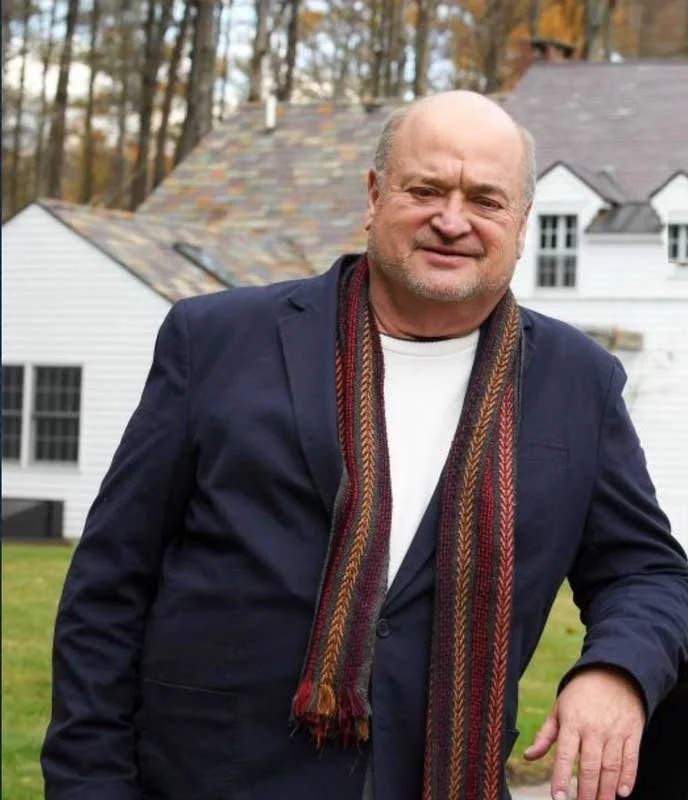
Bruce Piasecki has written now over two dozen books, noted on Amazon with videos at www.brucepiasecki.com. This is an adapted excerpt of a “capstone” book he is completing by 2026, Doing More with Less: The Ben Franklin Way. This short book, summarizing the key work and life findings of his career and other works, will appear in tandem with a PBS TV show by the same title.