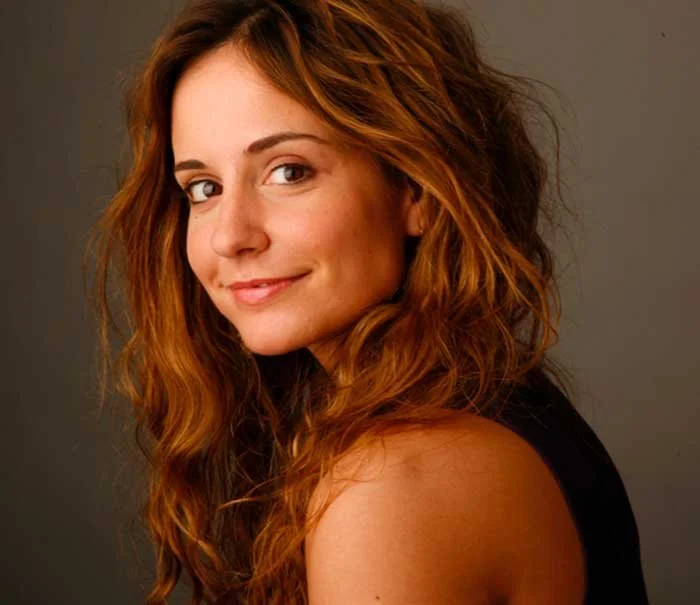
I think in an age of seeming isolationism, where some countries, maybe even our own, tend to isolate, this is such a great way to bring people together. When you're doing music and the arts, all those barriers just fall away. People are just collaborating and having fun. It’s such a bridge-building endeavor. I don't mean that to sound cheesy either, because I just think it is really amazing. They end up being ambassadors who go back to their own country and say, “Wow, I had a great time at this festival in America or in the Netherlands.”
I thought I had spent my whole year, I had spent 20 to 25 years playing in Broadway pits under the stage, which is incredibly exciting in a different way. But I thought, wait a minute, I really want to do this outreach as a professional full-time endeavor and grow that with our nonprofit. So, ever since then, which was five years ago, I’ve just continued that journey of playing in hospitals, playing for Alzheimer’s patients, playing for Congress Park here in town, playing at Café Lena, and playing for children. I just think that needs to be part of the fabric of classical music, not just the concert hall.
Today’s guests are composer Robert Paterson and violinist Victoria Paterson, the visionary duo behind Mostly Modern Festival & Projects, an organization dedicated to celebrating music by living composers through performance, education, and community outreach.
Robert’s work is known for its rhythmic energy, emotional range, and inventive themes—from environmentalism and mythology to technology and modern relationships. Based in Saratoga Springs and NYC, he’s been recognized with numerous honors, including the Classical Recording Foundation’s Composer of the Year at Carnegie Hall and a Grammy® for Three Way. His music is performed by major orchestras and ensembles across the globe and regularly featured on NPR. He is the co-founder and Artistic Director of the Mostly Modern Festival, which takes place in both Saratoga Springs and the Netherlands.
Victoria has built a multifaceted career across classical, Broadway, and commercial music, performing everywhere from Carnegie Hall to The Today Show. As General Director of Mostly Modern Projects, she leads year-round programming that brings music into hospitals, public parks, and senior centers, while also mentoring emerging artists across the country.


ROBERT PATERSON
Thank you. We're so happy to be here. Glad to see you again.
VICTORIA PATERSON
Hi Mia. Hi Bruce.
MIA FUNK
You're co-founders of the Mostly Modern Festival, musicians, your celebrated careers in performance and composition, to then founding one of today's most vital music festivals, and you've been instrumental in shaping I think, the future of music with a strong emphasis on mentorship in the next generation. So we're excited to speak to you about your different projects and your music. But let's start at the beginning. What inspired the creation of Mostly Modern and how do you feel your personal musical journeys helped shape its mission?
ROBERT PATERSON
Thanks. Yeah, so I think both Victoria and I have attended many festivals and during the course of our careers, both as teachers and also as students. Having been to so many wonderful festivals and some maybe not so wonderful we're like, well, what can we do that's unique and also maybe improving upon some of what we've experienced, but also something fresh and interesting and exciting? And so right away we knew we wanted to support living composers and not so much the dead ones, like most festivals do in our planet of classical music. And we make an exception for the freshly dead. So if they're recently dead, we'll support them too. But just not the ones that are long gone. And occasionally we might throw in one of two pieces here and there. So that's why we call it Mostly Modern Festival, because of that. And so that's basically why we started this and also because we just love working together and would be a lot of fun. MIA FUNK Yes. And so it takes place both in New York and in the Netherlands. So this is kind of unusual. How did you open this up to the international expansion?
VICTORIA PATERSON
I'm a violinist and Robert is a composer. And when we were in music school at Indiana University in the middle of the United States, Bloomington, Indiana, it is a very international music school and we were friends with a gentleman called Robert Frei. He's my, our, now there's American Robert here, and then there's Dutch Robert, Robert Frei, and he's a flutist and he and I played chamber music together like in our twenties. And then he went back to the Netherlands and had kids and a family and lived his life and we reconnected. Before the pandemic, he was taking his family to New York for a holiday and taking the kids to Broadway shows. And I've spent my career on Broadway. So we took him to My Fair Lady and some other shows, and we connected after 20 years of not connecting. And he said, you know, I see that you are running a New York Music Festival and I want to start a European festival in the Netherlands. I want to do this, but I don't have the infrastructure or the day-to-day operational skills that you and Robert have.
So, the Dutch government was and still is able to fund this wonderful festival. Wonderful. So he has those connections. The Dutch festival is just completed its fourth season. So it really was just like a friendship from over 25 years ago. But we are now completely connected. Robert and I are not Dutch, but we're trying to learn the language, which is not easy. No, it's not. But they're very kind and they speak English beautifully. So that's how, it's simple and as wonderful as that. Just a old, yeah. We started with a friendship.
BRUCE PIASECKI
And it's a very famous old town. There's something ancient about your generosity to music and the emphasis on living composers. Could you tell us a little bit about the town you chose to work with in the Netherlands?
ROBERT PATERSON
So Robert, our co-director, happens to live in Middelburg, which is in Zeeland, which is a part of the Netherlands. That town, interestingly, looks like Disneyland, I mean, it's lots of cobblestone and brick roads and castles, it's very beautiful. And it wasn't bombed during the war, so it was kind of preserved. And that's why it looks so old and beautiful, unlike some of the other cities there are like Rotterdam that might have been built up after the war. So that's where he's located. And also it's kind of like Saratoga Springs in New York where we wanted the festival not in Amsterdam. And people always assume at first that it's in Amsterdam, because that's basically one of the most well-known cities. And we're like, well we actually wouldn't want it there because we want people to commiserate and to hang out. And if you're in a bigger city like New York or Amsterdam, people tend to scatter. So it made a lot of sense for us when he asked us to do it in his town there.
BRUCE PIASECKI
Yeah. And that, that Robert and Victoria relates to the idea that even when you perform in our town of Saratoga Springs at Caffe Lena, lean in, bring the artists in, there's a sanctuary effect. Just like you underlined. It's a small, deliberately you, you come into the sanctuary and stay there for time rather than just zooming in and out. So one of the first things is their celebration of music creates an atmosphere that you're enduring in for a while, which I call a sanctuary.
ROBERT PATERSON
That's definitely it, right?
VICTORIA PATERSON
And just to add to the Middelburg, so it's a beautiful old town, but it has a 30-year history of new music and modern music that happens before our time. Like there, yeah. Go. Yeah. There was a 30-year festival that happened before ours that brought in composers from all over the world.
ROBERT PATERSON
I mean, people like John Cage, Xenakis, Morton Feldman, lots and lots of other composers from all over the United States and all over the world came to Middelburg for this wonderful giant festival where they'd have concerts all night. And I mean, it was amazing. So we're not doing a festival quite like that at least yet, we're doing something a bit more controlled. But it was a great, you know, when you walk in the main hall we were in there, they have giant posters of the music and the images of all these composers. I mean, how many halls do you walk in anywhere in the world where it's living or recently living composers? Usually it's Beethoven or Mozart and you see a bronze bust in a corner somewhere or something, but—
BRUCE PIASECKI
It was like, wow, they're celebrating people who are either alive or recently alive, so that's great.
MIA FUNK
Speaking of music, you're talking about the place. It's music inspired by place. I know that your, uh, lifelong vegan advocating for animals and the environment, and a lot of your music really entwines with these themes, works like the Triple Concerto, A New Earth, Listen, I Go Among Trees. Could you just open that up for us? How you find inspiration from the beauty and wonder of the natural world.
ROBERT PATERSON
Yeah. Thank you for that, Mia. I guess, you know, first of all it's become easier to do that now that we have a house in Saratoga Springs, which is, and we have 20 acres. So we're very, very fortunate to have a little bit of land and peace out here, because we lived in Manhattan for 20 years and we still live there. We go back and forth. But I find, I guess the older I get and the more I keep composing, I want to celebrate that part of the world around us because I feel sometimes we lose a connection with the natural world, especially in today's age. A lot of people live in urban places and I think just feeling a connection personally with nature and being able to walk in the forest or in the countryside, I love that and I want to share that, or at least share the joy that I feel with that, with people through music, and hopefully they'll want to experience that themselves.
READ MORE [ + ]
So for me it's therapeutic, but also a way to connect, I think. And that's why I love that. And also as far as being vegan and other aspects of that, you know, I consider myself kind of an environmentalist as much as I can be with any time that I have. And being vegan, I think about the world and mostly resources and overuse of resources like aquifers and places in the world where they're losing land and the animals of course, and health, all three of those things.
He was a vegan when I was dating him, and I was eating Chicken McNuggets and Quarter Pounders with cheese and I lost weight dating this man.
Our first date was eating a salad with sprouts and spinach and all kinds of healthy things. And she had a hamburger, a milkshake. I still fell in love right there, but I'm like, okay, we eat differently, it's fine.
He was vegan 30 years ago when it was super not the cool thing to do. Yeah. Plant-based wasn't a thing.
Yeah.
And yeah, I think to connect his piece, Listen, I Go Among Trees with your—when he began talking about the nature theme, it would be a very nice background if you feel it.
Yeah. I think hearing a snippet of that would be appropriate. I Go Among Trees, you know, that's one of my most recent pieces around this theme.
And can you tell us similarly about your desire to celebrate lyrical genius like Walt Whitman? You have this ability, there is a logic to a poetic lyric, more universal in a song and the music. So you've made something even more universal in that. Tell us about that piece.
Well, so that started out as a commission for an orchestra down in Florida and I was given free reign to do whatever I wanted. And I think we eventually agreed on the poetry of Walt Whitman, which a lot of composers have set his work, but I wanted to do something a bit more grand, orchestral with a choir. I thought his poems are so, like you mentioned, you know, they're so lyrical and so human. There's something about them that really connects with people because they're not pretentious or not in the way that a lot of poetry is.
Well said.
Yeah. And I also felt like I found some poems of his that I could connect in kind of an arc a little bit, and they're all about either America or about nature, essentially. Two things that I'm passionate about, our country that we live in, but also the natural world around us. And I think Walt Whitman encapsulates all that beautifully in his work. So I was so thrilled to do that piece.
So there's one thing that I see throughout your music. There's a sense of healing through the arts, whether it's healing the planet or healing you. You know, Victoria, you deliver vital programs to senior centers, hospitals and Alzheimer's patients, which we know that music can be a real bridge back to those memories and a sense of connection. As well as, you know, we also do performances in iconic public spaces, community centers and parks that really invite people to just stop during this rush hour time or lunchtime concerts, which are free and open to the public, but they really allow people to connect in ways because sometimes we don't know the people around us or we don't take time to pause and appreciate that. So what started this work for you?
I've always loved outreach music. So there's music in a concert hall, like Carnegie Hall, and then there's music in a senior center or a park, and then there's everything in between. And I've always enjoyed outreach, but I have to say the silver lining with the pandemic was I was able to do a lunchtime concert seven days a week for almost six months at the Jacob Javits Center. And that became the hub in the United States for everybody getting their vaccination. And at the height of that, there were 10,000 people a day walking through the Javits Center in New York City. And every day, seven days a week, we had a lunchtime concert for two hours.
Yeah. And you, Victoria, did over 300 concerts.
And I didn't play every single concert. I'm a violinist. I also contracted and hired every musician in New York City who had no work at that time. So we provided this moment of joy and people hadn't heard live music in eight or more months. And so I think that was a huge shift for me personally and professionally. I thought I had spent my whole 25 years playing in Broadway pits under the stage, which is incredibly exciting in a different way. But I thought, wait a minute, I really want to do this outreach as a professional full-time endeavor and grow that with our nonprofit. So ever since that, that's five years ago, I've just continued that journey of playing in hospitals, playing for Alzheimer's patients, playing for Congress Park here in town, playing at Caffe Lena and playing for children. I just think that needs to be part of the fabric of classical music, not just the concert hall. The concert hall's amazing. I mean, we were just in a mini Concertgebouw in the Netherlands and Carnegie Hall. These are amazing spaces, but I think it's really important to be out and about all year round doing this kind of outreach.
And can I add one thing to that just quickly? You know, so at the Javits Center in New York, which is the largest convention center in America, I think, when Victoria and all these ensembles that she was contracting were playing during that time almost pretty much every day, that was the only time there were no panic attacks when people were getting their vaccinations.
Fascinating.
So we had military people and doctors and people from the United Nations coming up to us going, what is going on? We're getting these reports that there are no panic attacks or any kind of medical issues during those two hours.
And it—
It was only with live music, not with piped in music. Only when there's a live ensemble there playing for all the people waiting to see if they were going to have reactions, you know? So it was really incredible that we were trying so hard with some people from the UN to try to get a study done to document this. Because people are always asking, how do the arts help, how does music help, does it matter? Well, here there was a real-life situation where it really mattered because it really caused everything to simmer down for those few hours, you know, every day. So I thought that was incredible.
And it made me think, Robert, about the deep calm of a superb musical composition. It brings a person to a space that is as ancient as the Greeks. You know, they would mesmerize people with the meaning, to where it gets almost prophetic. And it's really interesting that no panic attacks is a very modern way to define the success of music.
People in business are always looking for numbers, right? They always want to quantify. And so this was an example of, wow, the arts are finally—maybe there's something there that really is, whether it's the sound waves or just the presence or just the music itself. There's something going on that is magical in a scientific kind of way. And it was very interesting.
So far I've heard the intent of Mostly Modern was to support living composers. Now we also know that there's this immediacy and generosity of frequent performances in live outreach settings. I'm wondering how does this fit in your original conception of being classical, traditional, trained composers and performance artists with changing the future? You see this as moving into a more public space or as a return to the original purpose of music? Like a bird, does a bird sing for an original biological reason, or does a bird sing?
I feel like this whole idea that permeated the 20th century with at least the world of classical music where it became kind of this outsider experience, right? I personally, if by the end of my life, I'd like to see that completely go away. I think music by living composers should be as loved and as common, and it really, you know, it should be as much as pop music and some other forms of music. But the funny thing is, Bruce, and you know, this is actually happening. I mean, when you talk to young people and you look at how people are absorbing classical music, just recently there was a study that there's actually been a giant uptick in the number of young people that are listening to classical music. I find that I think people, now that we've exited 12-tone music and these forms of music that were a little bit, I wouldn't say off-putting necessarily, but maybe just confusing because they were so complicated, and we've gone back to music that really is designed to connect with people. I think that's changing everything because I think people don't always want music that is meant to be a little bit transient. They want music that they can cherish and come back to. And whatever form that is, it can be any form of music, even jazz or classical, anything. But I think we want to be part of that where people go, wow, I love, there's a tradition of loving this form because it's so creative. And so that's my goal in life, besides my own music, is to make sure people love, to encourage people to love this because it's got so much joy and so much creativity built in it. So, I mean, that's what I love about it is the craft as well as the emotion.
I think that it's true. It goes back to what you were saying about this sense of well-being that's imparted, and I think that it just reaches across. And I think that in some ways, you know, technology kind of at some point makes it more accessible. And we also have seen a rise in people now appreciating poetry because it was something they could find easily and even find on their social media. And it's kind of shareable. And going back to the popularity of classical music in previous centuries. Yes, it was true. I mean, there was sheet music with the best sellers of the day, you know? And anything like what you're doing that improves the accessibility and just that first introduction. Because then people will come back and then once they know where they can find it, they can have the connection to those live performances and they can really see that really connects. And so maybe because we've seen the decline and course funding for the arts and arts education in recent decades, it's great that nonprofits such as Mostly Modern can kind of step in to provide that bridge and that doorway. And I know that mentorship is at the heart also of Mostly Modern and you just tell us, you know, some of those stories, musicians or part faculty and participants who have gone through the program. How do you find that inspiring in terms of the mission of the festival?
Thank you. So faculty, when we started in 2018, that was our very first season of Mostly Modern Festival. Since we've been working musicians in New York City for 20-plus years, we have this wonderful web and connection of incredible classical musicians from Broadway to Lincoln Center to Carnegie Hall, and even when we went to school, like the story of Robert Frei. So, we hired our colleagues and friends from New York City, but since then, now we have faculty that live in the Midwest, faculty that are coming from California. Most of our faculty here are American and then in the Netherlands, Dutch. And then the participants, they're 18 and over. We have about 100 students each year. Although we had a composer this year in the Netherlands who was 83. So we have composers of all ages, which is super fun. But the participants are international, so they are coming from all over the world.
They really are international, which makes it so fun in the Netherlands as well as Saratoga, that we've got people from Ecuador, Australia, England, Europe and South Africa. It's really wonderful for us all to be together for a week to three weeks together.
You know, yeah. And adding to that, I think in an age of seeming isolationism where some countries, maybe even our own, tend to isolate, I think this is such a great way joining people together. Because when you're doing music in the arts, I mean that all just falls away. People are just collaborating and having fun and it's such a bridge building endeavor, you know? And I don't mean that to sound cheesy either, because I just think that it is really amazing because it's like they end up being ambassadors that go back to their own country and say, wow, I had a great time at this festival in America or in the Netherlands. And it ends up just being one more step, even in our way with our organization of trying to connect people together, in an age when so many people seem to want to kind of hide out and not connect. So we're big advocates of connecting. So that's another great reason why I think we love to do this too, you know?
I think it's not just healing for us. I mean, you mentioned a decline in panic attacks during COVID, but also talking about planting seeds for the next generation. These studies, and I'm sure you've read them too, where they're playing classical music and the plants respond, they bring more fruit, the soil. There's a frequency to everything. There's a frequency to life. I also love, you know, there's sometimes you can find these videos where you play music to wild animals or even not very social animals. And they're so intent. And they don't know, they're not their pets. They just come along to listen. And I think that's so beautiful that, you know, now AI is looking for, well, how can we communicate and understand animals, but music is the thing that's there and we have—
Mm-hmm. Well said. Absolutely. One of the mysteries in listening to musicians who can enable so much gathering of people. The mystery is how do you yourself then also, what are the techniques you use to reside frequently in your own creative space? So Victoria is still playing performances and you're still composing. So the question is, how do you keep creative frequently in the context of enabling and assembling so many people? Is there a balance? Is there a set of things you consciously do with your day or your week that enables that creativity to continue?
Bruce, that is a really great question because I think Victoria and I, every day it's a new day, right? And so we're always trying to balance our creative life with our, I guess, administrative life, we'd call it, you know, where we're putting things together and raising money and running festivals, record companies, a group, so many things that we're up to and more. But I think we both look at what we're doing and Victoria knows, okay, Rob has to compose, or she has to practice or get ready for her gigs and play out her concerts. And so we try to balance it by saying, okay, it's always like a little bit of a schedule negotiation. Like, we spend time doing this, then we'll leave time for that on that day, and it's never quite perfect. But it's always you have to prioritize what's important in your life, you know?
And you certainly compose in the morning. His best time to, I don't know Bruce when you write, but he certainly is. Morning is when he likes to compose.
When I was younger, I used to be a night owl. I used to compose at night, but we had a kid and that just wrecked everything. With my schedule, not with our kid. We love our son, but it changed everything. And so now I've become a morning person. Victoria works at night. She was playing Broadway for so many years that I would take care of our son. So I knew I couldn't compose then, so I had to train myself to compose early in the morning and into the early afternoon.
So it sounds like you find the balance at different phases of your life, but it's such a compelling thing that you know how to get into that creative space. Honor it each day and then continue to do the administrative. I know for example, when I was a professor running a master's program, it would consume administratively three to four hours a day. And I would always argue with the dean, I would never let it get more than four hours a day, hire this associate director or I have to leave. And it sounds like you found, because you've created your own organization, you can do that administrative balance well.
And you know, like you, for many years I taught in college. After many years of doing that, it takes a lot of energy, right? Teaching, if you do it well, should drain you. It should take a lot of energy, in my opinion. Absolutely. And it did. But then I was like, well, I'm not composing enough. As much as I love teaching and I really do, it's one of the most noble things you can do. But then I was like, well, I really want to compose. So I had to cut back on that. Eventually I stopped teaching full-time.
Well, now I teach at the festival.
The great thing is we have so many composers. It's limited, but I have access every year to almost 40 composers. And then I love commiserating with them because I love hearing what they're up to and learning new things. I mean, I learn as much from them as they learn from me. Just seeing what they're up to. Because they're all so interesting and creative. So I don't want to lose that. At the same time, you have to make priorities, right? And so I want to have tried to compose as much music as I can by the end of my life. So I had to make some choices. I think we all go through that in our own way.
I think so. Robert, I think that that's important though, this concentrated teaching you're doing because I deal a lot with university students and I've also made a decision this year to devote a little bit more time to my painting and writing, which I hadn't been doing so over the last 10 years so much. Yeah. I get lots of feedback from the students, particularly with their point of graduating or their point of like, so now I've learned this, but how do I make a career out of this? Their livelihood out of it. To understand, even just through creative modeling to see, oh, this is someone who's made their life there. That's just so inspiring. But anything that you can help them, you know, whether it's letters of recommendation or any of those kind of things that vital work experience, portfolio building, that's what they really need. And I find that they're really curious about, so now that I've learned this, what can I do with it?
That's exactly what Mostly Modern is an incubator for. Real life on the ground. How do you pay your rent? Exactly these, our attendees are participant students. They're very smart. They've gone to Juilliard or Curtis or all these wonderful schools and now it's like, wait a minute, okay. I know how to play the flute, but do I know how to play the flute and actually make a living on the flute? And so Mostly Modern because we've been on the ground in New York City for over 20 years, we can help them like, okay, yes, this is how you can make a living and this is what you can do. The standard thing for classical music is to get a principal flute job in the New York Philharmonic. That is your basic story, but Mostly Modern is all the other stories for all the people that don't get into the Metropolitan Opera and don't get into the New York Philharmonic. They also need to make a living. So what do you do? It's like a quilt. You teach, you play in this orchestra, you play on a Broadway show, you play in a church, you learn to play all types of music and you put it together and that is your career. I have a couple of shout-outs. We have every year such wonderful alumni who have gone on to do great things. There are three composers that I selected. One is Paul Frucht. He was one of our very first composers who attended Mostly Modern back in 2018 or 2019 and he went to Juilliard, wonderful composer. He now in 2025 runs the Charles Ives Music Festival. He started his own music festival in Connecticut. And I'd like to think he was inspired by Mostly Modern and by what we were doing. And we have consulted him, like, how do you start a music festival? And he runs that every summer in Connecticut. It's in the town where Charles Ives grew up and he's running an incredibly wonderful festival around Charles Ives. Another composer that has gone on to great things is Luca Suto. He's an Italian composer. He came to actually both festivals, the Netherlands and the US festival. This August in 2025, he has a performance with the Kennedy Center for the Performing Arts for his opera, the opera that he did at Mostly Modern. So that is a direct, huge opportunity for Luca. And he lives in Berlin and we see him often in Europe. And he is taking what he's learned from Mostly Modern and using that for his career in Germany and in Italy. The other composer that deserves a shout-out is Blake Curin, who came to our festival a couple of years ago and he ended up getting an opera commissioned by the Opera Theatre of St. Louis, partly because we selected his orchestra piece, and all of our orchestra, opera and chamber music is beautifully video filmed and recorded so that these participants go home with these incredible documents of their music that they can use on their website and put on YouTube and share with the world. And that's extremely important.
Yeah, that's a very important point Victoria, because you know how to recognize great performers who have the self-control and zeal and ability to perform, but then you give them a product that they might not have thought of saving to magnify. So you're both recognizing their talent and then you're magnifying it is what I heard from those last three cases, but please tell us the other two.
The other is Yifei Xu, an amazing Chinese pianist who came to our festival. Every year we have a concerto competition and our best students win. We select two winners and then they get to play an entire, in this case, a piano concerto with our orchestra the following summer. And she did the Avara piano concerto, which is this wildly wonderful contemporary piece. The conductor from the Austin Symphony, Peter Bay, conducted that piece. He loved her so much he had Yifei come to Austin the next season and perform with the Austin Symphony. That is a complete success story where we hire top-notch conductors. We have the conductor from the Buffalo Philharmonic. This summer we have the conductor for the Vermont Symphony. They spend three weeks in Saratoga Springs. They're with all these wonderful musicians, maybe one of those composers they really, really love. Or one of the performers and they say, you know what? We want you to come play with us in Austin, Texas or in Vermont. And that's a huge win for us that these students get to go on to playing with professional orchestras in the following season. And the last person that I wanted to highlight is a woman named Kelly Panero. She was a cellist last summer at our festival. She's from Brazil and she is from a very modest background, the favelas in Brazil. She is not some fancy cellist, she didn't even go to fancy schools like Juilliard or Curtis. She's going to a small community college in New Jersey. But she was able to come to our festival. We gave her an almost full scholarship. And since coming last summer, she is now in New York City. I'm hiring her for the healing arts programs. She plays in hospitals with me. She plays in the parks and outreach concerts with my group and she's even playing on Broadway. I was able to get her a connection to Hadestown, which is a fabulous musical on Broadway. And she's playing regularly on Broadway. So she's a total success and everyone loves her. So those are just five. I could talk for three hours about how much we love all our past participants and alumni, but that's just five I thought of.
I think what I hear is this celebration of the family of music you've made. In other words, you have engendered so many success stories in other cities by doing your events with a recognized talent and then watching it magnify into other adoptions, and what better thing than to have a third party say, yeah, we want you to do this opera or yeah, we want you to perform here. So I guess this brings up a question that was on my mind. It's the question of you're both so creative that you obviously take pleasure in watching other talented people, but I think I'd like to hear your reflections on when you really know you're connecting with the audience. With that special moment of sudden rightness where something Robert has written or something you're performing, it is better than the average performance. What does that feel like and when does that happen so that you can create it more often in your lives? Do you have any thoughts about that?
Yeah, I mean, I think whether it's my music or watching what happens with somebody else's, you know, if somebody comes up to me and says, wow, they're in tears, and they say, I love that music. Or they give me a big hug. Or they're saying, wow, you just brought up some emotions to me I haven't felt in a long time or I thought about this piece. There was one experience just that I thought was pretty poignant. There was a teacher, one of the other faculty, Steven Cabell, who I call my other brain because we work so closely together as composers on this festival that we just think alike on everything. And one of our teachers was Christopher Rouse who taught at Eastman and then Juilliard. He's a well-known composer in our world and we programmed his flute concerto with one of the performer participants playing it. And afterwards we were so emotional at that performance because not always is the piece so beautiful and so touching. It's tragic too if you know what it's about. It's about a little boy who was murdered in England. And so Chris wrote this piece about that and we just were weeping in the lobby after the piece, during intermission, and we couldn't control ourselves. It was mostly the piece, but the emotions that brings out of you are overwhelming when that happens. And I think that's so important to life. It's not just about the necessities, it's about the emotions and experience you have as being human. That's what this gets to in the arts for me. I have to keep reminding myself of that every day, that that's what I'm creating music for. And if somebody comes up to me and reacts that way, I know I'm doing something right. Whether it's my music or what we program.
The joy of having listened to
, a great violinist since ten. The great composer husband of hers, Robert, you get to see something very ancient about musicality. You think in the conversation about the ancient Greeks talking about how their heroes and gods were often in the pursuit of music and meaning. And during this interview, they talk about the recognition of talented people and you're going to hear how they go off and made operas an impact in other cities. You're going to also hear how they keep themselves creative and I hope you take away some of the lessons of how they've done that. But overall, I think what we really learned is how close they are to celebrating the sensibility of the earth and life in their work. Well, I heard in you, Robert, a lot of transforming the future in the things you were saying, but I also now hear you celebrating those moments of transformation that you made in an audience and the meaning of that for you. So one of the things I'd like us to try and sum up, you know, in honoring that time.
This is really what the arts can do and we're in this age right now, and I want to address it because now AI is coming to the question of creativity. And things like composition or the visual arts or writing. What for you is obviously the importance of the human story? The human element, when we can kind of almost have AI perfection, although my ears don't like it, but as you consider it's a whole new world. How do you make peace with that and what do you feel is the importance of that human involvement at the very core of creativity in the arts?
I think Mostly Modern should lean into the opposite of AI. Because that's not going away. But what do we provide that is just totally unique? That can't be done with AI, which is those live, tangible music experiences like you said, on a cellular level that you cannot have with your earbuds or you're listening to the radio in the car. My husband still writes music by hand. It's his beautiful manuscript. The violin I play, I have a new violin, but the violin I used to have was made in 1859 and my new one is still 2016. It's totally handmade and it's worth a lot of money because I think we need to lean into the opposite of that, like one-on-one when I'm playing for somebody with Alzheimer's and there's nothing. So I know AI is here to stay, but what we can do as an arts organization is do the very opposite and really create those human experiences.
If I can just add to that. Yeah. I mean, I believe everything Victoria said one hundred percent. I also feel that like a lot of technology, I think the first thing that usually happens, everybody gets scared and they should be. Because there's a lot of not great things you can do with all of these tools. It's kind of an open season right now because it's so new and everything's happening. I personally, I'm going to make a prediction that may not come true, but I don't think AI is going to one hundred percent take over everything in the arts. I do think it's going to be a layer, like a strata. I think it's going to be something that adds to it and is used as a tool. And sometimes it'll create things just like you create furniture from computers that end up in big shopping centers. I mean, things that aren't so personal. But I also think the personal is never going to go away. I just think it's going to become something that's integrated over the next 50 to one hundred years and however all this develops now, it's getting really good. I mean, to the point of like whole orchestras in movie soundtracks, you can barely tell that they're fake. Except for people like us. We can tell, but our friends are like, that sounds real to me. And it's like, well, it's not. I think people want, like Victoria's saying, people want the human connection and they want the real. And I think even with AI, we all crave to be together and to feel something that's human. You can be analytical about it and say, well, it's cheaper. It sounds the same. Who cares? It's throwaway. You know what? At the end of the day, are you really going to feel good about that? Or do you feel good going to the local club that you go to and hearing a band play live or a string quartet, whatever it is, a country group? And you're like, well, those are my friends and I know them and I heard them play a song and I felt something. Or I guess you could sit at home in front of your computer and click a button. Maybe you'll feel good about that, but I'm hoping you won't. I'm hoping you're going to feel good with the real, you know, and I think that's how we feel about that.
Well, a good case in point is I'm looking forward to seeing you all on June 6th at Caffe Lena. Yeah. That little stage that you feel the sanctuary, you feel the immediacy and then they can broadcast it to the world from there. So it's something about going to that is so special. Do you want to talk about your June event in Saratoga a little bit before we close?
Sure. This summer is our sixth season as Mostly Modern USA and our headquarters are in Saratoga Springs, New York. We have ten concerts this June, June 5th to June 20th. And like Bruce said, there is the kickoff on June 6th at Caffe Lena, which is this incredibly wonderful iconic space in Saratoga. The rest of the concerts are at the Arthur Zankel Music Center, which is a bigger space, although it's still intimate. I think a couple hundred seats. And what's magical about that space is you can fit an entire symphony orchestra or you can fit a string quartet, and the back of the wall is floor-to-ceiling windows looking into the forest. So no matter what's going on on stage that evening, talk about sanctuary, you're going to be transported because you're going to put away your phone for two hours. You're going to listen to this gorgeous classical music. You're going to hear new and exciting sounds. We've got JoAnn Falletta from the Buffalo Philharmonic on June 15th. She's a Grammy winner. She's one of our first American female conductors. She's been leading the charge in classical music and she's one of our best conductors and she's from upstate New York. She's in Buffalo, New York, so that's a standout. We've got the Mostly Modern Brass who are like the all-stars of the brass world. We've got the principal trumpet of the New York City Ballet playing on that concert on June 17th. So have a look at mostlymodernfestival.org. You can look at all ten concerts. And you know—
Most of all too, we have about 35 world premieres of new pieces by living composers, including one of my own on that concert, JoAnn, called Journey of a Dragonfly, a new 30-ish minute piece. It's not just, again, music by dead people. It's music by people that are sitting right there next to you. So if you like it, you can tell them and if you don't like it, okay, you can tell them that too, but hopefully you'll like it.
The other thing I wanted to mention is your frequently asked questions element to mentoring. I read the questions and I thought any of your students that are listening or the new generation musicians, that frequently asked question part is precious, I thought.
Yeah. I mean, we love what we do and I think you have to have joy in the work that you do, right? I think, whether it's Mia with this podcast you've created, and Bruce, with your amazing creations and your books and everything you do and your talks, you have to love it on some level.
Absolutely. I just love what you're doing and I think that it's vital now, as we mentioned, there has been a cutback in funding for the arts in just accessibility. How can people discover if they are talented or they have something in them if they just don't get that first exposure? Or someone to say, I believe in you. And then people will, but they have to first fall in love with it. And I think that that's what you've created with Mostly Modern. And Bruce too has always had this lifelong commitment towards the planet and also through education as a longtime educator. And I think that it's important to show people the way, to show people the path so they can then find their own path.
And I think that what you've shown in this, our discussion with us, Victoria and Robert, is that music in your hands is good for business and good for society, which is very important for people to hear.
Thank you. Yeah, we'd like to think all of this can work together. And I think the arts are an important part of our world.
Well, thank you Robert and
, for inviting us into your creative work, for sharing your vision, your commitment to chasing hope and healing through the arts and just creating experiences for connection and understanding. Thank you for adding your voice to Business and Society and The Creative Process.
Thank you so much.
Thank you Mia. Thank you Bruce.