(Highlights) DR. FARHANA SULTANA

(Highlights) DR. FARHANA SULTANA

Dr. Farhana Sultana is an Associate Professor in the Department of Geography and the Environment at the Maxwell School of Citizenship and Public Affairs of Syracuse University, where she is also the Research Director for Environmental Collaboration and Conflicts at the Program for the Advancement of Research on Conflicts and Collaboration (PARCC).

Dr. Sultana is an internationally recognized interdisciplinary scholar of political ecology, water governance, post‐colonial development, social and environmental justice, climate change, and feminism. Her research and scholar-activism draw from her experiences of having lived and worked on three continents as well as from her backgrounds in the natural sciences, social sciences, and policy experience.

Prior to joining Syracuse, she taught at King’s College London and worked at United Nations Development Programme (UNDP). Author of several dozen publications, her recent books are “The Right to Water: Politics, Governance and Social Struggles” (2012), “Eating, Drinking: Surviving” (2016) and “Water Politics: Governance, Justice, and the Right to Water” (2020). Dr. Sultana graduated Cum Laude from Princeton University (in Geosciences and Environmental Studies) and obtained her Masters and PhD (in Geography) from the University of Minnesota, where she was a John D. and Catherine T. MacArthur Foundation Fellow.

She was awarded the Glenda Laws Award from the American Association of Geographers for “outstanding contributions to geographic research on social issues” in 2019.

DR. FARHANA SULTANA

We are always students. We are students of the earth. We need to do better and we can do better because the capacity of the human spirit is quite expansive and we owe it to future generations to do the best we can do while we can…It’s about who is at the table or rather what is the table, meaning what are the terms of the debate. Setting the terms of the debate, but how do we even know what the terms of the debate are, who is being included, who is being heeded, and part of that is, therefore, a decolonizing of knowledge and power structures because it’s centrally or fundamentally a justice issue.

One of the issues is that, yes, it is harder to be a woman of color in any field, but it is harder to be a very outspoken vocal woman of color. That has been my reality because I don’t think silence is an option. Too many centuries of my people were silenced in various ways, and if I have the privilege of education and voice it is an absolute unending responsibility to therefore speak out and share my knowledge and expertise.

This interview was conducted by Mia Funk & Mariana Monahan Negron with the participation of collaborating universities and students. Associate Interviews Producer on this podcast was Mariana Monahan Negron. Digital Media Coordinator is Phoebe Brous.

Mia Funk is an artist, interviewer and founder of The Creative Process & One Planet Podcast (Conversations about Climate Change & Environmental Solutions).

DR. FARHANA SULTANA

DR. FARHANA SULTANA

Co-author: Water Politics: Governance, Justice & the Right to Water
Fmr. UNDP Programme Officer, United Nations Development Programme

We are always students. We are students of the earth. We need to do better and we can do better because the capacity of the human spirit is quite expansive and we owe it to future generations to do the best we can do while we can…It’s about who is at the table or rather what is the table, meaning what are the terms of the debate. Setting the terms of the debate, but how do we even know what the terms of the debate are, who is being included, who is being heeded, and part of that is, therefore, a decolonizing of knowledge and power structures because it’s centrally or fundamentally a justice issue.

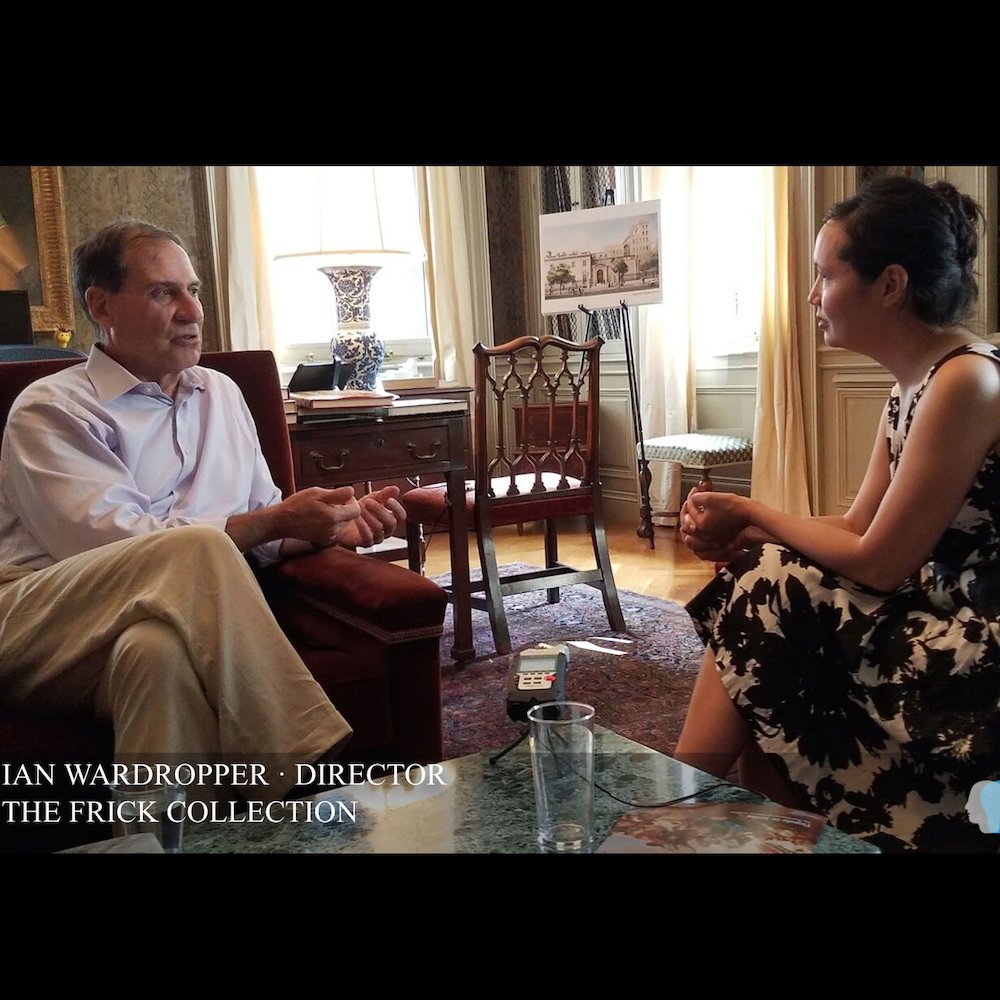
(Highlights) IAN WARDROPPER

(Highlights) IAN WARDROPPER

Anna-Maria and Stephen Kellen Director · The Frick Collection

I firmly believe that the arts should be a part of everybody's education. It's not just learning the history of art, but it's about opening up creativity as a means that can be useful to somebody throughout one's life.

IAN WARDROPPER

IAN WARDROPPER

Anna-Maria and Stephen Kellen Director · The Frick Collection

I firmly believe that the arts should be a part of everybody's education. It's not just learning the history of art, but it's about opening up creativity as a means that can be useful to somebody throughout one's life.

(Highlights) KATE MUETH

(Highlights) KATE MUETH

Actress, Choreographer, Artistic Director - Neo-Political Cowgirls

I care very deeply about the arts, theater arts. So I had a choice to make, either leave entirely or be the change, as they say. So I started Neo-Political Cowgirls to embrace women in their story, in our story.

KATE MUETH

KATE MUETH

Actress, Choreographer, Artistic Director - Neo-Political Cowgirls

I care very deeply about the arts, theater arts. So I had a choice to make, either leave entirely or be the change, as they say. So I started Neo-Political Cowgirls to embrace women in their story, in our story.

(Highlights) ANANTHA DURAIAPPAH

(Highlights) ANANTHA DURAIAPPAH

Inaugural Director · UNESCO Mahatma Gandhi Institute of Education for Peace & Sustainable Development

I’ve always found that science and evidence has to be the guiding force in the way that we design our programs. Of course, understanding people as humans. People as not just rational human beings. That’s another thing that I also learned during my journey is that the whole notion of a rational human being is used as an assumption to make our economic models simple.

ANA CASTILLO

ANA CASTILLO

Award-winning Xicana Activist, Editor, Poet, Novelist, Artist
Author of My Book of the Dead
One of the things of the things that is dying is our planet. We hear these sirens every single day. We’re being warned daily by experts and concerned people how vast that squandering is going. It’s a case of urgency and it’s astounding and a very sad, a very pathetic comment on modern life that most people are ignoring those signs. As a poet, it seems to me that one of the tasks that the poet takes on, it’s a vocation that’s born with it, it’s this consciousness, this serving as witness.

(Highlights) PETER BOAL

(Highlights) PETER BOAL

Artistic Director of Pacific Northwest Ballet

Dance is for everyone. That’s the mission. We see people that might not be able to encounter dance in so many ways because it’s not something that their school offers…and I think traditionally ballet has felt like it can be an elitist art form. Only certain people are invited. You have to have a certain type of foot. You have to have a long neck. You may have to have finances to be able to study ballet. We would like to eliminate that and make sure that it’s available for everybody to sort of dip their toe in and get a sense of it and have an experience of dance.

PETER BOAL

PETER BOAL

Artistic Director of Pacific Northwest Ballet

Dance is for everyone. That’s the mission. We see people that might not be able to encounter dance in so many ways because it’s not something that their school offers…and I think traditionally ballet has felt like it can be an elitist art form. Only certain people are invited. You have to have a certain type of foot. You have to have a long neck. You may have to have finances to be able to study ballet. We would like to eliminate that and make sure that it’s available for everybody to sort of dip their toe in and get a sense of it and have an experience of dance.

(Highlights) JIM JERMANOK

(Highlights) JIM JERMANOK

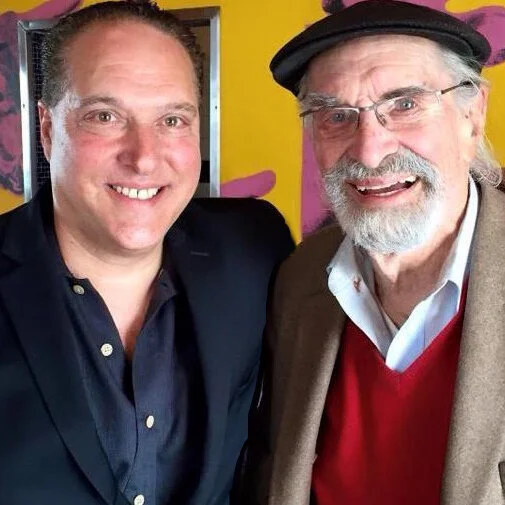
Award-Winning Writer, Director, Producer, Speaker
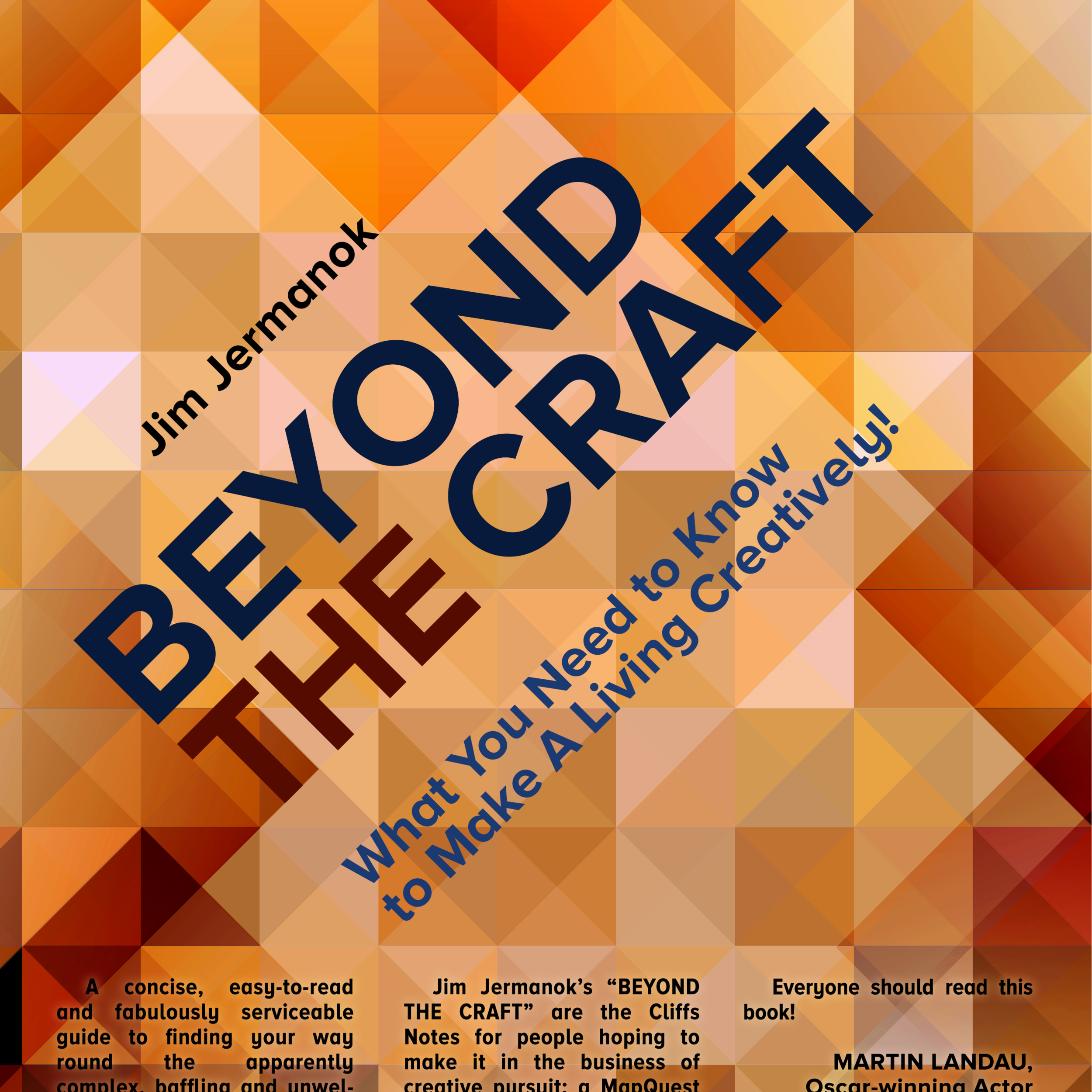
& Author of Beyond The Craft: What You Need to Know to Make A Living Creatively!

I like uncovering truth about behaviour, about history. I think all artists are attracted to unveiling truth. I think it’s a mirror of our society, of our world. It’s the soul of our world.


I like uncovering truth about behaviour, about history. I think all artists are attracted to unveiling truth. I think it’s a mirror of our society, of our world. It’s the soul of our world.

JIM JERMANOK

JIM JERMANOK

Award-Winning Writer, Director, Producer, Speaker
& Author of Beyond The Craft: What You Need to Know to Make A Living Creatively!

I like uncovering truth about behaviour, about history. I think all artists are attracted to unveiling truth. I think it’s a mirror of our society, of our world. It’s the soul of our world.


I like uncovering truth about behaviour, about history. I think all artists are attracted to unveiling truth. I think it’s a mirror of our society, of our world. It’s the soul of our world.

(Highlights) KAREN PINKUS

(Highlights) KAREN PINKUS

Author of Fuel: A Speculative Dictionary
Professor of Italian & Comparative Literature, Cornell University

For many years I wrote, taught, and published about climate change from a more philosophical, existential point of view, especially thinking about deep time, but I did come back to fuels with my Fuel book in part for the fact that so much of the press and so much of public discourse confuses fuel and energy, and it’s still happening today. I thought about this so long and the same themes, the same tropes are still being recycled.

KAREN PINKUS

KAREN PINKUS

Author of Fuel: A Speculative Dictionary
Professor of Italian & Comparative Literature, Cornell University

For many years I wrote, taught, and published about climate change from a more philosophical, existential point of view, especially thinking about deep time, but I did come back to fuels with my Fuel book in part for the fact that so much of the press and so much of public discourse confuses fuel and energy, and it’s still happening today. I thought about this so long and the same themes, the same tropes are still being recycled.

JASON W. MOORE

JASON W. MOORE

Environmental Historian, Historical Geographer & Professor of Sociology · Binghamton University

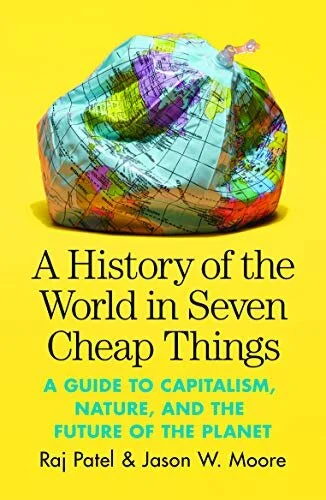
We’re not waiting for the disasters to happen. They have happened. They are happening, and the disasters aren’t natural. They involve climate, but the disasters are very much made by the conditions of capitalist accumulation. We are not going to be able to grapple with the challenges of planetary crisis with the thinking that created planetary crisis.


(Highlights) JASON W. MOORE

(Highlights) JASON W. MOORE

Environmental Historian, Historical Geographer & Professor of Sociology · Binghamton University

We’re not waiting for the disasters to happen. They have happened. They are happening, and the disasters aren’t natural. They involve climate, but the disasters are very much made by the conditions of capitalist accumulation. We are not going to be able to grapple with the challenges of planetary crisis with the thinking that created planetary crisis.


(Highlights) BRIGHT SHENG

(Highlights) BRIGHT SHENG

MacArthur & ASCAP Award-Winning Composer, Conductor & Pianist

I try to preserve the Chinese music flavor. So, you imagine in Chinese band, the country music that people usually reserve for weddings or for big moments or for funerals. That kind of a feeling. Drums and music playing. I try to preserve it from my memory because what we have now is just a tune. You can probably recognize the tune, but the execution of translating that for a Western orchestra and make it sound like it’s a Chinese band playing Chinese instruments.

BRIGHT SHENG

BRIGHT SHENG

MacArthur & ASCAP Award-Winning Composer, Conductor & Pianist

I try to preserve the Chinese music flavor. So, you imagine in Chinese band, the country music that people usually reserve for weddings or for big moments or for funerals. That kind of a feeling. Drums and music playing. I try to preserve it from my memory because what we have now is just a tune. You can probably recognize the tune, but the execution of translating that for a Western orchestra and make it sound like it’s a Chinese band playing Chinese instruments.

(Highlights) JANET BURROWAY

(Highlights) JANET BURROWAY

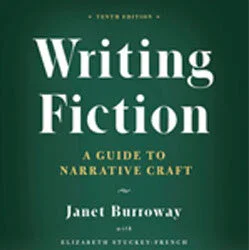
Novelist, Playwright & Author of Most Widely Used Creative Writing Text in America

There’s a lot of controversy about that idea at the moment, about whether fiction is truly empathic and how much freedom the imagination should have because, as one of my friends says, the imagination is not free. It comes from all of the places that we come from. So it’s a controversial notion, but I am firmly on the side of literature is empathic. In fact, I think that all the arts are empathic because all the arts basically say, ‘Wait a minute. Look at it this way.’ And they allow us to see from some other vantage point than our extremely self-interested selves.