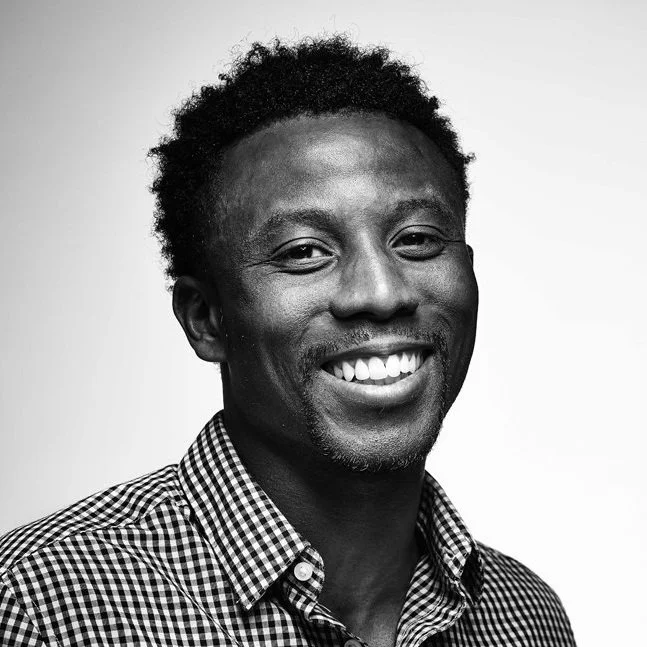
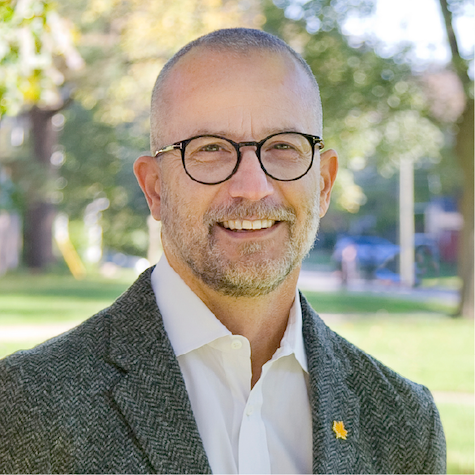
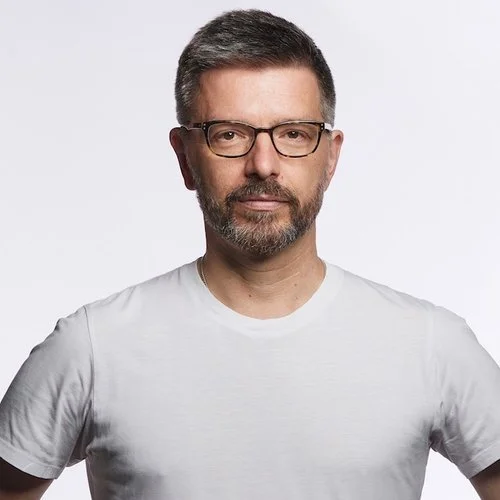
Highlights - Dr. Charles D. Koven - Lead Author - IPCC Report - Earth System Scientist

Highlights - Dr. Charles D. Koven - Lead Author - IPCC Report - Earth System Scientist

Earth System Scientist, Climate Sciences Department, Lawrence Berkeley National Laboratory
Lead Author on the IPCC Report

Looking into the future, as a scientist, what I've learned how to do is hold multiple futures in my head at the same time because we just don't know. We don't know what the future holds. We need to fight for the futures that we want, and against the futures that we don't want. All I can really say is that it's up to us. It's up to us to fight and advocate for the future we want, and what does that look like, and how do we get there?

Dr. Charles D. Koven - Earth System Scientist - Lead Author on the IPCC Report

Dr. Charles D. Koven - Earth System Scientist - Lead Author on the IPCC Report

Earth System Scientist, Climate Sciences Department, Lawrence Berkeley National Laboratory
Lead Author on the IPCC Report

Looking into the future, as a scientist, what I've learned how to do is hold multiple futures in my head at the same time because we just don't know. We don't know what the future holds. We need to fight for the futures that we want, and against the futures that we don't want. All I can really say is that it's up to us. It's up to us to fight and advocate for the future we want, and what does that look like, and how do we get there?

Highlights - Claire Potter - Designer, Author of “Welcome to the Circular Economy”

Highlights - Claire Potter - Designer, Author of “Welcome to the Circular Economy”

Circular Economy Designer, Lecturer & Researcher, University of Sussex
Author of Welcome to the Circular Economy

That's something that I would want all of the next generations to have in some way or another, to have the ability to access and be amazed by how staggeringly beautiful, complicated - awful in some ways and just brutal - the natural world is, but then really sit and think about how the natural world just gets on and does it. And every species is benefited from everybody else. And you could remove humans from that equation, and nature would just carry on doing its thing. So that's what I would love for people to see and to realize is that nature is so incredibly beautiful and diverse. And so are we. So how can we take the beauty and diversity of the natural world and actually learn a lot more and stop thinking we're separate from nature because we are pretty much, we are all part of that same biosphere on the planet.

Claire Potter - Designer, Lecturer, Author of “Welcome to the Circular Economy”

Claire Potter - Designer, Lecturer, Author of “Welcome to the Circular Economy”

Circular Economy Designer, Lecturer & Researcher, University of Sussex
Author of Welcome to the Circular Economy

That's something that I would want all of the next generations to have in some way or another, to have the ability to access and be amazed by how staggeringly beautiful, complicated - awful in some ways and just brutal - the natural world is, but then really sit and think about how the natural world just gets on and does it. And every species is benefited from everybody else. And you could remove humans from that equation, and nature would just carry on doing its thing. So that's what I would love for people to see and to realize is that nature is so incredibly beautiful and diverse. And so are we. So how can we take the beauty and diversity of the natural world and actually learn a lot more and stop thinking we're separate from nature because we are pretty much, we are all part of that same biosphere on the planet.

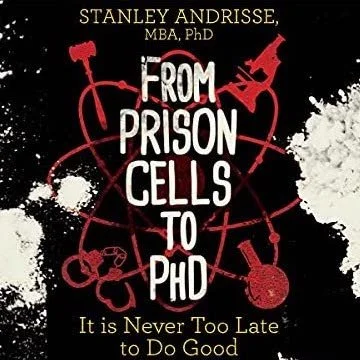
Highlights - Dr. Stanley Andrisse - Founder and Author of From Prison Cells to PhD

Highlights - Dr. Stanley Andrisse - Founder and Author of From Prison Cells to PhD

Endocrinologist Scientist · Founder & Author of From Prison Cells to PhD
Assistant Professor, Howard University

I kind of thought there was justice in the criminal justice system and that there was care for people, like you matter to me within the system, and in that moment it hit me. There wasn't. And in fact, it's the opposite. In order for the system to work the way it does, it needs to de-humanize the people that it puts in these cages.

Dr. Stanley Andrisse - Endocrinologist Scientist - Author of From Prison Cells to PhD

Dr. Stanley Andrisse - Endocrinologist Scientist - Author of From Prison Cells to PhD

Endocrinologist Scientist · Founder & Author of From Prison Cells to PhD
Assistant Professor, Howard University

I kind of thought there was justice in the criminal justice system and that there was care for people, like you matter to me within the system, and in that moment it hit me. There wasn't. And in fact, it's the opposite. In order for the system to work the way it does, it needs to de-humanize the people that it puts in these cages.

Highlights - Cynthia Daniels - Grammy - Emmy Award-winning Producer, Engineer, Composer

Highlights - Cynthia Daniels - Grammy - Emmy Award-winning Producer, Engineer, Composer

Grammy & Emmy Award-winning Producer, Engineer, Composer

We all are looking for a little magic in our lives, and I think that's what art and the creative process allow for, above all. In a world that can be either way too predictable and mundane and create tedium, the creative mind, for me, is the curious mind and the mind that's always learning and allowing yourself to make mistakes. To generate from your core, from your soul, and from your experience something new and experimental and something that is unique to yourself.

Cynthia Daniels - Grammy and Emmy Award-winning Producer, Engineer, Composer

Cynthia Daniels - Grammy and Emmy Award-winning Producer, Engineer, Composer

Grammy & Emmy Award-winning Producer, Engineer, Composer

We all are looking for a little magic in our lives, and I think that's what art and the creative process allow for, above all. In a world that can be either way too predictable and mundane and create tedium, the creative mind, for me, is the curious mind and the mind that's always learning and allowing yourself to make mistakes. To generate from your core, from your soul, and from your experience something new and experimental and something that is unique to yourself.

Highlights - Claudia Forestieri - Brigitte Muñoz-Liebowitz - “Gordita Chronicles”on HBO Max

Highlights - Claudia Forestieri - Brigitte Muñoz-Liebowitz - “Gordita Chronicles”on HBO Max

Claudia Forestieri (Creator) & Brigitte Muñoz-Liebowitz (Showrunner)
Gordita Chronicles

When you immigrate, it's kind of like you're going through adolescence because you're in a new place. You feel weird in your own skin. You're learning new things. Everything is changing. You feel awkward. So that also helped us connect the adult stories to the children's stories.

Claudia Forestieri - Brigitte Muñoz-Liebowitz (Creator - Showrunner) “Gordita Chronicles”

Claudia Forestieri - Brigitte Muñoz-Liebowitz (Creator - Showrunner) “Gordita Chronicles”

Claudia Forestieri (Creator) & Brigitte Muñoz-Liebowitz (Showrunner)
Gordita Chronicles

When you immigrate, it's kind of like you're going through adolescence because you're in a new place. You feel weird in your own skin. You're learning new things. Everything is changing. You feel awkward. So that also helped us connect the adult stories to the children's stories.

Highlights - Jonathan Newman - VP, Research, Wilfrid Laurier University

Highlights - Jonathan Newman - VP, Research, Wilfrid Laurier University

Lead Author of Climate Change Biology, and Defending Biodiversity: Environmental Science and Ethics
Vice President of Research, Wilfrid Laurier University

Climate change is certainly going to affect biodiversity. Some species will benefit from climate change, but others will not, and we'll have different ecosystems, different biotic communities as a result of this. I think the impacts that are likely are pretty clear, and I think that's a pretty good reason to do all those things we can do without completely destroying our economies and our communities because those things have moral value as well. It's not just the environment that we think is important. We also think humans are important, then doing the things we can do now, do the less painful things first. We should have done them already, and we should be now thinking about how to do the harder things.

Jonathan Newman - Lead Author, “Defending Biodiversity: Environmental Science and Ethics”

Jonathan Newman - Lead Author, “Defending Biodiversity: Environmental Science and Ethics”

Lead Author of Climate Change Biology, and Defending Biodiversity: Environmental Science and Ethics
Vice President of Research, Wilfrid Laurier University

Climate change is certainly going to affect biodiversity. Some species will benefit from climate change, but others will not, and we'll have different ecosystems, different biotic communities as a result of this. I think the impacts that are likely are pretty clear, and I think that's a pretty good reason to do all those things we can do without completely destroying our economies and our communities because those things have moral value as well. It's not just the environment that we think is important. We also think humans are important, then doing the things we can do now, do the less painful things first. We should have done them already, and we should be now thinking about how to do the harder things.

Highlights - Florian Hoffmeister - Award-winning DP, “Pachinko”, “Great Expectations”

Highlights - Florian Hoffmeister - Award-winning DP, “Pachinko”, “Great Expectations”

Florian Hoffmeister · Emmy & BAFTA Award-winning Director of Photography
Pachinko · Great Expectations · Official Secrets

Every time I ask, ‘What do you need? What do I want? What does the director want? How do we collaborate? What is generated during the collaboration? What ideas, questions come across? And then I can start constructing something like a look.

Florian Hoffmeister - Emmy - BAFTA Award-winning Director of Photography

Florian Hoffmeister - Emmy - BAFTA Award-winning Director of Photography

Florian Hoffmeister · Emmy & BAFTA Award-winning Director of Photography
Pachinko · Great Expectations · Official Secrets

Every time I ask, ‘What do you need? What do I want? What does the director want? How do we collaborate? What is generated during the collaboration? What ideas, questions come across? And then I can start constructing something like a look.

Highlights - Roy Scranton - Author of “Learning to Die in the Anthropocene”

Highlights - Roy Scranton - Author of “Learning to Die in the Anthropocene”

Author of Learning to Die in the Anthropocene & We’re Doomed, Now What?
Director of the Notre Dame Environmental Humanities Initiative

It seems irresponsible to me to downplay the possible consequences of climate change. It seems irresponsible to assume that we're going to fix it. And so I think it's absolutely a responsibility for the people who are talking about it and thinking about it, to look at the worst-case scenario and to look at the current trajectories, absent technologies for carbon scrubbers, to look at where we're actually headed, the worst-case scenarios, and address that and bring that to each other and to our children and to our students. When you really look at the situation, it's scary and terrifying, and it upends everything that we've been told to make sense of life.

Roy Scranton - Author of “Learning to Die in the Anthropocene” - “We’re Doomed, Now What?”

Roy Scranton - Author of “Learning to Die in the Anthropocene” - “We’re Doomed, Now What?”

Author of Learning to Die in the Anthropocene & We’re Doomed, Now What?
Director of the Notre Dame Environmental Humanities Initiative

It seems irresponsible to me to downplay the possible consequences of climate change. It seems irresponsible to assume that we're going to fix it. And so I think it's absolutely a responsibility for the people who are talking about it and thinking about it, to look at the worst-case scenario and to look at the current trajectories, absent technologies for carbon scrubbers, to look at where we're actually headed, the worst-case scenarios, and address that and bring that to each other and to our children and to our students. When you really look at the situation, it's scary and terrifying, and it upends everything that we've been told to make sense of life.

Highlights - David A. Banks - Dir. of Globalization Studies - SUNY Albany

Highlights - David A. Banks - Dir. of Globalization Studies - SUNY Albany

Director of Globalization Studies University of Albany at SUNY
Author of The City Authentic: How the Attention Economy Builds Urban America (forthcoming)

I think that is often what tourism is starting to move towards. Is this existential authentic? And what that means is that you're not even really looking to meet expectations or validate that the thing in front of you is what it says it is. You are trying to recreate who you think you should be in a time that is disconnected from your usual life. Because we're a pretty jaded and suspicious society now. “Is it a deep fake?”We live in this world of make-believe and fakeness, and you want to get to something that's real. And what's more real than yourself and the story that you tell to yourself about yourself. And if you can really connect to that, you'll feel really good.

David A. Banks - Dir. of Globalization Studies - SUNY Albany - Author of “The City Authentic”

David A. Banks - Dir. of Globalization Studies - SUNY Albany - Author of “The City Authentic”

Director of Globalization Studies University of Albany at SUNY
Author of The City Authentic: How the Attention Economy Builds Urban America (forthcoming)

Author of “The City Authentic”I think that is often what tourism is starting to move towards. Is this existential authentic? And what that means is that you're not even really looking to meet expectations or validate that the thing in front of you is what it says it is. You are trying to recreate who you think you should be in a time that is disconnected from your usual life. Because we're a pretty jaded and suspicious society now. “Is it a deep fake?” We live in this world of make-believe and fakeness, and you want to get to something that's real. And what's more real than yourself and the story that you tell to yourself about yourself. And if you can really connect to that, you'll feel really good.

Highlights - KC Legacion on Degrowth, Technology and Social Media

Highlights - KC Legacion on Degrowth, Technology and Social Media

Member of Web Collective degrowth.info
Master of Environmental Studies candidate, University of Pennsylvania

Degrowth as an idea has intellectual roots in the environmental critiques of the sixties and seventies found in landmark works like Rachel Carson's Silent Spring, the Club of Rome's Limits to Growth report, Nicholas Georgescu-Roegen's The Entropy Law and the Economic Process, which was a seminal piece of economic theory that applied the laws of thermodynamics to the economy and was very influential for ecological economics, which is intertwined with degrowth. Degrowth was first formulated in 1972 by French philosopher André Gorz in a public debate where he used the term décroissance to question whether planetary stability was compatible with capitalism.

KC Legacion on Degrowth, Technology and Social Media

KC Legacion on Degrowth, Technology and Social Media

Member of Web Collective degrowth.info
Master of Environmental Studies candidate, University of Pennsylvania

Degrowth as an idea has intellectual roots in the environmental critiques of the sixties and seventies found in landmark works like Rachel Carson's Silent Spring, the Club of Rome's Limits to Growth report, Nicholas Georgescu-Roegen's The Entropy Law and the Economic Process, which was a seminal piece of economic theory that applied the laws of thermodynamics to the economy and was very influential for ecological economics, which is intertwined with degrowth. Degrowth was first formulated in 1972 by French philosopher André Gorz in a public debate where he used the term décroissance to question whether planetary stability was compatible with capitalism.