

How is music a pathway to understanding animals?
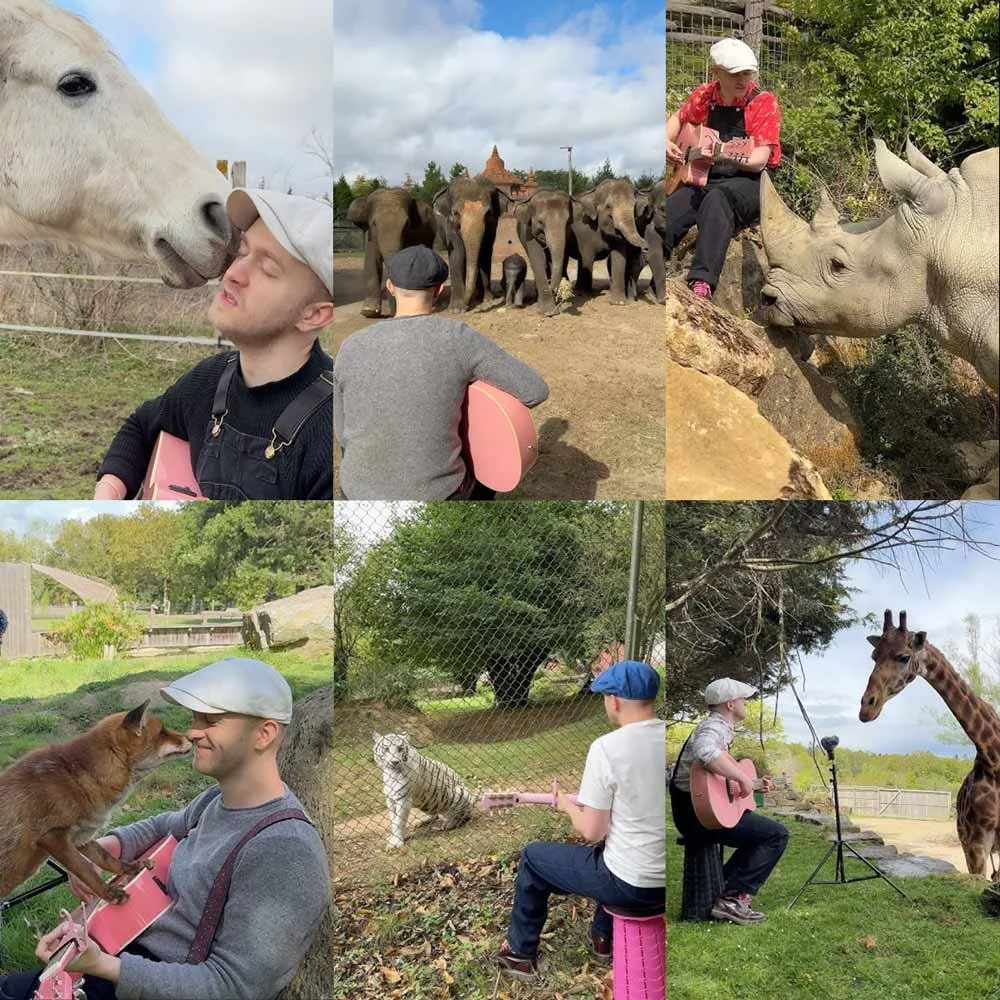
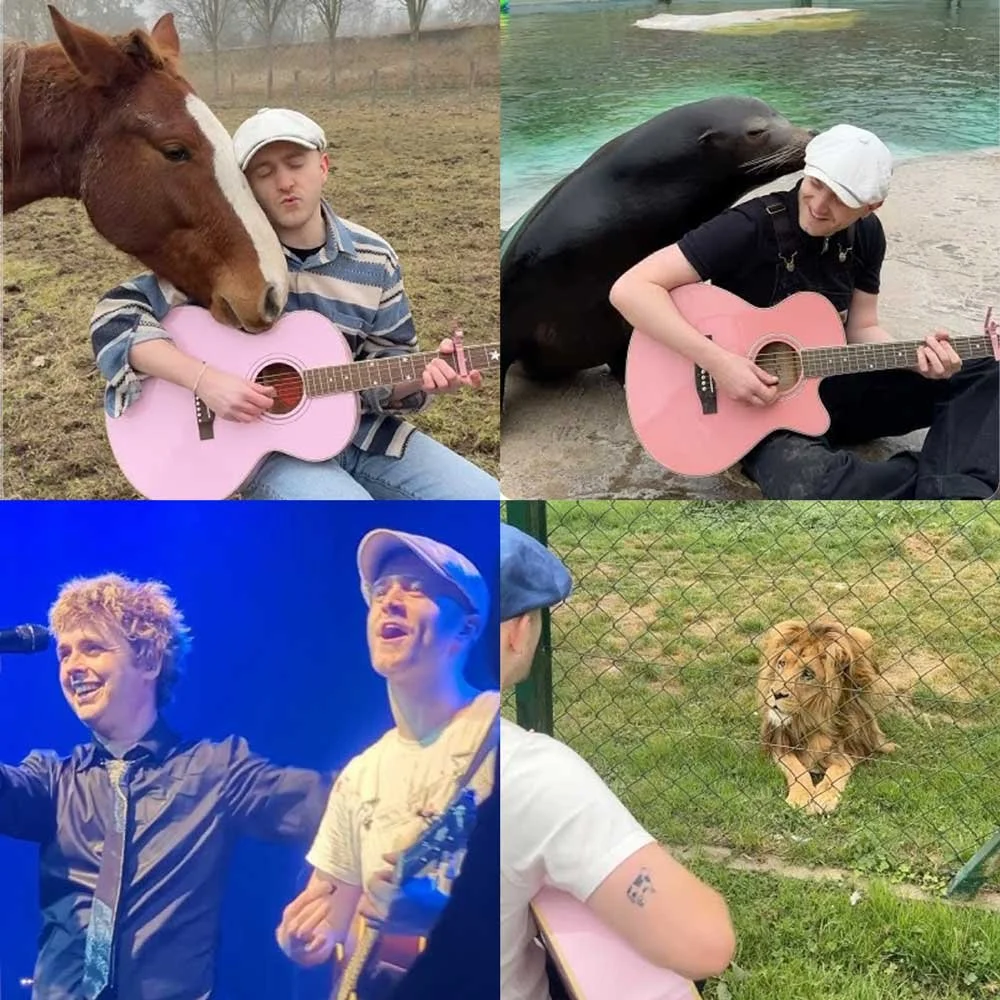
Our guest today is a musician who takes his guitar far beyond the concert hall. He plays in places most of us would never think of as venues—farms, zoos, sanctuaries, and animal habitats—sitting quietly among animals and letting the music unfold. What’s striking in these encounters is not just that animals pause to listen, but that many gradually approach him, settle nearby, and sometimes reach out in moments of unmistakable gentleness and trust. These are not trained responses, and there is no attempt to control the outcome—only sound, presence, and time shared across species.
Today, we’re exploring with Loris Assadian, otherwise known as Plumes, what might be happening in those moments: what animals hear, how trust forms, and what music can reveal when it enters a world not made for humans alone.
I hope they are going to like it as well. Mostly I’ll play in a minor key, something sad, which I think can work for an animal because they can sense the sadness, and they try to reassure me and comfort me, touch me, rub their hands against me. I chose love songs because I'm convinced they are very intuitive and they can sense what I am trying to say to them, and profess my love in a way. I think there's always a way to connect, and if you're being cautious and don't threaten the animals, something beautiful can happen.
THE CREATIVE PROCESS · ONE PLANET PODCAST
And so, animals as I understand—I mean, it's all theoretical on my end—but they're detecting patterns, in movement, sound, breath, and tension. You know, a human sitting calmly, producing this kind of nonthreatening noise over time. This patterned sound is already unusual for them, for you just to arrive there. I don't know if there's something in the live guitar music, but I definitely think there's something in your performance, because I don't know if you can break it apart, all the little pieces they might be responding to in you.
PLUMES · LORIS ASSADIAN
Well, that's very kind of you to say, but I think any musician can connect with them in a way. I think what makes a difference is that I don't sing around them; I sing for them. I really try to connect and feel like the intent makes all the difference, but it's not necessarily about me.
THE CREATIVE PROCESS · ONE PLANET PODCAST
I've seen videos of your performances. I don't know how much you study them before and how you select those songs or the key. As one actress, Sharon Lawrence, told me, she said, "Ask him about the key. Is it the key that's most important to tune into them?”
PLUMES
I mostly choose what I like, and I hope they are going to like it as well. Mostly minor, something sad, which I think can work for an animal because they can sense the sadness, and they try to reassure me and comfort me with a little bit of contact. You know, they touch me, rub their hands against me and things like this. And I chose love songs because I'm convinced they are being very intuitive and they can sense what I am trying to say to them, and profess my love in a way. Animals also enjoy classical music. Elephants love low vibrations.
THE CREATIVE PROCESS · ONE PLANET PODCAST
We've spoken with a lot of different wildlife documentarians or people who study earth sciences who go out in the field, but I like how you pair it with the music for animals because it gives a deeper storytelling, and it unlocks something in the song. Like "Country Roads," it makes me think about the song, what does that mean? Country Roads for Animals? “Let's go back to the home, where we belong.” Do those songs mean something to you? I hope it makes us all think that we've dominated this earth for so long, but we share this earth. We should be doing a better job at sharing it with them, and this song tells something about their relationship with the Earth.
There is a whole field of study called road ecology: how our cities and highways are cutting animals off from their natural habitats, food sources, and limiting their ability to mate and reproduce. Animals at great risk make road crossings, and often they are killed. Since cars and trucks kill more wildlife than almost anything else we humans do, consider that most of our highways are only about 50 to 70 years old—basically just a single human lifetime. But the migration paths these animals are walking have been carved into the earth for over 6,000 years. When an animal tries to cross a highway, it’s following a 'ghost road' that is three times older than the Roman Empire. To a deer or an elk, our 50-year-old highway is just a temporary obstacle that was dropped overnight across a trail their ancestors have used for 60 centuries.
PLUMES
We have responsibility. It's not because we are stronger that we need to exploit and torture. I think, given the fact that we have so much more power, we should use this for good. I do think something clicked in me after my first meeting with cows, and I really hope that I can show in my videos how sensitive and beautiful animals are, and that it can click for other people. There's a long way to go, but hopefully we can start treating animals better.
THE CREATIVE PROCESS · ONE PLANET PODCAST
You mentioned the way we treat animals prior to killing them. I know regenerative farming allows for a nicer relationship to exist. It makes us think about our carbon footprint on this earth. Everything is a circular economy for animals, and there is so much we can learn from them—especially their intuitive intelligence and nonverbal communication. Now, with the advances of AI and how consumed we are by our machines and screens, we forget all the other forms of language. Watching the communication in your videos is a real eye-opener.
Your first videos were with cows, farm animals accustomed to human-made sounds. You gradually progressed to animals in sanctuaries, like white tigers or elephants, who have very different instincts by nature. Can you paint a picture of the difference in playing for a wild animal who doesn't have this long relationship with humans?
PLUMES
I'll tell you, I feel like there's no difference. I feel we're all on an equal scale. You do have to be careful with wild animals because their reactions to us can be unexpected, and they can be scared of us, but I feel all part of this world and we're all the same. I didn't always used to think that way, because I was always wary of playing to big cats. I thought it would be a kind of joke, like they're just going to kind of want to eat me and that's all they're going to want to think about. But then I tried just to see without even taking a video the first time with lions, and they started lining up in front of me and falling asleep. There were almost twenty lions, so that was pretty special. So, why not try again? It turns out big cats are one of the most receptive species so far.
THE CREATIVE PROCESS · ONE PLANET PODCAST
We envy the freedom of a bird in the sky or a panther on the savanna. What has being around these animals—wild, farm, or those in sanctuary—taught you about freedom? As I watch your videos, it seems their interaction with you awakens another layer of freedom in them.
PLUMES
They can escape. A lot of sanctuary animals escaped already from a dark past, and it's always very surprising and very inspiring. These animals are just willing to forget and forgive right away. They want to connect even though they've been so heavily mistreated by human beings. We saw the past of those, and with a few minutes, we build this trust and we build this connection. It's something that I really admire in the animal kingdom, to be so forgiving and so open.
THE CREATIVE PROCESS · ONE PLANET PODCAST
So what has being around them taught you about the nature of freedom? We fill our time so much. Animals don't fill their time with the stresses of jobs and work, or have the same need to distract themselves. What has being around them made you reflect on the nature of freedom?
PLUMES
I think it's a human thing for us to need to be doing something. It's nice to witness it. I guess they're much happier than we are, in a way—the ones that are not mistreated. I sometimes think, and that's why it's so soothing for me to be around them, because it's one of those quiet, peaceful moments where you are there, you are present, and you connect with them. It's like my own private little therapy, in a way, because it's so rewarding and it's so soothing.
THE CREATIVE PROCESS · ONE PLANET PODCAST
This time of year, it's the holidays, and we're reconnecting to ourselves and to what matters most. I wonder, is there an element of spirituality in your work with animals?
PLUMES
Mostly a sense of anger because, you know, in France we have this tradition called foie gras that is a kind of torture of the ducks. We’re having a vegan Christmas with my family, and my mom wants to surprise us with some vegan recipes. I want to work with a tour manager who allows me to tour sanctuaries. I would like to do acoustic shows for a handful of people at a sanctuary. I think it would be great if people can see this for themselves. I do think we need to be more transparent about animal exploitation, especially to young people, so that they know what they are participating in. Maybe at schools it can happen, a program to explain nutrition and what we put into our bodies, and what it does. I really hope the future of the world will be living in harmony and not hurting anyone.