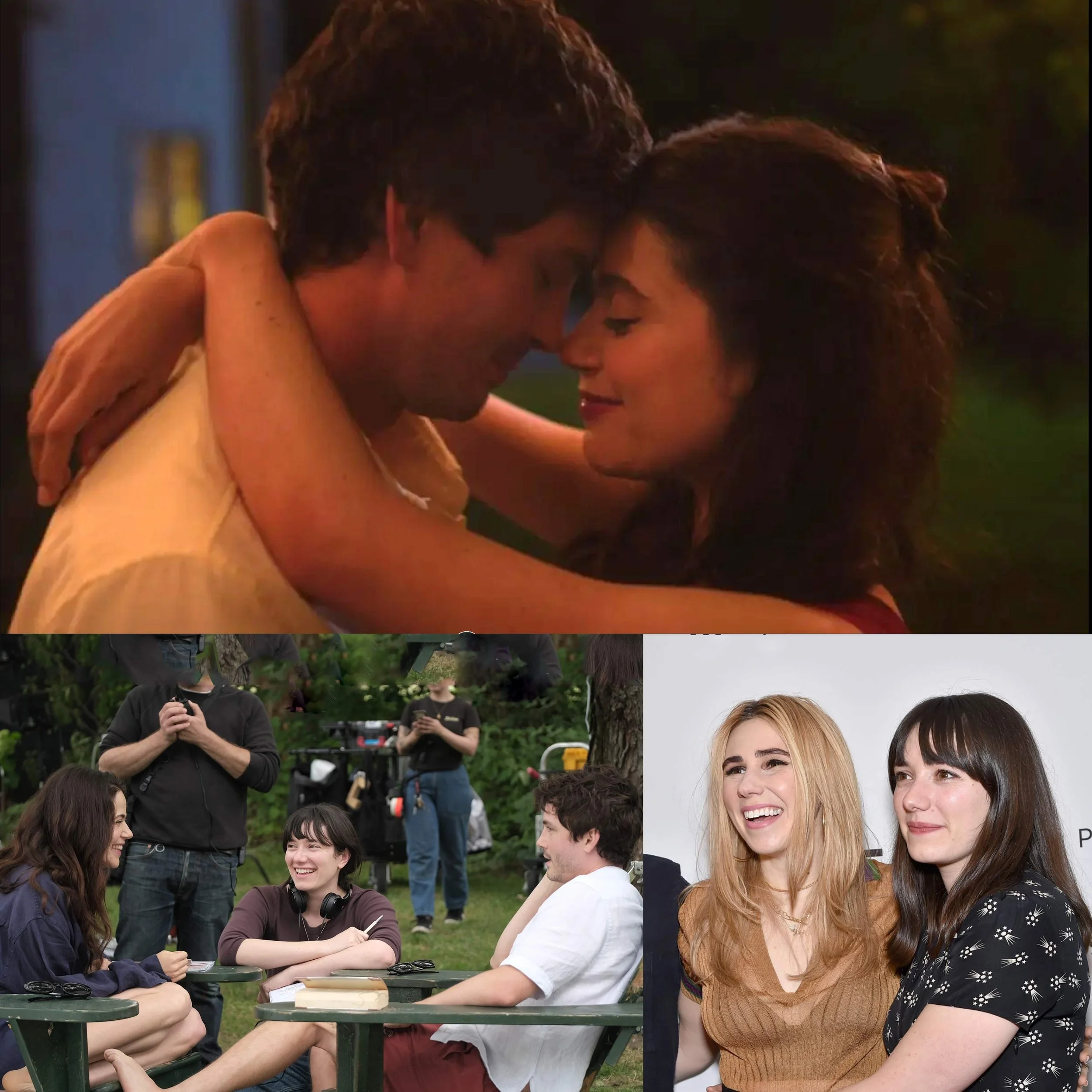
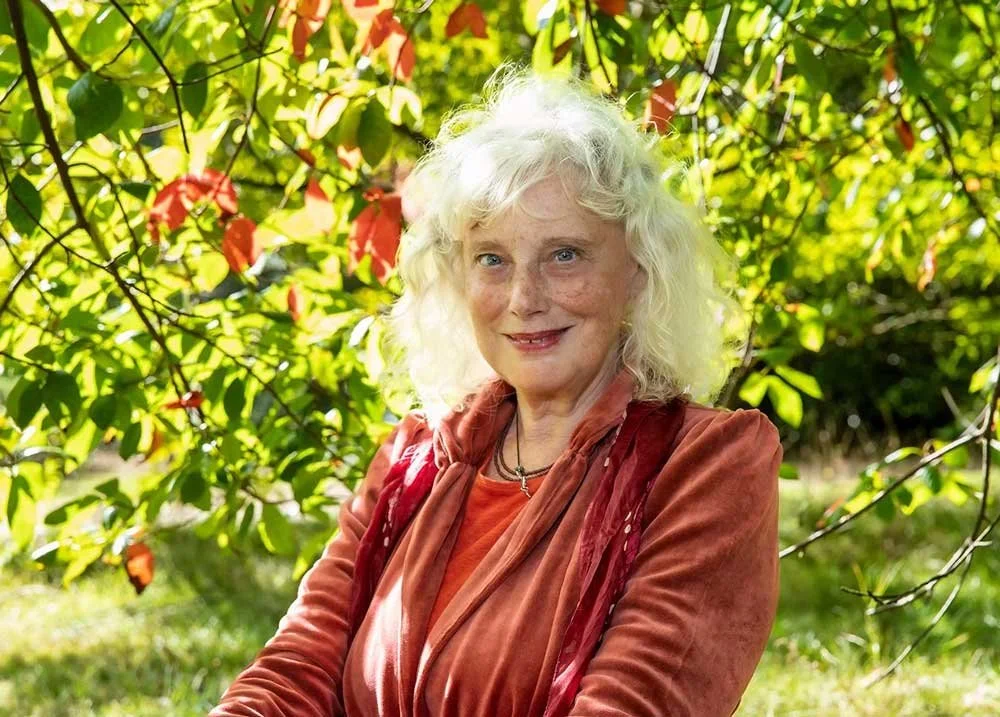
I won my first Emmy when I was 21, which was the result of absolutely devoting myself day and night for two years to doing all the scene work. I attended classes simultaneously and did plays until my mother died. I studied with Michael Howard for eight years. Even when I was so tired I couldn't get up to do a scene, he would say, "Get up and do a poem." It helped me enormously; it saved me.
The way I was trained and how I train others is that you know when you’re in the zone. Oh God, it feels so good. It feels like flying. And that's what you want. You want to be so unselfaware that you're on liftoff?
I had to become the father of my family very young because my parents divorced when I was 12. My situation was a little bit unusual in that my father kind of disappeared, and I had been making a fair amount of money as a kid, doing commercials and television and film. We needed money, and I kind of became the breadwinner. But I had this amazing world that I had access to, which was the world of the entertainment industry. My mom was supportive of my taking over and saying, "This is, I think, what we need to do." She liked the idea of moving to New York, so we moved to New York when I was 17 with a play that I had gotten. Then she got cancer and became really sick, so I had to take care of her full time. That lasted for about eight years, and then she died when I was 25. That was a rough go. At the same time, I had an amazing other world, and my other world was the world of make-believe and pretend, which I got to participate in on the soaps, with happy families and Christmases, Easters, miracles, love, weddings, and children. The pretend world that I spent a large amount of time in became a great way to balance what was sort of tragic in my real life.
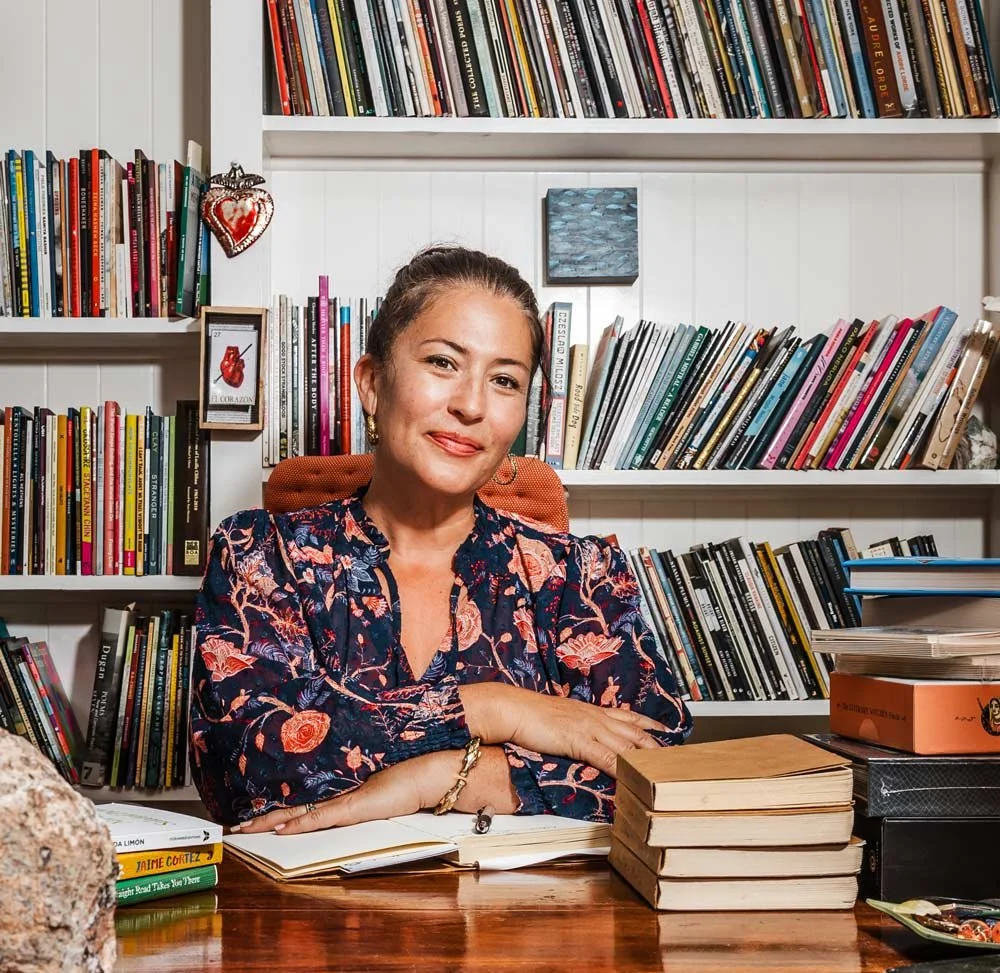
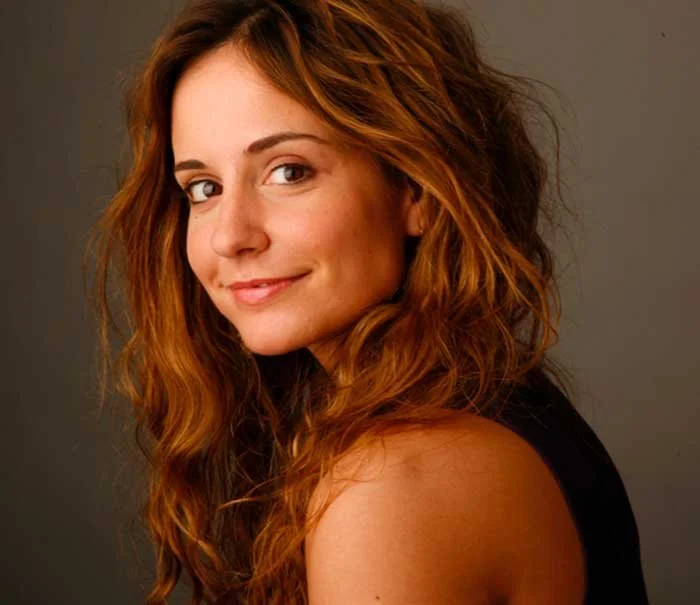
Our guest today is Cady McClain. You probably know her from her long and celebrated career in daytime television. She is a three-time Emmy® Award-winning actress. She plays Pamela Curtis on CBS’ Beyond the Gates, and is the Artistic Director of Axial Theatre, and her directorial work includes the documentary, Seeing is Believing: Women Direct, a fascinating look at the challenges and triumphs of women behind the camera. Her memoir, Murdering My Youth, is an honest and sometimes difficult book about growing up as a child actor in the spotlight. Her work across all these different art forms—acting, directing, writing, art, and music—all seems to be connected by a commitment to telling true stories, no matter how complicated.
THE CREATIVE PROCESS
We had a chance to meet in Paris when you came over for the John Patrick Shanley Acting Workshop. You've been decades in the business. Also, the directing end, and you’re involved in theater, of course, in television, and film.
Just going back, even to the start of your acting career, I mean, you really jumped in at the deep end. From your first roles, like sharing the big screen with legend Peter O'Toole in My Favorite Year, you played his daughter. I don’t know if you could take us back to that, but what do you remember about the time and the excitement? Did you realize these are huge figures?
CADY McCLAIN
Well, I had a very strange introduction into show business. It wasn't planned, really. As a little kid, I was a dancer. I was a tap dancer, and my very first television appearance was on the Guinness Book of World Records. I just wanted to do commercials, so I got these amazing auditions, and the audition for My Favorite Year, was at MGM. It was magical. What can I say? It was magical. All the sets that I got to work on, walking onto Paramount.
I had to become the father of my family very young because my parents divorced when I was 12. Because I was making money doing commercials and film and television, I kind of became the provider. Then, my mother and I made a decision, and my sister was in school on the East Coast. She was going to Yale.
Very quickly, by 15, I realized that my track in life needed to be different. If I was going to survive, I was going to have to really decide I was going to work for a living and not take a typical approach of “Who am I? Let me go to college. Let me figure it all out,” because I didn't have that kind of financial support. So we moved to New York when I was 17 with a play that I had gotten. Then she got cancer and became really sick, so I had to take care of her full-time. She died when I was 25, so that was a rough go. At the same time, I had an amazing other world, and my other world was the world of make-believe and pretend.
THE CREATIVE PROCESS
To be able to take on that world and be shoulder to shoulder with actors who had been in it for decades and to be so supportive of your family, your mother, it strikes me because you wrote a memoir, Murdering My Youth. Was that a chance for you to look back? When you were in it, swimming in it, you don’t really understand. You don’t really understand the strength, the resilience. People from the outside see it, but we don’t often see it from the inside. Is that your chance to kind of recoup, to understand?
McCLAIN
I feel now in my fifties that I am a person who has a long burn and a lot of compassion for people going through difficult things. It all kind of feeds into the art-making, where I'm interested in other kinds of conversations that go deep into behavior with compassion, empathy, and curiosity. I can hold it or experience it internally without it wounding me.
The pain I was experiencing and carrying when I was younger was a stopper for me. I couldn't go that far into certain kinds of creative work because I couldn't be vulnerable within the system of what was being asked creatively. Within a play, you're going down layer after layer on the same material. If you feel at all unsafe within that environment, it can be very unsettling. What you want as an actor or any kind of creative person is for that ambition to be tabled, pushed away so far that you're not thinking about it at all. The only thing that matters is the work. It really matters who you spend your time with. A friend who pushes drugs or alcohol on you at any age is not your friend. A friend who tells you to go to bed because you have a show tomorrow, that's your friend.
So it's really important who you hang out with, and I didn’t learn that until very late, but I recognize it now. Being a creative person, we're very vulnerable to those kinds of people who are slippery and may not have good intent. I saw that with a lot of young people, as a child actor, watching those kids wanting to explore life. Because they were famous, people would come around to them like moths to the light, wanting to feed off that light.
One of the things that brought me back to New York City was the offer to be the artistic director of a theatre company called Axial Theatre. I had retreated from theater for a little while because I loved it so much, and I was focusing on other things in my life. Other than the soaps, I did a documentary film about female directors, and was becoming a film director for a while. I produced films and learned a lot about that when I was in Los Angeles. Then COVID happened, and this opportunity to be an artistic director for a theater company came around, and I thought, “Wow, that sounds really great.”
THE CREATIVE PROCESS
Just tell us a little bit about what that was like to mature with the character Dixie Cooney for, I don’t know how many years and how many episodes. What is that like?
McCLAIN
That's such a nice question to ask. The way I survived that was that every two years, I would imagine she was a completely different character, and I would change my hair a lot so that I would, even for myself, become a different character. It's really hard to play the same character. It gets boring.
I never intended to be on soaps for that long; it wasn’t my goal. The first couple of years, I think the first two or three years, I never worked harder in my life. When they say it’s like boot camp, they’re not kidding. I mean, when you memorize a new script every day, five days a week for three months in a row, it does something to your brain, right? It either breaks you or makes you stronger than anybody, enabling you to work faster and see things more quickly.
I was really lucky because I worked with a guy named Michael Knight. Many years later, he told me that I taught him how to write, and I’ve always credited him with teaching me how to write. We would sit in our dressing rooms and work on the dialogue, which we were allowed to do at that time. We earned the right to rework our dialogue slightly and sometimes rewrite entire scenes so that we could create something that felt at the level of what their intention was, maybe even superseded it. Those were really creative times, and I really enjoyed that.
You know, I worked on All My Children. I keep losing count, but I think it was around 13 years, which is a lot of time.
THE CREATIVE PROCESS
Now you're in Beyond the Gates. Tell us about the evolution of your character.
McCLAIN
Beyond the Gates is a new soap opera that focuses on an affluent African American family in the suburbs of Washington, DC, and I play the best friend of one of the leads. My character's name is Pamela Curtis, and she’s very fabulous, a little bougie, and very pretentious. But she’s a great friend to her friend, and all she cares about is her friend’s well-being.
I fly down to Atlanta a couple of times a month and shoot a couple of episodes. I’m still able to do my theater work and other teaching, and they've been really great and helpful, allowing me to keep all my worlds rolling at the same time.
I’m super happy to get to dip in and out of a medium that I've known for so long, and people seem to be really enjoying it. They've done articles about why this is culturally important because, politically, it’s taking a stand for a whole kind of community of people who have also been marginalized without othering them whatsoever. So that's super exciting.
I am part Mexican. My father spoke fluent Spanish, and I grew up in Southern California. What I think people tend to forget is that California was once Mexico. Los Angeles is not an English name; it is a Spanish name for a city, right? San Diego is also a Spanish name. What’s happening now is bizarre and disturbing. It's a wildly concerning and dark time for our country, but a lot of people are doing things about it and speaking up, which I'm really happy about.
But the only thing that I know how to do, because I'm not necessarily eloquent in my politics, is to keep making art. That’s all I know how to do. If you keep making art, telling stories, and connecting people, I have a friend making a documentary about what happened to the civics program in public schools. Nobody knows the branches of government anymore.
The biggest challenge, and the thing we all have to fight, is cynicism. Cynicism sounds like, “Ah, it’s all screwed. It’s all over with.” If you don’t continue to make efforts toward building a better world, then those who would benefit from owning everything can just easily swoop in and take over.
THE CREATIVE PROCESS
You're acting, you're developing your writing skills, and you're constantly on set. You spoke of your directing and how that serves your work now as an artistic director. You did that documentary you mentioned, which focused on other women directors, really notable ones too. You're picking up all these other skills. You didn't intend to be there, but you're absorbing all these things as well.
McCLAIN
While I was on the soaps, I had two agreements with myself. One, if you're going to do this to take care of your family, you’re going to do two things: be the best at what you do, not half-ass it, and keep training and doing other projects. I set those standards for myself so that I would not sink into a kind of mediocrity that would depress me.
There was a voice in my head that said it is not okay or enough to be pretty good. That comes at a cost; not everybody has that kind of drive. I can’t understand why I have it, and I won’t apologize for it, but I think it's kind of a relief to admit it.
I won my first Emmy when I was 21, which was the result of absolutely devoting myself day and night for two years to doing all the scene work. I attended classes simultaneously and did plays until my mother died. I studied with Michael Howard for eight years. Even when I was so tired I couldn't get up to do a scene, he would say, "Get up and do a poem." It helped me enormously; it saved me.
It was like a place for process where I had to constantly be delivering product that I could rest in the soft arms of process.
I started writing poems in my early twenties. Poems for me are like little whispering visitors; they come in and beg to be written. In a weird way, they demand that I express this in a certain way with words now. I think I really used poetry to create that experience, to express things for me that were not beautiful and needed to be given beauty.
I felt like working on a soap was akin to working at a bank or the post office. It felt like a grind, but it also allowed him to keep his artistic life very pure because he didn’t have to use his artistic life to make money. When you use your artistic life to make money, it can affect what you create.
When you think of these things as games, even the art-making is a kind of game. The element of financial pressure, time pressure, conflicts, mistakes, or disasters all become part of the game. You are managing those things to play successfully.
Auditioning feels like deal-making that could change the way I approach auditions. Auditioning is such a difficult game, especially now where we’re auditioning through the screen. You're not even meeting in person; you’re not getting any sense of a person’s energy except through this limited visual. It feels different.
THE CREATIVE PROCESS
It’s very interesting. I think if you can approach it as a role, I thought it was clever. I heard that JB Smoove, who was on Curb Your Enthusiasm, approached it by becoming the character the moment he walked in the door. He wasn’t thanking anyone for seeing him; he just took charge. That’s clever; they are already lost in the painting.
McCLAIN
When I cast, when I'm directing, I don’t audition people. I meet with them, talk to them, and I can tell right away from having a conversation whether they can act or not.
THE CREATIVE PROCESS
Yeah, it’s an interesting skill that a lot of people overlook. Listening is a skill too. It’s not just about performance; it’s about listening and engaging.
I don’t know what your reflections are on how we can include arts education, which is under threat and notoriously underfunded. I think those are skills we must nurture—skills of empathy, listening, and being human beings instead of algorithms. What have they given you? It’s not something we have a lot of space for in our education models.
McCLAIN
Filmmaking is an empathy machine. Theater's superpower is showing sometimes the worst aspects of ourselves to a room full of people so they can confront those worst aspects and have a cathartic experience, walking out with the realization that they don’t have to be that way anymore.
I do teach at Michael Howard Studios, where I was a student for those eight years. It’s a beautiful full circle. I teach what I most need to learn, and then I get to go practice what I just taught so that I'm embodying it.
THE CREATIVE PROCESS
Of all these forms, we mentioned a little about your music. For those who haven’t heard it, it’s quite confessional, like Joni Mitchell. I wonder which of your different modes of expression feels most vulnerable for you to share. Do you feel a little bit naked about it being out there?
McCLAIN
I feel like I can sometimes trick myself with TV work. I have layers of cover, where I'm safe behind a mask of makeup, a crazy hairdo, and a costume that’s not me. You can hide behind that.
With theater, you want to feel that level of vulnerability. If your intent isn’t to tap into yourself on some level and take a risk to expose something, you haven’t done the work. You haven’t gone all the way.
The way I was trained and how I train others is that you know when you’re in the zone. It feels like flying. That’s what you want. You want to be so unselfaware that you’re on liftoff. In a way, it feels so good, and any praise feels almost meaningless because you know you were flying.
Each individual has an extraordinary universe inside, and their only job is to know it and share it.