When I write my stories, I don't want to solve things in life. I just want to persuade myself that there is a way out. Maybe I am in a cell, maybe I'm trapped. Maybe I won't make it, but if I can imagine a plan for escape, then I'll be less trapped because at least in my mind, there is a way. I think that my parents are survivors. They always talked about this idea of humanity. My parents always said to me, when you look at people, don't look at their political views; that's not important. Look at the way that they look at you. If they see you, if they listen to you, if they can understand your intention, even if it's a failing one, they're your people. And if they can't, it doesn't matter.
I think that when I came with my mother and father, they thought there are people, there are human beings, and there are people who want to be human beings but are still struggling. And you go with humanity; you go with the person who can go against his ideology if his heart tells him something.
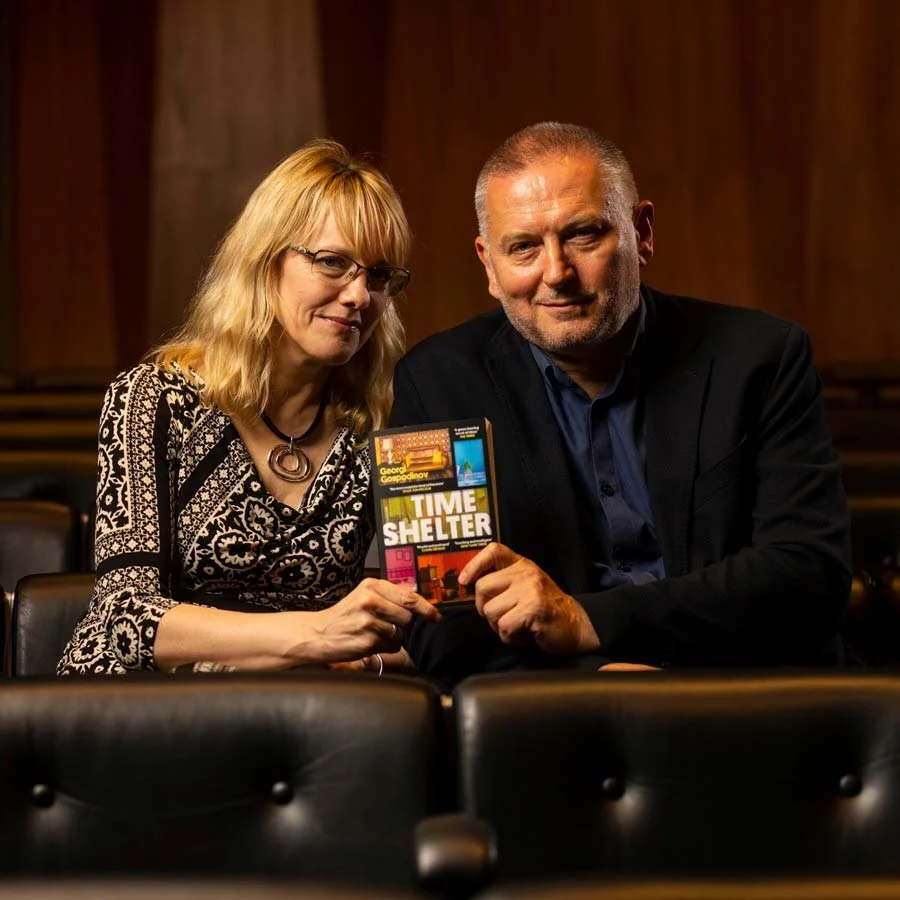
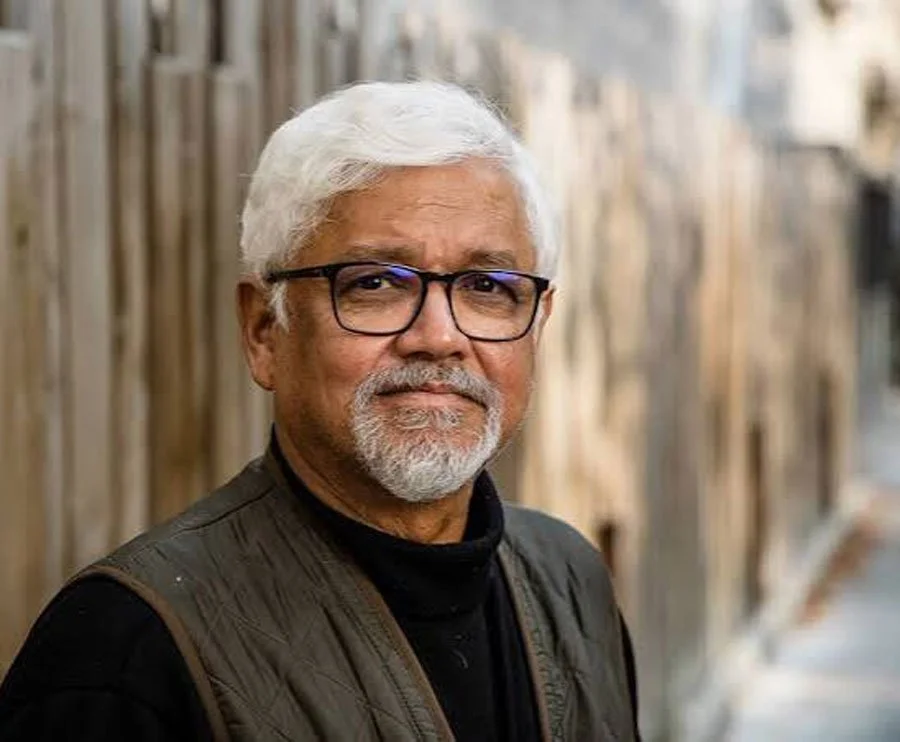
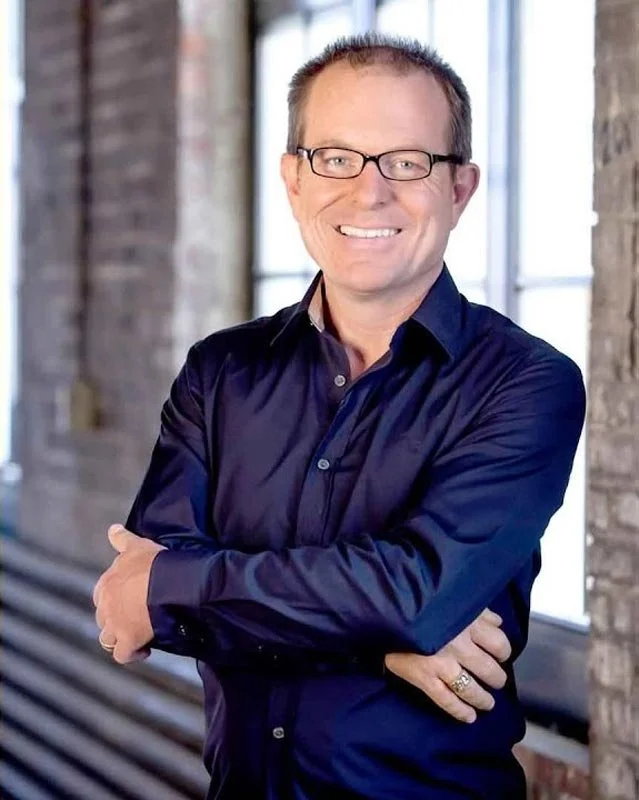
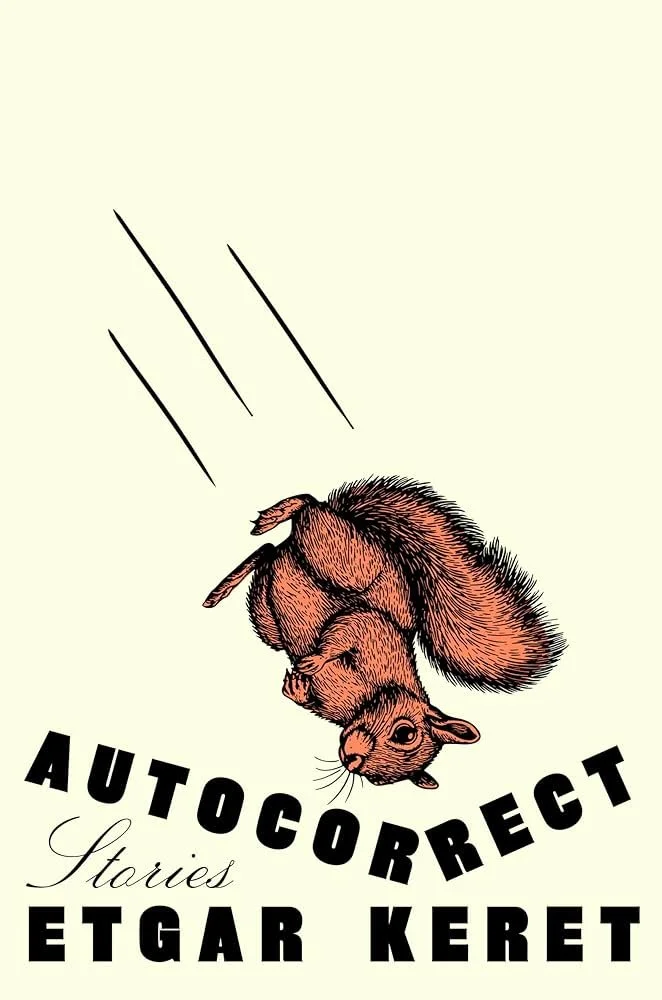
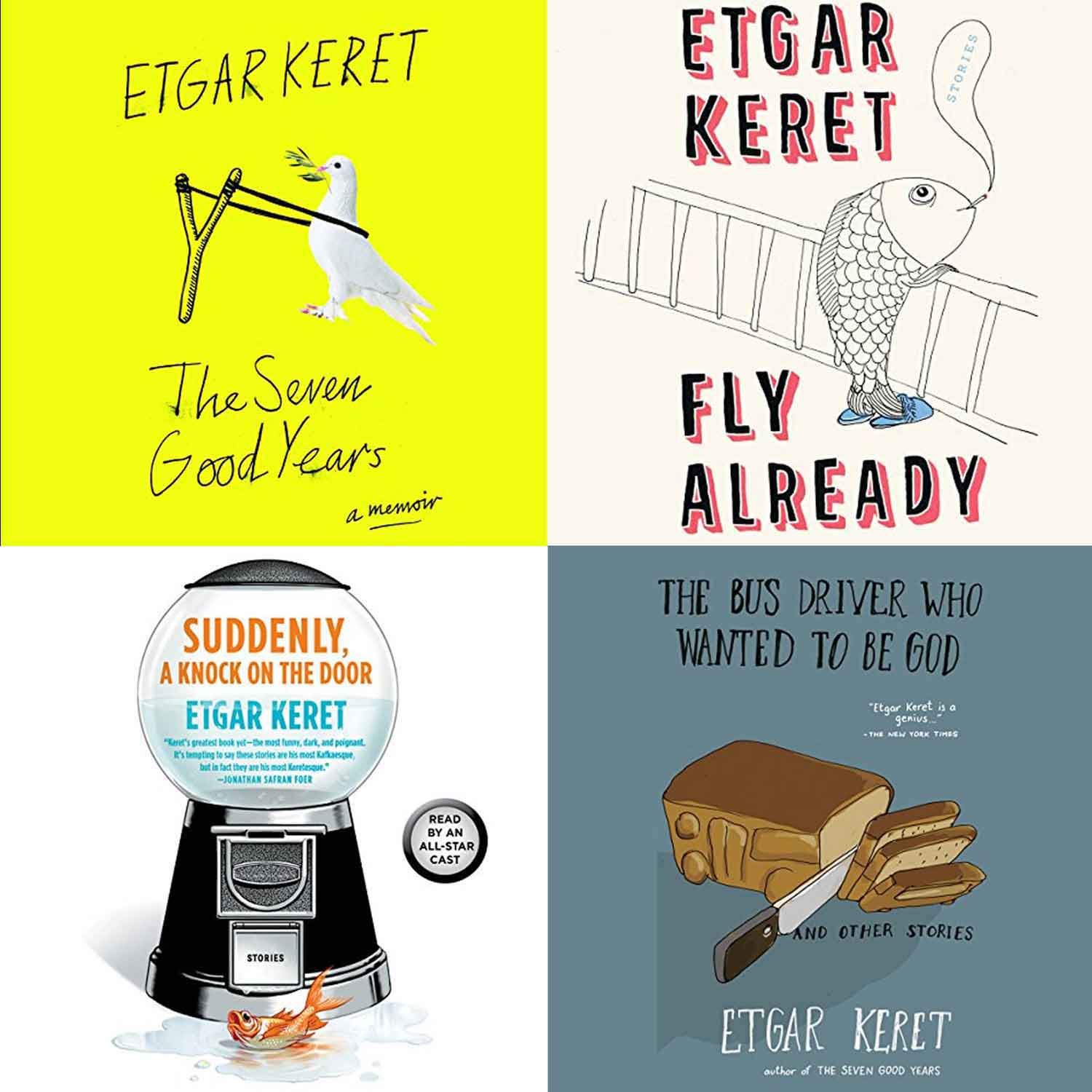
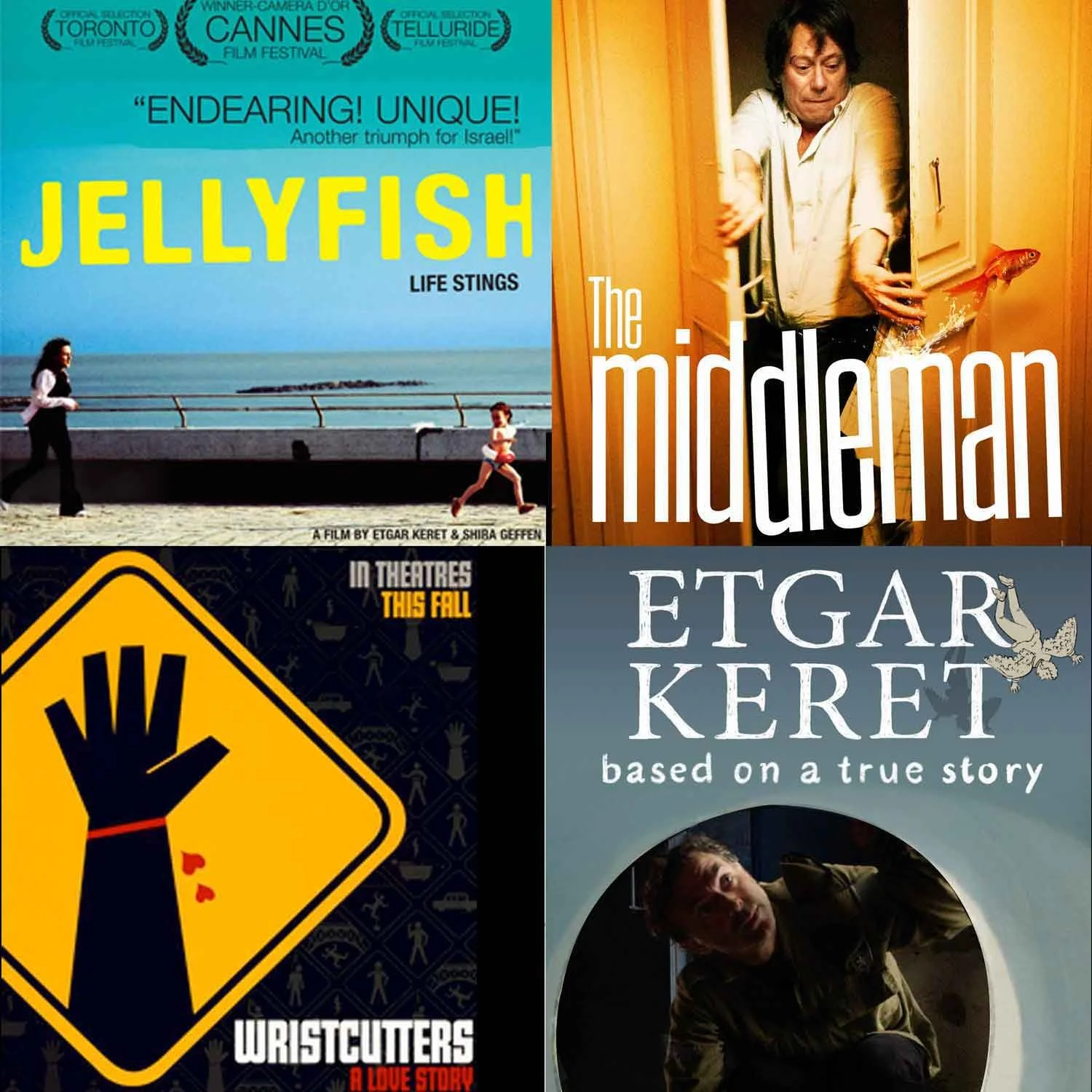
Etgar Keret is one of the most inventive and celebrated short story writers of his generation, a voice that captures the absurdities and profound loneliness of modern life with a deceptive, almost casual wit. His work, translated into dozens of languages, uses fantastical premises—from alien visitations to parallel universes—to illuminate the most human of truths. His new collection, Autocorrect, explores a world grappling with technology, loss, and the aftershocks of a global pandemic and, more recently, war. His awards include the Cannes Film Festival’s Caméra d’Or (2007), the Charles Bronfman Prize (2016), and the prestigious Sapir Prize (2018). Over a hundred short films and several feature films have been based on his stories. Keret teaches creative writing at Ben-Gurion University of the Negev. He now has a weekly newsletter on Substack called Alphabet Soup. He's also the new MFA Director of the Jewish Theological Seminary, where he's pioneering a new approach to storytelling. Joining me today from Tel Aviv is the great Israeli writer and filmmaker Etgar Keret.
ETGAR KERET
I think that right now, I'm really in a double whammy kind of situation where I'm blacklisted in my own country. In the Israeli community, there is news calling to boycott Grossman's book and mine in the city where I've been teaching for more than 20 years.
I was supposed to have a big tour in Australia, but it got canceled because I'm Israeli. I was supposed to come to Edinburgh, but that caused a problem because I'm Israeli. The idea is that I feel there is some kind of intolerance that I don't have any problem with. I have a problem with the fact that there are people who don't want to allow me any kind of opinion. I grew up in an occupying country with many strong liberal forces. But all the time, I knew that the fascists would shut you up. And today, everybody wants to shut you up. We live in a world of one strike, and you are out. I see young people, as a student, they're shivering. They know that if they say one wrong sentence, they'll be sleeping on a sidewalk. I find that this kind of oppression, when people talk about The Handmaid’s Tale, for me, it's already here. And it's much worse because there is always one group oppressing another. We live in this twisted world where everybody is oppressing everybody.

THE CREATIVE PROCESS
So I feel like the first question I should ask is, how are you? How are you keeping these days?
KERET
To say that this is the worst time of my life would be an understatement. I think that, generally, I lived with some kind of an illusion that I am in dialogue with the world, that the world listens to me and I listen to the world, and that I can change it a bit and it can change me a bit. I’m saying right now, with all the horror happening in my region, with the needless war that kills thousands and thousands of civilians and kidnaps many, this idea that there is something fundamentally against you, it's as if you see a child or something that you really understand in your core that if you could do one thing, you would change that.
Understanding that what you're doing doesn't work day in and day out for two years is really a feeling of futility that I have to fight. Every time you ask me a question, I have to muster some kind of energy even just to look at you and say something. I’m not trying to victimize myself because I'm not saying, please, I'm not going to press my head in the end, and everybody will throw me back. But I just want to say that my feeling may be intense, but I think that it's the universal human feeling right now.
It's this feeling of a powerless god, of an entity that knows about all the atrocities around it and has no power whatsoever to change them. I can blabber as much as I want on my Facebook page, but at the bottom line, people are dying. I can't do anything about it. All these people talking about it are not stopping it.
They can boycott me for not saying what they want me to say or can share my posts because they think I'm saying wonderful things. But it feels as if we are all spectators in some kind of a show that we have no effect on. It's like there is a football game, and there are people from different teams punching each other at the seats. You know, it doesn't affect the game. The idea that I want my team to win, that I want them to lift the cup—it's like I would give my heart, kidney, and brain for that, but I just can't. And it's heartbreaking, you know, day in and day out, just to be reminded of how powerless you are against the world.
THE CREATIVE PROCESS
I know that you're not religious, but a lot of your stories have, throughout your career, talked about the bus driver who wanted to be God or the afterlife. In this new collection as well, there's this speculation about what lies beyond, whether it's parallel universes or whatever. That's part of the wish to be able to change things. I don't like it the way this is, but maybe if I go down these Pipes (the name of one of your earliest stories), or if I find another way through. It might sound absurd, but it's no more absurd than the world we're experiencing now.
KERET
I totally agree with you. When I write my stories, I don't want to solve things in life. I just want to persuade myself that there is a way out. Maybe I am in a cell, maybe I'm trapped. Maybe I won't make it, but if I can imagine a plan for escape, then I'll be less trapped because at least in my mind, there is a way.
A few years ago, I was in Boston, and I spoke at one of the biggest universities there. I won’t mention the name because maybe the story will get me into trouble. It's good to be vague, but I spoke to a group of students, and there was a super intelligent young student there. At some stage, this student said to me, listen, I am a lesbian, and I won't stop fighting until the place that I live becomes a safe space where I can go hand in hand in the shopping mall, buy myself an ice cream, and kiss my partner on the lips without anyone looking at me. And I won't stop fighting until this happens.
I told her there is no such thing as a safe space. We are living in a jungle. The world that you wish for to be realized would mean that your Catholic, homophobic, elderly neighbor, when he goes to the shopping mall, wouldn't be in a safe space because it's totally unsafe for him to see two girls kissing. This idea that there is a right way to live that we should push down the throats of others is wrong. It's totally indoctrinated by social media because, you know, Mia, when you and I used to live in a village and I was your neighbor, people could ask you, what do you think about Etgar?
You'd say, “He talks too much. I want to buy something in the grocery store, and he catches me and starts talking to me about AI and what would happen if he were born in… But whenever I go overseas, he waters my plants and takes care of everything. In the end, you have some kind of a complex view of myself. If I say a sentence that is wrong, you could say, “Etgar told me this dumb sentence, but he's very good with dogs.”
In this kind of world where we’re living, where we just meet people on a sentence or an incident, it’s very similar to some kind of global road rage scenario. In the United States, people can get out of the car and shoot somebody because he cut them off. If the guy who cut them off went to high school with them, they would never shoot him because they know he’s funny and generous. Even in high school, they didn’t know how to drive. There is this kind of package that is human. But the moment that you meet people only through one thing, it becomes monstrous. It transforms into an inquisition, a McCarthy-style witch hunt kind of feeling.
THE CREATIVE PROCESS
This snap judgment leaves no room for due process. It’s bad for democracy, of course, but it’s bad for society and, of course, it's bad for art. You mentioned finding escape in your stories too. We see that a lot. I was surprised that in your latest collection, Autocorrect, although I know most of the stories were written before October 7th, there was little mention of war. Instead, there are a lot of stories about people's personal lives. But what there is a lot of is this kind of sense of escape.
There seems to be a metaphor of conflict or war zones, where personal lives could be a kind of war zone and could be treacherous. The danger of darkness is inside, kind of like what you're saying: we are full of all this road rage waiting to come out. Then there is that disconnection and loss. So again, I don’t know if it’s because we’re really getting now in the aftermath of October 7th, but there is this disconnection or loss, yet things aren’t mentioned explicitly because that is still looming, you know, ready to happen.
KERET
There is this tale that is probably an urban legend about a guy who suffered from severe depression and wasn't really functioning. One day he got up and said, “you know what? I'm going to take a shower, and I'm going to pay all my debts and be okay.” He took a shower and went to his café. He said, “I owe you 20 bucks. I want to pay you the 20 bucks.” They said, “It’s okay, just come another day.” Then he went to another place and said, “I owe you for the laundry. They said everything is fine, just go.” Then he went to Main Avenue and saw the Twin Towers on fire. He went home, brought a blanket, put it on the pavement, and lay down. He felt relief, and said, “Finally, everyone is feeling the way I feel.”
Now, I can say that when I lived in Israel before October 7th, sensations of doomsday fear, xenophobia, and fear of the other—these feelings were always there. When you see this war, it’s an eruption of something. As a writer, you sense it, not as an action, but as an energy. If you and I were sitting in a room and I said to you, Mia, can you smell this? And if you said no, as a writer, I have a better sense of smell. What I'm smelling is that there is a body in a closet in the room where we are sitting. The body may be found later, but the stench has been there long before.
THE CREATIVE PROCESS
Yeah, exactly. There’s this sense of menace, and I think that’s the thing that you do brilliantly because you undercut it with humor. You also use the brevity of your stories, so we know that jokes are short. If it were a novel, it would probably be depressing, because we would see every detail. With your stories, the movement is different. So it feels sped up, which undercuts the heavy themes. We don’t have to dwell long in the grief, although we know it’s there. There’s that stench of the body in the corner that none of us wants to look at, but you wrap it in this other sense that lets us go through the hard stuff while also getting to the light on the other side.
KERET
It’s really like, sometimes when you go to hotels, there is this kind of pianist who plays in the bar. I would say that as a writer, I was playing in the bar of humanity’s life. I was observing and writing about how beautiful it can be. I saw a man cheating on his wife, and I wrote about that.
Now, currently, life or the trajectory of humanity feels as if we're constantly falling down the stairs. I'm playing music for people who are falling down the stairs. It’s a bit like Charlie Chaplin-style music. The idea is that I’m doing whatever I can to hope with you, to see the good in life while both of us are falling down the stairs. I wish that one day I won’t feel that we are falling down the stairs. Maybe when that happens, I’ll stop writing, or maybe I’ll start playing a different tune. But for now, it really is this feeling—I feel like I’m the band on the Titanic, playing good music for those getting their trousers wet in cold water, trying to make it more bearable.
THE CREATIVE PROCESS
And you mentioned your mother. Of course, you've written about both of your parents, and you had that very moving exhibition, which we discussed the last time you were on the show. Honoring your mother, the stories she passed on to you, and how, as you say, that wasn't her profession, but both of your parents were storytellers in their own right.
The stories your father told himself when he was evading war, hiding in a hole in the ground, or the stories from your mother were a form of healing. It seems she made a magical world out of what was suffering. So I think it's a way of survival. And you yourself have, during this war, told stories to people who are survivors as a way of healing.
So what did you learn from what your parents passed on to you? What have you learned in your life as a storyteller about the importance of storytelling as a way of connection, healing, and growth?
KERET
So, I think, let's say if someone would tie your hands and tell you it's only for three days, you would feel every second of your life, your inability to use your hands the way that you want. Now, this doesn't mean that you won't be able to live your life. The people who like you will feed you, shower you, and turn on the TV for you, but you will feel that you're not a complete human being. I feel that when you don't tell your story, it's as if you have a limited existence. I think that when I talk about choices, we can always have some kind of choice, but I'm saying that the story we choose may be the most crucial choice that we make, because this story will affect all the other choices.
You know, if the story that I tell myself is that I really want to speak to you because we talked on a podcast and it was very interesting, and I think that we are living in a very problematic time, it's important to share ideas so people will find their own way while listening to other people, that's one story. If I say to myself, I published a new book, have a newsletter on Substack, and I must promote it, so I should go out and do PR, it's another story. Under those two stories, my experience of the interview would be different. My answers would be different. My attitude toward you would be different. The moment that you say, I make all the decisions, I'll just outsource the story decision, then you become a slave. Our current enslavement is really very, very tricky to catch because the only thing we do is outsource our decision-making. We outsource our imagination and we basically sit and, when we have the reward, we look on the phone and the phone will make it interesting to us. All the time we're making decisions because when you go to Instagram, you can always say, I want to see the next movie. And then you feel that you choose. But if you'd be a slave, and I say, Mia, what would you want to do? Build me a permit, clean my house. You can have the illusion of freedom, but you don't have freedom. The idea is that we don't feel enslaved; the feeling of enslavement usually comes from recognizing another ego and another intention.
Now, with that, we don't feel it. It's not like we say this asshole hates me. It's just this kind of big machine moving forward and pushing us. And if it pushes us, it has nothing against me, so I have nothing against it, and I can't even recognize it, you know? I'm saying when I decided that I want to open this kind of storytelling program, it came from the idea that telling your story today is a life skill. You cannot be free if you can do anything on your own. But in the bottom line, you succumb to the story that is given to you. And by the way, one of the things that are parts of the story given to you is a story telling you that it's important how fast you do things. That's the story that's given to you, and that's not the story that you should take.
THE CREATIVE PROCESS
I love that. I think it all goes back to what you're saying about telling your own story or meeting people where they are. I know that one of your stories in "Autocorrect" is called "Cornerstone," and a friend is drafted to write a eulogy for a boy whose family has been wiped out. But it's all going back to what we were talking about also before about technology: we're letting people write stories for us.
So we have to reclaim that autonomy and find out what works for us. It might not be writing the Great American novel. You know, I know that you're just trying to find what excellence means for them because I think every life is important, valuable, and worth sharing.
KERET
Yes. What I really think is that when you talk about this kind of AI-human competition, there are two things, at least two things that a human being can do that AI cannot do. I think the ability for obscurity and ambiguity are two things that, you know, when you have plus and zero, you see them as mistakes. Say if I say to you, Donald Trump is a danger to democracy, but he has such amazing charisma and a nice character, then this is something that is very difficult for AI to make this dance. You know, because it can, if I ask you, are you for it or against it? Is this thing a massacre or not a massacre? Then the human thing to do would be to stutter, to say, "Now, when we meet the AI, in the AI world, we treat our humanity as a mistake, something that needs to be corrected, outsourced, and solved."
You know, for example, if you do something bad to me, okay, if you steal money from me, I say, “You know what? I trusted Mia, and she betrayed my trust, but she's a good person. She stole that money because she wanted to buy herself a canvas, and she seemed to be sorry.” So will I forgive her? How will I forgive her? All this is so complicated, you know? We live now in a world saying, "What's the AI solution? Let's outsource it." Let somebody tell me if I should forgive her or not. Somebody tell me. I can hug her and say everything is okay, because I don't know why, because this is outside of my jurisdiction. Why? Because an AI wouldn't know that. So I'm saying that our fight is not to be better than the AI in what AI does better than us. Our fight is to keep what's human in us, and that we are now saying, if the AI doesn't have it, we don't need it either.
THE CREATIVE PROCESS
I think that you are so right. For me personally, the word, whether it's genocide or people saying ethnic cleansing, I just see that there's been a lot of deaths. That's important, with regard to Israel and Gaza. It's about the actual lives, it's the full description. It's the whole story.
KERET
What I always say is that we can call it different names, but names are not as important as actions. So let's say if I say it's ethnic cleansing and want to stop it, and you say it's genocide and you want to stop it, and the third person says, you're just horrible, but it's neither, then I say we're a coalition because the people who are dying don't care. They just want us to stop it. The fact is that because we are unable to stop it, then we take our frustration out on other people. You know, it's really like in Israel. It's always the same. Whenever the government and the army do something horrible, they boycott artists and academics that are all liberal, left-wing, and the artists are already boycotted and blacklisted.
But the word boycott—why? Because if I'm an artist, it's much easier to boycott an artist than to boycott a bank. The question is, am I doing something that resonates in the world or am I doing the things that are easiest for me to do? It's not a good solution.
So, what I want to say is that there are many things we talked about, but I really think that we all have hope for a good and full life. It's just a question of reference. I got in a taxi a couple of weeks ago, and the driver recognized that I'm a left-wing liberal because I'm outspoken, and most taxi drivers are right-wing, conservative, not to say racist. He said, I know you, and we are going to have a good, long talk until I drop you off. I said to him, listen, man, I don't mind arguing with you, but I will only argue about things where the outcome of our argument will have an effect in real life. So I'm willing to argue with you about the war in Gaza only if you'll convince me that the war is good.
We go to Gaza in your car, take guns, and help them. If you are convinced that war is bad, we'll go to Gaza and stand in front of the soldiers and tell them not to shoot. If you are willing to do that, I'll argue with you. The driver said to me, why do you say this bullshit? Nobody's going to listen to us anyway. So I said to him, you know what? So let's argue if we stop at a gas station and buy Coca-Cola or not, because I have had enough of arguing about things that I don't have any effect on. When I make this argument, it makes me feel important. I feel like a prime minister or maybe an American president, and I say, what? Trump is dumb. I'm smarter than Trump, but in the end, it has no effect on life.
So I really say that the moments that we'll be able to limit ourselves to the scope of the effect of our action, this doesn't mean that we should comply with things that we cannot stop. But the core of our action should be not to stop people from saying words. You know, when I was a kid, they would say, "Sticks and stones may break your bones, but words will do me no harm." We are living in a world where people will murder you for a word, and you can get away with murder as long as you shut up. So it's time to take this reverse word and put it back so it'll make some sense.