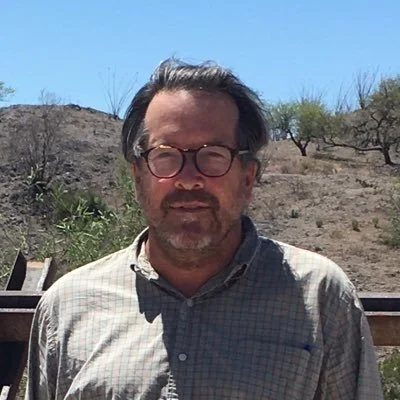
REBECCA WALKER

REBECCA WALKER

Award-Winning Writer, Producer & Co-founder of Third Wave Fund

The idea of writing memoir is about listening carefully. The way to find a story or, at least the story that needs to be told is that moment that you’re writing is the emerges from a deep kind of inner listening and finding the memories that are charged that don’t want to leave that have a certain kind of energy to them and, if you listen to them, and you allow them to be born in the writing, you discover your own story because your story is basically made up of all the memories that continue to hold the charge for you. All the memories that are lodged in your mind that you’ve secreted away and when you can excavate that story and you can write it down, then you can make sense of it and you can understand why you’re living the way you’re living and why you feel the way you feel. And you can also decide to to release those memories so that you can have new memories that can define and can shape your life.

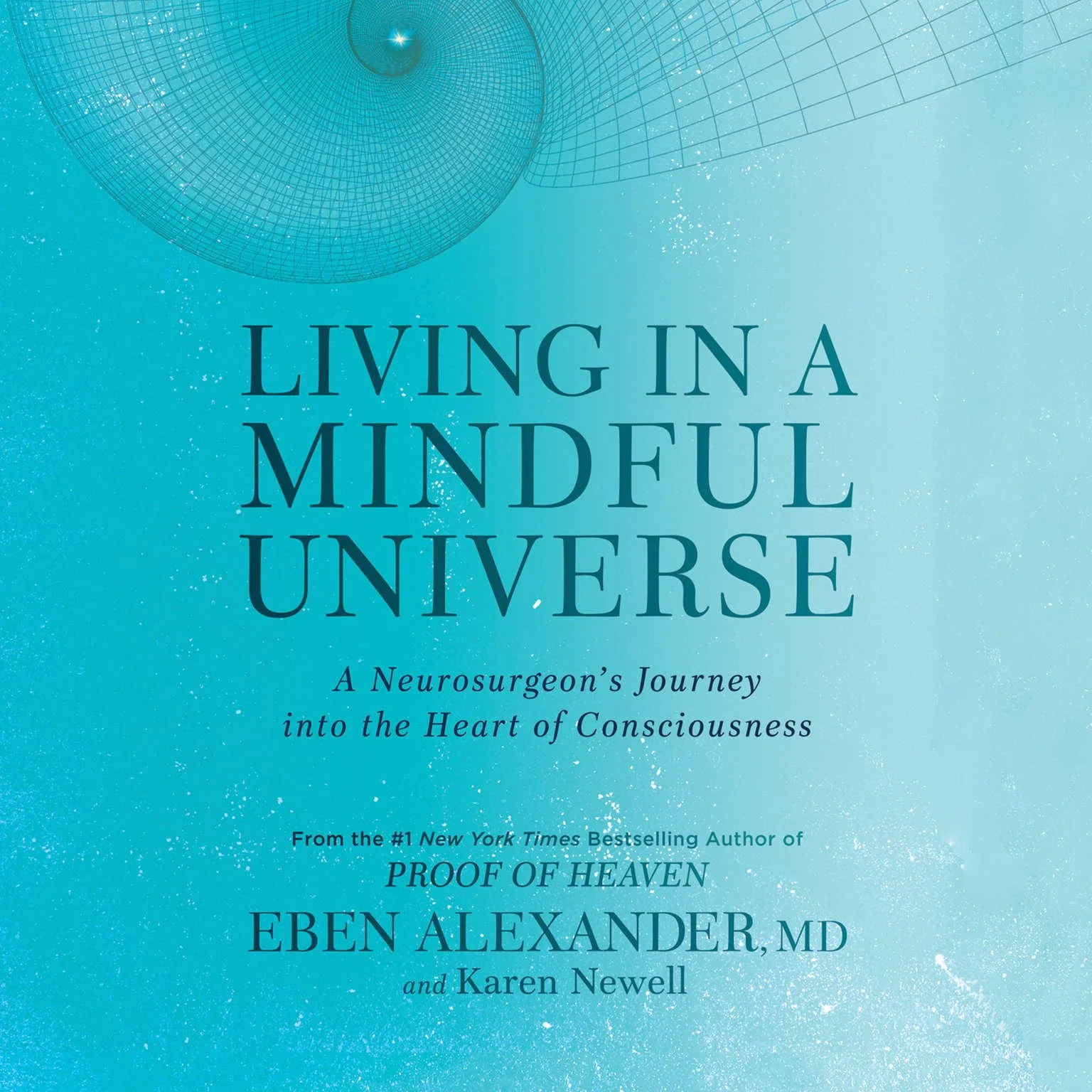
DR. EBEN ALEXANDER

DR. EBEN ALEXANDER

Neurosurgeon
Author of NYTimes #1 Bestseller Proof of Heaven, Seeking Heaven, The Map of Heaven & Living in a Mindful Universe.

Take care of yourself. Bring that love and kindness and compassion into your dealings with self and others. And this world will change dramatically. I think you’ll find great reason for optimism and hope and viewing the way our world can go, but it absolutely involves a change from the status quo from our current direction.

(Highlights) DR. EBEN ALEXANDER

(Highlights) DR. EBEN ALEXANDER

Neurosurgeon
Author of NYTimes #1 Bestseller Proof of Heaven, Seeking Heaven, The Map of Heaven & Living in a Mindful Universe.

Take care of yourself. Bring that love and kindness and compassion into your dealings with self and others. And this world will change dramatically. I think you’ll find great reason for optimism and hope and viewing the way our world can go, but it absolutely involves a change from the status quo from our current direction.

JIM JERMANOK (Highlights)

JIM JERMANOK (Highlights)

Award-Winning Writer, Director, Producer, Speaker
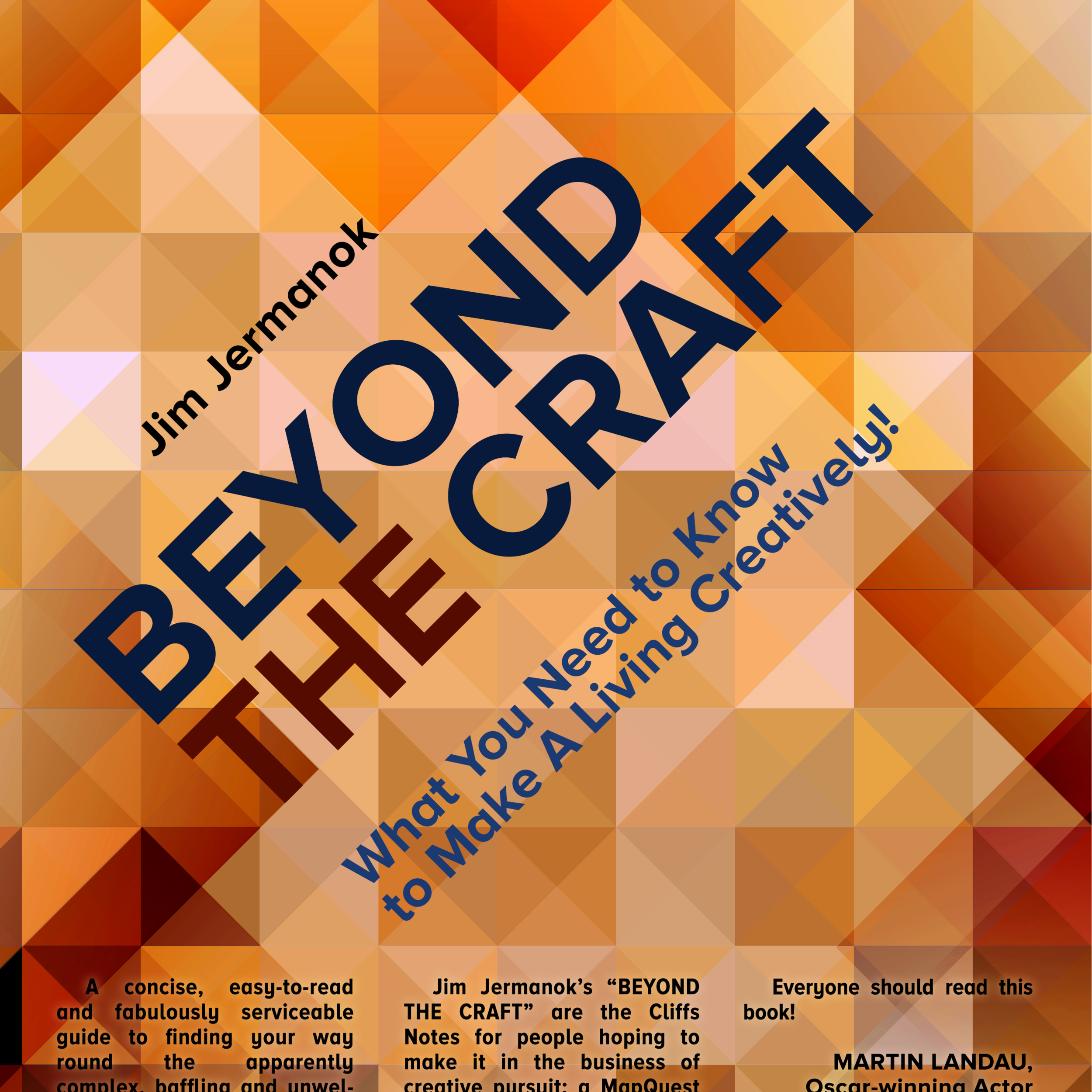
& Author of Beyond The Craft: What You Need to Know to Make A Living Creatively!

I like uncovering truth about behaviour, about history. I think all artists are attracted to unveiling truth. I think it’s a mirror of our society, of our world. It’s the soul of our world.


I like uncovering truth about behaviour, about history. I think all artists are attracted to unveiling truth. I think it’s a mirror of our society, of our world. It’s the soul of our world.

JIM JERMANOK

JIM JERMANOK

Award-Winning Writer, Director, Producer, Speaker
& Author of Beyond The Craft: What You Need to Know to Make A Living Creatively!

I like uncovering truth about behaviour, about history. I think all artists are attracted to unveiling truth. I think it’s a mirror of our society, of our world. It’s the soul of our world.


I like uncovering truth about behaviour, about history. I think all artists are attracted to unveiling truth. I think it’s a mirror of our society, of our world. It’s the soul of our world.

(Highlights) ROBERT NATHAN

(Highlights) ROBERT NATHAN

Robert Nathan is an award-winning television producer, screenwriter, journalist, and novelist. Best known for his work on the Law & Order television franchise and his novel The White Tiger. He has worked in politics, broadcast and print journalism, film, and television. Nathan joined the original writing staff of Law & Order, working on three series in the franchise. Nathan’s script for the episode “Manhood,” co-written with Walon Green, holds the franchise’s only Emmy nomination for Outstanding Writing for a Drama Series. He was also on the original staff of the TV series ER and received a Peabody Award. Nathan has received four Emmy nominations, an Edgar Award nomination, the GLAAD Media Award, the Silver Gavel Award, the Shine Award, and a Humanitas Award nomination.

This interview was conducted by Mia Funk with the participation of collaborating universities and students. Associate Interviews Producer on this podcast was Sophie Mackin. Digital Media Coordinator is Yu Young Lee. “Winter Time” was composed by Nikolas Anadolis and performed by the Athenian Trio.

ROBERT NATHAN

ROBERT NATHAN

Robert Nathan is an award-winning television producer, screenwriter, journalist, and novelist. Best known for his work on the Law & Order television franchise and his novel The White Tiger. He has worked in politics, broadcast and print journalism, film, and television. Nathan joined the original writing staff of Law & Order, working on three series in the franchise. Nathan’s script for the episode “Manhood,” co-written with Walon Green, holds the franchise’s only Emmy nomination for Outstanding Writing for a Drama Series. He was also on the original staff of the TV series ER and received a Peabody Award. Nathan has received four Emmy nominations, an Edgar Award nomination, the GLAAD Media Award, the Silver Gavel Award, the Shine Award, and a Humanitas Award nomination.

This interview was conducted by Mia Funk with the participation of collaborating universities and students. Associate Interviews Producer on this podcast was Sophie Mackin. Digital Media Coordinator is Yu Young Lee. “Winter Time” was composed by Nikolas Anadolis and performed by the Athenian Trio.

(Highlights) GIULIO BOCCALETTI

(Highlights) GIULIO BOCCALETTI

Author of Water, A Biography
Natural Resource Security & Environmental Sustainability Expert

The problem doesn’t really reside there. The problem is that people have gotten used to thinking about water as a technical issue that can be solved by somebody sitting in a room somewhere with a white coat. The reality is that the history of water shows that this is probably the most political and salient issue of society–How we share the resources that make it possible for us to live is a fundamentally political problem. And in nations that live together under a social contract is fundamentally a constitutional problem. So my hope is that we elevate water to a much higher level of political discourse.

GIULIO BOCCALETTI

GIULIO BOCCALETTI

Author of Water, A Biography
Natural Resource Security & Environmental Sustainability Expert

The problem doesn’t really reside there. The problem is that people have gotten used to thinking about water as a technical issue that can be solved by somebody sitting in a room somewhere with a white coat. The reality is that the history of water shows that this is probably the most political and salient issue of society–How we share the resources that make it possible for us to live is a fundamentally political problem. And in nations that live together under a social contract is fundamentally a constitutional problem. So my hope is that we elevate water to a much higher level of political discourse.

(Highlights) JASON W. MOORE

(Highlights) JASON W. MOORE

Environmental Historian, Historical Geographer & Professor of Sociology · Binghamton University

We’re not waiting for the disasters to happen. They have happened. They are happening, and the disasters aren’t natural. They involve climate, but the disasters are very much made by the conditions of capitalist accumulation. We are not going to be able to grapple with the challenges of planetary crisis with the thinking that created planetary crisis.


JASON W. MOORE

JASON W. MOORE

Environmental Historian, Historical Geographer & Professor of Sociology · Binghamton University

We’re not waiting for the disasters to happen. They have happened. They are happening, and the disasters aren’t natural. They involve climate, but the disasters are very much made by the conditions of capitalist accumulation. We are not going to be able to grapple with the challenges of planetary crisis with the thinking that created planetary crisis.


(Highlights) AIMEE NEZHUKUMATATHIL

(Highlights) AIMEE NEZHUKUMATATHIL

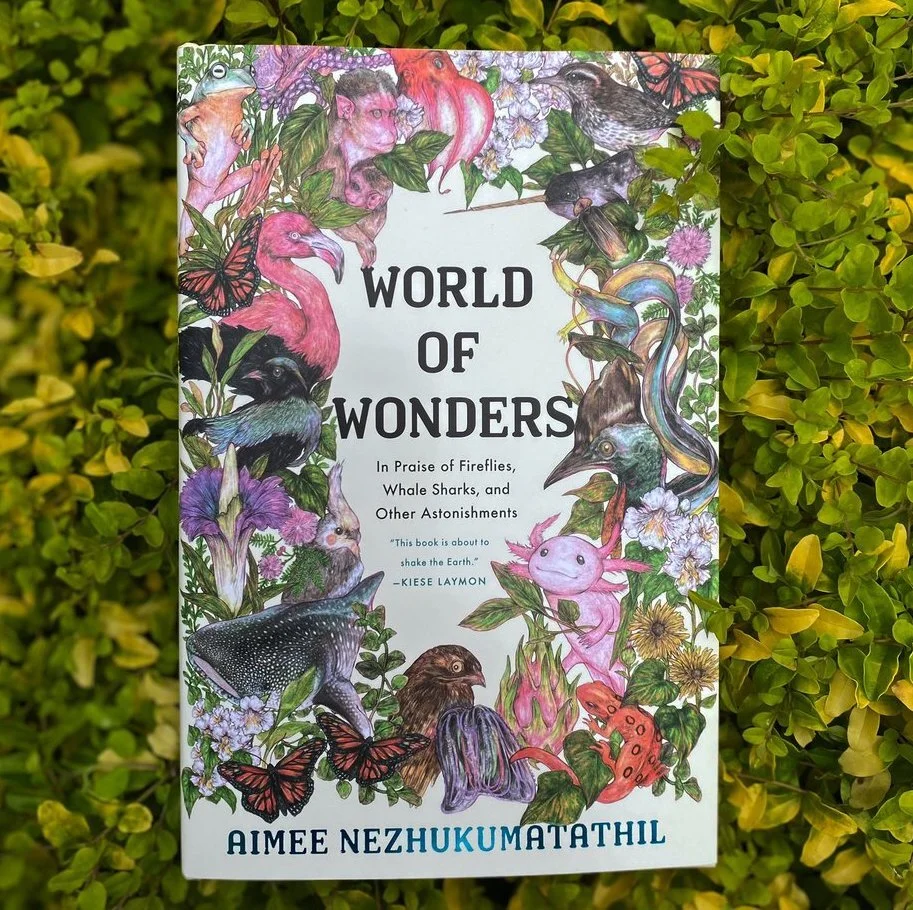
Poet & Author of World of Wonders: In Praise of Fireflies, Whale Sharks & Other Astonishments

I think something happened in 2016, where I just snapped. There was a lot of a hateful news going around with American politics, and I didn’t know how to answer a lot of my kids questions then. Something I know I can do is to tell them things that I loved about this planet or things that I loved in other people because all they saw or heard about was just this weird ugliness, school shootings, leaders who were saying ‘build that wall’ to anybody who looked different than them, and so I remember the night I shut myself up in my office after the kids went to bed and just started writing about plants and animals that I loved from my childhood.

AIMEE NEZHUKUMATATHIL

AIMEE NEZHUKUMATATHIL

Poet & Author of World of Wonders: In Praise of Fireflies, Whale Sharks & Other Astonishments

I think something happened in 2016, where I just snapped. There was a lot of a hateful news going around with American politics, and I didn’t know how to answer a lot of my kids questions then. Something I know I can do is to tell them things that I loved about this planet or things that I loved in other people because all they saw or heard about was just this weird ugliness, school shootings, leaders who were saying ‘build that wall’ to anybody who looked different than them, and so I remember the night I shut myself up in my office after the kids went to bed and just started writing about plants and animals that I loved from my childhood.

(Highlights) RON GONEN

(Highlights) RON GONEN

Founder & CEO of Closed Loop Partners
Former Deputy Commissioner of Sanitation, Recycling & Sustainability, NYC

We live in buildings and cities because that’s what generates a living for a lot of people, but where we’re most comfortable as humans is when we’re in nature. Your generation owns this. Don’t let anybody take it from you or damage it because you own it. The next generation is the one that owns it and view it with a sense of ownership and a sense of pride and a sense of protection because there are a lot of benefits you get from nature.


RON GONEN

RON GONEN

Founder & CEO of Closed Loop Partners
Former Deputy Commissioner of Sanitation, Recycling & Sustainability, NYC

We live in buildings and cities because that’s what generates a living for a lot of people, but where we’re most comfortable as humans is when we’re in nature. Your generation owns this. Don’t let anybody take it from you or damage it because you own it. The next generation is the one that owns it and view it with a sense of ownership and a sense of pride and a sense of protection because there are a lot of benefits you get from nature.


(Highlights) BEN PRING

(Highlights) BEN PRING

Director of Cognizant’s Center for the Future of Work
Author of Monster: A Tough Love Letter On Taming the Machines that Rule Our Jobs, Lives

They’re single-purpose engines doing one thing in extraordinary ways, and they’ve been encouraged in that by the ecosystem around them, by the funding that’s being pumped into them by people whose only motivation is simply to make more money–and you can see the results of that in the world as this technology has grown from a little acorn to now being the biggest Sequoia in the forest. And it’s shading every other tree, it’s taking all the light, it’s taking all the energy from the forest, and it’s distorting so much in the world.

BEN PRING

BEN PRING

Director of Cognizant’s Center for the Future of Work
Author of Monster: A Tough Love Letter On Taming the Machines that Rule Our Jobs, Lives

They’re single-purpose engines doing one thing in extraordinary ways, and they’ve been encouraged that by the ecosystem around them, by the funding that’s being pumped into them by people whose only motivation is simply to make more money–and you can see the results of that in the world as this technology has grown from a little acorn to now being the biggest Sequoia in the forest. And it’s shading every other tree, it’s taking all the light, it’s taking all the energy from the forest, and it’s distorting so much in the world.

(Highlights) TODD MILLER

(Highlights) TODD MILLER

Journalist & Author
Build Bridges, Not Walls · Storming the Wall: Climate Change, Migration & Homeland Security

In 2003, the Pentagon commissioned a report titled something like An Abrupt Climate Scenario. They asked some independent researchers to look at what would happen in a worse case scenario. They found that the United States and Australia. They said that they would have to put up defensive fortresses ‘to stop unwanted starving immigrants’…

TODD MILLER

TODD MILLER

Journalist & Author
Build Bridges, Not Walls · Storming the Wall: Climate Change, Migration & Homeland Security

In 2003, the Pentagon commissioned a report titled something like An Abrupt Climate Scenario. They asked some independent researchers to look at what would happen in a worse case scenario. They found that the United States and Australia. They said that they would have to put up defensive fortresses ‘to stop unwanted starving immigrants’…

(Highlights) McKENZIE FUNK

(Highlights) McKENZIE FUNK

Journalist & PEN Literary Award-Winning Author of Windfall

As a parent and especially through all this reporting, what I’ve tried to do is think through these solutions and these fixes we have for everything and make sure that we’re not forgetting…that we’re thinking about other people. Capitalism won’t do it. Self-interest isn’t going to do this for us. As silly as it is to think that empathy will do or caring about your fellow humans will do it, I don’t know what else there is to hope for. I don’t believe that people do stuff purely out of rational self-interest, this libertarian idea that I was quietly pushing against the entire time in Windfall. That we do things just for ourselves or just to make money–that’s not been the reality of my lifetime.