E.J. KOH - Award-Winning Memoirist & Poet - “The Magical Language of Others”, “A Lesser Love”

E.J. KOH - Award-Winning Memoirist & Poet - “The Magical Language of Others”, “A Lesser Love”

Award-winning Memoirist & Poet
The Magical Language of Others · A Lesser Love

I had delayed speech, and I had quite a bit of trouble with speaking. I think I must have been five before I was uttering some of my first words and trying to articulate. Simple communication was very difficult for me and my family, especially in a family where we were speaking several languages. They hoped to instill English. It’s the language of survival. There was a lot of frustration and fear in my relationship to language, and the relationship these languages had to each other, that was something I felt very sensitive to since I was young. Since before I could speak.

Highlights - DITTE LYSGAARD VIND - Circular Economy & Design Expert - Founder of The Circular Way

Highlights - DITTE LYSGAARD VIND - Circular Economy & Design Expert - Founder of The Circular Way

Circular Economy & Design Expert · Founder of The Circular Way
Author of Danish Design Heritage & Global Sustainability

Putting design first, it really enables us to shape a future that we don't yet know. But we need to be super tactile and practical about it as well. And then seeing that is something that design very much has the ability to do. And at the same time, having this growing frustration that wherever you go, wherever you talk about sustainability, it was a compromise. It was something that meant uglier, less convenient, more expensive, all these different things, but then diving into the Danish Design heritage, seeing that what set them apart was that after the World Wars, they had a social purpose of democratizing and rebuilding the welfare state, and that was not something that lessened the final result. On the contrary, it heightened the ambition, the final design, and the solutions.

DITTE LYSGAARD VIND - Circular Economy & Design Expert - Author of Danish Design Heritage & Global Sustainability

DITTE LYSGAARD VIND - Circular Economy & Design Expert - Author of Danish Design Heritage & Global Sustainability

Circular Economy & Design Expert · Founder of The Circular Way
Author of Danish Design Heritage & Global Sustainability

Putting design first, it really enables us to shape a future that we don't yet know. But we need to be super tactile and practical about it as well. And then seeing that is something that design very much has the ability to do. And at the same time, having this growing frustration that wherever you go, wherever you talk about sustainability, it was a compromise. It was something that meant uglier, less convenient, more expensive, all these different things, but then diving into the Danish Design heritage, seeing that what set them apart was that after the World Wars, they had a social purpose of democratizing and rebuilding the welfare state, and that was not something that lessened the final result. On the contrary, it heightened the ambition, the final design, and the solutions.

Special World Environment Day Stories - Environmentalists, Students & Teachers share their Love for the Planet

Special World Environment Day Stories - Environmentalists, Students & Teachers share their Love for the Planet

Environmentalists, Artists, Students & Teachers share their Love for the Planet

Today we’re streaming voices of environmentalists, artists, students, and teachers with music courtesy of composer Max Richter.

Happy World Environment Day! Voices from the Parkinson's Community & Artpark Bridges Celebrate the Natural World

Happy World Environment Day! Voices from the Parkinson's Community & Artpark Bridges Celebrate the Natural World

Happy World Environment Day!

For this special episode we celebrate the natural world with Artpark Bridges, the Parkinson's Community, independent living adults with Parkinson's disease, and People Inc, the Arts Experience, a day habilitation program for adults with developmental disabilities.  

Artpark Bridges is a year-round community engagement program led by interdisciplinary artist Cynthia Pegado, dedicated to empowering adults of diverse abilities and backgrounds through expressive arts workshops and performance opportunities. Serving the Buffalo-Niagara Falls region of New York State, Artpark Bridges connects citizens with a sense of inclusion and purpose, healing and creative expression. 

CARL SAFINA - Ecologist - Founding President of Safina Center - NYTimes Bestselling Author

CARL SAFINA - Ecologist - Founding President of Safina Center - NYTimes Bestselling Author

Ecologist, Founding President of Safina Center
NYTimes Bestselling Author of Becoming Wild · Song for the Blue Ocean · Beyond Words: What Animals Think and Feel

So we tend to take living for granted. I think that might be the biggest limitation of human intelligence is to not understand with awe and reverence and love that we live in a miracle that we are part of and that we have the ability to either nurture or destroy. The living world is enormously enriching to human life. I just loved animals. They're always just totally fascinating. They're not here for us. They're just here like we're just here. They are of this world as much as we are of this world. They really have the same claim to life and death and the circle of being.

ANTHONY JOSEPH - T.S. Eliot Award-winning Poet, Novelist & Musician, Lead vocalist of The Spasm Band

ANTHONY JOSEPH - T.S. Eliot Award-winning Poet, Novelist & Musician, Lead vocalist of The Spasm Band

T.S. Eliot Award-winning Poet, Novelist & Musician, Lead vocalist of The Spasm Band
Author of Sonnets for Albert

The life of Caribbean people is not really documented. So this idea of Caribbean life being fragmented is something that I've had in my mind for a long time. So when I came to write this collection for my father, I realized that it was the same process and what I had were fragments, especially with him, because he wasn't around in a physical sense all the time. So all I had were little photographs, scattered memories, and remembrances. They're little parts of his life and parts of my experience with him... I never disliked my father. I always loved him and always was fascinated and captivated by him.

Highlights - HENRIK FEXEUS - Mentalist, Author & TV Host - The Art of Reading Minds, Mind Melt

Highlights - HENRIK FEXEUS - Mentalist, Author & TV Host - The Art of Reading Minds, Mind Melt

Mentalist, Internationally Bestselling Author & TV Host
The Art of Reading Minds · Mind Storm · Cult · BOX

A mentalist is a kind of magician, an illusionist. And a mentalist uses whatever techniques are at that person's disposal to create the illusion of being able to read minds or being able to contact a supernatural presence…The only rule is that that part is fake, but then you can use techniques for magic or from stagecraft or from psychology. A mentalist is really someone who creates this illusion of having an almost supernatural ability. Having said that, today a mentalist sort of has come to mean something else, mainly due to popular culture TV series like The Mentalist and so on. And now there's this understanding of a mentalist as someone being able to read body language and influence behavior. It sort of ties into it all. And I've had a lifelong passion for magic, and it started when I was seven. Because I was always interested in the question: what if there's a color in the sky that we can't see? What if a handkerchief actually can vanish? What does that mean in terms of how the world works?

HENRIK FEXEUS - Mentalist, Author & TV Host “The Art of Reading Minds”,“Mind Melt”,“Cult”

HENRIK FEXEUS - Mentalist, Author & TV Host “The Art of Reading Minds”,“Mind Melt”,“Cult”

Mentalist, Internationally Bestselling Author & TV Host
The Art of Reading Minds · Mind Storm · Cult · BOX

A mentalist is a kind of magician, an illusionist. And a mentalist uses whatever techniques are at that person's disposal to create the illusion of being able to read minds or being able to contact a supernatural presence…The only rule is that that part is fake, but then you can use techniques for magic or from stagecraft or from psychology. A mentalist is really someone who creates this illusion of having an almost supernatural ability. Having said that, today a mentalist sort of has come to mean something else, mainly due to popular culture TV series like The Mentalist and so on. And now there's this understanding of a mentalist as someone being able to read body language and influence behavior. It sort of ties into it all. And I've had a lifelong passion for magic, and it started when I was seven. Because I was always interested in the question: what if there's a color in the sky that we can't see? What if a handkerchief actually can vanish? What does that mean in terms of how the world works?

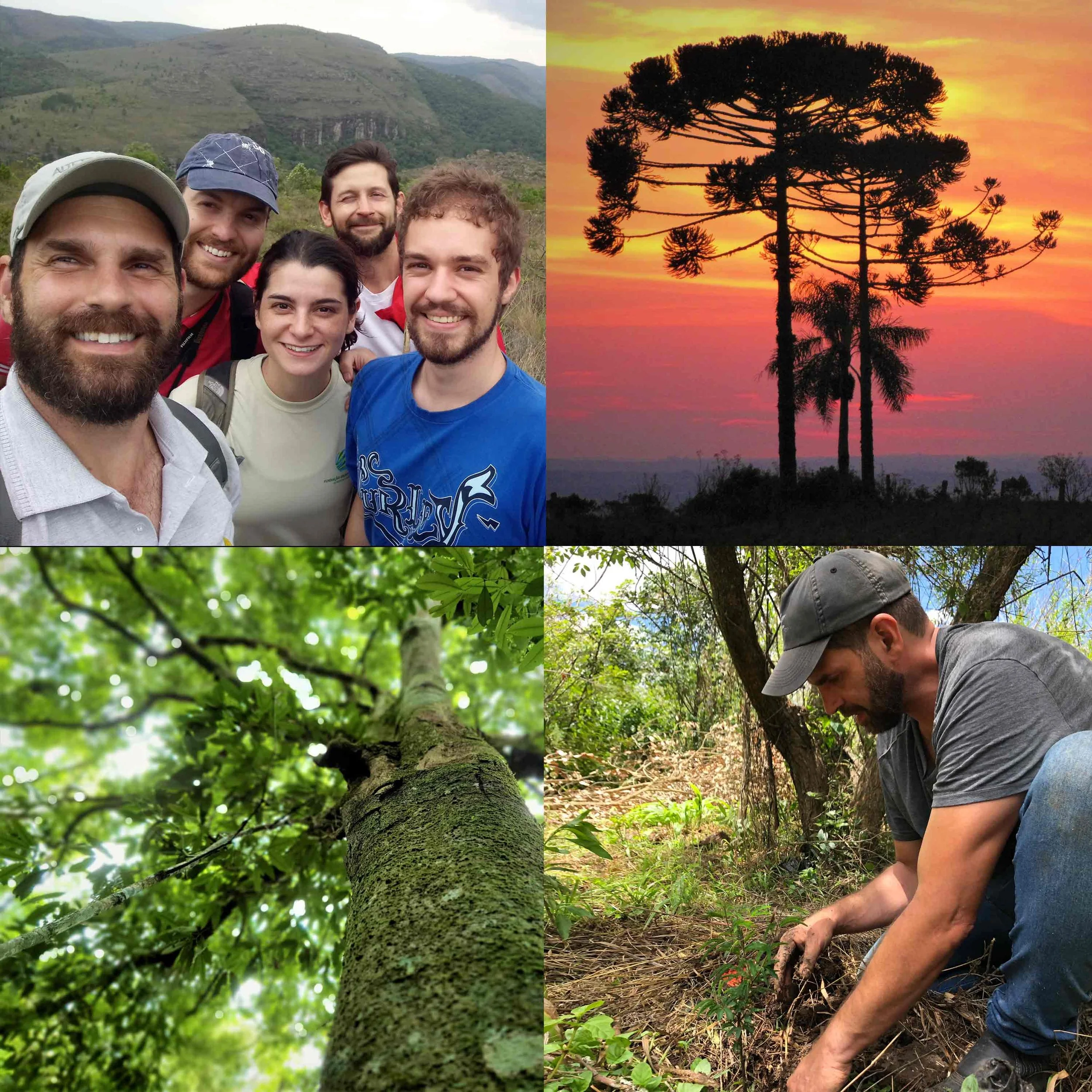
PABLO HOFFMAN - Whitley Award-winning Conservationist - Exec. Director & Co-Founder of Sociedade Chauá

PABLO HOFFMAN - Whitley Award-winning Conservationist - Exec. Director & Co-Founder of Sociedade Chauá

Whitley Award-winning Conservationist of Rare & Endangered Species
Executive Director & Co-Founder of Sociedade Chauá

Most of my family are cowboys and farmers. And I was like eight or nine years old. My grandmother was getting sick, and she always had a lot of plants at home in pots, and she asked me to help her to water the plants. And it was quite a good experience because when you start to like plants, it becomes like a viral thing. After some time I was growing my own plants, and I was very interested in doing her garden. And I would go to the forest and collect plants to grow at home like orchids that were beginning my first nursery. And it's a crazy love that grows when you start to understand how plants grow, and how the ecosystem functions. And how beautiful and amazing all this is. And we as humans are part of it, and I've always loved animals as well, but plants are my passion. And, of course, my, daughter's name is Flora. My wife, she's also a botanist, and she loves plants as well. So we live in the countryside where the farm has all kinds of plants. And I think one of the things that made me love and try to preserve and conserve the ecosystems and species is when you understand how slowly a plant or tree grows, and how much it takes to keep them healthy. And the interactions between the animals and plants, the pollinators and the dispersers within the ecosystem, it's something that everybody should know and see.

Highlights - BROCK BASTIAN - Author of The Other Side of Happiness: Embracing a More Fearless Approach to Living

Highlights - BROCK BASTIAN - Author of The Other Side of Happiness: Embracing a More Fearless Approach to Living

Author of The Other Side of Happiness: Embracing a More Fearless Approach to Living
Professor at University of Melbourne’s School of Psychological Sciences

In today's world, feeling happy is no longer simply a state of mind. It's become a marker of mental health and success. On the flip side, pain and sadness are viewed as signals of failure and sickness. If we're not happy, then there is something wrong with us, and we need to fix it. It is no wonder that the painkiller and antidepressant markets, already worth billions of dollars, continue their rapid expansion. We've come to treat even commonplace experiences of pain and sadness as pathological, as things that need to be medicated and eradicated.

BROCK BASTIAN - Author of The Other Side of Happiness: Embracing a More Fearless Approach to Living

BROCK BASTIAN - Author of The Other Side of Happiness: Embracing a More Fearless Approach to Living

Author of The Other Side of Happiness: Embracing a More Fearless Approach to Living
Professor at University of Melbourne’s School of Psychological Sciences

In today's world, feeling happy is no longer simply a state of mind. It's become a marker of mental health and success. On the flip side, pain and sadness are viewed as signals of failure and sickness. If we're not happy, then there is something wrong with us, and we need to fix it. It is no wonder that the painkiller and antidepressant markets, already worth billions of dollars, continue their rapid expansion. We've come to treat even commonplace experiences of pain and sadness as pathological, as things that need to be medicated and eradicated.

Highlights - ANDRI SNÆR MAGNASON - Writer & Documentary Filmmaker - On Time and Water, The Casket of Time, LoveStar, Not Ok

Highlights - ANDRI SNÆR MAGNASON - Writer & Documentary Filmmaker - On Time and Water, The Casket of Time, LoveStar, Not Ok

Icelandic Writer & Documentary Filmmaker
On Time and Water · The Casket of Time · LoveStar · Not Ok · The Story of the Blue Planet

A letter to the future
Ok is the first Icelandic glacier to lose its status as a glacier.
In the next 200 years all our glaciers are expected to follow the same path.
This monument is to acknowledge that we know
what is happening and what needs to be done.
Only you know if we did it.

If you look at the Himalayas, the frozen glaciers are feeding 1 billion people with milky white water. The real tragedy is if the Himalayan glaciers go the same way as Iceland. In many places in the world, glaciers are very important for agriculture and the basic water supply of people.

ANDRI SNÆR MAGNASON - Icelandic Writer & Documentary Filmmaker - On Time and Water, The Casket of Time, LoveStar, Not Ok

ANDRI SNÆR MAGNASON - Icelandic Writer & Documentary Filmmaker - On Time and Water, The Casket of Time, LoveStar, Not Ok

Icelandic Writer & Documentary Filmmaker
On Time and Water · The Casket of Time · LoveStar · Not Ok · The Story of the Blue Planet

A letter to the future
Ok is the first Icelandic glacier to lose its status as a glacier.
In the next 200 years all our glaciers are expected to follow the same path.
This monument is to acknowledge that we know
what is happening and what needs to be done.
Only you know if we did it.

If you look at the Himalayas, the frozen glaciers are feeding 1 billion people with milky white water. The real tragedy is if the Himalayan glaciers go the same way as Iceland. In many places in the world, glaciers are very important for agriculture and the basic water supply of people.

Highlights - RACHEL ASHEGBOFEH IKEMEH - Whitley Award Winner - Founder of Southwest Niger Delta Forest Project

Highlights - RACHEL ASHEGBOFEH IKEMEH - Whitley Award Winner - Founder of Southwest Niger Delta Forest Project

Whitley Award-winning Conservationist
Founder/Director of the Southwest Niger Delta Forest Project

There's no question, we are in a state of conservation emergency. And we have a real situation on our hands and it's so fragile that if we take a step back, we could say goodbye to two types of chimpanzee species and the forest is also on the brink of disappearing forever. And when I started as a conservation researcher, there was kidnapping and insecurity throughout the Nile Delta region, and it was immersed in a lot of oil politics and civil conflicts. Kidnapping and insecurity ran throughout that region. Let's not forget that Nigeria is Africa's most populous nation now. We are over 200 million people in the country, and it's a growing population of young people who are looking for means of livelihood and on the lookout to find space to live. So parts of the forest within one year would suddenly become a new village.

RACHEL ASHEGBOFEH IKEMEH - Whitley Award-winning Conservationist - Founder/Director, Southwest Niger Delta Forest Project

RACHEL ASHEGBOFEH IKEMEH - Whitley Award-winning Conservationist - Founder/Director, Southwest Niger Delta Forest Project

Whitley Award-winning Conservationist
Founder/Director of the Southwest Niger Delta Forest Project

There's no question, we are in a state of conservation emergency. And we have a real situation on our hands and it's so fragile that if we take a step back, we could say goodbye to two types of chimpanzee species and the forest is also on the brink of disappearing forever. And when I started as a conservation researcher, there was kidnapping and insecurity throughout the Nile Delta region, and it was immersed in a lot of oil politics and civil conflicts. Kidnapping and insecurity ran throughout that region. Let's not forget that Nigeria is Africa's most populous nation now. We are over 200 million people in the country, and it's a growing population of young people who are looking for means of livelihood and on the lookout to find space to live. So parts of the forest within one year would suddenly become a new village.

Speaking Out of Place: ADAM ARON discusses “The Climate Crisis: Science, Impacts, Policy, Psychology, Justice, Social Movements”

Speaking Out of Place: ADAM ARON discusses “The Climate Crisis: Science, Impacts, Policy, Psychology, Justice, Social Movements”

Author of The Climate Crisis: Science, Impacts, Policy, Psychology, Justice, Social Movements
Professor of Psychology at UC San Diego · Climate Activist

Psychology has something to tell us about why so few people are really engaged in the climate struggle. There are different components to this. First of all, there is what I call epistemic skepticism in the book, which is to say, skepticism about the facts of climate change. The second thing is threat perception, that threat levels are not as high as they should be. And the third is that people are skeptical about the response. They don't think that they can do anything, or they don't believe that groups or even countries can make a difference. Epistemic skepticism: psychologically this means that quite a lot of people, for example, the United States, don't believe in the human cause of heating. And the reason for that is very much to do in fact, with the systematic campaign of misinformation that's been fostered by the fossils industry, systematically set out to confuse people about the scientific consensus. We should be very threatened by this. In fact, the youth, generally speaking, are anxious to some extent about it. In effect, Mother Earth is saying, "I can't deal with what you're doing to me, people. I'm putting up my temperature." And if you're not feeling anxious, then you're not paying attention. That's the right way to feel on Planet Earth.

Highlights - MADELEINE WATTS - Author of The Inland Sea

Highlights - MADELEINE WATTS - Author of The Inland Sea

Author of The Inland Sea
Professor of Creative Writing at Columbia University

I was reading ecological history and also reading about violence against women and how violence perpetuates itself over many generations. And there was something about this European sort of supremacy of ideas about nature, their ideas about rationality, all of this stuff that sort of came from the Enlightenment. John Oxley's diaries made no mention of the Indigenous Australians who were at the time subject to genocide. So I was interested in these ideas about how they tried to tame the land, which is often talked about as "a woman" and the way that the kind of violence that comes from a particular kind of European colonial project that is enacted on the land intertwines with the way that violence is enacted upon women. And it was something that I felt growing up in Australia.

MADELEINE WATTS - Author of The Inland Sea - Creative Writing Professor, Columbia University

MADELEINE WATTS - Author of The Inland Sea - Creative Writing Professor, Columbia University

Author of The Inland Sea
Professor of Creative Writing at Columbia University

I was reading ecological history and also reading about violence against women and how violence perpetuates itself over many generations. And there was something about this European sort of supremacy of ideas about nature, their ideas about rationality, all of this stuff that sort of came from the Enlightenment. John Oxley's diaries made no mention of the Indigenous Australians who were at the time subject to genocide. So I was interested in these ideas about how they tried to tame the land, which is often talked about as "a woman" and the way that the kind of violence that comes from a particular kind of European colonial project that is enacted on the land intertwines with the way that violence is enacted upon women. And it was something that I felt growing up in Australia.

Highlights - ANIL SETH - Co-director of Sussex Centre for Consciousness Science & Canadian Institute for Advanced Research Program on Brain, Mind & Consciousness

Highlights - ANIL SETH - Co-director of Sussex Centre for Consciousness Science & Canadian Institute for Advanced Research Program on Brain, Mind & Consciousness

Author of Being You: A New Science of Consciousness
Co-director of the Sackler Centre for Consciousness Science · Canadian Institute for Advanced Research Program on Brain, Mind & Consciousness

This is a point in philosophy that the world as it is can never be directly apprehended by our minds. We are shielded from it by what's called a sensory veil. There are, for instance, no such thing as colors that are out there. As the artist Cezanne said, "The colors are where the brain and the universe meet." And color is, I think, a really good example because it is, in a sense, less than what's there because our eyes are only sensitive to three wavelengths of this huge electromagnetic spectrum, which goes all the way from x-rays and gamma rays to radio waves. And we live in a tiny, thin slice of that reality. But then out of those three wavelengths we experience our brains generate many more than three colors and almost an infinite palette of colors. So there's no sense in which our perception could ever reveal the world as it really is, that it reveals the world in a way that's very useful for us as organisms hell-bent on continuing to live and to survive.