As I was reading Bell Hooks and Paulo Freire, a colleague recommended Adrian Rich's essay "Teaching Language in Open Admissions." It was in that essay that I first read about her experiences teaching at CUNY during open admissions, learning that she taught alongside June Jordan, Audre Lorde, and Toni Cade Bambara. Eventually, that essay led me to their archival teaching materials. I was really excited because I found in those materials concrete teaching methods, things they were doing in their own classrooms that I then started trying in my classrooms as well. I also really liked their educational philosophies, thinking about what it means for college to be free and the fact that they were teaching during this revolutionary era. What would that look like today? What would it mean? What could free college bring to our society? What does free college make possible? All of those things coming together led me to the project.
In this episode of the Speaking Out of Place podcast, Professor David Palumbo-Liu talks with Danica Savonick about her marvelous book entitled Open Admissions: The Poetics and Pedagogy of Toni Cade Bambara, June Jordan, Audre Lorde, and Adrienne Rich in the Era of Free College. This is a riveting and deeply inspiring story of how each of these luminaries in the fields of literature and feminism found their way into the City University of New York in the 1960s, when community activists had forced open what was called the Harvard for the proletariat to admit new classes of Black, brown, and other people of color. Savonick shows through copious archival research how Bambara, Jordan, Lorde, and Rich each came to find radical teaching methods in collaboration with these new students, and how their experiences with this new pedagogy affected their creative and other writing in profound and lasting ways. This is a critical history we can and must learn from today, when federal and state governments have added to the damage and violence done by the neoliberal university. We find exactly the tools and models we need to create spaces for education for liberation both within, but also outside, the Academy.
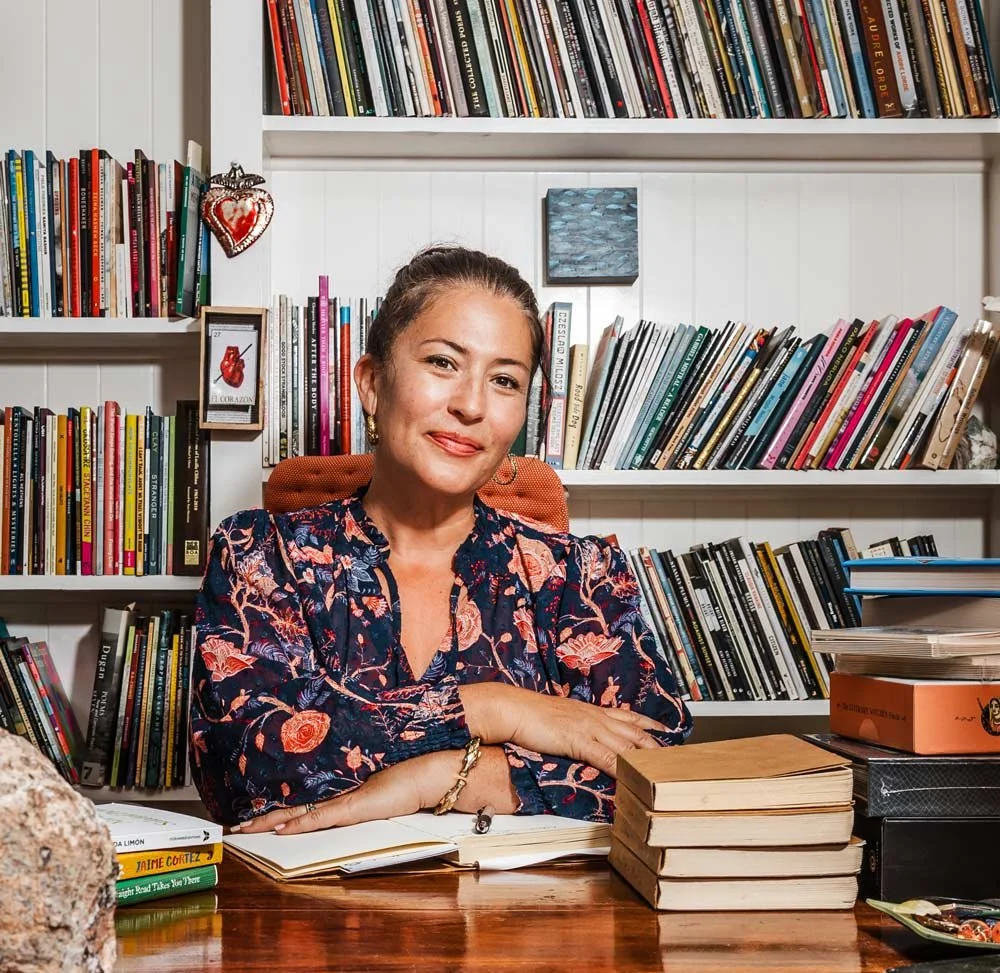
Danica Savonick is an Associate Professor of English at SUNY Cortland. Her current project focuses on the radical writers and artists who taught at the experimental Livingston College (part of Rutgers University) in the 1970s. Her research has appeared in MELUS, American Literature, Modern Fiction Studies, Radical Teacher, Keywords for Digital Pedagogy in the Humanities, Public Books, and The Chronicle of Higher Ed.
DAVID PALUMBO-LIU
I'm really fascinated to know how you stumbled onto the idea for this book. What led you to study this program and discover who was involved and how they were involved?
DANICA SAVONICK
I began working on this project around 2012, 2013, when I was a PhD student at the CUNY Graduate Center. At that time, I started organizing with a group called the Free University of New York City, which was an offshoot of Occupy Wall Street. We organized pop-up universities in parks throughout the city. I was really interested in the idea of free college and the history of free college.
At that time, student debt had just surpassed the $1 trillion mark, and I saw how that was affecting the lives of so many students, many of my friends and others. We were experimenting with what higher education could look like if it were free in these parks throughout the city. Then, at the same time, I also started teaching writing at Queens College, which is a campus within the CUNY system.
I was reading the works of people like Paulo Freire and Bell Hooks, thinking about what I could do in these classrooms to empower my students and help them think about the inequalities in our society, help empower them to challenge those inequalities, and help them develop skills that would be useful for them.
As I was reading Hooks and Freire, a colleague recommended Adrian Rich's essay "Teaching Language in Open Admissions." It was in that essay that I first read about her experiences teaching at CUNY during open admissions, learning that she taught alongside June Jordan, Audre Lorde, and Toni Cade Bambara.
Eventually, that essay led me to their archival teaching materials. I was really excited because I found in those materials concrete teaching methods, things they were doing in their own classrooms that I then started trying in my classrooms as well. I also really liked their educational philosophies, thinking about what it means for college to be free and the fact that they were teaching during this revolutionary era. What would that look like today? What would it mean? What could free college bring to our society? What does free college make possible? All of those things coming together led me to the project.
PALUMBO-LIU
It's a great story. One of the things that fascinates me about the book, and the reason I put it on my syllabus, is the course I’m talking about, called scholarship and activism. In the academy, we’re used to partitioning the two, right? I hear stories from our graduate students in other departments, for example, working in sustainability or other areas. Their advisors will say, “I really admire your passion," which is always the worst way to begin a conversation because you know what’s going to come next, right?
They say, "I admire your passion. You're here to learn, not to be an activist." There’s a kind of discipline that begins, and it's contagious in the academy. The story that you tell, both in terms of your own experience and coming to write this book, and the lives you write about in the book, shows that is not necessarily the case at all.
In fact, there are so many things that benefit from people disobeying that partitioning. Our minds don’t work in those very strict ways. Could you tell us about the SEEK Program, which is the Search for Education, Elevation, and Knowledge? How and why did it begin, and how did these four amazing writers each find their way there? I thought it was really fascinating that they came from different backgrounds, but they saw something in this program that was catalytic in their formation. So, talk about the program.
SAVONICK
The SEEK program was formed in 1965. It was the product of community organizing and activism within Harlem. This happened at City College, which was established in 1847 as the Free University of New York City. It was supposed to be this experiment in educating the working class and expanding higher education. It was a great success. Throughout the late 19th and early 20th century, it became this kind of gem. It was known as the Harvard of the Proletariat.
It was really seen as an inspiring model for free college education for the working classes. However, throughout the late 19th and early 20th century, the demand far outstripped the number of students they could educate at City College. Administrators used exclusive admissions criteria to decide who would gain access to these coveted seats.
Things like needing to have over a B+ average in your high school curriculum meant that the students who ended up attending were primarily young Jewish men, like my grandfather, Irish immigrants, and children of Catholic Italian immigrants; but it was primarily white students attending. By the 1960s, somewhere between 94 to 97% of the students attending this great free working-class college were white.
The hypocrisy or irony of this is that you have this college located in Harlem that is then 94 to 97% white, funded by all taxpayers regardless of race or creed. Activists became concerned with the racial exclusion of the college and wanted it to educate more Black and Puerto Rican students from the surrounding community. In 1964, activists from CORE got together with Black and Puerto Rican parents and students and community members. Progressive politicians were also on board in the struggle to challenge the racial exclusion at City College.
Shirley Chisholm, Percy Sutton, and many other historical names in New York politics got involved in the fight to open up City College. As a result of their activism, the SEEK program was born in 1965. It was designed to recruit economically and educationally disenfranchised students from throughout the surrounding Harlem community and throughout New York City.
What the program did was waive any enrollment fees for students. It provided money for transportation to college, on-campus housing, money for books, and access to specialized individualized tutoring and personal counseling. Students would come to college the summer beforehand and take classes to help prepare them to matriculate at City College.
One of the other things I should mention is that the program recruited students of color who were economically disenfranchised. These students didn't meet the normal entrance requirements; they didn't have to have that high B+ average to get into City College. The program worked with counselors in local high schools to identify students who showed academic promise.
Jordan, Lorde, and Rich all ended up teaching in this SEEK program. They taught basic writing and remedial writing, really lower-level entry classes that many in the English department didn't want to teach. There was a tiered system where writing classes were seen as almost the handmaiden of literature — the basic, uninteresting, labor-intensive work that the tenured faculty, who were predominantly white men in the English department, didn't want to do.
The college hired these activists and writers to teach in the program, as they saw it as an opportunity to work with Black and Puerto Rican students, to help empower them, and to gain access to a college education. Together, they taught alongside prominent poets from the Black Arts Movement, like David Henderson and Raven Patterson. You had up-and-coming literature scholars like Barbara Christian and Addison Gayle, all names that were significant at the time. This was much earlier in their careers, but they came together to teach in this revolutionary and groundbreaking program, which, in the years to come, would become a model for similar programs at universities throughout the country.
PALUMBO-LIU
Can you tell us what the pushback was? Because that was one thing that was not unsurprising but certainly depressing when you talk about this wonderful vision that CUNY had. Then, precisely when there was this notion that a different demographic would be coming in, you discuss the reaction of a lot of the white professors to that new population.
SAVONICK
Yeah, a lot of them were concerned that these students would tarnish the college's reputation as the Harvard of the Proletariat. They really took pride…
PALUMBO-LIU
The very notion of the proletariat, so much for racial capitalism…
SAVONICK
Yeah, exactly. They didn't want these students because they thought the school's reputation would decrease. They thought the students wouldn't be able to handle the curriculum. They just didn't want to teach these students who were coming in and needed a bit more remedial help in the beginning. However, very quickly, over the years, they succeeded once they had a little bit of additional support, especially with financial matters, personalized tutoring, and counseling to make up for the absences in their K-12 education.
In some instances, despite the white professors being really mean to SEEK students, doing some awful things, humiliating them and berating them in front of their peers, faculty administrators during this period wrote books like Geoffrey Wagner's The End of Education, claiming that this opening up of City College would destroy higher education. In fact, these writers and activists saw it quite the opposite. They believed this was what the future of higher education needed to look like: we need to hold City College accountable to its democratic mission to educate the entire population, not just a select few. It was disheartening to see that kind of pushback.
PALUMBO-LIU
Were they not cognizant of the fact that the same thing was said about working-class people coming to the university, that it would lower it? Exactly. Yeah. The Harvard of the... It was supposed to have the accent on Harvard, not proletariat, obviously, in that regard. Exactly. So tell us how each of these four came into this program.
SAVONICK
So Barbara was the first one to teach. She was one of the inaugural educators in the SEEK program. She pioneered many of the student-centered teaching methods that the program would come to be famous for. Having grown up in Harlem, she went to Queens College for her undergrad. She was getting her master’s at City College in the literature department, and I think a lot of people on campus just recognized her genius and brilliance; she had a passion for working with these students. She wanted to use her gifts and talents to serve Black and Puerto Rican working-class communities. So, I think she was a natural fit for that program to spearhead that.
The next one who arrived was June Jordan, who had been a political organizer. She'd been writing for different publications about Black liberation struggles. She dipped in and out of college, spending a few years in Chicago and a few years at Barnard, but she didn’t actually have a college degree. She had a lot of professional experience as a writer, but not those kinds of formal qualifications.
She was thrilled that this program would accept an instructor with an unconventional pathway, and they still hired her to teach freshman writing. Then there was Adrienne Rich, who was teaching at Columbia. She deliberately left. She very easily could have stayed at Columbia, but she wanted to teach instead in the SEEK program because she believed in the mission, right? She wanted to empower working-class students of color.
She was really struck by the protest that had happened at Columbia in 1968 and the ways that students were critiquing Columbia's complicity in racism and imperialism. This was the period of her radicalization, right? So, she decided to leave Columbia to teach specifically in the SEEK program. They had offered her a more prestigious position, maybe saying, "Oh, maybe you want to teach our creative writing MFA students?" But she said, "No, I want to teach basic writing and remedial writing."
Then in Audre Lorde's case, she had grown up in New York City and was writing some of her early poetry collections. She had gone down to Tougaloo College in Mississippi, where she had been invited as a visiting writer, and she was really struck and transformed even by just those six weeks of working with students. She realized that teaching was her life calling and passion. When she returned to New York City, she was eager for more teaching opportunities and was then hired to teach at City College in the SEEK program. She would go on for the rest of her career to teach at several different colleges within the big public CUNY university system.
PALUMBO-LIU
What an amazing four people to be in this program. You couldn't wish for anything more. So you're right; Adrienne Rich was the one I had in mind as somebody who came from a very different kind of context, and you tell the story about how there are certain transformations that she went through, and often she was at odds with one of the other three people who came in or her students. Now she's in this new environment.
SAVONICK
When Rich came to the SEEK program, she knew things were going to be different right from teaching at Columbia, but she wasn't exactly sure how. She was coordinating with Maura Shaughnessy, who was then in charge of the writing program, to get syllabi of what other educators had done and adapt those as models for her own.
We know from looking at her archives at the Schlesinger Library up at Radcliffe that she has Toni Cade Bambara's syllabi for her first SEEK courses. Wow! She was very much building off of what Addison Gayle, Toni Cade Bambara, and Barbara Christian had done in the early years of the SEEK program. Those documents sit right there in Rich's archives for her to adapt and rework.
I would say she had almost a kind of racial and class awakening in her experiences in the SEEK program. One of the things that interests me is today she is remembered as one of the few white feminists of her generation who actually addressed issues of race and class rather than prioritizing the interests of middle- and upper-class white women within the women's movement. I really think that those experiences were shaped by her time teaching students in the SEEK program and working to figure out what their needs are by listening to them and adjusting her teaching methods.
She did more direct teaching, showing students how to do things than when she was teaching in Columbia's MFA program. Her feedback on students' poetry was like, "Yeah, this is great. I really like this. This is awesome." It wasn’t very instructive, but in the SEEK program, you see her developing step-by-step instructions, not in an overly prescriptive and didactic way, but by saying, "If you're scared about writing, here’s how I do it. Here are some steps you can try taking and see if they work for you."
She was also reading works like those of Frederick Douglass while teaching SEEK. She studied the history of slavery in the U.S. to prepare for her lectures, class material, and for her discussions with students. You see her studying the histories of institutional racism in the U.S., which hadn't really been part of her own education previously. In these classrooms, you can see her developing these sort of intersectional sensibilities.
That she then writes about in that essay “Teaching Language in Open Admissions”, you see her adapting the methods of Bambara and Jordan by having their students analyze the quality of their education. They would read essays by George Orwell or Alfred North Whitehead about what education should look like, and then they would use those criteria or develop their own to analyze the institutional conditions of the schools that they had gone through, whether that was City College or their K through 12 schools.
So, yeah, it was a really transformative experience for her, and she became really passionate about teaching in SEEK. For the rest of her career, even after she left City College and went on to teach at other institutions like Douglas College, part of Rutgers, San Jose State in California, and Stanford, she remained an advocate for the downward redistribution of educational resources.
She continued to advocate for free college, for open admissions, and for funding for remedial writing programs. I think that time in SEEK really shaped her perspective on education and what it should look like.
Speaking Out of Place, which carries on the spirit of Palumbo-Liu’s book of the same title, argues against the notion that we are voiceless and powerless, and that we need politicians and pundits and experts to speak for us.
Judith Butler on Speaking Out of Place:
“In this work we see how every critical analysis of homelessness, displacement, internment, violence, and exploitation is countered by emergent and intensifying social movements that move beyond national borders to the ideal of a planetary alliance. As an activist and a scholar, Palumbo-Liu shows us what vigilance means in these times. This book takes us through the wretched landscape of our world to the ideals of social transformation, calling for a place, the planet, where collective passions can bring about a true and radical democracy.”
David Palumbo-Liu is the Louise Hewlett Nixon Professor and Professor of Comparative Literature at Stanford University. He has written widely on issues of literary criticism and theory, culture and society, race, ethnicity and indigeneity, human rights, and environmental justice. His books include The Deliverance of Others: Reading Literature in a Global Age, and Speaking Out of Place: Getting Our Political Voices Back. His writing has appeared in The Washington Post, The Guardian, The Nation, Al Jazeera, Jacobin, Truthout, and other venues.
Bluesky @palumboliu.bsky.social
Apple Podcasts · Spotify · Website · Instagram