

I think the community came together more when we started getting those notices about people being swept up by these supposedly ICE agents who are just covered up. So that was the thing that made us come out there and start defending everyone who doesn't want to come out to defend themselves.
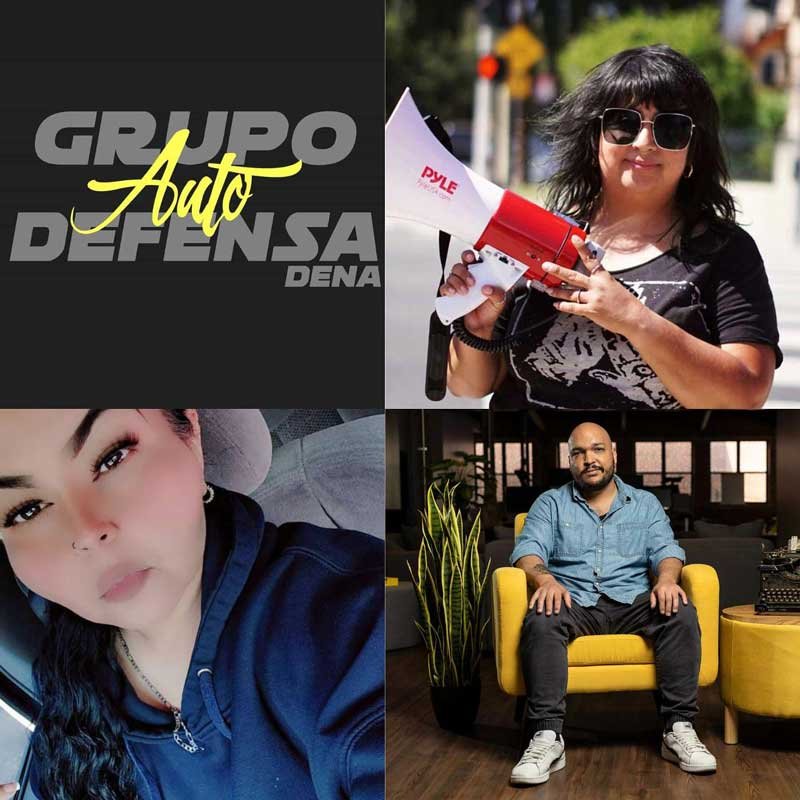
In this episode of the Speaking Out of Place podcast, Professor David Palumbo-Liu speaks with Daniela Navin and Jeanette de La Riva, two members of Grupo Auto Defensa a community organization based in Pasadena CA, which has come about in response to attacks by ICE, which have violently disrupted everyday life and led people to form new relations of mutual support and care. We hear their stories of how Trump lieutenant Stephen Miller's demand that ICE arrest 3000 people every day has put unbelievable constraints on hard-working people's lives. Nevertheless, we also hear how they have invented tactics to challenge these repressive measures. We are joined by journalist-activist Maxmillian Alvarez of The Real News Network who grew up in Los Angeles and comments on the broad networks of resistance cropping up organically to fight fascism.
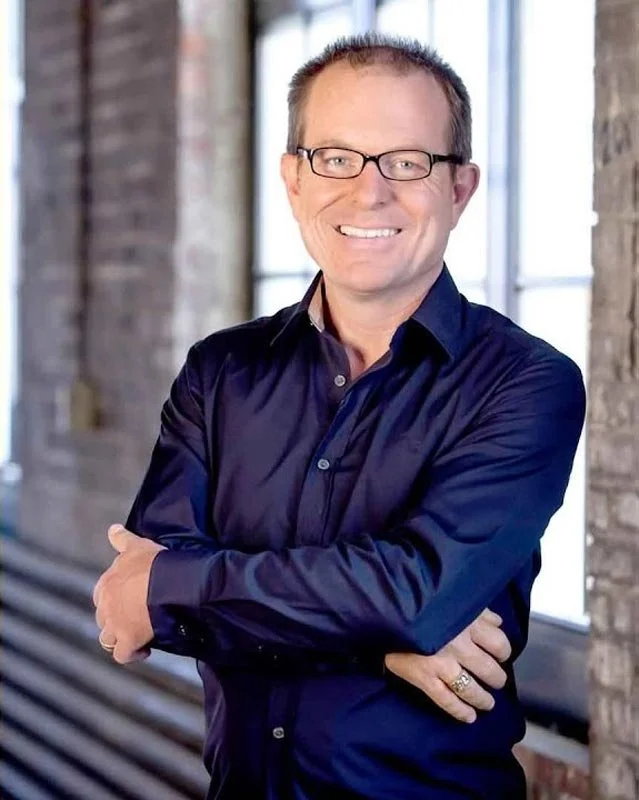
Maximillian Alvarez is an award-winning journalist and the Editor-in-Chief and Co-Executive Director of The Real News Network (TRNN) in Baltimore. He is the founder and host of Working People, "a podcast about the lives, jobs, dreams, and struggles of the working class today," and the author of "The Work of Living," a collection of interviews with US workers recorded during Year One of the COVID-19 pandemic. Prior to joining TRNN, he was an Associate Editor at the Chronicle Review. His writing has been featured in outlets like The Nation, In These Times, Poynter, Boston Review, The Baffler, Current Affairs, and The Chronicle of Higher Education; as an analyst and commentator, he has appeared on programs like PBS NewsHour, Breaking Points, Democracy Now!, The New Republic, NPR’s 1A, The Hill’s Rising, and more.
DAVID PALUMBO-LIU
Thank you all for being on the show. This is such an important topic. It speaks exactly to the purpose of the podcast, which is to get the story out, to correct misperceptions and to empower people. It's really thanks to Max that we're all together because I've known Max for a long time and he got me in touch with Daniella and Jeanette. I thought we'd begin by just asking folks, walk us through what Pasadena is to you.
JEANETTE DE LA RIVA
As for me, Pasadena is my neighborhood. It's my own community. I grew up here; I was raised here. My grandparents came from Mexico to make a living here. So I got to know almost everybody. Everybody knows me because of my grandparents and my dad, so I'm just gonna fight all the way until I need to fight because this is like a family to me.
Everybody's important. It doesn't matter to me what color you are or where you are coming from. We have to protect one another. So what have been the threats and the things that have been going down that have heightened this sense of community in terms of people getting to know each other and stepping in?
I think the community came together more when we started getting those notices about people being swept up by these supposedly ICE agents who are just covered up. So that was the thing that made us come out there and start defending everyone who doesn't want to come out to defend themselves.
For me, this happened when Elizabeth started with her horn, going down the street where I live and just yelling out that ICE is here. That's when I came out the window and just started asking her what was going on. She told me, and that’s when I realized, okay, this is not going to happen—not in our hometown. I think Daniella felt almost the same way.
DANIELA NAVIN
Yeah, I would say for me, Pasadena—though I didn't grow up there—I grew up in El Monte, which is very similar to Pasadena in terms of the demographics and the immigrant community, undocumented status, and coming from a mixed-status family.
So I moved to Pasadena probably around 12 years ago. I live just right above the 210 freeway, and people often think about the Rose Parade, Eddie Van Halen, or the Rose Bowl, but above the 210 freeway, there's a different vibe, a different community. It feels like La Loma lives there. It's a community similar to what I grew up with in El Monte.
We had the fires that happened earlier in January, so we were already in a vulnerable space. The community did come together. I think that was the most encouraging part—the support, the community, and the volunteer hours. One thing that really upset me was that there’s a donut shop up the street from me on Orange Grove and Post Robles. Men dressed up with coverings on their faces kidnapped six men who were actually going to clean up in Altadena.
The Pasadena Job Center did a lot of training for the day laborers to help clean up debris from the trees. They were on their way there, at the bus stop, around 5:30 or 6 in the morning. It was so close to where I live. When that happened, something lit a fire in me. I couldn't believe this was happening in our community, especially in a place still recovering from the devastating fires.
Jeanette started this with Liz. Liz was our connector. Jeanette and Liz had known each other from high school. For me, I went to the vigils, the protests, and city council meetings, looking for ways to take action. We were addressing six people who went missing on a Wednesday, and then on Saturday there was a park right across from where I lived, Villa Park, with a tamale stand. They took men from the tamale stand and also from Liz’s apartment on Marengo.
Hosting on Instagram is not enough; it just didn’t feel actionable. Attending city council meetings felt pointless. I changed my route home. I was patrolling on my own before I met Jeanette and Liz, looking for something, and sure enough, I found the tent. I rolled up there on a Friday after work, and the tent went up on Tuesday. I just started being there, going to sightings, and advocating.
We created this little group organically. It all just came together. You mentioned earlier that that's how you two met, right? Through this particular action, but obviously, you’ve been thinking along the same lines for a long time.
DAVID PALUMBO-LIU
Max, you grew up in LA, right? Tell us a little bit about how this registers with you.
MAXIMILLIAN ALVAREZ
There’s so much there that I'm frankly still processing, and I've been back in Baltimore for two weeks since I was in Southern California, filming for the Real News, including filming with Daniella, Jeanette, and everyone at Grupo Alto, the FSA in Pasadena.
I've been going home practically every year—minus some of the COVID years—for the last 20 years since I left when I was 18. There are so many familiar things, feelings, and sights that put my body and soul into a different mode. A different part of you reawakens when you're back in the surroundings where you were raised.
I still felt that. I'll be honest; coming home has never felt the way it did a few weeks ago. The place I’ve always associated with warmth, light, community, and the friendly vibe of Southern California—while it’s not all gone—was overshadowed by a dark, heavy feeling. You could sense it, especially if you’re from there. On the surface, everything looks the same, but then you start noticing that the parks that are usually filled with kids are so quiet, and the food trucks you’re used to seeing—maybe there are eight or nine—might only have one, if that.
It’s details like that. It’s the rings under people's eyes because they’re not sleeping. It’s the heaviness in their voices. This is so different from anything we have really experienced. One of the most striking parts for me was the example I use with climate change.
When it comes to climate change, our biggest battle over the years has been convincing ourselves and each other that it’s happening. We've never really had a firm footing where everyone could just acknowledge that this thing is happening and we should all deal with it. I would say to everyone out there, it's almost a "careful what you wish for" situation. I didn’t feel that at home; I didn’t have to convince my friends and family that it was happening. We all knew it.
There’s something both essential and powerful about that, but also deeply disturbing because you want to convince yourself that it’s a bad dream, that it’s not as bad as it is, and that things aren’t changing as rapidly as they are, but they are. I felt that going home. I felt it in the communities that we filmed in. These are neighborhoods, people, streets, and freeways that I grew up in.
I have family all over LA and Orange County. I grew up with people who are so much like Daniella, Jeanette, Chewy, and Liz—they felt like people I grew up with and went to high school with—which again highlighted just how real this is and how it shook me at the deepest core of who I am to see my people, my home, be taken over by this fascist occupation, this terror campaign.
At the same time, I’ve never felt more inspired than when seeing what Daniella, Jeanette, and everyone else are doing because they’re harnessing the best parts of who they are. They’re using the skills they developed just as kids in SoCal, whether that be being bilingual, knowing the streets well enough to evade ICE trucks or those trying to follow them, or just their ability to communicate with so many different people in various parts of their lives.
I saw everyone in Grupo Alto harnessing the skills they developed as Southern Californians, as people of mixed races, and putting those skills to use to fight for their community. That is incredible, and I think everyone should take heart and inspiration from what Grupo Alto Defensa is doing.
The last thing I'll say about what this means for our home is that Daniella mentioned this—Pasadena specifically—was battered by incredible wildfires in January. The Eaton fire was blazing through Pasadena while the Palisades fire was blazing just a couple of miles away. I saw the burnt-out ruins of old businesses and homes. They’re still there.
There’s so much debris that’s been cleared, but there are still ruins of the former Pasadena. In fact, many immigrants were the ones clearing away that debris months after the fire. And now these same people are being taken away. They can’t leave their homes because they’re terrified of being kidnapped in broad daylight by masked, unidentified armed thugs. No one knows if they’re agents of the state, bounty hunters, or vicious impersonators who are abducting people to harm them.
This is the situation that the Trump administration has actively and deliberately created in our homes. It became apparent to me that the scale of the problem was not being matched by the institutional responses from local government, unions, or nonprofits. However, where determination and creativity are being matched is among working people like Jeanette, Daniella, and their neighbors. That is an incredible thing.
DAVID PALUMBO-LIU
That’s such a powerful statement, Max, and it carries so much information and prompts so many questions. One is: how has your life changed? In what ways are you not able to lead the life you expected and had been living?
JEANETTE DE LA RIVA
I think basically for me, it changed a lot. Usually, I get up early in the morning before I go to work, like how Daniella does. We patrol, usually if my kids are up for it, they tag along too. We record, take pictures, but it’s tiring. Sometimes my body takes a lot of energy just trying to be out there, and I love it. I love standing out there with the group because it feels like a big family—one that we’ve formed together.
Daniella helps me out, and the rest of the team—like Jesus and Elizabeth—we all sit in a circle and talk things out. We’ve had our moments when we sat down to let it all out; I know we’ve cried a couple of times together, letting our frustrations out. We pass information to each other—what we don’t know, we keep in touch about. Sometimes, we want to be in other cities to help them out, but we also think we won’t make it on time for them.
That’s what frustrates me more, and it gets me upset because I have my kids. Seeing others, maybe other kids think, “Is my mom or dad coming back home? Am I going to see my family again?” The day Daniella mentioned with windshields—I knew two people who got picked up there. Where Elizabeth stays, I used to stay there a long time ago. When I heard who got picked up, it broke my heart because I knew the gentleman for a long time.
When I went to ask at his job if he had come to work, they told me he never showed up. It hurt me more to break the news to his own daughter. When I had to go in and let her know that her dad never made it to work because he got picked up, I cried with her. She was just in tears because her dad was taken away out of nowhere. But we’re still standing. We’re trying to stay strong and make it through each day. We have our ups and downs.
We encounter a lot of people talking negatively to us, but we’re not going to let the negativity get to us. I know Daniella has supported me all the way too. She has seen me frustrated sometimes, and when I need to take a break to breathe, she’s been there, even the whole group. It’s been beautiful.
DANIELA NAVIN
I think that it helps me stand in my power more, knowing I can make a difference. The way we get through this is with each other. It’s so easy to feel isolated—I felt isolated, frustrated, angry, and sad. I realized that community isn’t found on my phone, it’s by talking to my neighbors, engaging with people.
One thing that has definitely changed for me is checking in on people. I may not know you, but when I go to the grocery store, I’ll ask, “How’s it going?” Acknowledging people has definitely changed for me. Checking in, supporting each other—whether or not I know someone, we are all part of the same struggle and are all looking for something.
This has strengthened our community. I never thought I would be the person chasing these masked individuals, feeling frightened, but there’s something that drives me to get in their way. You’re stopping people from living their lives, yet you come into our community; you enjoy our community.
Many people have stopped us in our corner to tell us that they’re scared to leave, and because we’re there, they feel safe, as if people are watching their backs. That’s our corner; we’re protecting it. We have a watchful eye on Villa Park and Windshields, and we can respond to things.
Like Jeanette, my day starts early. I patrol in the morning, get ready for work, patrol again, then go to work. After work, I come back to our little corner. Even when we didn’t set it up today, we met up for coffee. It feels like a ritual now, and when I don’t see Jeanette, Liz, or Chewy, it feels strange.
We check in on each other and see what everyone is up to. Seeing Liz and other moms care for their kids, while I don’t have kids, really motivates me to continue doing this.
MAXIMILLIAN ALVAREZ
If I can just emphasize what I saw while reporting, on the same day I got to film with Daniella, Jeanette, and everyone at Grupo Alto. We started that day filming just a couple of blocks over at the Pasadena Job Center, and I want to give them a shout-out because they’re doing incredible work and everyone should support them.
We filmed a food distribution drive they're doing every Friday. They started it during COVID, picked it up during the fires, and now they do it every week because so many people are afraid to leave their homes. They won’t even go to the grocery store; they need neighbors and family to report to distribution drives.
Most of the people I saw there were picking up food for others because those folks haven’t left their homes in weeks. That’s what we're discussing here. I talked to elderly people and young adults who do everything for their parents, heartbroken because they’ve never seen their parents so scared.
They are burdened with the task of shopping and doing everything at home because they’re the only ones willing to leave. I heard stories of spouses creating plans to determine which one will take the risk to leave, contemplating what will happen if they get taken.
These are the daily decisions people are making in their homes because of the terror unleashed in our community. I want to be clear that this is not just happening to Latinos or those who look Latino. I’ve been to immigration courts, like the one in Santa Ana, where folks of East Asian descent and Haitian immigrants are also affected.
This is a full-on assault on immigrants. In a place like Southern California, packed with Latinos, the government is trying to meet quotas by arresting 3,000 people daily. They don't have enough warrants for true criminals, and they'll only meet that quota by racially profiling people, as they are doing in Pasadena, as they did in Santa Ana to Narciso Cisneros, a landscaper who has lived here over 30 years and was simply doing his job.
Then one day, a group of armed individuals swarmed him, didn’t announce themselves, and disappeared him into a van. For anyone looking at that and saying that’s horrible but it won’t happen to me—it could happen to any of us. Imagine how we feel watching that, telling our children everything is okay while having to remind my dad to keep a copy of his passport handy when he leaves the house.
That’s what we’re dealing with. What these incredible women and their neighbors saw happening in their communities, they felt as much fear as we do, but they did a heroic thing by saying, “We’re going to do something.” They banded together to stop this. Whether it’s Elizabeth Castillo grabbing her bullhorn and chasing those unmarked cars or Daniella, Jeanette, and Liz demonstrating that bravery, it inspires others.
People pulled out their phones and recorded these fascist kidnappers, showing that not only have they chosen to act and not wait, but they faced this fear to also stand up and instill bravery in others. That has given me more hope than anything I’ve felt in a long time.
*
Speaking Out of Place, which carries on the spirit of Palumbo-Liu’s book of the same title, argues against the notion that we are voiceless and powerless, and that we need politicians and pundits and experts to speak for us.
Judith Butler on Speaking Out of Place:
“In this work we see how every critical analysis of homelessness, displacement, internment, violence, and exploitation is countered by emergent and intensifying social movements that move beyond national borders to the ideal of a planetary alliance. As an activist and a scholar, Palumbo-Liu shows us what vigilance means in these times. This book takes us through the wretched landscape of our world to the ideals of social transformation, calling for a place, the planet, where collective passions can bring about a true and radical democracy.”
David Palumbo-Liu is the Louise Hewlett Nixon Professor and Professor of Comparative Literature at Stanford University. He has written widely on issues of literary criticism and theory, culture and society, race, ethnicity and indigeneity, human rights, and environmental justice. His books include The Deliverance of Others: Reading Literature in a Global Age, and Speaking Out of Place: Getting Our Political Voices Back. His writing has appeared in The Washington Post, The Guardian, The Nation, Al Jazeera, Jacobin, Truthout, and other venues.
Bluesky @palumboliu.bsky.social
Apple Podcasts · Spotify · Website · Instagram