Abolishing Silicon Valley means freeing the development of technology from a system that will always relegate it to a subordinate role, that of entrenching existing power relations. It means designing a new system that isn't deluged in the logic of the bucket. It means liberating our worlds from the illegitimate ring of capital. Perhaps this sounds unfair to capital. Perhaps I sound like I'm not grateful enough for everything that capital has given us, but we don't owe capital anything; the things we attribute to capital were built by workers.
People can labor and sometimes die in a process. Their contributions are unrecognized in death as in life. So don't thank capital. It doesn't deserve our gratitude, and it doesn't need it. Thank the people who created everything that capital always takes credit for. Capital is a means of accounting for wealth ownership, not its creation. And that means it's perpetually shrouded in a fundamental untruth; we can leap the swamp of capital behind and start over with something new.
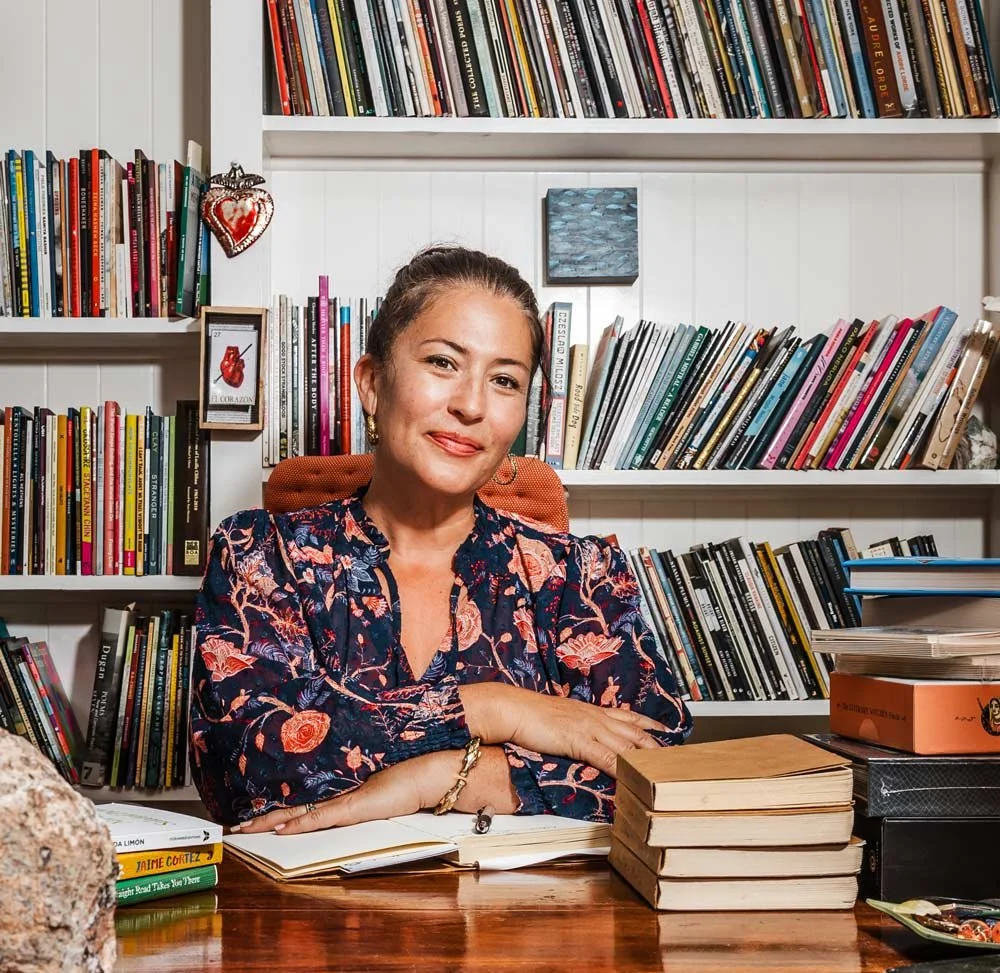
In this episode on Speaking Out of Place podcast Professor David Palumbo-Liu talks with Wendy Liu. Ever since its publication, Abolish Silicon Valley—How to Liberate Technology from Capitalism has proven to be more urgent and insightful. Today, he talks with author Wendy Liu about how developments like AI and LLM, further erosions of intellectual property, and increased invasions of privacy make the case for abolishing Silicon Valley even more important. They talk about how abolition is critical at a time when more and more the private sector has come to eviscerate the public good. Turning to the genocide in Gaza, they discuss the ways Capital has enlisted technology in deadly and horrific manners. They end with a meditation on the commons and how one can live with fewer commodities and find value in common projects to make life more valuable and worthwhile outside of the logic of the market.
Wendy Liu is the author of Abolish Silicon Valley: How to Liberate Technology From Capitalism, a memoir/manifesto about the tech industry from the perspective of a former believer. She lives in San Francisco and is working on a novel.
WENDY LIU
I think, in a way, this is the entirety of where this book comes from, right? This sets up the framework for the book, and I think for me to get to this point, it.
In a way, it's such a basic insight, and I think it's something that a lot of people already know intuitively, that I unfortunately just didn't because I had bought into this Silicon Valley dream, this idea that the way wealth was owned and distributed in Silicon Valley was somehow fair. I think it's deeply entwined with the idea of meritocracy.
Yep. And it's a very, very fickle, very strange, and slippery idea. But I think because I believed it, everything else seemed justified. I could look at wealth inequality and think, okay, yeah, that’s fine. Makes sense. There’s something legitimate there. You need to motivate people to work harder. Sure, that makes sense.
But there’s always some slippage, something that didn’t feel quite right. I think the process of me getting to the point where I could write a passage like that, I really had to unlearn all these things that I had internalized through my time absorbing the culture of Silicon Valley because I think the entirety of Silicon Valley is built on the idea that the opposite of what I was writing in this book; it's built on the idea that if you come up with a great idea, then you deserve to own all this wealth that flows from that idea, even if you are no longer involved to appreciate it after a while.
And there’s this strange, almost sleight of hand. Where we all know that the people who are doing the actual work that keeps the world going, we understand that they're not actually getting the full fruits of their labor, but we just take it for granted that that’s fine, that’s normal. This is a trick that capitalism has played on us; this is something we should accept as somehow fair or efficient.
What I'm trying to get at with this passage is that we should really rethink that and that we need a system that doesn't distribute wealth in this manner. I think that's such a hard thing to get to when we're living in this world that encourages us to behave in a certain way, encourages us to behave as the entrepreneurial subject and to try the rise-and-grind, hustle culture of Silicon Valley.
There’s such a disconnect between the ideology of this industry and the reality of what the world should be like. So I think that's where this book came from. The book is mostly structured as a memoir, which I think is surprising to people who look at the cover page and see it as maybe some kind of manifesto or some rant.
And there are elements of that for sure. But I wanted to take people through my own journey of being able to write a book like this because it was not a given. There’s an alternate world where I stayed within the path that I was on, became somewhat successful, and wouldn’t have come to the realizations I did.
In that way, I'm so grateful for the failure of my startup because that failure is what allowed me to really see the world as it was and not keep living in this fantasy where the only thing that mattered was my own success and my own sort of narcissistic need to become powerful and wealthy, to get recognition for what I was doing.
Once I left that bubble, everything else made sense again. It was as if I couldn't go back to the way it was, and I couldn't help but see the world differently. I guess that’s when I was inspired to want to write a book, to try to help other people who are in a similar place as me understand this thing that I think people are missing when they're inside that bubble.
*
Speaking Out of Place, which carries on the spirit of Palumbo-Liu’s book of the same title, argues against the notion that we are voiceless and powerless, and that we need politicians and pundits and experts to speak for us.
Judith Butler on Speaking Out of Place:
“In this work we see how every critical analysis of homelessness, displacement, internment, violence, and exploitation is countered by emergent and intensifying social movements that move beyond national borders to the ideal of a planetary alliance. As an activist and a scholar, Palumbo-Liu shows us what vigilance means in these times. This book takes us through the wretched landscape of our world to the ideals of social transformation, calling for a place, the planet, where collective passions can bring about a true and radical democracy.”
David Palumbo-Liu is the Louise Hewlett Nixon Professor and Professor of Comparative Literature at Stanford University. He has written widely on issues of literary criticism and theory, culture and society, race, ethnicity and indigeneity, human rights, and environmental justice. His books include The Deliverance of Others: Reading Literature in a Global Age, and Speaking Out of Place: Getting Our Political Voices Back. His writing has appeared in The Washington Post, The Guardian, The Nation, Al Jazeera, Jacobin, Truthout, and other venues.
Bluesky @palumboliu.bsky.social
Apple Podcasts · Spotify · Website · Instagram