Rajiv Menon's Vision for South Asian Art
I want people to understand South Asian art as broader than a single gallery or a single artist, but as a larger cultural movement. I want people to encounter art in all parts of their lives, and I’m constantly thinking about new ways to achieve that. I was very aware, as someone launching a South Asia-focused gallery, that this was the cultural dynamic that undergirded the way that most people in the West were thinking about art from the region. Taking that on directly and inviting artists to work with that theme was a really important ground for setting the ethos of the gallery and the types of critical questions we wanted to tackle with the work we were doing.
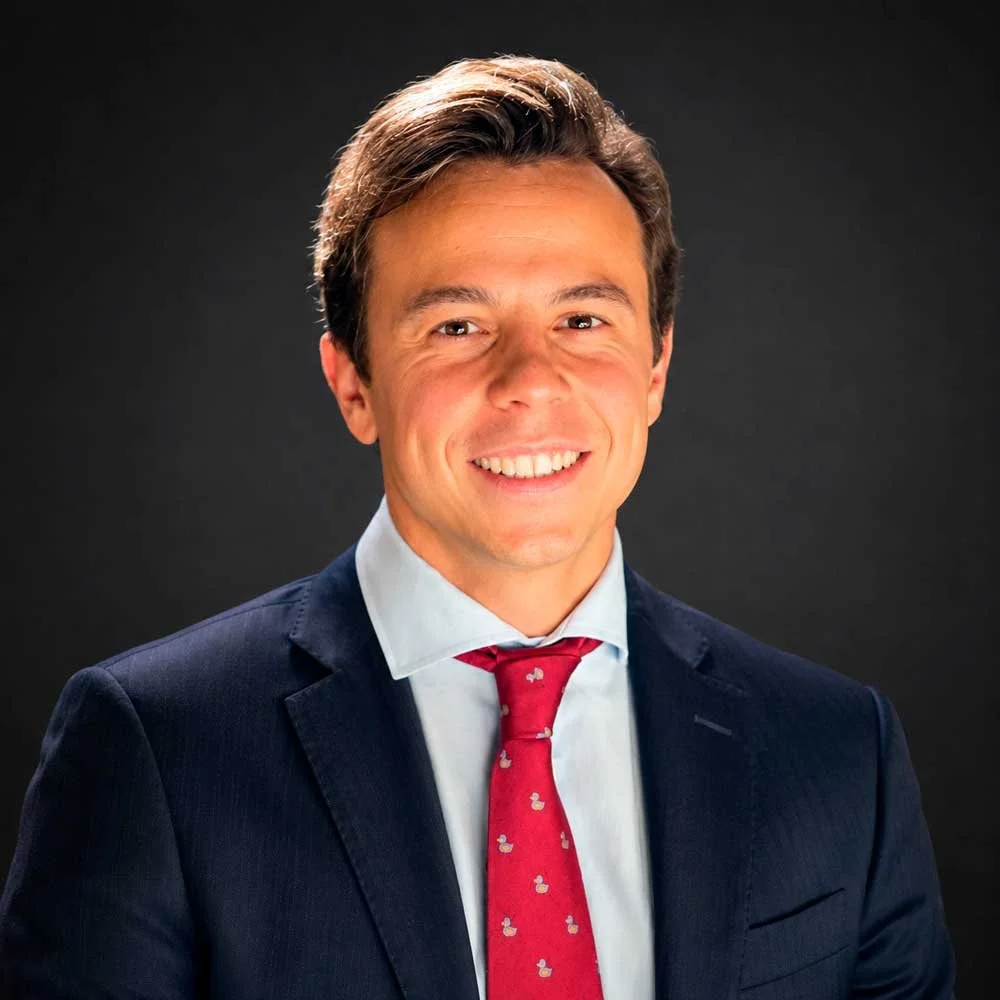
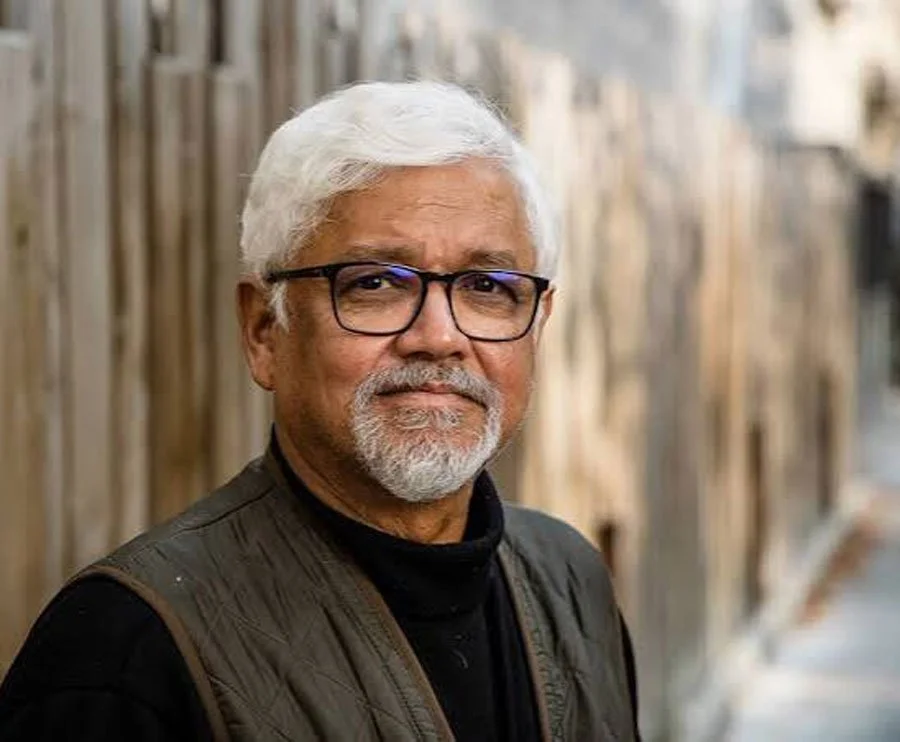
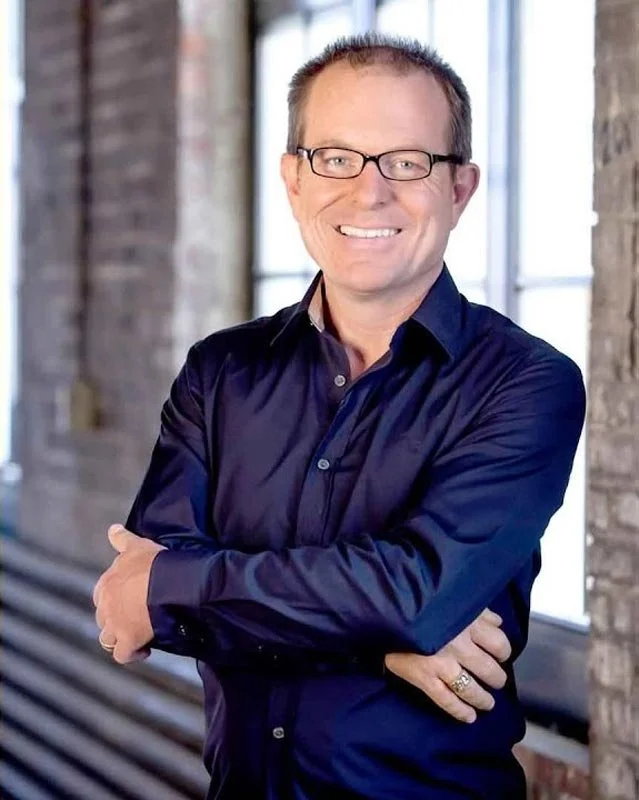
My guest today is Rajiv Menon, a gallerist and curator who is carving out a distinctive space in the contemporary art world. Based in Los Angeles, Rajiv Menon holds a PhD from NYU, where he studied global media and visual culture, and he's also a passionate collector of South Asian art. He founded Rajiv Menon Contemporary with a clear mission: to bring artists from South Asia and its diaspora to a wider audience, and to cultivate a new generation of art collectors within these communities. His exhibitions have tackled fascinating themes, from the exuberant and sometimes overwhelming world of the Indian wedding through Viraj Khanna's intricate textile art in Why Did I Say Yes?, to a deep dive into the creativity of Kerala in Three Steps of Land, and a compelling look at how artists transform nostalgia into an aesthetic movement in The Past Is a Country. His work resonates far beyond the gallery walls, aiming to shift our collective culture. He's also recently been honored by the City of Los Angeles for his contributions to the arts. @rajivmenoncontemporary
THE CREATIVE PROCESS
Tell us about bringing exhibitions beyond the gallery walls. You're bringing your first Indian American exhibition to India, to the Jaipur Palace.
MENON
Yeah, we will be the first individual gallery to curate at the Jaipur Centre for Art, which is a new platform built out of the City Palace in Jaipur. It's a really significant opportunity, not only because it's the major platform in the City Palace that's able to showcase Indian art for a global audience, but it's also an opportunity to bridge conversations between the diaspora and the homeland. That was very much the spirit I went into this exhibition with. The exhibition is entitled Non-Residency (9 August-30 September, 2025), which is all about the aesthetics of diaspora. An Indian who lives abroad is called a non-resident Indian or an NRI.
I wanted to think about that category of non-residency not just as a social one but as an aesthetic one. I wanted to consider how the experience of migration, immigration, displacement, and exile feels through artwork. What's the emotional texture of those types of experiences, and how are artists encountering the homeland from the position of the diaspora? It all kind of centers around the idea of non-residency as an experience of the uncanny and how the relationship between the homeland and the diaspora is often one of distortion of familiarity, of a sense of doubling, all things that feel very strongly aligned with the uncanny. I also want to use the exhibition as an opportunity to announce a really significant cohort of artists who are working through singular practices but also in concert to create a larger movement. I'm calling that the non-resident school. I want to present this body of work and this group of artists that is working to shift the culture in a very meaningful way and present them in that codified way for the first time through this incredible platform.
THE CREATIVE PROCESS
That's so interesting, that term non-resident, because it brings to mind living between two worlds, or sometimes the departed, those in exile, or the immigrant dealing with ghosts. I know this as a second-generation individual of East Asian origin. Born in America, but now in Europe, I find myself dealing with the ghosts of people I've never met in a way. If you're raised by a few different generations, such as grandparents and parents, they preserve their memories, which kind of lives on in you, but you never get the full story. It's a very interesting perspective to unpack and understand.
MENON
Absolutely. I think so much about how, when you grow up abroad, away from India or whatever the country of origin is, you're having to construct identity through the materials you have and through the residues of what's been left behind. It makes complete sense to me that for those in the motherland, in this case, India, when they see that culture, they feel that it's odd, distorted, and different than what they're used to. By nature, it will be. That felt like a really exciting ground to investigate through art—actually looking at that perceived gulf between the motherland and the diaspora and seeing it not as a barrier but as a rich place of cultural creation.
I wanted to turn our position on loss. I love the way that you described the culture as ghosts. So much of our experience growing up in the West is defined by the loss of that source of origin. To take that experience of loss and turn it into something very fertile, productive, and challenging felt like a really exciting opportunity. I think the artists that I'm getting to exhibit absolutely exemplify that dynamic.
THE CREATIVE PROCESS
It's also interesting about the children of immigrants or the grandchildren of immigrants because it's often a multi-generational family. At one point, they are the teachers and the cultural translators in some ways. While their parents are taking care of them, they can only explain things as natively born into American culture or whatever country they may have immigrated to. There are aspects their parents or grandparents will never truly understand.
So it's an interesting dynamic of cultural translation and how the artists who grew up with these experiences then go on to become cultural translators in their artistic careers.
MENON
Translation is exactly the language I use to think not only about the artists' work but about my own work. I think that even though we're working within different mediums, I feel like I'm constantly having to translate the context in which the artists are creating. I feel like the artists themselves are translating deep emotional and psychological experiences into visual and aesthetic ones. Now in the show, between the diaspora and the homeland, I feel like I'm translating between those two spaces, helping to understand diasporic perspectives better and allowing diasporic artists to understand the rich cultural context of contemporary India.
One of the biggest critiques that diasporic creatives receive is that they're responding to a version of India that exists within the past, and that is a very valid criticism. In my lifetime, I have seen the critique of the diaspora within India shift from the idea that we're overly westernized and have lost touch with India to almost the opposite— that we've become too fixated on an India of the past and are old-fashioned and out of touch with Indian modernity.
I wanted to understand how there’s always this present critique of the diaspora within the homeland, and no matter what position is taken, it always places the diaspora in a position of subordination or derivation in relation to the motherland. I wanted to intervene and show that actually diasporic work is very much thinking in the present tense. The same kind of emotional experiences that might lead someone to be considered old-fashioned or backward-facing can also be the grounds for tremendous innovation. I think the artists within this exhibition embody that—they're taking their position within the diaspora and using it to create forms of art that are fully new and wholly original.
*
I was born in 1988, and my early childhood in India was during the early nineties when the country was liberalizing. Suddenly, the India I encountered throughout my life was fundamentally different than the one my parents had seen because they grew up pre-liberalization. They left in the seventies. I was definitely cognizant of this massive change happening in India and the impossibility of treating it as a static cultural space. I think that's been kind of a mission of mine as someone who's regularly going back, especially with my peers in the diaspora, to not think of India as this imagined source of cultural purity and authenticity in our past but to look to it for our future.
One of the things I found so inspiring as an Indian American creative when working in India was that it allowed me to take on these questions of what it meant to be an Indian person in a globalized world in a way that fundamentally centered our perspective. We didn't have to think of ourselves as minoritized because we were back in India and could engage in creative discussions that centered us. That was so small but revolutionary for how I wanted to present Indian work on a global stage. I'm constantly thinking about how my exhibitions can challenge the way folks in the diaspora think about their cultural positioning because that sense of fossilization you gesture towards is very present.
*
Nostalgia can be thought of in different ways. It doesn't necessarily have to be something that bogs us down and holds us to the past, but instead can be this creative spark that gives us a new framework to think about the future. I think the goal of that show, The Past Is a Country, was to show that we can grapple with our sense of loss and the past while steadfastly working towards the future in innovation.
*
I was very aware, as someone launching a South Asia-focused gallery, that this was the cultural dynamic that undergirded the way that most people in the West were thinking about art from the region. Taking that on directly and inviting artists to work with that theme was a really important ground for setting the ethos of the gallery and the types of critical questions we wanted to tackle with the work we were doing.
I want people to understand South Asian art as broader than a single gallery or a single artist, but as a larger cultural movement. I want people to encounter art in all parts of their lives, and I’m constantly thinking about new ways to achieve that.
*
I feel fortunate to have the very specific and odd combination of skills that I've brought to the gallery. As a former academic, I did my PhD at NYU and went through very rigorous, traditional humanistic training in terms of how to think about culture, literature, film, and contemporary art.
I want people to come in and feel comfortable asking questions, improving their own palette, and feeling more at ease in a gallery setting. I think art is for everyone. It is something that everyone should be able to access if they're ready to engage with what they're looking at. I also want to infuse the gallery with a sense of hospitality and approachability.
THE CREATIVE PROCESS
It's about emotions ultimately, but it's also about learning and expanding your consciousness. It's about engaging their feelings with the hook you'd have. That’s a great experience to have from the marketing end of film and television, where you have to hook people quickly. If you've lost them in the first two seconds, then they just move on. So I think that it's great to find that midway because, when I appreciate art, it's not necessarily about learning something, but I believe it's always great to have some kind of story behind it. You need those layers; it's not just the immediate. I think that’s wonderful since you've learned different storytelling modes.
MENON
Absolutely. I love the way you describe it as consciousness-raising because that, ultimately, is the goal of art. I want people to not only have an intellectual experience but a spiritual experience. I want them to be deeply moved and understand their capacity to discover new forms of meaning. With that first step of the hook and getting them in and engaged, they might leave the gallery with a shifted understanding of the world. If I can facilitate that, it is an absolute honor and privilege.
THE CREATIVE PROCESS
I think South Asians broadly—or Indians in particular—are great storytellers, often drawing upon so many centuries of mythologies. It’s living with the ghosts of all these traditions in a very everyday way that I don’t fully understand.
MENON
Through that blending and syncretism of all these different traditions, the macro and the micro, the personal and the grandiose, one finds this beautiful language not only to think about storytelling broadly but also to think about oneself.
I took on that challenge almost immediately. I don’t want to try and define South Asia through art, through the gallery. Instead, I want to demonstrate the impossibility of defining South Asia through any body of work because it is infinite, multivariate, and heterogeneous. That mindset always sort of sank in, and I want to stress that there is no stable notion of what South Asian art is. It is simply an umbrella for an infinite number of perspectives.
I think it is so important for contemporary South Asian art to consider living heritage because these craft traditions are very much forms of contemporary art. They're made by living practitioners and are often dismissed as less-than or low art, while being rooted in the culture of making and possessing sharp perspectives about the culture.
Textile art is very important to me. We will be showing another textile artist named Lakshmi Madhavan next month, and she's working with the Balaramapuram weaving community in Kerala. It's one of the last communities that makes kasavu, which is a heritage fabric from Kerala. She wanted to think about how her own conceptual practice could highlight and preserve a craft form that is under threat of absolute disappearance.
THE CREATIVE PROCESS
We actually have an environmental channel as well, and I think about the way the contemporary textile industry, which involves all the dyes, is poisoning rivers and things like that. This is a separate subject, but it’s good that we return to and honor these older traditions that are kinder to the environment, to our rivers, and to our soil.
MENON
I think there's been a beautiful resurgence of Neo-Tantric art, with thinking about Tantra as an artistic practice. This is something that’s very much on my radar, and I’d love to explore it in a deeper way. I am also very moved by meditation as a practice. It's a big part of my life, and I’m really interested in exploring it in relation to art-making, thinking about how the culture of meditation, yoga, and all these different entry points for South Asian culture in the U.S. have shaped the cultural consciousness.
Specifically, I want to examine how meditative practices find their way into art-making. I think the magic moment happens at the intersection of intellect and spirit. I walked out with a different understanding of the world and how feeling can be expressed visually. I feel that intersection of head, heart, and spirit; I know I'm onto something special.