

By Jennifer Kwon Dobbs and Johanna Domokos
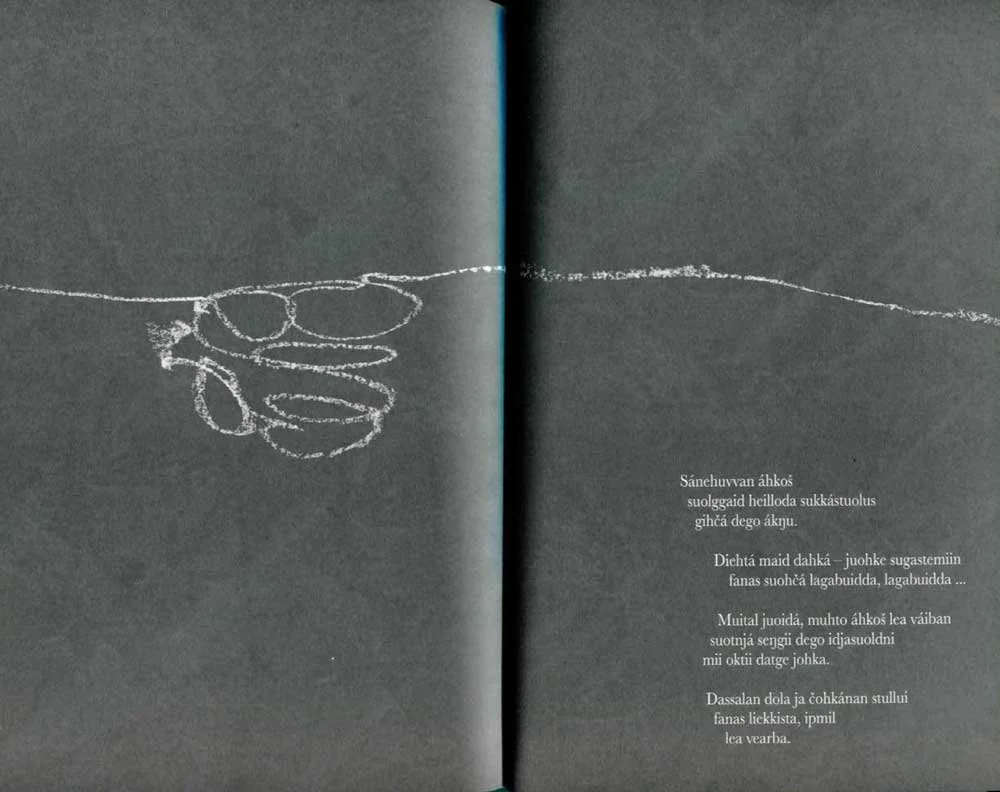
from Niillas Holmberg's Underfoot
translated from the Northern Sami
by Jennifer Kwon Dobbs & Johanna Domokos
A matriarch
gently sways in a rocking chair
creaking like an oarlock.
She knows what she's doing—with each stroke
the boat floats closer, closer...
I ask for a story, but she’s weary
and retires like the night mist
rising off the river.
I tend to the fire and sit in the chair
the boat warms me, god
is a verb.
What are the importance of the arts and humanities and how does The Creative Process resonate with you?
In a time of increasing disconnection and dehumanization, the arts enable empathy and felt insight to recognize a shared humanity. Translation opens a portal for these encounters across linguistic borders and geopolitical distances. Thank you for the opportunity to submit work to this project!
Tell us something about the natural world that you love and don’t wish to lose. What are your thoughts on the kind of world we are leaving for the next generation?
Underfeet (2018/2022) by Sami poet Niillas Holmberg is a poetic manifesto that underscores the vital connection with land as a central issue for those concerned about the future. This collection honors traditional knowledge while questioning its relevance in the modern world and mindset.
The Sami are engaged in a battle to protect their lands and ways of life from the relentless exploitation by industrial societies. But what is it that prevents States from seizing everything all at once? What stands between decision-makers and the resources of the land they covet?
The answer is the people. However, this remains true only as long as the people maintain their connection to the land. This bond inevitably fosters the need to protect and preserve. Therefore, the most effective strategy for States to access these resources is to gradually erode this relationship. From early childhood, Sami are subtly conditioned by schools and media to serve the goals of capitalist society.
This book constructs a world of symbols to highlight the challenges of maintaining an intimate relationship with the land. It asserts that humankind must return to our feet because that’s where our connection lies. This brings us to another central symbol: the Shoemaker. The Shoemaker represents something that seems warm and comfortable. This is the turning point. When we put on the shoes, we align ourselves with the mechanisms of politics and engage with the capitalist dialogue. This is when we trade our values of sustainability and community for individualism and self-interest.