

By Pedro Serrano
Translated by Anna Crowe
Step by step, and little by little,
he’s gathering dung, the scarab-beetle.
Noises he’ll make, and paw the air,
a trick well-known to the conjurer.
Over lime and dusty ground
with feet together he tries to plough.
There is nothing that cannot be used,
straw, spent matches, salt and lust.
Finally, like beaten gold,
he hammers, lifts high this rich brown globe.
The Importance of Arts, Culture & The Creative Process. We’d love to hear your thoughts on the importance of the arts and humanities and how this project resonates with you. Joseph Brodsky said that poetry was the highest point of human evolution. Because, I would add, the confluence of emotion and reason in language achieves its utmost complexity and simplicity in it — its elegance, in scientific terms. Poetry is a mental and a physical activity, participating both in our abstraction from the world and in our involvement in it. As part of human nature, poetry, and in this sense art in general, contribute to the well-being of humanity and, by extension, of the well-being of the world at large.
What was the inspiration for your creative work?
I've linked the labour of the beetle, merely pushing sparsed dung lying flat on the dust, with the mental process of someone writing lines. The beetle, starting out almost from nothing, finishes its work making up of it a perfectly round ball. The writer of a poem builds, by pushing on line after line and accumulating in the process what he finds along the way, something that was not there before the writing started, and which ends up being something like a jewell… ultimately made of manure. Anna Crowe has magically revealed what the original poem barely hinted at. By finely adjusting the word “conjurer” to what was merely called the work of an “illusionist”, she took the poem to its full potential, to the point of giving this word “The Conjurer”, as a title to the entire collection in which “The Jewelers Craft” appeared in English translation.
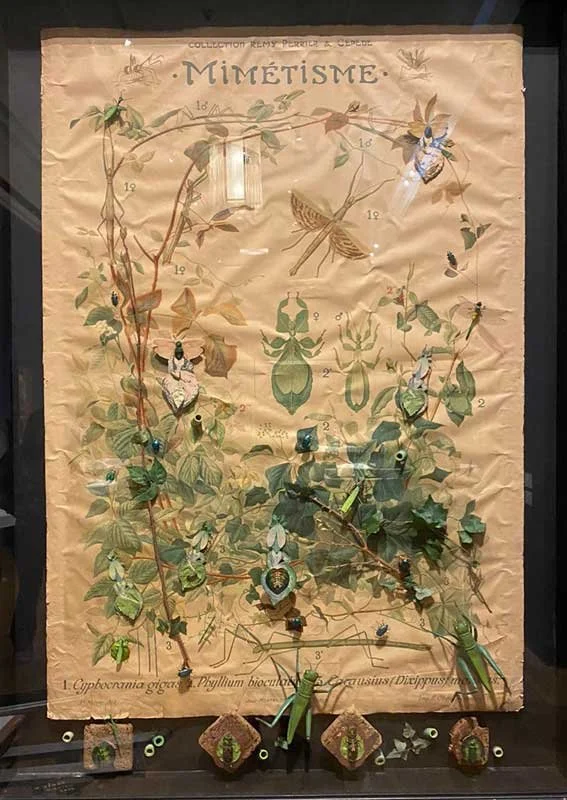
Tell us something about the natural world that you love and don’t wish to lose. What are your thoughts on the kind of world we are leaving for the next generation? One of the effects of climate change is the disappearance of diversity. We don’t realize how many species inhabited our immediate world because they disappeared from our environment before we were here, like the passenger pigeon in the United States. How many children have never seen a beetle slowly pushing a ball of dung, just because they live in an area where they don’t exist? As a child I spend hours lying on the ground, marveling, watching them push and push, inexhaustibly, so the imagery in the poem arose from that experience. One of the effects of climate change is the disappearance of diversity. We don’t realize how many species inhabited our immediate world because they disappeared from our environment before we were here, like the passenger pigeon in the United States. How many children have never seen a beetle slowly pushing a ball of dung, just because they live in an area where they don’t exist? As a child I spend hours lying on the ground, marveling, watching them push and push, inexhaustibly, so the imagery in the poem arose from that experience. Poems on nature help us not completely lose sight of that fading reality. They are a kind of palpable awareness. I am including "Mimetisme", a piece by Alan Glass, a Surrealist artist who, as me, was born in Montreal and lived in Mexico, and who had a miniaturist eye on and from nature. It served as a cover for The Conjurer, translated by anna Crowe and published by Arc Publications in 2024.
Photo credit: Grerardo Landa / Eduardo López
ORFEBRERÍA
Pieza a pieza, paso a paso,
junta la caca el escarabajo.
Hace ruidos y se agita,
rueda que rueda el ilusionista.
Por la cal y el terregal
a pie juntillas intenta arar.
Nada hay que no le sirva,
paja, cerillos, sal y lascivia.
Al final, en tornasol,
bate y alza esta perla marrón.
Pedro Serrano (Montreal 1957). Arc Publications published The Conjurer (2024) and Peatlands (2014), both translated by Anna Crowe. La Generación del Cordero, an anthology of contemporary British and Irish poetry, was edited and translated by him and Carlos López Beltrán. He also translated William Shakespeare’s King John into Spanish. He was awarded a Guggenheim Poetry Fellowship in 2007