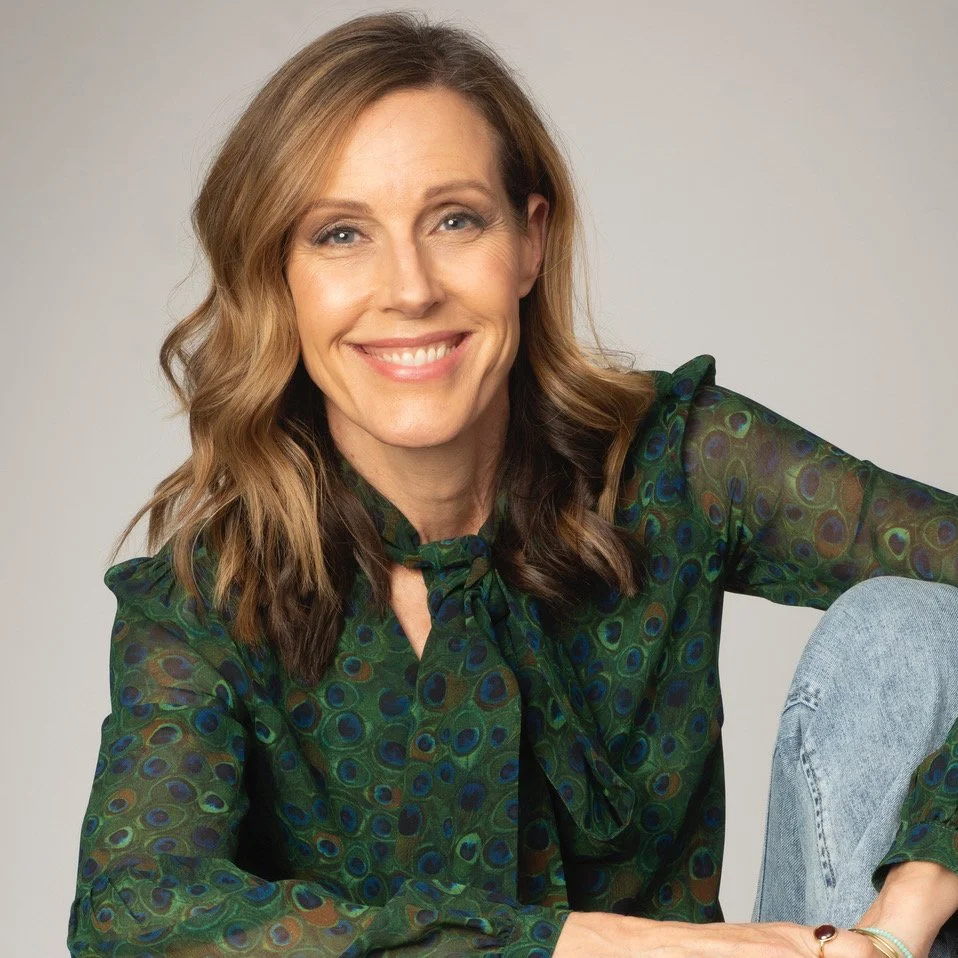
David Montgomery - Co-author of “What Your Food Ate: How to Heal Our Land and Reclaim Our Health”

David Montgomery - Co-author of “What Your Food Ate: How to Heal Our Land and Reclaim Our Health”

Professor of Earth and Space Sciences, University of Washington · MacArthur Fellow ’08
Co-author of What Your Food Ate: How to Heal Our Land and Reclaim Our Health · The Hidden Half of Nature

When you dig into the medical literature, 7 out of 10 of the leading causes of death in the United States are diet-related chronic diseases. And so one of the hopeful messages that I think comes out of The Hidden Half of Nature, Growing a Revolution, and What Your Food Ate is that what we do to the land, essentially we do to us. And what's good for the land is good for us. So if we think about farming differently, we can actually enjoy ripple effects that are not only beneficial to the farmers in terms of reduced costs for fertilizer, pesticides, and diesel, but it could also translate into better human health outcomes at a population level.

Highlights - Anthony Joseph - Award-winning Writer, Musician & Educator - “Sonnets for Albert”

Highlights - Anthony Joseph - Award-winning Writer, Musician & Educator - “Sonnets for Albert”

Award-winning Poet, Novelist & Musician, Lead vocalist of The Spasm Band
Author of Sonnets for Albert

The life of Caribbean people is not really documented. So this idea of Caribbean life being fragmented is something that I've had in my mind for a long time. So when I came to write this collection for my father, I realized that it was the same process and what I had were fragments, especially with him, because he wasn't around in a physical sense all the time. So all I had were little photographs, scattered memories, and remembrances. They're little parts of his life and parts of my experience with him... I never disliked my father. I always loved him and always was fascinated and captivated by him.

Anthony Joseph - Award-winning Writer, Musician & Educator - Author of “Sonnets for Albert”

Anthony Joseph - Award-winning Writer, Musician & Educator - Author of “Sonnets for Albert”

Award-winning Poet, Novelist & Musician, Lead vocalist of The Spasm Band
Author of Sonnets for Albert

The life of Caribbean people is not really documented. So this idea of Caribbean life being fragmented is something that I've had in my mind for a long time. So when I came to write this collection for my father, I realized that it was the same process and what I had were fragments, especially with him, because he wasn't around in a physical sense all the time. So all I had were little photographs, scattered memories, and remembrances. They're little parts of his life and parts of my experience with him... I never disliked my father. I always loved him and always was fascinated and captivated by him.

Highlights - Jack Horner - Renowned Paleontologist - Technical Advisor, Jurassic Park/World Films

Highlights - Jack Horner - Renowned Paleontologist - Technical Advisor, Jurassic Park/World Films

Renowned Dinosaur Paleontologist
Technical Advisor on all Jurassic Park / Jurassic World Films

I found my first fossil when I was six years old. And I found my first dinosaur bone when I was eight, my first dinosaur skeleton when I was 13. When I was a kid, I knew I wanted to be a paleontologist, and I didn't think there was much hope for it, though. I was doing very poorly in school. I think I was always a pretty positive kid. And so even though I wasn't doing well in school, I was really happy about the fact that I was finding all these cool fossils, and I was making collections. I don't know when it came to me that I would do this, but I think I just was born this way.

Jack Horner - Renowned Dinosaur Paleontologist - Technical Advisor, Jurassic Park/World Films

Jack Horner - Renowned Dinosaur Paleontologist - Technical Advisor, Jurassic Park/World Films

Renowned Dinosaur Paleontologist
Technical Advisor on all Jurassic Park / Jurassic World Films

I found my first fossil when I was six years old. And I found my first dinosaur bone when I was eight, my first dinosaur skeleton when I was 13. When I was a kid, I knew I wanted to be a paleontologist, and I didn't think there was much hope for it, though. I was doing very poorly in school. I think I was always a pretty positive kid. And so even though I wasn't doing well in school, I was really happy about the fact that I was finding all these cool fossils, and I was making collections. I don't know when it came to me that I would do this, but I think I just was born this way.

Highlights - Michael Sticka - President/CEO of the GRAMMY Museum

Highlights - Michael Sticka - President/CEO of the GRAMMY Museum

President/CEO of the GRAMMY Museum

It's actually right in our mission statement that “we celebrate the music of yesterday and today to inspire the music of tomorrow.” And we do it through our exhibits. We have 35,000 square feet of galleries. We travel exhibits, really, all over the world over the world for the past 15 years. And through our education programs, we really focus on the next generation of music's creators and leaders. We do that through really specific curricula that is designed to educate particularly young people, K-12, about the business of music, especially for those who want to go into the industry.

Michael Sticka - President/CEO of the GRAMMY Museum

Michael Sticka - President/CEO of the GRAMMY Museum

President/CEO of the GRAMMY Museum

It's actually right in our mission statement that “we celebrate the music of yesterday and today to inspire the music of tomorrow.” And we do it through our exhibits. We have 35,000 square feet of galleries. We travel exhibits, really, all over the world over the world for the past 15 years. And through our education programs, we really focus on the next generation of music's creators and leaders. We do that through really specific curricula that is designed to educate particularly young people, K-12, about the business of music, especially for those who want to go into the industry.

Highlights - Bruce Mau - Award-winning Designer, Author of “Mau MC24…24 Principles for Designing Massive Change”

Highlights - Bruce Mau - Award-winning Designer, Author of “Mau MC24…24 Principles for Designing Massive Change”

Award-winning Designer, Artist & Educator
Co-founder & CEO of Massive Change Network
Author/Co-author of Mau MC24 · The Nexus · S, M, L, XL

I would like them to know just how powerful they are, that they have the power to shape the world. At some point, I realized that the world is produced. The world is designed and produced, and since we designed and produced it, we can redesign it. And you can play a part in designing it. You can play a part in that production. It doesn't have to happen to you. And I think, for too many people, too much power and too much control is concentrated in too few hands. People need to have the power to control and design their own life.

Bruce Mau - Author of "Mau MC24…24 Principles for Designing Massive Change in Your Life and Work”

Bruce Mau - Author of "Mau MC24…24 Principles for Designing Massive Change in Your Life and Work”

Award-winning Designer, Artist & Educator
Co-founder & CEO of Massive Change Network
Author/Co-author of Mau MC24 · The Nexus · S, M, L, XL

I would like them to know just how powerful they are, that they have the power to shape the world. At some point, I realized that the world is produced. The world is designed and produced, and since we designed and produced it, we can redesign it. And you can play a part in designing it. You can play a part in that production. It doesn't have to happen to you. And I think, for too many people, too much power and too much control is concentrated in too few hands. People need to have the power to control and design their own life.

Highlights - David Farrier - Author of “Footprints: In Search of Future Fossils”

Highlights - David Farrier - Author of “Footprints: In Search of Future Fossils”

Author of Footprints: In Search of Future Fossils · Anthropocene Poetics
Professor of Literature & the Environment · University of Edinburgh.

Just thinking about how our actions play out over multiple generations who will have to live with the consequences of these decisions. I think we need to stretch our sense of time, and within that stretch our sense of empathy. The philosopher Roman Krznaric talks about that in his book The Good Ancestor, that we need a more elastic sense of empathy that can encompass not just those close to us or living alongside us, but those who have yet to be born will have to inherit the world that we passed down to them. But I think in stretching that sense of empathy and stretching that sense of the times that we touch, if you like, because all of us are engaged in activities that will lead long legacies, long tails, in terms of the fossil fuels we're consuming. And so, alongside that, I think we need to accept that the time we live in is a strange one, and time itself is doing strange things in the anthropocene.

David Farrier - Author of “Footprints: In Search of Future Fossils” - Prof. U of Edinburgh

David Farrier - Author of “Footprints: In Search of Future Fossils” - Prof. U of Edinburgh

Author of Footprints: In Search of Future Fossils · Anthropocene Poetics
Professor of Literature & the Environment · University of Edinburgh.

Just thinking about how our actions play out over multiple generations who will have to live with the consequences of these decisions. I think we need to stretch our sense of time, and within that stretch our sense of empathy. The philosopher Roman Krznaric talks about that in his book The Good Ancestor, that we need a more elastic sense of empathy that can encompass not just those close to us or living alongside us, but those who have yet to be born will have to inherit the world that we passed down to them. But I think in stretching that sense of empathy and stretching that sense of the times that we touch, if you like, because all of us are engaged in activities that will lead long legacies, long tails, in terms of the fossil fuels we're consuming. And so, alongside that, I think we need to accept that the time we live in is a strange one, and time itself is doing strange things in the anthropocene.

Highlights - Marcia DeSanctis - Author of “A Hard Place to Leave", “100 Places in France Every Woman Should Go”

Highlights - Marcia DeSanctis - Author of “A Hard Place to Leave", “100 Places in France Every Woman Should Go”

Journalist, Essayist, Author of A Hard Place to Leave: Stories from a Restless Life
100 Places in France Every Woman Should Go

I started looking over the stories that I had done. I would say the majority of the essays were not really about travel. They were more about aging and marriage and memory and all of those things, but I did find in the travel essays those kernels of things that I wanted to explore - bigger kernels of things that were sort of scratching at me from the inside like a piece of sand in my pocket that was irritating me and that I wanted to explore. What I found was that the theme of coming and going, the theme of arrivals and departures, the theme of entrances and exits, and the theme of home and away seemed to repeat itself. I felt that whenever I was somewhere, there was always a tide home. And when I was home, there was always the urge for going. And so I just weeded out and weeded out and really wanted to keep this theme of home and away.

Marcia DeSanctis - Author of “A Hard Place to Leave: Stories from a Restless Life"

Marcia DeSanctis - Author of “A Hard Place to Leave: Stories from a Restless Life"

Journalist, Essayist, Author of A Hard Place to Leave: Stories from a Restless Life
100 Places in France Every Woman Should Go

I started looking over the stories that I had done. I would say the majority of the essays were not really about travel. They were more about aging and marriage and memory and all of those things, but I did find in the travel essays those kernels of things that I wanted to explore - bigger kernels of things that were sort of scratching at me from the inside like a piece of sand in my pocket that was irritating me and that I wanted to explore. What I found was that the theme of coming and going, the theme of arrivals and departures, the theme of entrances and exits, and the theme of home and away seemed to repeat itself. I felt that whenever I was somewhere, there was always a tide home. And when I was home, there was always the urge for going. And so I just weeded out and weeded out and really wanted to keep this theme of home and away.

Highlights - John Beaton - Founder, Director & Co-Visionary of Fairhaven Farm

Highlights - John Beaton - Founder, Director & Co-Visionary of Fairhaven Farm

Founder, Director & Co-Visionary of Fairhaven Farm

What's trending now with beginning farmers is that it is creating this kind of community connection. It's bringing people to the farm. It's connecting them to their food source. That creates community. It helps cultivate culture and connectivity, and so I think overall, it's like the landscape and agriculture as a whole is shifting towards a different direction.

John Beaton - Founder, Director & Co-Visionary of Fairhaven Farm

John Beaton - Founder, Director & Co-Visionary of Fairhaven Farm

Founder, Director & Co-Visionary of Fairhaven Farm

What's trending now with beginning farmers is that it is creating this kind of community connection. It's bringing people to the farm. It's connecting them to their food source. That creates community. It helps cultivate culture and connectivity, and so I think overall, it's like the landscape and agriculture as a whole is shifting towards a different direction.

Highlights - William Irvine - Author of “The Stoic Challenge”, “A Guide to the Good Life”

Highlights - William Irvine - Author of “The Stoic Challenge”, “A Guide to the Good Life”

Author of The Stoic Challenge & A Guide to the Good Life: The Ancient Art of Stoic Joy

Happiness is another interesting thing. I've been thinking about this lately. You know, people take aim at happiness. I don't know if you can actually do that, if you can have a recipe for attaining happiness. Happiness is something that just happens as a byproduct of something else going on in your life, and that is having a day where you're experiencing equanimity. You don't have this abundance of negative emotions, where you value the things you've already got, where you value the relationships you've got, where you feel good inside your own body. You like being who you are. And I think, if all that happens, then suddenly, you know, it'll dawn on me. 'Gosh, I guess I'm happy...'

William Irvine - Author of “The Stoic Challenge”, “A Guide to the Good Life”

William Irvine - Author of “The Stoic Challenge”, “A Guide to the Good Life”

Author of The Stoic Challenge & A Guide to the Good Life: The Ancient Art of Stoic Joy

Happiness is another interesting thing. I've been thinking about this lately. You know, people take aim at happiness. I don't know if you can actually do that, if you can have a recipe for attaining happiness. Happiness is something that just happens as a byproduct of something else going on in your life, and that is having a day where you're experiencing equanimity. You don't have this abundance of negative emotions, where you value the things you've already got, where you value the relationships you've got, where you feel good inside your own body. You like being who you are. And I think, if all that happens, then suddenly, you know, it'll dawn on me. 'Gosh, I guess I'm happy...'

Highlights - Victor Lopez-Carmen - Co-Chair, UN Global Indigenous Youth Caucus - Dakota - Yaqui Writer, Health Advocate

Highlights - Victor Lopez-Carmen - Co-Chair, UN Global Indigenous Youth Caucus - Dakota - Yaqui Writer, Health Advocate

Dakota & Yaqui Writer, Health Advocate · Co-Chair, UN Global Indigenous Youth Caucus
Founder of Translations for our Nations · Co-founder Ohiyesa Premedical Program

My mom and my dad would often go to protests. They would organize movements. They'd be part of multilateral indigenous people's movements, not only nationally, but internationally, that were operating at the grassroots level. Activism, it’s a tradition in my family for indigenous rights. I have aunts and uncles that were very involved as well. So as a kid, I was often at those protests. I was running around as a little Native kid with all the other little Native kids, when our parents would be in meetings discussing how to move forward discussing indigenous rights.

Victor Lopez-Carmen - Dakota - Yaqui Writer, Health Advocate - Co-Chair, UN Global Indigenous Youth Caucus

Victor Lopez-Carmen - Dakota - Yaqui Writer, Health Advocate - Co-Chair, UN Global Indigenous Youth Caucus

Dakota & Yaqui Writer, Health Advocate · Co-Chair, UN Global Indigenous Youth Caucus
Founder of Translations for our Nations · Co-founder Ohiyesa Premedical Program

My mom and my dad would often go to protests. They would organize movements. They'd be part of multilateral indigenous people's movements, not only nationally, but internationally, that were operating at the grassroots level. Activism, it’s a tradition in my family for indigenous rights. I have aunts and uncles that were very involved as well. So as a kid, I was often at those protests. I was running around as a little Native kid with all the other little Native kids, when our parents would be in meetings discussing how to move forward discussing indigenous rights.

Highlights - Donald Hoffman - Author of “The case against reality: Why evolution hid the truth from our eyes”

Highlights - Donald Hoffman - Author of “The case against reality: Why evolution hid the truth from our eyes”

Professor of Cognitive Sciences, UC Irvine
Author of The case against reality: Why evolution hid the truth from our eyes

This is really what life, I think, is about - learning to not believe your thoughts. Watch your thoughts, see their patterns and learn that you are not at the whim and beck and call of your thoughts. You can watch your thoughts, and you can choose to let go of thoughts and just be present and let go of the complaints. And that then opens up a level of creativity that's surprising. It could be in dance, science, it could be in music, or art. Wherever you have creative expression, letting go of thought and having this balance between thinking and no thinking, going into complete silence and then pulling ideas back for your art, your science, your dance, whatever it might be, is really the dance of life.