

And I think there's also just something about an unfettered or uncensored id that is so captivating. We all have that fantasy of doing exactly what we want with no consequences and sort of letting that go. I think when you see an athlete at the peak of their game, doing that embodied thing and living that dream, or when someone has actually done horrible things that you would never allow yourself to do, there is a fascination there. I had one teacher who said, "Anyone who drives you crazy or that you just cannot stand in life, put them in a play or put them in a scene, and the audience will love them." If someone has really gotten under your skin and you just cannot stand them, and you have a visceral reaction—like, "I just hate this person"—make them a character, and the audience will make them everyone's favorite character. There is something to that.
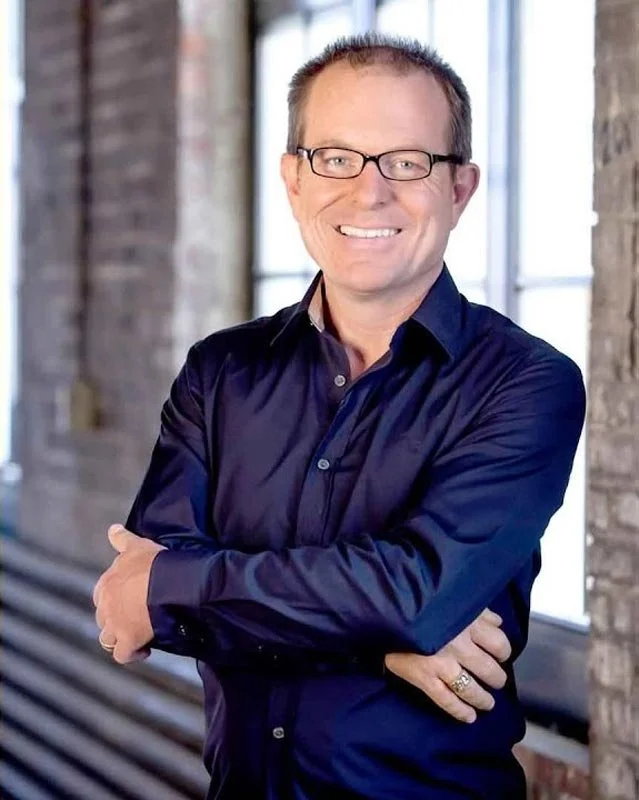
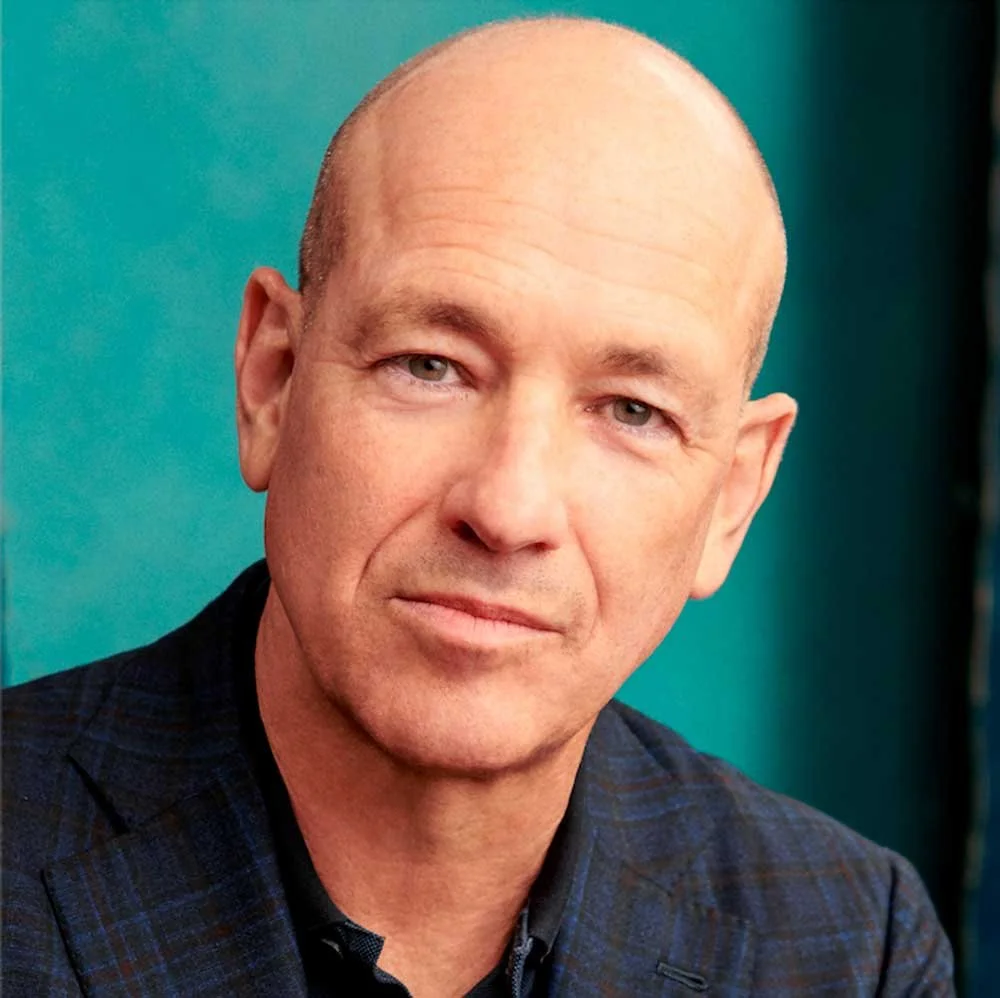
Today, we explore the dark psychology of obsession, guilt, and the thin line between predator and victim. Our guests are two of television's most accomplished architects of high-stakes drama and moral ambiguity: Howard Gordon, the showrunner and executive producer whose work defined a generation of thrillers with 24 and the multi-award-winning Homeland; and Daniel Pearle, an executive producer and writer who brings a distinct, penetrating depth from his background as a celebrated playwright and his work on series like Accused and American Crime Story.
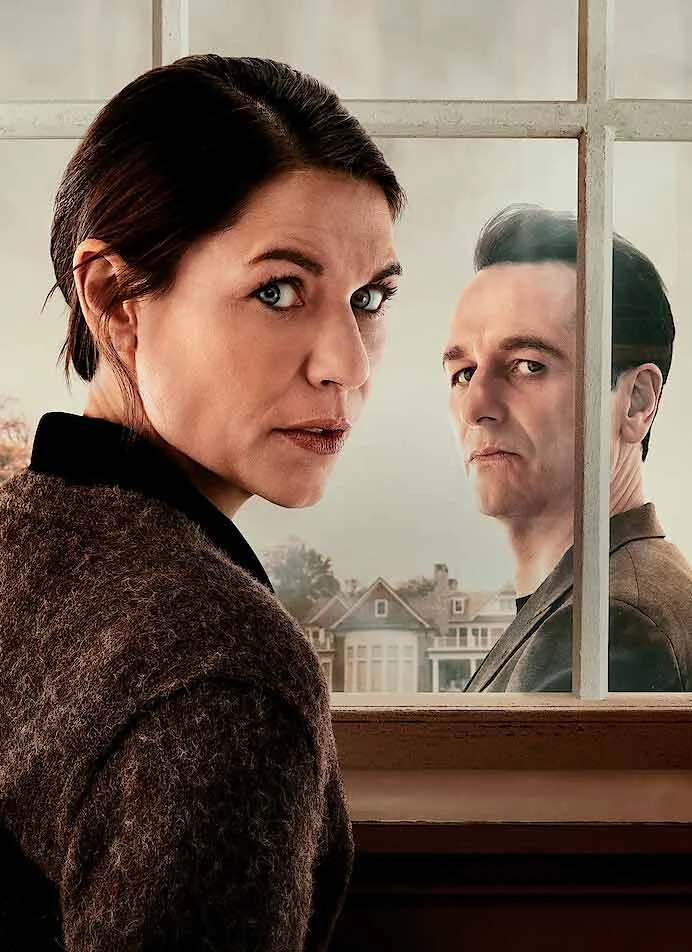
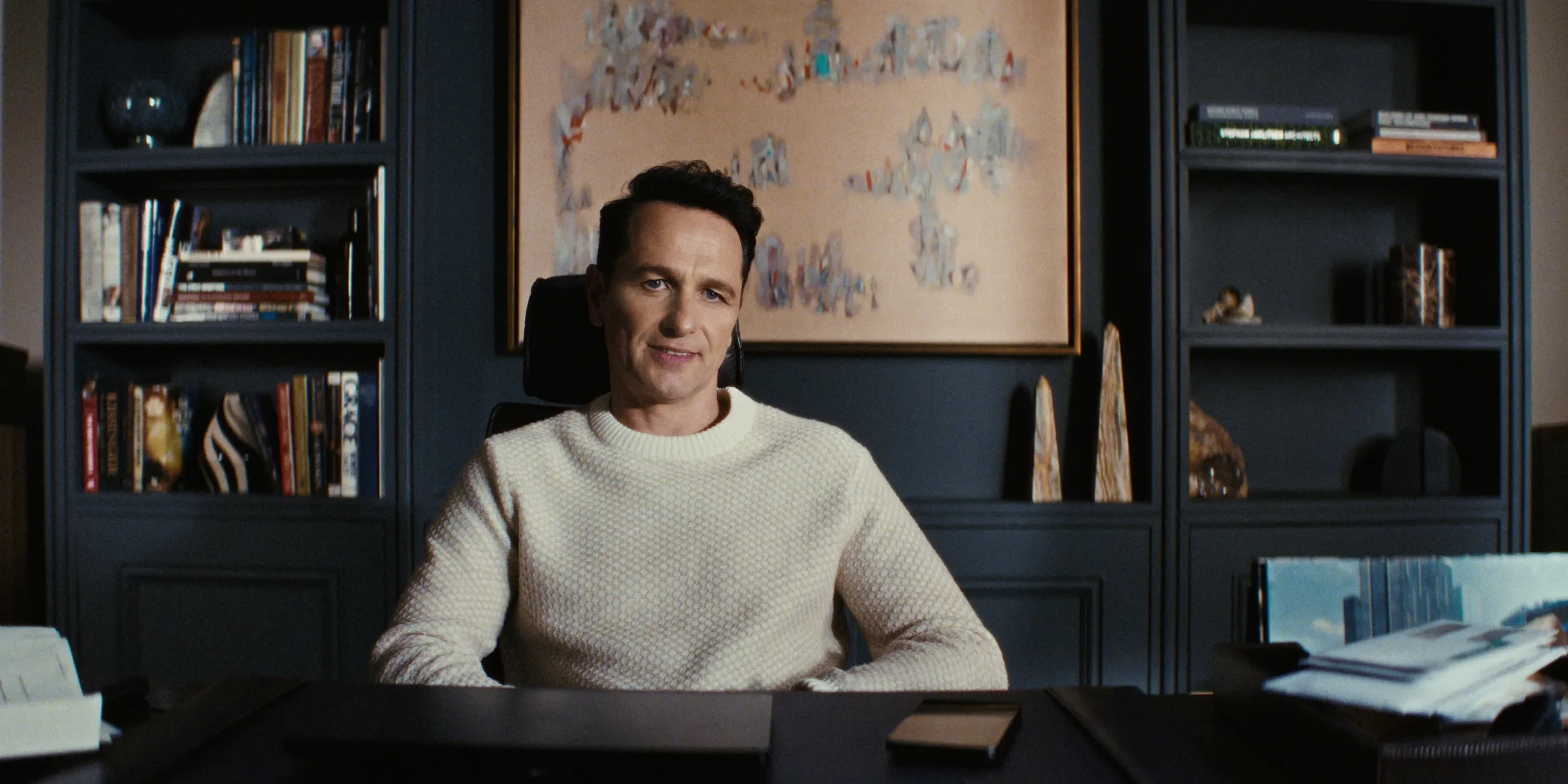
Now, they've collaborated on a new, eight-episode Netflix thriller launching November 13th called The Beast in Me, starring Claire Danes and Matthew Rhys. The show takes us into the life of Aggie Wiggs, a celebrated author paralyzed by grief after the death of her young son. She's struggling to write, and she finds dark inspiration in her new neighbor, Nile Jarvis—a man who carries the cloud of suspicion after his wife vanished. The show is an uncomfortable look at how obsession with another person’s darkness can become a way of coping with your own. As Aggie comes to distrust her own perception, we’re left with the question: is the real beast the person across the street, or the beast we find within ourselves.
THE CREATIVE PROCESS
I always love anything that Claire Danes does, and I know you've worked with her in the past. And now, with Matthew Rhys, I think they are two of the most psychologically interesting actors. They can summon so much, and Claire Danes’ face. It's like a masterclass in the kind of I'm ready for my close-up—psychotic breakdown that she can summon. And in The Beast in Me, her character, Aggie Wiggs, she's a grieving mother. She's an author with writer's block and kind of the ghost of her former self. And suddenly, this neighbor comes who has his own baggage, even more baggage than she does. By the point that we meet her, her inner life is so clearly broken. How did you both approach the writing and showrunning to follow her search for her own truth and her search for the truth about Nile (Matthew Rhys) and how those wove together?
HOWARD GORDON
Well, first of all, we need to tell you that this was a spec pilot, which means it had been a pilot that was created by Gabe Rotter, largely with the premise that that exists in the current show, but because it's kind of a complicated, I would say it’s a very high degree of difficulty. I think Gabe was very open, and so was Netflix to bringing in some new voices to sort of help shape it.
It was evident to us, and we also hadn't had—we haven't had this moment, as you described really well, of such exquisite vulnerability and stuckness. It was important to us to sort of define that very existential beginning, the details of it that were very important to develop atmospherically and intellectually. Because, you know, how do you render something interior filmically? How do you communicate the details of the lost child, of the amount of time of the stuck creative process, and even the exterior, or the externalization of the house as a kind of hellish thing that's barely staying together—literally flooding with waste—and that you can't afford?
So those are the details that we had to carefully figure out how to weave. But, you know, when you look at the first 10 minutes, it could be a horror movie. From that moment, a lot can happen. But what's important about it is that it sets the table for what does happen.

DANIEL PEARLE
Yeah, I think that was one thing that I really responded to in the initial draft that we sort of inherited to help shape. Her loneliness was so palpable, but as Howard says, you know, grief, loneliness, isolation—when a character doesn’t have a scene partner, that’s obviously a challenge to get inside their head. And obviously, that's one virtue of an actor like Claire; you can really see it all on her face. I think every detail in that pilot, as far as shaping how her external circumstances were mirroring and reflecting her inner world, was very important for all the reasons Howard just described.
THE CREATIVE PROCESS
In an odd way, Nile is one of the few people who kind of understands Aggie, or seems to understand her bloodlust—the thing that’s underneath.
HOWARD GORDON
But it's interesting too, like in the thriller trope, and this was something obvious during a time when we're seeing everyone's attention span waning, and the buyers and the platforms are sort of requiring a much more obvious thing—whether it's a bomb under the counter or someone wakes up and the person's dead next to them. I mean, okay, you're in it.
THE CREATIVE PROCESS
I think it also has that element, as you’ve said, of The Shining. I mean, just because Aggie is an author, what is she really writing? There's the story within the story, and you know, the unreliable narrator of that. We get that kind of claustrophobia as well and the kind of menace that feels familiar. I like the pacing very much because I think it escapes genre limitations. It's very much propulsive viewing, and, within genre, as you say, it could even be like horror, but it’s not horror.
These are real things. It's not supernatural. At the same time, it takes its time because I really wanted to know Aggie's story, and that's something that is revealed gradually. She doesn't even face it. She doesn't actually know she's an unreliable narrator of her own life in ways. I liked how that came of a piece. It wasn't just so fast-paced that we didn't honor their lives.
HOWARD GORDON
This did require something compelling enough in those small, almost Roman Polanski or early Coppola moments, like the conversation in The Tenant or Rosemary's Baby, to really set a mood, and it requires some attention. Attention seems to be an increasingly scarce commodity among viewers. Again, it really was the synthesis of Daniel and Gabe, the pilot, and Antonio Campos, our wonderful director, and of course, this incredible alchemy between Claire and Matthew.
THE CREATIVE PROCESS
And I guess all these other things that we don't think about, in a way, like if you're going to make the pacing such that it's exciting, but you are really holding your breath to know what's happening—like music and production design and the costumes—and how these combine to tell a story. That allows it not to be just constantly moving, but to build our internal sense of suspense.
DANIEL PEARLE
That was one area where I think we just really hit the jackpot. I mean, Antonio Campos did such a beautiful job directing it. We had an incredible Loren Weeks, our production designer, and Lyle Vincent, our DP, just in terms of really making the pilot feel like a film. As you say, you lean in with all your senses. I think that was really important since, you know, for most of the pilot, she's alone, and you don't have the benefit of getting an info dump right away because she's just shuffling around her house. So you have to sort of feel that tension and that loneliness.
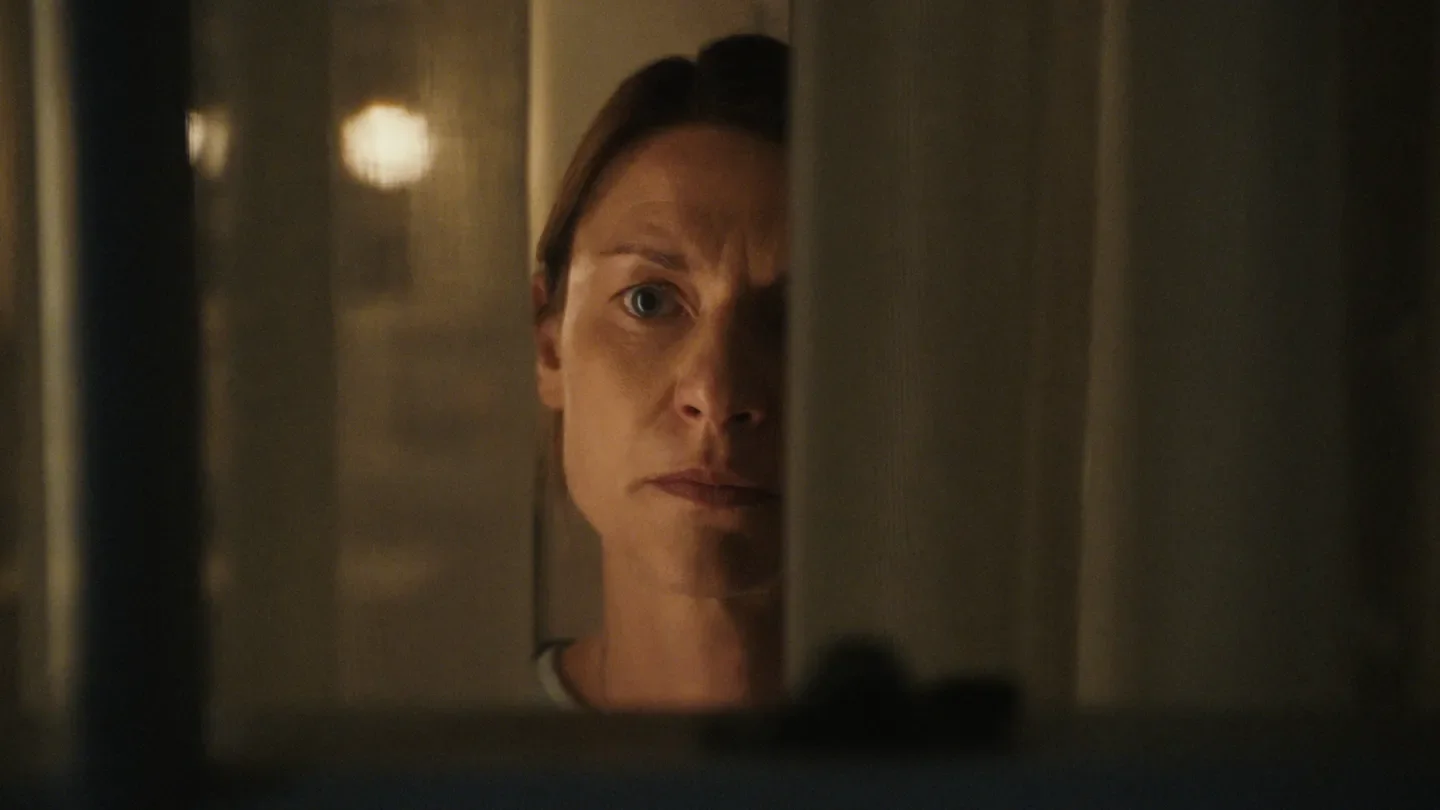
One thing I think Antonio really understood early on was just the power of atmosphere. I remember early on he talked about this scene where she's on the phone with her editor walking through the house. He had a very specific vision. It was one of the first things he mentioned when we first met with him. He thought, I want to shoot that phone call because the phone call itself is very pleasant and even loving. It's sort of the one person who calls on the anniversary of her son’s death, her longtime editor and friend, who’s alone in her office in Manhattan, while Aggie is alone in her house.
The way he shot it, while the conversation is happening, you really feel her isolation. The sinister silhouettes and the lighting as she goes around turning off the lights one by one make you feel both simultaneously—the humdrum nature of their conversation and this lurking menace. There are even a few times when he shot her from outside the house. He’s a really brilliant filmmaker, and we really benefited from that.
HOWARD GORDON
You mentioned just in terms of attribution. I just want to say that Sean Callery, who is our composer, is always one of the first elements because it’s the last element. We very early on insinuated him into the process. Again, tonally, we were always experimenting and always trying to find out what's tricky. It's easy to lapse into certain false notes or manipulative notes. The process was such a wonderfully collaborative one among all of us. Believe me, having done this for now 40-something years, it does not happen very often. This was a particularly good team.
DANIEL PEARLE
I think, as Howard said, and you mentioned this in terms of our complicity while watching it, is that I really think the show ended up being so much about scapegoating and how much fun and good it feels to scapegoat. Just because someone, you know, is a sociopath or a villain doesn’t mean you can’t still scapegoat them.
Obviously, collectively, we love finding a villain. We love putting the blame on one person or one thing. We love looking outward rather than inward. I think, to some degree, all these characters are doing that. As you said, what does it say about us as a culture that we love true crime? We love it. I would posit that it's the illusion that there is one bad guy, and you can solve the problem that way. I think that Aggie comes to reckon with in this story. When we meet her, she's fixated on the notion that there is one guilty party in the death of her son.
That's who deserves justice, and she's obsessed with this notion of blame. This doesn't mean that person is without blame, but obviously, we can all scapegoat each other to death. Ultimately, then what? I think the show ended up really being about that.
HOWARD GORDON
Gabe had been with it, obviously, for four years before. They had taken a few paths, none of which really seemed to pan out. One has a certain advantage coming in with fresh eyes to a process like that. But again, the compelling, what I call the dramatic molecule—the essential relationship—felt provocative. It provoked kind of a fear in me, in a good way. It was not schematic at all, but we knew it would require improvisation and a certain music and tone that had to be found.
As someone towards the end of my long career, it was about the relationship and the loss. I mean, being a father too, I think the whole therapy of doing this is being able to imagine what a situation feels like—what it feels like to lose someone. What does grief look like? How do you experience that dramatically? Maybe there's a salutatory process for you as a writer and as a bridge—to help an audience experience something safely through someone else's experiences.
THE CREATIVE PROCESS
What were the moments or touchstones of grief, if you don’t mind me asking you?
HOWARD GORDON
The touchstones? Well, it's funny because I think when we started, I remember telling Netflix or Daniel that every scene is about loss. Everything is refracted through that. Whether it's Aggie's defensiveness, insistence on the narrative between her and her wife, or the facts of the day her son, Cooper, was killed. It's about her telling herself that she is making progress in her own relationship to her work.
It was really like finding the sort of matrix of desperation and defining all those moments and how they collided into that perfect moment where her house is literally coming apart, she cannot write a word, and it's the anniversary of her son's death. She is deeper in the hole than she was even four years ago. It was really defining this supremely lonely person.
It's funny; Daniel mentioned the art direction too. I remember we wanted this house to be kind of a bit of a shithole, but when we walked in for the first iteration, it looked like a clearly psychotic person lived there dysfunctionally. We were like, okay, let's just dial that back. A lot of it was about finding the right level of dysfunction. It's almost like that thing where, as one senator said about pornography: "I'll know it when I see it." It was a negotiation among all of us about the tone—what was too much and what wasn't clear enough.
THE CREATIVE PROCESS
We’ve talked about charisma now, and we talk about killers or psychopaths or people who really walk that line. But it is fascinating. We want to watch that as long as we have our distance. It reminds me of those interviews with the Iceman. For those who don't know, The Iceman was Richard Kuklinski, a contract killer from the sixties to the eighties, and there are famous interviews with him in prison. At one point, the interviewer calls him an assassin. He says, "Oh, how exotic." His expression, I mean, they’re like actors, you know? There’s something—I don’t know if you’ve seen that interview, but he has this whisper of a smile, and it's like they’re on a whole other level of just what they’ll do. They’re just so driven.
HOWARD GORDON
It's funny because I'm reminded of being at this birthday party for a 6-year-old friend of mine. Most of the people were academics or physicians, but one of the attendees was a well-known crime family figure. I will tell you that at some point during the evening, it was like a barbecue, and people were fawning over this man.
I think everybody, including me, had some awareness that this person had done these forbidden, subversive things that none of us had the guts to do. But he had. Keeping company with those types of people may even lie at the root of some evolutionary instinct—someone who is willing to kill or who has killed someone. You oddly feel you’re endangered by them, but you’re also protected by that person if you're in their space.
DANIEL PEARLE
There is a fascination there. I had one teacher who said, "Anyone who drives you crazy or you just cannot stand in life, put them in a play or a scene, and the audience will love them." If someone has really gotten under your skin and you have a visceral reaction—if you just hate this person—make them a character, and they will be everyone’s favorite character. There’s something to that.
In my own life, I've kept many more people who might drive me crazy but are interesting, fascinating, and entertaining. There’s something about when someone gets under your skin; there’s some sort of heat there that is really good for creativity. There’s something that comes alive in you when you kind of want to wring their neck. So I think there’s something to it.
THE CREATIVE PROCESS
I'm glad you brought up important lessons or teachers. In a way, Howard, you’re kind of saying that you are a slightly previous generation. I don’t know if you want to say you’ve taken Daniel under your wing, but you have a creative partnership—it’s like one generation inspiring another. If you want to talk about the evolution of your creative partnership from Daniel starting off writing to now executive producing and showrunning together.
HOWARD GORDON
Well, we met during the season finale in Morocco, actually, on the set of Homeland. Dan was visiting Claire, who was on a trip with them, and we spent half the day on the set. I really liked this young man named Daniel Pearle. That was about the beginning and end of it. About two or three years later, I had a show that was going on the air, and Daniel's name crossed my desk. I thought, "Is that the same guy I met in Morocco three years ago?"
The long and short of it is that we engaged in this project. Daniel wrote a script for the show, in fact, before it even got picked up. I will tell you, I was fawningly appreciative. It is a unique thing because, by and large, as Daniel has now discovered, you’re mostly disappointed in other people's work.
People who you may have had high expectations for, whose work you’ve seen or read, there’s often a disconnect. With Daniel, it was like, "Holy cow, this guy is brilliant!" It just got better and better. During that first year, Daniel leapfrogged over whatever other cohort of writers and, in a de facto way, became my partner on the show. Then in the second season, he became showrunner. I wanted him there, and I was very open about my own point in my career. I told Daniel, "I'm actually enjoying this process." It was the first time it had happened across a generation, and we still feel the same way.
I will tell you that I’ve joked with my friends—and even with Daniel directly—that I feel like the samurai master who’s about to be disemboweled by the student, willfully or having his head cut off. I’m very glad for it because Daniel's learning curve has been painfully steep, and it’s been wonderful to see. Now that he has authority on set and with the other actors, it’s a wonderful process. When it works, it's spectacular.
DANIEL PEARLE
I feel really incredibly lucky that I met Howard, and we’ve had this partnership. As he mentioned, I think the other thing I've really benefited from is that he’s not just a veteran, but a kind of legend in this TV space. I talk about Howard’s Spidey sense; he has a sixth sense for when something's funky story-wise, or about propulsion or structure. He knows when something actually has legs that will sustain a show. I’m sure it comes from years of 24 when I can’t imagine writing 24 episodes of a season. My head explodes just trying to write eight.
So I came from a theater background and then got into film. I adapted a play of mine called A Kid Like Jake that starred Claire, which is how I met Claire, which is why I was visiting her in Morocco. I hadn’t done a ton of television. I had been in two writers' rooms before I met Howard. Most of my experience was in theater and film.
One of the really amazing things for me about working on Accused was getting to be on set for production and in the edit room. As people know, in TV, writing becomes producing, and suddenly you wear many hats. You’re not just writing scripts; you’re actually on the set talking to directors, designers, and actors. Cutting the episodes—I feel like the fact that Howard was willing to just let me take a crack at it and trusted me to learn by doing was just amazing. Not to mention, I think just his mentorship and willingness to show me the ropes.
I just think there’s no excuse for just doing it over and over again. The other really exciting thing about Accused was that it was an anthology series, which meant that every episode was a different story. It was a different little movie. In one season, every episode had a new cast, a new director, a new story.
So it was crazy, but it was also probably the best training I could have gotten. The combination of working with Howard on that show was great because we just got to do it over and over again—every aspect of the process, from talking to production design, casting, and costuming because it was a whole new world in each episode. This project has been just an extension of that, which has been incredibly exciting. I feel humbled, grateful, and I keep learning, so that’s very exciting.
THE CREATIVE PROCESS
You mentioned Accused, Homeland, 24, and now The Beast in Me. You know, a common throughline I see from whatever the setting it is, but it’s this moral ambiguity. We’re really rooting for these characters, but sometimes for the wrong reasons. We get lost in the muddiness, which is interesting because life isn’t clear.
I think this is an awkward segue, but I want to talk about the future of television, film, and playwriting in the age of AI and what this is doing to the way we tell and receive stories and edit stories. We’ve learned all this stuff, and now in some way, some people are outsourcing their creativity to these bots and algorithms that don’t have our priorities.
HOWARD GORDON
I guess for me, the one thing—and this may be delusional hope—is that, you know, it is incredible what AI can do. Obviously, the fact that it’s incorporated all this text and can spit out things is insane. Do I think when it comes to the creative process? When I think about the best ideas I’ve ever had or the best moments in screenplays, I do think there’s something very mysterious about where that comes from. I don’t think you can reduce it to everything that’s ever been written before and use that to predict what should be written now.
So I do think there is—I have faith that a really good screenplay can only be written by a human with a psyche and a soul. Whether AI can write drivel that someone will watch—maybe. I don’t doubt that it can, even better than drivel, even something that is kind of by the numbers that it can parrot or mimic, synthesize other works, and spit out something that resembles a script. I don't doubt that’s possible. But personally, I think when you’re writing, the best ideas come from a place you can’t predict—something a little bit spooky and mysterious. I would like to believe that’s not something AI can replace. But I don’t know; maybe that’s just optimistic.
HOWARD GORDON
I mean, I’m far more gravely concerned. Not so much about the creative process; I think they’re all related. I think an audience should be—criticism, which again, in the Aristotelian sense was the job of a critic, was to be the gatekeeper for the public's taste and point of view. The lack of curation and outsourcing curation to AI, both in terms of creating art and in terms of curation, is a problem.
We joke all the time about the algorithm dictating to human executives who, one could argue, are—who knows? I don’t want to bite the hand that currently feeds us both, but I do think this is shortening attention spans and lowering our capacity to appreciate art. There’s a Freudian reference—a folie à deux—this destructive dance between two entities that I have grave concerns about.
As a search tool and as a first drafter, I suppose it can be a tool, but I think there are consequences. None of us, I'm just not smart enough or conversant enough to see clearly.
We’ve seen where listening was actually a virtue or critical thinking. These are things that seem evident or once seemed like civic components that just seem to have been lost without any fight. I hope we can put some of this genie back in the bottle or toothpaste back in the tube. Part of it is just having the composure to read visual art—having the ability to relate to a static image or something—and to bring the engagement of that process to bear, not just have it fed to you by some glowing pixels.
DANIEL PEARLE
I mean, I think there’s also something about how we’re quickly losing our tolerance to sit with any kind of discomfort. That’s another danger with all this sort of force feeding, bingeing content, and phones. I noticed this past summer that I said, “I’m going to read Middlemarch by George Ellitot.” I’d never read it, and it was because I had this fear. I felt like my reading brain and my patience for denser prose were atrophying.
But it took me an adjustment period. I hadn't read a hefty novel in a while because so much of my reading was for work. I think the distraction economy pulls you in different directions, and that’s a real loss. For future generations, I believe the best impulses and ideas often come from the times you’re alone with no stimulation.
There’s something about creating a space where ideas can pop up, and that’s increasingly less the case when you’re always—
HOWARD GORDON
Stimulated.
DANIEL PEARLE
Yeah, that's all real. The ideas that come from your unconscious are usually the good ones, and so I think creating—at least trying to cultivate rituals—is something I certainly try to do. I usually fail because I’m so addicted to my phone, but for younger generations, that tolerance for discomfort, stillness, and uncertainty is hugely important. I believe that’s where a lot of the best ideas come from.