Everybody wants happiness, joyfulness, peaceful world. Our 21st century will not be easy century. Fear, anger, hatred. In our mind we created distinctions. Different nationality, different color, different religion. Strong concept of “we” and “they”. Brothers and sisters of this small planet, we are same human beings. Meanwhile, global warming is a serious problem. Destruction of this planet is actually destruction of yourself. Our common responsibility should be work together, to save our world. We all have this marvelous human brain. The problem is, when negative emotions develop, our whole mind is taken over. So, we must deal with emotions.
I can change my mind. I can reduce anger, hatred. Nothing to do with religion. All religions carry the message of love, loving kindness, and tolerance. With different views, there is a possibility to synthesize new ideas. If majority of the world leaders become female, world become safer. I feel that. Compassion is the key factor. Non-violence, compassion and self-confidence, these are key factors for happy individual, happy community, peaceful world. This century should be century of compassion, century of peace. No more bloodshed. We should develop a big “we,” rather than “we” or “they.” With these wings, you can fly.
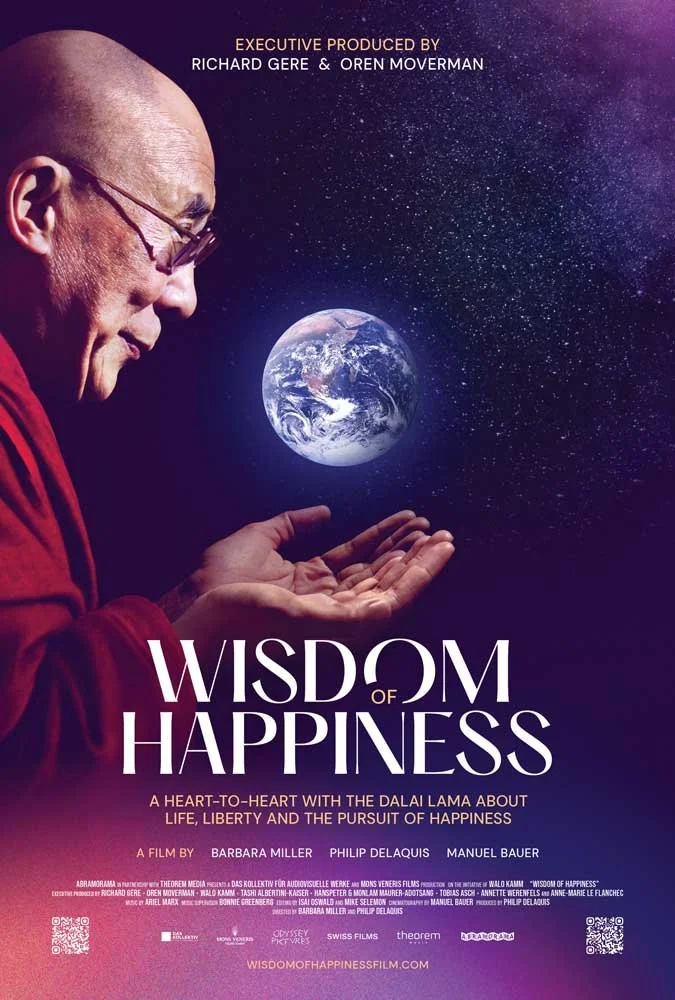
For decades, the Dalai Lama has been a global symbol of peace, compassion, and resilience, a spiritual leader living in exile from his home in Tibet. But how do you capture the essence of his wisdom—the kind that can truly change a life—in a way that feels intimate and personal? My guest today, documentary filmmaker Barbara Miller, has managed to do just that in her new film, Wisdom of Happiness. It’s a beautiful film that feels less like a documentary and more like a private, heart-to-heart conversation, where he invites us into his thoughts and shares practical steps for finding inner peace in a chaotic world. She's dealt with anti-globalization, domestic violence, and the fight for female pleasure in her previous works. We’ll talk about how she shifted from exposing systemic pain to focusing on radical hope and her collaboration with Executive Producer Richard Gere and Manuel Bauer, the Dalai Lama’s personal photographer for the last thirty-five years, who made his cinematography debut with this film. She shares what the Dalai Lama taught her about living in harmony with our body, nature, and the world.
THE CREATIVE PROCESS · ONE PLANET PODCAST
The message is simple but profound. I always think simplicity is the hardest thing. The clarity of true love—what does that mean? You investigate each one of those words and what they really mean. We talk about happiness, but what does that mean? The question about love—what do you mean when you love? Do you love for yourself? Because often that's a selfish notion, too. Like, I love you because you make me feel good. Is it about giving? Tell me what it means to you.
MILLER
Maybe I can mention what the Dalai Lama says in Wisdom of Happiness. He says it's so important that you “start with loving yourself.” He says, "I love myself," but not in a cherishing or egoistic way. Feeling love towards oneself gives you the possibility to share love and feel love towards everyone else. I think this is a deep truth because the Dalai Lama was shocked when he learned that people in the West often don't love themselves. They're full of doubts, having all these concepts like, "I should be different," or "I can be lovable." He was really shocked to learn that because this is not a part of Tibetan culture.
THE CREATIVE PROCESS · ONE PLANET PODCAST
There's so much going on in the world. There is an anti-war message in this film, a very strong message for having compassion for others. There's a strong feminist message, which I know aligns with your previous films as well—that more women should be in positions of responsibility and leadership because we tend to nurture our families. That's kind of how we're raised. There are so many important messages. The ecological message is strong in this film about observing animals. We are animals; we forget that. But observing animals and how they live in community—why is it so hard for us to learn these lessons?
MILLER
Yeah, that's a really big and difficult question. The Dalai Lama reminds us of all these aspects. In the end, we are all equal. We are human beings, and we need community. We need nature. We can't survive without this planet being healthy. We are often taken away from these basic ideas and this truth, thinking that we need a lot of materialism and success. I am not so sure why we forget these things—maybe because there's huge pressure in society, or because we learn the wrong messages in school, childhood, or society.
It's so important that we remember who we really are and what we need. I think hearing the knowledge of the Dalai Lama and the wisdom of happiness can really help us reconnect to these things that are so important for each and every one of us.
THE CREATIVE PROCESS · ONE PLANET PODCAST
I really liked, of course, the intimacy you discussed, but also reflecting on the Dalai Lama’s life. He honored his mother and his parents, and I don’t often think about that. It makes me think that we are always growing. We always have the opportunity to evolve and learn. Tell us about your other creative partners in this. I know that Richard Gere was an Executive Producer and helped you realize this project, given his long relationship with the Dalai Lama. How did he help in the storytelling process?
MILLER
This was wonderful. We had a rough cut of the movie, and the secretary of the Dalai Lama saw it and thought it could be of interest to Richard Gere. He had the chance to go to New York and show Richard and his wife, Alejandra, the rough cut. Alejandra was really in tears, and Richard Gere was really moved as well. The movie was originally 72 minutes, and he said, "Let us really use the 90 minutes you have for a documentary." He expressed a desire to share his knowledge, which is important for the Dalai Lama and which he has also experienced, to be included in this film.
It was incredible that we never thought Richard would want to work with us on this film. We set up a suite in New York and worked hard together for two months, going through the archival material and the aspects you mentioned before—having the Dalai Lama really seen as a child who had to learn how to be the leader. Sometimes it was hard for him to learn all these things and understand them because, as a kid, he just wanted to play. These aspects were exceedingly important for Richard to have in the film.
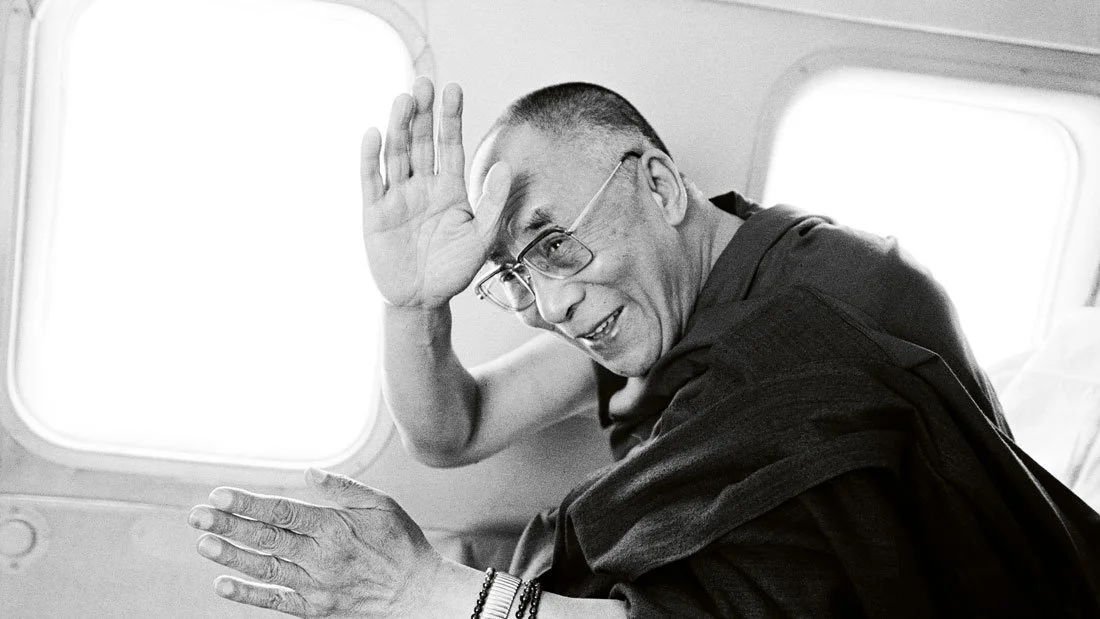
I think it's really great to see this human being who struggled. He lost everything—his country and the whole world where he was living. Seeing that his biography has been difficult, but that he is still so full of love and always says, "I would never hate someone. I don’t have negative feelings toward people who made my life difficult." I think this is a huge learning experience for all of us to see how it's possible to overcome difficulties, sorrows, and challenging situations.
The aspect you mentioned before—his mother was so important in shaping him on this path. He always says, "My mother was the first guru of compassion." This is where he learned to be this compassionate human being, and it's wonderful to see and experience.
THE CREATIVE PROCESS · ONE PLANET PODCAST
Yes, and the suffering aspect that you mentioned is important because, in our pursuit of happiness— the film is not called The Pursuit of Happiness; it's called Wisdom of Happiness, but there’s always in parentheses… Yes, we have happiness. Does that mean we don't have suffering?
Beauty has to coexist alongside suffering. I think you convey that. All the advertising tells us otherwise, that we should always expect the perfect life. The materialism, as you say, distances us from who we really are. I don’t know how you are engaging in bringing this into schools or into these environments, but I think young people would really benefit from seeing this film.
MILLER
This is one of our goals because the Dalai Lama says it all starts with education. Of course, it starts with your parents, but soon you get into the education system. It's important to learn these things to give you the feeling that you can learn how to handle your emotions.
The film talks a lot about how to handle negative emotions like fear, anger, and even hatred, and how you can transform these feelings, which may be bothering you or difficult to handle, into something positive. We have already developed educational materials because this knowledge is vital for children and young adults. There is already this material for schools, and we are working closely with educational programs. This is where it all starts.
We have seen, for instance, after working with several classes, that we have shown the film in Switzerland to over a hundred school classes. It changes these young people's feelings to realize it’s not that we don’t have a future—we’re not helpless.
No. We can also be part of a change. We can change our inner feelings and overcome our fears and sadness, and find solutions. But I think what you said is essential: the Dalai Lama always says you shouldn't think that everything should be fine and that there is no suffering—these negative feelings must not exist. The question is how you can deal with them and how you can live with them in a way that they are not hurting you—that you can transform them into something positive, something active.
THE CREATIVE PROCESS · ONE PLANET PODCAST
It’s hard to lower the volume, lower the noise, and get back to who we are. So, I wonder what your reflections are on AI and how it's changing the way we tell and receive stories, but also on a broader societal level. What is it doing to our minds and our spiritual sense?
MILLER
I think, if you refer to AI as all this noise we have, it’s extremely difficult to stay focused and to feel ourselves, and to really feel others. We should focus on how we can reconnect with ourselves and how we can reconnect with the people around us.
At the moment, there’s this hype around AI and all these things coming into our minds and reality, along with smartphones and everything. But in the end, it's just a search for happiness in a way that avoids feeling lonely or fearful. As we all know, that's not the way to find happiness or fulfillment in life.
Talking about AI in the technical sense, I think it’s a technique, and we have to learn how to navigate it, just like we learned to use the internet or phones or drive cars. We need to learn how to deal with AI. In the field of cinema, it’s omnipresent; our work involves human creativity along with a lot of technique.
We, as filmmakers, have a huge responsibility to stay true and not use fakes. Using AI in cinema is so easy—you can create human beings, voices, and images that didn’t exist before. Therefore, we have a big responsibility to declare when we use AI and to highlight what is artificial versus what is human.
We must find the right balance between technique and creativity. I think we are just starting. I am the president of the directors and screenwriters guild of Switzerland, and we are working on a concept of how we can deal responsibly with all these challenges—and let’s also acknowledge the seductions of AI while addressing them responsibly.
THE CREATIVE PROCESS · ONE PLANET PODCAST
You mentioned your responsibility as a filmmaker. What do you feel your responsibility is as a filmmaker? Do you define yourself as an activist filmmaker, or how do you see yourself?
MILLER
Oh, definitely. I was a lawyer before I became a filmmaker. For me, being active and fighting for justice was always my motivation for the work I do. I realized that with the law or being just a lawyer, it was much more difficult to help bring justice to the forefront.
That’s why I decided to go into creative work. I thought with film, it would be easier—though not necessarily easy—to stand up for justice, to bring voices that are not heard into public awareness, and help truth and justice spread to change society. This has always been my motivation. Yes, I see myself as an activist, and that’s why I create films.
If I look at my peers from law school, they have a lot of money and lives that could be seen as successful. But for me, it has always been more important to bring about positive change in society and the world.
THE CREATIVE PROCESS · ONE PLANET PODCAST
On a day-to-day basis, how do you feel your background in law contributes to your unique lens? Others may come from different disciplines, but how does it add to your unique voice?
MILLER
For me, the aspect of human rights, for example, has always been a centerpiece of my work. Just because I was a lawyer doesn’t mean this is more important than for others. However, I always had the feeling that these were the stories I wanted to tell.
This background helps me to find the stories I want to convey and the way I tell them. I always wanted to create films where the protagonists, the people talking, tell their stories. It’s not me, as the filmmaker, telling the world how I see it or what is right or wrong. They can emphasize their voices, whether it’s the Dalai Lama or a woman who grew up in Iran. For me, this is how I envision my work. I have spent the last 25 years amplifying these voices for justice and finding ways to live together in a more peaceful, respectful, and equal world.
THE CREATIVE PROCESS · ONE PLANET PODCAST
They say the first principle of law is to assume nothing. I think you’ve brought a compassionate but neutral lens to some of your other films, like those on the anti-globalization movement or #FEMALEPLEASURE. While these are related in some ways, they are vastly different from Wisdom of Happiness. What were your ways into those stories, and why did you feel they were important to tell?
MILLER
My last documentary was #FEMALEPLEASURE. Five women from five world cultures and religions discuss what it means to be a woman, what it means to have a female body, and what it means to grow up in society.
We discovered that this is a global phenomenon. It doesn’t matter which religion, culture, or continent you’re on; there’s so much blame placed on female sexuality and the female body for being sinful or less valuable. Of course, there are differences in how strong these feelings are, but we all need to realize and change the perception that female bodies and voices are less valuable than those of men.
This ancient idea of the female being of lesser value is ingrained in our societies worldwide, including modern ones. We really need to change that. Having five women speak on this topic from diverse religions and angles has a powerful impact. Women are rising up and saying, “No, stop. We have to change this.” It will not only help women; it will also help men. This is a vital message we definitely need.
THE CREATIVE PROCESS · ONE PLANET PODCAST
Going back to your spiritual awakening during the film’s making, what was it like to go to Dharamshala? We see the pictures and what fits into the 90 minutes, but beyond that, what was that experience like for you?
MILLER
That was an incredible experience. Going to Dharamshala, high up in the mountains near the Himalayas, was challenging because of the equipment we had to bring for setting up this interview in the private rooms of the Dalai Lama. The whole atmosphere there is peaceful and beautiful.
I understand why the Dalai Lama feels at home in Dharamshala, as it looks somewhat like Tibet, where he comes from. Meeting the Dalai Lama was one of the most beautiful moments of my life. Being so close to this person who radiates love, kindness, and acceptance of everyone is incredible.
We stayed in Dharamshala for about two weeks and visited the temple where the monks and nuns live. The Dalai Lama has done so much for Tibetan monks and nuns, ensuring they have the same opportunities as monks. It was incredibly beautiful to be there, calming and inspiring, giving that feeling of hope and reinforcing the belief that it’s worth fighting for compassion in the world, for world peace, and for ways we can live more peacefully and respectfully with one another.
THE CREATIVE PROCESS · ONE PLANET PODCAST
I think people are waking up. Your films help alert us to all the ways we need to care more. In closing, as you think about the future and the importance of the arts, what kind of world are we leaving for the next generation? What would you like young people to know, preserve, and remember?
MILLER
I would really love for young people to be aware of how beautiful our planet is and how much of a gift it is to be born on this earth. It’s essential to work together to preserve nature and our diverse ways of living, to find ways to live in peace, and to see each other as human beings without preconceived notions or ideas on how we should be or how nature should be or how to maximize profit.
They should realize that the real value and the true goal lie within ourselves and in our relationships with others. I would love for young people to feel this and to take action alongside many others. As the Dalai Lama says, “it starts with one person, then ten, then a hundred, and then a hundred thousand.” That’s how we can build a positive and beautiful future together on this planet.