

Grief happens because you don't stop loving the person who died. The person doesn't exist in your reality anymore. The everyday is not colored and shaped by this other human being, but you don't stop loving the person. So grief is a particular kind of unrequited love. And probably without that dynamic relationship with this person, I would be someone else. And he would've been someone else. I mean, Paul died before me. But we were, I think, hugely important to the drama of becoming in our own lives.
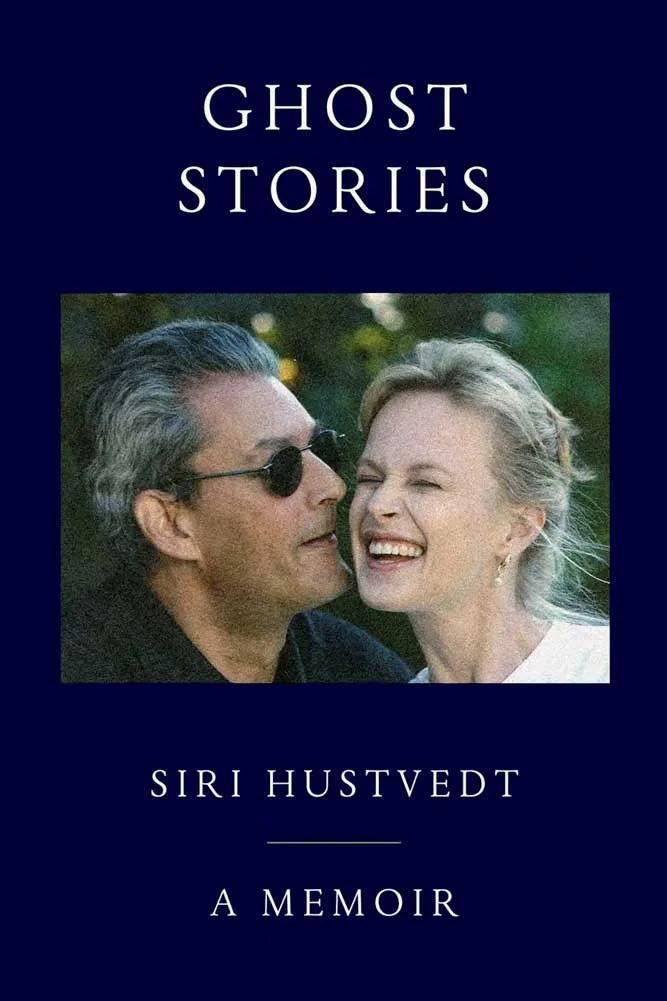
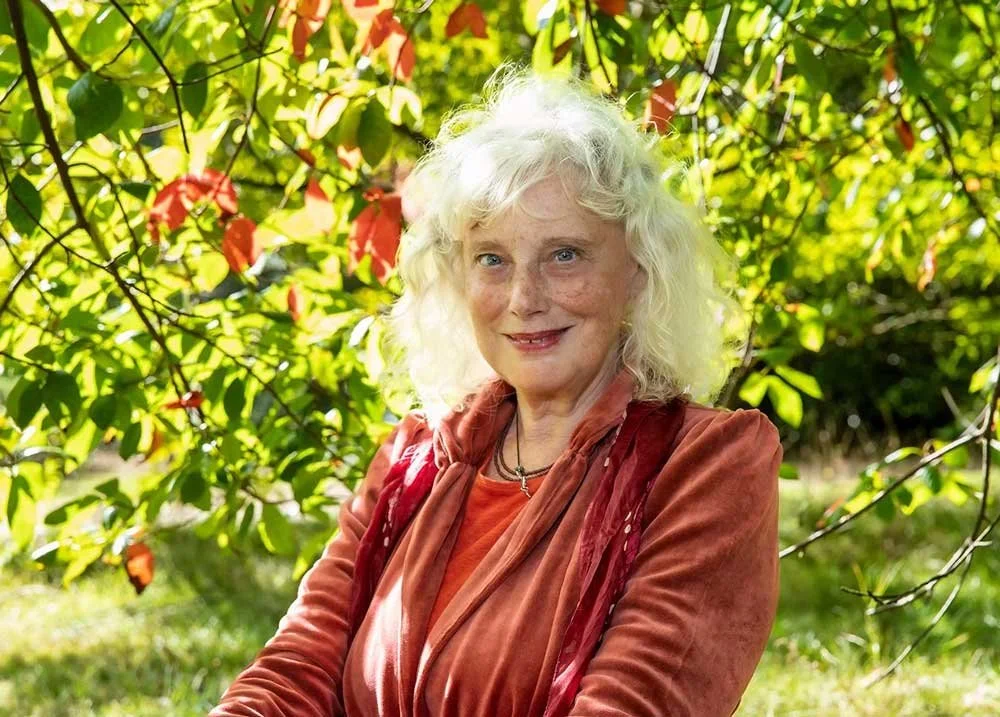
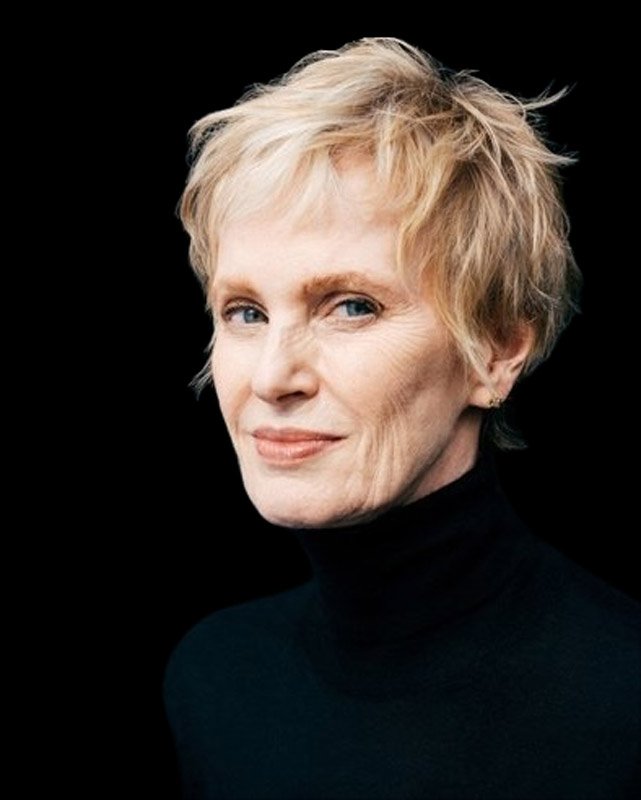
Today, we are honored to welcome a writer whose work has long explored the intimate landscapes of the mind, memory and the heart. Siri Hustvedt’s writing moves between the personal and the philosophical, the literary and the deeply human. Her work bridges collections of essays, non-fiction, poetry, and seven novels, including the international bestsellers What I Loved and The Summer Without Men. Recipient of the Princess of Asturias Award for Literature and the Gabarron Prize for Thought, her work has been translated into over thirty languages. Her new memoir, Ghost Stories, is a reflection on forty-three years shared with her late husband, the writer and filmmaker Paul Auster. In its pages, we encounter not only love and loss, but the quiet persistence of presence, memory, and language itself.
SIRI HUSTVEDT
Years ago, we bought this grave in Green-Wood Cemetery. I have to look up the year. I cannot remember the year we were there, but we had graves long ago and we talked about it, and, you know, Paul died with tremendous courage that I still think about almost every day. And it helped, Mia, it helped that we thought about it, that the imaginative entry into that place is not full preparation for the experience of grief, but it offers a perspective. That means you're not shocked by it, if you see what I mean.
It is actually shocking when someone you love very, very much dies at the same time. I am very glad that we had those conversations, that he knew how he wanted to die. He didn't try to hide that fact under the rug, which is very common these days. And it happens not only to people who, maybe, you think of are so caught up in the daily business of living that they never think about dying. It's other people, too. I mean literary friends, et cetera. I've had quite a few friends die now, not in person, but been part of their dying. A lot of people simply don't want to even use the word die.
THE CREATIVE PROCESS
I don't know what your preferred word is. You wrote about how people use the word passing.
SIRI HUSTVEDT
I think I'm quite alone because everybody says passing now, but I just haven't gotten used to it. I just can't, I like the much harder and truer word: dead, deaths, dying.
THE CREATIVE PROCESS
I believe it's about tone, once you prepare your mind for it. You have these discussions, and then you come to a place where I believe, and you talk about the spirit, the work lives on in the memory, lives on in the books, it lives on in your life together, in your family and your grandson, Miles. It lives on through him. So, then you understand it. And then, I think, it's a transformation. It's another energy. It's not the same physically, but it's in some ways deeper.
SIRI HUSTVEDT
Yeah. I mean, I call it Ghost Stories. Paul is absent from my immediate life. So, the embodied man whom I loved and whose touch, talk, humor were always a kind of sustenance—it went both ways—that's gone. And grief is the experience. I was just thinking about this, I mean, grief happens because you don't stop loving the person who died. The person doesn't exist in your reality anymore. The everyday is not colored and shaped by this other human being, but you don't stop loving the person.
So, grief is a particular kind of unrequited love. You know, it wasn't unrequited in the past. Usually, we think of unrequited love as you never got to do it, you never had it for yourself. But, in fact, there can be requited love, which is then unrequited love in the paroxysms of grief.
THE CREATIVE PROCESS
That's such a beautiful way to express it. But I think it's requited. I think, as you said, he said he wanted to come back as a ghost, so that was a want.
SIRI HUSTVEDT
You live with the ghost. And the ghost is, I have to say, that ghost, that being that was, is very much part of my reality, my waking, sleeping and eating reality. But it is changed, and I think it's good to comfort ourselves with the realities of memory. But memories, of course, don't have the surprise of the living person.
Kierkegaard says there's repetition and recollection. And I put this in the book, repetition is what you do forward, right? You're repeating the same thing and moving forward, and recollection is a movement backwards. Repetition is never identical because you can never have the immediacy that was there in the past. Right? So, even if you're trying to... his little novella Repetition is all about this. The guy is trying to repeat an experience exactly. And, of course, it's not the same, right? Because time changes it. It's a kind of internal museum. It's also important, and I found this with Sophie and Spencer now as time has gone on, how crucial it is for the three of us to talk and remember Paul together because that's a form of solidarity inside the family that strengthens us as a unit.
THE CREATIVE PROCESS
You see how it's carried forward. Like in your daughter Sophie Auster’s song, “Blue Team”—you are now the blue team carrying that forward—which, for those who don't know, is a reference to Paul's writing as well.
SIRI HUSTVEDT
And that's the other thing about human experience and human life: yes, there are some experiences or some secrets that people never divulge that they hold for a whole lifetime, but many of our experiences move ourselves because we tell stories to people because there's some complicity that's formed so that you're actually sharing feelings. And this is important to acknowledge what I call the between—well, actually, Martin Buber called it the Between way before I did. But that idea that I talk about in the book, which is the... So, what I am missing from my long marriage is Paul, of course, but I'm also missing the Siri and Paul, Paul and Siri, that place or zone of experiences that happened between us over time that created what I like to also call a kind of overlap.
THE CREATIVE PROCESS
That was actually going to be my second question. I also thought, okay, it's called Ghost Stories, but it could be called Paul and Siri or Siri and Paul. It felt very much like an alternative title...
SIRI HUSTVEDT
That's right, but no publisher would like the title And. That would also work!
THE CREATIVE PROCESS
But it's this ongoing presence. I want to say one thing before you read, and I think I kind of said it, but what I've appreciated about so many of your books and your essays is I learn so much about art and psychology, and we all feel more intelligent when we're inside a Siri Hustvedt book. We understand how our minds work. But for me, as I say, this is the most personal. So, I think right now, it's my favorite book of yours because I think it answers not just in theories or abstracts or fiction, which is creative and stimulating, but you answer it with the stuff of your own life. What I think is the most important question: how to live a good life. How to love, how to love through loss, how to keep memories. You answer it with the stuff of your own life, and the form of it is poetic. It's just real, and we learn so much. So, you selected a passage to share with us.
SIRI HUSTVEDT
I'm actually, I think I'm just going to read the very first page and a half of the book, and the first chapter is called "Lost Time".
I am alive. My husband, Paul Auster, is dead. He died on April 30, 2024, at 6:58 p.m. here in the Brooklyn house where I am now writing these words. He was diagnosed with non-small cell lung cancer in January 2023. But before that, in early November 2022, Paul had a CT scan in the emergency room at Mount Sinai West hospital. The radiologist spotted a mass in his right lung and noted it might be cancer.
We all die, but only some of us know our lives could end soon. Although I had often thought about what it would mean to live without Paul, I began to imagine it more often. I imagined walking around the house alone. I imagined grieving. If your father dies, I said to our daughter, Sophie, I will lose my everyday.
What I didn’t imagine is that after Paul’s death, time would be deranged beyond recognition. I remember and then forget what day it is. I remember it’s the month of May and then forget. The hours skip ahead but minutes often move slowly. I want to root my body in calendar and clock, those reliable, if ultimately fictional, markers of time, but I’m not making sense of their regular beats. I’m afraid if I don’t keep checking date, day, and hour, I will lose my orientation, stumble on the stairs, and fall or float away ungrounded. I make lists and calendars. Lists and calendars lie on various tables and surfaces around the house. I worry I will forget chores, appointments, bills that must be paid. I worry my thoughts will scatter into more pieces than I can recollect. I am now in the business of recollecting myself.
I have trouble breathing. My heart beats too fast, not all the time, in bursts. I have pains between my ribs, sometimes intense. My neck and head ache. My nerves buzz and hum, and electricity shoots up and down my limbs. My gut rumbles, and my bowel rhythms are off. Some of these are old ailments that have worsened. I imagine I’ve grown a tumor that mirrors the one found in Paul’s lung, and I will die soon. I take the fantasy further. Maybe mirror cancer is a rare medical phenomenon outside the purview of mainstream science, one of those outliers that has been jettisoned from “cleaned data.”
I’m glad I can still laugh at myself. Then again, hypochondriacs die from illness too.
THE CREATIVE PROCESS
That expresses the humor, the intellectual curiosity and the sense of discernment. You bring us in, in a very real, grounded way. Then you bring us into your home, and we get the rhythm of your life. That music of being. It made me think of one thing, you said it disorientated your sense of time and place, and, you know, these odd things like you found yourself laying with your head at the foot of the bed and all these kind of things. But then it made me think of another way: really being in love, and being in a work of art. These are two things that disorientate your sense of time. But when the person you love dies and that love becomes almost spiritual, the disorientation is almost like the return to real time, the way the rest of the world experiences it.
SIRI HUSTVEDT
Of course, the question of time, as we know, is a philosophical quandary that's been treated in all kinds of different ways and still is unsolved. You know, even in physics where there's a whole other idea about what time is, has been challenged by certain physicists. So, time remains a problem. In an essay I wrote for a very academic journal, one of the things I say is that time, when you think about it, is abstract and invisible, but timing is not, right? So, the rhythms of our body, day and night, sleeping and waking, heartbeat and breathing, all of that is part of our timing. And I think that when someone dies that you love, that was part of your rhythmic reality every single day, when that is abruptly taken from you, the feeling of time itself gets screwed up, you know, to put it bluntly. And so, I like to think about those bodily rhythms and the external rhythms. We have lots of things. The menstrual cycle is a rhythmic reality for women for part of their lives. The moon, the tides, all of this, I think, is connected to rhythmical reality.
THE CREATIVE PROCESS
Yes, and before language, this is how we communicated primarily. If your partner is there, you feel their presence laying next to them. If they're not sleeping, you're not sleeping. There's a tension. Whatever they're going through, you feel it. You describe that as the phantom limb.
SIRI HUSTVEDT
Yes. And I also described the rather weird thing that both Paul and I had read Merleau-Ponty, the French philosopher, with tremendous care and sensitivity on both parts. We read a little differently, but we definitely had read him. And when Paul asked me for information on phantom limb, I just, I don't know, I wasn't thinking. I was thinking, I guess, about scientific studies, so I gave him the ones that seemed apt for his use. And then later, when I was writing the book, I thought, well, of course, this is this huge part of phenomenology and perception. And certainly as a metaphor and possibly as a real scientific phenomenon as well, I think this is beautiful to describe grief, that the beloved is taken away and it feels as if you're amputated or gutted. And then, nevertheless, there is this sense of the presence of the other, sometimes vividly in hallucinations, but other times it goes on. As I said, you don't stop loving just because the person dies, and that's a strange reality to negotiate.
THE CREATIVE PROCESS
Yes, and it's strange because until you wrote it, because I get lost in the stories or I get lost in the essays, I didn't really count how many stories of bereavement were in your different books.
SIRI HUSTVEDT
Especially Paul’s. I mean, his books are… When I thought about it, and, actually, there was a moment when I thought I would include some of the grief stories in Paul's work because there are many, I couldn't quite face it. And, you know, I started writing this book just a couple weeks after Paul died, and it's something I could actually do now, but couldn't do then. A young friend of Paul's who's mentioned in the book, Andy Martino, cataloged grief stories; he sent me this long list. It was everything, and it was not only the grief of death, but the grief of other kinds of losses as well. And I realized that to just kind of post a list of the grief instances wasn't enough. It would have to be framed. So, I, you know, I didn't end up doing that. You know, it might have been kind of fascinating as an appendix or something, but I ended up not using that. But there's no question that grief in some important way, long before Paul died or had any sense that he was dying, was a kind of engine of storytelling for Paul.
And in The Invention of Solitude, of course, he talks about his grandmother's murder of his grandfather, which he didn't find out until he was an adult because his first cousin met a man on a plane, and when he heard her name, he remembered the trial of the grandmother who got off. I don't know if it was like a justified homicide because he was an adulterer exactly. But, you know, Paul goes into the trial story as well. I think that violence and its effect on the family was hugely important for Paul's literary generative life. And when you think about the number of his stories that start out with often a man who has lost everything, you know, his wife and children. The former life is gone. He's stripped down, he's thrown back on himself in some way. So, that's how a number of his stories begin.
THE CREATIVE PROCESS
And you mentioned the stories, but also the real-life experiences like the grandfather that he didn't really know, but then also more recently, his son Daniel and granddaughter Ruby, and others who you've lost.
SIRI HUSTVEDT
We were beset by a series of what Paul called the “horrible things" and, you know, the death of ten-month-old Ruby. And we didn't know how she had died until Daniel was arrested for negligent homicide. And this was obviously shocking. And then months later, after he had been arrested and he was released on bail, he died of an overdose. And then it wasn't that much after that that Paul was diagnosed with cancer, so it was a prolonged period of grief and suffering.
THE CREATIVE PROCESS
It's awkward to ask about, but you say about, not that one causes the other, but in individuals who are sensitive, the emotional weight of that could cause a decline.
SIRI HUSTVEDT
Well, I mean, this is as I point out in the book, it's scientifically unproven, but we do know that at some point, especially with a tumor, the immune system ceases to recognize it. And so, the immune system does play a very important role in cancer. And for centuries, physicians have linked cancer to powerful emotions. And, in fact, even in the contemporary literature, it remains true.
Exactly how it happens, of course, is mysterious. Just as there's no cure for cancer. Many cancer treatments fail, although more and more are successful. But the model in Western medicine, which is the biomedical model, has a tendency to ignore the social circumstances and personal histories of the patients. And I point that out. No doctor asked Paul about his recent experience. And I do think it played a role, saying that it played a role. I mean, the man smoked for many years and we know that lung cancer is strongly correlated with smoking. So, obviously, this was not the single cause of his illness. Nevertheless, I am convinced not only because of my experience with Paul, but in my general reading, that questions of a person's life play a significant role in illness, too.
THE CREATIVE PROCESS
You’re someone who has a foot in both worlds of the arts and the sciences. You are so analytical about things, but quantifying everything does tend to, for many people, kill the spirit. We study biology, we study animals, but it's often like they're dead or they're in a lab. As a biologist said to me, they’re not living animals, and that's not the study of life.
You talk about the doctor-patient relationship. This is a living relationship. It's not all numbers. And so, it's hard to really analyze that. It's just an instinct. It's what you develop in the arts. And so, it's fascinating and you're so fascinated with the spirit, although I know you have the scientific mindset. But what was both of your relationship to religion or spirituality? Because it's a blended open thing.
SIRI HUSTVEDT
You know, I think both Paul and I, we did talk about this over the years, we believe very deeply in a reality that transcended the individual. Right. And that that was both ethical and mysterious because it's not fully known and can't be quantified. And, you know, I have always opposed what I think of as belligerent atheism. It's like, how do you know? Excuse me, can you posit this as an absolute verity? You know, that there's nothing that we think of as a god-like or a spiritual reality in the world.
We just... it's an unknown. And at the same time, I think most people strive for what is beyond the self. And, you know, even to look at it from a scientific point of view, we are social animals and we need others. In a neoliberal world where everyone is treated as an isolated consumer, and that's how worth is quantified and determined, now that we have surveillance capitalism, all our data is being collected all the time. I think not necessarily a return to old modes of ethical knowing, but a sense of responsibility for others, which is, of course, part of many, many cultures and arranged in countless different ways, is hugely important.
Neither Paul nor I believed in an afterlife. Now, who the heck knows, but I mean, we just, we didn't, and not enough anyway to create a comfort zone for after death. Paul very pointedly told me that he wanted to be buried in the Jewish mode in a plain pine box, not embalmed. And the phrase he used was, "I want my body to feed the earth". And that, too. A sense of not standing outside what we think of as the natural world, but, of course, we're part of the natural world. We're organisms that are part of nature with a capital N, and that, I think, has great spiritual value in our world.
THE CREATIVE PROCESS
I think it's so humbling. When you expose yourself to so many ways of looking as you outline the different belief systems, the different ways people think of those departed. You know, there's a commonality. So, I can't believe in one. It's closest to Buddhism, but it's like I believe in Earth.
Tiokasin Ghosthorse said something to me, it was a beautiful phrasing. He says, we start seeing that we are becoming Earth as we're born into this physical dimension. We are becoming Earth, and then as we're living during this time, we're alive, we're becoming Earth. And then when we are finished with this body, we are becoming Earth. And that's just as you expressed. Paul and you have a place together.
SIRI HUSTVEDT
And actually, I have to tell you, I find that really comforting. And when we visited the grave site, now there is a stone there. My name will go under it. It turns out you can't have two stones if you buy a deep double grave. But I felt almost jubilant when we visited because I thought, yes, this is where we'll be. Of course, I don't think, you know, anyone is conscious then, but it was actually not sad for me, and even now I'm not ready to die yet, but it's a comfort to know that I'll be there, too, in that place.
THE CREATIVE PROCESS
I want to think, we can't say definitely, let's keep our mind open to it. But when we talk about, or when you both talk about The Music of Chance or where... I know that you're very interested in that space. Memory and imagination, you call them twins and the spirits or where our ideas come from.
I mean, so often, you know, it's an act of listening. So, whether that is the spirit, whether that is the lives that have walked this earth that you pick up on, that all the things you experience and take in. But I feel like we're all kind of listening posts to what has been before. I mean, hopefully I'm not just learning from this little monkey brain because that's not enough.
SIRI HUSTVEDT
No, of course. I mean in the arts, but I think in everyday living, what you've mentioned is the most important thing, and that is being open and really listening to what's coming in. And now at seventy in my old age, I am really conscious of the listeners among us. To listen openly, right? Really try to take it in and then wrestle because that is the essence of dialogue.
And sometimes Paul and I would go out to a dinner and we'd come home, discuss what happened and maybe there was a person who was dominating or speechifying and I'd always look at Paul and I'd say, "No dialogue". And this can sometimes have to do with hierarchies; especially men, maybe especially white men, have gotten so used to their positions of preeminence in the culture that even when they're dull and saying, you know, sort of pious and stupid things, they expect everyone to listen to them without really listening to any reply.
And that is how, I think, people actually shut down. You mentioned earlier about children. I have a little grandson who's now two and his alertness... he doesn't talk that much, I have to say it, but his alertness to the world, to imitation, understanding what's happening around him socially is so inspiring. And, you know, of course, he's my darling, but I think his openness and alertness is shared by many, many children that age.
THE CREATIVE PROCESS
And you write about Paul’s innocence as well. I think that's the greatest courage for someone. You talk about masculinity, they're not supposed to show the softness, the appreciation, that love. But I think it takes great courage to be innocent. The courage to maintain your innocence in a sense, purity, throughout life, instead of protecting yourself.
SIRI HUSTVEDT
No, no, he did. And, of course, that word innocence, it was a gift from my friend Anna Motz, a forensic psychologist who I love. The moment she said to me, well, you know, Paul had this innocence, I thought, that's exactly what it was. A kind of innocence. I don't know that that prevented him from going into, I think, despairing places. Even when he was dying, I didn't feel any despair.
And, you know, he kept saying, he said it several times, "I would really like to die telling a joke". You know, I said, "Darling, I don't think that's going to happen". And, of course, it didn't happen. But it was the idea that he embraced, that he would go out laughing.
THE CREATIVE PROCESS
But you describe it as a good death?
SIRI HUSTVEDT
A good death. It was. It was. It was a good death and I'm not sure that in my life I have ever said that exactly before. I mean, it was the best death I have experienced.
THE CREATIVE PROCESS
You had all this, you were ready. It's beautiful that you capture that. I mean, there's so much. I don't think you can ask much more for a book, but it made me appreciate and feel grateful and wish I had written down enough or told the people I love them enough, you know, remembered all the moments. Because sometimes you're living in that moment and you forget, but it just made me appreciate life.
SIRI HUSTVEDT
Well, I think, if one can come away from the book with that feeling that is what I hoped. Despite the raw feelings of deprivation and grief and, to be honest, you know, it changes, but it doesn't go away. I think the body adapts to the loss. I think this is a truly embodied physical reality that as time goes on, that sense of what the heck is going on here and where is that other body, where's my other body, what happened to it? You physically adapt to the absence and that makes in some way the everyday easier.
But it certainly does not change the fact that you would love it if the person could just be resurrected and come back and it doesn't stop your grief. But, you know, I do feel so lucky that I don't have regrets. There was really nothing undone between us that had to be fixed. I think that's extremely hard for people when someone dies and there's so much that either wasn't said, declarations of love or difficulty and pain, and people are really tormented because you can't change it then. You can't repair it. Repair is between the living. And I feel deeply fortunate that that wasnt our story.
THE CREATIVE PROCESS
I love the full arc because you keep this freshness and a lot of people need to know this, that through a really long, true, loving relationship. But let's talk about the love making. So you even say that it becomes deeper. You're not salacious or anything.
SIRI HUSTVEDT
No, I think that the, you know what's interesting actually, my agent, Amanda Urban, someone I am close to and think is wonderful, she said in one of her emails to me, "I'm so glad you talked about physical love". It's true that after Paul died, I read quite a few grief memoirs, even some very famous ones that I hadn't read before. Physical love almost is never mentioned. There are probably books that do, and I just haven't read them.
I mean, you know, I'm not sharing details about the bedroom in this book, so I don't want people to get too excited. But it's rather that the two of us, that physical relationship was extremely important and central. And it goes on. I know some younger people don't like to think about old people doing it, but we do it.
THE CREATIVE PROCESS
It's life-affirming to read that.
SIRI HUSTVEDT
It's part of life and old people are randy, too. So, that said, I wanted to include that because it was extremely important to us. And I know it's not important to everyone, and I certainly am not judging other relations by my own. But that had to be included. And the other thing that is missing from a lot of grief memoirs is the person who died.
THE CREATIVE PROCESS
That's amazing.
SIRI HUSTVEDT
This is interesting to me, you know, because I... and again, this is not a criticism because grief is such an extraordinary state. An essay I wrote after the book, I almost wish I had the thought before, but I wrote an essay for the Journal of the American Psychoanalytic Association, JAPA. And in it, I say grief is ordinary madness. So, it's not at all strange that there are many books about grief that focus on the ordinary madness of that experience. That go kind of nuts for a while. And I mean, many people do.
But for my urge, in fact, I think the urge that pushed me, you know, to the computer to write this book, I know it was a bid for resurrection. To the degree that that's possible, I wanted to bring something of that man back. I wanted people to have some feeling of closeness to him. You know, there are many people who have read Paul's books and people have held him up as a kind of literary hero, others have been resentful and angry as happens, but, you know, that's not the person I knew.
So, I wanted, I guess, readers to have a feeling for his humor, his character and not write a hagiography. This is not, you know, life with St. Paul. It's, you know, the real man. And, of course, it's impossible to resurrect human beings and words are not bodies, at the same time, I know I wanted him to be a force. And, you know, having his own words, you know, he has a different prose style and so you're moving back and forth between my language and his language, and I thought I wanted this to have an effect on the reader.
THE CREATIVE PROCESS
Well, it does really have an effect and the form it took... Intimate doesn't describe it accurately to me, but it does feel like you open the rooms of your house, you open the rooms of your mind, the rooms of your love, your relationship with each other and others. I don't want to say it's voyeuristic, but the sentences have this cadence of breath. It's not like they're fragments or disjointed, but you just say enough that it really felt like that's the daily rhythms of life. And I wasn't sure, because you had mentioned Roland Barthes at some stage, one book I really do appreciate is A Lover's Discourse.
SIRI HUSTVEDT
I really like that book, too. In fact, I'm very partial to the late Barthes, you know, because I think I read when I was first in graduate school at Columbia, I read S/Z. But as he got older, I mean, it's such a sad story, you know, being killed by a bus. I mean, it's just terrible. And that, you know, in a sense, I think after his mother died there—this is hardly my original insight—that there was a kind of freedom, too, that happened, a kind of opening. Those later books demonstrate that. And I'm really fond of them.
THE CREATIVE PROCESS
Yes, and Ghost Stories has that intimacy. I feel like I've just opened this person's mind. Wow. And then you can revisit it because it doesn't feel formalized. That's what I appreciate about your book.
SIRI HUSTVEDT
I mean, it's a strange beast, this book. You know, sometimes I think, so what? How did you do this? I had a feeling, you know, I think every book is a kind of organism, you have to... you're finding the form, but in another way, the book is creating its own form as you're writing it, makes sense. I did have an arc. I did know I didn't want it to be really long. I wasn't going to write a tome about the endless numbers of memories I have from our life together. I mean, it could go on and on.
And when I finished I thought, oh gosh, you know, there are all these really important people in our lives that weren't in the book. But it was because somehow I was led by the thoughts and the illustrations of those thoughts then came to me, as I was writing. But yes, it is both, it's a collage with storytelling, you know, a documentary collage with storytelling and my text with Paul's text. So, if you think about it, the structure is rather complex, but I don't think it reads that way.
THE CREATIVE PROCESS
No, it really reads just like poems, but in a very, you know, they're full sentences, but it has that feeling.
SIRI HUSTVEDT
I agree. And, you know, the funny thing is, of course, Paul, the last novel he wrote was Baumgartner. And he read to me all the time from it because he said, "I don't know what I'm doing. I have no idea what I'm doing, Siri, so I have to read to you. I need you to tell me if this is okay". And I really had almost nothing to say about that book. I just said, "Keep going. It's great. I love it. Keep going".
And when he finished and I read the entire manuscript, we always did that with a pencil. And if there was something we thought was off, we just put a little X by it. And when I read the whole book, I thought, this is one of the most complex narrative structures I have ever seen in my life. But it reads like water. It's amazing. I mean, he hops around in time, he goes into childhoods, he goes, you know, to what is now Ukraine. Fine. It's all fine. It all works. And I remember to myself, only a master could write this book. You know, the young Paul could never have written that book ever. It's just, when complexity becomes simplicity, you know, what is the magic of that? There it is.
THE CREATIVE PROCESS
So you have that complexity and simplicity in Ghost Stories. Did you feel like the over-the-shoulder quality of… You created the structure, but did you feel that kind of co-writing even within the pieces that you were writing yourself?
SIRI HUSTVEDT
Because, you know, again, in some way that's, I had to, it was very nice. I was given a philosophy award in Monaco, this principality prize. And, you know, in order to get the prize, you had to write a speech. And I thought, what the heck? You know, I'm going to summarize what I've been thinking and working on for all these years. And I ended up calling it "Betweens".
You know, I started because I thought, how am I going to do this? I think I must have had, you know, 80 pages that I threw out because you're trying to talk about your whole life, right? It's an hour. You can't possibly do all that. So, I just ended up using examples from various disciplines about the between and relation and what that is. Which was a solution to a big problem, you know, in biology, is that? You know how I use the example of intrinsically disordered proteins, which have been around and scientists have known about them for a long time, but they thought they were exceptions. It turns out in what we think of as higher organisms or complex organisms, these proteins that what they end up doing is determined by the partner. It's a beautiful thing. And the context, the whole cellular context of what's going on, this is a beautiful example of relation in biology.
And there's also that I understand not nearly as well, but have relied on someone like Carlo Rovelli, the wonderful, I think, physicist who talks about relation as actually the foundation of physics. And he, you know, everyone knows about the story, I think about two particles that are millions and millions of miles away, and yet they have a relation, you know, and the strange thing with quantum, where the observer is implicated in what's happening, all of this, you know, can be used toward thinking about relation.
And then, of course, there's Freud and transference. Psychoanalysis is very strong on that intermediate area or the relation. So, I've been thinking about this for so long. It's so part of who I am and my life was grounded in a particular relation with the particular man that changed me. I think, as I say near the end of the book, made me better. And probably without that dynamic relationship with this person, I would be someone else. And he would've been someone else. You know, I mean, he died before me. But, you know, we were, I think, hugely important to the drama of becoming in our own lives.
THE CREATIVE PROCESS
I think that that's it. It is all about becoming, and I love that because it's a constant evolving state. We talk about transformation and he's gone, to use your expression. He's gone ahead into the future.
SIRI HUSTVEDT
Memories of the Future.
THE CREATIVE PROCESS
Reading and listening to you, we get a real sense of that constant conversation that you and Paul had, endless discussions back and forth on the arts, sciences and the world. Ghost Stories is a book about grief, but above all it's about love. Before we began recording, we were talking about how that sense of loss isn't strictly personal right now. There's a kind of collective sense of grief, particularly in the United States, for the state of our democracy and the social unrest we're seeing. The world is changing so fast, and we're living through this massive upgrade moment in terms of our relationship to technology, nature and our humanity. We look at the man-made climate crisis and we grieve for the planet. We look at AI seemingly replicating human intelligence and creativity, and we grieve for what we're losing.
Because you've always advocated for multidisciplinary intelligence to answer the serious existential questions we face, your reflections on AI are novel. You have this outsider status where you can speak your mind about a variety of important subjects.
SIRI HUSTVEDT
And also a kind of mad curiosity, as you say, that's led me from one discipline to another. And every time I enter a discipline, I am a stranger. You know, I'm like going, well, you know, it's 101 every time that I start, right? But I'm looking at it. There’s no question that I'm able to look at it because of the other disciplines where I've been, you know, a temporary resident or another marginal resident give me a perspective that many people don't have.
THE CREATIVE PROCESS
That's the playfulness, the curiosity and the limitless sense of self that children have. You've retained it, through great intellect, but also that playful curiosity. I’ve always said that I think it's one of the greatest challenges in life to do that.
SIRI HUSTVEDT
That’s really nice. I don't think I could have a higher compliment.
THE CREATIVE PROCESS
If you don't mind me asking, because I love this idea of relationships within nature. I know you're so deeply invested in trying to understand consciousness, and I'm curious about things like the mind of the universe. We are now just discovering the language of trees and how they communicate. To expand on how you are inspired by nature, your childhood in Northfield, Minnesota and your playground of learning—all these things that excite your mind find their way into your stories, your life and your understanding of the world.
SIRI HUSTVEDT
I mean, there are now papers being written about plant consciousness and we know about these connective roots that are sending signals of forms of language. And, you know, I've read some of those papers on plant consciousness, and I don't think I have the depth of knowledge to make complete judgements about it. And, of course, all of this rests on what we think of as consciousness. What is it? How do you define it? Nobody seems to be able to do that job very well.
What this tells us is that the way human beings, certainly since what we call the Enlightenment and before the 17th century, really, when there was a switch to a form of mechanical, scientific thinking has been—and I do want to say this because I think it's important—a mathematical way of thinking has been extremely important to all kinds of discoveries. And it's often very successful, which is why I think it's continued. At the same time, as a blanket working paradigm, there are also many failures. And failures, I think, are often related to a kind of hubris, right?
That man, or what was always called man is, you know, this goes all the way back to Bacon actually, who stands outside nature and wants to control it, right? And nature still is, and for a long time has been thought of as a feminine reality, right? So controlling that unruly, feminine, natural world became man's job. And I think that has had terrible consequences, certainly ecological consequences that we know now are catastrophic. And you can root this in forms of scientific thinking that have not paid much attention to something like intrinsically disordered proteins. You know, because once you're in a mindset, you see with those proteins, they were there, but they couldn't be regarded because the lock-and-key fantasy about proteins was that every protein had a little job and the proteins got together, like a lock and key, a very mechanical image, and then they went about and did their business.
The idea that the character of the other protein was crucial to the task that then occurred was a foreign way of thinking. Now, one of the reasons I'm so keen on Margaret Cavendish, the 17th century natural philosopher and, you know, fiction writer, playwright, poet, is that her natural philosophy is absolutely grounded in exactly this. And I compare her to the much later thinker, Alfred North Whitehead, who also had this dynamic, moving, relational philosophy of the universe. And Cavendish, too. Now he had access to early quantum thinking. Whitehead did. I mean, it's a completely different thing. It's not that they're the same, but I have come to think of it as an oppositional way of thinking and philosophy. There's a whole tradition there that was never followed, but it is present in the past. We can pick it up and there's a whole story, I think, that begins in the 17th century and we can trace it into the present day.
THE CREATIVE PROCESS
And regarding AI and this relationship we were discussing, there are opportunities and risks. We talk about proteins, and while I don't know enough about AlphaFold, people say it has interesting possibilities—like eliminating single-use plastics. So, there are ways it could be creatively explored. But I do want to ask about consciousness and AI. AI is changing the way we're communicating with each other on so many levels. We've seen journalists and knowledge workers being laid off; it affects every aspect of society. I'm wondering what your reflections are on how it's changing us, especially as we look back on 20 years of social media and its effect on our society.
SIRI HUSTVEDT
Well, this is very common for me. I'm always of two minds. At least two, sometimes three, four or five. But if we do two with AI, listen, I agree. First of all, artificial intelligence is not going to go away. Technology can change, obviously it's changed a great deal, but we're not going to eliminate AI. This is not a realistic position to take. Also, I do think that there are certain tasks that AI is perfectly suited to that can be useful. I mean, calculation is the most obvious one.
There used to be rooms full of female computers who did all that calculation work because the big boys at the top didn't want to bother with it. You know, the idea that mathematical calculation is some kind of high work, this comes with the fact that when men took over computers, right? That, oh, you know, software technician, all this stuff. I mean, when women were doing it, it was grunt work. And there's no question that people working in biology labs, et cetera, can take advantage of ways to collate huge amounts of data that they could never have done before. And all this I'm totally for.
The problem is more what I was saying earlier, which is that the fantasy of human-like robots, robots that, you know, can entertain you at dinner and love you. I think this is quite dangerous, or act as therapists. Now, there is a movement in psychiatry, for example, to create AI therapists.
THE CREATIVE PROCESS
They're using them now.
SIRI HUSTVEDT
I think this is dangerous to me because a machine will be able to simulate therapy talk. We know this goes way back to the first computer program for a therapist, which is basically, you repeat what the person says, you know? Oh, I see you're having some conflicts with your father. Tell me about that. You know, it's like, yes, we can make a program that's going to ask some of the right questions, but the human encounter, the sense of that living body, and again, you can simulate forms of empathy, but it's not real empathy.
Machines do not think, they do not feel and they do not... there is no such thing at present of anything that's close to what they want to call general AI or general intelligence. We do not think the way machine learning thinks. Now, that doesn't mean we can't be impressed and amazed by what these machines can do, to mistake them for other humans. As I said in a long essay I wrote, you know, people have always projected human feelings onto things. I mean, I loved dolls when I was a little girl, for example. I had whole scenarios and stories that I acted out, and I would arrange them in different ways. I really loved it. And I projected human feelings onto my dolls. Of course, when I got a little older, I knew they weren't going to come to life at night.
But we do that. So, if you give a person a humanoid-like robot, human beings will have feelings for them. You know, all children are animists, too. So, that is a very ordinary human experience. What has happened in AI from very early days is these endless predictions that, here's the moment it's going to come. I can't remember. The first was like by 2000, and then it's 2008. And now, I think, there are a lot of predictions that it will be 2030. It is not going to happen, right? Because it's a mind-body problem.
These people believe that the human mind can be... that it's basically a kind of software and the hardware supports it. This in the neurosciences, which was once a kind of working paradigm, is now... many, many cognitive scientists and neuroscientists have abandoned it because they realize that the material, what we're made of, is part of how we think. And you cannot isolate. You know, we're also not brains in vats, right? For me, our fantasy land and science fiction has and continues to invade thinking in these tech worlds. They are philosophically naive in many, many ways, and they don't bother to correct that because they feel they're on top of the world.
THE CREATIVE PROCESS
Yes, it's true. I don't think they've read the end of most of those science fiction books. They seem to have just liked the cover or thought it was a great movie. But I feel like that might not matter because they're spending over a trillion dollars on this. If it destabilizes society with mass redundancies and all the other aspects of mass surveillance—you talk about surveillance capitalism—it might not matter if we reach superintelligence. It becomes a dominating force and is spying on us because it's in all of our technology. Those are the problems, even without superintelligence, because it's owned by these companies.
SIRI HUSTVEDT
Nobody knows what superintelligence means. Nobody knows what intelligence means. And so, the intelligence models that these people are using comes out of a very spurious tradition, which is IQ measurements, right? Most people have at least a vague idea that there's something rather sinister about IQ. Now this long story of ways of measuring what cannot be measured. We mentioned that before, you talked about quantifying things as opposed to qualifying things, they do that. Now, this is not analysis of quantity, but of quality. You see that in sociology and psychology reports all the time, but I think that statistics are useful, right? I'm not opposed, again, just the way I'm not opposed to AI.
Statistics are useful, you look back at the history of statistics, a discipline started with Galton in the late 19th century, you see that from the very beginning it was tied up with eugenics. And a great many of the statistical innovations that happened in the early 20th century and are still used today and are very useful were in the service of eugenics. It was a way of proving, for example in England, that Jews, the immigrant Jews, were on the whole less intelligent than the native-born white population of England. And this is now having a form of reckoning.
When I started doing research on this, which is, I don't know, like 20 years ago, there was nothing on it. I kept saying, why is it statistics? What is statistics? Why is all this eugenic stuff? And the statistics, I found exactly two papers. Now I think because, you know, the world has changed and maybe it's changing back. We're now in the middle of a backlash. But it then became much more common knowledge, the close alliance. It was a riddled, complicated and dangerous alliance. Now that alliance is still going on in the AI community. Because if statistics can measure everything, they can also prove many things that aren't true. And they were marshaled to prove those things over the history of the discipline of statistics.
THE CREATIVE PROCESS
I think that's so true. Of course, you find what you look for. And now with all of this, the problem is that we're drowning in data. Data is doubling every two years, and probably with AI, it might be every year and a half now. So, it becomes a matter of sifting through all of that. It's scary to hear how the discipline of statistics was tied up in eugenics. It makes me think of what you've written about the modern propaganda surrounding AI and its current alliance with state power.
SIRI HUSTVEDT
You know, I have to tell you, I have a lot to say about that. I've been researching and reading and I just... I think it becomes for me more and more terrifying. But now the strong alliance between AI companies and say ICE in the Trump administration is truly terrifying. And in the budget, I think it was in The New York Times that they showed how everything has been cut. You know, biological research is a sliver of what it once was, but AI has grown enormously. It is like a huge piece of the pie now and it's all speculation, so there's that part of it. But also, I think, authoritarianism and its link to AI is really frightening.
THE CREATIVE PROCESS
I'm so glad to hear your insights. We have a project with the Center for European Humanity Studies who very much appreciate your work. Sam Altman is saying that in the near future, they envisage a billion-dollar company with just a CEO. So that’a lot of out of work people. And who wins in that scenario?
SIRI HUSTVEDT
I think it's really important because there's so much... I think the word propaganda has to come back into service and it's really, AI has been doing propaganda since the sixties.
THE CREATIVE PROCESS
Oh yeah. It was military? Of course, it started that way.
SIRI HUSTVEDT
Yeah, military. Also, you know, there were these disputes inside cognitive science, what is general intelligence, it goes way back. I mean, it goes even further back than that. But this fantasy of general intelligence, that's been going on for decades and decades, but we're now, because these have become commercial products… Now, in a way, the danger is realized in the state. And I find it really frightening.
THE CREATIVE PROCESS
It's interesting to note that China is opting for actual global governance. Biden had a version of the EU AI Act, but that was rolled back by Trump. Now, more countries in Europe are thinking China is taking moral leadership on this. Europe is taking moral leadership, too, but you see what I'm saying.
SIRI HUSTVEDT
I agree. It's like, you know, we're kind of throwing up all the verities of what are getting skewed. And I think this is hard for everyone. It's hard for scholars, it's certainly hard for ordinary people who are trying to take in what this means, and they're both frightened and inspired by the propaganda. And I think what is talked about in media fora, that it's just not there. I mean, truisms that get churned out in the culture are endlessly present, you know, oh, we're going to have general intelligence and computers are going to have superintelligence and then they'll take over the world. You know, that's another scenario. This is not going to happen. You know, I mean… You see?
Is that what you get? This is what I keep explaining to people, which I had to read, you know, read books like on computer programming. Actually, there's a very nice book by, I think it's Robert Elliott Smith, and it's called The Rage Inside the Machine. What is really good about that book isn't sort of as a, you know, literary structure, but he talks about the history of the algorithm, which is, of course, very, very old. It just goes back to step-by-step idea. That's what an algorithm is. And he explains in that book, not just the historical antecedents of what we think of as contemporary AI, he explains why he thinks it's dangerous and why it promotes bigotry, et cetera.
And that is because in order to have a data set that can be used for an algorithm, he explains it like this: let's say every data point is represented by a little point, say on a page. What you will get in almost anything, say you're talking about a disease, you get all these data points that are clustered together where the disease manifests itself in certain ways, let's say. And that will be a data point. And you'll get this very heavy, almost like black cloud. But every dataset will also have what they call outliers. So like a dot here, a dot there, but it's floating away from this dense center.
And in order to prepare the machine learning or whatever you're putting your data into, you have to clean out all the outliers. Now, as somebody who, for example, has spent a lot of time looking at illness, I am a great believer in the fact that sometimes it's the unusual case, the person who is diagnosed with an illness and does not follow the usual algorithmic route, say to wellness or to death or whatever you have there. Therefore, I think, it's extremely dangerous. What you also get is you're not only removing novelty, right? The unusual cases are gone. You're also only regurgitating the past. Because what is data, right? It's not new thinking, it's just you're pouring all this old material, including bigotry of all kinds, false science that you know, or paradigms... another scenario.
THE CREATIVE PROCESS
I'm so cautious of AI, but still trying to hold onto some of the good things that can be done with it. It allows us to work with more granular data. So, if we use it right, we can use it to improve democratic participation like they're doing with the deliberative democracy movement. Instead of people just casting a vote, small groups of seven or eight citizens are provided with neutral, fact-based information on an issue to discuss in depth—like focused mini town halls. AI is being used to help scale up this process so that many groups can participate simultaneously. We were talking with Stanford's Deliberative Democracy Lab, and they're already running these programs around the world, even in China. So, if I'm holding onto the good things, that's one of the exciting possibilities that encompasses deeper participation and helps encourage a healthy, more participatory democracy.
SIRI HUSTVEDT
Oh, yeah. Listen, I think I step away from my two minds thing, but, you know, one is that technology has always been feared. And that's what we're seeing now. We see that fear a lot in reports about social media, to be honest. No one really knows or understands what effect social media has had on people. But I think it's rather clear that it is human to get annoyed about the bad things and to ignore the good things. So, there are aspects, I think, of people being connected to other people. I find, for example, with Writers for Democratic Action, if we didn't have Zoom, we wouldn't be able to meet. We're all over the country, this steering committee. And we learned during the pandemic how important when you're missing people to be able to have contact with them.
This is technological improvement. Now there are, as everyone talks about, there are characteristics in the algorithms that enrage us, right? And that being played by big companies that want to make money is a problem. It doesn't mean, however, that technology as a tool and understood as a tool isn't part of the intentionality to use that philosophical word that can make it different. Of course it can, right? As you're saying, it can be used for democratic purposes to enhance feelings of being empowered, of having forms of solidarity with others. That's all good.
And so it's not to... you know, what happens in popular culture that the nuances are always disregarded. It's bad or good. It's a kind of illness that you want the easy answer and you want it fast. And the easy answer usually gets people all worked up and sweaty. But it's almost never true, right? And so if you're looking for genuine complexity, then this issue of technology, how can it help us? What do we need to do to make it a force for good, not a force for evil? That's something that has to be discussed publicly, I think, and with a lot of freedom. Unfortunately, that, I think, is becoming more difficult rather than easier. And that's because of state interference and, you know, what's happening here, but in other places, too.
THE CREATIVE PROCESS
It's viral, and what else is self-replicating is cancer. I don't mean to bring it back to that, but it is dangerous. Disinformation and misinformation become amplified on so many levels. You mentioned something important, and it must be heartbreaking for you seeing what happened in Minnesota with ICE, and these hate crimes and propaganda being amplified by algorithms and AI. What are you feeling?
SIRI HUSTVEDT
Well, it's terrible. I actually wrote a piece for The Observer in London. And so I have two feelings, you know, a feeling I think shared by many people, many progressives, that that is just horrible, you know, and that the old truth that has to keep being re-articulated is that if you deprive any person of his or her or their rights under the law, everyone loses. Now, that's not to say some people aren't far more vulnerable than others, but we've seen now that they're killing observers. So, you know, the two deaths that were all over media were white people. And actually the organization that I'm part of, Writers for Democratic Action, is sponsoring just a vigil. I don't think it's going to last more than a half an hour, but some of us are just saying the names of the people that ICE has killed. And I think there are 38 names.
THE CREATIVE PROCESS
Wow.
SIRI HUSTVEDT
Just to, you know, recognize and memorialize every single person who has died by their hands. So, you know, I think we do what we can. I write. I wrote something, I think, the last month about Minnesota. I wrote for Die Zeit in Germany, The Observer in England, El País in Spain, just to put in my two cents. And also, I think, to, rather than downplay the alarm, make the statement. I also wrote a statement for WDA, the Writers for Democratic Action, that this is an emergency and it can't be treated as something less than an emergency. Right? If the Republic isn't in the rearview mirror right now, It’s going there very, very soon. And the only way to rehabilitate what we can is, I think, mass, steady, organized nonviolent resistance as they've been doing in Minnesota. So the other part is that I feel actually heartened by my fellow Minnesotans.
THE CREATIVE PROCESS
And I'm sorry for those who have paid with their lives, but it's so important to bear witness. When we start to attack those bearing witness, what are we going to see? Mass killings of journalists? What's going to happen?
SIRI HUSTVEDT
Well, yes, and I think that it's very important to emphasize that despite the fact that some people are far more vulnerable than others, and to pretend they're not is stupid, it's also important to recognize that we are all forfeiting our rights at the moment that one person has had those rights taken away. I mean, that is what a democratic republic supposedly is, which is not advertising that the United States has always been that. I really don't think so. I think we could claim to be a democratic republic between 1965 when the Voting Rights Act was passed and 2013, when the Supreme Court gutted that very same law. The little window we had, but, but, you know, more democracy. I mean, that's it. Like Writers for Democratic Action is for more democracy, you know, in the system. And we can't, I think we can't despair even though that can be very tempting.
THE CREATIVE PROCESS
I noticed that some of your political pieces are primarily appearing in European publications. I wonder if there's a growing difficulty or reservation in placing these kinds of stories in the US right now, especially given the atmosphere of fear a lot of writers and academics are facing.
SIRI HUSTVEDT
It's funny, it's really because I'm asked, you know. All of these pieces are commissioned and it turns out that I'm asked in Europe. You know, my daughter helps me run an Instagram and I've put a lot of political content on that and that I do myself. So, I think the people who read it are not just from the United States. But mostly I've been publishing in France, in Scandinavia… Oh, yeah. I wrote something for a Norwegian newspaper because they saw Norway, I think in my Instagram.
THE CREATIVE PROCESS
And it's true, Americans are also getting their news overseas, too.
SIRI HUSTVEDT
And I also think it's important to make all of these distinctions, you know, as a writer. I mean, I have a little job, but it's very marginal at Weill Cornell teaching a seminar to psychiatric patients, not patients anymore, doctors. I used to volunteer for the patients, but now I have a little job and it's a once-a-month seminar for psychiatric residents. But I'm not living in fear of losing my job and my income, right? That comes from my work. And I am in a position of relative freedom compared to others.
Now, that doesn't mean that the op-ed, you know, there was this graduate student, where was she at? Rutgers? She was pulled off the street because she had written a pro-Palestinian op-ed. This is a complete and violent violation of free speech rights. So, you know, they don't care. So, of course, you have to assume that it's possible that I, like anybody else, like that poor young woman who was studying child development, as I remember, you know, ripped off the street and arrested. Of course that could happen. I mean, I know enough about history to be primed for those possibilities, but I do think I am again, not as vulnerable as many other people.
THE CREATIVE PROCESS
In closing, as we think about how you and Paul are wonderful teachers through your writing, and you are a child of educators. You think about the importance of holistic learning, the freedom of following your own curiosity and not feeling limited. We talk about the importance of interdisciplinary learning. What are your reflections on the future of education?
SIRI HUSTVEDT
I'm sure there's a part of me, too, that is kind of innocent and naive. But I kept thinking like, okay, people are worried about AI writing the papers. And we know now, for example, with translation, one of my essays, you know, it was the early, I think Google translations and I gave it a little piece about Simone Weil. Everything was wrong with the translation. And, of course, the translations now are much better. And we have to nod in appreciation for what Google Translate can now do, which it could never do before.
But my naivete about this is always this: so you use the AI to write your paper, and I know there are certain professors who are using it, et cetera, et cetera. And I'm sure that that's fine, but if you just have the thing write the paper and you turn it in and it's okay, well, you might get a good grade on the paper, but you haven't learned anything. So how is that helping you? As someone who, for years and years and years has had both the difficulty and the pleasure of discovering various ideas, and I think benefiting from that, bringing me a kind of plural mind, why would anyone opt for the other thing? That you just turn in something that you had nothing to do with. Of course, I suppose if you have it done and then you edit it and you check everything, that you might also be learning.
Again, there are probably some good uses for AI in the classroom, but if it's impeding learning and understanding and asking crucial questions. And often those crucial questions are not asked, as I like to say, nobody asks the first, second, third, fourth or fifth question in a discipline. Those have all been answered and they just go on unquestioned. That's exactly what the structure of scientific revolutions is about, you know, paradigms that are assumed, taken for granted, and they aren't questioned until the crap hits the fan and suddenly you can't go forward. And then you have to reinvent the paradigm.
So, yes, if AI is used to encourage and forward independent thinking, investigation, interrogation of paradigms, I'm all for it. But I think the danger is the good grade or getting out of the right college. So again, I think we have to ask ourselves, what is education, right? What do we want from it? How do we want people to learn? Or how do you want to learn yourself? And that learning is a thing in itself. It's not just for an end. You don't reach a place. I'm never going to come to the end of my learning until I die. Right? Then it's over, you know? But until then, it's this dynamic reality of constantly interrogating your own thoughts, your own assumptions in relation to other people. That's what learning is. And we have to just, you know, it's funny that it should have to be said, but it turns out it does.
THE CREATIVE PROCESS
Well, you are the living embodiment of it. Learning is living! So thank you, Siri Hustvedt, for bringing us into your life and illuminating the beautiful betweenness of things. Thank you for sharing this deeply human work with us. By showing us how love persists in language, in memory and in the stories we tell, we can continue the conversation with those we love. Thank you for adding your voice to The Creative Process.
SIRI HUSTVEDT
Thank you, Mia.