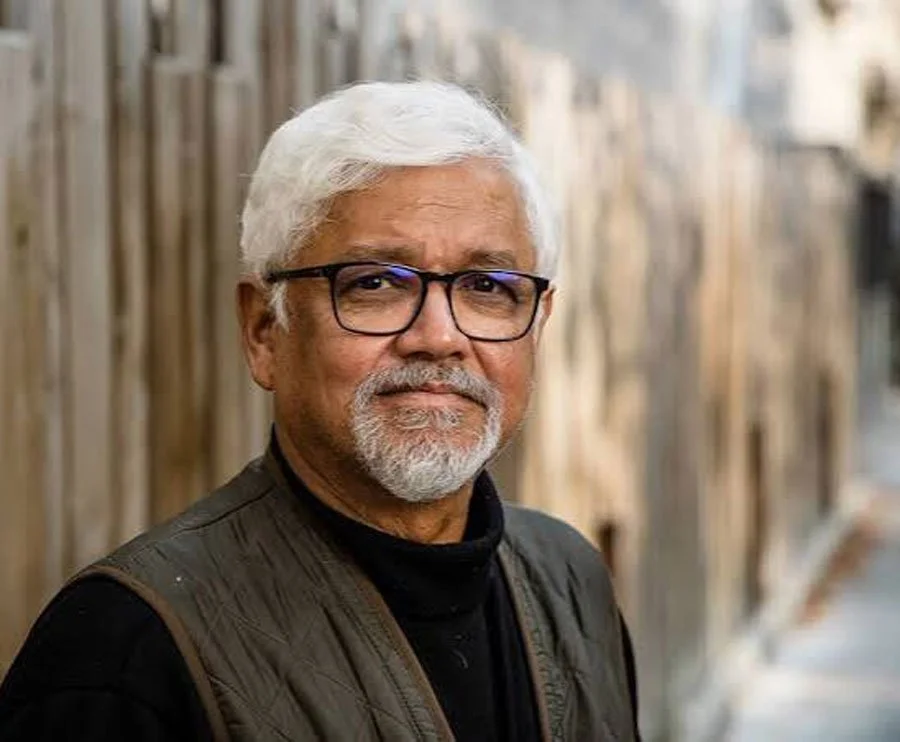
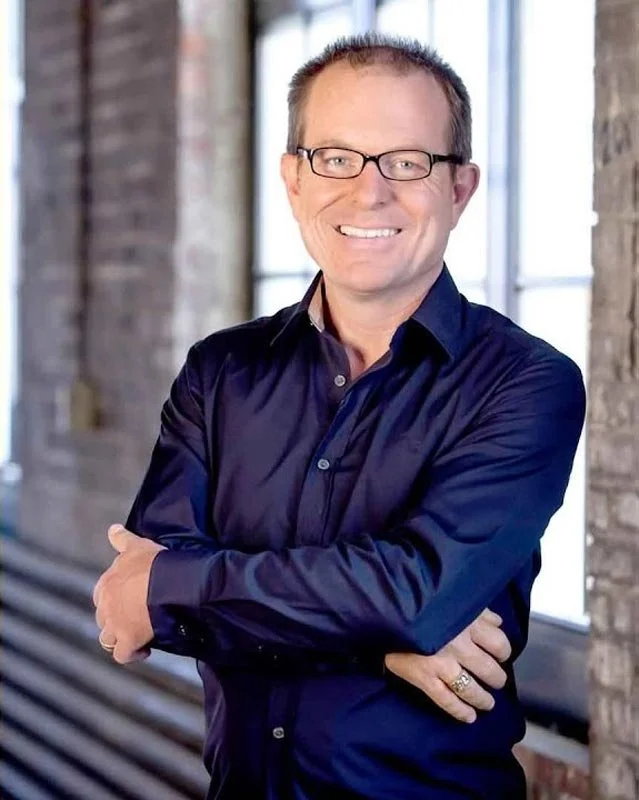
Carbon Tracker is a non-profit financial think tank focused on change and the energy transition. I set it up because I spent 20 years working in the financial world, and I noticed that a lot of coal, oil, and gas projects, even with all the evidence we know about climate change, were getting financed through banks and the stock market. It was almost as if investors were completely disregarding what climate change was going to do within our lifetime. What I wanted to do was challenge that, challenge the way people think, and challenge the financial operators, the bankers, stock exchange regulators, and investors to think about what climate change was going to do and what we could do about it. We're saying to the owners of these companies, the shareholders, "Why don't you think about what the world will look like in 50 years, and why are you putting these young people's pensions into coal, which we know is going to destroy the planet?"
For decades, the conversation around climate change often felt abstract, a distant threat. But what happens when that threat collides with the very concrete world of finance, with investments, and with the bottom line? Mark Campanale has been at the forefront of this critical intersection for over two decades. He's a veteran of sustainable finance, having helped launch some of the earliest responsible investment funds. But it's his work with the Carbon Tracker Initiative that has truly reshaped how we understand the economic risks of a fossil fuel-dependent future. Carbon Tracker, an independent financial think tank, introduced concepts like the "carbon bubble" and "stranded assets"—terms that have not only become central to the divestment movement but are now indispensable for investors and regulators trying to navigate the path to decarbonization. Mark Campanale and the Carbon Tracker Initiative have made it impossible to ignore the financial implications of a warming planet.
THE CREATIVE PROCESS · ONE PLANET PODCAST
As the founder of Carbon Tracker, can you just explain for our listeners what it does and why it's crucial in today's environmental landscape?
MARK CAMPANALE
Carbon Tracker is a non-profit financial think tank focused on change and the energy transition. I set it up because I spent 20 years working in the financial world, and I noticed that a lot of coal, oil, and gas projects, even with all the evidence we know about climate change, were getting financed through banks and the stock market. It was almost as if investors were completely disregarding what climate change was going to do within our lifetime. What I wanted to do was challenge that, challenge the way people think, and challenge the financial operators, the bankers, stock exchange regulators, and investors to think about what climate change was going to do and what we could do about it.
That was the trigger for setting up Carbon Tracker—to reproduce research for the world's biggest pension funds and try to get them to move faster in dealing with this extraordinary crisis that we're in now.
What we track is the financial flows going into fossil fuels. We analyze these big new projects, whether they are up in the Arctic or in deep water, or where people are trying to do more fossil fuels. We are going to the owners. We're saying to the owners of these companies, the shareholders, "Why are you letting these management teams do this? If you are running a pension scheme, you know you're paying people's benefits in 50 years' time. Someone who is 20 and joins a pension fund won't get paid for 50 years. Why don't you think about what the world will look like in 50 years, and why are you putting these young people's pensions into coal, which we know is going to destroy the planet?"
THE CREATIVE PROCESS · ONE PLANET PODCAST
So, when you're presenting to these pension funds, you're saying, of course, there's a financial imperative, and you want to make sure it's for the long term, the moral imperative. But when we have examples like the second Trump presidency, saying almost do nothing—just go back to business as usual—despite the fact that renewable energy is by far more competitive when implemented intelligently, what does that do? What kind of message does that send? How does that reverberate around the world in terms of people who just want to turn a blind eye?
CAMPANALE
Well, I have to say, I look at this through a political lens, a geopolitical lens. In one part of the world, you've got America, the world's biggest exporter of oil and gas today, and you've got 80% of the world's population living in energy-importing countries. America's doing very well selling its oil to other countries in the petrodollar. They like the fact that countries are dependent on their gas or their oil, their liquid natural gas. The bankers, every time they finance a project or lease you a tanker, or have a trading desk that trades in oil and gas futures, they're turning over billions of dollars every day in trading oil and gas futures. It’s a money-making machine for them.
On the other side, you've got China, which has come in and is electrifying the world with super cheap solar and very cheap electric vehicles. What is China doing? Of course, they’re interested in climate change more than many other countries. They know they need to shift away from burning coal, and they are. But what they're really doing is taking away the economic power of the United States by removing dependency on fossil fuels and creating independence.
Countries are becoming energy independent by using renewable energy. You can buy an electric car, the Seagull from BYD in China, for seven and a half thousand dollars. That’s an extraordinarily low price. You can't buy an internal combustion engine car for that amount. These are described as laptops on wheels. We now have super cheap computers, super cheap electric vehicles, and super cheap solar. It’s a kind of geopolitical attack on the petrodollar. Many countries in the Global South may be linked to America or the Western political and economic systems, but in comes China, disrupting all of that.
In Europe, we’ve tried to protect our car industry, which is based on internal combustion engines. We've given China a ten-year head start to produce cheap cars while we were fighting yesterday's battles. That’s how I see it.
It's a geopolitical issue. When you talk to the investors, I think they understand that the European car industry, as we know it, is in rapid decline, and that America is trying to put up defenses to keep people using fossil fuels. But the imperative of the climate emergency must mean we switch to renewables. There are brilliant technology companies in Europe and America, of course, in climate technology. However, China is dominating because they have the intellectual property, cheap manufacturing, and access to critical minerals, putting them light years ahead in mass production for super cheap products.
We're living in a fascinating time, and unfortunately, to an extent, Europe and, very much so, North America are trying to hold onto the past while other parts of the world, like China, Taiwan, Korea, and Japan, are looking to the future. As an Italian citizen and an English citizen, I feel that we’ve left ourselves behind and that others are taking leaps forward. This isn't just about climate science; it’s about big geopolitics. It's about who wins the power battle over the dominant economy, economic thinking, and currencies. Do we have a reserve currency in the petrodollar? All these things are now being questioned in 2025. We're in an extraordinary period of history.
THE CREATIVE PROCESS · ONE PLANET PODCAST
You know, it’s kind of strange because you were talking about speaking with journalists. I was speaking with Richard Black, who now heads Ember. He wrote The Future of Energy, and he said that you can have some strange bedfellows of people who are fans of greening the grid because, in America, all these people are against big government, they like their Harley Davidsons, and they don’t want control.
You think they’re kind of anti-environment, but traditionally, they’re Republicans. However, because of this sense of autonomy—of being able to go off the grid and not be indebted to the fossil fuel industries—it’s very appealing to their sense of freedom. It can actually appeal to many different people across the spectrum who you wouldn’t expect, right?
CAMPANALE
That's right. Part of it is because there’s a lot of cultural baggage with the environmental movement. There’s a whole swath of society that doesn’t look at the world through the same lens or think in the same way.
There are core things that people want: reliable utilities, televisions, and all the rest of it. They want access to reliable and cheap energy. We need to be smarter in the way we communicate the benefits of the move to carbon-free energy.
THE CREATIVE PROCESS · ONE PLANET PODCAST
You mentioned the example of China there, and of course, being the world’s first electrified state, there are lessons we can learn. Obviously, the real thing is to ensure that all that electricity is derived from sources not associated with fossil fuels, not from coal. What can we learn from that?
I understand, on the other hand, America doesn't wish to be dependent on some of the battery technologies that could be coming out of China; they need to make their own. So, what can we learn from it? How can we also be more independent and, you know, make our own batteries and all these other elements so that we’re, as you say, addressing a geopolitical question?
CAMPANALE
It is. There are many different types of batteries, each with a different element at the center of the battery technology. Chemistries are changing, and people are getting better all the time at working out what works or what doesn’t work. China controls a lot of the critical minerals marketplace—supply, production, processing—and there’s a shortage of magnets and other components because the Chinese are stopping exports. It’s a difficult time in the manufacturing industry if you need rare earth metals.
We need to look at all of the chemistry available to us. Sodium salt is not too far away from lithium on the chemistry table, so we could be finding different chemistries that work for batteries. The evolution of battery chemistry in the last ten years has been extraordinary.
There’s going to be more innovation to come. Just look at the latest Chinese batteries that can charge in five minutes and run for 500 kilometers; that’s extraordinary. I think we’ll see more, but I don’t like a situation where one part of the world dominates the technology at the expense of others because that just leads to disruption. We need common materials available to all as long as we find materials that work to do the job.
THE CREATIVE PROCESS · ONE PLANET PODCAST
I was seeing that, of course, we've seen a lot of turmoil or upheaval within universities in America. There’s a ranking of scientific universities around the world, and Harvard is still at the top, but the other top ten are all in China.
It doesn’t make sense to me if we’re talking about being independent and attracting the best minds. I found that very illuminating. I didn't know there was such a ranking because, in the UK, there are excellent universities, but on this particular ranking of science and publishing and innovations, it seems the rest are in China. It’s no mystery, perhaps, that they’ve become the first electrified state and are pushing for these advancements. So, how can we, as you say, support innovation? If we’re looking for alternative batteries or aiming to be less energy-dependent or less materials-dependent on different nations, we have to support our universities. We have to support our intellectuals and our scientists. We can’t have this level of transition without them.
CAMPANALE
Yes. China is producing millions of qualified students each year in technology, while in Europe, it’s measured in the tens, or if we’re lucky, hundreds of thousands. When you're producing that many highly qualified scientists and technologists, you can see how the collective brain power can facilitate a big leap forward.
However, there is a uniqueness to the universities in America and in Europe, whether it’s Oxford, Cambridge, MIT, or Harvard. The key is the discipline of freedom of thought and the exploration of ideas, whether in science or social sciences. That is the emblem or symbol of a truly evolved society. One could argue that the world needs more scientists and technologists than it needs social scientists. However, occasionally, we see individuals who look at the world in a slightly different way.
THE CREATIVE PROCESS · ONE PLANET PODCAST
I think it’s sad that people say we don’t need as many from the social sciences, but I believe to have movements that accelerate change, we must involve all stakeholders, and only a sliver of them are scientists, while another sliver are from social sciences.
CAMPANALE
Yes. If you think about it, I think a lot about where power sits in the traditional lexicon. Power is in government and policymakers, which is true, as well as in voters and consumers. There’s also this other body called business. Where does finance fit in? The way I see it is that business and finance are not the same disciplines; they are different communities that think differently and act differently. Often, on one side, you have business, and on the other side, you have finance. They are not always on the same side.
If you're interested in movements and power, people think of citizens' movements, which is fine because we should have an open and democratic society. However, I think of power concentrations in the world of finance. They know what their power is very well—the ability to move markets, for example. I went into finance because I was interested in business, but also in creating sustainable businesses. That’s what I've always done over the past 35 years.
Social change movements in the context of people taking back control of their money is something I am passionate about. I'm also interested in how to mobilize blocks of power to create change in society. You often hear the joke about capitalism: the workers took control of capital 20 years ago, but nobody ever told them because they took control through their pension funds. These pension funds are workers' pension funds. The workers invest their pension funds in companies—same companies that often treat employees badly or don’t pay them fairly or have exploitative practices. The solution to that issue is progressive funds representing workers, enforcing a particular view of the world through how they invest their money.
Good examples of this include the Danish Pension Fund system, large funds like PGGM and APG in the Netherlands, CalPERS and CalSTRS, and New York City’s Pension Scheme in America. In the UK, we have the People's Pension Fund and Nest, which is the National Savings Scheme. These initiatives are really trying to reflect ordinary citizens' views about the world. You’ll see a very progressive approach to how they manage these pension funds, attempting to listen to people's needs. In a way, this tries to turn capitalism on its head, putting people and their interests—whether they are working for a company or are retirees in a pension fund—at the forefront. This shows that you too can mold your society.
I'm a fan of the work done by groups like ShareAction in the UK. There are similar groups around Europe, and we used to have a group called Make My Money Matter, which aimed to enlighten ordinary citizens about the power of their money—whether through a bank, a pension fund, or otherwise. Most people, though not everyone, have a bank account, and many have some kind of pension plan. Power resides within the control of those assets. If you can build a movement of people’s capital, similar to how you can build a movement of political power, then you can create a different way—not the only way, but a different way—of molding society.