Reincarnation, Food & Memory

Reincarnation, Food & Memory

AMITAV GHOSH · Author of Ghost-Eye · The Shadow Lines · The Hungry Tide · Sea of Poppies · The Great Derangement: Climate Change and the Unthinkable

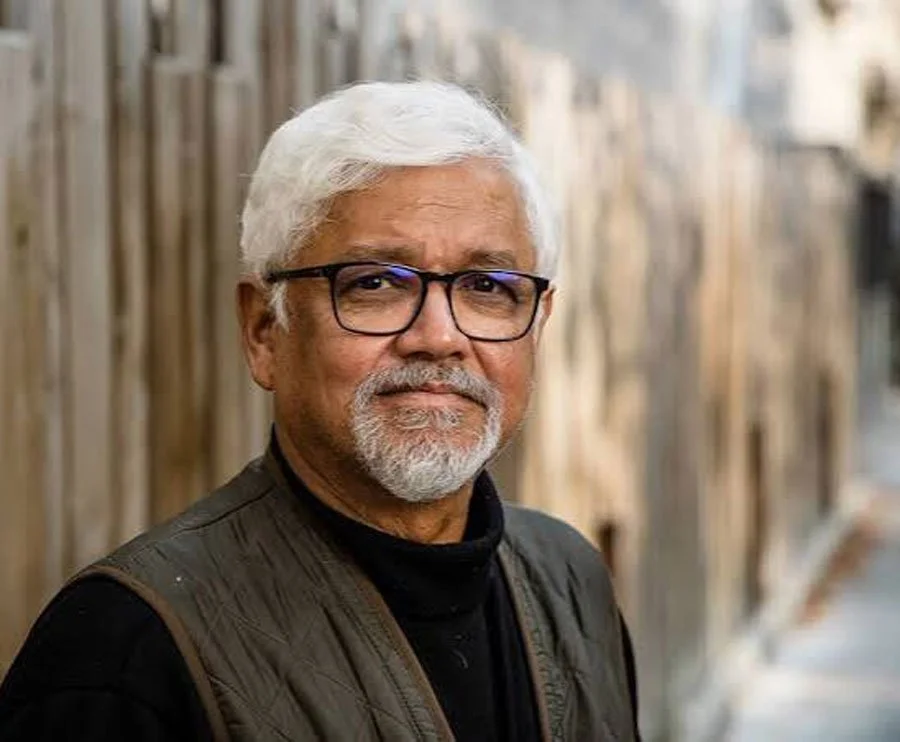
Imagining with precision is a very fundamental part of my work. When I sit down to write about anything, whether it be The Hungry Tide in the Sundarbans, or let's say The Shadow Lines, or Ghost-Eye. It's very important for me to get the topography right, to get the outlay of the streets or the house exactly right so I can actually picture all of that in my head. It's very important for me to have a sort of pictorial sense of what I'm seeing and what I'm writing about. Before I can write about it, I need to see it, as it were. So that's absolutely fundamental to my craft. That's just how I go about it. Like the Sufis say—behind the apparent reality is a hidden or ba- reality.

I guess that's always been something of great interest to me. How do you square these two realities and make them come together on a page? And really that is what, in some sense, the work of the imagination is. We know that we're in the grip of an intensifying planetary crisis. We can see signs of it everywhere.

Land Grab Universities

Land Grab Universities

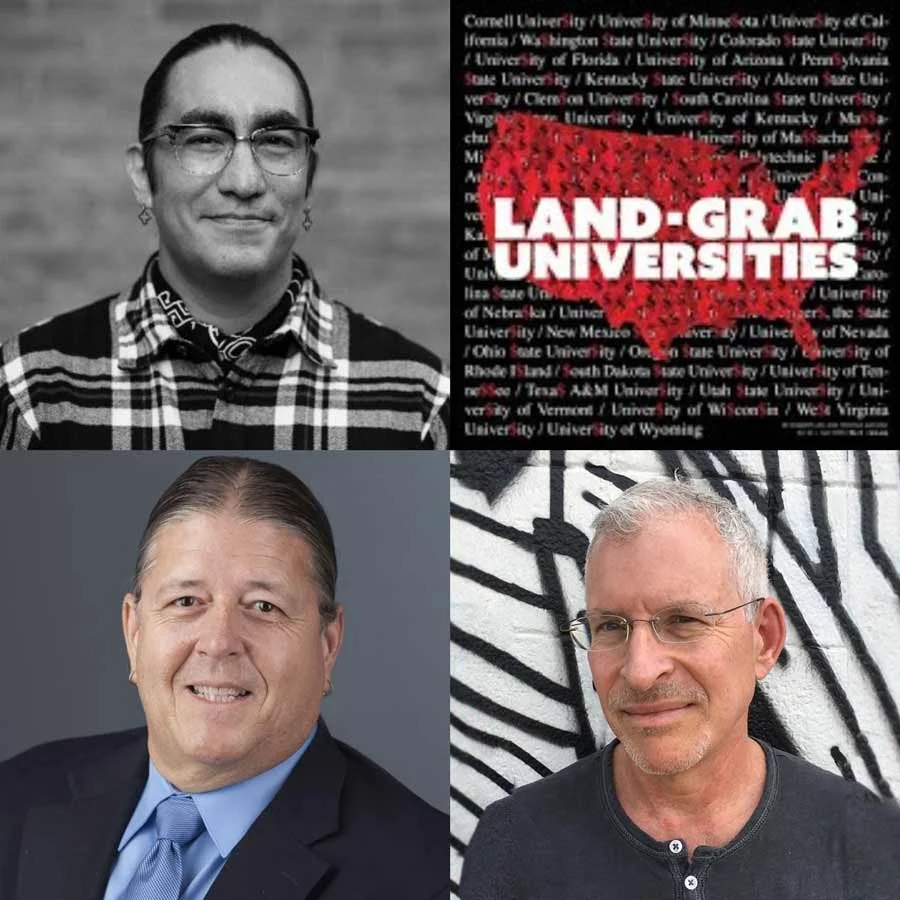
TRISTAN AHLONE · ANDREW HERSCHER & ROBERT WARRIOR on Dispossession, Indigenous Futures & the True Cost of Higher Education

I think in terms of the Land-Grab project: looking at that history and really beginning to learn more about the history of education in the United States—and especially Indian education—a lot of that was new to me. So, our project that we did about two years ago, building on Land-Grab, was our Misplaced Trust investigation at Grist. We wanted to go back to those universities and start looking at not just the history of how they got their finances, but looking at the present to understand how dispossession and extraction are ongoing.

MUSKISM—Its Roots, Nature & How to Fight It

MUSKISM—Its Roots, Nature & How to Fight It

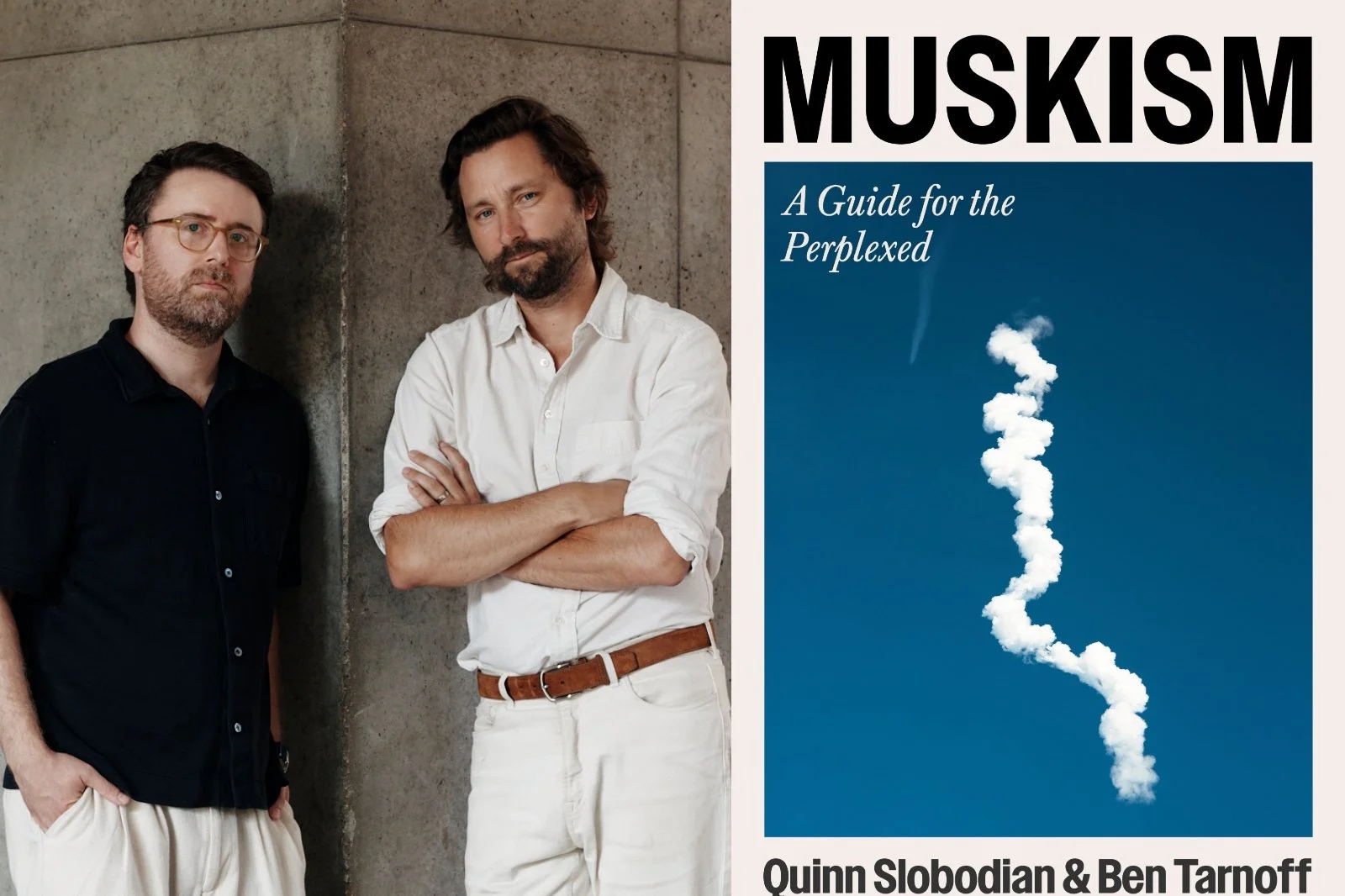
QUINN SLOBODIAN & BEN TARNOFF on why understanding Elon Musk’s computational worldview is essential for protecting the public sphere and fighting back against cyborg conservatism

 Musk interestingly has this way of excluding the majority of the population from consideration, what he variously calls non-playing characters or NPCs, which is a category from video games, or sometimes bots, vampires. And this is a much more stark version of insider and outsider group creation than even hierarchies of race because it takes this one step further by taking very seriously the idea that other people are not only not human, but they in some way don't even exist, which is the literal reading of Musk's adoption of Nick Bostrom's simulation theory, which is that most people are simply programmable parts of a simulation, and only a small number of people are actual players.

Indigenous Surviving, Thriving & Love

Indigenous Surviving, Thriving & Love

JULIAN BRAVE NOISECAT · Author of We Survived the Night · Oscar-nominated Filmmaker · Champion Powwow Dancer

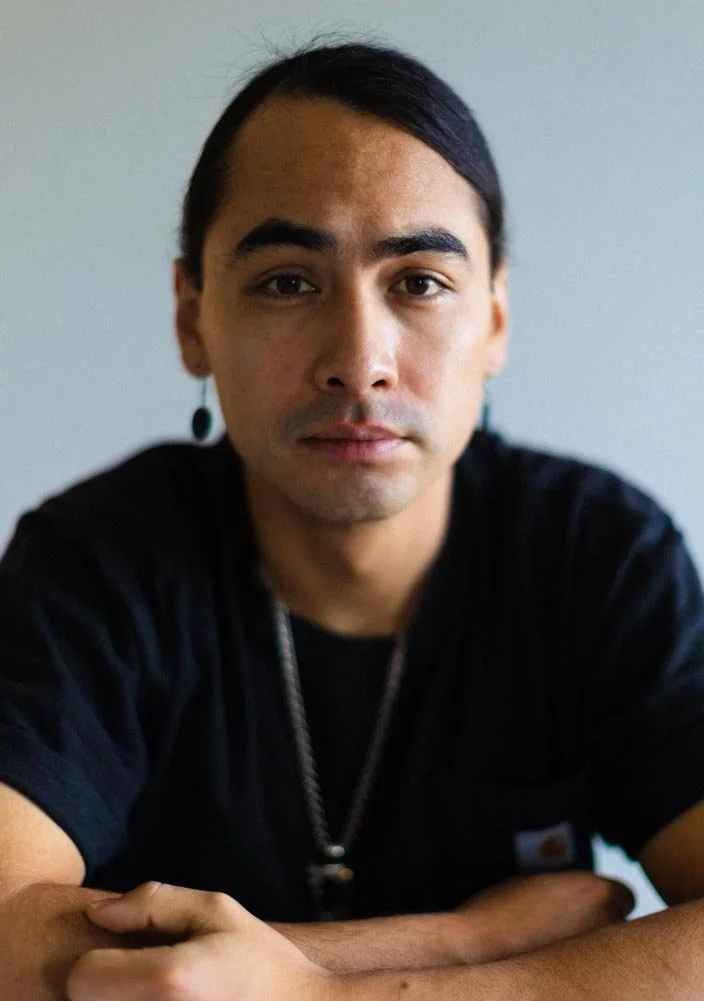
Everything from the title to the words and style all the way up to the structure I'm working with, I describe them as forms from my own culture... that come from my own people.

The Effects of the War on the Iranian People

The Effects of the War on the Iranian People

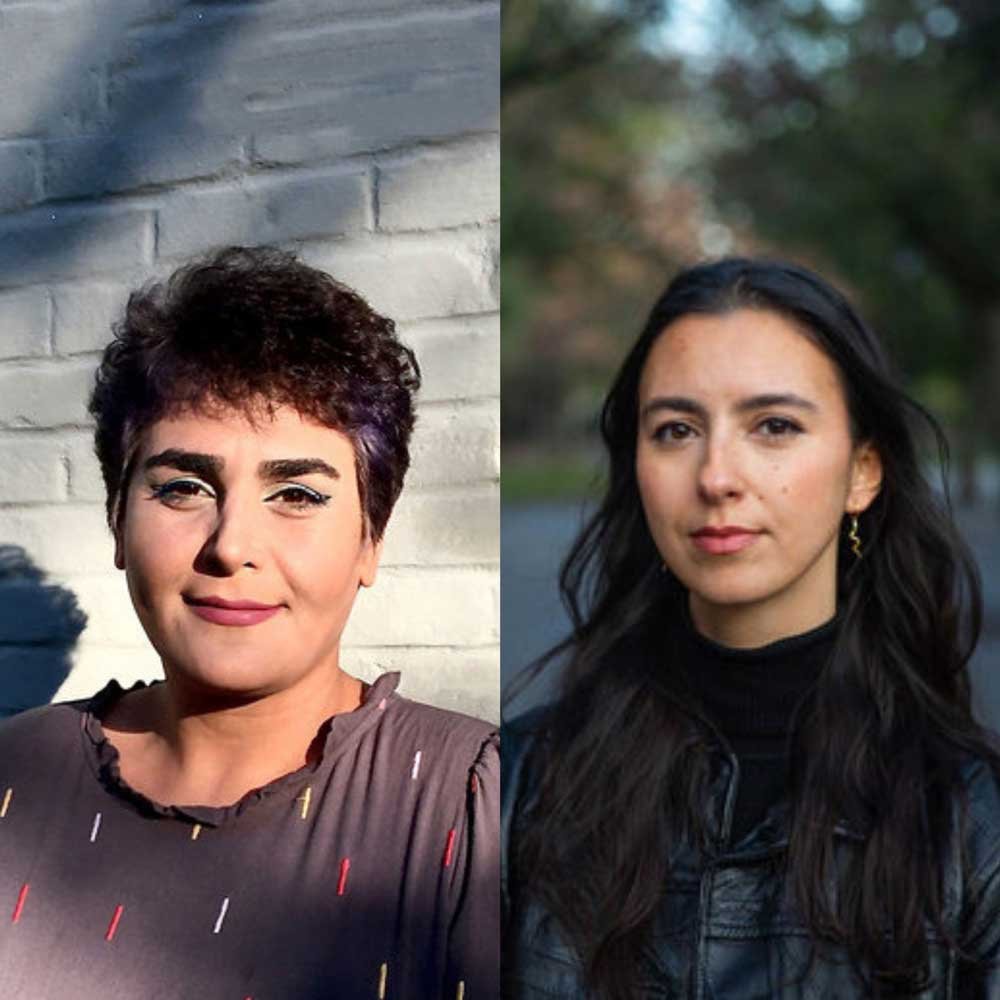
Iranian Journalists FATEMEH JAMALPOUR & NILO TABRIZY

Imagine losing your internet access just as airstrikes begin in your city, severing you from loved ones and the outside world. Jamalpour and Tabrizy authored a book on Iran's women-led uprising and continue to report on the lives of ordinary Iranians, civilian casualties and infrastructure damage.

The Fight for the Future: AI, Privacy & Power

The Fight for the Future: AI, Privacy & Power

CARISSA VÉLIZ · Author of Prophecy: Prediction, Power & the Fight for the Future · Privacy is Power: Why & How You Should Take Back Control of Your Data

Algorithms are deciding whether you are eligible for a loan, a job, an apartment or insurance. They determine what you see online, who reads your social media posts and who connects with you on dating apps. They may even decide whether you get arrested or go to jail. Your very life hangs in the balance of prophecies.

If you are unlucky, a prediction will be what kills you. Forecasts can determine your place on a waiting list for an organ transplant or whether you get medical care in an emergency. Policymaking hinges on predictions. War and peace and whether someone lives or dies are decided based on forecasts about the strength of an adversary, the impact of a mission or the identity of a person. And yet no one has asked your permission to make those guesses. No governmental agency is supervising them. No one is informing you of the prophecies that shape your fate. Prophecies are the grounds on which fights over the future take place.

How the Pandemic Exposed the Cruelties of Incarceration

How the Pandemic Exposed the Cruelties of Incarceration

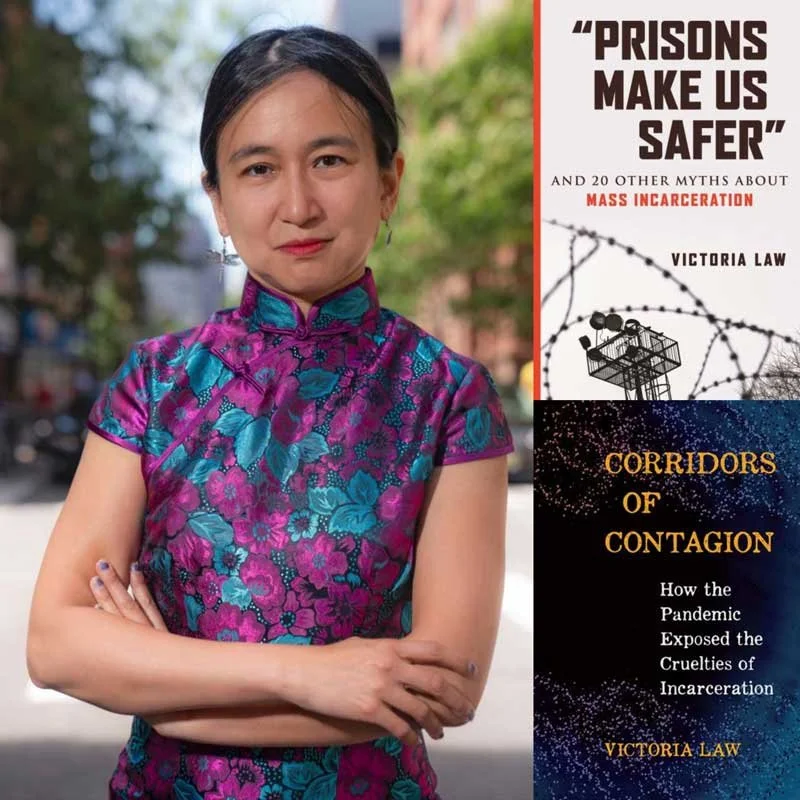
VICTORIA LAW · Journalist · Author of Corridors of Contagion · Resistance Behind Bars

The United States has this mentality that if somebody is serving a prison sentence or if somebody is in jail, they somehow deserve whatever happens. Whether it is medical neglect, whether it is abuse by staff or the other incarcerated people, whether it is terrible food, whether it is not being able to communicate or see their family members and loved ones. What happened in 2020 is that being incarcerated became a possible death sentence. Because we saw that prison deaths jumped 77% compared to the previous year where there was not a pandemic in the United States.

Science in Resistance: Direct Action for Climate Justice, Democracy in Education

Science in Resistance: Direct Action for Climate Justice, Democracy in Education

FERNANDO RACIMO · Scientist-activist · Author · Professor of Ecology & Evolution · Globe Institute · University of Copenhagen

By pretending like science is neutral or apolitical, we're really feeding a particular discourse which serves whatever political structures are in place right now, whatever status quo is in place right now. Science can never be apolitical because it's a human activity, it's practiced in society with others, with human and more-than-human beings.

The Imperative to Support the People of Venezuela

The Imperative to Support the People of Venezuela

A Conversation with ANDERSON BEAN, SIMÓN RODRÍGUEZ & EMILIANO TERÁN

I guess we can start with what happened on January 3. The United States carried out a direct military operation against Venezuela. US forces bombed targets in and around Caracas and other areas. They struck the electrical grid, killed over 100 people and abducted Venezuela's sitting president, Nicolás Maduro, along with his wife, Deputy Cilia Flores. Within hours, Trump declared that the United States would run Venezuela until a safe transition was completed. The United States Secretary of State Marco Rubio underscored this regional warning by saying, “If I lived in Havana, I would be worried.” Trump threatened other countries too, Colombia and Mexico, showing again that this wasn't about democracy—it was about submission.

Beyond Sanctuary: The Humanism of a World in Motion

Beyond Sanctuary: The Humanism of a World in Motion

A Conversation with ANANYA ROY & VERONIKA ZABLOTSKY

This question is of, all right, if we are a sanctuary city, how and why do ICE agents and other federal agents, including Border Patrol, have the power that they do to undertake these forms of detention and disappearance?

Extraction: The Frontiers of Green Capitalism

Extraction: The Frontiers of Green Capitalism

Scholar · Journalist · Activist THEA RIOFRANCOS

Biodiversity and territorial rights of indigenous and other land-dependent peoples. That those two values of rapid, urgent climate action, which I completely subscribe to, and the value of protecting and allowing to flourish non-human life, our ecosystems, our water systems, our soil systems and the peoples who are primarily indigenous, though not exclusively, that steward those non-human relationships and cultivate them and are immersed in them in their own livelihoods and cultural practices. And the idea that these two sets of really important phenomena that have deep significance and are both harmed by extractive capitalism in lots of intense and durable ways, the idea that there would be a fork in the road that either we have to choose climate action or we choose the protection of life.

Fighting Professional Cowardice & Activating Fearlessness

Fighting Professional Cowardice & Activating Fearlessness

A Conversation with RODERICK FERGUSON

I think when we're talking about institutionalization, we're really talking about the period after the epic protests that would go on to establish the interdisciplinary fields, especially ethnic studies and gender studies and the protests that were taking place among queer and trans folks post-Stonewall. To use Judith Butler's phrase—there's a real psychic life of power that happens at that moment, and that's always intrigued me. Because it's one thing to say that this stuff is external, but when it sets up shop inside of us, we crave the recognition. We don't think that we've achieved anything unless it is authorized and celebrated by the institution on its terms.

Iranian Women Leading Fight for Freedom

Iranian Women Leading Fight for Freedom

A Conversation with NILO TABRIZY

This interview complements another episode I did with her collaborator, Fatemeh Jamalpour. Ms Tabrizy tells us about her work in Visual Forensics, which she used to complement Ms Jamalpour’s reporting on the ground. The two pieces together form a vivid account of the uprising, and the repression that preceded and followed it.  Nilo draws on other examples of Open Source reporting during the #BlackLivesMatter protests and in Palestine. Like her collaborator, Nilo Tabrizy also explains the ways this reporting was for her deeply personal.

Palestinian Poetry, Art & Activism

Palestinian Poetry, Art & Activism

A Conversation with NICOLAS MIRZOEFF & PRISCILLA WATHINGTON

I think politics is now the meeting of the visible and the unspeakable. Unspeakable in that what is visible is so awful as to be beyond ordinary words. Unspeakable in that what is visible is forbidden to be said. What has been sayable about the unspeakable? It has been poets who have found ways to make language do what it should not have to do.

 Silicon Valley Imperialism: Techno Fantasies in Postsocialist Times

Silicon Valley Imperialism: Techno Fantasies in Postsocialist Times

Associate Professor of Geography · University of Washington
Cofounder · Anti-Eviction Mapping Project

There were very different histories of land, housing, race and technology in San Francisco and in Romania. I became interested in those very different histories and how they led not just to different types of housing tensions, but to different struggles more generally—different erasures of the past and different ways that the past itself was getting evicted from historical memory. So that is the premise or the context, grounded in ongoing commitments to justice and racial justice in the midst of technological transformation. It is also grounded in really wanting to understand the sort of deeper layered histories that lay the groundwork for the present.

Materializing the Cloud—Breaking Tech’s Spell Over Us

Materializing the Cloud—Breaking Tech’s Spell Over Us

TAMARA KNEESE · Director of Data & Society Research Institute's Climate, Justice & Technology Program · XIAOWEI WANG · Artist · Writer · Organizer · Coder

I think increasingly more and more of us are aware of these tiny silicon wafers that power everything from our watches to our phones, to these data centers... semiconductors are, I think of it as alchemy in a lot of ways, chemical alchemy, and they require vast amounts of water, resources, electricity, energy, and especially chemicals to turn a silicon wafer into essentially this very tiny, tiny circuit.