

For years we have known that this is a classic feature of the suppression playbook of the Islamic Republic. Why, years later, have we not mobilized as a community to help people? This is how you help Iranians. Put away groups that we can arm. <b>The real way to help Iranians is for them to stay connected, for them to be able to find ways to circumvent surveillance so they can organize. It is really heartbreaking and confusing to me, and there has to be something I am missing.
Speaking Out of Place is produced in collaboration with The Creative Process and is made with support from Stanford University.
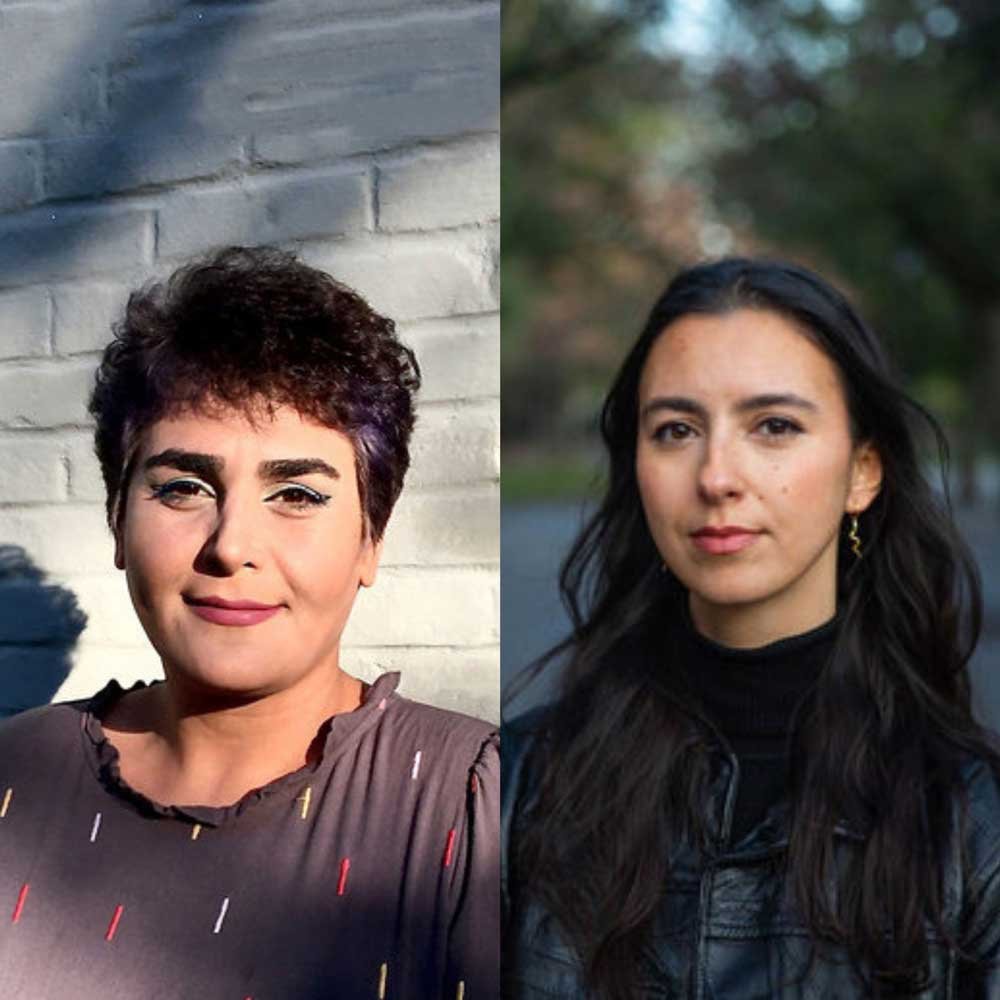
In this episode of the Speaking Out of Place podcast, Professor David Palumbo-Liu welcomes back Iranian journalists Fatemeh Jamalpour and Nilo Tabrizy. Before, they talked about their book, For the Sun After Long Nights: the Story of Iran’s Women-led Uprising, today they tell us of conditions in Iran, which since January has suffered the government’s massacre of tens of thousands of protesters and the onslaught of the US/Israel war on Iran. Instead of concentrating on how the war is going and its effects on the global economy, as most media sources do, we focus entirely on the Iranian people, and talk about the effects of the bombing on daily life, the attacks on infrastructure, and the shutting down of the Internet. We look at the impact of these many forms of violence on civil society, and talk about the differentials of class, ethnicity, and gender. We end by having Fatemeh and Nilo talk about how covering Iran now is affecting their lives as journalists, and as Iranians.
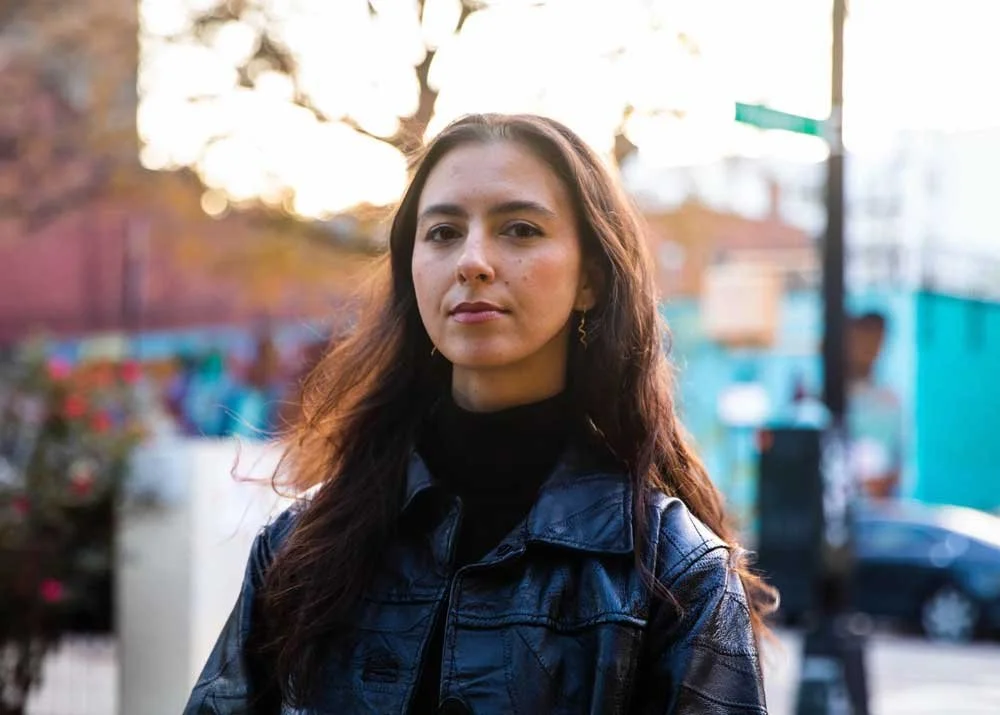
Fatemeh Jamalpour is a feminist journalist banned from working in Iran by the Ministry of Intelligence. Jamalpour has worked as a freelance reporter for outlets such as The Sunday Times, The Paris Review and the Los Angeles Times, and has also held positions at BBC World News in London and Shargh newspaper in Tehran. She has two master's degrees in journalism and communication from Northwestern University and Allameh Tabatabaei University in Tehran and was a 2024-25 Knight-Wallace Fellow at the University of Michigan.
Nilo Tabrizy is an investigative reporter at The Washington Post. She works for the Visual Forensics team, where she covers Iran using open-source methods. Previously, she was a video journalist at the New York Times, covering Iran, race and policing, abortion access, and more. She is an Emmy nominee and the 2022 winner of the Front Page Award for Online Investigative Reporting. Nilo received her MS in Journalism from Columbia University and her BA in Political Science and French from the University of British Columbia.
DAVID PALUMBO-LIU
Thank you both so very much for being on the show and coming back to talk with me under these terrible conditions. I really appreciate it, and I know that my listeners will as well.
I'd like to start by asking you both to talk about the last several months in Iran, which have seen deadly and violent repression of popular protests, tens of thousands of people killed and then the US-Israel war on Iran. Could you please give us the historical context for this before we start talking about the present in detail?
NILO TABRIZY
Oh, this. It's fun to ask two Iranians for the historical context because we could go back in time a hundred years or 200 years. But in this present moment, we keep getting news about whether the US and Iran are making a deal, and people are thinking 40-plus years of animosity can be solved in a matter of weeks, right? Thinking about the previous nuclear deal that was hammered out over months, I think we're watching those acute tensions of two states that have had lots of mistrust and not knowing whether or not this is a place where they can have a good-faith negotiation. From Iran's perspective, it has been years of figuring out if they agree with this administration, will another one come that will take away any type of diplomacy that has happened.
So that is how I see the historical context playing out in the relations. Of course, when we think about the Iranian people as you introduced, it is so much to process and hold. I feel we haven't even really processed the massacre that happened in January. Fatemeh has reported on it, and I've reported on it, but it almost seemed like as soon as we were able to, those protests were violently and viciously suppressed by the Islamic Republic. There is probably an opportunity for Fatemeh and me to keep confirming deaths and bringing the voices of people, families and communities who have lost loved ones.
And then this war is something that both Fatemeh and I have grown up fearing. We knew—and decision-makers have known—how badly it can spiral out, and we are watching the spiral. We haven't even dealt with this extreme trauma that our country and our people have gone through, and now we're under this whole other moment. It feels really relentless.
FATEMEH JAMALPOUR
I think not only the last few months, but the last few years have been really hard for Iranians. We had the suppression of the 2019 protests. Then we had COVID across the globe, and after that we had the Woman, Life, Freedom movement and its suppression. Then the 12-day war with Israel, the protest massacres and these recent events. It seems we do not even have time to process, as Nilo mentioned, especially for people inside Iran. The economic situation continues to decline.
Until last year, 30 million people were dropped under the poverty line, and these conditions have really worsened. Day by day, the prices change, and many families cannot even afford basics. What I was surprised by during the war was the lack of empathy from the international community. There was no humanitarian aid for the Iranian people. Those people are squeezed between the Iranian regime and foreign governments.
The other point is that after the massacre of the protests, there were fears about executions. People who were suppressed by the government found a little hope, and they continued to protest on the second night, especially because of social media posts, but more executions happened. During the war, the regime executed protestors weekly and no one cared. The whole country was worried about disappearing, and I talked to many mothers who were afraid for their children. It is a scary and really sad time.
DAVID PALUMBO-LIU
I love to have you both talk about that, because I just realized that I interviewed you both for the podcast before, but separately. It's so special to have you both on together since you're such good friends and collaborators. But you hit upon exactly the point that I'd like to spend most of the time talking about, which is that in the Western press, all we hear about is how it affects us—our oil prices or our fertilizer or the Strait of Hormuz. The narrative has been completely captured by that. That is, as you point out, not just dismissive, disrespectful and callous about the people that are affected most immediately day to day.
When you mention no international relief aid or concern or protest, could you both talk about it from whichever angles you'd like? I'd love to hear you talk to each other about it because, again, it's so precious having you both on together.
NILO TABRIZY
Fatemeh and I have been chatting a lot more recently, and every time we talk I feel so grateful for our relationship. I wonder if you've come across this, Fatemeh, but I have so many well-meaning friends or people who read stories who ask me where they can donate or send money. Because of US and EU sanctions, there is no way to donate without being a sanctions violator. There is just nothing. People ask me how to help, feeling really helpless with the situation in Iran, and it is because that is the reality.
Even I feel helpless in that way. Using violence or economic sanctions as a weapon to change the behavior of the Islamic Republic is not going to work. When you have a system that does not care about its people, it will continue to let them starve based on sanctions. I've written so many stories about people in Iran having difficulty finding medicine because, even if there is a sanctions exemption for medical supplies, if you cannot do transactions with Iran's Central Bank, you are not getting that medicine in. There are so many patents, and you can't just switch someone's medicine in the middle of their MS course, for example.
It is really terrible to watch that over the years, the US and its allies are putting these really intense sanctions on a regime that will not change its behavior. And then this war as well, thinking about a carrot and stick approach. Now let's be really aggressive, and if we're the most powerful army in the world, let's force Iran into submission. This is a regime that has been planning for attacks like this for decades. It is ready to absorb shocks because it does not care if civilians are in harm's way.
As long as the regime survives, that is their view of success. So all of these measures that we are seeing—sanctions in this war—again, squarely hurt the Iranian people. When the international community says, "Where can I donate?" I have no ethical avenues where I 100 percent know the money will reach the hands of the Iranian people.
FATEMEH JAMALPOUR
If I want to talk about the last month around my personal experience, I have not seen my family or been able to have a video call with my parents since the war started. When everything happened, the regime shut down the internet. Now they have the ability to use a domestic internet for all approved and affiliated regime apps and programs while shutting down the entire country from the international internet. It is so hard because the regime, the US and Israel all just make our lives harder. Since 2009, we have been hearing in the US that we need to provide internet for the Iranian people.
We need to support them, but nothing happened. And the reality is that without...
READ MORE [ + ]
…internet, it seems that life goes back two decades. I couldn't even use Google. They couldn't use any AI, ChatGPT or anything.
I talked to a subject, and she said it goes back two decades, and I reiterate it because before that I used ChatGPT a lot. Many people lost their jobs because of the internet blackout. A few days ago, an official from the business sector said that the price of the shutdown is eight million daily. We see that they do not care, and the international community doesn't care either.
Absolutely. I think that's such an important part, Fatemeh. The internet shutdown is affecting people's bottom lines. There are so many people that I know who are language tutors. If they can't participate in the formal economy because there isn't one really in Iran, right? Everyone's in limbo. Iranians are an incredibly savvy, resilient people. And so I have friends that are language tutors. They use the internet to tutor people in English, Persian, French and other languages they've learned, and this is just the hustle that they have to do. They're not able to do that.
Or many people in Iran use Instagram as a business platform, right? They'll use it to sell goods, designs and beautiful artistry. And if they're not able to access that, this is the way that they found to hustle and make money, and now that's taken away. The internet blackout is horrific to think about. Iranians were under darkness for three weeks in January from the start of the year, and now they've been in darkness since February 28. This is a huge chunk of the year that people are in a complete blackout, and it really affects people's mental state.
I was interviewing someone who spent years in Evin Prison. It was someone I developed a relationship with during the massacre. I couldn't reach them after the massacre, but finally they got in touch. This is someone who is super chatty, has a lot to say and is a really lovely person to speak with. The first time that we talked, I noticed that they were very stalled, having a really hard time making conversation. And then they sent me this essay they wrote about how the communications blackout in January reminded them of solitary confinement in Evin Prison.
Seeing your friends—these things that we think of as our rights—prison turned into privileges. The internet was our right, and now it is this weird privilege. He went back into his survival brain, sent me a message and said, “I'm so sorry, I wasn't prepared to talk. Next time we talk, I think I have to make a list of things to talk about.” It really affected his mental state. We haven't even had the room to report on the trauma people live through during a communications blackout. If Iranians come online again, I don't know how people are going to deal with that.
I don't know, Fatemeh, I'm sure you've seen those leaked documents from the Ministry of Communications in Iran. The fear we've always had is that Iran will turn totally inwards connectivity-wise, like China, and have an internet where Fatemeh and I cannot access our friends, families, loved ones or the voices of people who, at great risk, talk to us to elevate their experiences. And so these leaked proposals make it seem like our worst fears might come true. It is such a horrible feeling.
One of my friends said the internet affected her mental health more than the war. And besides it, we know that our people do not have sirens or shelter. The only way that they could know about the Israeli attack was that Israel tweeted about the neighborhood that was going to be bombed. But the people did not know, and that put many people in danger. I am just so sad. It is also an injustice.
I just see the lack of support—like with the Ukraine war, Elon Musk provided many satellites there. I see this double standard. It seems that we are not as human as the rest of the world to the international community. Unfortunately, this is part of the dehumanizing campaign in media.
Many sources inside Iran told me it's not in the favor of the people that they shut down the internet. We could report about the casualties of war and about the children killed in the Minab School, but we couldn't make that many headlines because of the restrictions as well.
It's interesting because I had a guest on a few weeks ago, a Kurdish scholar, and he's done extensive studies about dehumanization and how powerful the media is in recycling these things even through absence. So most of your information, then, is coming from telephone conversations? Two things spiral off that. First, I really appreciate the beginnings of stories that you've told us. That line about the loss of the internet affecting someone more than the war is just a mind-blowing quote. Please tell us more of these stories.
Second, it would be wonderful if you both collaborated again and maybe did a small volume of stories. We do have a podcast blog function, so I'm just so interested in getting the voices of ordinary people out into the world in whatever small platform we have. But please tell us more of these stories that are so important for us to know.
Do you want to go first?
You go ahead.
I think how we communicate with the people is when they can really afford to buy expensive VPNs and get connected. That means that only rich people are able to connect. What we miss in our coverage is the working class, and it is a disaster. For me as a journalist, the main aim is to represent ordinary people's voices, and I have lost that because of this lack of internet.
All the time that I'm reporting, I'm sad and I am not satisfied because I know that I only represent the rich people inside Iran. Yes, there are many heartbreaking stories there, but I'm willing to hear about working-class people who lost their jobs as part of the problem now.
The other point is that we never know if our subjects will be connected again. There is no guarantee. So whenever editors send me follow-up questions, I have to say, “I'm sorry, this is what I have.” It makes the story superficial and not deep because we cannot do any follow-ups most of the time. This is what we have, and we do our reporting based on what we have. We do our best.
One of my subjects told me, “We find solidarity in exchanging VPNs.” Whenever someone gets connected, they share those VPN configurations in an internal messaging app—Iran has a kind of WhatsApp for internal applications. What people do is share the configurations there for free so other people can use them, but it is just for a few hours' use.
The other point is that people outside the country would be able to buy VPNs for friends and family inside the country, but it is hard. This blackout and war have many stories to tell; I do not know which of them I should highlight. Nilo, do you want to go ahead?
Yeah, you made such a good point. We have a really big job. Because there is such a difficult access issue with Iran, the people that we platform might be the only voices that the world hears. So I really co-sign everything that you have said. It is so important to represent many different groups of people and socioeconomic backgrounds. Fatemeh and I both come from different parts of Iran. She comes from Khuzestan province, Masjed Soleyman. My family is from Tabriz.
I think that is one of the things that we clicked on when we first met—realizing that neither of us are from the chic Tehran crowd. That is all you hear because when you're a foreign journalist and you go to Iran, you're very tightly monitored. You are only in Tehran, so you just get these higher mobility classes of people who can afford to take the risk to talk to a Western journalist. They can afford to pay a fine or get out of it, and they have a bigger risk appetite. You have a better risk appetite if you have money.
I think Nilo froze for a second.
Okay. Yeah.
We'll see. But that was so important—that you are only able to talk to those who have the material wherewithal, and even that is sporadic. The other point that you made is that you are not able to do your journalism because you cannot follow up. All the usual journalistic practices of double-checking and giving the interviewee a chance to elaborate are lost. We just have these short snapshots.
I'm so glad that you're both on the show because you are experienced journalists covering Iran, and so you can put the pieces together in a very unique way. You might take a part of one person's story and put it together with a part of somebody else's because these are the only means that we have, so we have to make the best of it, as you say. And then the other point that you bring up is that the media is not going to publish everything.
Exactly. I pitched many stories during this time, and they just picked a few. We're trying to say to The New York Times, “See, we have the stories of these people for the last month. Are you able to work with us?” Unfortunately, most of the media only care about the oil and American interests. We saw that the war became important when the oil price jumped.
Yeah.
Not when they killed 100 children in the Mina School.
Let Nilo finish her point, but what we were talking about—which I'd love to have you comment upon as well—is that Fatemeh was talking about what kinds of stories editors are taking now and which ones they are not taking, which further exacerbates the lack of information. So you could either finish your point or take on that one.
Sorry. I was thinking about internet access, and then my computer decided I didn't get to access the internet either! I will just hop onto this point about pitches. I don't know if you experienced this too, Fatemeh, but in the first couple weeks of the war, editors kept emailing me asking me to write about the diaspora and the tensions. My response to all of them was, with respect, I do not care. There is only so much energy I can give, right? There is only so much I can do. I want to put all my energy on what is happening inside Iran.
There is an access issue, and it is so dangerous for our friends who are journalists in Iran to report safely. If I have this privilege of physical safety, I am going to use all of my energy to document civilian infrastructure damage, the civilians who are killed, the issues of daily life and the suppression that people are facing under war. That is where I want to put it. I just said no to all the diaspora pitches because that is for a Western audience, and I understand that.
They want to know why Iranians are flying Israeli flags at the rallies they go to. What is that about? Have someone else do it, because when you are Iranian and you report on the diaspora, you open yourself up to really vicious attacks. This is a polarizing issue. I am totally open to the fact that when I release a story, I cannot control the reactions to it. I have had big, targeted campaigns against me when I reported on civilian casualties. What I have observed is that when people look at a news story, they look at it through the prism of, “Does this help or hurt my cause?”
People who are supportive of an intervention will say the Mina School attack hurts their cause, so they want to discredit it and say that it was an errant Iranian missile that fell out of the sky when none of the evidence supports that. I know that this work is polarizing and that it is going to elicit a response. Fatemeh has been so supportive of me when I've been through that. I just want to focus on the harm because at least I can elevate these voices, and that is really important to me. Again, it is challenging because I am only able to elevate a sliver of voices.
I have been in touch with groups that focus on the experience of ethnic minorities in Iran, such as Balochi and Kurdish people. It is extremely difficult. I haven't been able to connect with anyone in the Kurdish provinces because no one is online. I have had no success in communicating with anyone directly in Sistan and Baluchestan. I just rely on contacts who are outside of the country, but they cannot put me in touch with them directly because of the internet issue. Knowing the challenges of elevating those voices, that is the lane I want to stay in.
The diaspora stuff is not anything that I am going to help solve, and it is not a good use of my energy. But people really want to know that I work in open-source investigations, so they want to know about which ships are moving and what is tracking. I am like, why don't we look at the fact that there are oil spills happening in the Persian Gulf?
And this is a super sensitive and environmentally biodiverse region. No one cares about that. Oh, they hit a desalination plant on Qeshm Island? Who lives there? Who is served by that? That is what I care about.
Yeah, I appreciate a story about the Mina School saying that I can access their families, but the media rejected it and said it is old news.
Oh my God.
Yeah. For me, it is never old, and I will do reporting about it someday, I am sure, but unfortunately, they do not want it these days. Or, as Nilo mentioned, I was attacked for the story that we did about the Mina School as well. They were like, “No, it's IRGC,” and they do not want to hear what they don't like. As a journalist covering stories about casualties, the massacre and protesting the war, I wish I was powerful enough to make an impact, but I am not, unfortunately.
I just want to return to the internet if possible. One of my friends says she has suicidal thoughts. She is in Tehran, and her therapy was online, so because of the internet blackout she lost access. She was joking—as Iranians we are resistant, and we make jokes out of all these difficulties.
She was jokingly telling me, “I called my psychiatrist, and he left Tehran because of the war.” Yes, because of the internet blackout, someone is out there with suicidal thoughts. And it is not what I am hearing after the massacre. While many people had suicidal thoughts, they do not have access to mental health care because it is not included in insurance in Iran. They cannot even find mental health medication, as Nilo mentioned, and it is just another layer of pain.
I want to do a story about Iranian mental health after this war, but no media is going to pick it up because no one outside Iran cares about it. Whenever I want to pitch, I have to think not about the human side of the story, but about whether the Western editor and audiences will care about that.
On that note, could you talk about how people are able to assemble in public? Because I am thinking about how when one feels the most isolated and cut off, that is when one is really harmed in terms of mental health. What are the possibilities of ordinary life? Let me put it this way. In what ways is life carrying on? Are people meeting in markets, or is that very erratic as well?
I think it depends on the day and where you are. As Fatemeh mentioned, the Israeli military will put out a warning like, “Everyone in district two, evacuate.” There are millions of people who live here. No one has internet. How is anyone heeding this? So it really depends on the day, because people are very much in survival mode.
But in terms of thinking about when Trump announced the war on the 28th, he said, “This is your time, Iranians, take to the streets.” That does not seem anchored in reality because people started messaging me from Iran when they had internet, and they said they were getting text messages from state numbers that said, “Stay inside. Do not go outside. Do not share media with Western journalists or you'll be charged with sedition.”
Or, I had people report to me that on every intersection of their town in Isfahan, there were armed guards standing—not to save you from airstrikes, but to intimidate you to stay home. People are telling me there are checkpoints everywhere. Sometimes we are seeing images and videos of children in uniform at checkpoints, which is just horrific.
And it is interesting—one day I tweeted that the level of suppression people are under in Iran is really alarming. People will co-opt things to fit their own narrative, and someone said, “Oh, yeah, you're just being pro-intervention. Do you have any proof of that?”
And I was like, I am not being pro-intervention; I am relaying to you what I am hearing, and yes, here are the screenshots of the text messages that my sources are sending me. The person obviously never responded to that, but I think it is interesting even when you try to report on the conditions, people see it from the prism of whether this is helping or hurting their cause versus taking something at face value. So yeah, it is just an immense pressure that people are living under.
The other point is that before the war started, another wave of protests started from the universities. That happened even after the massacre of the protests, and it is something that shows how this war affected civil society and protests. It was suppressed because the regime shut down the universities, and there are no physical universities anymore; everything is online.
The other point that Nilo mentioned about the checkpoints is that they search people's phones. My friend said a 13-year-old boy volunteering for the IRGC pointed a gun in her face, and they even searched her texts to her mother. These checkpoints are really problematic. They beat people and humiliate them. You cannot even go out for your mental health.
There are no avenues to help people except gathering. My friends just get together at home and share their feelings, and that is how they can survive. Or people go to cafes these days after the ceasefire, and there are many photos of beautiful cafes in Iran with Iranians who try to just survive and celebrate as much as possible. Many people outside say these photos are AI-generated and not real, but no, it is real. People try to live as much as possible, even with all of these crazy checkpoints and the danger of the war.
Yeah, and I think your point on civil society is so important because the Islamic Republic is really good at making that space shrink. Sometimes the best places for civil society are in Evin Prison. That is a place where some of the smartest people are, and you learn your activism from other people and get inspired. Sometimes that is the organizing place, which is a horrible organizing place because it cannot spread.
And so it is really grim to talk to women who fought with their lives and put their bodies on the line during the Woman, Life, Freedom movement. It was incredible just seeing women without a hijab. After the Woman, Life, Freedom movement, that is an active, daily protest. That was a win from that movement. The laws did not change, but women continue to say, “We will not go back.”
What does that space look like after the war? It seems like it will go backwards. I hope not. We will see. I have so much faith in our people to resist and to see what that resistance looks like, but I am afraid that the government is going to just push even more now, and any gains that people died for and were killed for are going to go away in that extremely limited space.
Could both of you talk more about the gendered aspect of what's going on now?
Yeah. It's actually funny, Fatemeh and I were talking about it because I was writing this article about Woman, Life, Freedom. I asked her, “Are you in touch with anyone who protested during that time? How did they feel about the protest that grew out of the bazaar?”
And one woman, a teacher that Fatemeh is close with, said, “I felt like during Woman, Life, Freedom, I was heard, I was seen, I was a part of something. And then in the massacre in January, it had nothing to do with women. It had nothing to do with what we fought for, and then more people were even killed.”
There is no space to be seen or heard when you're fighting for your life. And regarding the gendered aspect of it, I think it makes sense, right? In any society, the people who are the most oppressed and going through hardships, hurt and shame from the government are the ones that will probably speak out first because they're the ones experiencing the harm so much.
And so women absolutely are experiencing gender apartheid in Iran under the Islamic Republic and have been for decades. So something that might just seem so small, like women not wearing a headscarf—that is big. That is a pushback against the system and saying, “You will not govern me.” That is huge. And I am pre-grieving the fact that it will go away.
I want to add that another friend of mine was in prison during the Woman, Life, Freedom movement, and because of her participation, she said, “At that time, I felt I was powerful. I felt I had agency. But these days”—this was a conversation during the war—“I think my fate is in the hands of Trump and Netanyahu, and I have no agency, unfortunately.”
Another example of how this war suppresses people is Narges Mohammadi, who won the Nobel Peace Prize for her activism during the Woman, Life, Freedom movement. She was arrested a month before the protests. She had a heart attack, and the regime didn't send her to the hospital. She might die any day if it wasn't for this suppression level of the war, where people were protesting, demanding her release and raising awareness.
Before, her cellmates went on a hunger strike that forced the regime to take her to the hospital. But because of this war and suppression, we lost all of that limited agency that we still had to fight for. For civil society, all of that is lost now because of the suppression of the war. It is a new level, and they have many excuses. Also, the media attention is somewhere else, and no one cares even about someone who won the Nobel Peace Prize and whose life is in danger day by day.
And I think that is what's so frustrating when we are outside of Iran and people are saying, “There's actually only one option for a leader, and it's the former king's son, and this is who it is, and we're rallying behind him.”
It ignores the fact that there are really brilliant people like Narges Mohammadi, the Nobel Peace Prize winner. There are brilliant minds, but again, because the state has taken away the space for civil organizing, these brilliant people like Narges and her peers are imprisoned. These people do not have a voice but could be leaders. The Islamic Republic is incredibly tactful because they don't want another option, so they suppress and suppress.
I think that is what is so frustrating, because it takes the agency away from people in Iran who are living under this system and under airstrikes. I am always trying to figure out what I can do to elevate voices and give agency to people who are risking so much to talk to me. It is also disheartening watching this. Of course there is support for the Shah's son in Iran, but can we measure that? No, we cannot measure that responsibly because there is no internet access.
Fatemeh, I would love to do a survey of the whole country together. I would love to split up the provinces. I would love to become a mini polling service. There is so much data that I would love that would be so good for our reporting, but we cannot do it. And so we are stuck with people saying this is actually the only choice, and it is disrespectful to the people of Iran.
There are these brilliant minds who could probably lead. Again, you have to be in the country to know how to represent the people, right? It becomes really disheartening seeing the continued injustice to Narges Mohammadi and her condition, knowing that this could be one of our leaders. Of course she is powerful—that is why they put her away. The Islamic Republic is totally okay if she dies on their watch because that is one less powerful person they have to deal with.
Yeah. And of course, this is exacerbated in the Western press that only gives those binary options. It is always important to talk about resilience, but you also don't want to oversell it. I want you both to talk about more stories and instances of resilience because I think it is important to have that out there without overselling it.
Oh, let me think, because I don't want to oversell it. Yeah.
I think it is difficult because, of course, Iranian people are survivors. We have survived many oppressors over centuries, but this is different. Iran hasn't been under airstrikes from the world's most powerful military. What does emotional and mental resilience look like under the very real physical harm of airstrikes? I think that cannot be understated. And not just airstrikes, but airstrikes in which US weapons manufacturers are boasting, “For the first time, we are using this weapon that has never been used” on a strike in a sports hall where civilians and children were killed. How do you square this incredible resilience of our people with the real physical violence? That is where I get stuck.
So again, one of my subjects inside Iran told me that they still go without a hijab. Even the number of women without a hijab after the war increased, according to them. She said it is interesting that whenever she faces a checkpoint, they seem to behave like it is okay, because now they have a new problem, which is the supporters and this war. But it is resistance.
What I am seeing is that these brave Iranian women who pass the armed IRGC checkpoints are still without a hijab, fighting for that. Meanwhile, I see the BBC sending a woman correspondent to Tehran who wears a hijab. I am like, how are you not embarrassed by seeing all of these young women risking their lives to go outside without a hijab, while you accept putting a scarf on your head just to report inside Iran?
Or as I mentioned, they have gatherings. My friends always get together, but one of them recently said that before, they would always dance and listen to music to enhance their mood. But after this, they couldn't even listen to music, and they even jumped at any loud noise because of all the huge bombs. They are traumatized, but they say that they care about each other.
The solidarity is taking care of each other. Taking care of the people whose homes got damaged, opening their homes to them to come and live until their houses can be rebuilt. We see this kind of solidarity, but at this moment it is hard to highlight it because the people are hopeless. The people are suppressed. The people are traumatized. The people are left alone by themselves without any support from the international community, with outside facilities only returning to kill them, bomb them and destroy them.
Yeah, absolutely. When we talk about the resilience of people under this moment, it feels so different. I'm sure you get these messages all the time too, Fatemeh, but the day that Trump said this is going to be the end of civilization, we were messaging, and I was like, I am not doing well.
It really affected me because when a head of state says we are going to destroy all civilization, it is horrifying. I was like, are they really? Am I never going to be able to see my loved ones? What is going to happen to my family members? Someone in my family has a two-year-old child that they are living under airstrikes with right now. I just start to panic about them. And then that day, some people had connectivity. I got four messages from people saying, “If I die tomorrow...” People were sending last-rites text messages to you.
It was horrifying.
Horrifying. And I think there is resilience in that moment too, right? Not knowing what the future looks like, but just using that little bit of internet to be heard. It is really intense emotionally. To think about it as an Iranian in that moment—okay, I want to respect and honor this person, but it is hard when you are emotionally affected that day too. I had never gotten messages like that. “Oh, I just got internet connection.” Someone messaged me, “I'm alive. I'm alive.” It is horrifying. That is where we are right now.
Yeah, like whenever I am talking to my family as immigrants, they always say, “I'm good.” They say we're good even if they are totally broken. They want to show a good face and not worry each other. For the first time during the three years that I have been out, my sister was crying over the phone.
It was two days ago, and she was like, “At least you live good. At least you will be happy.” It made me cry because I know how my sister is resilient and powerful, and she always tried not to cry and give up. It shows how this whole situation has affected people's resistance, mental health and every aspect. For the first time in her life, she was talking about thinking about immigration.
And that is sad, because many people that I know made the decision to stay there and raise their children. They love Iran, but they are in doubt. They are like, “We should immigrate because there won't be any future.” They do not want to raise their children under the danger of bombing.
I think something is that people just conflate Iran with the rest of the region. Up until this summer, Iran didn't experience airstrikes, right? The last airstrikes that Iran experienced were under the Iran-Iraq War. While the domestic situation was horrific and a weight that keeps growing every day, it was a relatively safe country to live in compared to the region.
We had a couple, maybe two, terrorist attacks that I can think of in recent memory. You could live a normal life if you had money, and yes, the classes went away, but it was safe. But this has totally changed the face of Iran. I sometimes think people see this and they are like, “Oh yeah, this is just another country in the Middle East. This is just what happens, right? Remember Iraq and Syria and Lebanon?”
It is like all of these countries are distinct from each other. All of them have had different security considerations, experiences and possibilities for life, and people are just painting them all with the same brush. Iran was very different from all of these countries, and they lump them all together because it is difficult, I guess, to hold nuance in your brain. I understand there are access issues and there is so much going on in the world, but people just paint the region in one way.
Someone told me, “I had no idea Iran was a country of 90 million people. I had no idea there was a big urbanized population. I didn't know women were lawyers.” There is a different mobility and civilization, and Iranians fought for that. I just don't know what it is going to look like. Billions of dollars to reconstruct that? It is horrendous.
The type of work I do is verifying footage. And what I see is so much damage. Like the bridge that was bombed in Karaj, which is horrible. This was a really egregious attack. This is a bridge that was under construction. It was not even open. And a reporter said, “Oh, I heard from a US administration official this bridge was bombed because it was bringing missiles over.”
This bridge has been under construction for months. It is not open. When I looked at the footage—okay, the US also used seven 2,000-pound bombs to bomb a bridge. Why would you do that? There is no military advantage to bombing a bridge that is under construction. And why would you bomb it during the daytime?
They bombed it during the day of Sizdah Bedar, which is the last part of Iran's New Year celebration. It is a day that Iranians are outside because you are warding off the bad vibes of the number 13. You are outside, you are picnicking and you are enjoying life. There is a green space under that bridge.
Watching the footage, you see an old woman being helped away. It is horrifying. Thinking about reconstructing that bridge, thinking about reconstructing all these places—how is Iran going to do that under sanctions, not being able to import material? I think the last thing people are going to get is their homes back, right? Because the Islamic Republic will prioritize trains, railways and all of those things. But your individual home is gone, and so what line are you going to wait in to have that reconstructed? It is just horrific.
And then we do not even think about the environmental impacts. The US said we hit 13,000 targets. Okay, that is a lot. Let's put it into perspective. With the US war against ISIS in the heaviest second phase of bombing, they hit 8,000 targets between Iraq and Syria. In a matter of weeks, 13,000 targets hit. Just thinking about the environmental impact of that, the material and the munitions hitting the oil depots in Iran, and then that material rains down. We are not even going to be able to understand the environmental impacts, let alone the reconstruction.
I am very anxious about what this looks like for our people, and we cannot even grasp that. The US is focused on our energy shocks, jet fuel, crude and all that. The South Korean government is already rationing. Okay, but what does it look like for Iranians there? Why are we caring about this? This is going to be the story, and I know that both Fatemeh and I are going to have to fight and charm editors to get room to do this type of reporting. I know that, but that is really what I am thinking about too.
Yeah, it is scary.
I think Nilo anticipated the last question I was going to ask, which is a double one: how are you all doing, how do you keep going and how do you do your job? And you touched upon it, Nilo. Fatemeh, do you want to talk about that? And then also, as we close out here, just anything that we haven't touched upon yet that you'd like to introduce to the conversation. I want to give you that space. But Fatemeh, talk a little bit about being a journalist and being Iranian at this point.
Yeah. Especially these days with the internet, and before that, during the protests. Like the last story that I did before was a survey of the observation of massacre days. For that story, I was listening to those doctors who witnessed the massacre days. They were crying and talking about the people in the hospital. These young people put them in front of them. They talked about a newborn child getting shot, and all of them affected my mental health for sure.
I try to do more therapy, and you have to take care, trying to empower each other and encourage each other during this time. You can't do it alone, but it is hard. The last month was really hard. I wanted to do a story about the unrecovered bodies because 40 percent of the dead people during the war, their bodies are not identified. I found a male resident of Tehran who was a civilian and got killed in the bombing, and only one part remained of his body. His family couldn't accept that. Or like the children of the Minab School—one of them, his body never got found, and a teacher.
Whenever I want to pitch something like that, I am like, do I have the mental capacity for that? And then I am like, you have to do it. Because we know that if we do not do that kind of story, no one cares. And also no one knows the nuances. It is just a huge responsibility. My encouragement is around my colleagues and also my people inside Iran. The people who want to be heard and stay, risking their lives. They know that if the regime finds their identity, they will execute them for sure. But because they risk their lives to talk to us, we feel a responsibility to be their voices in a serious way.
It is something that keeps me doing this job and keeps me feeling alive, to be their voices and try helping them to be heard. Like our conversation about the internet blackout. I really want your audiences to imagine a day that they do not have internet. Many people got lost in Tehran because Tehran is big, because they do not have GPS. As a journalist, for instance, she is always lost and always late. It affected each aspect of their lives, and I really want anyone who can help Iranians be connected—especially in San Francisco and Berkeley. Those IT people, if you are human hearing this voice, please help my people.
I think about that too. Fatemeh, we always talk about Iranians when they immigrate to the US. Wow, what a group of highly skilled, highly capable people. Iranians are sometimes top earners. The CEO of Uber is of Iranian descent, right? We always talk about these important people in our community who come and really make it in America. And I think about all the brilliant minds of Iranians who work in Silicon Valley. I wish I was good at any type of math or engineering because I would use my brain to figure out direct-to-cell satellites and how to get connected. That is not my skillset, but I think that we have these incredible people in our community who do this work and are known for being incredible in tech.
And I wonder what the block is. Why isn't there that type of engagement? People are like, what can we do with the Iranian people? Can we arm the people? And it is like, for years we have been saying this. Since 2019, I remember Fatemeh and I were communicating during the bloody Aban protests, and we had a connectivity blackout. You and I couldn't communicate. And I remember Fatemeh was like, “I feel suffocated that I can't communicate with you.” And this was for days.
For years we have known that this is a classic feature of the suppression playbook of the Islamic Republic. Why, years later, have we not mobilized as a community to help people? This is how you help Iranians. Put away groups that we can arm. The real way to help Iranians is for them to stay connected, for them to be able to find ways to circumvent surveillance so they can organize. It is really heartbreaking and confusing to me, and there has to be something I am missing.
There has to be some type of block that I am not aware of because I am not in tech, I am not in this world. But it is something I think about a lot when people ask me how to help Iranians. I am like, we help them get online. We have failed them by not doing this over the past few years, and this is the result of that inaction. We are watching it in real time, and it is horrible. I think we all bear responsibility for that.
What does it feel like to be an Iranian reporting on this moment? It feels bad. It is the only way I can think about it, but I am constantly telling Fatemeh that I need to take a break, but there is no moment to take a break because something continually happens. Fatemeh said if we do not report on the story, who is going to? Because there are few people who do this, it carries a lot of risk to do this work. It is very difficult. You have to have sources for years to now figure out how to do this work under a blackout. Or like me, I have open-source skills where I am verifying videos of civilian infrastructure and things like that.
I have been specialized, but to try to jump into it now, there is a big responsibility for us to do this work, and we often sacrifice our sanity and mental health. I went down with a ten-day flu last week just because I know my immune system was suppressed because I have been so stressed, but I had to work through it. There is nothing else to do.
What keeps me going? Fatemeh, you shared this voice note from your friend the other week. It is such a different experience to be inside the country and to be out. I had a friend who, in the summer, happened to be in Iran. He hadn't returned for ten years, but he grew up there, went to university there, and he said when he was in Iran under airstrikes, there is a survival element, right? We are all in this together. There is a camaraderie. We are not infighting. We do not have time to infight like the diaspora because we are trying to survive. And so there is this natural optimism that comes with surviving this with your people. We are all in it together.
Fatemeh's friend shared a voice note, and it shared that optimism. She was like, “Something good is going to come out of this.” Because that is what you feel when you are in there and in the moment. And for people who aren't, there is this extreme anxiety, helplessness and traumatization that comes with watching something horrible happen to people in a place that you love and not being able to touch it or be there. It creates a real frenzied reaction. No wonder we are at each other's throats because we are all in this horrible trauma response that we haven't dealt with.
Sometimes I feel super pessimistic because I am watching this and I am like, there is just no way that in our lifetime it will be okay. I think about the optimism that our friends, families and loved ones feel because they are under survival. And then I also think about how movements take a long time. The 1979 revolution took 13 months of street protests, right? This does not happen overnight, and I believe that there is no legitimacy among the people in Iran for the Islamic Republic. They overwhelmingly have said for decades, “We do not want this system,” and that sentiment will stay there.
I have to remain in the optimism that my people will liberate themselves. That is the thing that keeps me optimistic. When I feel doom and gloom, that is what I return to. I think of the voice note Fatemeh shared with me, and I think of the people, and I just try to stay there because being outside, there is a frenzy of emotion that I really hope no one experiences. It is such a horrible thing to see places that you have been inside, buildings you have been inside and parks you have been in bombed. It does something to your brain. I really hope no one ever experiences that. It is a horrible thing to be a part of this club now, because Iranians weren't a part of this club and now we are. It is horrible, and I just do not want more people to experience that. It is really affecting.
Thank you both for those responses to that question. They are so moving, and I admire you both so much. As I said, I have a very small platform, but it is yours. I consider us to be friends now, and I am not like the editor of The Wall Street Journal or The Washington Post.
Come back anytime you want. I really do think the point about bringing the internet to people in Iran is so important, so I will be thinking about that. We should pick that up. But thank you so much for being on. I wish you both the best and send you solidarity and love.
Thank you so much. Thank you for making space for us. I really appreciate it.
Yeah, I love this podcast, and I feel at ease talking to you. Thank you for the opportunity.