

The United States has this mentality that if somebody is serving a prison sentence or if somebody is in jail, they somehow deserve whatever happens. Whether it is medical neglect, whether it is abuse by staff or the other incarcerated people, whether it is terrible food, whether it is not being able to communicate or see their family members and loved ones. What happened in 2020 is that being incarcerated became a possible death sentence. Because we saw that prison deaths jumped 77% compared to the previous year where there was not a pandemic in the United States.
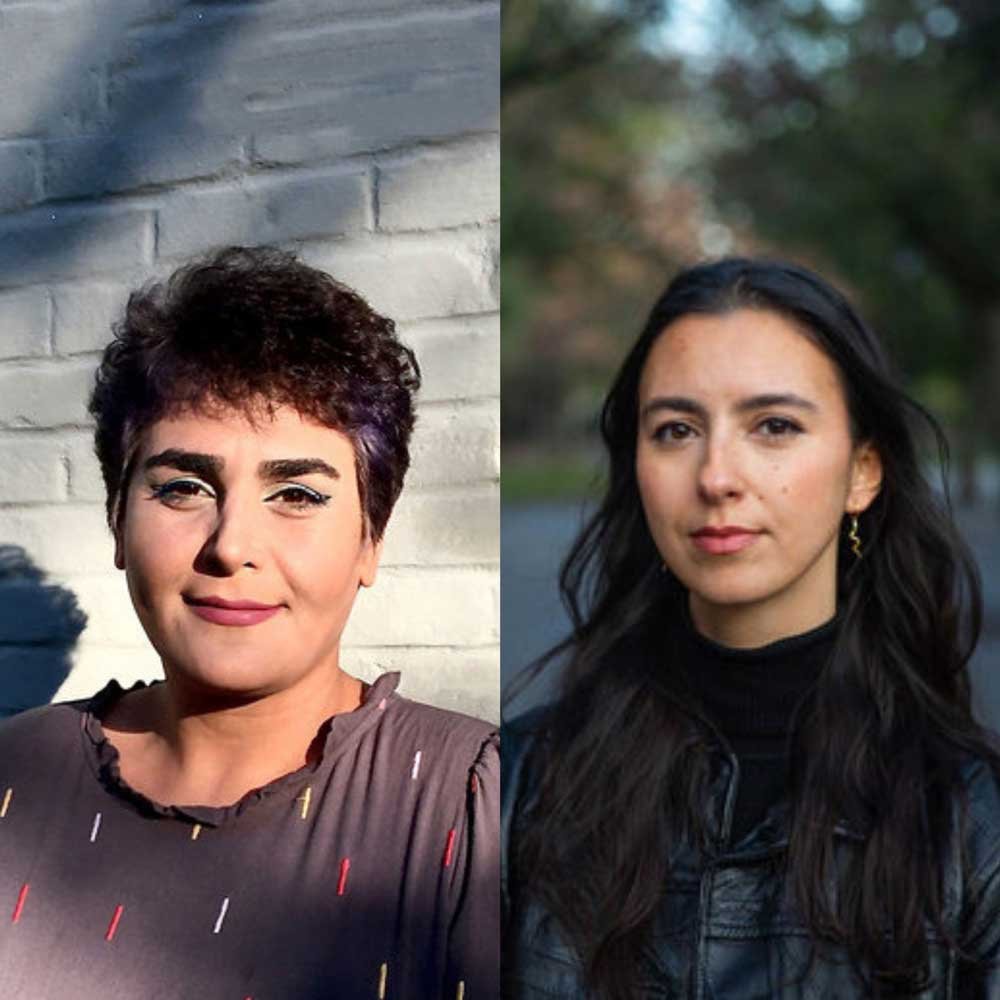
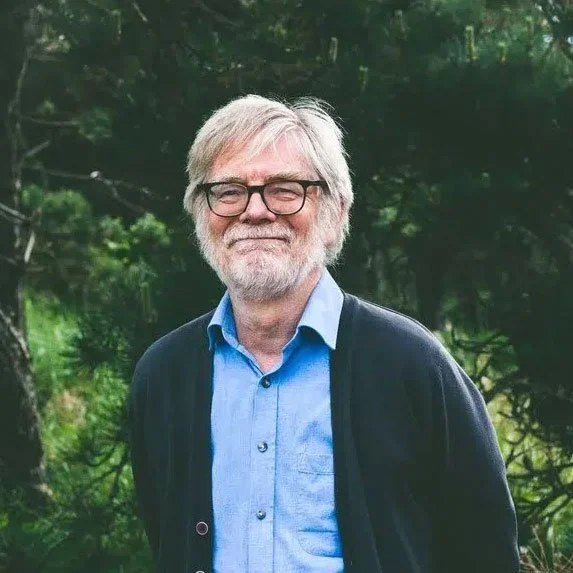
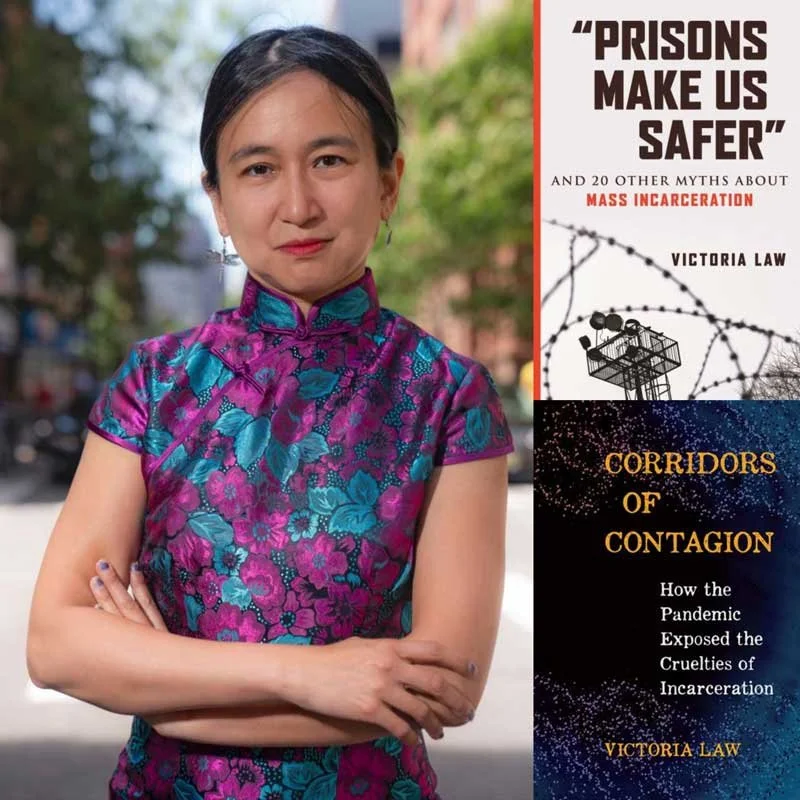
In this episode of the Speaking Out of Place podcast, Professor David Palumbo-Liu speaks with veteran journalist Victoria Law. She is the author of such books as Resistance Behind Bars: The Struggles of Incarcerated Women, Prison By Any Other Name: The Harmful Consequences of Popular Reforms (co-authored with Maya Schenwar), and “Prisons Make Us Safer” and 20 Other Myths about Mass Incarceration. Today we talk about her new book, Corridors of Contagion: How the Pandemic Exposed the Cruelties of Incarceration.
In this devastating study, Law shows how instead of focusing on care during the outbreak of COVID, prisons took the pandemic as an opportunity to amplify their inhumanity, cruelty, and violence. We hear how contagion spread through ventilation systems and through guards who spread viruses from outside to the prisoners, we learn how things like solitary confinement and strip searches only intensified their worse aspects, and how extractive communications systems preyed on those hungry for news from their loved ones. Law also tells us of the personal stories she was able to track that give a human dimension to the statistics of the pandemic, and also remarkable stories of self-sacrifice and solidarity, as prisoners gave each other the care and support so badly needed. We end by learning about organizations that are at the forefront of fighting for decarceration and restructuring of parole boards, and other actions to fight against the inhumane and cruel practices of the prison industrial complex.
Speaking Out of Place is produced in collaboration with The Creative Process and is made with support from Stanford University.
Victoria Law is a freelance journalist and author who has written about incarceration, particularly women's incarceration, for nearly two decades. Her books include Resistance Behind Bars: The Struggles of Incarcerated Women, Prison By Any Other Name: The Harmful Consequences of Popular Reforms (co-authored with Maya Schenwar), and “Prisons Make Us Safer” and 20 Other Myths about Mass Incarceration. Her latest book, Corridors of Contagion: How the Pandemic Exposed the Cruelties of Incarceration, is sadly still relevant.
DAVID PALUMBO-LIU
Thank you so much for being on the show, Victoria. It is an incredible book. It is gripping. It is shocking in many ways, and depressing. But as you point out throughout, what happened in prisons during COVID was in many ways simply an extension of the brutality of the system. I thought we might begin for a general audience by giving us the background of what prisons looked like before COVID. What kinds of things fed into this explosion of the prison industrial complex?. What is particular about the United States, which is always shocking to me?. Could you give us a general picture about prisons in the United States?.
VICTORIA LAW
Sure. Before the pandemic hit the United States, many jails, prisons and ICE detention centers were packed. They were crowded. Either people were left in a cell with many other cellmates. In California, people can be in cells with six to eight other people, and this is not just in California. Like in Indiana, we've heard stories of people being in cells meant to hold maybe two people with eight people packed inside in bunk beds. People are also placed in dormitories where the bunk beds are about three feet apart, so there's no way to social distance or anything like that.
The United States has been building up mass incarceration with more and more severe sentencing laws, which mean that people go to prison for longer and longer sentences for sentencing laws and criminalization laws that criminalize acts of survival. So people say, of course, shoplifting from the Walgreens or the CVS or whatever could be hit with charges that land them in jail or for short prison sentences. But as we know, even a short incarceration, so even three days, one week or two months of incarceration can destabilize lives. People lose jobs, they lose housing. If they have children, it could endanger custody of their children. If they were getting medical treatment, drug treatment or mental health treatment, being incarcerated disrupts that as well.
So people come out in a lot more of a precarious situation than they were before. And keep in mind, aside from teenagers who shoplift on dares, most people who are arrested for shoplifting are already in precarious and vulnerable situations. They're not doing it because they're fulfilling a 13-year-old dare. They are doing this because they need the supplies that they're taking, or they think that they can sell those supplies so that they can get money for food, rent or other necessities. So incarceration destabilizes them. And then inside jails, prisons and immigrant detention centers, they are packed. There is no way to get away from other people, even in solitary confinement, which is a form of isolation, where if you imagine being locked in your smallest bathroom for 23 and a half to 24 hours a day, you still come into contact with the guard. Guards have to give you your meals, they have to give you your medication. They have to give you your mail.
So there's no way to fully quarantine or isolate or shelter at home in the ways that we were asked to do at the start of the pandemic. So people who were behind bars were at greater risk of contracting COVID-19 because even though jails and prisons shut down all communications and contact with the outside world, prison staff were still coming in and out every day. Even before the pandemic, we see crowded living quarters. We have places where people cannot socially isolate, such as the medical units, online for chow hall or meals, or online to buy from commissary or the prison's sole store. So there were no ways for people to easily isolate, and in prisons there were no ways to take precautions that all of us outside were taking. People were not provided with masks or with ways to sanitize their hands. And even before the pandemic, we saw outbreaks happening in places such as an outbreak of, I think it was measles in a detention center in 2019, because of these packed conditions. Because once one person gets it, everybody gets it.
DAVID PALUMBO-LIU
One of the really important strengths of the book is that you do a deep dive into the histories of the ways in which illnesses of various kinds of epidemics—measles, flu, whatever—were treated horribly back then. It is a continuation of that kind of disregard, and it is beyond disregard, as actually violent animosity. I was thinking that as you were giving the example of shoplifting, and this comes out in the book too, in terms of those prisoners who were released early or benefited from certain leniencies eventually. If you think of who is even arrested for shoplifting, there are certain types of people that tend likely to be not let off with a warrant, but prosecuted and then thrown into the system. What is the likelihood they have the wherewithal to hire an attorney, and then what are the pressures for them to plea bargain?. So there is this reproduction, as you well know—I am just sharing this for the audience—of the stereotypes of the criminal class become set in these patterns of prejudice and discrimination that we see outdoors, but it is brought into the replication of the system itself. What kind of mental rationalizations feed into this willed animosity or antipathy toward care?.
VICTORIA LAW
Yeah, that is a very good question because at the start of the pandemic, at the start of the global pandemic, we saw other countries release tens of thousands of people from their jails and prisons to prevent outbreaks. This includes places like Turkey, which released more than 40% of its prison population. Iran, which released 85,000 people from its jails and prisons. And then we see the Philippines, India, Iraq and Ethiopia releasing tens of thousands of people from their jails and prisons. These are not countries that are known for their human rights. It's not like a place like, oh, Finland or Norway has released the hundred or so people in its maximum security lockups. These are places that are not well known for caring about human rights, and they did this as a precautionary measure, as a prevention for outbreaks. And in the United States in 2020, we released fewer people than we did in 2019 when there was no pandemic.
So even though there were widely publicized releases of a couple of dozen here, maybe a couple of hundred there—California released a few hundred people, New York City released a few dozen people, some people were allowed to go home earlier, like if their sentences ended six months later, they could go home six months earlier—but still, the United States as a whole released 50,000 fewer people than it did the previous year. And of those people that were released, it was roughly 550,000, only 6% were because of the pandemic. The other 94% were due to be released anyway. So the United States has this mentality that if somebody is serving a prison sentence or if somebody is in jail, they somehow deserve whatever happens. Whether it is medical neglect, whether it is abuse by staff or the other incarcerated people, whether it is terrible food, whether it is not being able to communicate or see their family members and loved ones.
We have this mentality that has been built up over decades that if you are accused of a crime or have done something that is considered a crime, you deserve whatever terrible treatment you get. And keep in mind that if you believe that the criminal punishment system is supposed to mete out punishments for crimes, the punishment is loss of liberty. It is not that you are physically assaulted, you are sexually assaulted, you are subject to medical neglect or medical abuse. You are subject to all of these other terrible conditions. And what happened in 2020 is that being incarcerated became a possible death sentence. Because we saw that prison deaths jumped 77% compared to the previous year where there was not a pandemic in the United States. And prisons don't always sort out who died of what. The states that did sort by cause and listed COVID-19 as a cause, COVID-19 caused nearly one third of those prison deaths.
DAVID PALUMBO-LIU
My God.
VICTORIA LAW
So that is hundreds of deaths that could have been avoided, had people in charge decided we need to decarcerate, we need to let people go home and take the measures that people on the outside have been urged to take. To shelter at home, to be able to mask when they go out, to not be in close contact and close quarters with dozens of other people who if one person gets sick, everyone gets sick.
DAVID PALUMBO-LIU
Tell us about how this played out in terms of solitary confinement, because I think that is another weird kind of warping of what happened during COVID.
VICTORIA LAW
Yes, the United States has a tremendous number of people in solitary confinement. I think it's more than 80,000 people who are in some form of isolation, so solitary confinement for listeners who may not know the term is being locked in a cell for 23 and a half to 24 hours a day. You can be locked in solitary confinement as punishment for breaking a prison rule. You can be put in solitary confinement when you report abuse, particularly abuse by a staff member. And then you are put in what is called protective custody. And I say this with air quotes because it's not actually protecting you from anything while the prison investigates your claim. This is a very big deterrent for people coming forward to speak out about staff abuse. You can be placed in isolation because you have problems with another incarcerated person and you don't want to be in a population setting where you could be attacked.
Imagine a small bathroom, you actually have a toilet sink combo in your room, often just mere feet away from your metal bunk bed, and you are left there for 23 and a half to 24 hours a day. In some places, they limit what you are allowed to bring with you to your solitary confinement cell, so you're limited to your possessions and you do not leave, say for meals. Or if you take medications, to the medication line, which the prisons have where everybody lines up and they go get their medication in the morning, in the afternoon and evening. Instead, guards come to your cell to deliver everything. So that means you have to be in proximity to the guards who are coming to your cell door to give you your meals, your medication, your mail, anything else.
So you are not entirely isolated. And then there are vents that connect the cells for air circulation. But that also means that if somebody in the next cell is sick, you can hear them coughing and their respiratory droplets could very well travel over. And again, I heard from people who were in solitary confinement at the start of the pandemic that they could hear their neighbors coughing and they worried. They would try to block their vents to keep out the respiratory droplets. In prisons, there are very strict rules and you're not supposed to be blocking that. You're not supposed to be wearing masks or you're not supposed to fashion anything into a mask.
You could be written up or given a ticket, and what that means in prison is that this could mean you don't get visits or you're not allowed to use the telephone, or you can't buy food from commissary. And further down the line, if you go before the parole board to apply for parole, earlier release from prison, they might look and see that you have, say, four tickets and they might all be COVID related, like making a mask, covering your cell vent, covering your cell doors. But they see you have four tickets and they think you haven't learned anything from your incarceration. And so therefore we're going to say, come back in three years, come back in five years and we'll see again. So those tickets could jeopardize a chance at freedom down the line. But at the start of the pandemic, people were understandably alarmed because they were getting dribs and drabs of information and they were not given any preventive measures. They weren't allowed to take precautions that people on the outside were able to take…
READ MORE [ + ]
This is how you sanitize the phones, because the phones are communal. Imagine just going into a room and there's a line of phones. Some listeners may not remember a time before cell phones, but there's a line of phones and everybody uses them, which means that everybody's hands are on the phone, everybody's respiratory droplets are on the receiver. And then they hang up the phone and the next person jumps on because they are desperate to talk to their family members, but then they are breathing in the respiratory droplets of the person before. At Rikers Island, Tracy talked to people about taking the 30 seconds to sanitize the phone. In other places, people used socks to put over the phone. They had clean socks that they would go and put on the phone receiver, so they were more muffled, but they would help share information.
And in prison, sharing is not allowed. That is a ticket. You cannot share a pen. You cannot share food, you cannot share information. This is all prohibited. It is ridiculous and absurd, and in many cases can cost lives. And people risked getting these kinds of infractions, getting these types of tickets in many of the prisons in California. And remember, California was also a hotspot. California prisons were hotspots for the COVID-19 virus. People risked getting tickets to take care of each other. They would notice that somebody was sick, but that person did not want to ask for a COVID test because they did not want to be uprooted from their cell and go to either solitary confinement or a quarantine dorm.
So other people would come to their cells with ramen soup that they bought off commissary, bring food, bring things to comfort them, and check on them to make sure that they were okay because they knew, A, prison staff did not care, and B, they also knew that this person needed care. They were not going to get it from the prison, but being next to somebody's cell or inside somebody's cell is also an infraction of prison rules. So all of these little things that indicate care are prohibited in prison, and people risked that. They risked their own health and well-being because, remember, COVID-19 is spread through respiratory droplets. So if somebody's sick and coughing up a storm in their cell, people were risking getting the virus by going in and saying, 'Yeah, I made you some soup.' And they're risking getting a ticket if an officer walks by and says, 'Hey, what are you doing in that person's cell? That's not your cell. I'm going to write you a ticket.' And now you have all of these other punishments that come into play, but people did this again and again.
If somebody is financially unstable and shoplifts, we see calls for harsher penalties for shoplifting. We see calls for the criminalization of homelessness. I think some place in Oregon actually succeeded in criminalizing homelessness. People, by and large, don't choose to be homeless. Nobody is saying, 'Oh, I have an apartment, I have a job. I'm just going to give it up and live on the streets and be harassed by the police.' This is not what happens. But we see a louder call for more punishment, more incarceration. And I think listeners need to think about what we can do locally, because all of these lawmakers that push for this are elected.
What can we do to push back and say, no? We do not support longer punishments. We do not support harsher punishment. We do not support police going and arresting people for these quote-unquote quality of life issues and sending them to jails that further destabilize their lives and then lead to incarceration. What we need to do is push back on these things and think about ways in which we can try to build society so that when the next pandemic happens—and we know there will be another pandemic because of the lack of public health policies that are now happening, the rollback of vaccinations and everything else—we don't have these overwhelming numbers of people inside jails, prisons and immigrant detention centers who are then at risk. Quite frankly, when you send people to jails, prisons or immigrant detention centers, you destabilize families and communities. So we have a destabilization, and then we also have a place that is a veritable hotspot once the disease gets in.
In New York City, there's Release Aging People in Prison, the RAPP Campaign, which has focused on getting people home. During the course of the pandemic, they held so many rallies outside the governor's office, outside prisons themselves. They fought for people to come home pre-pandemic. They fought for the parole board in New York State, which is appointed by the governor and then confirmed by the Senate, to get particularly punitive parole officials off parole boards and have them be replaced by people who are not law enforcement—who are social workers, who were teachers, who were people who might look at the people coming before them with a more humane view and not simply deny them parole. And they also continue to push for legislation that allows people to come home, including the Elder Parole Act, which would allow people who are age 55 and older to be released or to be parole-eligible after serving 15 or 20 years in prison.
If their age is 55 and older, it does not mean that they're automatically released. The parole board can still say no, but it gives them a chance to go before the parole board. And this is very important because in the 1980s and 1990s, the US had sentences that were ridiculous, that were basically life sentences, like 85 years to life. So unless you were two years old when you committed your crime and got sentenced, you are not going to see a parole board if you have that kind of sentence. People change over decades. They grow up, they mature. They accept responsibility for any harm that they have done, and they should have a chance to go before the parole board and make that case.
They have also done amazing things in New Orleans. There is Participatory Defense NOLA to keep people out of jail during the pandemic and after, and they also fought to release the longest-serving incarcerated woman, Mama Gloria, who was incarcerated in the 1970s after she participated in a robbery in which one of her co-defendants shot and killed a shop owner. She had been imprisoned since the 1970s. She was imprisoned for 50 years, and they fought to get her home. She got COVID, she was sent to the hospital, she was put on a respirator. So there are organizations and there were individuals, and there were ad hoc groups that fought for people to come home and fought to keep people from going in, get people home, and stop the pipeline of people being fed into these carceral systems.
…They have also done amazing things in New Orleans. There is Participatory Defense NOLA to keep people out of jail during the pandemic and after, and they also fought to release the longest-serving incarcerated woman, Mama Gloria, who was incarcerated in the 1970s after she participated in a robbery in which one of her co-defendants shot and killed a shop owner. She had been imprisoned since the 1970s. She was imprisoned for 50 years, and they fought to get her home. She got COVID, she was sent to the hospital, she was put on a respirator. So there are organizations and there were individuals, and there were ad hoc groups that fought for people to come home and fought to keep people from going in, get people home, and stop the pipeline of people being fed into these carceral systems.
DAVID PALUMBO-LIU
Thank you so much for all of those references. If you send me the links, I will put them up on the blog. Thank you for spending time with us. This has been one of the most powerful episodes I have ever done, and I look forward to meeting you soon.
VICTORIA LAW
Yes, thank you.