

By pretending like science is neutral or apolitical, we're really feeding a particular discourse which serves whatever political structures are in place right now, whatever status quo is in place right now. Science can never be apolitical because it's a human activity, it's practiced in society with others, with human and more-than-human beings.
In this episode of the Speaking Out of Place podcast, Professor David Palumbo-Liu talks with Fernando Racimo, a leading scientist-activist, about his new book, Science in Resistance. This book gives a riveting account of the founding and growth of the international group Scientist Rebellion, in which now thousands of scientists from around the world have organized direct actions to draw attention to the climate crisis. Breaking through the censorship and silencing carried on by big fossil fuel companies, and also scientific groups in and out of academia, which often collude with each other, members of SR have put their careers, and their bodies on the line to raise public consciousness and to spur action. We talk about the connection between power and knowledge, between ecocide and genocide, and the need to democratize education and research if we are going to have the kind of world we want to both live in, and to pass on to other generations
Speaking Out of Place is produced in collaboration with The Creative Process and is made with support from Stanford University.
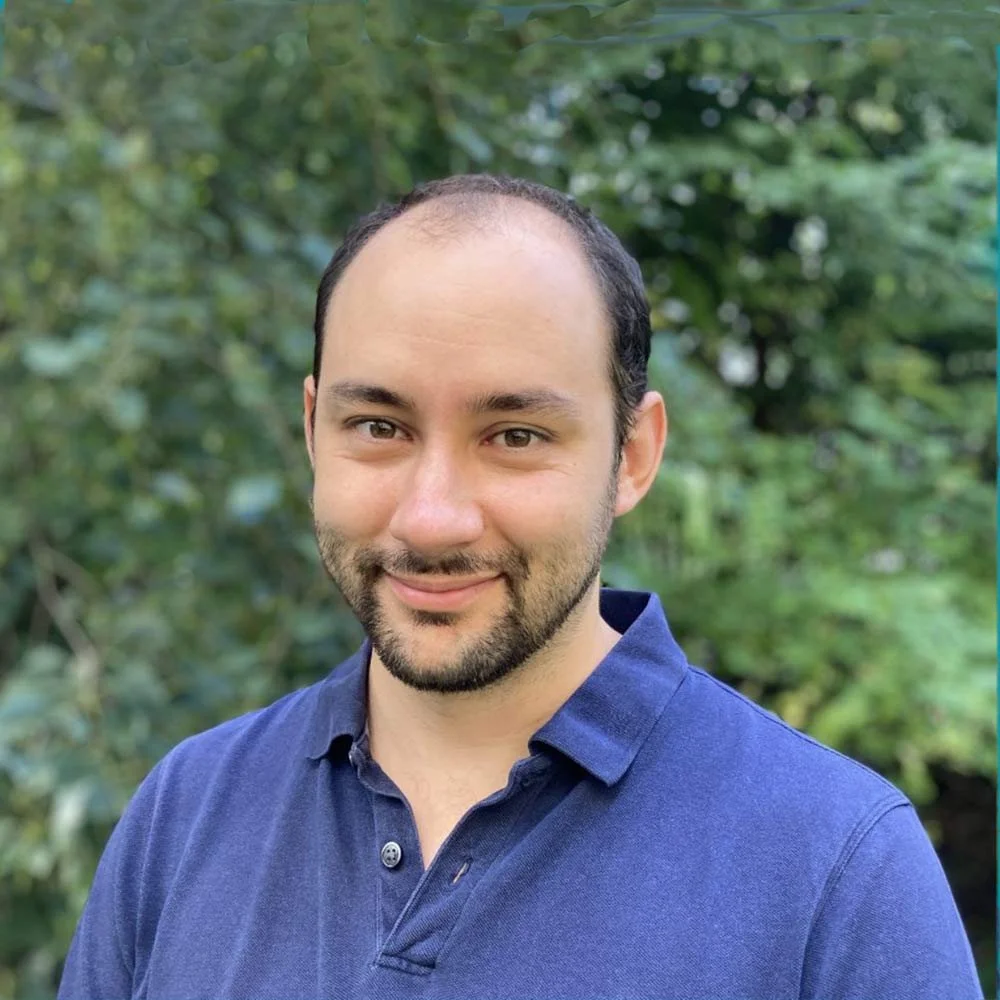
Fernando Racimo is a scientist-activist and the author of the new book Science in Resistance. He co-founded the Danish chapters of Scientist Rebellion and Academics for Palestine, and works at the intersection of academia and social movement organizing. He earned his bachelor from Harvard University and his PhD from the University of California Berkeley, and is now an associate professor in ecology and evolution at the Globe Institute in the University of Copenhagen. He has written articles and OpEds on the urgent need for scientists to join and support social movements fighting structures of oppression, as well as on strategies for transforming and democratizing academic institutions to serve positive socio-ecological needs. At the University of Copenhagen, he teaches on various topics including ecology and evolution, degrowth and socio-ecological justice, decolonizing global health and social movement theory and practice. He currently co-runs a study circle on Degrowth and Exnovation as part of the Nordic Summer University, to explore creative and democratically engaging ways to undo, dismantle and decommission unsustainable institutions, structures and technologies.
DAVID PALUMBO-LIU
Thank you so much for being on the podcast. This is such an important book and it's especially useful to be able to encourage more and more people to speak out.
You begin your book with a very interesting personal note where you talk about your own entrance into direct action. Could you tell us a little bit about this? What motivated you to finally make this exponential move forward?
FERNANDO RACIMO
Yeah, I'm not sure I would call it exponential, but it was quite large. Yes, it was the early 2000s and it was at the time that this movement that I study in the book was emerging, Scientist Rebellion. At this time, the government here in Denmark had passed a climate law where they were committing themselves to reducing emissions by 70%. Just their domestic emissions, not their transport or external emissions, but it was something that they could be held accountable for and they were failing to comply with the letter of their own law.
So there were a lot of scientists and academics that had been pushing for this law together with various NGOs and social movements, and there was a lot of anger at the government for not fulfilling the letter of the law. They were arguing that they were not going to do much for the first eight years of the law. They were going to invest a lot in carbon capture technologies, a lot of these techno-solutionist approaches.
So we met together with various scientists in Denmark and we were seeing these sort of pockets in other parts of the world of scientists that were rising up, engaging in direct action. Quite small at this time. There were maybe a few scientists here and there that were engaging in civil disobedience in their role as scientists, and we decided to do something like that here in Copenhagen as well.
In the book I talk about two actions that happened in front of the climate ministry. There's one where we did a teach-in where we had a classroom full of students occupying a street while delivering lectures in front of the climate ministry, calling out the ministry for not fulfilling this climate law. And then soon after, at the release of the sixth assessment report from the IPCC, we came back. We were reading the report while holding scientific papers.
That's what I talk about in the prologue of the book, of my feelings as this is happening. This was a very typical Danish rainy day, and it was also the first time where we knew that the police could move on us. It was the first time we had done it. They were quite surprised that there was a bunch of scientists wearing lab coats while blocking our streets. They actually treated us fairly leniently that time, but this time they were ready.
They had lots of police vans at the ministry. I don't know, triple the amount of policemen that were actually scientists there. So we knew that some of us might be detained or arrested. And the feelings that go through this particular form of direct action that is very public-facing, engaging in civil disobedience, which is one of many other types of direct action that this and other movements are pursuing.
So it was quite an emotional moment to me. It's coming to terms with what it means to be a scientist during climate and ecological breakdown. How little scientists have been listened to, how much this sort of supposed science-policy bridge is, if not—I'm not sure I would call it broken, but I'm not sure if it ever actually existed.
There's also opening up of possibilities that come with engaging with social movements and realizing there's many other ways in which one can contribute to the challenges of society beyond just talking politely to politicians and asking them to pretty please stop with all the death and destruction. So, yeah, it was quite an emotional movement to me, and that's one of the things that really got me into the movement.
DAVID PALUMBO-LIU
To me, that is such a powerful illustration of how you can connect your research and science to the public without the mediation of all these other institutions which often distort, diffuse or completely block it. It struck me that it's not like you possessed knowledge or information that people had absolutely no access to. The media was doing its thing, but the person on the street can feel the changes in their own bodies.
They can see it all around them. It's not as if it's some mystical or hidden thing. What you were doing was connecting people with their own experiences, getting them to trust their own bodily senses and putting things together in ways that are much more powerful than simply being preached to. Could you talk a little bit about what it was like during the teach-in? You mentioned an interesting set of interactions with the police, which I thought was funny, but what was the general experience? Did people stop and talk to you? What were your interactions with the people on the street?
FERNANDO RACIMO
Yeah, so that day of the teach-in was very different from the day I talk about in the prologue. The day of the teach-in was much more sunny. It was a very different vibe, and I would say beyond convincing the truth, the radical truth that comes from doing these actions. I think one of the things I learned from that teach-in is the power of configuration, of enacting the things that you want to actually happen in the future.
Because beyond the teach-in, beyond the message that we were delivering—we had different climate scientists, ecological scientists and political scientists talking about the crisis and how little the government was doing—it was also a way to show not just students and faculty but anybody walking in the street that this part of the city could be something else. It doesn't have to be just cars all the time.
Yeah, and I think that was quite beautiful, that kind of the silence that came with the teach-in because even though there were talks, a lot of it was just the reduction of noise and seeing this place that were there all the time. It was a very busy intersection of Copenhagen and seeing it from a very different perspective, showing others that these places in the city don't have to be constantly occupied by these fossil machines.
We could have classrooms, we could have libraries, we could have street events, permanent street events, showing the world what is in our heads by actually doing it. We had some people passing by that actually joined the teach-in there. We had these chairs, we had half the number of activists to the number of chairs, so we could invite people and sit as well while blocking the street.
Obviously some people were scared, a lot of people were confused about what was happening. We had people while the teach-in was happening explaining to others what was happening. And unlike with any of these actions, there were also people that were angry, that didn't want this to happen. So we always have people engaging in dialogue with those that are walking by.
But I would say one of the things that often this type of actions that are particularly this civil disobedience actions that are focused on blocking things are often criticized because you're often blocking sort of workers or people trying to get from one place to another, have nothing to do with the thing that you're protesting. I think there's some power in blocking while also generating something new.
Showing people that we can transform places in a way that could benefit them as well. So that showed me not just the power of blocking a road, but turning a road into something else, which is quite good. And at the time that action did gain quite a lot of media attention, it was like every Danish news media outlet had a camera on us, so it was also a way to transmit the message a bit more widely.
DAVID PALUMBO-LIU
I completely understand that there will be those who are angry at the inconvenience and worried about the interruption of their daily lives. But I do believe that sometimes those same people will, months later, when they read the newspaper and see something about climate change or how oil companies are covering things up, feel it click. So a lot of activism for me is planting seeds that may not sprout immediately. In fact, very often don't. But you might find that those same people might join a demonstration two years from now. These actions have a different type of life than what you would expect from the bombardment of daily media, which constantly demands instant solutions.
Could you talk a little bit more about the disincentives? There are so many important details and anecdotes in your book about why more scientists don't do this. You talk clearly about the hard material disincentives, but also the social notion of the killjoy. You mention Sara Ahmed in your book and the idea that the scientist who protests is seen as a killjoy, refusing to let their professional life percolate along as it should. Talk about some of the disincentives and punishments scientists face.
FERNANDO RACIMO
Yeah, this concept of killjoy comes from the feminist scholar Sara Ahmed, the feminist killjoy, and it was later taken on by a group of Scientist Rebellion members who are also academics or professors, and they talk about this concept of the climate killjoy. When there's an uncomfortable topic that needs to be had then we're going to make the room uncomfortable because we think it's an important enough topic.
And it's partly about, like you say, it's partly social issues or this state of organized denial. There's a good paper about this by Norgaard and colleagues that we all perceive that there's something very off with our societies in terms of climate breakdown, in terms of techno-fascism, imperialism and genocide. But we stay quiet and we see other people stay quiet, and that generates more silence out of this. Like the silence begets more silence.
So I think part of activism beyond all the sort of flashy stuff that one might do, perhaps one of the most important things about activism is the bravery to speak up about things that are true or that are important to be spoken, but that nobody's daring to speak. So this idea of a radical truth that I mentioned in one part of the book.
I think there is a social component. I would say there's also these rational components, the arguments that are given for why scientists should not engage in social movements, participate in activism of various sorts. This idea of scientific neutrality, that scientists should be neutral, objective and detached from the world in which they practice their science. There's been a lot of criticism to this notion from various fields, scholarship from feminism, from anti-colonial and indigenous thinking.
Calling out this purported scientific objectivity to just be a particular kind of subjectivity, which is that of the western white man, and that we can never really be detached from the world around us. We're always participating in the world, even when we practice our science, where we might be extracting something from somewhere in order to carry out an experiment, emitting CO2 to go from one place to another. Rather than pretending like the world is just out there, we need to just be mindful of the destruction that we carry as we practice our science.
And of course, practice a science that is non-destructive, non-extractive. There's a really good book about this called Towards Convivial Sciences that speaks about this, and then there's an argument about credibility that is often thrown at scientists. That a scientist will stop being credible when they participate in social movements. That has been quite debunked by a lot of social science studies that look at scientist engagement and what happens to scientists when they engage.
It's also part of my own personal experience. I gain credibility in these topics the more I participate in activism and social movements. There is a really good study about this by Fabian Dablander from Scientist Rebellion that explores that there's really two groups of barriers for scientists from engaging in activism. One has to do with these sort of rational or intellectual barriers, that one thinks that scientists should not be doing this or that one would lose credibility, or that one doesn't know how to participate in social movements.
And then there's other kinds of barriers that have to do with proximity to social movements or not having enough time or perceiving to not have enough skills. So these different barriers should be tackled in different ways. But one of the points that I make in my book is that beyond these various rational barriers, neutrality and credibility, and beyond the social state of organized denial, there are structural barriers.
For scientists to participate in activism, having to do with the way in which academia itself is structured and has been structured over decades of neoliberalization. Decades of managerial practices becoming more and more embedded into universities, into higher education institutions, to the point where scientists feel like there's a particular set of actions that they're allowed to do. Often stepping outside of those actions is seen as transgression.
The owner always needs to defer to authority, and there's also a state of fear because of so much precarization in academia that one might lose their job if they do something that is out of line with a very narrow set of activities. But yet with all these barriers, rational barriers, social barriers, structural barriers, what I try to show in the book is that still there's quite a lot of people within academic institutions, professors, researchers, students and staff that are still rising in resistance.
They're still working to organize away from all these structures, trying to transform academia to serve social and ecological needs, rather than serving fossil capitalism and fossil colonialism. So I think that's one of the most important messages of the book. These people that are speaking up and how they become empowered in part by seeing other people also speaking up, organizing and standing up to those who would prefer the scientist to be this passive actor that is subservient to capital needs.
READ MORE [ + ]
I really want to spend the last part of the podcast talking precisely about these kinds of coalitions and mutual support across different populations and geographical spaces. But I did want to get back to the accusation that those who are becoming politically active and taking science to the streets are betraying the commitment to scientific neutrality and objectivity.
I'm so glad that you dedicate an entire chapter to this topic of the enemy within, because I'm sure you know this story. When Stanford got the Doerr School of Sustainability, it was announced through an article in The New York Times. The new dean was asked whether they would take money from fossil fuel companies, and his response was ridiculous. He said they would take money from anybody who would help them, assuming, of course, that those companies were actually going to help.
What was interesting at Stanford was the immediate reaction, not from the professors, but from the graduate students. The graduate students were militant and very well organized, and we actually had them on the show back then to discuss this contradiction they were participating in while getting their PhDs. They shared that one of the persistent conversations they had with their advisors often began with the advisor saying, "I really admire your passion." Which is always a dead giveaway for what comes next.
A hand on the shoulder.
Exactly. The advisor would say, "But these are really two separate worlds. I'm here to teach you about science, so if you want to do that on the side, go ahead, but it will delay your progress toward your degree." There was a hidden threat there—the implication that a letter of recommendation might simply say, "I admire their passion, but..." Could you talk a little bit about the powerful ways in which fossil fuel companies are in bed with universities and vice versa, rendering the idea of neutrality a ridiculous sham?
Yeah, so that chapter starts with an action that we did at a technical university here in Denmark, the Danish Technical University, who has a ton of fossil ties, particularly with the company Total. At the time, we were building this sort of mock oil pipeline, which was just like a tarp dark tunnel painted black, and it was like a very harmless action. It was just a bunch of scientists wearing lab coats with helmets creating this sort of construction site.
And we had the DTU director come down. There was security around us and the director ended up calling the police on us, and we were arguing that we're calling out these fossil ties. This was in alliance with a group within DTU called Divest DTU, which were, as you mentioned, students and postdocs that were trying to sever these ties between fossil companies and the university.
For this university, it's Total funding centers of research that are devoted to finding ways to extract more oil and gas. There was a center that was called Center for Oil and Gas that went through a rebranding effort that's called now DTU Offshore. And I think over half of the seats on the board of this institution are Total. DTU is not a specifically salient case. It is the most fossil-embedded institution in Denmark, but there's many others around the world.
Fossil companies in the UK pump every year, I think it's something like 40 million pounds into higher education institutions. As part of this book tour I was at one of the universities, Imperial, which has a lot of ties with Shell, with other fossil companies and with airline companies. But as you say, often there's resistance from the students. I mentioned resistance by students in Spain, in the UK and in the Netherlands.
These movements like End Fossil: Occupy, which are students that are just really pissed off that management is making these decisions, accepting money from fossil fuel companies, influencing the kind of research agendas and curricula that happen within universities. And part of this has to do with the managerial structures. The fact that students and often faculty have very little say in who gets to give money to the university.
So it points to a lack of democratic practices within the neoliberalized university that allows these things to happen at such a wide scale. And of course, fossil fuel companies receive quite a lot of benefits from these partnerships, not just research that is happening on campus but the greenwashing that happens on their names and the ability to influence curricula.
One of the examples that I give in the book is Radboud University in the Netherlands that partnered with Shell, and Shell was influencing curricula. It had a say on who could be allowed on university grounds. It was ridiculous and there were protests around this. Students were removed from campus as a consequence of this protest or several occupations on this university. In many cases, these ties have been severed as a consequence of this protest.
In other places they haven't. I was just at DTU a few days ago. I was again invited by students and postdocs who are really angry at these ties to give a reading of my book about my occupation of the university in the university where I was occupying it. But it's quite egregious and it's something that we need to be mindful of.
I think part of this, like you say, this sort of border, that one place is science and there's things that happen outside of science, that is a move that we need to be calling out because no science is practiced in isolation. All science requires resources that are extracted in order to practice that science, people that one is in partnership with and pretending like we're angels practicing science outside of reality is quite frankly feeding into the complicity of universities.
I mentioned a panel event I was in where somebody was saying there's ways of doing science that are really neutral, and I was trying to understand what they meant by this. For example, a scientist studying ice in Greenland is more of a neutral scientist than you are, and he was arguing that my way of practicing science wasn't that different from a far-right politician trying to influence campus activities.
I think we need to acknowledge that all science to a certain degree is political. There's political aspects into what gets funded, who gets to practice the science, which bodies are sacrificed in order to practice particular forms of science and what the outcomes of that science is. All the AI surveillance that is coming out of all these technologies for generating AI slop and surveillance, a lot of this is scientific expertise, massive amounts of scientific expertise coming from universities.
I would even call out this example of a scientist going to practice their science in Greenland and measuring ice. There are political decisions that go into deciding who gets to go to Greenland, why they can go to Greenland, why they can fly to Greenland, what it is that they're doing there and why they're not doing something else. Why are they not carrying out a teach-in in front of the climate ministry?
By pretending like science is neutral or apolitical, we're really feeding a particular discourse which serves whatever political structures are in place right now, whatever status quo is in place right now. Science can never be apolitical because it's a human activity, it's practiced in society with others, with human and more-than-human beings.
I was thinking about eons ago when I was a graduate student at Berkeley, this first became clear to me because of an amazing physicist named Charles Schwartz. He showed how physics was so deeply tied into nuclear energy, the nuclear bomb and related military projects. The Berkeley cyclotron was doing all these experiments that were multipurpose. They weren't just aiming for pure scientific discovery, but were funded by the Defense Department.
All these things were feeding into a particular purpose that, once begun, would not be stopped. Often the scientists would argue that it's up to Congress to decide how the research is used, but nonetheless, they were producing this rather than putting the same amount of time and energy into researching projects that could serve the public in different ways. The system was already skewed in that direction.
Not speaking up isn't just being passive; it carries an active stamp of approval. By remaining silent, you are implicitly stating that the status quo is perfectly permissible. You have this wonderful section about education for the future where you talk about the counter-hegemony that is important to put into place. I think that all these actions aggregate into being part of that in a very concrete way. Can you talk more about education for the future?
Yeah, that chapter is about reflecting that education and universities provided by scientists and scholars, and also by students themselves, often it's education that is not fit for the future that will come to pass. We're teaching students about life skills that will very rapidly become obsolete as the ice caps melt, as sea levels go up, and the challenge that we face today is how do we educate for a world on fire, a world that is changing quite rapidly?
And here I'm following on a lot of Black feminist abolitionist education scholars that talk about the connections between education and empowerment and education and social justice issues. So people like bell hooks, Freire. And to me, education is a process of realizing that the span of human activities is much wider than we've been taught to believe.
It's also a process of remembering those things that we have been told to forget. You were just mentioning the anti-nuclear movement, and of course a lot of this were scientists and academics that were rising up on campus in the sixties and the seventies, calling out these research activities. So a lot of the things that Scientist Rebellion and other academic movements or academics joining social movements do, it's not new, but we've been told to forget and we've been told to think that scientists should be apolitical.
So it's about re-remembering that. I think this teach-in is a very flashy example of educational resistance, but there's a lot of examples of educational resistance that happen in the classroom itself. Even just talking openly about these topics in the classroom can be a way of opening up the air in the room to things that maybe students don't feel like they can talk about.
So I always try to in my courses, even courses that might have nothing to do with the climate crisis, I always try to make space for talking about these very difficult topics like climate justice, like the genocide in Palestine, mining in Congo, like Western imperialism. And it's generally a very positive response. It's generally like people feel like something that was constricted opened up and now I can talk about this thing that I wasn't able to even phrase in the right way.
You were also talking about sort of these seeds of resistance that one plants, and often the most rewarding opportunities to me was seeing people that I had at a small teach-in within the classroom where we were talking about these difficult topics, and then seeing that person joining a social movement or telling me about somebody who had joined a social movement and they were inspired to join it as well. So the classroom is a site of struggle. It's a very important site of struggle that we all need to keep in mind as educators and scholars.
It's interesting that you mentioned bringing up topics that are not usually taught in those kinds of classrooms. Have you ever been chastised for doing that? What kind of pressure have you felt?
Yeah, and I've felt pressure from our senior academics, not for talking about these topics in the classroom, but I have felt pressure from talking about my activities as a scientist-activist openly in departmental settings. Often the repression that you feel most directly is not so much the police repression, it's the repression that happens within your workplace.
And in terms of classroom activities, I think at least the way in which I present this, I always make space for people that don't want to discuss about these topics. And also mention this is outside of the curriculum, so giving people space to leave if you don't want to talk about these things. And people rarely leave because people are dying to talk about these things.
But I know scholars who have lost their jobs for teaching and perhaps doing research on topics that are outside the narrow scope of academia. A lot of people, for example, doing now research on AI abolition or being loud about the genocide in Palestine and calling out the complicity of universities in the genocide in Palestine. I know several people that have lost their jobs as a consequence of that.
Also, one needs to be mindful that there are repressive structures within academia, and I think a lot of it is not necessarily like purely evil intentions, just the structures are in place to incentivize policing and incentivize people checking on other people and making sure that they're doing the right thing in quotes. So it's also about thinking about how we could transform academia to be a place in which we can actually talk openly about engaging with society.
Also because academia, universities are supposed to be places that are engaged with our embedded communities. They're not just places that produce employees for chemical companies and fossil companies. They're supposed to produce critical thinkers. They're supposed to be hotbeds for critical thinking. And if we lose that, then we lose the positive aspects of the university beyond all the fossil ties, beyond all the managerialism, the potential that universities have to be transformative.
You have a great discussion about democratizing the university, which I think is incredibly important. When you describe what's happening in those classrooms—and I've had similar experiences—the suggestion that these things are not impermissible but simply not the business of the university is a profound sign of disrespect to our students. You're effectively telling them what they should and shouldn't be curious about, or that if they are curious, they should have coffee with their professor rather than discuss it in the classroom.
There's almost a fear of contagion. I think especially at a place like Stanford, which is so heavily embedded in Silicon Valley and technology, I often joke that I'm almost flattered they think my small class is going to have any effect on the monolithic status of the university. But I think it speaks to a deeper fear of democracy, this fear that you can't allow these conversations because they could start a huge trend.
I was thinking about the example you gave of how Peter Kalmus interrupted a professional conference for ten seconds. I've known Peter for years, and he once said, "I've been arrested five times. I'm not sure I can get arrested a sixth time without NASA getting really upset." These actions are momentary and performative in a powerful way, showing people what can happen. It sounds to me that this is a sign we are doing something important, even if we shouldn't exaggerate our sense of what we're actually accomplishing.
I'm so glad you mentioned Palestine because years back, I had Tim Hewett on the show and it was supposed to be him and Mike Lynch-White. But he informed me that Mike couldn't join because he was in jail—not for climate activism, but for a Palestine action. It's crucial to point out that the environment, ecocide and genocide are stitched together. They can't be separated out except through the most abstract rationalizations. These forces operate together. Could you talk about the ways in which science has effects that are immediate but also proliferate across different scenarios?
There's a lot of points that come to mind. I should say it's also, you were talking about people that suffered for speaking out. Rose Abramoff was together with Peter in that event and she lost her job just for displaying a banner for 30 seconds. And this fear of speaking out percolates through a lot of the episodes in the book, and as you say, it's connected to a lack of democratic practices within the university.
It's what enables universities to also become complicit in the structures of oppression, in the genocide in Palestine. I interviewed Mike. As you say here, he was arrested for an action with Palestine Action. It was for occupying a factory that was producing weapons parts to be shipped to Israel, and he was arrested for and spent time in jail for almost two years. So I interviewed him after he came out and he's just an amazing person.
He was one of the main drivers of SR, particularly in its early years. He's very determined and he can really call you out when you're not embodying the truth of your actions. And I wanted to talk to him because I also know that he's in many ways quite critical of this particular movement that I'm in and that I've studied, Scientist Rebellion. He calls out the movement after all these years because it hasn't been loud enough at criticizing the institution from which academics emerge, higher education institutions and universities.
Often it's a scientist wearing a lab coat maybe blocking an oil refinery or blocking an airport, but it's rarely calling out the structures of oppression within the university. It does happen, but it's rare compared to other actions where one is more the public-facing scientist that's supposed to be talking to the public about the crisis. So he's recognizing that Scientist Rebellion, at least from his perspective, was more about scientists calling out other scientists angrily but lovingly at the same time about the complicity of this institution.
So that got me to reflect on why isn't there more activism in universities by academics, by professors. Of course, there's a ton of activism by students, and student Palestine camps is one example of that, which were in many ways supported by staff and academics, but the main drivers of that were the students. And of course, tied to this is the fact that under capitalism, scientists and academics receive a salary from this institution.
So you're putting at risk your job if you just step too much out of the line to the point that you're seen as a threat by a university institution. And so a way forward to think about this also along the lines of democratizing our universities is thinking about workplace democracy, practices of workplace democracy within universities. Realizing that the managerial structures that prevent change, that have been instituted through decades of these sort of new management practices that have removed agency from faculty, from students and from staff in terms of deciding how universities run.
So often universities increasingly are run from the top down by boards or these top-down bureaucracies, often with strong ties to either whoever's in political power or who is in economic power as universities also rely increasingly more and more on private funding, on student fees. So they're seen more as a capitalist service than an institution for critical thinking.
And I draw here on a really cool paper by M. San Martel on democratizing the university. It's called administrative abolition. So abolishing positions of extreme power in the university like rectors and presidents, and bringing back democratic practices to universities and how one goes about doing this. Conceptualizing that, as in many other spheres of society, there is this managerial predatorial class, but it's preying upon the labor of students, of staff, of academics, and it's often trying to divide them into different stratas so that they can't organize for transformative change.
Putting tenured professors and non-tenured professors in different categories. So the tenured professors just want to keep their job, the non-tenured professors are trying to get a permanent position. And then there's even more precarious staff that are on very short-term contracts. There's all staff that actually makes the university run, the cooking staff, the cleaning staff, without whom universities would not be running, and that are often characterized and not really thought as being part of the university, even though they're integral to the university.
Thinking about how all these people could be organized. And a lot of that obviously involves strengthening and radicalizing our unions and connecting these big issues that I talk about in the book, like climate change and ecological breakdown, ultimately tying them down to also the things that have to do with the day-to-day, with the end of the month.
There's a strong current now within the climate justice movement about the importance of connecting climate issues with the day-to-day, about things like the fact that people can't afford their energy bills, they can't afford their food. Demanding things like free public transport and universal basic income, which are all climate measures. They're just not raised in terms of how many parts per million in the atmosphere they will save us from or how much heat they will save us from, connecting to the day-to-day issues.
I think we need to be doing that also within the universities, looking at people that are prioritized within universities and addressing the day-to-day basis of the university. Removing precarization from universities and higher education institutions so that people feel that they are empowered enough to actually call out the big issues, call out things like fossil ties between universities and all these horrible corporations. Bringing back practices of workplace democracy and remembering that in many cases these existed at some point.
M. San Martel brings up this example of democratic practices in Latin American universities that emerged as a consequence of student and faculty revolts in the early 20th century. Students and faculty allying themselves against managerial structures and that brought about a lot of democratization of universities in Latin America and having people realize that just because one is in a committee or in a faculty senate, that might not mean that they actually have a say in the workings of the university. A lot of these things have been made ineffective, completely symbolic. Bringing back practices of workplace democracy to universities, I think, is quite crucial.
One other thing I wanted to discuss is how impressed I was by the collaboration between members of Scientist Rebellion in the Global North and those in the Global South. As you point out, if there are threats to those in the Global North, they are exponentially worse for your colleagues in the Global South. They face the risk of not just losing their jobs, but losing their lives, facing violent repression for speaking up for climate change. Furthermore, the pseudoscience and continued extractivism generated in the Global North is felt most immediately and violently in the Global South. Could you talk about the interactions you've had with your colleagues in the Global South?
That's a great question and I tried in the book to give as much voice to Global South activists as I could. I come from the settler state of Argentina, so I have some connections to the Global South. My family still lives in Argentina and my parents live there, and I thought it was important to stop repressing the voices in the Global South.
With many global movements it's also something that affects Scientist Rebellion, that we often give more voice to Global North activists than Global South activists, even though Global South activists might have much more wisdom to give about how to resist against these actors that are trying to take over their land and have been trying to take over their land for centuries.
I think it's a very humbling process. As a Global North scientist, I feel like I've learned a lot about different practices of resistance, even theories of resistance from Global South activists. In the book I interviewed scientist activists from Ecuador, from Panama, from Uganda and Tanzania. A lot of them are involved in resistance against fossil fuel projects like oil companies like Total, the EACOP pipeline running from Uganda to Tanzania is one of the focuses of the book.
One of the things that they say is that it helps a lot to connect struggles. Connect struggles between Global South countries and also with the Global North imperial centers. That's where the financing banks and the governments subsidizing these projects are located. Trying to coordinate actions so that you do actions both at the centers of extraction but also at the centers of operation of these companies.
Another thing that I learned by talking to them is the way in which activism is conceptualized. It is often conceptualized in a way that is much more attentive to indigenous ontologies and epistemologies. For example, the groups of Scientist Rebellion chapters that span what we now call Latin America, they're called SR Abya Yala, which is an indigenous term to refer to the American land mass.
Obviously in what is now called the US and Canada you have SR USA and SR Canada. There's no single chapter for SR USA and SR Canada. And the symbols that are used in SR Abya Yala, there's the symbol of the jaguar that is very associated with resistance against oil extraction, for example, in Ecuador and in other places in South America and in Abya Yala.
That also got me into, it was one of the reasons why I tried to explore anti-colonial ontologies and epistemologies in the book beyond the Western conceptions of science, because I think it's both how one conceives of the world around one and also what one can learn in terms of how to resist against further repression and oppression. There's quite a lot of successful campaigns that have emerged from SR activist groups in Abya Yala.
I talked to Jordan Cruz in SR Ecuador who has been contributing to this massive mobilization against oil exploitation in the Yasuní region. There was a successful campaign, an alliance between workers, students, indigenous groups, scientists and academics that led to a referendum that was devoted to end oil exploitation. The Yasuní is a region, it's a tropical rainforest, has a ton of oil underneath and has been exploited for oil for decades.
First by Chevron, which caused massive amounts of pollution in the area, and later on by the state oil company in Ecuador. And it was quite a success. I think it's one of the biggest successes by the climate justice movement in decades, and it's something we need to learn a lot from. It's also worth learning about knowledge practices in the Global South.
I bring up this example of the Ecoversities Alliance, which is this decolonial alliance of education institutions where there's a lot less hierarchical practice, more horizontal practices of knowledge sharing. And they usually do it in a way that is functional to whatever social movement is embedded in the region. One famous example of this is Universidad de la Tierra that works a lot together with the Zapatistas in Chiapas. I think there's a lot that we can learn by talking to both scientists and academics but also activists in the Global South who have been fighting these fights for much longer than Scientist Rebellion or any kind of Global North scientist movement that is now rising in resistance.
I have just one last question for you. What are you up to today? It's the horrible question authors inevitably face right after they publish a book—"what's next?" But I hope your current work has something to do with the idea of the day-to-day, which I found to be so powerful and exactly what we need in terms of real democratization. What are you currently working on?
Yeah, so I'm working a lot with workplace organizing and helping. There's a network here that is trying to push the unions in Denmark. It's called DM Palestine Network, trying to push the unions and the pension funds in Denmark to divest from genocide. But I'm also learning a lot from people that have been doing workplace organizing.
In addition to doing that, I'm also trying to, together with some of other people that have been disenchanted with academia, some of whom have been fired in recent months because of speaking out about the genocide or speaking out about the proliferation of AI by university management, trying to start academic institutions that serve social movements outside of academia. So producing knowledge and maybe other things in places that are a bit more independent of university environments. Try to plant some seeds, as you say, in these different places.
And yeah, I'm also trying to bring more activism into the university. So right now I'm co-teaching a course on how to organize for change. We had some amazing scholars at the university. It's a lot of it is student-run, but we're bringing some scholars that are specializing in social movements, having been embedded in social movements and participating in social movements, different tactics and strategies, and having this as knowledge that we can give to the students, which I think is very important.
We just had a scholar called Fabian Halt who actually followed the Democratic Socialists of America in New York in the run-up to the election and talking about this hybrid mix of movement and party politics. Trying to bring some more activism into the university and also trying to do things outside of the university in the service of social movements is what I'm doing these days.
DAVID PALUMBO-LIU
That is a perfect response because, as a matter of fact, we are on our spring break right now, but classes begin next week and I am teaching a course called Scholars in Activism. The premise of the course is precisely to debunk the notion that those two realms are separate. There are plenty of activists who are scholars and intellectuals, and plenty of intellectuals who learn deeply from activists. Your book is featured prominently on our syllabus, as will be this podcast.
FERNANDO RACIMO
Thank you so much.
DAVID PALUMBO-LIU
No, it is a truly wonderful book. I want our audience to learn more about it through this podcast, but even better, please buy and read the book because we have barely touched the tip of the iceberg. There are so many wonderful anecdotes and stories that bring this movement to life and prove how important it is for us to break apart these institutional silos. We do not have a lot of time left, so thank you so much for being on the program. It has been wonderful talking to you.
FERNANDO RACIMO
Thank you for having me.