

I think increasingly more and more of us are aware of these tiny silicon wafers that power everything from our watches to our phones, to these data centers... semiconductors are, I think of it as alchemy in a lot of ways, chemical alchemy, and they require vast amounts of water, resources, electricity, energy, and especially chemicals to turn a silicon wafer into essentially this very tiny, tiny circuit.
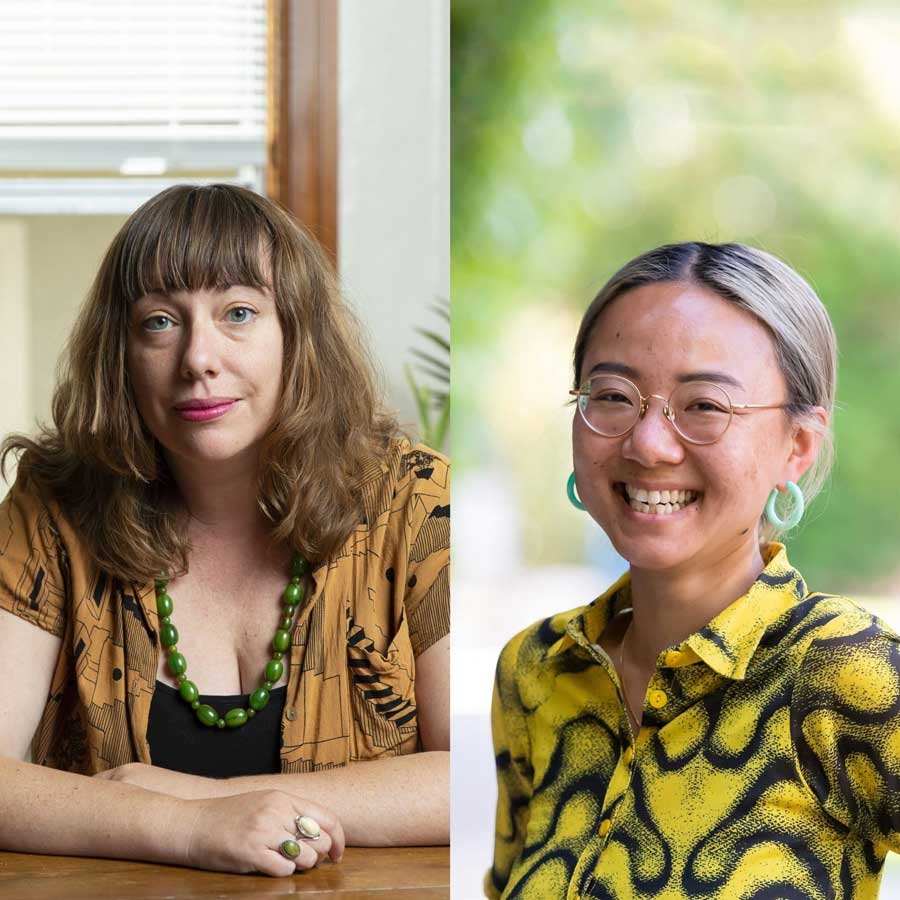
In this episode of the Speaking Out of Place podcast, Professor David Palumbo-Liu talks with Tamara Kneese and Xiaowei Wang, two individuals whose research, writing, and activism has for years insisted on the materiality of the technologies that have brought us things like artificial intelligence, the Cloud, data centers, and digital agriculture. They explain why and how these technologies clothe themselves in ethereal garb and notions of a frictionless, beneficent capitalism while diverting attention from the vast natural and human resources they plunder to make a profit, and colonize more and more land, water, and minerals. We move from corrective histories and analyses to case histories that show how these technologies materialize in settler colonial practices, and end decisively on stories of how people are fighting back, and creating alternate software, hardware, and cultural and social practices that offer a window onto a much less violent and dismal world than the one technofascism wants us to be hypnotized by. Here, we set to break that spell.
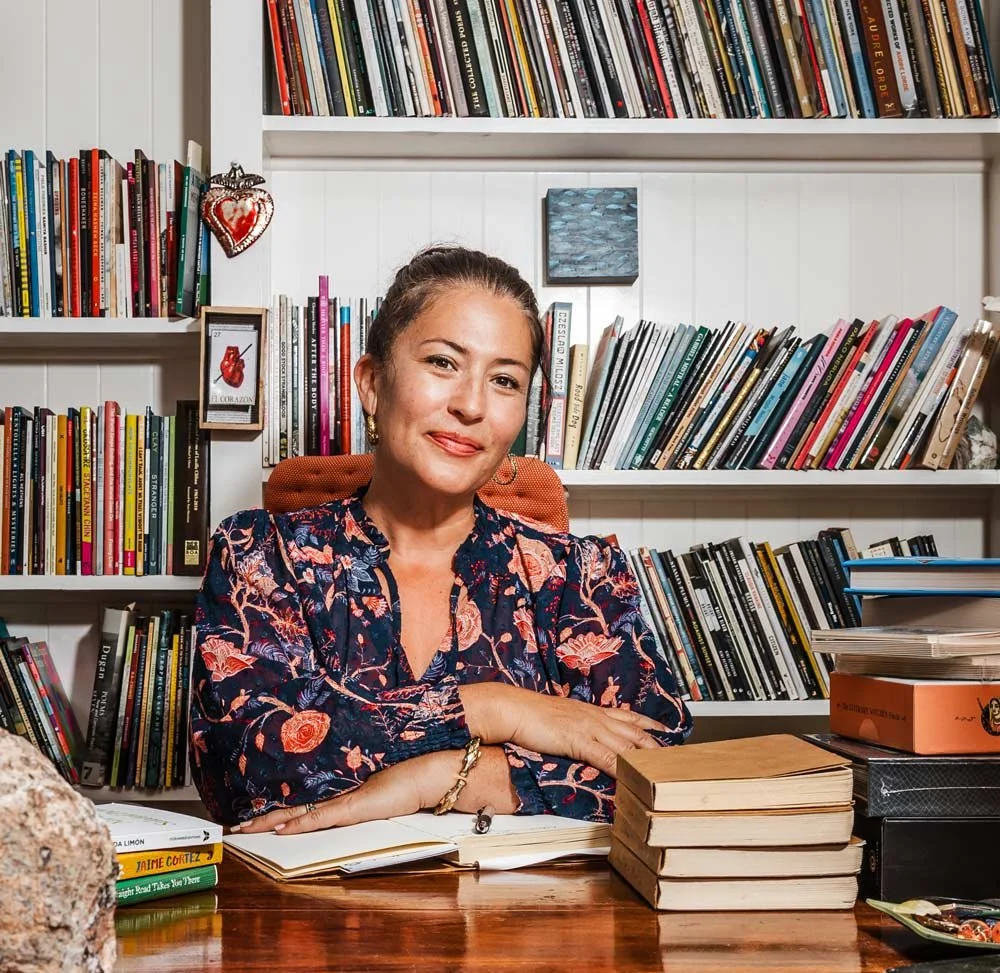
Tamara Kneese directs Data & Society Research Institute's Climate, Justice, and Technology program and previously led the Algorithmic Impact Methods Lab. Before joining D&S, she was director of developer engagement on the Green Software team at Intel and assistant professor of Media Studies and director of Gender and Sexualities Studies at the University of San Francisco. She is the author of Death Glitch: How Techno-Solutionism Fails Us in This Life and Beyond (Yale University Press, 2023), co-author of Notes Toward a Digital Workers' Inquiry (Common Notions Press, 2025), and the co-editor of The New Death: Mortality and Death Care in the Twenty-First Century (School for Advanced Research/University of New Mexico Press, 2022). Her work has been published in academic journals including Social Text, Social Media + Society, and the International Journal of Communication and in popular outlets such as Wired, The Verge, and The Baffler. Her research has been supported by the Internet Society Foundation, National Science Foundation, Social Sciences and Humanities Research Council, the Mellon Foundation, and the American Council of Learned Societies.
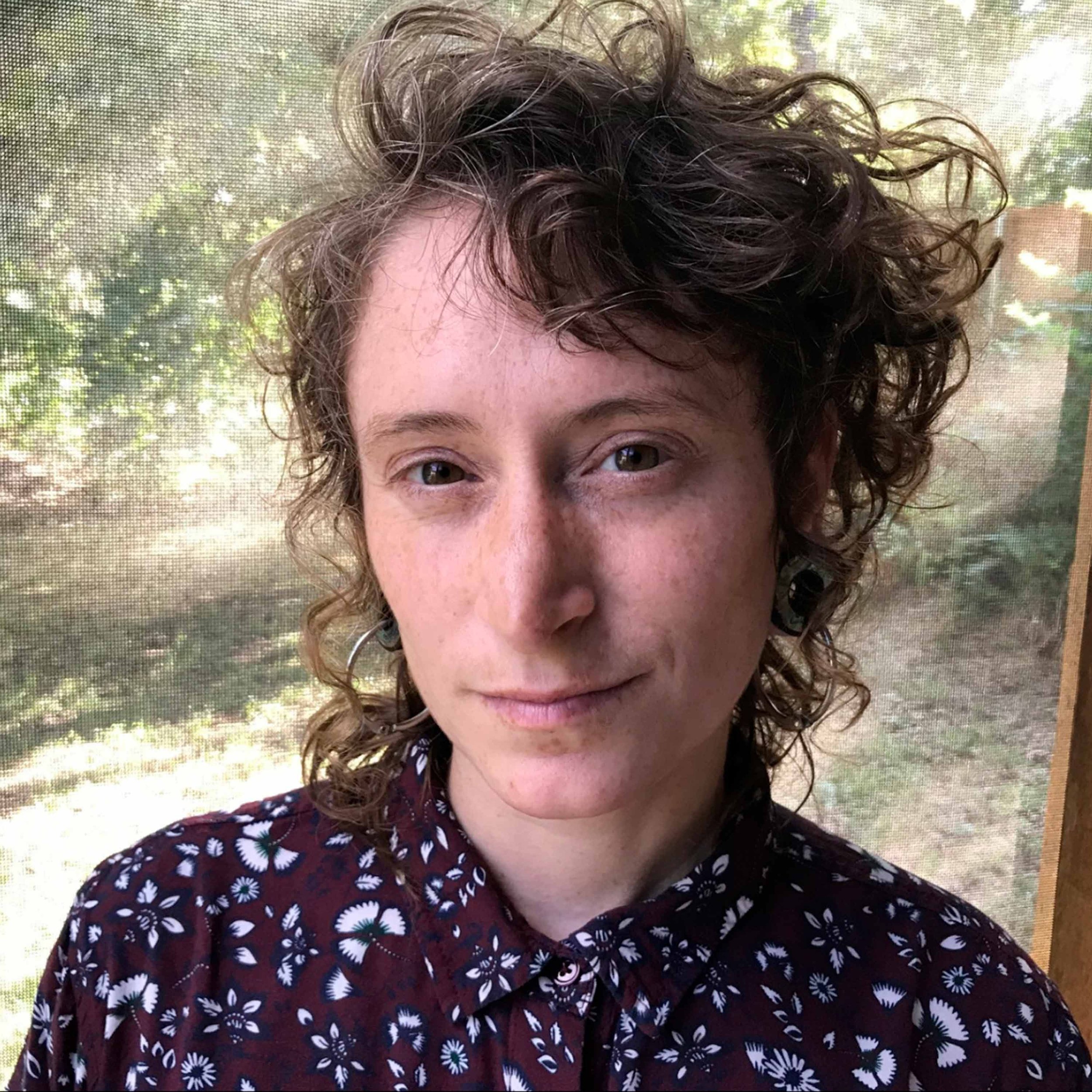
Xiaowei R. Wang is an artist, writer, organizer and coder. They are the author of the book Blockchain Chicken Farm: And Other Stories of Tech In China's Countryside, a 2023 National Book Foundation Science and Literature Award winner. Their multidisciplinary work over the past 15 years sits at the intersection of tech, digital media, art, and environmental justice. Currently, they are a Mancosh Fellow at Northwestern University and one of the stewards of Collective Action School (formerly known as Logic School), an organizing community for tech workers. In 2024 they were a Eyebeam Democracy Machine Fellow, which supported their work with forms of soft data storage and transmission using textiles.
Speaking Out of Place is produced in collaboration with The Creative Process and is made with support from Stanford University.
DAVID PALUMBO-LIU
This is such an important topic. I thought we could start with getting real and ask Xiaowei to talk about semiconductors. You and Anne Chen wrote this really useful article about semiconductors and what they actually are—and especially the way that they draw upon the environment, especially water and the different cycles of production. I was surprised and depressed by how quickly things need to cycle through to constantly replenish according to new technological developments. And of course, AI is just eating up everything.
XIAOWEI WANG
I think increasingly more and more of us are aware of these tiny silicon wafers that power everything from our watches to our phones to these data centers. And increasingly across the world, countries have also started to securitize semiconductor production because, especially after the pandemic, people are seeing how fragile the AI supply chain is. Countries want to really make sure that we can manufacture it, whether it's the US or Korea or the EU.
And so semiconductors are—I think of it as alchemy in a lot of ways, chemical alchemy—and they require vast amounts of water, resources, electricity, energy and especially chemicals to turn a silicon wafer into essentially this very tiny circuit. You're essentially doing chemical engineering at the atomic level, and it's crazy if you start to dig deeper into it. There are also these quantum effects that can happen with contemporary semiconductors just because these circuits are getting so small.
One of the big things that I really look at and that we looked at in the semiconductor guide was water. Both water use, because the industry needs what's called ultrapure water—just contaminant-free—and a lot of that can't be recycled. I was recently at a semiconductor industry conference, and if you're thinking about profits, it's risky to start recycling water, right? It might have these micro-contaminants, and if you're doing atom-level engineering, anything can affect your final bottom line. We also looked at wastewater because so many chemicals are used throughout the process.
Historically, as the three of us have all looked at and thought about, is the chemical pollution in Silicon Valley with the semiconductor industry here, but also throughout East Asia in the 1980s and 1990s with Samsung, a very high-profile set of leukemia cases in the semiconductor floor workers. But this is also because circuits have gotten more complex. Emerging contaminants like PFAS forever chemicals are also a really big concern in Korea right now; 64% of PFAS emissions are just from the semiconductor industry, and I think in the EU it's 10% of PFAS waste. Yeah, so this is a really dire issue and there's not a lot of regulation right now, especially around PFAS.
DAVID PALUMBO-LIU
Could you talk more about water? How does it go into the cooling of computers and drives and things like that besides just the production of microchips, and what other ways is this industry extracting water? And are there any guardrails at all? Are governments just capitulating right and left? Is there any pressure point to moderate this consumption and dumping?
XIAOWEI WANG
So I think to the data center component, Tamara probably can speak to it more than me since my focus has really been in the chip manufacturing process. But I will just say from the field guide, on a daily basis, TSMC uses the equivalent of one American household's annual use of water.
DAVID PALUMBO-LIU
My God. Jesus. Tamara, great article. I love the title, The Cloud is Dead because how could it be dead if it is floating up in heaven? So please bring us back down to earth the same way that Xiaowei did in terms of what the materiality of the cloud is and its effects.
TAMARA KNEESE
Yeah, so The Cloud is Dead emerged from a kind of frustration that I felt, along with a lot of other researchers who have been looking at data infrastructures and their environmental repercussions, and just the materiality of computing for a long time. What's been interesting to watch is that as data centers become a major focal point for the press, for activist communities and for politicians right now—especially from the right who are hoping to use data center accelerationism as a way to grow their power and develop new relationships to energy infrastructure—there's a tendency to ignore the fact that a lot of these processes were already in motion before.
And The Cloud is Dead is really in many ways an homage to a lot of the scholars and critical researchers from the previous decade-plus who've been doing work in this area. People like Mel Hogan have been doing research on the relationship between data centers and the surveillance state, the collusion of then-Facebook with the NSA, and also the water consumption of data centers in places like Utah that are water-stressed.
Looking at the fact that many of these articles by people like Mel, people like Ingrid Burrington were published over ten years ago, and yet now everyone is shocked by the existence of data centers, which have been here. They're just taking on a new sense of urgency as generative AI demands new kinds of hyperscaler data centers.
I think when we look at the intensification of production, the semiconductor industry Xiaowei was talking about is already rife with all kinds of issues related to occupational health. So the toxicity for workers that Xiaowei's work poignantly points out, the relationship between electronics manufacturing and things like miscarriage. All of these issues that plagued largely women workers in East Asia and also in Silicon Valley and Santa Clara Valley before everything moved over to Asia.
Now with the growth of data centers, you need more chips, right? And you need more powerful chips. As chips become more powerful, they also become more toxic in that you need particular chemicals and materials in order to make them more powerful. And they also can be churned through much faster. We're seeing an acceleration of e-waste as well, which can contaminate the communities that it ends up in. And then we also have increased mining.
Politically, the realm of critical minerals as a new site of extractivism and a new site of political leveraging, particularly from the Trump administration, is another area in which it's basically impossible at this point to think about cloud computing and the internet as something that is disconnected from the material.
But I think what I was also trying to do in The Cloud is Dead essay that I wrote in the larger series that I put together that Xiaowei contributed to is to think about longer histories as well. It is not accidental where these mega-hyperscaler data centers are going. They're going to places like Louisiana, they're going to places that...
READ MORE [ + ]
...have already become sacrifice zones. They're going to places that have less political and economic power. And if you look at data centers and their relationship to places that are already suffering from high asthma rates, are there health effects from poor air quality? Now we see again an intensification of processes. So if you're putting in a hyperscaler data center that is relying on diesel fuel backup generators, the particulate matter from those will negatively impact communities that are already dealing with poor air quality from previous eras of industrial development, including things here in Oakland like highways and interstate infrastructure.
Looking at these legacies of resource extraction can be incredibly helpful when we're thinking about data centers as maybe the newest kid on the block in a much longer history and trajectory, but also looking at resistance. So how have people organized and formed coalitions to fight back against things like Amazon warehouses where they don't want them? How can people who are looking to fight data centers who maybe haven't been part of that particular kind of fight before, how can they look at previous waves of environmental justice organization and larger coalition-building to find some strategies that might work?
Finally, I would just say that the other aspect of The Cloud is Dead that I really wanted to emphasize was the fact that it isn't just about the environmental impacts that can be quantified. It isn't just about thinking about the energy use and the water use of a particular AI model. It is very much about the pollution and the embodied impacts of living near something like a data center or near a mining operation or a manufacturing plant. It is also about what the AI is being used for.
And I think increasingly we have come to realize that AI is a fascist project, and that we cannot talk about the environmental harms of AI without also talking about what the AI tools are being used for, including in cases of genocide and also fossil fuel extraction. The fact is that Microsoft and Amazon are both selling their AI products to oil and gas companies to help intensify and accelerate oil and gas exploration. So you have something that is a fundamentally evil technology in many ways that is also harming people on a local level.
It also brings to mind, like I mentioned, I was at a semiconductor industry conference, and I like going to industry conferences because people don't have to put on the PR face; they just say directly what they think. And you had people there who were talking about how we need to securitize the chemical supply chain. We need to be making more chemicals in the US, given the CHIPS Act. And you had an industry lobbyist who was talking about how the Stockholm laws that are going to be passed against persistent organic pollutants are “the biggest threat to their existence as an industry.” And so it's just laid bare that so many of these digital industries are really chemical industries, right? The semiconductor industry is a chemical industry. It relies heavily on these transformations.
And the other thing I'll add, thinking about local communities, is that part of looking at semiconductor manufacturing in Taiwan—an incredible scholar has looked at this in Taiwan throughout the 1980s and 1990s with the development of this idea of a Green Silicon Island, and how that actually displaced a lot of local aquaculture farmers and local farmers. There were contestations over who has the right to clean water. And so now with this push towards miniaturization of chips to two-nanometer chips, there are talks of putting in desalination plants where TSMC is trying to manufacture pure water.
Of course, these questions then come in: who has a voice in economic development and what industries are being prioritized? I think when Anne and I were doing research in Taiwan on the ground, there was this idea at the time of the Silicon Shield in Taiwan, but of course with changing geopolitics, that's also shifting too.
Wow. There is so much to pull out of this. You were talking about Taiwan in the 1980s and 1990s. I was in Taiwan in 1980. And this was right after their very famous Kaohsiung Incident. In other words, there was an uprising of native Taiwanese, right, and brutal repression. And I was studying literature and had these underground authors smuggling me these manuscripts.
So this will form a wonderful bridge to your article, Xiaowei, about Guizhou in terms of settler colonialism. There's a really strong convergence between these two things, but I also wanted to back up to Tamara's article and the idea of haunting. Because I've had Malcolm Harris on a couple of times, and when he talked about the inspiration for his writing the book on Palo Alto, he said Palo Alto is a haunted space. The bodies of all these indigenous populations laid the foundation for this, and the book goes layer after layer into this really brutal parsing out of viable versus unviable life forms. And he talks about microchips very poignantly, about how that was the basis of that. So could we talk a little bit about this idea of haunting, pulling it out for both of your work?
Because I think it's really important. And then another question I had—I wanted to articulate it before I forget—I was struck, Tamara, when you were talking about Mel Hogan's work and how longstanding a lot of these critiques are. Maybe you could both talk about how those critiques were met back then and largely brushed off, and how the current critiques are also being disarmed by tech.
When we had Karen Hao on, she said she too was embedded in a really interesting way in that community. She said it's like being in a faith community. It's so hermetically sealed and they keep plowing ahead, expanding the scale on the idea of this open promise that AI is going to deliver. And the goal is never clear what it is. It's just we need more and more extraction to get at something that's so huge that we can't even imagine it, but we need it. So could we talk about these different timeframes a little bit and the idea of haunting?
Do you want to go first? I think we're also both laughing because both Tamara and I are somewhat witchy.
Oh, perfect. How did I know? How did I know?
Haunting in other capacities a lot. So I think I'll start with the, maybe the shorter answer first towards critiques. And one of the things that I'm always interested in is that, in this quest to think about the environmental impact of AI, we try to quantify environmental impact. We try to construct nature and humans as very separate, and if we somehow just solve the numerical impact of AI, if we lessen the pollution somehow, if we develop even better wastewater filtration systems, it'll all be fine. And I think this promise of a delayed future, when I look at these issues, it's often dismissed as, “Oh, you're being too negative, and we'll solve these issues later on with more technology.”
But there's such a logical fallacy to me in that. And I think that goes to your question of haunting, which is that with so much technocratic discourse, there is always this very linear perception of time—that there's always this amnesia about the past that's constantly happening. At least just thinking about the witchy dimensions of haunting, there's always this understanding of time that's very different, right? That ancestors, those who came before us in the physical sense, they're still here, they're still wandering around, and I think that history is always very alive and present.
It often for me feels a bit depressing researching sometimes because the history of microchip workers in Taiwan and Korea, for example, there's always this mantra of, “Oh, we hire women workers, especially young Asian women workers because they're easier to control and they're very precise.” And you still see these narratives continuing to happen, right? And so I think in that sense we're haunted by so many of these narratives as well as the very lifeblood of people in the past.
Yeah. I think obviously I think a lot about death. I wrote an entire book about the relationship between data and death, and I also have been putting together a few special issues lately and writing a few essays that are more about the metaphysical aspects of AI. On the one hand, I have a lot of critiques of using the data of the dead and mining it, extracting it for the purpose of commercialization. And the ways in which all of our data is being gobbled up by LLMs and a lot of the horrors that are possible when you start trying to resurrect the dead through something like generative AI.
But I'm also fascinated by thinking about generative AI as just another medium through which we might communicate with the dead, and why people find something compelling about their interactions with AI that may seem like a connection to another realm. And I think there are interesting ways that AI can be used as a mechanism for understanding that relationship between the past and the present, between the living and the dead.
I think there are ways in which the ambiguity of communicating with something that you don't completely grasp, where you can't really understand fully where the data is coming from, can feel enchanted. I am quite fascinated by the kinds of care and maintenance and relationships that go into preserving some sort of digital or mediated relationship with dead loved ones. And so I am very open to people's experiences with that.
That being said, I think this larger question of the environmental impacts of AI and data centers and all of the materiality of the cloud is juxtaposed with this idea of living forever through digital means. And in a lot of my work also, there's an element of transhumanist critique. It is no accident that Sam Altman and many of his friends are very invested in extreme life-extension technologies, mind uploading and obviously space exploration and ways of becoming digital in order to leave this world for another plane after they're finished destroying this world.
I think this disconnect between what the preservation of a digital afterlife really means and the very materiality of the data center, of the servers, of the people who are maintaining the technology and the care work involved in preserving a digital afterlife, is something that these white men largely have. And I think this is how I moved from studying the data of the dead to thinking more about the environment and the relationship to technology.
And I think it's actually interesting because there are a number of other scholars who have also written about both of these elements, and Xiaowei as well. People like Mel Hogan, in fact, and Abou Farman, who has written about the experiences of terminal cancer and thinking about temporality and the transhumanist fantasy of extinction. And so I think there is something there, right?
Thinking about what it means to actually have a deep relationship with the material world and with the earth is at odds with this kind of disembodied fantasy of a digital afterlife, which is so much connected to the metaphor of the cloud. And I feel like we're just going back to Descartes in many ways, looking at that division between the mind and the body and what it means to upload your consciousness to a system that is, of course, inherently material.
And I think the critiques in terms of the quantification that Xiaowei mentioned, one of the interesting things has been how companies are able to weaponize particular kinds of transparency and selective disclosure. So they will release metrics that don't actually speak to the whole problem. This has been the issue with things like carbon accounting for a long time anyway. They will say, “Here's our report of all of our emissions scope one, two and three,” in theory. But they don't factor in the carbon offsets that they're using to arrive at those numbers or all of the other kind of funky math they're using.
And when it comes to things like water use, they will also look at it in the aggregate. And that's where you get Sam Altman saying ChatGPT is just like a little tiny trickle of water. It's like a teaspoon. Tell that to the communities of Mexico who are fighting with tech companies for access to water. And so this is part of the problem too, is that the quantification can make it much easier for companies to appear like they're doing the right thing, and this is an old story. This is like the story of corporate sustainability. But I think we can use storytelling and we can use the more embodied effects and historical context in order to counter some of that.
This is our first conversation together. I'm thinking we have to have a series because there's so much important stuff here. And as you were speaking, I was thinking a bunch of things. One was a few weeks ago I had Christine Webb on and she's a primatologist and her book is called The Arrogant Ape: The Myth of Human Exceptionalism and Why It Matters. And she ties it clearly to the idea of addressing the climate crisis. And she says, as long as we feel exceptionalized, we're never going to be able to address this.
We talked about the soul a lot. Humans have souls and animals of course don't. And I was thinking as we were speaking about, again, this open promise of AI. When you have it opened onto everything from talking with your ancestors to living forever, you're evading the present day as if the present day is degraded and worthless, and we're always aiming for something else. And as being the oldest person in the room, by far, finitude is cool. Death makes life much richer because you have much more vivid experiences of the present and your commitments to the present. And so much of what we see now is just survival for the sake of survival without any discussion whatsoever about the quality of life.
So yes, you could have your neurological matter perpetuated forever, but who would want that except for just the idea that it would be there as a possible outcome and therefore legitimize all these horribly extractive, violent and re-present in the sense of not just time, but also physical presence.
The other thing—and this is a segue into the wonderful article on Guizhou—is that you talked about fascism. Fascism is one version of definition, is the combination of the business political class, right? And so what we see now in China is that convergence. I hate to give you any guidance at all, Xiaowei, because it's such a rich article, and you could approach it from any number of angles. So I'll leave it totally up to you as to what you want to pull out. But it attaches to nearly everything we've said about the degradation of indigenous ways of living, agriculture, et cetera, the substitution of digital agriculture, the mandate of the Han state upon these minority populations and the data centers, of course. So I'll leave it to you to be our master guide, please.
Yeah. No, and I think to what we've been talking about death, last year I was lucky enough to be at Data & Society's 10th anniversary, and you gave a talk where I started by saying the way that we get to the grave is not equal, right? You have people like Sam Altman where it's, “Oh, I will choose to live forever maybe. And I can do that.” And then there are so many communities across the world who are beset by everything Tamara mentioned, like bad air quality to exposure to chemicals. And so that path to the grave, it is not equal for everyone.
And so to this question of Guizhou and the ways that the settler colonial state has really pushed technological development in many ways, it's these old structures that have always been there, both during the Cultural Revolution throughout 1960s and 1970s China, which is located in the west. To China, mountainous, really seen as this frontier, and again, similar patterns throughout China where the state, which is very Han ethnicity-dominated, goes into territories and starts to push economic development.
So in my paper, I looked at Guizhou. It was part of a broader project for my first book, Blockchain Chicken Farm: And Other Stories of Tech in China's Countryside, which looks at the impact of technology in China, but ostensibly in global agricultural systems and the ways that it's changing both people's lives but also relationships with the land.
And so I am very food-motivated. And so part of this article in Guizhou was really looking at the chili industry. I had a sense that it was this globalized industry, but it was surprising to me that most of these chilies, they're coming from China, India, they're being processed in Guizhou, and then you have the rise of smart farming being pushed into these areas that were formerly small ethnic minority farmers farming chili peppers. And now the state comes in and starts enforcing the building of data centers. All of these very high-tech farming techniques, using drones, pesticides, all of these things that are designed to be more ecologically friendly, but actually displace people off of their land and erase these traditional chili farming techniques. It also de-skilled a lot of the local populations, so basically their knowledge was now rendered irrelevant or anti-modern. They found new jobs just de-stemming chilies, working in chili processing, and basically being asked to do these tasks that were unimaginable a couple of decades prior.
And so it's really also wild to see the ways that e-commerce has continued to transform this industry in ways that you know now, like you go onto Alibaba.com, which is this global gateway for you wanting to start maybe a small import-export business. You can see just the new pathways that e-commerce has created for people trying to sell things like chilies, both to other businesses as well as directly. And all of these kinds of technocratic forms of economic development, they're really being pushed by the state and forcing people off of their land.
I think the relationship between land specifically and some of the aspects that are coming up in conversations around data centers also connect to a different kind of haunting. Something that one of my colleagues at Data & Society, Hannah Lipstein, who joined my team just a couple of months ago—she's been doing a lot of field work in Virginia specifically, which is known for being the data center capital of the world in many ways because of Data Center Alley. And she went on this data center tour led by Nature Forward, which is an environmental justice conservation organization, and the juxtaposition of the large number of data centers and all of the various ways that these data centers are asserting themselves on the landscape, but then also the Civil War battlefields and the feeling of that.
The tension is between, of course, farmers and their land being used for things like data center siting or transmission lines cutting through them, and then of course relationships to water as well. But I think this other kind of more conservative bent also towards things like historic preservation, heritage, and so what does it mean if your argument against a data center is actually not so much about harms to a marginalized community or things like biodiversity necessarily, but what if the argument is more about preserving Civil War battlefields and a very different kind of heritage, particularly if you are a southern state?
And so I think what's been interesting is the kind of political differences that come up in a lot of the conversations around data centers. You might end up with a situation where you have particular political groups that are opposed to data center encroachment, but who are also very opposed to things like solar energy and renewables because of a “don't tread on me” mentality and a fear and distrust of big tech. But maybe also for different political reasons than some of us might have reservations about big tech. And so I think the very complex relationships that people have with land and place and with particular kinds of histories and how those show up when you're talking about technological futures is quite interesting and fraught.
Absolutely. I think with the appropriation of language by both sides, you have a common discourse coming at very different ends. You have tech people talking about green this or that, and then you have the idea of preservation or conservation even, which can be an incredibly colonial project in and of itself.
And as you were both talking, I was thinking about water in a different way, which is mega-dams in India. This is asking you to improvise, but I know you can do it. Compare the notion of the building of mega-dams, displacement of people, the idea of energy and especially the way in which governments are tied into these sort of World Bank notions of progress and their own political advantage, and the willingness to devalue populations and expel them as a gateway to further kinds of encroachments.
I have a lot of thoughts and feelings about this at the moment because I think there's a big narrative right now of “Silicon Valley has China envy.” I don't know if either of you saw that article recently, and you know you have JD Vance—yes, I did, for research purposes, watch a lot of JD Vance's speeches where he constantly mentions the kind of current administration, the New Right's vision of economic development in the US. And he specifically says he wants parts of the US to be like Shenzhen, which is terrifying.
If you think about what goes into making Shenzhen possible, right, like the low labor wages, the massive amounts of migration and a population of people who essentially have to live in a second-class position in a huge Chinese city, for example. And I think there's a lot of narratives right now in the US, as you said, on both sides of this kind of “let's build abundance” agenda that really does trouble me. And it also is complete whiplash for me, who's based and researches across the Pacific, to see so many strains of US narrative economic development policy now mirroring what has happened in China, including people on the left in the US where I'm like, wait, what happened to community, voice and democracy? Yes, green energy is important, but how we get there is equally as important and that cannot be overlooked. So it is, I don't know, terrifying right now.
You mentioned democracy, and that was going to be my last kind of cluster of questions, which is Tamara's essay, tech oligarchs' obsession with energy, and what does it mean for democracy? Could you talk about that article a little bit, but also talk about the report that you did, Turning the Tide, because I'd like to get us into the activist part of things. So maybe Tamara could take the lead and then Xiaowei could put in her thoughts as well.
Yeah, so the relationship between what people like Gil Duran have called techno-fascism, right? And so thinking about the rise of tech oligarchs who have become increasingly obsessed with relationships to energy, in part to power the very powerful forms of AI that are really essential to their continued domination of the planet. And so you have not only a real concentration of wealth to just a handful of billionaires, but you also have increasingly a concentration of resources.
We have now reached a point where data centers are able to have first dibs on energy that is available in a particular place. And so what does it mean if you're privileging data center operators over residential customers and the trade-off, particularly on a warming planet, when rather than using resources that we do have, which are limited and not infinite and not really abundant—what if we use them to cool people's homes and help them cope with the repercussions of climate change rather than enabling tech billionaires to continue to just go wild with generative AI in ways that are not actually profitable or useful to the majority of the world?
And I think what we've seen right now, particularly in the US, is an openness towards cutting down existing environmental protections and forms of regulation in order to help push for even more data center expansion and production of more energy sources. And so right now we have a lot of speculation around things like nuclear energy as a way that will solve the problem. And this is where the weird kind of liberal abundance conversations can intersect with the openly fascist ones. But the reality is that we are not anywhere near having nuclear energy power the data centers that are being built very hastily and without really much regulation or oversight in a lot of places.
And we have a lot of cases where data centers are really just openly defying the Clean Air Act. They're going against permitting rules and doing whatever they want, and there's no accountability, particularly in a regime that is actively not only undermining but also weaponizing the EPA and opening up federal lands to things like mining as well as data center construction, which of course affects tribes more than anyone.
And so I think what we're seeing is an interesting kind of con happening too, where I don't know the extent to which people like Sam Altman, Musk or any of these guys believe their own narrative. I don't know if they actually know what they said in previous interviews. Sometimes I think they're just spouting bullshit. But the reality is that because you have the rapid acceleration of data centers and a need for energy—even if perhaps a lot of these forms of AI will not continue in another five years, right? Like we don't actually know if the energy forecasts are taking into account the actual use cases that AI will take, or if this is all speculation.
But at the same time, it's propping up the fossil fuel industry and actually reinvigorating coal plants and bringing back nuclear facilities that were sites of horrible catastrophes with even fewer regulations and protections in place. It's just very clear that the relationship between energy domination, as the Trump administration would put it, and a kind of AI supremacy go hand in hand, and that they are basically the main ideology running through the current techno-fascist regime.
Yeah. Xiaowei, did you want to comment on that and then we'll pivot into the activist part of it?
Yeah. One thing as you were talking, I was thinking about was this: I think oftentimes China's held up as this epicenter of emerging green energy, and it's put in a ton of infrastructure over the past few years for solar, wind energy for these high-voltage lines that you need. In many ways, from that lens, it's again the story of land grabs and these big state infrastructural projects. And to see it happening in the US definitely through a set of different actors and institutions, it really is both dismaying and terrifying.
I think to this question of both activists who are working to change this on the ground, but also thinking about technology differently—we were talking about attending to the present, and I think there's a lot to be said for that. I derive a lot of joy in interacting with students, with this new generation where they're talking more about things like degrowth and steady-state economy. And a lot of young environmental justice advocates are saying, “Why do we need these forms of computation and these devices that are endlessly growing and that need to be thrown away and cycled through?”
I think there's also a lot of space too for young folks who are interested in hardware and computing to think about building technology differently. One of the projects at the Steward Collective Action School this year—it's been running for five years now, and this upcoming year we're really thinking more about permacomputing and running our own server, actually. And when you do it at the scale of the community, it's really different, right? Because you get into conversations about even negotiating, okay, who has access to this server? What does it run on?
You can decide what kind of energy you want it to be run on. You can use recycled computer parts, repurposed iPhones even for that hardware. And it's also a different pace of the internet. As we've been using our own internal server, it's way slower. Our interactions are also slower, and it's just this very different culture and relationship to technology that has been really exciting to be a part of.
And there's also Keolu Fox at the University of California, San Diego. His work is amazing. He's thinking a lot about earth-friendly computation, and one of his big projects is a lot of these hardware companies, the software renders the hardware no longer usable, right? Essentially programmed for obsolescence. What are the ways that recycling these components can happen? How can we write software differently so that you don't just use an NVIDIA unit and then have to just get rid of it? And maybe also these large AI models, as Tamara said earlier, it's not inevitable or necessary.
Yeah, I love these low-internet projects and thinking about refurbishment and repair, which is so the opposite of what tech companies are focused on right now. So from the activist side, it's been quite interesting. Thinking about history a little bit again, but shorter-term history, I've been part of the Tech Workers Coalition, which is a very loose international affinity group for tech workers who are interested in organizing both within their own workplaces and across the supply chain. It's not a union or anything formal of that nature, but the original impetus behind Tech Workers Coalition was very much about white-collar workers at companies like Facebook showing solidarity with janitors and food service workers who were often subcontracted and who were attempting to unionize on different tech campuses.
And that was really starting around 2014. And then Tech Workers Coalition became a much bigger deal and got a lot of press attention after the first election of Donald Trump. And so that spread a lot of activism around things like “tech won't build it.” And this idea that tech workers could refuse to work on projects that were going to be used to surveil immigrants, that would be used for military applications. There was a lot of worker power within tech companies at that time, and to some extent, tech companies were willing to entertain a lot of that organizing, and the labor landscape was quite different then.
Tech workers had it pretty good for the most part, if they were in full-time employment, if they were not contractors, if they had the cushy jobs at places like Google, and so they had some leverage. That has dramatically shifted. I would say the tech worker landscape is pretty bleak. Amazon recently announced that they were going to lay off 30,000 people. And they are claiming that this is in part because of AI efficiency; it's also because of how priorities have shifted within tech companies. And so everyone is realigning around AI and AI investments, including data center construction. And there is an idea that you can do more with less. This is like the enshittification of the entire tech industry.
So softer positions that are not seen as mission-critical, that are not hard coding jobs, that are not senior developers—even junior developers now and interns are being essentially replaced in theory by AI, by systems like Copilot. And so you have a radical reorganization of how the power dynamics within tech companies are playing out, which is really bad for workers but also does potentially create new forms of solidarity.
Particularly because there are organizations of tech workers, including groups like Amazon Employees for Climate Justice, which has been around since 2019, who are doing a lot of really intense advocacy work, both from within Amazon, but also former Amazon workers who have quit and who have joined in coalition with environmental justice organizations and other groups of workers in order to push back against a lot of the false claims that companies like Amazon put out. So Amazon Employees for Climate Justice, in response to the sustainability report that is full of all kinds of obfuscations that Amazon puts out, they put out their own counter-report to point out how unsustainable Amazon was, in fact.
And they also have been doing a lot of really interesting local, on-the-ground organizing around particular bills that come out. The way that Amazon and other companies force local officials to sign NDAs so that people who live in a place don't even know anything about the plans for a data center that is being constructed. And then local officials can't tell them anything about what they know because they've signed an NDA. So issues around NDAs and also shell companies. A lot of the lobbying that the data center industry is able to do through the Data Center Coalition, basically just a collection of companies that hide behind this lobbying group in order to make it not look like Amazon or Google is the one pushing for something.
And so having people who used to work within tech companies use whatever privilege they have because they do tend to get press attention, and also use whatever insider knowledge they have to then join in coalition with environmental justice organizations and others who are organizing can be really powerful. And I know that Amazon Employees for Climate Justice has had several different wins where they've been able to get Amazon to step back from certain claims that they were making, or basically got them to not use gas for new data centers that they were building in Oregon. And so I think there's a lot of really interesting on-the-ground action happening right now and really broad coalitions that are forming.
What's been quite fascinating is being part of a working group led by the Athena Coalition. There are groups from all parts of the US, and so you have people from deep red states who have their own political fights or constituents that they're trying to appeal to. So in some places, talking about the ratepayer effects of people's energy bills going up because of data center encroachment—that might be a compelling argument. Or thinking about farmland and land use.
But in other cases, talking about environmental justice concerns, asthma and particulate matter might go over better if you are, say, organizing in places like Memphis. So looking at how different coalitions are working together right now has been really inspiring. I think we really need a real diversity of strategies and tactics right now.
Yeah, for those interested on the chips front, CHIPS Communities United is doing some really incredible work thinking about occupational health as well as environmental justice in communities where new chip fabs are being proposed in the US. They've assembled an incredible coalition, both of communities on the ground but also people who are former Silicon Valley Toxics Coalition folks, as well as transnational folks. So people who have done work in Korea, Taiwan as well as throughout. So definitely worth checking out their work.
I said very seriously that we should start a series, and I already know what the next episode is. I would love to have you both back just to talk about activism. I think that merits an entire show, if not two, because the doom is so present and frightening, frankly. On the other hand, it's inspiring and invigorating to hear that people are doing such amazing work.
And I love the idea of slow computing. I remember way back when I was a graduate student at Berkeley. Does the name Adam Osborne mean anything to you at all? Okay, that's how old I am. So way back then, he was the first person to invent a portable computer and it was like a 50-pound piece of luggage and we thought it was so cool. It was based in Albany, California. And so I actually interviewed for a job as an editor. I didn't get it, which is fine, but I was also a computer operator back in those days.
And so the whole idea of speed, as you say, was the heroin of the time. Faster, better. And now that I look back upon it, we could just do so much stuff when the machine was doing its thing. Go out and have a cup of coffee, see a movie, come back. And so I think the idea of just readjusting one's expectations of life and what all this rush is for and what you're going to do—and what we find out is that it's just displacing people. It is forcing us to accelerate in times when it's super unhealthy, not only in terms of our bodies but the planet.
So please come back. For the moment, I cannot thank you enough for both being on. It's been wonderful to hear you both and be in conversation. There's been so much information. I know for you it's old hat, but for me it's, “Wow, I didn't know this.” So I will voice the appreciation of my audience to you now for them. So thank you so much.
Thank you. Thank you so much. It was such a great conversation.
Have a great rest of your day, and thank you for being on.