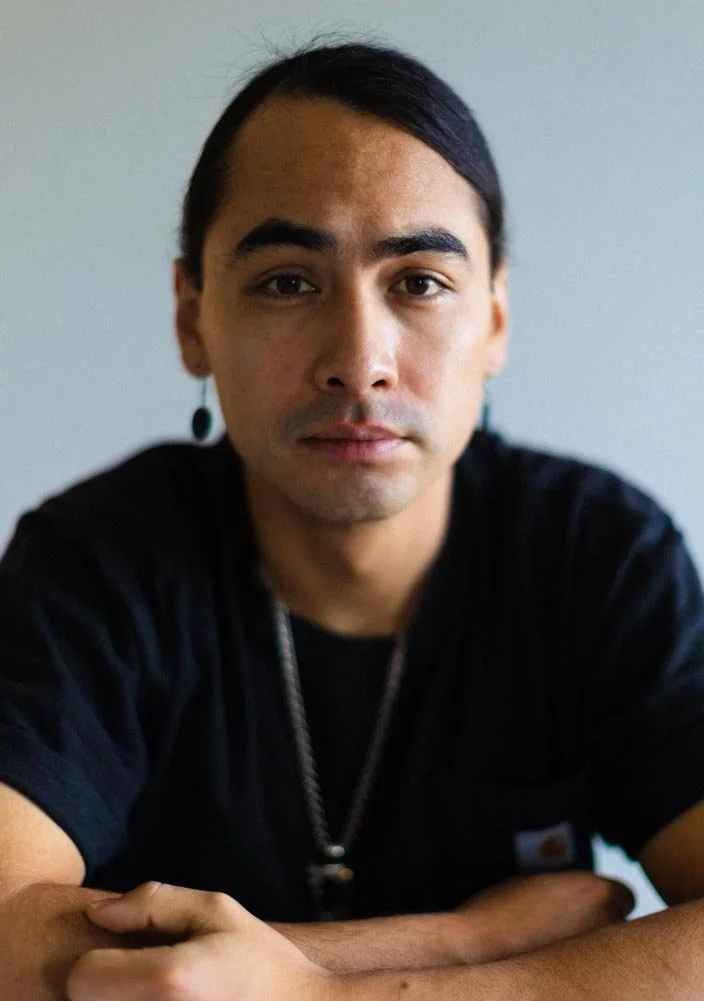


Everything from the title to the words and style all the way up to the structure I'm working with, I describe them as forms from my own culture... that come from my own people.
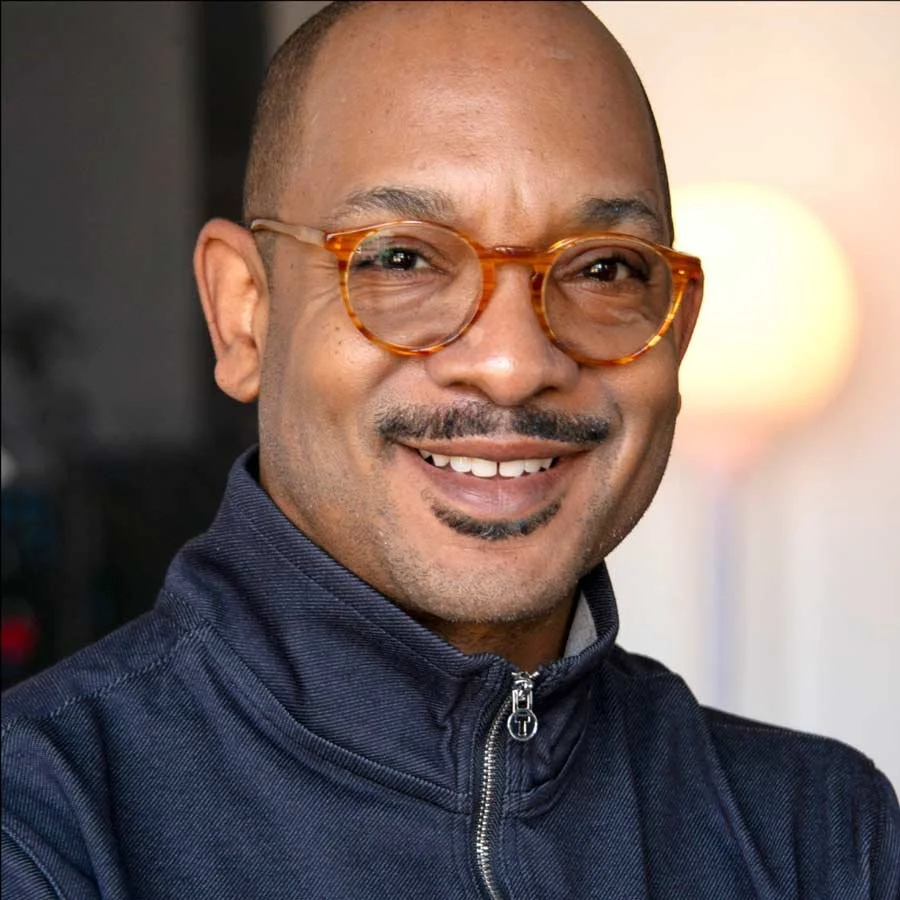
In this episode of the Speaking Out of Place podcast, Professor David Palumbo-Liu speaks with journalist, storyteller, historical researcher, and Native American ceremonial dancer Julian Brave NoiseCat about his book, We Survived the Night. This highly original book blends many voices and registers, from both well-known but also buried and purposefully obscured historical archives, to tribal and family stories. Foremost are the legends and adaptations of the Coyote figure—which haunts, inspires, deceives, and, yes, teaches lessons that help Indigenous peoples survive the night. We spend some time talking about how Coyote is many things at once, but not all the time, we discuss notions of purity and mixedness, multiplicity and singularity, truth and lies, and come out on the side of generosity, love, and creativity, to make worlds that deserve not only to survive, but also to thrive.
Julian Brave NoiseCat is a writer, Oscar-nominated filmmaker, champion powwow dancer and student of Salish art and history. His first documentary, Sugarcane, directed alongside Emily Kassie, follows an investigation into abuse and missing children at the Indian residential school NoiseCat’s family was sent to near Williams Lake, British Columbia. Sugarcane premiered at the 2024 Sundance Film Festival where NoiseCat and Kassie won the Directing Award in the U.S. Documentary Competition. The film was recognized with dozens of awards including Best Documentary from the National Board of Review and was nominated for an Academy Award. A proud member of the Canim Lake Band Tsq'escen and descendant of the Lil'Wat Nation of Mount Currie, NoiseCat’s first book, We Survived the Night, was published by Alfred A. Knopf, Penguin Random House Canada, and Profile Books in October 2025 and was an instant national bestseller in Canada with translations forthcoming from Albin Michel in France, Aufbau Verlag in Germany, Iperborea in Italy, and Libros del Asteroide in Spain.
NoiseCat’s journalism has appeared in dozens of publications including The New York Times, The Washington Post and The New Yorker and has been recognized with many awards including the 2022 American Mosaic Journalism Prize, which honors "excellence in long-form, narrative or deep reporting on stories about underrepresented and/or misrepresented groups in the present American landscape." In 2021, NoiseCat was named to the TIME100 Next list of emerging leaders alongside the starting point guard of his fantasy basketball team, Luka Doncic.
Speaking Out of Place is produced in collaboration with The Creative Process and is made with support from Stanford University.
DAVID PALUMBO-LIU
So before we start, I'm about your dad's generation. Did he ever mention a guy named Malcolm Margolin?
JULIAN BRAVE NOISECAT
Yeah, I knew Malcolm.
DAVID PALUMBO-LIU
Oh my God. Yeah.
JULIAN BRAVE NOISECAT
Yeah. I was at his celebration of life. What was that, three weeks ago? Four weeks ago?
DAVID PALUMBO-LIU
Oh man. I should contact him because I lived partly in Oakland and I went to Berkeley, and then I worked at Heyday Books.
JULIAN BRAVE NOISECAT
Oh, no way.
DAVID PALUMBO-LIU
Yeah, I was a typesetter, not hot type but these thermal things, and then he had me doing copy editing, and then if you know the place, we also painted the place again. He was an amazing guy. I should contact him.
JULIAN BRAVE NOISECAT
He actually just passed, two months ago, maybe. They just had a big celebration of life for him at the Oakland Museum in November.
DAVID PALUMBO-LIU
Oh, dear. He was a giant.
JULIAN BRAVE NOISECAT
Yeah, he was a great guy. A true, significant contributor to the humanities and life of the Bay Area and to Native California. And such an interesting story too. You know the outlines of it a little bit. So he wrote this book called The Ohlone Way, which was his first work, and in the initial printing of it, he basically said that the Ohlones were gone now, and then they got in touch with him and they were like, “no, we're not.”
And that therein began—that's my understanding of the story at least—therein began a lifelong relationship between him and Native California wherein he published News from Native California. He published books by and about California Indians. A naturalist in the best sense of the word. Really significant figure in the intellectual and cultural life of the Bay.
DAVID PALUMBO-LIU
He had so many amazing stories, but one of the stories I remember most was his son Jakey. He's riding in the car with Jakey and Jakey is like five years old and he's eating this cookie. Malcolm says, “gee, Jakey, that cookie looks really good.” And Jakey says to him—at the dad anyway.
JULIAN BRAVE NOISECAT
Yeah. At the celebration of life, actually, his kid—I think it must have been Jake then who told this story about how his dad would play with him and they would pretend the little thing that they were in was a spaceship and that they were landing on Mars. He seemed like he was a really magical guy. And I met him obviously when he was a quite elderly man. His health was failing him, and he did a lot to support some of the work that I and the community did. We did a canoe journey around Alcatraz for the 50th anniversary occupation in 2019. He was a big part of the life of the place.
I wonder whether they will continue to make them like him the way that things are going with print culture and people not being that interested in taking the time to be with and learn the places that they're in and all that sort of thing. But yeah, and I also think that if he was doing what he was doing in New York or on the East Coast, he'd be way more famous. You know what I mean?
DAVID PALUMBO-LIU
Maybe he was. There was that famous strip of bookstores, Cody's and Moe's. There was a whole interesting community on the West Coast too. But yeah, I'll miss him. My son was born in '84 and he gave him this wonderful Indian artifact. We still have it. It's wonderful. So thank you so much for being on the show to talk about this really amazing book. There's so much in it. It's so rich and complex that we can really only touch the surface. But I hope to come up with some interesting questions for you, and I will also encourage our listeners to buy a copy and spend a good amount of time with it and what's inside.
I'm going to start with the big question, which is that one of the great values of the book for me is that you present significant parts of the history, stories, belief systems and languages that residential schools and the entire historical process of settler colonialism tried to erase. And I was really impressed by the way you chose to present these stories this way. The way the book is told contains a message as well. I think you have many talents. You're a journalist, storyteller, historical researcher, ceremonial dancer and others. And each of these skills and talents goes into making this book. So this is the big question. Can you tell us about the ways you chose to use these different kinds of voices, storytelling techniques and tones to convey this really complex story?
JULIAN BRAVE NOISECAT
Firstly, thank you so much for having me on for such a thoughtful starting question. We're diving straight in, so I'm going to do my best. We Survived the Night is a book about Indigenous life across the continent of North America, so not just the United States or Canada. It takes the continent as its geographic scope, but it begins with a personal narrative and expands outwards from there. Everything from the title to the words and style all the way up to the structure I'm working with, I describe them as forms from my own culture, whether that be words or approaches to narratives, narrative traditions and the woven structure of the book that come from my own people. So I come from the Secwepemc people from what is now British Columbia, Canada.
And the title of the book, We Survived the Night, is derived from the way that we give the morning greeting in our language, Secwepemctsin. We say, which doesn't actually translate to good morning. Instead, it means you survived the night. And from there, I also work with some of our oral histories. In particular, I interweave a family history, my own story and my family's story with the story of our first ancestor, the trickster Coyote, who was a figure in many Native oral literatures and very prominent in my own people's. He was sent to the earth by the Creator to set things in order but was a trickster. And so while he did some good, he was often up to no good. And so through stories of the trickster, I narrate a story of self, family and the broader Indigenous world and how this trickster tradition still gets at the truth of the Indigenous world and the world more broadly.
And then I'm also interweaving, as I'm gesturing at, memoir and family history with oral history. And there's also a reported thread, so reportage. And in that sense, the book is itself a woven narrative, which is a metaphor that I use very purposefully because for my people, especially my father's side of the family, weaving is considered the highest art form. Which is interesting because it's also a feminine craft and this is a story about fathers and sons. And my own father is himself an artist and a carver. And so no offense to my dad, the book itself is actually an ode to the woven traditions of my people, like my great-grandmother and my great-great-grandmother whose works you might find in the University of British Columbia's Museum of Anthropology and things like that.
And so throughout the text, I'm bringing back to life essentially through narrative tradition, through a contemporary interpretation of them, my people's language, the way that we tell stories and a structure that is also evocative of our culture. Because of course, there was this effort across North America to wipe those things off the face of the earth. And I happened to have been working on a documentary called Sugarcane, about the school that my family was sent to where our way of life was nearly killed off, where my father was born and found in a trash incinerator. And if you're working on a documentary about the system that nearly did that to your people, at the same time as you're writing a book to weave back together a sense of self and world for your people, you inevitably ask yourself what parts of your people's ways, especially your narrative traditions, do you as a writer have a responsibility to bring back to life? And that is in a sense, what I'm implicitly...
READ MORE [ + ]
Yeah. And I'm really glad you mentioned the title because it contains so much. And I have two questions already prepared about the title and one of the striking things about your book is that it raises really important questions about what should be preserved and what should not only survive but also flourish and expand. You raise questions that force us to rethink many simple assumptions.
So did writing this book help you process this question? What should survive? What should flourish among the many possibilities? In other words, was an updating part of the book as well?
Yeah, it's such a good question and I think the way that I approached this was that I'm not a stenographer for the oral traditions. You have to remember that sort of an interesting thing that happens to Native cultures is that they almost get frozen in time from when we met our first white person or when an anthropologist decided to write down our culture.
And for whatever reason, there is this bias against Indigenous cultures wherein our cultures are not allowed to transform and change and to, in a sense, live. Because that's what cultures do. They live. If a tradition is alive, that means it has to change and reflect the new generation. That's truly what it means to be a tradition in my view. It's not just maintaining the things from the past, although that's also a really important part of a tradition to maintain core values and core messages for the next generation.
But it also has to remain relevant to new circumstances, and our cultures have often not been allowed to do that because the only things that are viewed as authentically Native are the way that we might look in a museum diorama or in a set of artifacts. And so the way that I approached the oral traditions that I was using throughout We Survived the Night was to think about myself as someone who was re-enlivening and a part of this tradition.
And I did have to read the Coyote stories, I should say, because these stories are not told really anymore by my own people. I've mentioned this in the book, but I actually only ever heard one member of my family ever tell a Coyote story once, and that was my uncle who was a long lost uncle, and my grandfather had 19 children, the majority of them not with my grandmother.
We didn't meet my Uncle Bucky until he was north of 50. And my dad was shocked to learn that he had an older brother. And this is the man who I heard tell a Coyote story and he's also no longer with us. And I think that is an accurate reflection of where this tradition is. So the Coyote stories, it's worth pointing out, are a narrative tradition that was shared from Central America to Western Canada.
It's probably one of the most wide-ranging oral traditions in the history of humanity, and at least among my own people, and I would say probably among others as well, it is at risk of not existing really anymore, other than in these ethnographic texts that collected these stories about a hundred years ago, sometimes older, sometimes more recent.
And so I was reading in articles that I'd find on the American Museum of Natural History's website and Google Scholar and JSTOR about my ancestors basically and stories that they told. And in the story, the trickster forefather Coyote, who was this epic creator, destroyer, survivor, deadbeat dad.
And to write the book, I made the decision to move back in with my own father, with whom I have a complicated relationship. He left when I was about six years old. And so you have to imagine, I was sitting there with the same laptop actually that we're doing this interview into, reading in the PDF, and it was talking about this deadbeat dad, survivor, creator, destroyer. And then I was looking out at the carving shed where my dad was doing his work because he was an artist—at this epic creator, destroyer, survivor, deadbeat dad.
And it struck me when I was in process that my dad had a lot of the Coyote, our trickster ancestor, and of course he does because that's one of our first ancestors. And that observation transformed the book that I was writing as the trickster does. So the trickster is himself a transformer, a shapeshifter, and made me ask a question that I'd never seen asked before, which is what would it be to treat the Coyote story seriously as nonfiction, which is the way my own people always approach these stories.
And to do that, I wasn't only transferring the stories that I was reading in the ethnographies, but I was also imagining myself as a new generation of storyteller, bringing this tradition into this present moment and seeing what it had to say to this present moment. And so that meant understanding which parts of the stories needed to remain true to themselves.
There's a story that is told across the Northwest about the first time Coyote steals the salmon and leads them up the river. Clearly in the story, across the various versions, there are some core messages that can't be changed really. And that is number one: don't catch all the fish, which is a pretty straightforward but also very important message about any fishery, which by the way, fisheries around the world, the industrial capitalist colonialist versions of them, get that wrong all the time.
So it's an important message. And another message is that despite your differences, our people are related to all the people up and down the river through the trickster Coyote in our intermarriage and our relationship to the salmon. And that is also true in both a cultural sense because the people along the Fraser River, which is the river that my people and our culture sprung from, we are in fact all related linguistically, culturally and otherwise.
And also we are related in a broader life sense. We are all tied to the wellbeing of the river and the fish. And despite the fact that we might have our own intercommunal, intertribal disputes, we are all in together to an extent. So you had to remain true to those at the same time as, for example, in that story I saw in it the people who Coyote robs the salmon from, they have different identities in various versions of the story.
So in some versions it's two witches. In some versions it's two sisters and others it's two birds. And so I figured, look, my ancestors had a bit of a disagreement about the identity of the antagonists in this story. And so in my version I was like, it seems like it might be fair game to make it relevant to the present.
So in my version, there are two witches who are actually two lesbians who are in the middle of an argument about their open marriage, about their polyamorous open relationship when the trickster shows up and throws a trickster wrench in it all, which again felt like fair game to me because my ancestors had different ideas about their identity and also it helps bring the story into conversation with the present in ways that it has to be. That's what it means for a culture and a tradition to get to live again.
No, that's a wonderful elaboration of it because I was thinking as I was reading the book that the Coyote identity offers you an almost retroactive explanation of things like you think, now I understand this, that and the other thing about either people or life itself. And that's one of the other things I admired about the book is how fluid it is without being flimsy. Right?
There was a kind of elasticity to it in that it brings in things and in your response. It also gets to the other question I had about the title, which was the idea of “we,” because I think this is something else you're doing a lot in the book is reconceiving of how things can stand, but also mix and either would be tribes or languages. And as a literary scholar, I really appreciated your discussion of language and its mixedness and those qualities.
And it also comes down to just you and your father. That's part of the we too. And you're rethinking these things constantly. So could you riff a little bit about the idea of we and what's included in that in any one particular time?
I think the idea of we has always been one that has been in tension for me because my particular background is that I am a child of two worlds. My father is a Secwepemc artist who was—this is an oxymoron, a contradiction in terms—but he was a famous Indian artist. To the extent that there is such things as a famous Indian artist.
I remember when I was a kid, he was pictured on the cover of Native Peoples magazine with a backwards Kangol hat and purple rockstar shades. He was a bit of a figure. And he had a big last name, NoiseCat. And my mother is an Irish-Jewish New Yorker from a very different world. And I came out looking the way I look and they stuck about as Indian a name on a kid as they could: Brave NoiseCat. Nobody read my name at school attendance and was like, what's your ethnic background now?
So when my dad left, that left me in a bit of a spot, so to speak. Like here I was an obviously Native-presenting kid with a white mom and a famous Indian artist dad, who when I walked into Native context, at least in the nineties and the two thousands, enough people knew that last name, NoiseCat, to be like, “Oh, are you related to Ed Archie NoiseCat?”
And I would have to say, “Yeah, that's my dad.” And then I'd have that little tinge of my dad who left. And that left me with a lot of questions. I grew up in Oakland, California, which is a thousand miles, a country away from Canim Lake, British Columbia, the res that my family calls home. And I didn't really feel like I was part of the “we,” so to speak, of being Native.
And the book is, in a sense, a chronicle and also in the writing, an attempt to weave back together a sense of wholeness for myself and then beyond that family, community and world. Because the reality of colonization is that it has broken down in many senses, shattered that sense of wholeness for an Indigenous ‘we’ and an Indigenous self.
And so that's what I'm trying to do in the book is to weave those back together in a way that also feels true to the specific people who I come from, which is I think part of the power also of the Coyote story. It gives me a structure, a set of ideas, a character through which I can understand complicated figures like my father.
I think that it's profound to me that my ancestors understood the world to be created through one of our first ancestors, this guy who was sent to the earth by the Creator who had incredible power and also abused that power and was out there acting the fool in certain ways. He leads the fish up the river only to turn around and use the fish to try to marry him into every single village along the river that will have him, which is part of how we're all descended from the guy.
He populates the land with all these descendants and then he abandons them. He's probably the most epic deadbeat dad ever known to human history. Yet he's second only to the Creator in our account of creation, which is such a kind of beautiful set of contradictions.
Yeah, absolutely.
That gave me in a very interesting way, and I did not predict this because I almost discovered the Coyote stories for myself in the act of writing. I didn't know these stories, and they actually, in an interesting way, gave me a way to understand my father, my grandfather, myself and the broader Native world that we're a part of. And that's what they always did as well, which I think is really interesting. It's a very capacious tradition.
But I think part of what it was clearly doing was helping kids understand their fathers who were off in the bush chasing game and boning fish on the head and doing all that kind of a thing. And maybe they had another family in a village over here. And it was also a way of understanding the environmental and cultural history of our people.
And it was also a way of grappling with the contradictions of change and what change really is. And also it was a set of moral lessons that were conferred through a figure who was breaking all the rules. And in all of that, what's really interesting to me about it is firstly it's very literary and philosophically deep. And secondly, it's also very entertaining.
And I think that those two things are actually related. If the tradition was conveyed through a set of lectures, no offense to our professor friends, nobody would remember it.
Part of what made the tradition endure for thousands of years, and by the way, there are moments in environmental history that are gestured at in the Coyote stories that are like 11,000 years old. Some of the stuff in here is really truly ancient. It would've been forgotten. The slapstick, contradictory, downright backwards, hilarious, entertaining nature of the Coyote is part of what makes his stories stick. And they definitely did because people all the way from Central America to Western Canada told stories about him.
Yeah. And in the end, you have a really rich and moving discussion about your father and Coco, but I wanted to pick up a line from Coco to ask you about your mother because he remarks to you the good things that you have, not so much from your dad, but from your mom. Still is and was direction. So could you talk a little bit about your mother and this idea of direction and how she connected you with your culture in some ways?
I think that my mom was a really thoughtful and instinctual parent. And I think that this is not a unique story for folks with single mothers, but I do think it is perhaps a little bit unique, at least in the cultural representations of white women that have predominated over the last number of years to tell a story about a white woman that is not a problematic story, not focused on the Karen of it all.
And the truth of my mom is that she did a lot to keep me connected to my family and my culture. After my father left, she would put us in the car and drive us all the way back to the Canim Lake Indian Reserve, which is, as I said, a country away, over a thousand miles. It's 24 hours in a car. And we did it in a car a number of times to go visit my father's family where they began to embrace her as sister, auntie, and that's what they call her to this day.
Like literally next week for the holidays, we're going to hop in the truck. And I do the driving mostly now, but we'll drive up to Canim Lake to visit that same family who regards her as family. She brought me down to the Intertribal Friendship House in Oakland, California, which is one of the oldest urban Indian community centers in the United States where I learned how to powwow dance.
She even learned how to bead so that I could have my own powwow regalia. She also encouraged me to read and to write. She put Sherman Alexie books in my hands. She has been my first reader and editor for a long time, and for all those reasons and more, the book is dedicated to her. And there's also, I think, some hard stuff in there for her, and I'm really grateful to her for trusting me to tell a story that puts her in a vulnerable position.
As a character who is, I think people view her as a little bit of the hero of the story, just summarizing the way that people have read it, but that also gets into the ways that this was not necessarily an easy life and road for her to walk. She has suffered with an autoimmune disease, for example, since my father left, that has left a permanent mark on her body that she hides from the world.
And I'm just really grateful to my mom and I really love her. And I would also just say that it was hard for me to write about her because there's a phenomenon I find wherein the things that are the closest to you sometimes are so close that it's hard to have perspective on them.
No, that's one of the other things I really admired about the book is how honest it is and unflinching without glossing it over into a kind of sentimentality. You have a kind of wisdom beyond your years in tackling these subjects in ways that are important, not only personally, but they teach lessons to other people as well in terms of what human beings can be in good and bad ways.
One of the chapters that really captured my attention was the one on the Lost Colony and the Lumbee, which is an amazing story. There's so much going on there, but one thing you write brings out such an important dimension. You write, “This body of Americana is a prism through which ideas about whiteness and Indigeneity can be understood. In the Lost Colony mythology, a failed and abandoned settlement morphs into the American Aeneid. A parable for go-it-alone white bravery in the wilderness of Native savagery. The colony, rather than the Native population surrounding, is the focus and the colonists are heroes fit for portrayal by A-list movie stars,” end quote.
But the story you tell is almost the exact opposite. So could you talk a little bit about how this play and this historical event signaled to you an important contradiction in the telling of American history and how it indeed has implications for today's MAGA? You mentioned Donald Trump, and now I understand Tiffany Trump is also involved in this weird historical event. Could you talk more about the Lumbee please and the Lost Colony?
I would love to, in part because actually we are recording this the day after the Senate passed the National Defense Authorization Act, a bill that includes recognition for the Lumbee.
Oh my God.
Barring anything, all the Lumbee need now to get recognized is a signature from the President who has promised in his campaigns that he's going to do it. So the Lumbee are, by the time this is probably shared with the world, the Lumbee will be a federally recognized tribe.
So the story has reached its conclusion. The book begins, of course, with a story of family and self, but it expands outwards from there to give a continent-wide portrait of Indigeneity.
And part of what I'm trying to show with that portrait is that you cannot understand the continent of North America. You can't understand American life, Canadian life. You can't understand this place without Indigenous peoples. And I think the Lumbee are an incredible example of this. They are, to me, not just a prism through which you can understand Native life and identity, but through which you can actually understand the whole thing.
And I say that because the Lumbee firstly trace their diverse ancestry to the Lost Colony of Roanoke, which I didn't remember what the Lost Colony of Roanoke was when I set out to report this. So I'll just tell everybody. The Lost Colony of Roanoke was the first English settlement in North America.
I mean, it was considered erroneously lost because it was a failed colony. The mystery arose far later. Basically at the time, and also now the going assumption, the going understanding is that the Lost Colony assimilated into the surrounding Native communities, which, if you think about it, would be a very logical thing to do to survive if your colony is failing.
They became known as a lost colony in the 1800s when ideas around race and racial superiority began to solidify in part because it was incredibly difficult, maybe impossible, for white people to imagine their white ancestors choosing to assimilate into Indigeneity. And in the ways that whiteness and race are set up in America, you know that assimilation is supposed to be unidirectional.
It's across time supposed to be Natives becoming white or non-Native. Over time, it's not supposed to go in the other direction. In fact, in real history, lots of people have chosen to assimilate into Native life and identity across time. White people, Black enslaved and free people all over the place.
This has really happened, and yet the way that the laws were set up around who does and doesn't count as Native, which were based on in part ideas of racial purity, precluded that kind of a recognition which is evident in things like blood quantum, the measurement of Native blood down to fractions, wherein once you get past a certain fraction, you no longer count as Native in the eyes of the law. And so the Lumbee are a really fascinating window into that. They're also a fascinating window into the racial politics of the South and the United States in part because they're kaleidoscopic and contradictory.
So on the one hand, their tribal hero is this guy named Henry Berry Lowry, who's actually the ancestor of the current tribal chairman, a guy named John Lowery. Henry Berry Lowry was like the Django, I guess. He was a multiracial gunslinger who during the Civil War and Reconstruction led a real-life guerrilla uprising against the white power structure in the Robeson County swamps and was really effective at doing it.
And this is the guy who the Lumbees, if you asked any Lumbee today who is your tribal hero, nine out of ten of them would go: Henry Berry Lowry. They put on an outdoor drama right about Henry Berry's life every year during their tribal homecoming celebration on the Fourth of July. And yet at the same time as they celebrate this history of multiracial violent uprising right after Henry Berry Lowry disappeared or died—and it is a bit of a mystery which of that happened—the Lumbee tribe or its antecedent compromised with the Dixiecrats to form a separate tribal school.
Because the tribe has always, to this day, still wanted to have its own separate tribal institutions that has seen itself as a sovereign, independent tribal nation. And so they compromised with the Dixiecrats to get their own tribal school, which actually is now UNC Pembroke. When they did that, they agreed not to intermarry with Black people anymore, and they started supporting the Democrats after being a strongly Republican voting bloc.
Fast forward to 2012, 2016. So they vote for Obama in 2012, but then in 2016, they switched their allegiance to Trump, who travels down to Robeson County and promises them federal recognition, something that they have been fighting for almost 140 years now. And again, they vote for him in 2020 and again in 2024.
And so you have this example of people who celebrate a history of multigenerational downtrodden uprising against the white power structure who are voting in a strong majority for Trump. They're the most populous tribe east of the Mississippi, so they are a very significant voting bloc in North Carolina politics. They help the Republicans and Trump carry the state, and now under Trump, they are poised to be recognized as a tribe for the first time. Hard not to see that as a victory for tribal rights under a president who my personal politics are very much not Trumpian, I'll just say.
And so it's this very interesting contradiction. And to layer one more thing on top of all that, you could make a very strong case that the primary actors in this entire narrative are all tribal. And I say that in part because not only was the strongest voice for Lumbee recognition obviously the Lumbee themselves, but the strongest voice against Lumbee recognition was another tribe. So in the state of North Carolina, there is a federally recognized tribe called the Eastern Band of Cherokee, and the Eastern Band of Cherokee has for decades now been vociferously opposed to the Lumbee getting federal recognition.
And they don't outright say why. The reasons are that they believe the Lumbees to be fraudulent, but I think that you can read into it a little bit more and see that having a very populous tribe in the same state would compete with federal funding, which is limited for tribes for essential social services as well. And also, if they were to get full federal recognition, it would set them up potentially to be able to begin building a casino, which the Lumbee would be situated about halfway between New York and Miami on I-95.
And so this would be a very advantageous spot to build a gaming operation. And perhaps understandably, the Eastern Band of Cherokee, who have their own lucrative gaming operation that just a few years ago paid each tribal member about $10,000 annually, might not want to see that happen. And what's really interesting to me about this story also is that it leads us to see something that is very rare to be seen in American politics or to be recognized in American politics, which is Native people themselves as powerful political actors in the US political system.
Whether you were for Lumbee recognition or against it, you have to recognize that the reason why the Lumbee now have been recognized and also the reason why it took so long for them to be recognized, both of those involve dealing with the power and agency of tribes as political actors. The story of America is very often told as one of Natives as victims, and this story is not that kind of story.
No. And you do such a good job of building up to it by giving the long history of notions of sovereignty and recognition. One other thing, because I probed a little bit about the Lumbee. Tell me about Tiffany Trump. What's the deal with that? That somehow one of her ancestors was supposedly Lumbee, or what was that? Was that completely—
I actually didn't know about this one when you brought it up. I hadn't heard that there was a Tiffany Trump connection in it at all, but it wouldn't surprise me. Again, I do feel like this is a little kaleidoscopic prism type thing through which I think you can see and refract so many different elements of American politics.
Maybe that thing came out of one of the opposing tribes trying to delegitimize Trump's signature, saying there was some sort of connection, you know?
It's very possible. One piece of this that is very interesting is that part of the mythology of the Lost Colony is connected to this figure of Virginia Dare, who's usually mythologized as the first white child born in North America, which by the way, erases the Spanish presence in Florida. But setting that aside, what's really interesting is that there's a big sort of, it's almost like a Nic Cage—you could almost imagine—what's that film series that he does? The kind of silly one? Where he's looking for the Declaration of Independence and that kind of thing.
Anyways, you could imagine him looking for the grave of Virginia Dare. It's like a Dan Brown style type Americana movie, and one of the claims about where Virginia Dare's grave lies is actually in the swamps of Robeson County that the Lumbee know where her grave is. And I think that again gets at the wonky, topsy-turvy nature of all of this, right? Here's a tribe in North Carolina that wasn't recognized as a tribe until literally yesterday as of this conversation.
And at the same time, they count among their ancestors the first white child born in North America. I think that to me, what I love about this story is it forces people to see not just Native people, but the whole thing. A whole different set of narratives and lenses. I think that is the power of Indigenous stories and history and enduring presence on this continent.
No, absolutely. And precisely in the most fantastical things, you find the greatest truths in some ways. I'd like to end by asking you about the end, because it really ties together so many important threads. You tell about your last encounters at that point with your father and Coco. And a lot of this is about not just forgiving, but also understanding your relationships in a very, as I said, honest but also very generous and accepting way. That really characterizes for me the accomplishment of the book.
There are so many remarkable passages in the conclusion. I kept on underlining different things I wanted to ask you, but one quote really encapsulates so much, and this is the quote I'm going to read to you and ask you to talk more about. You write, "By all means, let's break with those unhealthy cycles. But let's also make sure that we don't lose all of our Coyote ways because that trickster makes us who we are for worse, but often for better." And again, you write so beautifully and it condenses so much that I'd like to have you have the chance now to expand on that.
Yeah, I think one thing that I was thinking a lot about while I was writing—and this is another uncanny sort of echo of the trickster narrative in my own life—is that the trickster, the point of the story for our kids is: this is how you should not be. The trickster in every story is an example of how you are not supposed to act, which is honestly how I regarded my own father for much of my life.
And I don't think that's a particularly unique relationship to have with your parents. I think a lot of us don't want to become our parents in certain ways. And for me, that was my dad. He struggled with alcoholism. He had obviously immense talents, and yet he to this day has always struggled to piece it together into a viable career. He had all this unrealized potential in certain ways. And including as a father, he has this incredible ability to be a great hang. I love hanging out with the guy. And that's not that different from being a great dad, and yet he could never really figure out how to do the dad thing. And of course, one of my biggest fears has always been that someday I will not be a present father like my dad was.
And at the same time, after living with him as I did for two years, learning so much more about his life, and also just thinking a little bit more deeply about what it means to be part of a tradition and a culture that takes our relationship to our ancestors incredibly seriously, that is sacred essentially to our people.
There's an interesting tension therein where on the one hand, I think like many people who have dealt with the trauma of colonization, I'm trying to get as far away from that as I possibly can, and yet you have to be careful what you run away from. Because some of the very things that you're running away from might be the parts of your culture and tradition that need to live again, might be the parts of yourself and your people that have always been there since its inception, are things that need to be honored and remembered.
And that are in another way perhaps just part of the deeply complicated and contradictory reality of being a human being. I think that's part of what is profound about the Coyote is that he is a deeply human supernatural being. This guy is governed by his id. He's constantly out there up to no good, chasing women, out for a bigger legend for himself, trying to enrich his legacy himself. And yet in so doing, he once in a while stumbles into doing some good and making the world the way it is. For example, providing our people with salmon.
Exactly. That's no small thing. Back in the day, and still to this day, we derived about half of our calories any given year from salmon. There's this hilarious to me body of oral histories that you'll encounter from the late 1800s, early 1900s, wherein our people are integrating Christian theology with our understanding of the trickster narratives. And in one of them, and I include this one in the book, the guy, I think his name is Han, which means red hand, he's from the Colville Reservation.
He basically remarks, he's like, the people were told about Jesus, and Jesus taught us how to be good and moral, and that was really important. But if you think about it, the Coyote, he did a lot more to make the world. He got rid of the cannibals and the bad beings and he provided our people with food. And Jesus, he died and resurrected once. The Coyote, you know, he died and resurrected we don't even know how many times.
And I also think that there's an approach to our culture and tradition that is very different from the all-or-nothing way in which colonization happened to us. Across many Indigenous contexts that I've had the opportunity to learn from, there is a more pluralistic, inclusivist kind of way of looking at culture and tradition wherein we are very open to incorporating new ideas, new stories, new understandings, and putting them in conversation with our own and seeing what we might be able to learn from that place.
Which sometimes leads to humorous observations about Jesus versus the Coyote, for example. But then I think also can be part of a more pluralistic way of living and approaching and allowing your tradition and your culture to transform. And I think that is a really important thing in life. It's something that we all have to constantly grapple with, how much we maintain our own ways, the ways of our parents, and how much we change.
Basically a big question the Coyote stories and our tradition asks is you need to change, but also you need to maintain and you have to figure out the balance. And we happen to be in a moment in history right now wherein there is head-spinning transformation happening environmentally, technologically, culturally, and figuring out how much we need to transform and how much of our humanity and some of our core messages that have been passed down to us need to be maintained is the big thing that we are grappling with right now as a society.
And I guess what I'm saying is this tradition that has been left over here to die in these a hundred-year-plus anthropological texts. I went to a university wherein we had to study the great works of Western civilization in the core curriculum. That included the Iliad, the Odyssey, Virginia Woolf, this whole sweep of history. Would it have been so difficult to include a ten-page version of Coyote Steals the Salmon, and to have a class discussion about that, to talk about the way that trickster and transformation stories get at these questions of what is transformation and of self and of relationship to ancestors and all these different things? I don't really think so.
In Indigenous life, in Indigenous tradition, there are real questions, universal questions that we all are grappling with as people that the humanities have overlooked. Nonfiction has never treated as nonfiction, and that I am humbly suggesting maybe we need to take a little bit more seriously.
The other way in which I think the Coyote myth has a slight edge over Jesus, and I don't want the Christian nationalists to come after me for that line. But what I love about Coyote, according to what I read in your book, is that nobody knows what happened to him. There are three possible fates for Coyote, so he could be gone for a long time. He could be hiding someplace and God knows what, and that to me creates a huge potential, right, that you can make it any one of those endings depending on what your life needs for an explanation at a certain point.
One of the things I like about the podcast is that it's a totally one-person show. I do everything. I can cut and slice and dice things. As we were speaking, I was thinking about what we began with before we officially began taping, which was talking about Malcolm Margolin, who I didn't include in our discussion because I didn't think of it till now. But my own father died when I was 20. And when I was working with Malcolm, he often said, “David, don't take me as your surrogate father. We're just partners here. We're just working together.”
But that's fine. So I think that when I became a father myself, I think Malcolm was stepping in when he gave me that incredible present. If you don't mind, I'd like to include that part in the podcast. Is that okay?
Yeah, no, of course. Listen, I think that Malcolm made an incredible life and I think that he made amazing contributions to the life of his own family, but beyond that, the life of the Bay Area to Native California. And I feel incredibly lucky that as a young man, my life overlapped and intersected with his own. Yeah, no, totally, totally.
Thank you again so much for being on the show. I'm sure you've done a thousand of these, but it's a book that is so impressive in so many different ways. And as I said at the beginning, I really urge all of our readers to get it and to really spend some time with it.
Don't try to rush through it, but make your way through it at different parts and go back and reread it because as I said, it offers so much in so many different interesting ways. But I'm so grateful to be in conversation with you, Julian, and please take care of yourself and please come back again sometime.
Oh, thank you. I have done a lot of these, but this was a really special one. I really appreciate the way that you thought about it, engaged with it, the incredibly insightful questions that you asked. This was a real treat.