

I guess we can start with what happened on January 3. The United States carried out a direct military operation against Venezuela. US forces bombed targets in and around Caracas and other areas. They struck the electrical grid, killed over 100 people and abducted Venezuela's sitting president, Nicolás Maduro, along with his wife, Deputy Cilia Flores. Within hours, Trump declared that the United States would run Venezuela until a safe transition was completed. The United States Secretary of State Marco Rubio underscored this regional warning by saying, “If I lived in Havana, I would be worried.” Trump threatened other countries too, Colombia and Mexico, showing again that this wasn't about democracy—it was about submission.
Speaking Out of Place is produced in collaboration with The Creative Process and is made with support from Stanford University.
Starting in the autumn of 2025, the US began attacking small civilian boats in or near Venezuelan waters, summarily executing over 126 people. January, 2026 began with it kidnapping Venezuelan president Nicolás Maduro and his wife, and bringing them to the US. This month, just weeks after the kidnapping, Haymarket Books published the immensely useful and urgent book, Venezuela in Crisis. The historical range of the book begins with the regime of Hugo Chavez and ends with the 2024 elections in Venezuela.
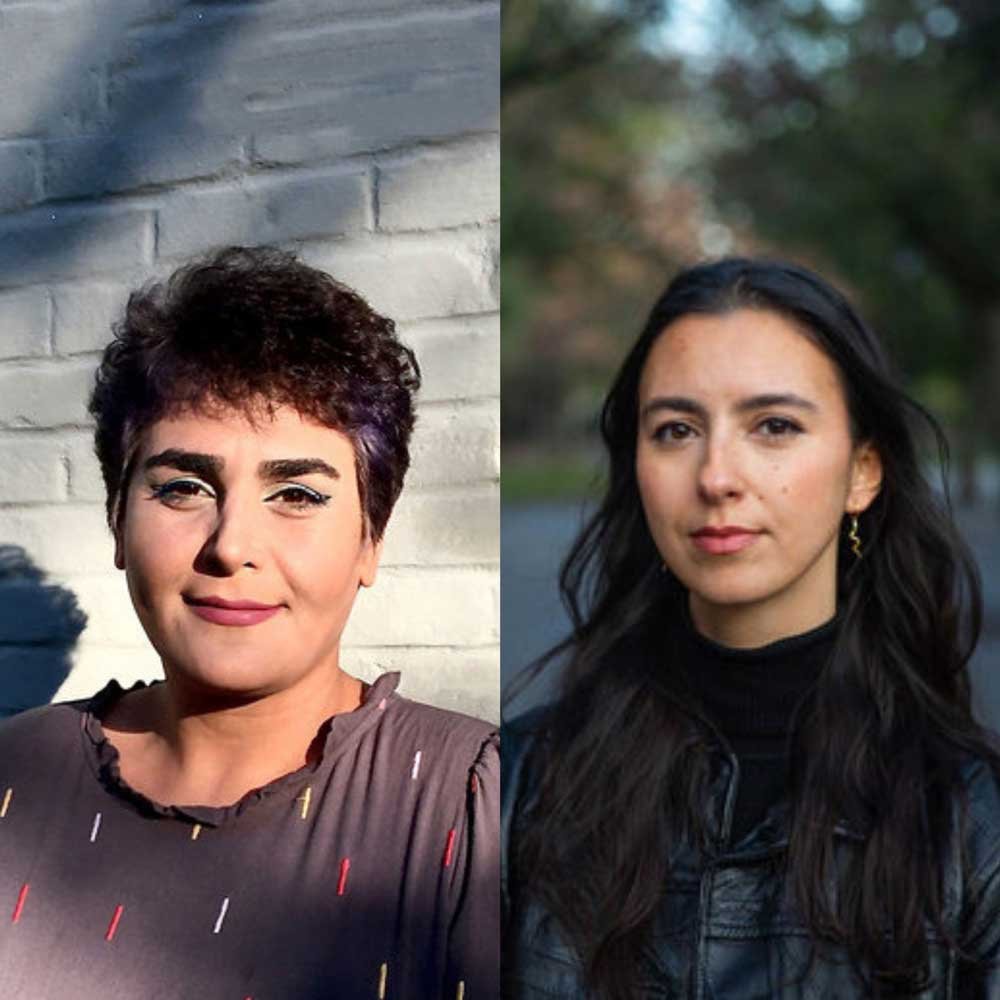
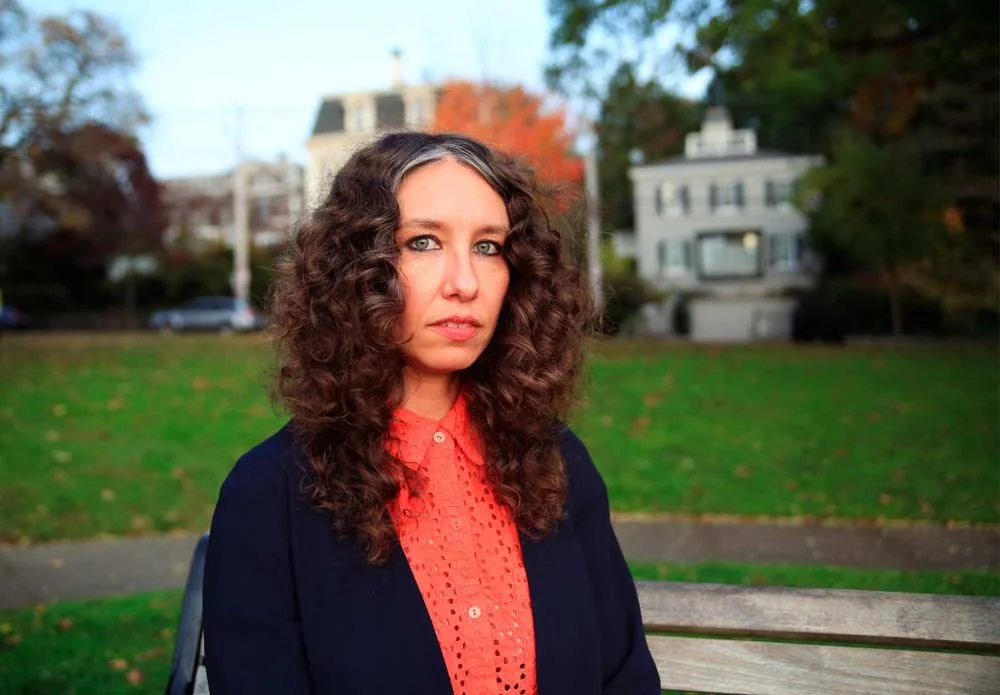
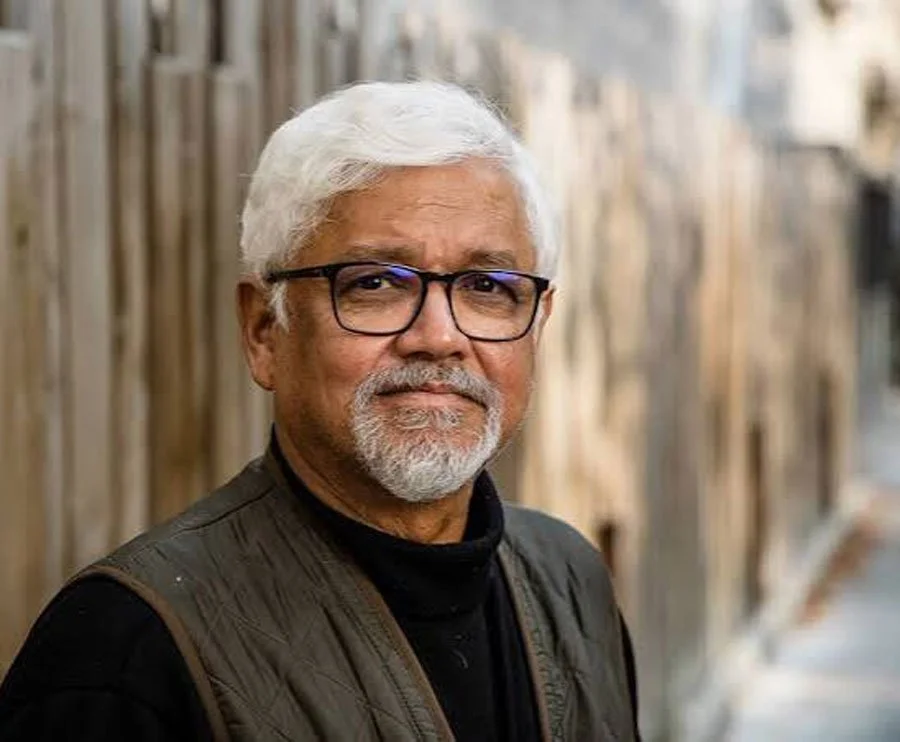
In this episode of the Speaking Out of Place podcast, Professor David Palumbo-Liu speaks with the editor and translator of this collection of essays, Anderson Bean, and two of its contributors, Emiliano Terán and Simón Rodríguez. The key argument of the book is that, even by his own admission, Chavez was not able to completely transform Venezuela into a socialist state. The book explains the roots of this failure, despite the inspiring successes of Chavismo. It then tracks an ever-increasing neoliberal and oppressive trend carried forward by Maduro, which is characterized by burgeoning extractivism, corruption, and suppression of human rights. We end by calling on socialists and progressives everywhere to resist the tendency to side with Maduro’s false claims to socialism, and to focus instead on building solidarity with the people of Venezuela.
DAVID PALUMBO-LIU
So thank you so much for being on the podcast.
One of the key aims is to dispel distortions that the media has placed on important events, especially as those distortions work to disarm or at least distract leftists and progressive work. So in that regard, among many others, your book could not have been published at a more important time. Could we start with each of you introducing yourselves and telling us a little bit about yourselves? Maybe Emiliano, go first.
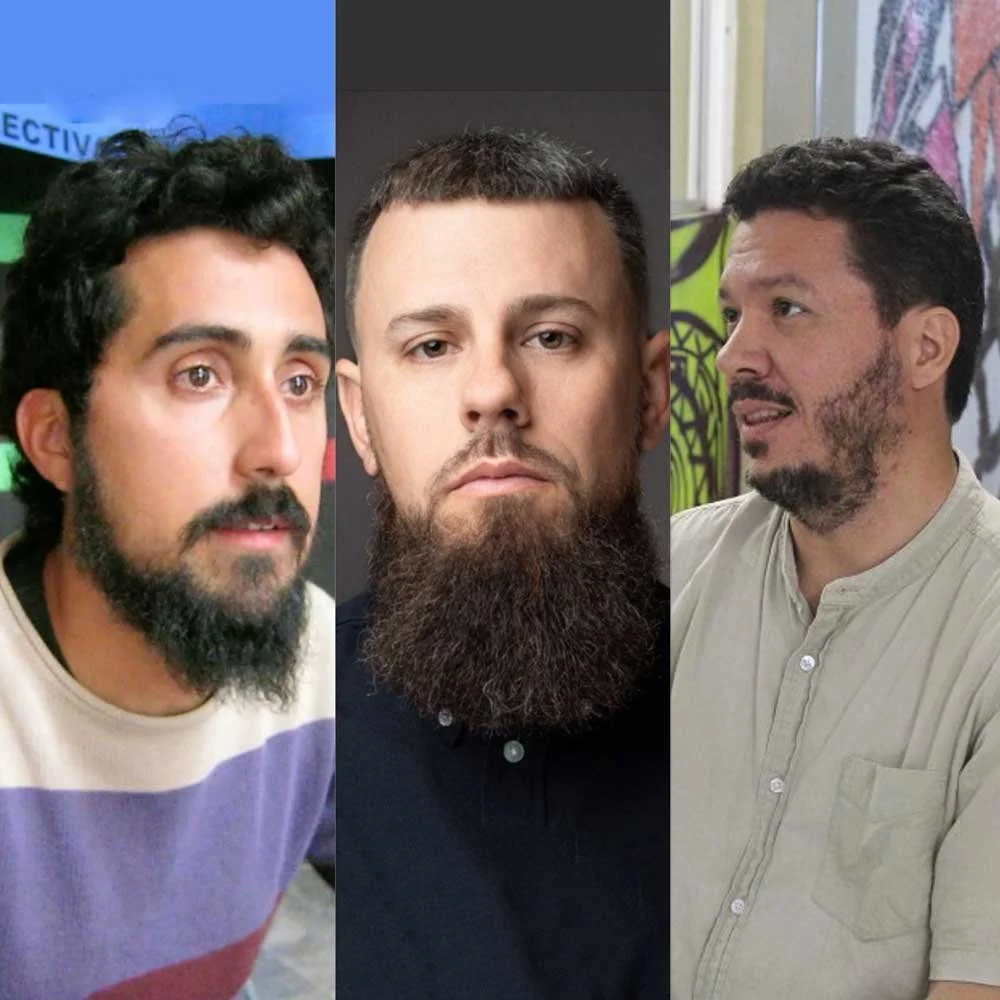
EMILIANO TERÁN
My name is Emiliano. I am from Caracas, Venezuela, and my work has been developed in two scopes—an academic scope and also an activist scope, which is mainly environmental activism. I have been part of CENDES in the Central University of Venezuela, which is a research center. I have been focused on extractivism and environmental conflicts, but from a political ecology approach. I also belong to the Venezuelan Political Ecology Observatory. Eight years ago we founded this observatory. We focus on environmental conflicts, the role of the communities and social movements around the impacts of extractivism in Venezuela, and also monitoring extractivism in Venezuela.
DAVID PALUMBO-LIU
Wonderful. Thank you. I wanted to add that the podcast also has a blog function, so if you want to advertise the work that you guys are doing and get support, it could be updated all the time, so I would welcome that. Simón?
SIMÓN RODRÍGUEZ
Yes. My name is Simón Rodríguez. I am from the city of Mérida in the Andean region of Venezuela. I have been living outside Venezuela for the last decade now, and I have been a socialist activist for about 20 years and have also done some journalistic work. I also try to do some work translating into English literature that comes from socialist organizations, independent leftist Venezuelans, academics and so on. At a page where I am an editor, which is venezuelanvoices.org, I was happy to collaborate on this project with Anderson Bean, along with other Venezuelan socialists collaborating in bringing this alternative perspective to a wider audience.
ANDERSON BEAN
I am Anderson Bean. I am a professor of sociology at North Carolina A&T State University. I wrote the book Communes in the Venezuelan State that came out several years ago with Lexington Books, and then of course, the editor and translator of the book that we are talking about today, Venezuela in Crisis. I am also a member of the Tempest Collective. Good to be here, so thanks for inviting us.
DAVID PALUMBO-LIU
It is such an honor to have you all. Anderson, your book does really a great job of winding back from Maduro to Chávez and making the key argument that socialism was never actually achieved under his regime, but rather for historical and political reasons. Even Chávez operated under a capitalist mode that back then began to counteract the possibility even of socialism in many ways. So let us start with the present. What is the current spin on what is going on in Venezuela and what kind of myths are circulating now? And then if you could, Anderson, wind back briefly to tell us about the history that led us here. In other words, start with the present and then wind back to Chávez.
ANDERSON BEAN
I guess we can start with what happened on January 3. The United States carried out a direct military operation against Venezuela. US forces bombed targets in and around Caracas and other areas. They struck the electrical grid, killed over 100 people and abducted Venezuela's sitting president, Nicolás Maduro, along with his wife, Deputy Cilia Flores. Within hours, Trump declared that the United States would run Venezuela until a safe transition was completed. The United States Secretary of State Marco Rubio underscored this regional warning by saying, “If I lived in Havana, I would be worried.”
Trump threatened other countries too, Colombia and Mexico, showing again that this wasn't about democracy—it was about submission. It was about the control of oil, and I think there are several ways in which this has been justified. Rubio said that this was a police action. Trump said that this was a counter-narcotics operation. Others invoke democracy and the rule of law. But in Trump's own post-invasion press conference, the word democracy didn't appear a single time.
This was not a drug interdiction, and it had nothing to do with democracy. Like we said, this was a forceful removal of a head of state by the world's most powerful military and the imposition of a new political order under US control. This action culminated a month-long campaign of pressure and intimidation that began at sea, escalated through economic coercion and acts of piracy, and ended with bombs over Caracas and the abduction of the head of state. But I think it also marked something larger than Venezuela. It signaled a new phase of US imperial assertion, one defined by openly seizing political authority, imposing neocolonial tutelage and discarding international law wherever it obstructs Washington's goals. In effect, it was a moment where the pretense of a rules-based order was abandoned.
There have been several things that have happened since then that I think are really important. One of them was the reform of the Hydrocarbons Law. The National Assembly unanimously approved the reform of this hydrocarbons law that was put in place during the Chávez era, and basically it repeals the law. It says in all joint ventures, the state-owned oil company has to have a majority control. So now foreign private firms can own a majority stake rather than just being minority partners. US-based arbitration replaces Venezuelan jurisdiction on contracts and disputes, while taxes and royalties have been reduced.
The National Assembly loses the authority over contracts of national interest. It is also important to point out, and I think this is something that is often missed, that this is not something entirely new. Maduro began this kind of oil opening years ago, particularly after the Anti-Blockade Law in 2020 and the Law on Special Economic Zones. What is also remarkable is that Delcy Rodríguez, the now-sitting president, has been celebrating this. She gleefully said that this law reflects Maduro's vision for the future, and they have been discussing these changes for years. She claimed that this legal instrument was enacted for history, for the future and for our sons and daughters.
This is what makes the book really important. If you have this perspective that the Maduro regime has been revolutionary, anti-imperialist or socialist, you would have a really hard time understanding how these changes have happened post-invasion. The other thing real quick is that General License 46, which the US imposed, modifies the sanction regime that exists to allow US companies to operate in Venezuela, but only under unprecedented US control. The US would control the money. Oil revenues wouldn't go to the Venezuelan state—they would go to a US-controlled bank account in Qatar. These funds would be released only at US discretion for US-approved purposes.
Venezuela can't freely use the oil income for its own budget. The US would also control who Venezuela can trade with. So this prohibits...
READ MORE [ + ]
...oil trade with China, Iran, Russia and Cuba. It prohibits trade at discounted prices, which Venezuela often did with Cuba, or in exchange for debt, which Venezuela often did with China. It also would make it so the US controls contracts and disputes. All contracts would be governed by US law.
All disputes would be settled in US courts. This strips Venezuela of legal sovereignty over its main resource, and it also would require the US to monitor every barrel. Every non-US sale would be reported to Washington every 90 days. The volume, the prices, the buyers, the destinations, the taxes and fees, the dates of transactions.
And so what this means is that Chávez's laws that were designed to defend Venezuela's oil sovereignty have been severely weakened and in some cases completely repealed. The US has partially lifted these sanctions but maintained strict oversight over oil sales. Like I said, who it can be sold to, under what conditions, by which payments can be made.
And so this is the reality that we have here. Like I said, I think that none of this would make sense with this perspective that the Maduro regime and the PSUV and Delcy are anti-imperialist or revolutionary.
One of the things that really struck me about the book was you showed how, for various reasons, Chávez was never able to really turn the state into a true socialist state, and that certain historical events created a situation where he could either go with capitalism or go with socialism, so to speak.
Tell us about that initial breakup of some of the dreams and some of the aspirations of the Chávez regime.
Yeah. I mean, the primary goal of the book is how do we understand this crisis? How do we go from a country that was an inspiration to the left and progressives around the world that used oil revenues to drastically expand social spending?
Living conditions improved, and poverty and extreme poverty drastically reduced. Inequality dropped to among the lowest in the region. Millions of people gained access to healthcare for the first time. To then fast forward to around 2013 and on, you see a GDP that has declined by 75% between 2013 and 2020. You see a minimum wage today that is less than one dollar a month.
And also, just to put that in perspective, the basic basket, which includes the amount of foodstuffs that is considered necessary to keep a person healthy and cover the cost of other necessities like housing and transportation, is about $500. So if someone is making a minimum wage, they would have to work about one thousand months to survive for one month.
A lot of Venezuelan leftists call this zero salary. And also you have things like inflation reached 130,000%. And the goal of the book is like, how do we understand this? And there are two main caricatures of the crisis that we see. The first is that this crisis is a product of socialism, or at least attempts to achieve socialism.
This is a common argument, the most mainstream argument, probably the one that is put forth by the State Department and Republicans and the Democratic establishment. But workers never democratically controlled the means of production. The Venezuelan economy remained overwhelmingly organized around production for private profit.
The private sector dominated major areas of economic life. There was no real meaningful transformation in social property relations. There was no serious confrontation with private property or profitability. So this kind of argument falls apart pretty easily. The second major argument, and this is a common argument on the left and has more validity than the first one, but we still think it misses the mark, is that the crisis can be explained exclusively or almost exclusively by US sanctions, coupled with other acts of aggression by the US and collaboration with the right-wing Venezuelan opposition.
Those who make this argument often conclude that since the crisis is a product of US aggression and not the failures or limitations of Maduro or the Bolivarian process, then the left should unconditionally defend Maduro and the Maduro government. And that solidarity towards the Venezuelan people is synonymous with solidarity with the Maduro government.
And so we argue that this misses the mark. And I mean, there are a lot of reasons for the crisis. We can talk about them. I think that one of the main ones is that—I don't want to take up too much time—but that Chávez and later Maduro continued and even deepened in a lot of ways this rentier model of capital accumulation.
So rentier economies are economic systems where a country relies heavily on income derived from the extraction and exportation of natural resources rather than from productive activity. So in the case of Venezuela, this model manifests through its dependence on oil revenues. This reliance led to economic vulnerabilities such as exposure to fluctuating global oil prices and the underinvestment of other sectors.
And this is huge in a country where oil exports accounted for 95% of export earnings and 90% of the country's budget. This made Venezuela more vulnerable to the end of the commodities boom than other countries. And so instead of using oil revenues to diversify the economy and invest in domestic industry, the state massively expanded imports.
Local production was priced out, neglected, hollowed out. Deindustrialization and dependence on imports increased. And so when oil prices dropped, this model collapsed.
The other thing about the commodities boom I think is really important. And now I promise I'll end here, is that Chávez's time in office largely coincided with the commodities boom.
This was driven by demand from emerging markets like China and India. And so this enabled Chávez to increase social spending, create various distribution programs and improve the standard of living of the majority of Venezuelans. But it also meant that he was able to do this without having to confront the capitalist class in any serious way.
He had enough revenue to both fund these social programs while at the same time appease the capitalist class. And like we talked about earlier, there was no meaningful transformation of social property relations and so on. And so when the commodity boom ended, a decision needed to be made about who was going to pay for this crisis, and Maduro decided.
And this wasn't just solely a decision of an individual, and we have to talk about the balance of forces and those sorts of things, but for the most part, Maduro decided instead of confronting capital to make the working class pay for the crisis. So you see austerity, market liberalization, privatization and labor flexibilization.
You see the dismantling of collective bargaining contracts, the subordination of social rights to capital accumulation, and then of course, the repression of any grassroots resistance to these changes. There are other causes of the crisis. There is lots of corruption related to the currency controls that we can talk about.
There is the prioritization of the foreign debt that we can talk about, and then the sanctions are crucially important too. Like I said, it is not the sole kind of explainer, but Venezuela was already in a crisis before the first financial sanctions happened in 2017 and economic sanctions in 2019. A collapse began around 2013, so GDP had already contracted by 30% before the first financial sanctions.
Imports had already dropped precipitously from 71 billion in 2012 to 17 billion in 2016, and so the sanctions didn't cause the crisis, but they made it nearly impossible to get out of it. The sanctions cut off Venezuela from US financial markets and blocked the restructuring or issuance of new debt. They froze assets abroad.
It restricted oil exports. It crippled PDVSA, it slashed foreign currency earnings and it made it harder to import food, medicine and additives. And there was one study put out by Mark Weisbrot and Jeffrey Sachs that said there was an excess of 40,000 deaths due to the sanctions in 2017 and 2018 alone.
And the sanctions didn't end in 2018. So we can, I think, safely assume that these numbers increased. One last thing is that I don't mean to explain all of the reasons why people have these misunderstandings about what is happening in Venezuela, but I think one of the reasons on the left, at least, why there is such a misunderstanding of what is happening in Venezuela is because there is just a lack of access to the actual debates that the left is having in Venezuela.
And I think what makes this book so important is that it brings together some of the most important Marxist, socialist, anti-capitalist thinkers and organizers in Venezuela. The contributors of the book represent a range of left political traditions and organizations. And with this book, Anglophone readers can now have access to these debates in English and hear what Venezuelan leftists are arguing about the country, its crisis and its struggle.
I have been reading the works of these comrades, these contributors in this book for years, and they have been a huge influence on my political thoughts. So it is really an honor to have them contribute to this book and also have their works in English for people to read.
Absolutely. And this is a great segue into talking with Emiliano and Simón about their essays. Emiliano, could you talk about your essay, setting it up in terms of the idea of the extractivism that has exploded and the ways it ruined the environment and subjugated indigenous peoples? Talk about your contribution, please, and how it attaches to some of the arguments that Anderson was making.
Yes, thank you. First of all, it is important to say that this extractivism is a historical base of the economy and state societies in Latin America. So we are talking about a systemic problem, and we experienced a deep change in the Chavista regime from this petrostate regime, which collapsed to another, which was focused on a kind of predatory extractivism.
And the main basis of this new extractivism has been the illegal mining of gold in the Amazon. The Amazon in Venezuela is almost half the territory in Venezuela. Historically, this has been a region which has not been in the center of the development model, and in the last decades, and mainly in the 21st century, because of the long crisis of the oil development model, the Amazon was put in the center of the important changes in the Maduro regime.
This new phase of extractivism is an expression of the new phase of the economical and political regime, because from this hyper-centralized model from a petrostate, we face a new fragmented extractivism. And this regionalized extractivism is enabled by the articulation between illegal and criminal actors in the territories and the regional and local powers.
These local powers are based on military sectors and also the governorships, and other kind of local and regional powers. So this is really a complex new scenario for Venezuela because we can say that corruption in Venezuela is really important to understand the mechanism of oil rent distribution.
But in this new scenario, corruption becomes a central factor in the distribution of wealth in Venezuela. Not only rent, because the rent collapsed, we start to see a new regime which was based on the direct appropriation of nature in this sense. And this is really emblematic because it shows a restructuring of the state, which produced power from the articulation between legal and illegal scopes.
The collapse of the petrostate favored the growing of illegal criminal actors in the Amazon. You can see from ELN, FARC dissidents, criminal bands of Venezuela and also other parts in the south, boosted by powerful criminal organizations from Brazil. We have a really complex map of actors which are appropriating this gold, and some Pan-Amazon analysis from all the countries which are in the Amazon pointed out that the level of predatory extractivism is highest here in Venezuela.
So at this level, maybe the most accurate estimations point out that the level of extraction in Venezuela is between 30 and 35 tons a year. This is a historical level for our country, and this level of predatory destruction is not possible without the complicity and the direct participation of the state.
Because first of all, the local powers, the military powers gain from this gold extraction. And also this is because the central government, which is located in Caracas, has gained around 30% of this gold, because the rest of the gold goes out from the illicit chain of commodities.
This is a really important element for the government because without the oil rent, they need the appropriation of other resources. But two elements more. One is the impact in territories is really huge. The Amazon in Venezuela has a lot of delicate ecosystems and has around 27 indigenous peoples living there, and overexploitation of labor.
The link between illegal mining and narcotraffic, the pollution of the basins with mercury, displacement and also indigenous peoples killed by the violence of this new kind of governance in the territory are part of the main sequence of this. The other thing to highlight is the destruction of the institutions and politics to address the problems.
The management of life in Venezuela has favored a new scenario for capital accumulation in Venezuela. And this is not only about the Amazon. We are witnessing in this last week a new chapter of a previous scenario of accumulation by dispossession, which is being developed in the whole country, a new model of predatory extractivism.
It is important to say that the Maduro government has taken this way to sustain power because this government has chosen sustaining power as the first goal of the government.
I had a question about scrap iron. I was looking at one of your charts, and it comprises a huge chunk there. Tell me about scrap iron. How is that now part of the economy?
This is a really interesting question. The Venezuelan economy was an oil-based economy. Every person knows that. But the asymmetry of this economy was really huge. Almost 96% of the incomes from exports comes from oil. And the power of the industry was really huge in this sense.
If you compare us with other parts of the economy, the other parts of the economy are really small and also generate really small incomes. So if you see this collapse of the oil economy, the survival of the Maduro government was based on the attempt to make grow the other parts of the economy. But as I said before, the political context in Venezuela was really complicated with really violent aftermaths.
After the international sanctions, the development of a formal or legal economy was impossible in this sense, was really difficult in this sense. So the main basis from a new economy was this predatory extractivism, which includes a kind of recycled extractivism. What was this recycled extractivism, for instance?
We have a lot of cases in which a lot of oil wells were abandoned because they collapsed. And the pieces of the facilities were taken to become a new commodity, which was called scrap metals because there is an important international market of scrap metals. What is the importance in the incomes?
The national incomes were maybe 500 million dollars a year. This is not so much in comparison with the incomes from gold, but part of this new economic scenario in which the national government needs several sources of incomes, and that was part of this. But this was also an illegal economy because the first boosting of this economy was groups of corruption, which started to take the metal pieces, the metal scraps.
The government understood the importance of these incomes and created a law to a creation statement of these scrap metals as strategic materials. Is this similar to the illegal extraction of gold? You don't have joint ventures or formal enterprises. You have conglomerates of corruption and illegal economies.
And this evolved from a more sophisticated structure and consolidated this predator economy in Venezuela. Not only criminal groups in the base, but this is a structure from bottom to top, a structured economy in which the central government can catch part of these incomes and participate in these illegal economies.
So this is important because it shows you how a structure of corruption was consolidating the new regime in Venezuela. The basis of this economy was the looting, the violence in territories, the environmental degradation and also the strengthening of huge structures of corruption.
You have a long discussion in the book about the lumpenbourgeoisie. Could you talk a little bit about that?
Yes. This is interesting, but this is from Chávez. It is not an outcome from Maduro. As Anderson was saying, the vast majority of our problems are a consequence of the failures of the Chávez government, and this is not only administrative failures, it was also a restructuring of power in Venezuela.
And this was developed from the state because the plan from Chávez's approach was extended nationalization and control of the economy. And this was developing without social and political controls. So it was developing in parallel. The Chávez government started to intensify control and participation in the oil industry, in the coal industry, iron, steel, agricultural industry, a lot of industries, and also, this is really important, in the control of the currency. You can identify in the final years of Chávez's government different sources of networks of corruption, which come from the financial sector and the control of the currency exchanges in Venezuela.
And the result was the consolidation of a new power structure, which was based on institutional and political control and the control of the main sectors of the economy. These sectors became a more and more degraded composition of politics. They also became legal structures of the economy. So the evolution was that this new bourgeoisie comes from the state and comes from the revolution, and they even consolidated from the narrative of socialism and revolution.
And the evolution of that was a really political and economical structure, and this is important, really linked also to the military sector because the military sector was not only an actor in the monopoly of arms or violence. They also play an important role in the economy. So we are in this moment also suffering the outcomes of the evolution of this structure because also this structure was focused on minimizing or destroying the opposition and the dissidents, whatever dissidents they try to destroy. Yeah.
Thank you so much, and this raises so many important questions. I want to get to Simón and ask him to talk about his contribution. Afterwards, we can have a sort of a collective discussion of many of these issues that are so important to put together. Simón?
Yes. Thank you. So my chapter is an abbreviated version of a very long essay I wrote for an alternative media outlet that is Strange Matters. It is about the history of the Essequibo territorial conflict between Venezuela and, at first, the British Empire and later on the independent Guyanese state. I think it is very illustrative in showing the limitations of Chavista foreign policy.
And also because I think it shows to what extent really a foreign policy of the Chavista regime reflected its internal policy.
The issue of integration was very important to Chavista narratives because it was linked to the way it viewed its own insertion into geopolitics, into the political world.
Basically, regional integration was portrayed as the realization of the Bolivarian dream as a way of constructing regional blocs that could become a form of opposition to US imperialism and so on. But in fact, what was happening in the concrete ways in which this was applied economically and politically, was that the same forms of client politics, of corruption that we were seeing inside Venezuela were also being applied in the way in which the regime was relating to other regimes in the region.
For example, regarding the Caribbean, it was propping up very reactionary, even right-wing governments by this tool which it has, which was Petrocaribe as a program which allowed small countries to get loans, to get very favorable credit conditions to buy cheap oil.
And this became a huge source of corruption. For example, in Haiti, as much as two billion dollars went missing. In the Dominican Republic, there were also important forms of corruption because then the government would get paid for the oil with agricultural products, but it became easier, for example, for the Dominican Republic to buy beans in Vietnam and then sell them to Venezuela. So all sorts of schemes came about.
And of course this was a phenomenon in which the Venezuelan government was participating very actively in all of these forms of corruption. And in the case of the relationship with Guyana, it was interesting because historically the left in the Caribbean had sided with Guyana against what was seen as a very instrumentalized patriotism on the part of Venezuela, claiming about 70% of Guyana's territory against left-leaning governments in Guyana throughout the Cold War era.
So it was interesting to see how with Chávez this could have changed at some points. There was a rapprochement, but the Venezuelan government was never actually willing to face the last consequences of breaking with the past, of breaking with that policy. And so what eventually happened was that it was retaken in an even more violent fashion than it had been in decades by the Maduro government.
The national government started threatening with military action and eventually in 2023 even held a referendum by which it proclaimed to annex de facto this territory, even if in concrete ways this only meant symbolic measures, such as changing the Venezuelan map to get rid of what is called the reclamation zone and to put the territory as a part of the Venezuelan territory in equal terms with the rest of Venezuela and appointing a symbolic military authority for the region and so on.
I think it highlights many of the important limitations and characteristics of the Chavista regime, which was of course a capitalist, nationalistic oriented regime that was very far from internationalism in the international sphere. In the same measure that it was very distant from really political and economic socialism at home.
Thank you. I have just a couple of questions for all of you, and I will say them all at once and you can all think of them. And then let us just have a conversation on these topics and anything else you want to talk about before we end. First of all, I read the chapter about the recent elections and because of the exclusion of leftist groups, what kinds of forms of unity do they have after they have been fragmented and disenfranchised?
But you also mentioned their set of core values and core ambitions that still link them together. So first of all, maybe you could talk about the state of the left now and what kinds of thoughts you have about the future. Second is talk about the current regime. You mentioned Delcy Rodríguez. I would be interested in why Trump snubbed Guaidó and went with Delcy and what kind of situation is on the ground now.
And then the last and final question would be, you make some really important recommendations for those of us on the left who want to act in solidarity with the Venezuelan people. Could you talk about the best things we can do as socialists? So again, to recap, what is the situation of the left now, the fragmentation, the possibilities of unity and what are the core ambitions? What is the current regime and its relation to the US? And finally, what kinds of recommendations do you have to us as socialists?
Very broad and important questions, which are hard to address, but I will try to do it very schematically.
The first issue is the situation of the left.
The left has been weakened by many years of co-optation and repression. And the fact that it has responded in very different ways and at very different moments to the reactionary elements and orientation of the Chavista regimes. For example, being a founding member of a party, which is the Socialism and Freedom Party of Venezuela, which always had a left opposition approach to Chavismo, but then other sectors of the left broke away from support of the government in more recent years.
And each of these tendencies or currents has basically had different analyses or has thought of when the reactionary return of government was. It is situated historically at different moments. So there are a lot of debates, a lot of diversity on the left. I think that for us to come together, we would like to see a process in which unity of action is actually the defining axis of work, because starting from analysis was very different for us to be on the same page.
Because the socioeconomic crisis is so huge, the aspiration for democratic rights is something that is common to all sectors of the left, and that finally now in recent years, most leftist organizations are standing in opposition to the regime. There are opportunities for us to, in concrete ways, for example in union activism or environmental activism or defending women's rights, really there would be a lot of common ground for us to work together.
Regarding the regime, we are in a very interesting and really new situation. The embassies at Caracas and Washington are being reopened. There is a reestablishing of diplomatic relations within the US and Venezuela, which had been broken since 2019. There has been talk about Trump visiting Caracas and Delcy Rodríguez visiting Washington, which would be the first time in 30 years that this happens.
Since the Clinton years and the Caldera years, we have not had heads of state of the US and Venezuela have an official visit. So this really means we are in uncharted territory and for us, defending principles of national independence, sovereignty and authentic anti-imperialism, we need to make a very strong case for the need of really the Venezuelan people taking charge of our own destiny and that the future of Venezuela not be decided either in Washington or in military barracks.
Finally, I think that to know the reality of Venezuela, to be genuinely interested in engaging in discussions about the reality of Venezuela would be a major first step. Because the first difficulty we have when discussing with leftists in the US especially, is that they pretend to be experts based on what they read from official sources.
And if they are more serious about knowing Venezuela, they would also see that we have more common ground that would appear at first sight. Because, for example, in Venezuela, abortion is not legal. There are no LGBT legally sanctioned rights. The environmental disaster is huge for those concerned about global warming and climate disaster.
Venezuela is a very important place because we have huge methane leaks all day long. We are burning excess gas that is not commercially exploited, but simply burned into the atmosphere. We are an oil exporting economy. We are destroying the rainforest. Really, for ecosocialists, for socialists with concerns about the environment, it will be crucial to come together with left opposition and socialist Venezuelans who care about these issues and oppose a government that is very destructive of labor rights.
In the US there is a struggle to gain at least a 15-dollar an hour minimum wage. But in Venezuela, we have a one-dollar a month wage, and most income comes from bonuses that are not legally binding, which can change overnight because bonuses are not as protected as a wage is. So also union rights, the right to assembly, to have an independent union. These are all things we struggle for. So I think the measure in which leftists from the US get to really know the reality of Venezuela, they would be closer to our position and opposing, of course, US intervention is crucial, is very important.
We do so all the time, but we must remember from past experiences where perhaps opposition to the invasion of Iraq or the invasion of Panama had nothing to do with saying Saddam Hussein was a socialist, or saying Manuel Noriega was a socialist. Which they clearly were not. But nonetheless, even recognizing they were dictators, the left was correct to stand against the invasion of these countries.
In the same way, we have nothing to defend in the Venezuelan regime, and yet we also are clear in the sense that the US should not intervene in the country. Its intervention has to do with criminal murderers, and it is the Venezuelan people who should decide their future. Those would be my recommendations to have empathy towards the Venezuelan working class, to look at the real issues, the real situation in Venezuela, and from this informed position, then you can exert real solidarity with the Venezuelan people.
Thank you for that really capacious and moving answer. And I wanted to add one thing which I saw in the book and I saw you wearing the keffiyeh, it is solidarity with Palestine. I think that is really, really important. I am glad that was mentioned in the book and I am glad to see you wearing the keffiyeh. Emiliano, do you want to share your thoughts?
Okay. The first question about the left groups.
It is important to say that in Venezuela historically, the left organizations have been relatively small in comparison with the rest of the social or political organizations. Maybe in the Chávez government, for instance, the Communist Party of Venezuela got the best outcomes in elections historically. Yeah.
After the collapse and this new regime of Maduro, this kind of monster which this regime becomes, the left groups which still maintain their historical position and historical agenda were part of the political opposition in Venezuela, and they have had an important role, mainly in the international discussion about the features of the Maduro government, to put a different position in front of these two main communicational matrices of opinion.
One is this opinion more related to the right-wing or far-right wings. And the other, the defense of Maduro's government because it is socialist and it is revolutionary and so on. This left group has been really important to put the complexity of the context and critical ideas, critical insights to discuss more in depth.
We are not in a black and white situation or a good and bad situation. We are witnessing the collusion between groups of power which have capital accumulation interests. And they are struggling between themselves to get the power and the resources, either national groups or international groups or empires, because China has also played an important role in the history of Venezuela in the last 20 years, for instance.
So this is not only a good and bad analysis, and I think the left groups have played this important role. But I think the outcome of this collapse has been a consequence for the left in the people. An important sector of the population in this moment relates the left with corruption, with torture, or relates socialism with corruption and narcotraffic.
It is true that this is part propaganda, but it also is the analysis of the population. This is a bad outcome. If you put on the table in a discussion a critique of capitalism. So you critique capitalism. Oh, you are a part of them. So the people are really affected because this regime and the left image, socialist image in Venezuela has been affected, and this is part of our reality and we should work from this reality.
The most powerful initiative is a broad articulation from grassroots organizations. We need wide and broad articulation between social organizations, which includes indigenous communities, which includes human rights organizations, which includes different kinds of organizations, to try to recover a network, a web of the social fabric, because the social fabric in Venezuela has been destroyed by this problem.
So this is part of our challenge in this moment to repoliticize the debate from our concrete realities. The second is about our context. There is an important debate about transition in Venezuela. A part of the people say that there is not a transition in Venezuela. Not yet, because it is too soon to say that.
Okay, from my analysis, there is in fact a transition in Venezuela and it depends on what you understand for transition. Because we are not talking about only political transition.
Changes of governments and the structure of governments. Yeah. But we are witnessing a transition of the capital accumulation regime in Venezuela. We are witnessing a process that Anderson was explaining that has a background in the previous years. This is the process that we should analyze in detail because this is a transformation of the historical petrostate structure, a change in the frameworks of the economy.
The government was trying to change the economy from this pragmatic new approach that he put in practice, maybe from 2018. And this was a process of liberalization of the economy, changing the frameworks of law and resources. And you change the framework of governability in the country. At this moment, we are witnessing a fast process of changing these structural elements, which has a background in the previous years. It is true that we do not know exactly where we are going because this process is incomplete, but we do not know what is going to happen in relation to the several contradictions which are in the country.
We have political contradictions inside of the structure of government. And it is important to say also that some of these contradictions are really dangerous for our country because a break of this structure can happen and a possible violent confrontation. There is an economic contradiction because the economy is destroyed. And maybe the most emblematic example is that of the oil industry. We have a lot of oil, but the levels of investment that are required for the Venezuelan economy are really huge. And in an energy scenario which is really complicated, not only for Venezuela but even for the global scenario, we have social contradictions, and we have also the US contradictions, which play an important role. What happens in the US will have an impact in Venezuela.
So we do not have certain things about the future at this moment, but the national elite, which is subordinated to Trump, have a position in this new framework because it is the only group which can guarantee governability in Venezuela. And this is an important topic, the governability in Venezuela. And for me, this is a clear sign of transition in Venezuela. And we do not know if these structural changes will be governed by this Delcy Rodríguez government, or another kind of cover or possible elections maybe in two years in which we do not know if Chavismo will have a future in a regular election. These are our dilemmas, but I think María Corina and Delcy have really similar approaches to restructure the economy. And maybe if Trump is not the next US president, we do not know, but these are the material concrete trends that we can identify at this moment.
I agree with Simón. It is really important to strengthen channels of communication between social organizations from the left, from other countries, and the connection with the social organizations from Venezuela, which I insist are heterogeneous and diverse. It is important to create a channel to talk from people to people, from organization to organization beyond the big international media, and the importance of the proposal of a new and alternative agenda. The left has this duty to create an alternative agenda. And this alternative agenda should be full of reality.
We need to talk about the external debt. We need to talk about the role of the oil industry. We need to talk about the salaries, the wage. We need to talk about the recovery of the environment because it is destroyed. We need to talk about the models of the city. We need to talk about energy transition. These discussions are not being carried out in Venezuela right now. And the left has the capacity to put these important debates on the table. I think the people are needing an alternative agenda because we are in a huge global problem.
Thank you so much. Anderson, you get the last word.
Thanks. Yeah. I will just speak briefly on the state of the left and then I will end with some thoughts on solidarity.
The left in Venezuela is definitely weaker and more fragmented and operating in far harsher conditions than ten or 15 years ago, and I think that it has been weakened for several reasons. One of them is just sustained repression of the left. Until recently, there were over one thousand political prisoners, despite the fact that the government denied this. And it is true that a lot of them are right-wing opposition people, but a lot of them are left-wing opposition as well. Trade unionists and socialist organizers were political prisoners.
The left has been systematically restricted from independent left politics, whether that is running in elections—we know that left parties like Marea Socialista and the PSL have been either denied or stripped of legal electoral status. And then probably more dramatically you have the case of the Communist Party that Emiliano talked about earlier, which is the oldest political party in Venezuela, and historically an ally of Chávez. But because of the rightward shift of Maduro, they became part of the left opposition. And as soon as they did that, the Supreme Court handed legal control to Maduro-aligned figures, effectively banning the Communist Party's original leadership from electoral participation.
So I think the first reason why the left has been weakened is because of this sustained repression, to say nothing of raids of headquarters of left organizations like Marea or attacks on media sites that produce critical politics. The second thing is the demobilization and exhaustion that is produced by years of crisis have weakened the left. And I think the third thing is the mass migration. Millions left the country. Somewhere between a quarter and a third of the country now lives abroad. So this includes many organizers, union militants and cadres, making collective action harder.
But despite that, there are several really important formations that have come about, and I will just mention a couple of them. One is the Popular Revolutionary Alternative, which is the APR, which emerged around the 2020 parliamentary elections as a coalition of socialist parties, unions, campesino organizations and social movements that were seeking a non-capitalist way out of the crisis. It included groups like the Communist Party, the MRT, the Tupamaros, the PRT and others.
There is also the National Gathering in Defense of People's Rights, which includes groups like Marea Socialista and the PSL, which Simón is part of. Also the PPT, the Fatherland for All, Communist Revolution and another group. And this kind of formation has coordinated campaigns among parties, unions and social movements in a united front style.
There are also other coordinated bodies like the National Committee for Workers in Struggle, which formed in 2023, which had delegates from unions and workers movements across many states aiming to unify dispersed workplace conflicts into a national push to restore labor, social and civil rights that had been rolled back under Maduro.
There is also the Citizens Platform in Defense of the Constitution, which is made up of, not entirely, but a lot of them are former Chávez ministers that have come together to fight against the attacks on the Constitution coming from Maduro. So you have these formations of left opposition that exist that are small but important.
And just to end on the question of solidarity, I think that an important lesson to draw from the book and from this conversation is that you do not build solidarity, you do not build emancipation by suspending criticism of an authoritarian state simply because the enemy is worse. I think that this logic tends to turn socialism into apologetics for whichever government is in conflict with Washington. But an anti-worker, repressive, neoliberal government does not become socialist by adopting anti-US rhetoric or flying a red flag or aligning with Russia or China. I think it is the opposite.
I think that when the left defends those regimes, we weaken our credibility with workers and oppressed people who live under them, and we undermine the very principles that make anti-imperialism meaningful. That is democracy from below, working-class self-emancipation and international solidarity with people, not states. And so I think that Venezuela shows why critical solidarity cannot be a slogan that excuses silence.
Maduro's dismantling of collective bargaining rights, wage collapse, repression of unions and the left, all these secret privatizations that occurred and the hollowing out of popular institutions did not protect Venezuela from US aggression. It made it easier. It fractured anti-imperialist sentiment. It demoralized the social base that would normally mobilize against an external attack. And it left many people vulnerable to the illusion that US intervention might offer some type of relief.
And so this is precisely the tragedy of campism. It treats dissent from below as a threat when in reality it is the only durable foundation for defending sovereignty and resisting empire. And so I think that when we are talking about Venezuela or Iran or anything else, it is that the left must refuse these false choices. We oppose imperialist intervention and sanctions without endorsing domestic repression.
We defend sovereignty while insisting that socialism means workers' power, democratic rights and class struggle from below. And we recognize that durable revolutionary change cannot be reduced to charismatic leadership or state redistribution. It requires transforming property relations, breaking dependence on extractivism, building institutions of popular power that can outlast booms, withstand external attack and resist bureaucratic degeneration. So I think that is what we would say.
Wow, amazing. Amazing final statements from all three of you. Thank you all so much for all the work you have done. This amazing book, which is, as I said at the beginning of the podcast, such an important corrective for so much of what we think we know about Venezuela. We think about the US involvement there. So thank you all so much for being on the show, and I hope to see you all sometime face to face. But until then, leaving you with love and solidarity.
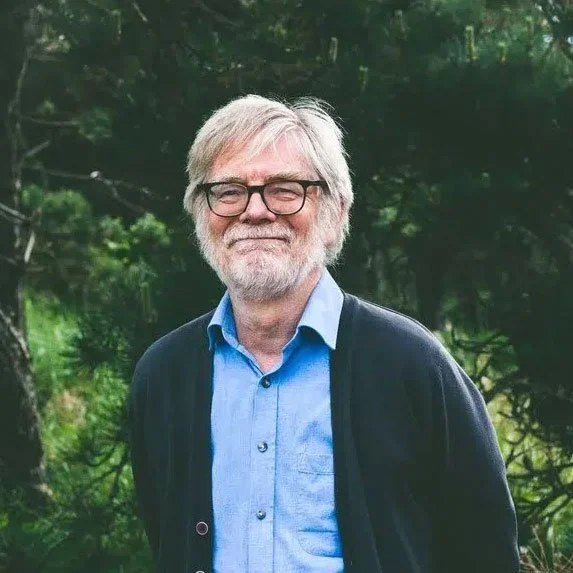
Emiliano Terán is a sociologist from the Central University of Venezuela and has a master’s degree in ecological economics from the Autonomous University of Barcelona. He is a PhD candidate in environmental science and technology at the same institution. He is also an associate researcher at the Center for Development Studies in Venezuela and a member of the Observatory of Political Ecology of Venezuela.
Simón Rodríguez is a Venezuelan socialist writer and journalist. He was a student organizer and later became professor at the Universidad de los Andes. When he was a member of the national leadership of the Socialism and Freedom Party, he ran as a candidate for the National Assembly in 2015. He is a founding member of Laclase.info and Venezuelanvoices.org and has published articles in Humania del Sur, NACLA Report on the Americas, The New Arab, and Rebelión and on dozens of electronic outlets, and his articles have been translated into six languages. He has given talks and lectures in Argentina, Brazil, Cuba, and the Dominican Republic. He is coauthor with Miguel Sorans of the book Why Did Chavismo Fail? A Left-Opposition Balance Sheet.
Anderson Bean is a sociology professor at North Carolina A&T State University, a member of the Tempest Collective, and a North Carolina–based activist and editor. He is a contributor to Venezuela in Crisis: Socialist Perspectives (Haymarket Books) and the author of Communes and the Venezuelan State: The Struggle for Participatory Democracy in a Time of Crisis (Lexington Books).