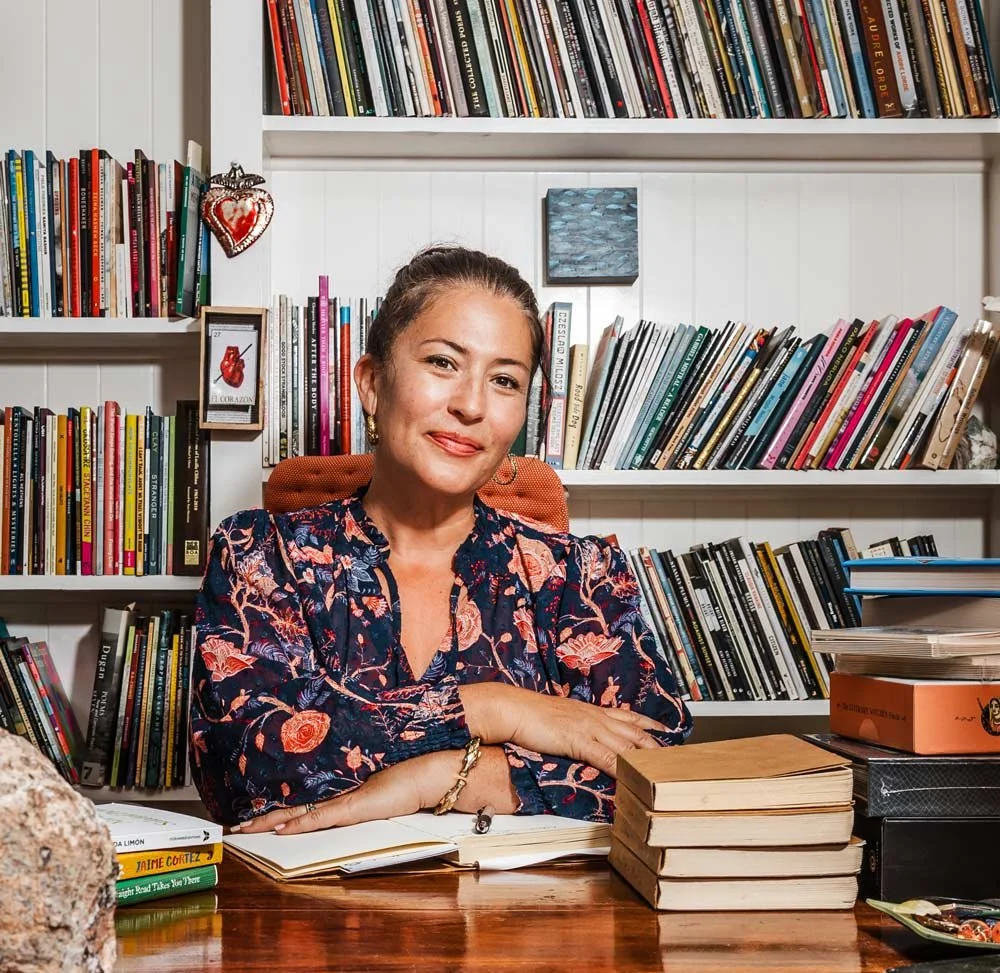


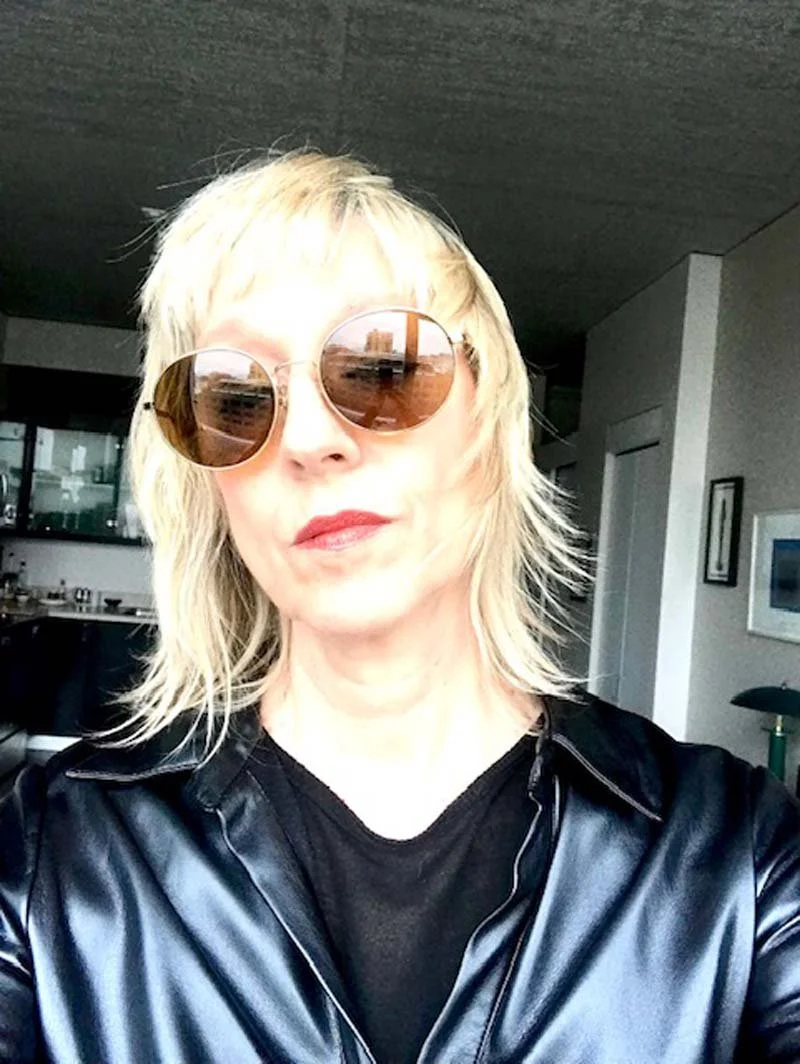
Eva Lake has exhibited extensively in the United States and Europe since 1980. She began as a punk artist in the late 70s, and her fanzines are in the Artist Books Collection in MOMA. She studied art history at the University of Oregon and painting at the Art Students League of New York. As a child, she began writing a diary and has continued ever since. She has also written about art and interviewed hundreds of art people on KBOO. As a singer in post-punk bands, she recorded with Trap Records in the Pacific Northwest. She is the recipient of multiple awards from the Oregon Arts Commission and the Ford Family Foundation. Born in Los Angeles, she then grew up on a dirt road in Southern Oregon. Lake currently lives and works in Portland, Oregon and is represented by Frosch and Co. in New York City and Modernism in San Francisco. @evalovelake
Where were you born and raised? How did it influence your art and your thinking about the world? I was born in Los Angeles, but we left for a very rural environment when I was 5, to southern Oregon. Los Angeles continued to influence me because of my parents, who brought their love of art and antiques with them. Still, I did not receive a lot of outside media, with the exception of magazines. And magazines are still of primary importance!
My mother had a gallery with 3 other women in the historical town of Jacksonville. All of her friends were artists, so I grew up thinking everyone was an artist and that anyone could make art. The children of the 4 women all painted too, and we had our own small gallery within this space. Mom had a marvelous studio, and I tried everything from a very young age.
When did you first fall in love with art and realize you wanted to be an artist? For you, what is the importance of the arts? Art chose me, not the other way around. I would say that art is a way to live, not just something to think about or make. It is every day and all of the time, even when I had all kinds of jobs to survive. Those jobs not only gave me a way to pay the rent, they also provided, in time, the subject matter of my work. I worked in beauty and fashion for years, but I was also educated in art history and archaeology. I want to bring everything into my work, just as it lives in my home.
What does your typical day in the studio look like? Walk us through your studio and your most-used materials and tools. I live with/in my studio. I am surrounded by books and magazines. I have 4 tables, one with a big paper cutter. That way I can live with what I call a floating world, unpasted collages I am considering at any given time. There is a balcony which is an extension of the studio, as I can paste out there. I use the same scissors I have used for decades, and the same boombox for music. Almost everything is fairly old, things I brought back with me from New York in 1997. There is not a lot on the walls. I need open space, and sometimes I just wander around. I also like to dance, so I need the open floor. Every single day I dance a bit.
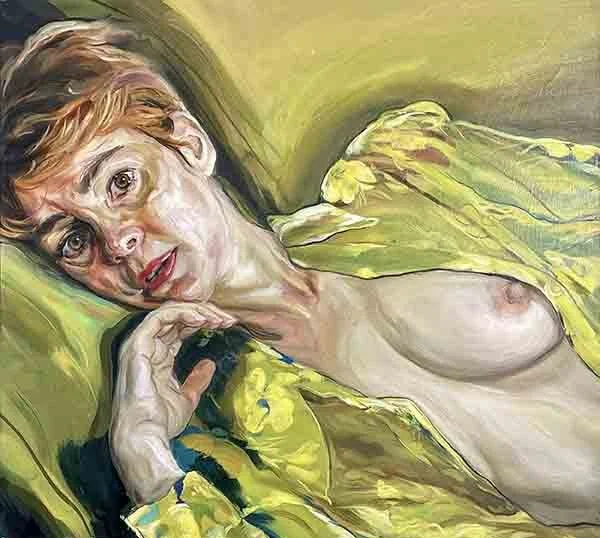
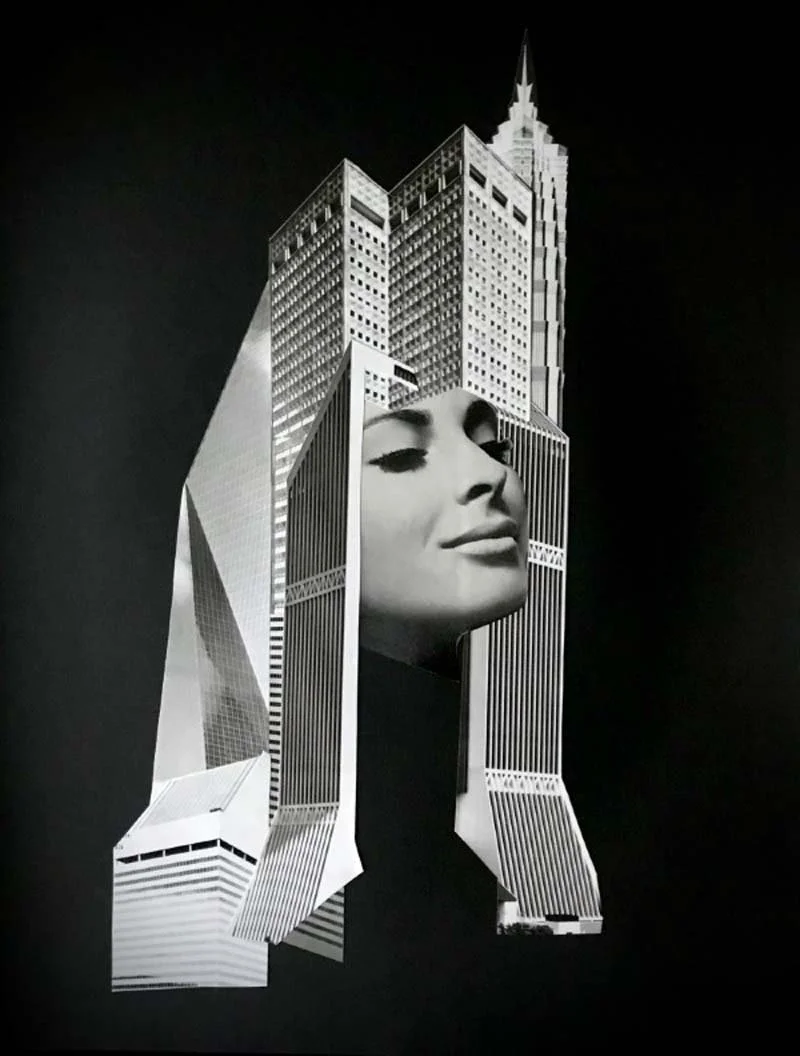
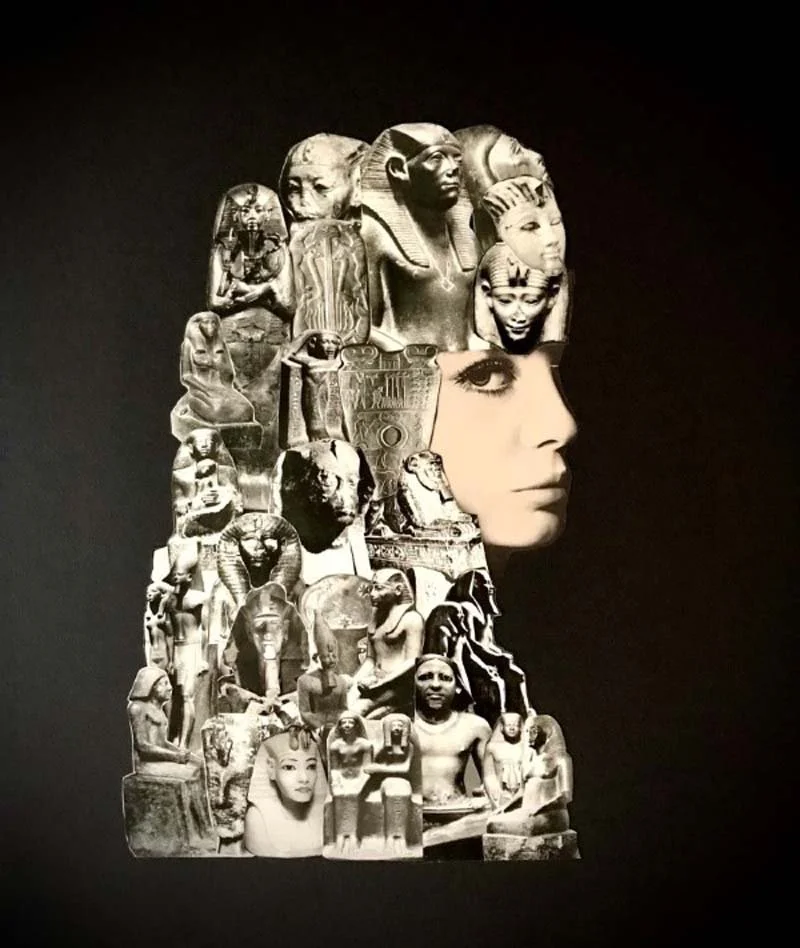
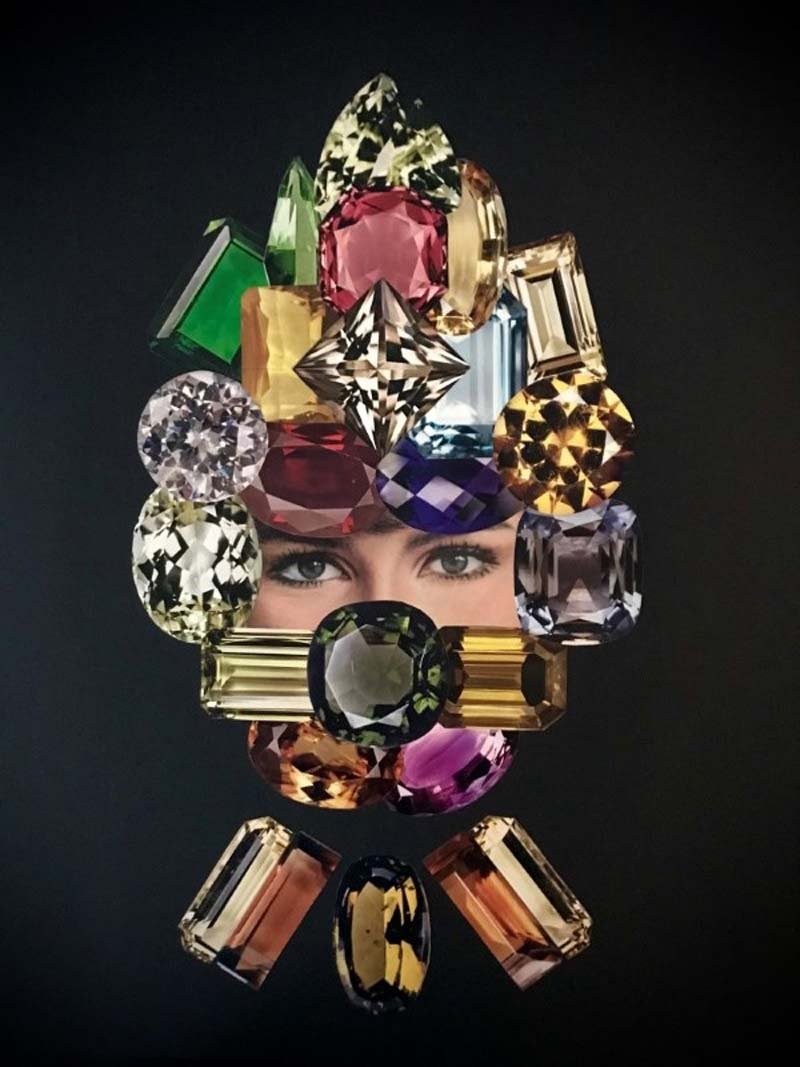
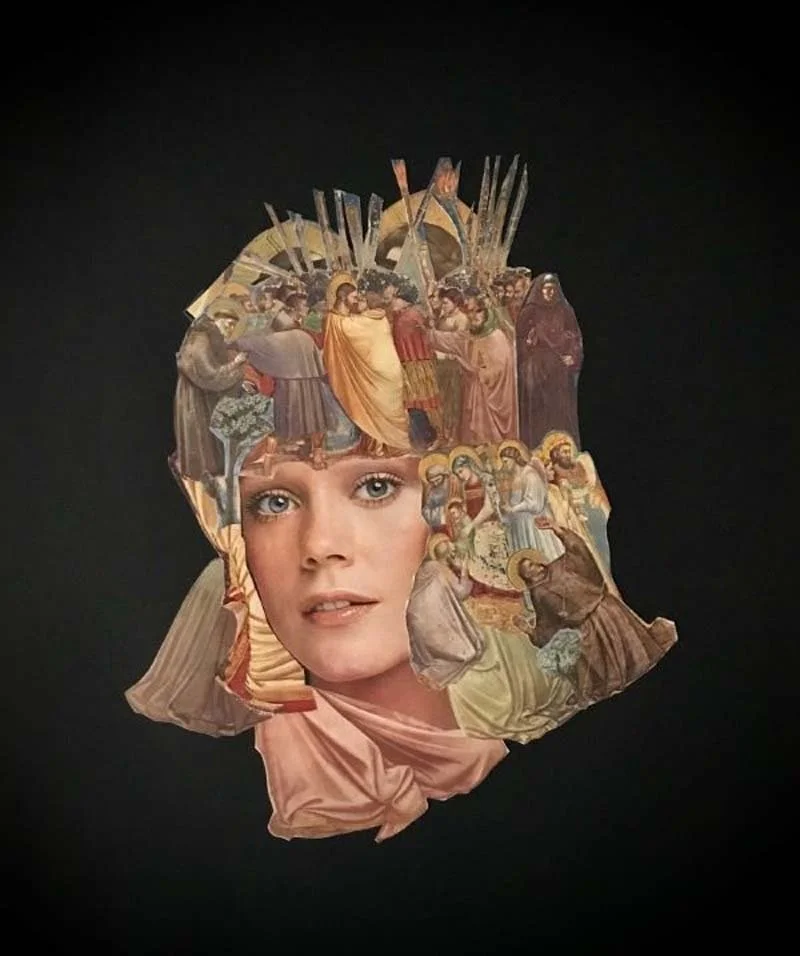
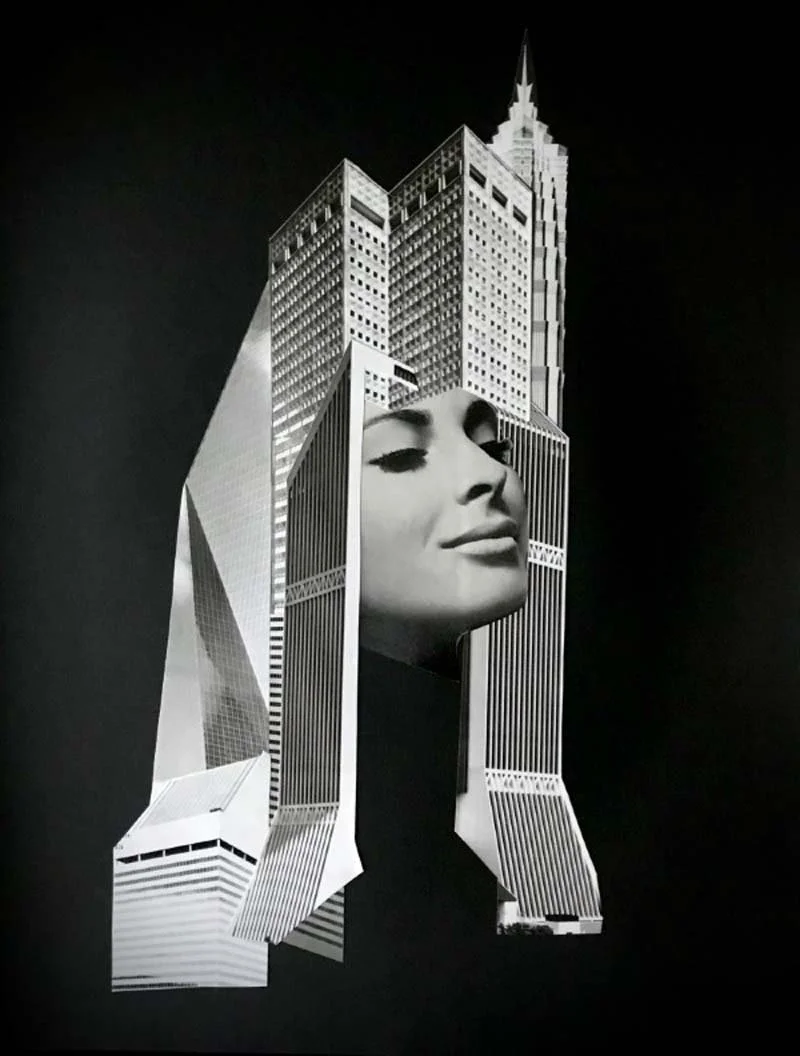
What projects are you working on at the moment? And what themes or ideas are currently driving your work? There are a few things going on. Presently, I am making what I call Helmets or Headdresses. They are portraits of women with elaborate headgear. This headgear is made of gems, crystals, elements from art history, and architecture. Right now, I am working on one with typography. This is all about empowering women, outfitting for the struggles and the glory to come.
I am also making a small group of work from a single 1930 book on Ikebana. The photography is fantastic. Indeed, photography drives a lot of what I do. This is always about working with what pleases or attracts me in some way. It is always about amusing and engaging myself.
What do you hope people feel when they experience your art? What are you trying to express? I cannot predict what others will say or feel about my work. I was often surprised. Me, I like mystery, I like power, I want to make you look at what I like to look at. And I want to substantiate the "beauty" in women. But once things are made, we don't own the resulting reaction.
Which artists, past or present, would you like to meet? And why? When I was young, it was Georgia O’Keeffe. It still is. There's nothing I don't like about her. I am old enough to remember when her big book came out in the 70s. As far as that goes, I would absolutely love to know Alfred Stieglitz. He did everything, artist and artist champion.
I would love to have met John Heartfield and Hannah Hoch, too, but especially Heartfield. It is how he lived a life of risk that interests me. And he survived.
I think as an artist, I would have greatly benefited from knowing Ana Mendieta. The artist living today who impresses me the most is John Stezaker.
Do you draw inspiration from music, art, or other disciplines? I was in bands during the post-punk era and then danced jazz in New York in the 90s. To me, this is about living an interesting life. My work is based on that. Who is the woman in the picture? Ah, well, she has done many things.
A great thing about living in my city/town is… Portland does not have great museums and endless world-class exhibitions like New York. So indeed you must get to work here, just to entertain yourself. I've made more work here than anywhere else.
Can you describe a project that challenged you creatively or emotionally—and how you worked through it? I have kept a diary since I was a child. Whatever my challenges are, they get funneled into writing. It has been extremely helpful.
Tell us about important teachers/mentors/collaborators in your life. My greatest teacher was a jazz dance teacher in New York, named Eugene Louis Faccuito, otherwise known as Luigi. He placed great faith in me; his dance studio was like a healing church. There was no art teacher who even came close. As far as mentors go, my friend Katherine Dunn, the writer (Geek Love), helped me with so much advice, including how to handle people. When she passed in 2016, she was never replaced.
Sustainability in the art world is an important issue. Can you share a memory or reflection about the beauty and wonder of the natural world? Does being in nature inspire your art or your process? Almost everything I do is of a recycled nature. I make work from old magazines. I wear "vintage" clothes. I chose not to have children, and yes, this was political as much as it was personal. I went into driving kicking and screaming at the age of 47 and now drive a 2001 used car. I write all of this because I see a lot of people claiming but not living their political concerns, especially when it comes to the future of this planet.
AI is changing everything - the way we see the world, creativity, art, our ideas of beauty and the way we communicate with each other and our imaginations. What are your reflections about AI and technology? What is the importance of human art and handmade creative works over industrialized creative practices? I am very analog in my life. My diary, for instance, is all handwritten, all 189 composition notebooks. No AI could ever replace that kind of work, that kind of historical mojo. AI cannot make you dance, cannot make you a great pasta, cannot drink wine with you, and most of all, it cannot build the kind of relationship art can. Art—it's a relationship.
Exploring ideas, art and the creative process connects me to… One idea I continue to explore is the erasure of time. My women live throughout the centuries. They shift through time, and because of this, they have their own power, their own governance. As a child, I believed very strongly that I had been here before. Eventually, I came to realize that art was the constant journey, the connection between the present and the past and the future. Everything lives in the same room.