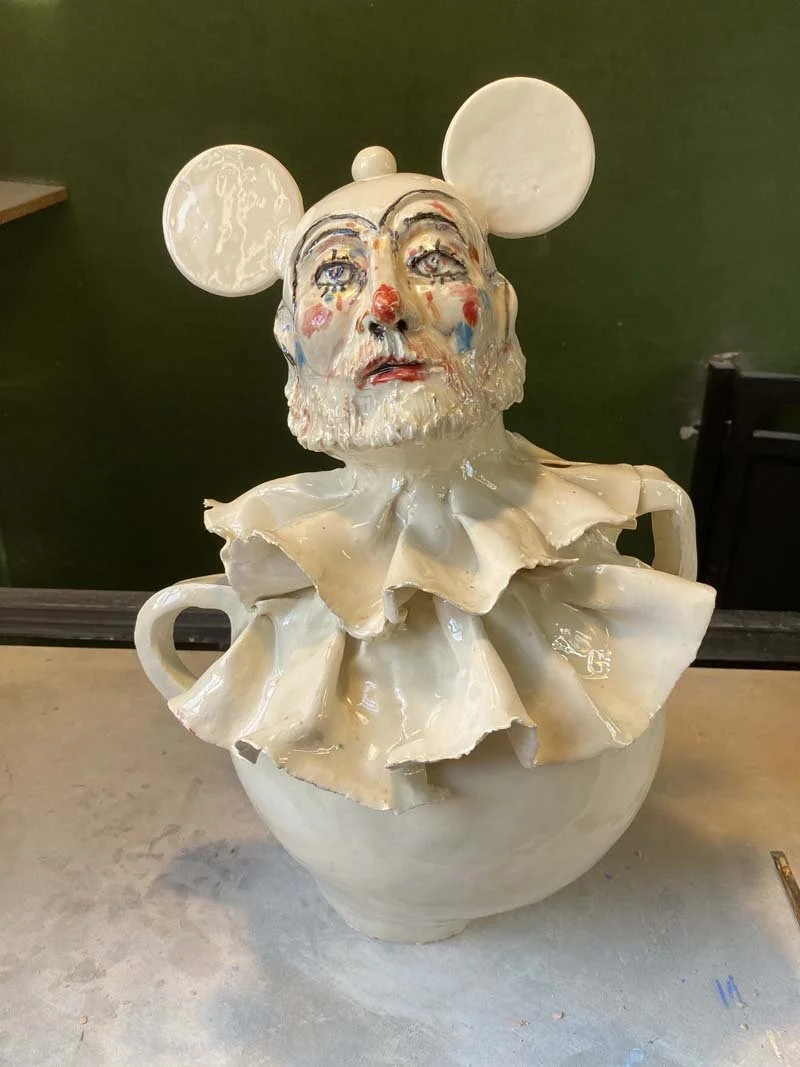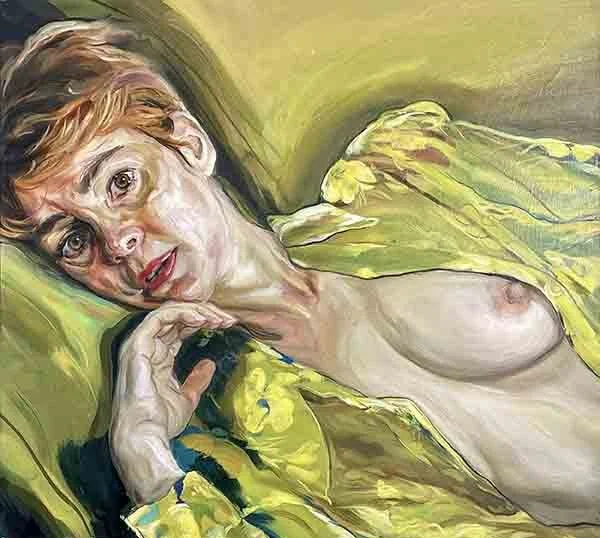


Lauren Cohen is a multidisciplinary artist working across painting, ceramics, installation, and performance to explore power, identity, and theatricality through a surreal Americana lens. Rooted in her Puritan-infused New England upbringing, she creates fictional interiors and absurd character tableaux that blur personal history and cultural myth. Using personas, folk textiles, and ceramic sculptures, she examines the quiet power dynamics of domestic life and curated labor. Her staged environments reflect an ongoing fascination with performance, repression, and humor. Through layered references and handcrafted props, she builds immersive worlds that question inherited rituals and the strange elasticity of American cultural memory. @laurencohenstudio


How did your upbringing in Old Salem Village (now Danvers, MA) influence your art and your thinking about the world? I grew up in the home of the witch trials. Living next to Salem meant being surrounded by theatrical reenactments and witch kitsch. It was all real trauma turned into a tourist spectacle. That mix of performance and repression shaped how I see the world. As a queer kid with learning differences from one of the few Jewish families in a post-Puritan town, I often felt like an outsider. That tension between visibility and control, humor and harm, continues to influence the way I stage and build my work.
When did you first fall in love with art? For you, what is the importance of being an artist? I grew up surrounded by art. My mom’s side of the family had some painters and creatives, and their work was all over our house. The aesthetic was pure New England: weathered buoys, driftwood, moody Maine seascapes. Even though I often felt isolated, those pieces let me mentally escape. I started making up characters and performing in front of our old camcorder as a way to cope and entertain myself. That’s when I fell in love with art. It wasn't just about making things, but building worlds. Comedy became essential to that. Without humor, everything falls apart.
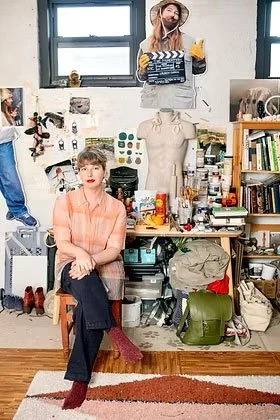
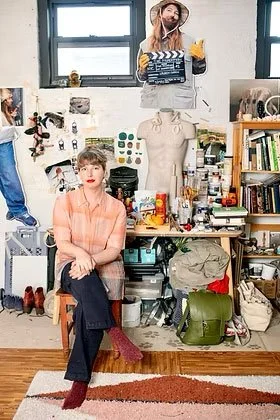
How does your workspace reflect your artistic process? My days start in a local coffee shop, where I write and sketch before anything else. It’s a quiet ritual that helps ground me creatively. After that, I stop by my neighborhood food co-op to grab my lunch to take to the studio. Once I'm in, I don't really come up for air. I hyper focus for the entire day and take one short break in the middle to eat. I'm working in oils, so the studio is full of tubes and solvents, etc. When I make ceramics, I head across the road to Powerhouse Arts. I like to work on both art forms in separate spaces. The communal nature of a place like PHA is such a great thing for me.
What projects are you working on at the moment? And what themes or ideas are currently driving your work? Right now, I’m focused on finishing a series of paintings for my next body of work. In the coming months, I’ll shift back to ceramics. Many of my sculptures function as visual references within the paintings, creating a kind of feedback loop between the two. Research is a big part of my process. I’ve returned numerous times this past year to my childhood home in Danvers to dig through old memories and objects, and I recently went to Gettysburg for the Civil War reenactments. These experiences feed directly into the world-building in my work. I’m interested in how personal memory and cultural myth get tangled up, especially through the lens of American culture. My work explores themes of power, identity, and performance, often by staging surreal, theatrical scenes that feel both familiar and off-kilter. Domestic objects like quilts, figurines, or ceramic foods become symbols that carry humor, tension, and psychological weight. I’m especially drawn to the idea of inherited belief systems and how they shape our behavior. My curated jobs help to develop relationships with people in order to create fictional personas. There’s always a balance between control and collapse, seriousness and absurdity, and I’m interested in how that plays out in both personal and national narratives.
What impact do you hope your art has on viewers? I hope people are first drawn in by humor and curiosity. They become intrigued by the strangeness or playfulness of what they’re seeing, but once they’re in, I want them to sit with the deeper layers: questions around identity, power, memory, and cultural myth. I’ve never been someone who makes art for art’s sake. I’m always trying to express something about the complexity of being. If the work unsettles while still making someone laugh, I know I’m on the right track.
Which artists, past or present, would you like to meet? And why? I’d love to meet some of the surrealists—Tanguy, Magritte, Tanning, Dalí. Their ability to build alternate realities that feel both playful and unsettling has always fascinated me. But the dream scenario would be an intimate dinner party with Louise Bourgeois. Her work is so raw, psychological, and deeply personal. I imagine the conversation would be just as layered. More broadly, I’m always inspired by artists who create their own worlds. Getting to know contemporary artists who do that in their own way has been one of the most rewarding parts of being in this field.
Do you draw inspiration from music, art, or other disciplines? Absolutely! I draw a lot of inspiration from comedy. I’ve followed certain troupes for years and get deeply invested in seeing their live shows. Working at Saturday Night Live for nearly half a decade had a huge impact on how I think about timing, character, and performance in my own work. Lately, I’ve also started learning American Sign Language, which is opening up entirely new ways of thinking about communication, gesture, and expression. It’s already starting to influence both my life and my creative practice in ways I’m really excited to explore.
What do you love about where you live? A great thing about living in my neighborhood is the perfect mix of nature and creative weirdos. I’ve grown especially fond of the big park (ideal for wandering and people-watching), the fireflies, and the amazing community of artists, writers, and activists who make this place feel alive. I couldn’t live somewhere that didn’t embrace difference, and here, the quirks are part of the charm.
What was a project that challenged you creatively or emotionally, and how did you work through it? I worked for two years as a “Gallerina” in Chelsea as a durational performance. It was both creatively enriching and personally challenging. It gave me an inside look at the gallery world—something we rarely get to see in art school—and I developed a real appreciation for how much effort goes into supporting artists and exhibitions behind the scenes. At the same time, it pushed me to think more deeply about my own values as an artist. Navigating the business side of art helped clarify what I’m most invested in exploring in the studio. It taught me the importance of staying connected to my voice while respecting the larger ecosystem that helps bring work into the world.
Tell us about important teachers/mentors/collaborators in your life. I’m still in touch with professors from my time at California College of the Arts—especially those in the painting department, who were deeply invested in their students. Since then, I’ve built a network of mentors and collaborators who offer support, feedback, and perspective. It took time to overcome the fear of reaching out, but those connections have become essential to both my practice and personal growth.
Does being in nature inspire your art or your process? Being in nature helps me to slow down and breathe. I try to venture upstate as much as I can to hike and explore. Visiting places like Wassaic Projects, especially in the fall when they have their haunted mill event, is just so special.
AI is changing everything - the way we see the world, creativity, art, our ideas of beauty and the way we communicate with each other and our imaginations. What are your reflections about AI and technology? What is the importance of human art and handmade creative works over industrialized creative practices? I think AI can be a powerful tool when used with intention, especially if it helps people express ideas they might not otherwise be able to. That said, I draw a clear line in my own practice. I value the handmade and tactile process of painting or sculpting ceramics. For me, it’s essential that my mind and hand are fully engaged. There’s something irreplaceable about the physical act of making, the imperfections, the intimacy. That’s where meaning lives for me, and where human art continues to hold its power.
Exploring ideas, art and the creative process connects me to… The rhythms of everyday life, the textures of memory, and the quiet moments where imagination meets material, bringing a sense of presence, connection, and play to both my work and my world.